WPC Doors: Complete Guide to Types, Prices, Pros-Cons & Best Uses in Indian Homes
Complete guide to WPC doors in India—types, price range, pros-cons, best uses for bathroom/bedroom. Compare WPC vs wooden doors & find dealers near you.
Quick Decision Summary
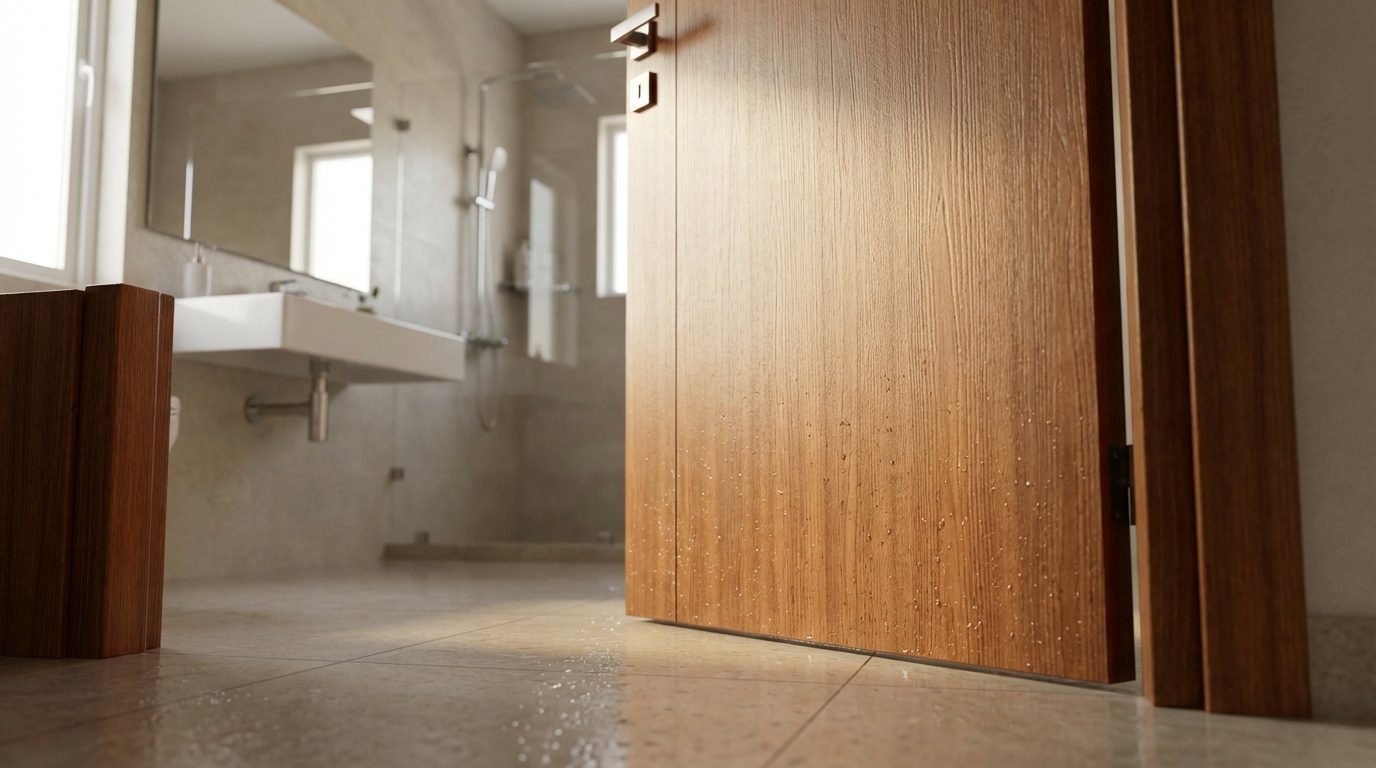
WPC doors are the best waterproof door solution for Indian bathrooms, toilets, and moisture-prone areas where wooden doors typically fail within 2-3 years.
If you're in a hurry: WPC (Wood Plastic Composite) doors combine wood fibre with thermoplastics to create doors that resist water, termites, and swelling—the three biggest enemies of traditional wooden doors in Indian conditions. They cost ₹2,500–₹6,000 per door depending on density, thickness, and finish. For bathrooms and utility areas, they're the clear winner. For main entrances and bedrooms where aesthetics matter more, wooden or laminated flush doors may still be preferable.
- Choose WPC if: You need bathroom doors, toilet doors, kitchen utility doors, or any door in high-moisture areas; you want zero termite risk; you prefer minimal maintenance; budget is ₹3,000–₹5,000 per door.
- Avoid WPC if: You need grand main entrance doors with heavy locks; you want real wood grain aesthetics for living areas; you need doors thicker than 35mm; screw-holding for heavy hardware is critical.
Key takeaway: WPC doors solve the "bathroom door swelling" problem that frustrates millions of Indian homeowners every monsoon.
What WPC Doors Actually Mean (Composition, Construction, and Grades)
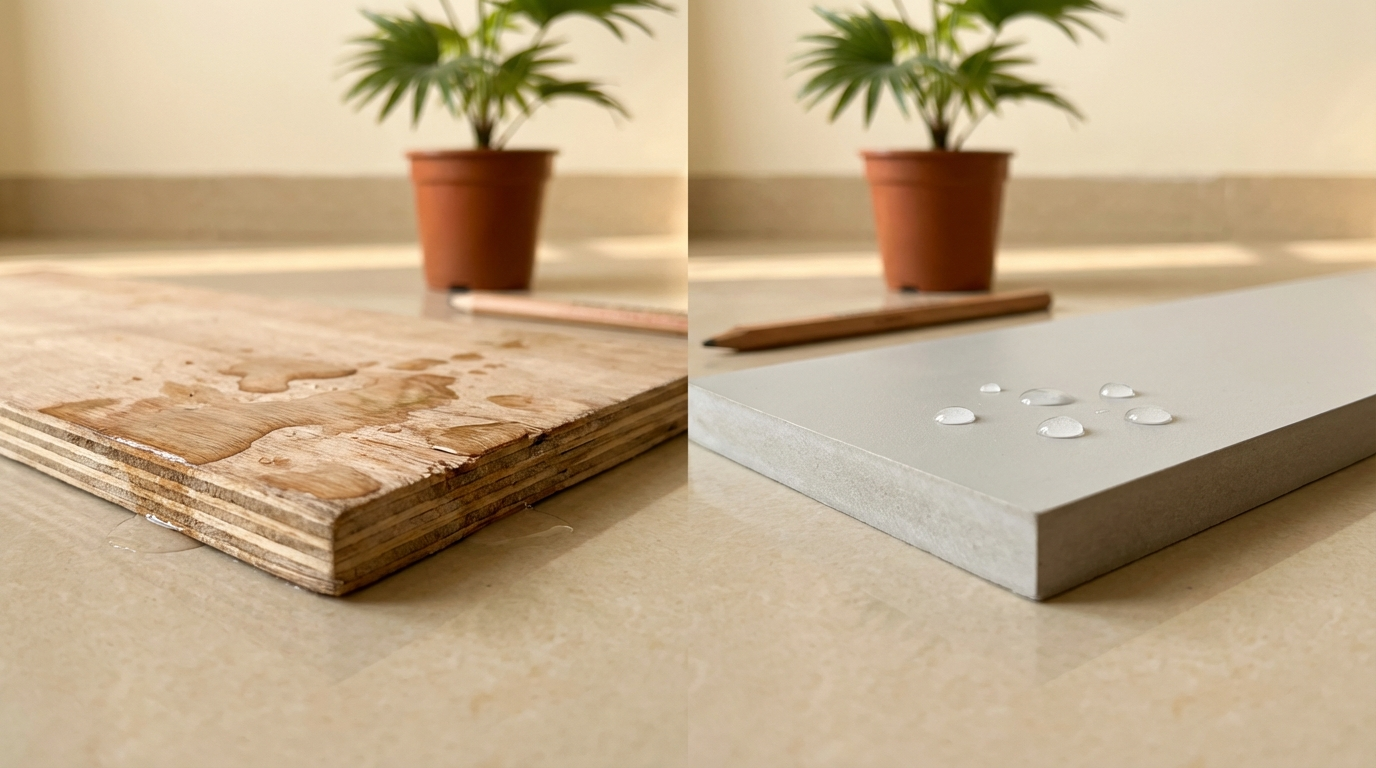
WPC doors are manufactured from Wood Plastic Composite—a material combining wood powder or wood fibres (typically 40-60%) with thermoplastics like PVC, polyethylene, or polypropylene (40-60%). This composition creates a door material that looks and feels somewhat like wood but inherits plastic's resistance to moisture and biological attack.
The manufacturing process involves extruding or pressing this composite mixture under heat and pressure to form solid door panels. Unlike traditional wooden doors that use natural timber planks joined together, or flush doors that use a hollow framework with face veneers, WPC doors are typically solid throughout their cross-section. This solid-core construction contributes to their water resistance since there are no internal voids where moisture can accumulate.
Understanding WPC Density Grades
WPC doors in India are commonly available in two density ranges that significantly affect performance:
- Standard Density (500-600 kg/m³): Adequate for bathroom doors and light-duty applications. Screw holding is moderate. Most budget WPC doors fall in this category.
- High Density (650-750 kg/m³): Better screw retention, improved sound insulation, and enhanced durability. Recommended for bedroom doors or areas with heavier usage. Commands a 20-35% price premium.
Common Misconceptions About WPC
Many buyers confuse WPC with PVC doors or assume WPC is "just plastic." The key differences: PVC doors are hollow profiles with thin walls, suitable mainly for modular furniture. WPC doors have solid cores with actual wood content, giving them better structural integrity and a more natural feel. However, WPC is not a direct replacement for solid hardwood—it's a purpose-built material for moisture-prone applications where wood fails.
Another misconception is that all WPC doors are equally waterproof. While the material itself resists water, the edges, hinges zones, and frame joints still need proper finishing. Poorly sealed WPC can absorb moisture at cut edges, causing localised swelling.
Note: sainik710.com is an independent informational site and is not affiliated with any manufacturer.
India-Specific Reality Check (Moisture, Climate, and On-Site Challenges)
Indian bathroom conditions create unique challenges that make WPC doors particularly relevant. The combination of high humidity (70-90% during monsoon), frequent water splashes, poor ventilation in many bathrooms, and inconsistent waterproofing means that conventional wooden doors often fail within 2-4 years in these environments.
Regional Climate Considerations
Coastal cities (Mumbai, Chennai, Kolkata, Kochi): Salt-laden air accelerates wood degradation. WPC performs well here since it doesn't rot or attract marine borers. However, ensure the hardware (hinges, handles) is stainless steel or brass to prevent corrosion.
Humid eastern and southern regions: Persistent humidity year-round makes WPC the default choice for bathrooms. Even bedroom doors benefit from WPC in ground-floor flats where dampness rises through walls.
Dry northern plains (Delhi, Jaipur, Lucknow): Extreme temperature variations from scorching summers to cold winters can cause some WPC formulations to expand and contract. High-density WPC handles this better. The dry climate actually reduces the need for WPC in non-bathroom areas.
Site Storage and Handling Issues
On Indian construction sites, doors often sit in partially completed buildings exposed to rain and dust for weeks. WPC tolerates this abuse better than wooden flush doors, but prolonged sun exposure can cause surface fading in coloured WPC. Store doors horizontally in shaded areas. Unlike plywood, WPC doesn't need the "standing upright" storage requirement since it doesn't warp from its own weight.
Carpenter Familiarity
Many traditional carpenters (mistris) remain unfamiliar with WPC working characteristics. The material cuts cleanly but generates plastic-like dust requiring masks. Standard wood screws work, but pilot holes are essential to prevent cracking. Edges must be sealed or capped since exposed WPC core can absorb moisture through the wood fibre component.
Types of WPC Doors Available in India
WPC doors come in several configurations based on construction method, surface finish, and intended application. Understanding these types helps you match the right door to your specific requirement.
Plain/Solid WPC Doors
The most basic and affordable type, plain WPC doors have a uniform colour throughout (typically off-white, grey, or brown). The surface has a slight wood-like texture from the manufacturing process. These work well for utility rooms, servant quarters, and basic bathroom applications where aesthetics aren't the priority. Price range: ₹2,000–₹3,500 per door.
Laminated WPC Doors
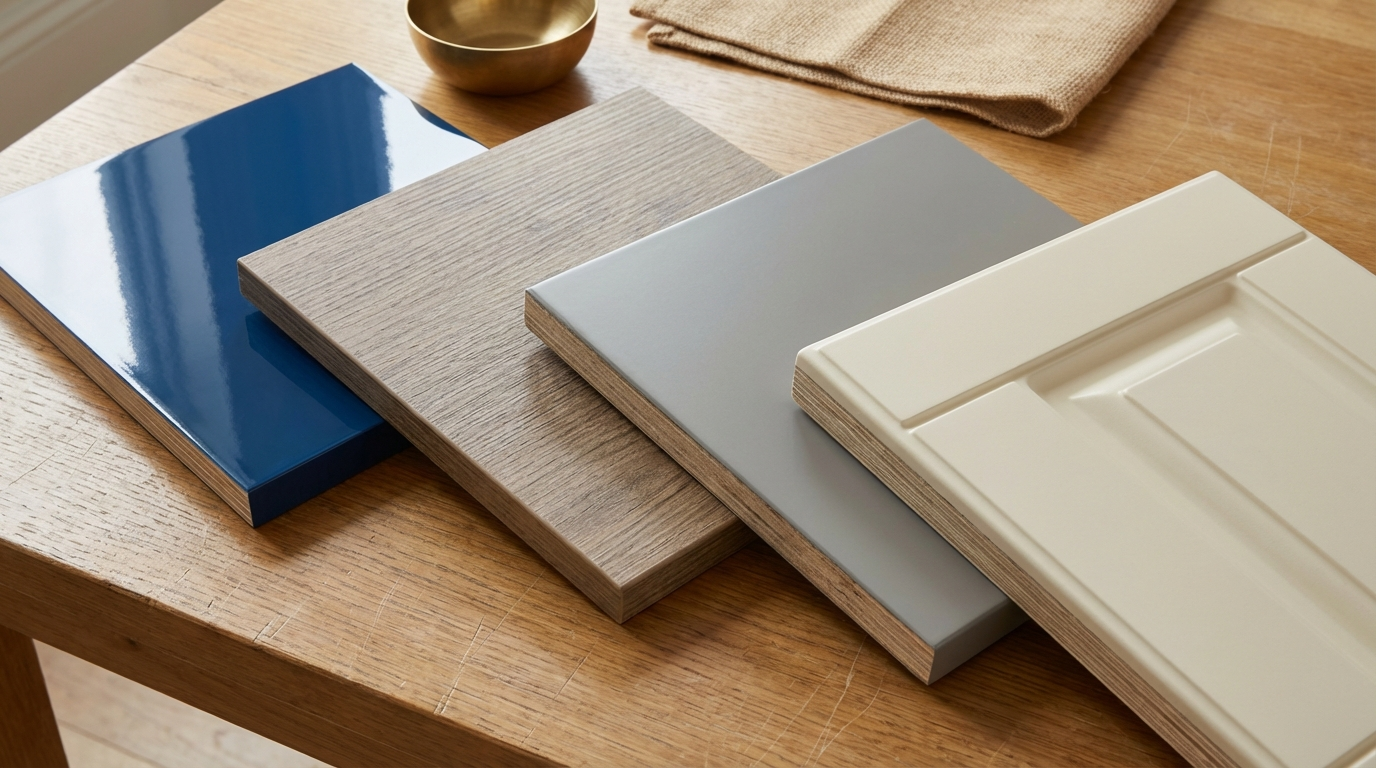
A decorative laminate sheet (similar to Sunmica/Formica) is bonded to the WPC core. This dramatically improves appearance, offering wood grain patterns, solid colours, or textured finishes. Laminated WPC doors can visually match bedroom and living area aesthetics while retaining moisture resistance. The laminate also provides an additional moisture barrier. Price range: ₹3,500–₹5,500 per door.
UV-Printed WPC Doors
Digital UV printing technology allows photorealistic patterns—teak grain, walnut, marble effects, or custom designs—directly on the WPC surface. These offer superior design flexibility compared to standard laminates. The UV coating adds scratch resistance and UV protection preventing fading. Price range: ₹4,000–₹6,500 per door.
CNC-Routed/Grooved WPC Doors
Computer-controlled routing creates three-dimensional patterns, grooves, and decorative designs on WPC door surfaces. Popular for pooja rooms, main bedroom doors, and anywhere a designer look is desired. The routing does expose core material, so ensure the grooves are sealed with PU coating to maintain water resistance. Price range: ₹5,000–₹8,000 per door.
Hollow vs Solid Core WPC
Budget WPC doors sometimes use hollow-core construction with internal ribbing rather than solid material throughout. While reducing weight and cost, hollow cores have significantly lower screw retention and sound insulation. For bathroom doors where heavy hardware isn't needed, hollow core works adequately. For bedroom doors, insist on solid core.
Price Range and Cost Drivers (2026 Market)
WPC door prices in India typically range from ₹2,000 to ₹8,000 per door for standard residential sizes (6'6" × 2'6" to 7'0" × 3'0"). This wide range reflects variations in density, thickness, finish quality, brand premium, and regional logistics.
Thickness-Wise Price Breakdown
| Thickness | Typical Price Range (Per Door) | Common Applications | Screw Holding |
|---|---|---|---|
| 24-25mm | ₹2,000–₹3,200 | Bathrooms, utility rooms | Adequate for light hardware |
| 28-30mm | ₹2,800–₹4,500 | Standard bathrooms, bedrooms | Good for standard hinges and locks |
| 32-35mm | ₹3,500–₹5,500 | Bedrooms, pooja rooms | Good to excellent |
| 38-40mm | ₹4,500–₹7,000 | Premium applications | Excellent |
Why Prices Vary So Much
Density: The single biggest cost factor. High-density WPC (700+ kg/m³) costs 25-40% more than standard density (550 kg/m³) but offers significantly better durability and hardware retention.
Surface finish: Plain WPC is cheapest. Add ₹400–₹800 for quality laminate finish, ₹600–₹1,200 for UV printing, and ₹800–₹1,500 for CNC routing.
Brand premium: Established brands with consistent quality control command 15-25% premiums over local manufacturers. This premium often justifies itself through uniform density and proper edge sealing.
City and logistics: Metro cities like Mumbai, Delhi, Bangalore typically have competitive pricing due to multiple suppliers. Tier-2 and tier-3 cities may see 10-20% higher prices due to transport costs. Coastal cities sometimes have lower prices for certain brands due to port proximity.
Budget Estimation for Typical Projects
For a 2BHK apartment with 2 bathrooms, 2 bedrooms, and 1 kitchen utility door requiring WPC:
- Bathroom doors (2): ₹3,000 × 2 = ₹6,000
- Bedroom doors (2): ₹4,500 × 2 = ₹9,000 (laminated finish)
- Utility door (1): ₹2,800 × 1 = ₹2,800
- Frames (5): ₹1,200 × 5 = ₹6,000 (WPC frames)
- Total material: ₹23,800
- Installation: ₹800–₹1,200 per door
Compare this to quality flush doors (₹4,000–₹6,000 each) that will swell in bathroom applications, and the WPC value proposition becomes clear for moisture-prone areas.
WPC Doors vs Wooden Doors: Head-to-Head Comparison
The choice between WPC and wooden doors isn't straightforward—each material excels in different scenarios. This comparison helps you decide based on your specific application rather than generalised marketing claims.
| Parameter | WPC Doors | Wooden/Flush Doors | Winner For |
|---|---|---|---|
| Water Resistance | Excellent (core won't absorb water) | Poor to moderate (swells, warps) | WPC for bathrooms |
| Termite Resistance | Immune (no organic food source) | Vulnerable (requires treatment) | WPC for long-term safety |
| Screw Holding | Moderate to good (density dependent) | Excellent (solid wood edges) | Wooden for heavy hardware |
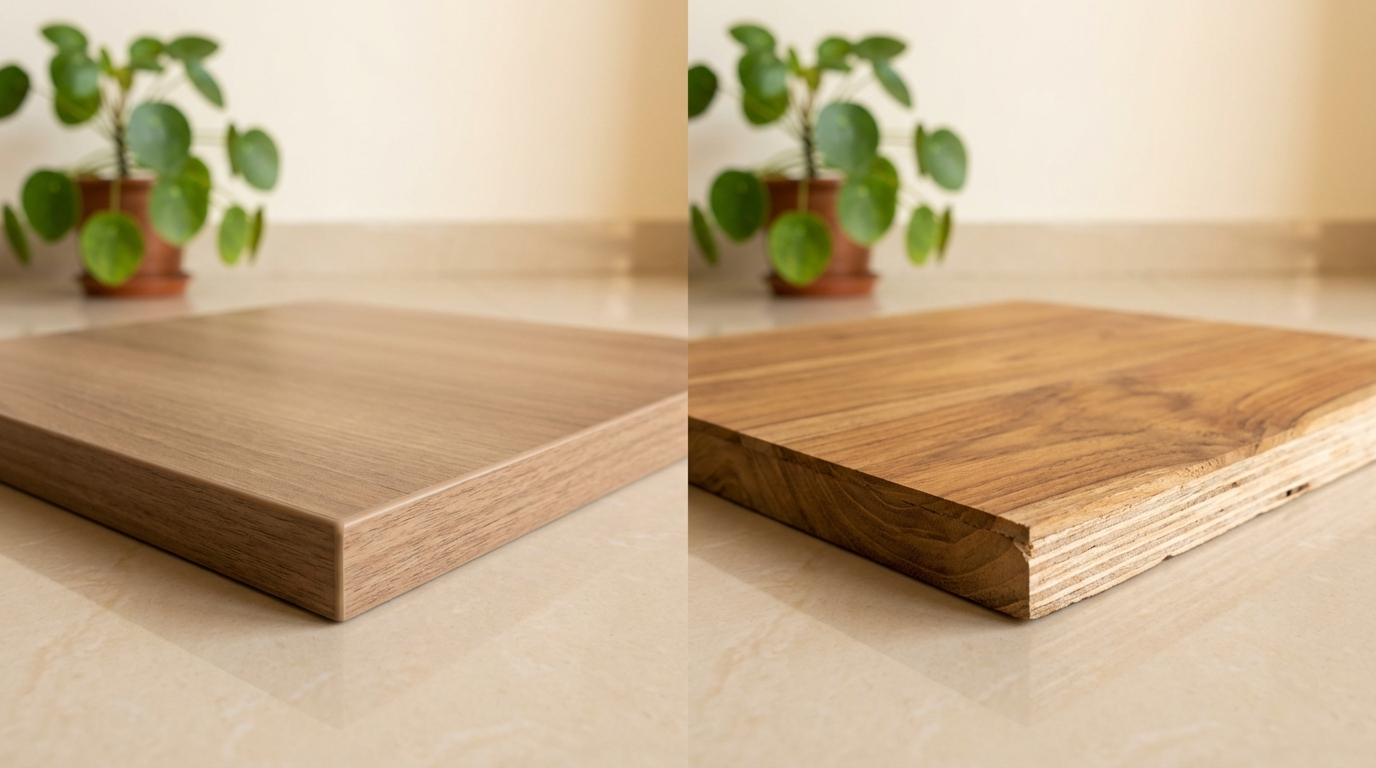
| Aesthetics | Good (with laminates/UV print) | Excellent (natural grain, veneer options) | Wooden for premium look |
| Sound Insulation | Moderate | Good to excellent | Wooden for bedrooms |
| Maintenance | Very low (wipe clean) | Moderate (polish, termite checks) | WPC for convenience |
| Lifespan (Bathroom) | 10-15+ years | 3-5 years | WPC clearly |
| Lifespan (Bedroom) | 15-20 years | 20-30+ years | Wooden slightly |
| Fire Resistance | Self-extinguishing | Burns (unless treated) | WPC safer |
| Weight | Lighter (easier handling) | Heavier (feels more solid) | Depends on preference |
| Price (Bathroom size) | ₹2,500–₹4,500 | ₹3,500–₹6,000 | WPC more economical |
When to Choose WPC Over Wood
- All bathroom and toilet doors without exception
- Kitchen doors near sink or washing areas
- Utility room and service area doors
- Ground floor rooms with dampness issues
- Coastal properties where salt air accelerates wood decay
- Rental properties where maintenance will be minimal
When Wood Still Makes Sense
- Main entrance doors requiring heavy-duty locks
- Premium bedroom doors where natural aesthetics matter
- Pooja room doors with intricate carving requirements
- Heritage or traditional-style homes
- Areas with excellent ventilation and climate control
Best Uses for WPC Doors in Indian Homes
WPC doors shine in specific applications where their water resistance and durability justify the material choice. Understanding optimal placement helps you budget wisely—use WPC where it matters most and save costs elsewhere.
Is WPC Good for Bathroom Doors?
Absolutely yes. Bathroom doors represent WPC's ideal application. Indian bathrooms typically lack the ventilation and waterproofing standards of Western homes. Water splashes on the door bottom, steam exposure, and direct spray during bathing create conditions that destroy wooden doors within 3-5 years. WPC handles these conditions for 10-15+ years without swelling, warping, or bottom-edge rotting. For bathroom applications, even basic 24-25mm WPC outperforms expensive teak flush doors.
Can WPC Be Used for Bedroom Doors?
Yes, but consider trade-offs. For bedrooms, you need better aesthetics and sound insulation than bathrooms require. Choose laminated or UV-printed WPC with 30-32mm thickness and high density (650+ kg/m³). This configuration provides reasonable sound dampening and supports standard bedroom door hardware. However, if budget allows and moisture isn't a concern, a quality BWR-grade flush door with veneer finish may provide better sound insulation and a more premium feel. For ground-floor bedrooms in humid regions, WPC remains the pragmatic choice.
Kitchen and Utility Areas
Kitchen entry doors, pantry doors, and utility room doors benefit from WPC. These areas see water splashes from cooking, dishwashing, and cleaning. The door bottom often gets wet during floor mopping. WPC tolerates this abuse while maintaining structural integrity. For modular kitchen shutter applications, however, PVC or HDHMR boards often work better due to specific thickness and hardware requirements.
Commercial and Rental Applications
Service apartments, PG accommodations, and rental properties benefit from WPC's durability and low maintenance. Tenants often neglect door care, leading to rapid deterioration of wooden doors in bathrooms. WPC survives this neglect better, reducing owner maintenance costs over time.
WPC Door Frame Options and Compatibility
The door frame matters as much as the door itself in moisture-prone areas. A WPC door installed in a wooden frame defeats the purpose if the frame swells and jams the door. Understanding frame options helps create a complete moisture-resistant door system.
WPC Door Frames
WPC frames complement WPC doors perfectly. Made from the same composite material, they resist moisture identically to the door. Available in standard 4" × 2.5" profiles suitable for typical 4.5" wall thickness. Cost: ₹150–₹300 per running foot. For bathrooms, always pair WPC doors with WPC frames for a complete solution.
uPVC Door Frames
uPVC (unplasticised polyvinyl chloride) frames offer excellent water resistance and precise dimensions. They're slightly more expensive than WPC frames but provide cleaner aesthetics with smoother surfaces. Particularly suitable for premium bathroom installations. Ensure compatibility with WPC door thickness when ordering.
Can You Use Wooden Frames with WPC Doors?
Technically yes, but not recommended for bathrooms. If existing wooden frames are in good condition and you're installing WPC doors in non-moisture areas, the combination works. However, in bathrooms, the wooden frame will still swell even if the WPC door doesn't, causing fitting issues. Consider replacing wooden frames with WPC or uPVC when upgrading bathroom doors.
Metal Door Frames
MS (mild steel) frames with powder coating work with WPC doors but require rust protection in humid areas. Stainless steel frames eliminate rust concerns but significantly increase costs. Metal frames provide excellent security for main doors but aren't cost-effective for bathroom applications.
Quality Checks and Inspection Guide (Without Lab Testing)
You don't need sophisticated equipment to assess WPC door quality. These field-tested checks help you identify good quality material and spot potential problems before purchase and during installation.
Before Buying: Dealer/Showroom Checks
- Weight test: Lift the door. A 7' × 2.5' WPC door should weigh 18-25 kg for standard density, 25-32 kg for high density. Suspiciously light doors indicate hollow cores or low density.
- Edge inspection: Check all four edges for uniformity. Good quality WPC has consistent colour and density throughout. Variations indicate manufacturing issues or mixed-batch material.
- Surface flatness: Place a straight edge (scale or carpenter's level) across the door surface. Any bowing or warping indicates storage problems or quality issues.
- Density inquiry: Ask for the density specification in kg/m³. Reputable dealers provide this. If they can't, consider buying elsewhere.
- Sample cut request: Request a small offcut to examine the core. Quality WPC shows uniform wood-plastic integration without voids or inconsistent areas.
What Thickness of WPC Door Is Best for Bathrooms?
For bathroom doors, 28-30mm thickness provides the optimal balance of cost, durability, and functionality. Thinner 24-25mm doors work for compact bathrooms with standard hinges but may feel flimsy for larger openings. Going above 30mm for bathrooms rarely justifies the extra cost since bathroom doors don't require heavy-duty security hardware. The key factor is density rather than thickness—a high-density 28mm door outperforms a low-density 35mm door in every practical measure.
Post-Delivery Inspection
- Dimensional accuracy: Measure all four corners. Quality WPC doors maintain dimensions within ±2mm. Larger variations cause fitting problems.
- Surface defects: Check for scratches, dents, or bubbles in laminated surfaces. These worsen over time and indicate handling damage.
- Edge sealing: Verify all exposed edges have proper sealing or capping. Unsealed WPC edges absorb moisture through the wood fibre content.
Simple Field Tests
- Tap test: Knock on the door surface at multiple points. Consistent sound indicates solid core. Hollow sounds at certain spots reveal voids.
- Water drop test: Place water drops on the surface and wait 10 minutes. Quality WPC shows no absorption. If the surface darkens, the protective coating is inadequate.
- Scratch test: Try scratching an inconspicuous area with fingernail. Good quality laminate/UV coating resists this. Easily scratched surfaces will deteriorate quickly.
Installation Tips and Carpenter Guidance
Proper installation maximises WPC door performance and longevity. These guidelines help you brief your carpenter (mistri) and avoid common installation errors that compromise even quality material.
Cutting and Trimming
WPC cuts cleanly with standard woodworking tools—circular saws, jigsaws, or hand saws. Use carbide-tipped blades for cleaner cuts and longer blade life. The material generates fine plastic-wood dust; ensure carpenters use dust masks. Unlike wood, WPC doesn't splinter but can chip at edges if cut too aggressively. Support the door fully near cut lines to prevent chipping.
Edge Sealing Requirements
This is critical: all cut edges must be sealed. Options include PU edge band tape (most common), paint or primer application, or WPC edge strips. Unsealed edges allow moisture ingress into the wood fibre component, causing localised swelling. Pay special attention to the bottom edge of bathroom doors, which sees maximum water exposure.
Hinge Zone Preparation
WPC has lower screw holding than solid wood, making hinge installation critical. Use hinges with larger plates distributing load over more area. Always drill pilot holes to prevent cracking—never drive screws directly. For heavy doors (above 25 kg) or high-traffic areas, use four hinges instead of three. Consider hinge zones reinforced with hardwood inserts if available from the manufacturer.
Lock and Handle Installation
For bathroom doors, standard lever handles with basic privacy locks suffice. WPC holds these adequately. For bedroom WPC doors requiring mortise locks, choose high-density WPC and ensure proper pilot holes. Avoid large mortise locks designed for solid wood doors; opt for compact locks designed for hollow or composite doors.
Carpenter Briefing Checklist
- Store doors flat, not leaning against walls
- Keep away from direct sunlight before installation
- Use pilot holes for all screws
- Seal all cut edges before fitting
- Allow 3-5mm gap at bottom for bathroom doors (for ventilation)
- Don't force tight fits—trim rather than hammer
- Use rubber mallet, not metal hammer, for adjustments
Common Buyer Mistakes and How to Avoid Them
Years of market feedback reveal consistent patterns of buyer errors that lead to disappointment with WPC doors. Learning from others' mistakes saves money and frustration.
Mistake 1: Choosing by Price Alone
What goes wrong: Ultra-cheap WPC doors (below ₹2,000) often use low-density material or hollow cores that fail within 2-3 years.
Why it happens: Price appears to be the only differentiator since WPC doors look similar at surface level.
How to avoid: Ask for density specifications. Budget ₹3,000–₹4,000 minimum for bathroom doors that will last.
Mistake 2: Using WPC for Main Entrance Doors
What goes wrong: Heavy-duty locks loosen over time due to WPC's moderate screw retention. Door feels "light" compared to solid wood, disappointing users expecting premium feel.
Why it happens: Sellers promote WPC as universal door solution without explaining limitations.
How to avoid: Use WPC for moisture-prone areas; choose solid wood or metal for main entrances.
Mistake 3: Ignoring Edge Sealing
What goes wrong: Bottom edges swell and deteriorate despite WPC's water resistance claims.
Why it happens: Cut edges expose wood fibres that absorb water. Carpenters unfamiliar with WPC skip sealing.
How to avoid: Specify edge sealing in installation scope. Inspect after installation.
Mistake 4: Wooden Frames with WPC Doors in Bathrooms
What goes wrong: Door remains fine but frame swells, jamming the door.
Why it happens: Budget constraints or existing frame reuse.
How to avoid: Always pair WPC doors with WPC or uPVC frames in moisture areas.
Mistake 5: Buying White WPC for Bathrooms
What goes wrong: Shows every stain, water mark, and fingerprint. Looks dirty within months.
Why it happens: White looks clean in showrooms; buyers don't consider maintenance reality.
How to avoid: Choose brown, grey, or wood-grain finishes for bathroom WPC doors.
Mistake 6: Over-Specifying Thickness
What goes wrong: Paying premium for 40mm doors in bathrooms where 28mm suffices.
Why it happens: Assumption that thicker always means better.
How to avoid: Match thickness to application. 28-30mm is optimal for most residential bathroom doors.
Mistake 7: Skipping Pilot Holes
What goes wrong: WPC cracks around screw holes, hinges loosen prematurely.
Why it happens: Carpenters apply wooden door installation habits to WPC.
How to avoid: Brief carpenter explicitly. Supervise first hinge installation.
Maintenance and Long-Term Care
One of WPC's key selling points is low maintenance, but "low" doesn't mean "zero." Simple periodic care extends lifespan significantly and keeps doors looking new.
Regular Cleaning
Wipe surfaces with damp cloth monthly or when dirty. For stubborn stains, use mild soap solution. Avoid abrasive scrubbers that can scratch laminated or UV-coated surfaces. For plain WPC, a soft brush handles textured surfaces. Never use harsh chemicals, bleach, or solvent-based cleaners.
Hardware Maintenance
Even though WPC door bodies need minimal care, hardware requires attention. Lubricate hinges every 6 months with light machine oil. Check screw tightness annually—retighten if loose. In coastal areas, clean metal hardware quarterly to prevent salt accumulation and corrosion.
Annual Inspection Points
- Check bottom edge for any swelling or damage
- Inspect edge banding for peeling
- Verify door closes properly without sticking
- Look for surface fading on sun-exposed doors
- Test lock and handle operation
Addressing Minor Damage
Small scratches on laminated WPC can be minimised with furniture polish. For deeper damage, matching-colour wood filler works on plain WPC. Edge band peeling can be re-glued with fevicol or contact adhesive. For significant damage, panel replacement is typically more economical than repair.
Decision Framework: Which Door Where?
This framework simplifies door material selection based on location, budget, and priorities. Use it as a quick reference during planning.
| Location | Recommended Material | WPC Specification | Key Reason |
|---|---|---|---|
| Bathroom (attached) | WPC (strongly recommended) | 28-30mm, standard density, laminated finish | Water exposure, humidity |
| Common toilet | WPC (essential) | 28mm, standard density, plain/laminated | Maximum water exposure |
| Kitchen utility | WPC (recommended) | 28-30mm, laminated | Water splashes, humidity |
| Bedroom (upper floors) | Flush door or WPC | If WPC: 30-32mm, high density, laminated | Aesthetics, sound |
| Bedroom (ground floor, humid area) | WPC | 30-32mm, high density, laminated | Rising dampness |
| Pooja room | Wooden or WPC | If WPC: 32mm, UV printed/CNC routed | Aesthetics priority |
| Main entrance | Solid wood or metal | Not recommended | Security, hardware needs |
| Balcony/terrace access | uPVC or Aluminium | Not optimal | Weather sealing needs |
| Store room | WPC or basic flush | 24-28mm, plain, lowest cost option | Budget optimisation |
For detailed guidance on bedroom door materials including flush door options, our bedroom door material guide covers selection criteria in depth.
Frequently Asked Questions
What is the full form of WPC in doors and what does it mean?
WPC stands for Wood Plastic Composite. The material combines wood powder or wood fibres (typically 40-60% of composition) with thermoplastics like PVC, polyethylene, or polypropylene. This hybrid composition gives WPC doors the visual warmth of wood while providing plastic's moisture resistance and immunity to termites. The manufacturing process involves extruding or pressing this mixture under heat, creating a solid material that can be machined like wood but resists water damage far better. For Indian homes, this means doors that won't swell during monsoons or rot from bathroom moisture—the two biggest problems plaguing traditional wooden doors in our climate.
How long do WPC doors last compared to wooden doors?
In bathroom applications, WPC doors typically last 10-15 years or longer, while wooden doors deteriorate within 3-5 years due to moisture damage. This dramatic difference occurs because wooden doors absorb water through end grain and bottom edges, causing swelling, warping, and eventual rotting. WPC's plastic component prevents water absorption, maintaining dimensional stability throughout its life. In non-moisture areas like bedrooms, the longevity gap narrows—wooden doors can last 20-30 years with proper maintenance, while WPC lasts 15-20 years. However, WPC requires virtually no maintenance, whereas wooden doors need periodic polishing and termite treatment to achieve their full lifespan.
Are WPC doors completely waterproof or just water-resistant?
WPC doors are water-resistant rather than completely waterproof—an important distinction. The composite material itself doesn't absorb water through its core, making it far superior to wood in wet conditions. However, cut edges expose the wood fibre component, which can absorb moisture if not properly sealed. Additionally, the laminate or surface finish on decorative WPC doors can allow water penetration at joints if damaged. For practical purposes in Indian bathrooms, quality WPC doors with sealed edges perform as effectively waterproof for their intended lifespan. Just ensure all cut edges are sealed with edge banding and avoid prolonged water pooling against the door.
Can WPC doors be used for main entrance or only for bathrooms?
While WPC can technically be used for main entrances, it's not the optimal choice. Main entrance doors typically need to support heavy-duty locks and security hardware, which require excellent screw retention—an area where solid wood excels over WPC. Additionally, main entrances represent the home's aesthetic statement; despite improvements in WPC finishes, solid wood or veneered doors still provide a more premium appearance and satisfying heft. WPC's core strengths—moisture resistance and termite immunity—matter less for main doors that remain protected from rain and receive regular attention. Reserve WPC for bathrooms, utility areas, and moisture-prone zones where its advantages genuinely matter.
What density of WPC door should I choose and why does it matter?
Choose standard density (550-600 kg/m³) for bathroom doors where basic functionality suffices, and high density (650-750 kg/m³) for bedroom doors or any application requiring better hardware retention. Density directly affects screw holding capacity—higher density WPC grips screws more firmly, preventing hinges and locks from loosening over time. It also impacts sound insulation; denser material dampens sound better, important for bedroom privacy. Finally, high-density WPC resists dents and surface damage better than lower-density versions. The price premium of 25-40% for high-density WPC is worth it for doors with frequent use or heavy hardware, but represents unnecessary expense for simple bathroom doors with basic hinges.
Is WPC door fire-resistant and safe for home use?
WPC doors offer good fire resistance characteristics. Most quality WPC formulations are self-extinguishing—they don't support combustion when the flame source is removed, unlike wood which continues burning. This happens because the plastic component in WPC doesn't sustain flame propagation the way organic wood does. However, WPC is not fireproof; it will melt and deform under sustained high temperatures. For residential applications, WPC's fire resistance exceeds untreated wooden doors and provides reasonable safety margins. In commercial settings with specific fire rating requirements, check for WPC products with fire-retardant additives and relevant certifications. Always maintain clear egress paths regardless of door material.
How much gap should be left below WPC bathroom doors?
Leave a 8-12mm gap between the WPC door bottom and the bathroom floor. This gap serves multiple purposes: it allows air circulation reducing humidity buildup inside the bathroom, prevents the door bottom from sitting in water during cleaning or splashes, and accommodates minor floor level variations. Some installers leave only 3-5mm gaps, which causes the door to scrape against wet floors or bathmat edges. At the other extreme, gaps exceeding 15mm compromise privacy and allow excessive water spray to escape the bathroom. For bathrooms with floor drains, verify the door swing doesn't interfere with water drainage patterns toward the drain.
Do WPC doors require special hinges or hardware?
WPC doors work with standard door hardware but benefit from specific considerations. Use hinges with wider plates (4-inch rather than 3-inch) to distribute load over more material—this compensates for WPC's moderate screw retention compared to solid wood. Always drill pilot holes before driving screws; WPC can crack if screws are forced in directly. For bathroom doors, stainless steel or brass hardware prevents corrosion in humid conditions. Avoid oversized mortise locks designed for solid wood; opt for compact locks or cylindrical locksets that require smaller door cutouts. If using heavy locks on WPC bedroom doors, consider adding wooden inserts or metal reinforcement plates at the lock zone.
What is the price difference between WPC and wooden flush doors?
For standard bathroom-size doors (6'6" × 2'6"), quality WPC doors cost ₹2,500–₹4,500 while comparable flush doors range ₹3,500–₹6,000. However, this initial price comparison misses the true cost picture. Flush doors in bathrooms typically need replacement every 4-6 years due to swelling and rotting, while WPC doors last 10-15+ years. Over a 15-year period, you might replace bathroom flush doors 2-3 times at cumulative cost of ₹10,000–₹18,000 plus installation each time. A single WPC door at ₹4,000 with one-time installation represents significantly better value. Add the maintenance costs of periodic termite treatment for wooden doors, and WPC's economic advantage in moisture-prone applications becomes even clearer.
Can I get WPC doors with same designs as wooden doors?
Modern WPC doors closely replicate wooden door aesthetics through several finishing techniques. UV printing technology allows photorealistic wood grain patterns—teak, walnut, oak, or mahogany—directly on WPC surfaces. Laminated WPC doors use the same decorative laminates available for wooden furniture, providing identical visual appearance. CNC routing creates three-dimensional panel designs, grooves, and decorative patterns matching traditional wooden door styles. However, discerning users will notice differences in feel—WPC lacks wood's natural warmth and weight. The hollow sound when knocked and lighter heft distinguish WPC from solid wood regardless of surface finish. For bathroom doors where these factors matter less than moisture resistance, the visual similarity usually suffices.
How do I identify good quality WPC doors from low-quality ones?
Several indicators help distinguish quality WPC doors. First, check weight—a standard 7' × 2.5' door should weigh 18-25 kg; significantly lighter doors indicate hollow cores or low-density material. Ask dealers for density specifications; reputable suppliers provide this information readily. Examine cut edges if possible; quality WPC shows uniform wood-plastic integration without voids or colour variations. Perform the tap test—knock across the door surface listening for consistent sound. Hollow or varying sounds indicate voids or inconsistent cores. Finally, check manufacturer credentials and warranty terms. Established brands with 5-8 year warranties typically maintain better quality control than unbranded local products. Price is indicative—doors below ₹2,000 rarely offer lasting quality.
Is WPC environmentally friendly compared to wood?
WPC offers environmental advantages in specific contexts. Many WPC formulations use recycled wood waste and recycled plastics, reducing demand for virgin timber and diverting plastic from landfills. The longer lifespan means fewer replacements over time, reducing cumulative resource consumption. WPC doors don't require the chemical treatments (termite-proofing, preservatives) that wooden doors need, eliminating those environmental impacts. However, WPC isn't biodegradable and recycling options remain limited in India. End-of-life disposal involves landfilling or controlled incineration. The "greener" choice depends on your priorities: if preserving forests and reducing chemical use matter most, WPC wins. If biodegradability and circular economy matter more, sustainably harvested wood may be preferable.
Can WPC door frames be used with regular wooden doors?
Yes, WPC frames can accommodate wooden doors and often provide an excellent hybrid solution. In moisture-prone areas where you want wooden door aesthetics but face frame swelling issues, WPC frames offer the best of both worlds—the frame resists moisture while the door provides the desired wooden appearance. Ensure dimensional compatibility; WPC frames come in standard sizes that should match typical door thicknesses. The reverse combination—wooden frames with WPC doors—works but defeats the purpose in bathrooms where the frame's swelling will cause the same problems regardless of door material. Our door frame selection guide covers compatibility considerations in detail.
Do WPC doors fade or change colour over time?
Colour stability varies with finish type and sun exposure. Plain WPC without surface treatment may show gradual fading under direct sunlight over several years. UV-printed and UV-coated WPC doors include protective layers that resist fading significantly better—quality UV coatings maintain appearance for 8-10 years even with moderate sun exposure. Laminated WPC doors depend on laminate quality; premium laminates with UV inhibitors resist fading while budget laminates may show colour changes within 3-5 years. For bathroom doors with minimal sun exposure, fading is rarely a concern regardless of finish type. Outdoor applications or sun-facing doors require UV-protected finishes to maintain appearance.
Making Your Final Decision
WPC doors represent a purpose-built solution for India's moisture and termite challenges rather than a universal door replacement. Their value proposition is strongest in bathrooms, toilets, and utility areas where traditional wooden doors consistently fail within a few years. For these applications, WPC eliminates the recurring frustration and expense of swollen doors that won't close during monsoons and rotted bottom edges that become eyesores.
Approach WPC doors with clear expectations: excellent moisture resistance, zero termite risk, and minimal maintenance in exchange for moderate screw holding and a different feel compared to solid wood. Match specifications to application—28-30mm standard density for bathrooms, 30-32mm high density for bedrooms. Pair WPC doors with WPC or uPVC frames in moisture areas for a complete solution.
The Indian door market continues evolving with improved WPC formulations, better finishes, and wider availability. What was once a niche product for commercial applications has become a practical choice for residential bathrooms across Indian homes. By understanding WPC's strengths and limitations, you can deploy it where it genuinely adds value while choosing appropriate alternatives for applications where wood or other materials remain superior.
Disclaimer: This content is provided for general informational purposes based on industry practices and publicly available information. Product specifications, standards, prices, and availability may vary by manufacturer, region, and time. Readers should independently verify details with manufacturers, dealers, or qualified professionals before making purchase or construction decisions.Want Plywood Suggestions?
Share a few details and a Sainik 710 specialist will suggest suitable brands and connect you to responsive dealers.