Kitchen Shutter Material Guide: Acrylic vs Laminate vs PU vs Membrane—Which is Best?
Compare kitchen shutter materials—Acrylic vs Laminate vs PU vs Membrane finish. Durability, maintenance & price guide to choose the best for your kitchen.
Which Kitchen Shutter Material is Best for Indian Homes?
The best kitchen shutter material depends on your budget, how much cooking you do, and whether you're in a humid city like Mumbai or Chennai. Short version: For most middle-class Indian homes with regular heavy cooking, laminate shutters on HDHMR or BWP plywood give you the best balance of durability, maintenance, and price. If budget allows and you want that high-gloss showroom look, acrylic performs excellently in moisture-prone kitchens—just know it shows fingerprints more than you'd like.
This is right for you if:
- You cook daily with oil, masalas, and tadkas (basically, a real Indian kitchen)
- You want shutters that won't peel after two monsoons
- Budget matters but you don't want to redo everything in five years—laminate or acrylic make sense here
- You're building or renovating a kitchen in a coastal city where humidity hovers between 75-90% RH for half the year
Skip this if:
- You rarely cook and just need shutters for display—veneer or glass might work better
- You're renting short-term and want cheapest possible option
Bottom line: For everyday Indian kitchens, laminate on quality substrate is hard to beat. Acrylic if you can afford it and want the premium look. Membrane works for tight budgets but watch out for peeling near heat sources. PU is gorgeous but high-maintenance.
Note: sainik710.com is an independent informational site and is not affiliated with any manufacturer.
What Kitchen Shutter Materials Actually Mean
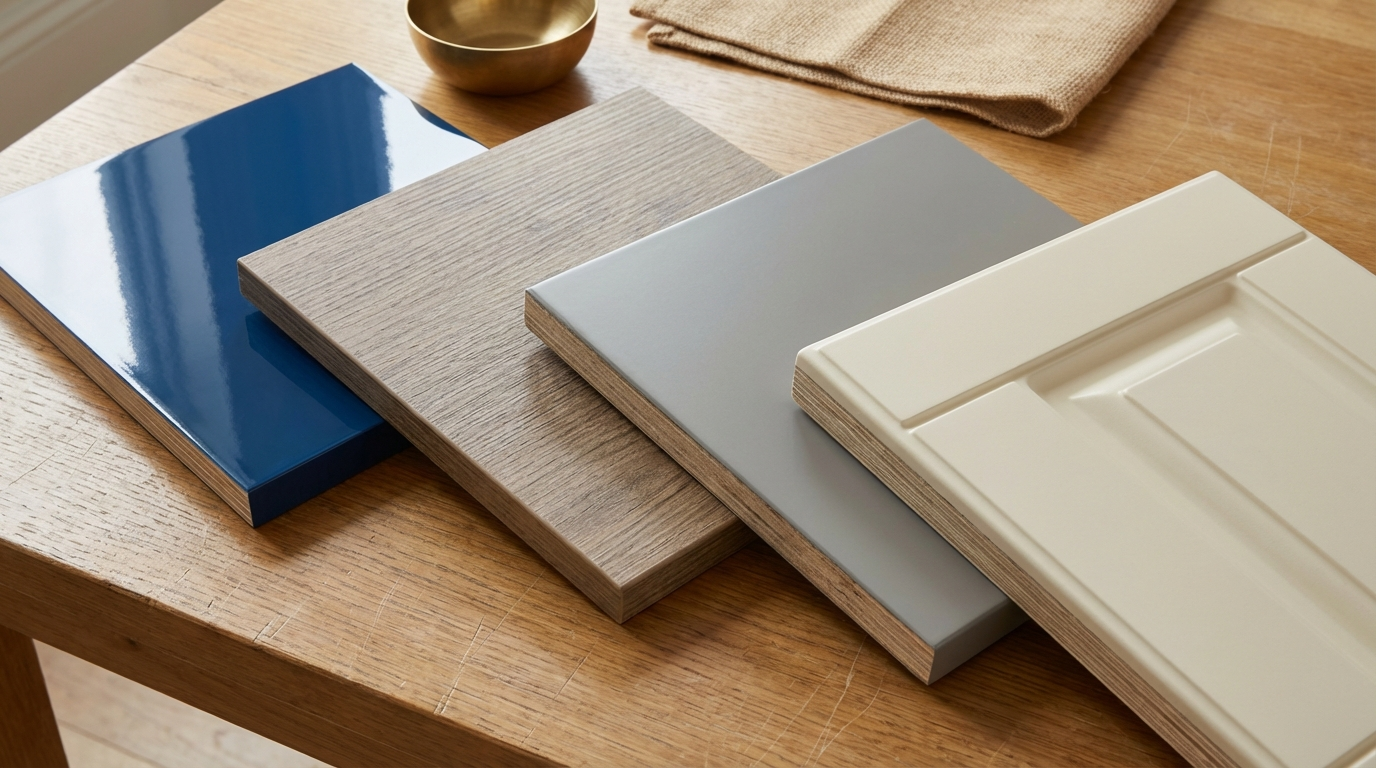
Membrane shutters are made by wrapping a PVC foil (membrane) over MDF or HDF boards using heat and pressure. This creates a seamless, smooth finish that can mimic wood grains, matte textures, or solid colors. Acrylic shutters use a high-gloss acrylic sheet that is either pasted or laminated onto MDF, HDF, or plywood boards. These shutters are known for their mirror-like shine, modern appeal, and bold color options.
Most people think the material is the shutter. Actually, no. The "material" everyone talks about—acrylic, laminate, membrane, PU—is just the finish on top. The actual shutter is the substrate underneath: MDF, HDHMR, HDF, or plywood. This matters because a fancy acrylic finish on cheap MDF will still fail if that MDF swells up near your sink.
Here's the breakdown in plain terms:
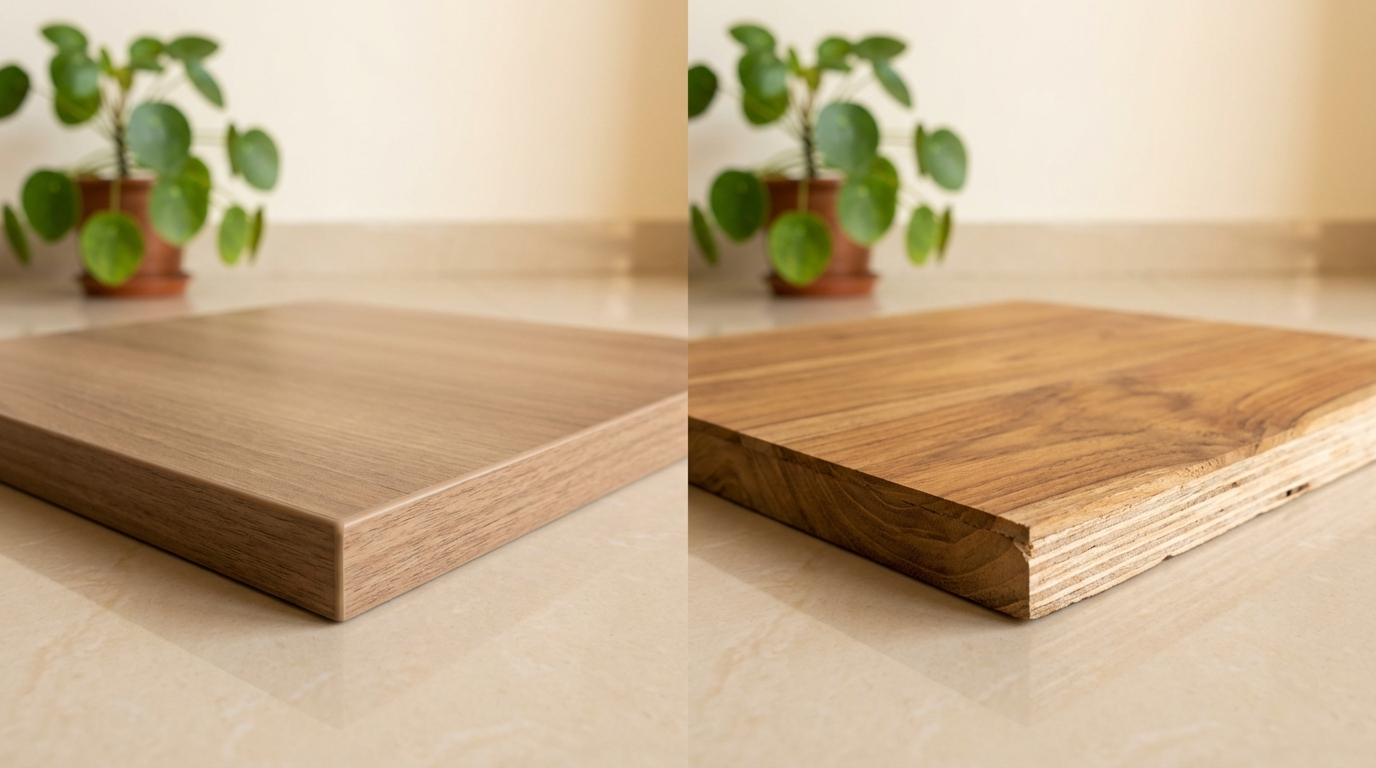
Laminate is a 1mm thick decorative sheet (people still call it "mica" in many parts of India) pressed onto the substrate and edge-banded. Laminate shutters are easy to use as they can be pressed over many kinds of boards. These shutters generally have the longest variety to offer, in terms of finishes as well as colours. Their finishes vary from matt, to emboss to gloss.
Acrylic is also about 1mm thick but it's a plastic sheet (PMMA technically) that gives that deep, mirror-like reflective finish. It gives your kitchen a high sheen. A good quality acrylic shutter has high scratch resistance, and maintains its colour and finish for at least eight years.
Membrane (PVC) is a thin foil, maybe 0.3mm, vacuum-pressed onto the board so it wraps around edges seamlessly. PVC membranes are thin foil sheets that are moulded on plywood or MDF boards. These Kitchen Cabinet Shutters have a smooth finish, and as the membrane flows fluidly over carvings and grooves alike, it offers a seamless finish with high water resistance. Edge-banding is not required as all the edges are sealed by the membrane.
PU (Polyurethane) is essentially spray-painted finish—multiple coats applied directly on the board and then baked or cured. Polyurethane is like melted plastic. It is usually applied as a spray. Once hardened, it forms a strong protective shell over wood. It gives a great shine to wood furniture. Polyurethane finish is hard and durable and is scratch proof.
Is acrylic actually worth the extra cost?
If I'm being honest, for many families—yes, but only if you're doing a kitchen you plan to keep for 8-10 years. Acrylic gives your kitchen extra glossy finish and its durable product. It is available in variety of plain & sparkling colors, which can easily last for 10 to 15 years. The higher upfront cost balances out when you don't have to replace shutters in year four because the membrane started peeling near your gas stove. But if you're on a tight budget or renting, laminate does the job at half the price.
Why Shutter Material Matters So Much in Indian Homes
Here's what I tell my clients in Mumbai: your kitchen is not a European showroom. You're frying things daily. You've got steam, heat, oil splatter, humidity that hits 85-90% during monsoon. The shutter material has to survive all of this—and still look decent when relatives visit during Diwali.
In places like Chennai or Mumbai, the humidity alone destroys cheap shutters. In Indian kitchens, where heat, moisture, and frequent use are common, finding the right balance between aesthetics and strength is essential. I've seen MDF-based membrane shutters in Thane flats start bubbling within 18 months. The Konkan belt, coastal Karnataka, anywhere near the sea—you need to be extra careful.
Dry cities like Jaipur or Ahmedabad are more forgiving. You can sometimes get away with membrane finishes there. But in Kolkata during the monsoon? Humidity hits 90%+ some days. That's brutal on anything that isn't properly sealed.
Membrane shutters are known to degrade or peel when exposed to excessive heat or water over time. Acrylic shutters, especially when pasted on BWP plywood, are more resistant to heat and moisture, making them ideal for Indian cooking conditions.
And then there's the cooking style. North Indian kitchen with lots of tadka and deep frying? Your shutters near the hob take a beating. South Indian kitchen with steaming idlis every morning? That's moisture hitting the shutters constantly. Acrylic shutters perform better in Indian kitchens due to higher heat, oil, and moisture resistance.
Quick detour: I did a kitchen consultation in Powai back in 2022. The lady had installed membrane shutters—looked fantastic on day one. By the second monsoon, the shutter right next to the chimney had started peeling at the edges. The membrane couldn't handle the heat cycling. Had to replace three shutters. That's roughly ₹15,000-20,000 gone, plus the hassle.
The Four Main Kitchen Shutter Finishes: What Works When
Right, moving on to the actual breakdown. Each finish has its place. Don't let anyone tell you one is universally "best"—that's marketing talk.
Laminate Shutters
These type of finish are very durable finish, used in kitchens and interiors. Laminates of good quality are usually available as a scratch-resistant variant.
Best when: You want maximum color/design options, need durability on a budget, and don't mind the slight visible edge-banding.
Honestly: Laminate is the workhorse of Indian kitchens. Laminate are economical and rough & tough to use. If your budget is low and you want to invest in long lasting material then laminate is the option for you. Most modular kitchen companies push acrylic because the margins are higher, but for everyday kitchens, laminate works. The matte finish versions hide fingerprints better than anything glossy.
Laminate shutters are that they are easy to clean, generally do not loose thier colour over a long period, easy to maintain and are the most affordable as compared to the other finishes.
Acrylic Shutters
Acrylic shutters are all about that glossy, premium look, they instantly make a kitchen feel sleek and modern. Laminates, on the other hand, are the practical choice. They come in endless colours, textures, and handle daily wear and tear without much fuss.
Best when: You want the showroom high-gloss look, have a bigger budget, and are okay with wiping fingerprints regularly.
My take: Acrylic looks stunning. No argument there. Acrylic lends a glossy finish to your kitchen and has a seamless look. This is one of the most sought-after options for kitchen cabinets because of its reflective mirror-like finish. But that mirror-like surface shows every fingerprint, water spot, and smudge. If you have kids touching the shutters constantly, you'll be wiping them down daily. The ultra-matte acrylic options are better for hiding marks but cost more.
Acrylic Shutters are more durable and scratch resistance in comparison to the UV boards. They are also available in ultra matt finish, which provides a striking look and durable quality.
Membrane (PVC) Shutters
A membrane finish, also known as PVC (Polyvinyl Chloride) foil, is a type of surface finish pressed on MDF or other wooden surfaces. It involves using a thermofoil vacuum press machine to heat and press this flexible PVC foil. Unlike all other finishes that use edge bands for the corners, a membrane finish can wrap the complete surface, including the corners, creating a smooth, clean, and perfect finish.
Best when: You want that seamless, no-edge-band look at a mid-range price, and your kitchen isn't directly exposed to heavy heat or moisture.
Between you and me: Membrane gets a bad reputation because people install it in the wrong places. Near a gas stove? Bad idea. Membrane is also a Hi Touch Finish, however the only challenge with Membrane is that it cannot withstand much moisture and over time the membrane starts to peel off. The life of the shutter depends mainly on the quality of the membrane used and the machine and glue used to press the membrane on the HDHMR sheet. But for overhead cabinets or the cabinets on the far side of the kitchen away from heat sources? Membrane looks elegant and costs less than acrylic.
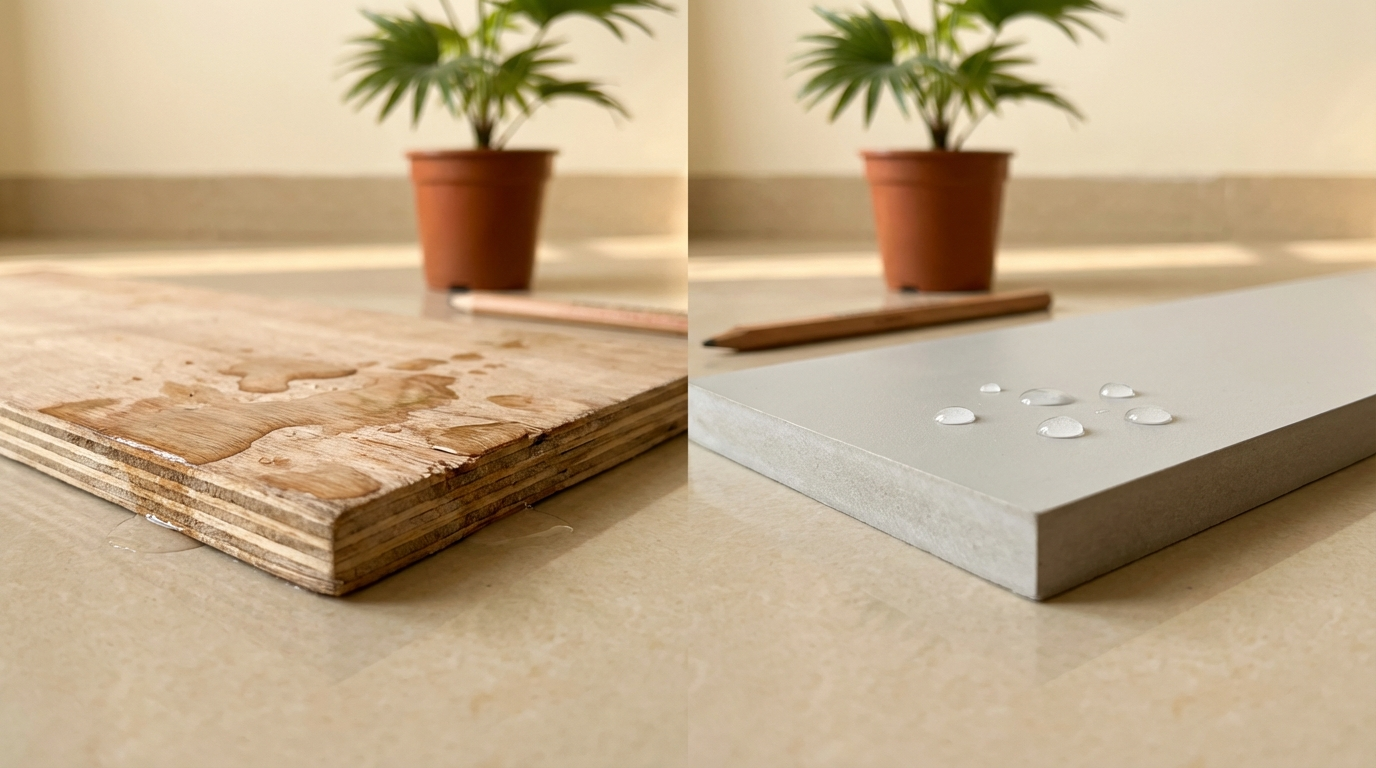
Membrane shutters are water-resistant but not waterproof. If water seeps in at the edges, it can cause peeling over time.
PU (Polyurethane) Finish Shutters
Pu is a wide variety of paint finishes, we recommend the one with high level of coating and proper buffing for good gloss factor. Full form of PU is Polyurethane Paint. This paint is one of the most durable paint for kitchen exterior finish and gives a very near look. PU Paint shutters are clean and neat because it is applied directly on the shutter - there is no pasting etc.
Best when: You want custom colors, curved or profiled shutters (like Shaker-style panels), and you're willing to maintain them carefully.
I've been saying this for years: PU looks incredible when done right—those smooth, seamless edges are hard to match. All the other kitchen shutter finish variants generally have an edgy look whereas, P.U. painting gives a sleek and seamless look to the shutters. But it's high-maintenance. Duco, PU and Wood are all Low Touch Finishes – i.e. a high maintenance, which in turn means that you should avoid it in a high touch area like the Kitchen and if you do end up doing your Kitchen in PU then be ready to maintain it at a very High Standard.
Kitchen Shutter Material Comparison Table
| Parameter | Laminate | Acrylic | Membrane (PVC) | PU Finish |
|---|---|---|---|---|
| Look/Finish | Matte, gloss, textured, wood-look—widest variety | Mirror-like high gloss, premium feel | Smooth, seamless edges, matte or wood-grain options | Smooth, painterly, custom colors possible |
| Durability | Very good; can chip at edges over time | Excellent; scratch-resistant when quality is good | Moderate; peels near heat/moisture over 3-5 years | Good initially; scratches show, needs careful handling |
| Heat Resistance | Good | Good (avoid direct contact with very hot items) | Poor near stoves | Good |
| Moisture Resistance | Good if edge-banded properly | Very good on BWP plywood | Water-resistant but not waterproof | Good |
| Maintenance | Easy—wipe with damp cloth | Shows fingerprints; needs regular wiping | Easy cleaning but avoid abrasives | Needs careful maintenance; scratches visible |
| Price Range (2026) | ₹800-1,500/sq ft (finished shutter) | ₹1,500-2,800/sq ft | ₹1,000-1,800/sq ft | ₹1,800-3,500/sq ft |
| Color Options | Hundreds | Limited compared to laminate | Moderate | Unlimited (custom mixed) |
| My preference | Best value for most kitchens | Best for premium modern look | Okay for wardrobes, careful in kitchens | Best for statement kitchens with high maintenance tolerance |
Price Reality Check: What You'll Actually Pay in 2026
The usual range is ₹1,200–4,000 per sq ft. The lower side covers simple laminates and basic modules, while the higher side includes premium finishes, accessories and branded hardware.
Here's what actually affects your final bill:
The substrate matters as much as the finish. Most kitchen carcasses and shutters use 16mm to 18mm. The choice depends on design span and load requirements. Using HDHMR or BWP plywood adds ₹30-50 per square foot over basic MDF. But this is where you shouldn't cut corners—especially for lower cabinets and anything near water.
Edge banding quality varies wildly. Cheap PVC edge tape costs almost nothing but peels within a year. Good ABS edge banding with proper adhesive adds ₹15-25 per running foot but lasts.
Labor and finish quality differ by city. Same acrylic shutter in Bengaluru might cost 15-20% more than in Pune simply because of labor rates and transport.
Branded vs unbranded: Branded acrylic sheets (think Senoplast, Rehau) cost more but the UV-resistance and color consistency is noticeably better. Unbranded sheets can yellow in 2-3 years, especially near windows.
Budget estimation approach: For a standard 100 sq ft L-shaped kitchen (8-10 feet along each wall), expect roughly:
- Laminate finish (decent quality): ₹1.5-2.5 lakh complete
- Acrylic finish: ₹2.5-4 lakh complete
- Membrane finish: ₹1.8-2.8 lakh complete
- PU finish: ₹3-5 lakh complete
These are all-in numbers including carcass, shutters, basic hardware, installation. Countertop, chimney, hob, appliances extra.
How to Choose Your Kitchen Shutter Material: Decision Framework
Step 1: Check your budget realistically. Not just what you want to spend, but what you can actually spend without cutting corners on the substrate or hardware. A ₹2 lakh budget realistically means laminate—and that's completely fine.
Step 2: Look at where your kitchen is. Ground floor in a high-humidity city? Don't go membrane. Fourth floor in dry Jaipur? More flexibility.
Step 3: Think about cooking intensity. Daily heavy cooking with tadka, frying, steam? Laminate or acrylic on good substrate. Occasional cooking, mostly ordering in? Membrane or PU can work.
Step 4: Consider your maintenance tolerance. Will you actually wipe down glossy acrylic shutters daily? No judgment—I wouldn't either. Be honest with yourself.
| Your Situation | Recommended Material | Why |
|---|---|---|
| Budget under ₹2 lakh, heavy cooking | Laminate (matte) | Best durability-to-cost ratio, hides wear |
| ₹3-4 lakh budget, want premium look | Acrylic | Stunning appearance, excellent long-term durability |
| Mid budget, want seamless edges | Membrane (away from heat) | Good look at lower price, but position matters |
| High budget, want custom design | PU finish | Unlimited color options, curved/profiled shutters possible |
| Rental property, 2-3 year horizon | Basic laminate | No point over-investing |
| Coastal city, very high humidity | Laminate or acrylic on BWP plywood | Membrane will peel; substrate quality critical |
Red flags to walk away from:
- Anyone who insists on MDF substrate for lower cabinets in Mumbai or Chennai
- Membrane shutters offered for placement right next to a gas stove
- Unbranded acrylic at branded prices
- "It's all waterproof"—nothing is fully waterproof, it's always water-resistant with proper sealing
Common Mistakes People Make with Kitchen Shutter Materials
1. Choosing purely on looks, ignoring the substrate. Biggest mistake. Gorgeous acrylic on cheap MDF will swell and fail in humid conditions. Always ask what's underneath. If the quote just says "MDF" without specifying grade, push for details.
2. Placing membrane shutters right next to heat sources. This drives me crazy. While membrane shutters hold up well initially, long-term exposure to heat and moisture (like near a stove or sink) can cause the membrane to peel or bubble. Sharp objects can scratch the membrane surface. I've seen this happen dozens of times. Keep membrane away from your cooking zone—overhead cabinets on the far wall? Sure. Cabinet right next to the hob? Use laminate or acrylic.
3. Skipping edge banding or using poor quality edge tape. The edges of your shutters are where moisture enters. Laminate shutters usually chip in the corners and get damaged when exposed to extreme heat. Proper ABS edge banding with good adhesive is worth every rupee. Don't let your carpenter skip this.
4. Ignoring shutter positioning based on material. Mix finishes wisely: Instead of going for high-end finishes everywhere, reserve premium materials like acrylic or PU for shutters and visible areas. For the insides of cabinets, laminates or economical finishes will do the job just as well. Use acrylic or PU where you see them—upper cabinets at eye level, island fronts. Use laminate for lower cabinets that see more wear and spills. This is how smart interior designers optimize budget.
5. Getting fooled by "waterproof" claims. Nothing is truly waterproof except stainless steel. Everything else is water-resistant with proper sealing. Even BWP plywood will swell eventually if edges aren't sealed and water sits on it continuously.
6. Not considering cleaning habits. Now the real catch? Acrylic looks gorgeous but can show fingerprints and scratches quickly. So, if you want style, go acrylic; if you want easy upkeep, laminates win. If you're not the type to wipe surfaces daily, glossy finishes will frustrate you. Go matte.
7. Believing all membrane shutters are equal. The other option of course is to do the Panel shutter in Membrane but then make sure to use branded shutters from a quality supplier just to ensure that the membrane does not go peeling off in 3 years. Cheap membrane from no-name suppliers uses inferior adhesive that fails fast. The difference in quality between branded and unbranded membrane is massive.
8. Installing PU finish and expecting zero maintenance. if you do end up doing your Kitchen in PU then be ready to maintain it at a very High Standard – to put it in short you cannot have a maid managing your slick PU finish kitchen. PU looks amazing but needs careful handling. Scratches show easily. If you have house help doing kitchen cleaning daily, PU might not be the wisest choice unless they're trained on proper cleaning.
Quality Checks You Can Do Yourself
Visual Checks
- Run your hand along edges—they should feel smooth, not rough or sharp
- Look at corners for any lifting or gaps (common problem with cheap membrane)
- Check color consistency across all shutters—they should match exactly
- Inspect edge banding alignment—gaps between edge band and surface indicate poor workmanship
- For acrylic, check for waviness when light reflects off surface
- For PU, look for orange peel texture or dust particles trapped in finish
Questions to Ask Your Dealer
- "What substrate is this—MDF, HDHMR, or BWP plywood?" (Don't accept vague answers)
- "Which brand is the acrylic/laminate sheet from?" (Ask for samples to compare)
- "What adhesive is used for edge banding?"
- "What's the warranty specifically covering—material failure or general wear?"
- "Can I see the shutters before edge banding and installation?"
Simple Field Tests
- Weight test: HDHMR and BWP plywood feel heavier than cheap MDF. Pick up a sample and compare.
- Tap test: Hollow sound indicates air gaps or poor lamination
- Edge inspection: Press your nail into the edge band—it shouldn't leave a mark easily on good quality ABS
- Flex test: For larger shutters, slight flex is normal but excessive bending indicates thin or poor substrate
Here's a trick most dealers don't like: Ask to see the board before the finish is applied. Any reputable fabricator should be able to show you the raw HDHMR or plywood with brand markings. If they can't, be suspicious.
Workmanship and Installation: What to Tell Your Carpenter
Cutting requirements: Acrylic and laminate need sharp, specialized blades. Regular wood blades chip the surface. If your carpenter says "main kar lunga" with a regular saw, that's a warning sign.
Edge sealing matters more than you think. Edge banding or sealing improves moisture resistance and prevents swelling at cut edges over time. All exposed edges need to be properly edge-banded or sealed. Not just the visible ones—even edges that face walls or inside cabinets. Moisture finds its way everywhere.
Hinge holes and fastener placement: Use cup hinges (concealed hinges), not ordinary piano hinges. Screw sizes matter—too long damages the face, too short doesn't hold. For 18mm shutters, typically 16mm screws for hinges work well.
Installation briefing checklist:
- All edges must be sealed before installation—no exceptions
- Leave 2-3mm gap between shutter and countertop to prevent moisture wicking
- Soft-close hinges adjusted properly so shutters close fully without slamming
- Check alignment after installation—shutters should sit flush and level
- Silicone seal along countertop edge where cabinets meet
- Test all soft-close mechanisms before final handover
Storage and acclimatization: If shutters arrive early, don't stack them flat in a damp room. Store vertically, off the floor, in a reasonably dry space. Membrane shutters especially need protection from humidity before installation.
There was this job in Vikhroli—2023 I think. The carpenter stored the membrane shutters flat on the floor for a week during monsoon before installing. Three of them warped permanently. Complete waste. Properly stored, they would have been fine. Small detail, big consequence.
How Long Do Different Shutter Materials Actually Last?
Here's my honest assessment based on what I've seen over the years:
Acrylic is available in variety of plain & sparkling colors, which can easily last for 10 to 15 years. This matches my observation—good quality acrylic on BWP plywood, properly maintained, can genuinely last 12-15 years looking good.
Laminate: 8-12 years typical lifespan in regular use kitchens. Laminate shutters generally do not lose their colour over a long period. Edges may show wear around year 5-6, but the surfaces stay good if you haven't scratched them with steel wool.
Membrane: 5-8 years is realistic. Membrane shutters work well if you're working with a budget, prefer a soft matte or wood-like look, and don't mind replacing shutters after a few years. Near heat sources, expect issues sooner. Away from heat and moisture, they can last longer.
PU finish: 8-12 years with careful maintenance. The finish itself is durable, but scratches and chips show more easily. If you're hard on your kitchen, expect it to look worn faster.
What affects longevity:
- Cooking intensity and oil exposure
- Humidity levels in your city
- Quality of substrate underneath
- Whether edge banding was done properly
- How you clean—harsh chemicals and abrasives shorten lifespan
Signs of wear to watch for:
- Edge banding peeling or lifting
- Color fading near windows (UV damage)
- Bubbling in membrane near heat sources
- Swelling at bottom edges of lower cabinets
- Yellowing of white/light acrylic surfaces
How long does laminate really last compared to acrylic?
In similar conditions with similar care? Acrylic typically lasts 2-4 years longer and maintains its appearance better. But laminate at half the price lasting 10 years is often the smarter financial choice. Do the math for your situation. If you're planning to redo the kitchen in 8-10 years anyway during a renovation, premium acrylic might not justify the premium price.
Alternatives Worth Considering
If budget is tight: Pre-laminated boards (Prelam) cut to shutter size are an option. Prelam options are not all equal. Choose based on wear level: Wardrobe interiors: standard prelam is often enough. Kitchen shutters: choose better scratch resistance and edge banding quality. The variety is limited but cost savings can be 20-30%.
If you need better moisture resistance: HDHMR boards with laminate finish are the sweet spot for humid cities. For most interior kitchens/wardrobes: HDHMR is often the best balance. Our HDHMR buying guide covers the substrate selection in more detail.
If you want the glass look without glass: Lacquered glass shutters exist but are expensive and heavy. Glass shutters can work really well in Indian kitchens, but the trick is picking the right type. Toughened or frosted glass is a smart choice since it's strong and adds a stylish, airy vibe. They're perfect if you want to display your crockery without making the space feel heavy. The only thing is, glass does catch smudges and grease quickly, so a little extra cleaning is part of the deal. For a display cabinet or crockery section? Consider. For main kitchen cabinets? Too impractical for daily Indian cooking.
The kitchen cabinet material comparison guide covers HDHMR vs plywood extensively if you want to understand substrate options better. And if you're considering shaker-style or profile shutters, the membrane vs PU decision becomes more complex—worth reading about separately.
Frequently Asked Questions
Is it true that membrane shutters peel off within 2-3 years?
Depends entirely on quality and placement. Membrane is also a Hi Touch Finish, however the only challenge with Membrane is that it cannot withstand much moisture and over time the membrane starts to peel off. The life of the shutter depends mainly on the quality of the membrane used and the machine and glue used to press the membrane on the HDHMR sheet. Cheap membrane from no-name suppliers with poor adhesive? Yes, it peels fast. Branded membrane from reputable manufacturers, installed away from direct heat, on HDHMR substrate? Can last 7-8 years without issues. The "membrane always peels" reputation comes from bottom-of-market products being used everywhere.
What if I live in Chennai or Mumbai with very high humidity?
Substrate choice becomes critical. Avoid plain MDF completely for lower cabinets. Use BWP plywood or HDHMR with proper edge sealing. Acrylic shutters, especially when pasted on BWP plywood, are more resistant to heat and moisture, making them ideal for Indian cooking conditions. For finish, laminate or acrylic work well. Membrane is riskier in these conditions—if you must use it, keep it only for upper cabinets far from any water source. And ensure your kitchen has decent ventilation—a good chimney makes a massive difference to humidity levels.
Is it true that PU finish is better than acrylic for durability?
Not really—it's different, not better. PU kitchen cabinets are considered better for high-traffic kitchens due to their superior resistance to scratches and water. They are designed to handle more wear and tear. But in practice, acrylic's hard surface resists scratches better, while PU shows scratches more easily but can sometimes be touched up. For average Indian kitchens, I'd put them roughly equal on durability, but acrylic wins on maintenance simplicity.
Can you use acrylic shutters in bathrooms?
Technically yes, but it's overkill. Acrylic on good BWP plywood handles moisture well, so it'll survive. But for bathroom vanities, marine plywood with laminate finish is usually more practical and cost-effective. The high-gloss look of acrylic gets constantly spotted in a bathroom environment anyway.
Why do carpenters prefer laminate over acrylic?
That said, acrylic gives a great hi gloss finish especially when the shutters are factory made from pre-laminated boards. Pasting of acrylic sheets on board on site is not recommended as this leads to waviness due to non-uniformity of the surface of the board or of the layer of adhesive. Acrylic needs factory-level precision for best results—on-site pasting often creates waviness. Laminate is more forgiving of site conditions. Also, laminate requires less specialized tools to cut and edge. Most local carpenters have worked with laminate for decades; acrylic is relatively newer and some aren't comfortable with it.
Is it true that glossy finishes are harder to maintain than matte?
Absolutely true. Dirt, fingerprints, scratches are easily visible on these glossy finishes. Any high-gloss surface—acrylic, glossy laminate, PU—shows every fingerprint, water spot, and smudge. Matte finishes hide minor marks much better. If you want minimal maintenance, go matte. If you can handle daily wiping and want that dramatic showroom look, go glossy.
What's the actual price difference between laminate and acrylic per square foot?
Acrylic finishes are expensive compared to laminates. They are perfect for big-budget kitchens. Their glossy finish makes them reflective, giving your kitchen a seamless, spacious and clutter-free look. Roughly speaking, acrylic shutters cost 40-60% more than equivalent laminate shutters. On a typical modular kitchen, that translates to ₹50,000-₹1,00,000 difference depending on kitchen size. Worth it if budget allows and you value the aesthetics. Not worth it if that money could go toward better hardware or appliances instead.
Is it true that HDHMR is better than plywood for kitchen shutters?
For shutters specifically, both work well when quality is good. HDHMR stands for High Density High Moisture Resistant board. It is a high-density engineered fiberboard designed to resist humidity better than standard MDF, with improved routing, a more compact core, and better screw holding. HDHMR gives smoother surfaces for acrylic or laminate pasting. BWP plywood has better screw-holding for hinges and handles more structural stress. I'd suggest HDHMR for shutter faces, BWP plywood for carcass and areas with heavy loads. Our plywood comparison guide goes deeper into this.
What happens if water gets behind the laminate edge?
If water seeps past the edge banding and reaches the substrate, that section will swell over time. With MDF, swelling is severe and irreversible. With HDHMR, it's slower but still happens. With BWP plywood, it's more resistant but not immune. This is why proper edge sealing is critical—it's your first line of defense. Once swelling starts, the only fix is replacement.
Can I mix different shutter materials in the same kitchen?
Yes, and it's actually a smart approach. Mix finishes wisely: Instead of going for high-end finishes everywhere, reserve premium materials like acrylic or PU for shutters and visible areas. For the insides of cabinets, laminates or economical finishes will do the job just as well. Use acrylic or PU for the main visible shutters (wall cabinets at eye level, island). Use laminate for lower cabinets that see more wear. Use basic prelam for internal cabinet surfaces. This optimizes budget without compromising on the look where it matters.
Is UV coating on laminate worth the extra cost?
If your kitchen gets direct sunlight, yes. UV rays cause color fading and yellowing, especially on lighter shades. UV-resistant laminates cost maybe 10-15% more but prevent that faded look over years. For kitchens facing north or with limited natural light? Standard laminate is fine.
How often should PU finish shutters be polished or maintained?
PU doesn't need polishing like natural wood. But it does need gentle cleaning—soft cloth, mild soap, no abrasive cleaners. Minor scratches can sometimes be buffed out by a professional, but deep scratches need repainting. Plan for careful handling daily and possibly professional maintenance every 3-4 years if scratches accumulate.
That's the gist of kitchen shutter materials. Whatever you choose, focus on substrate quality first, finish second. And seriously—make sure the edge banding is done properly. That's where most failures start.
Disclaimer: This content is provided for general informational purposes based on industry practices and publicly available information. Product specifications, standards, prices, and availability may vary by manufacturer, region, and time. Readers should independently verify details with manufacturers, dealers, or qualified professionals before making purchase or construction decisions.Want Plywood Suggestions?
Share a few details and a Sainik 710 specialist will suggest suitable brands and connect you to responsive dealers.