WPC Board Guide: What is WPC, Uses, Price & Comparison with Plywood for Furniture
Complete WPC board guide—what it is, uses for doors & furniture, price range. Compare WPC vs plywood for waterproof, termite-free applications in India.
Quick Answer: What is WPC Board and Should You Use It?
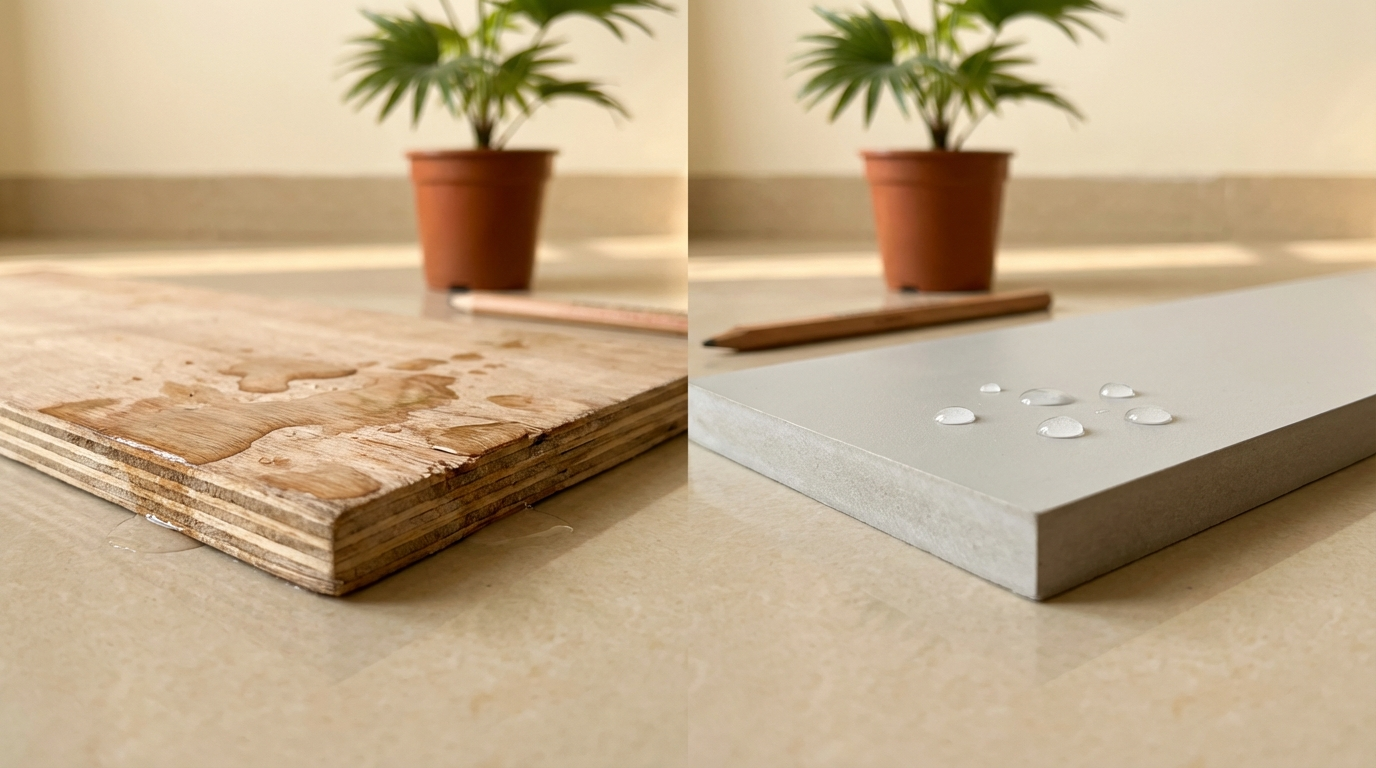
WPC board is a wood-plastic composite material made from wood fibers mixed with thermoplastic polymers—essentially engineered to give you water and termite resistance that plywood simply cannot match.
Short version: WPC (Wood Plastic Composite) boards combine roughly 70% polymer with wood powder and additives to create sheets that won't swell in moisture, won't attract termites, and need almost zero maintenance. They cost more upfront than standard plywood but eliminate most water-damage headaches in bathrooms, kitchens, and coastal homes. For furniture cores, plywood still wins on strength and screw-holding.
This is right for you if:
- Your project involves bathrooms, kitchen sink cabinets, or any area that regularly gets wet
- You live in a humid coastal city and termites have been a nightmare
- Low maintenance matters more than initial cost
- You're building outdoor furniture or balcony cabinets that'll face rain exposure
Skip this if:
- You're making heavy wardrobes with lots of hanging load—WPC doesn't hold screws as well as good plywood
- Budget is tight and the area doesn't face moisture issues
Bottom line: WPC solves specific problems brilliantly—but it's not a universal plywood replacement despite what some dealers claim.
What WPC Board Actually Means
WPC board is a composite material manufactured by combining wood fibers or wood flour with thermoplastics like PVC, polyethylene, or polypropylene. The mixture gets extruded under heat and pressure to form rigid sheets used for furniture, cabinets, and door frames.
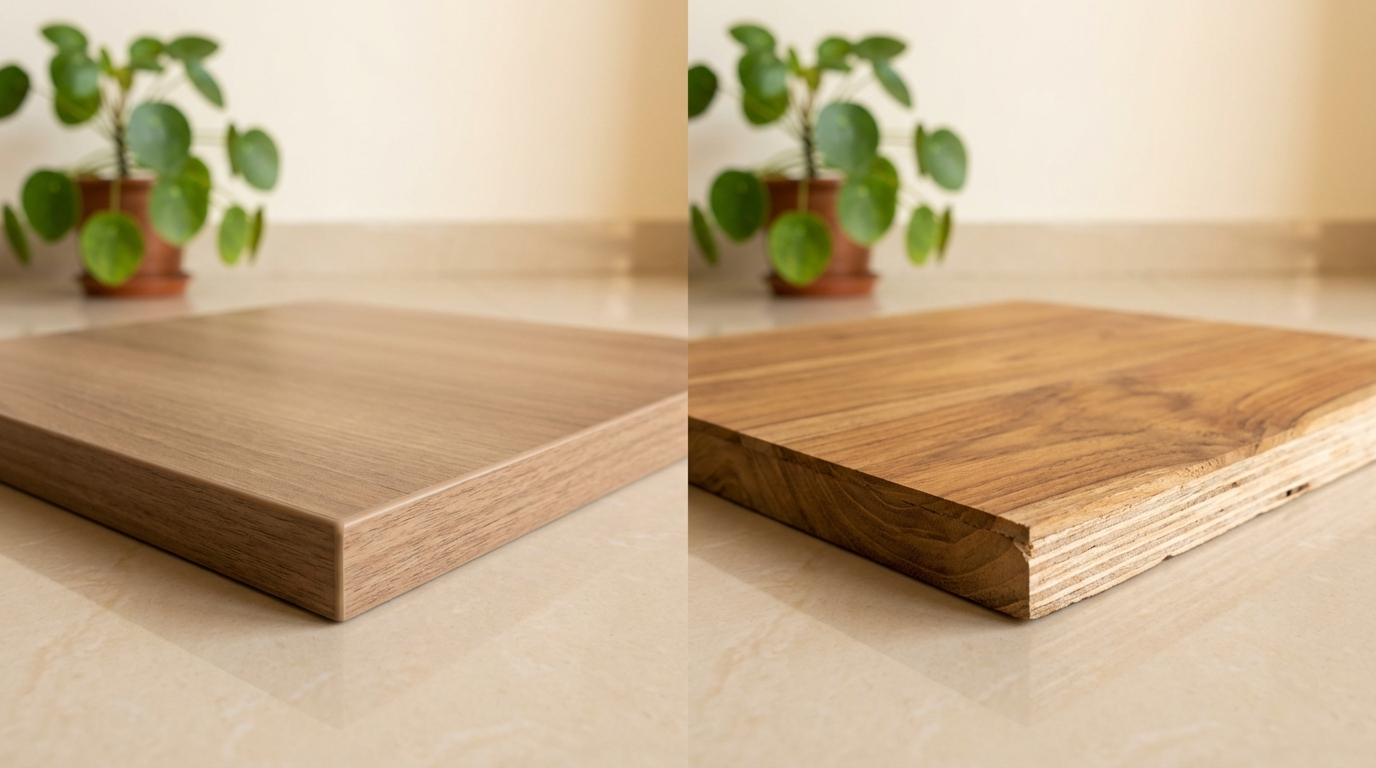
Most people think WPC is just "plastic plywood." Actually, it's closer to a hybrid material with properties neither wood nor plastic has alone. The wood content—usually around 15-30%—gives it some workability with standard tools, while the polymer base delivers the water resistance and termite-proofing.
Here's what threw me off initially when WPC started appearing in Mumbai markets around 2018-2019: the material looks and feels different from anything we'd worked with before. It's denser than MDF, heavier than similar-thickness plywood, and has this slightly slick surface that laminates don't bond to the same way.
The technical composition varies by manufacturer, but most boards run something like this:
- Virgin polymer: 60-70%
- Wood powder/fibers: 15-25%
- Additives (UV stabilizers, fire retardants, binding agents): 10-15%
The density typically sits around 600-650 kg/m³, which makes 18mm WPC sheets noticeably heavier than equivalent plywood. This matters when you're doing large wardrobe carcasses or overhead cabinets.
Is WPC board actually waterproof or just water-resistant?
Properly manufactured WPC is genuinely waterproof in the sense that it won't absorb water and swell like plywood does. I've left sample pieces submerged for weeks with no dimensional change. However—and this is important—the edges and any cut surfaces can still absorb some moisture if not properly sealed. The core material resists water, but machining exposes areas that aren't as protected. So waterproof? Yes, mostly. But don't assume you can skip edge banding in wet areas.
Why WPC Matters for Indian Homes
The humidity situation in most Indian cities makes WPC genuinely useful, not just marketing hype.
In Mumbai during monsoon, indoor humidity regularly hits 80-90% even in AC rooms. Chennai stays humid almost year-round—I've measured 75-85% RH in apartments there during what locals call the "cooler months." Kolkata, especially around Salt Lake and the eastern stretches, sees similar conditions. Even Bengaluru, which people assume is dry, gets surprisingly humid from June through September.
What happens with conventional plywood in these conditions? Even BWR-grade ply—the boiling water resistant stuff—absorbs atmospheric moisture over time. The veneer layers expand slightly, laminates start lifting at edges, and if there's any direct water contact (think below-sink cabinets), you're looking at swelling and eventual delamination.
A kitchen project in Powai taught me this the expensive way back in 2020. Client had used decent-quality BWR plywood for everything, including the sink base cabinet. Within two monsoons, despite the laminate finish, the base had swollen enough that the drawers wouldn't close properly. That was ₹70,000-odd to redo just that section.
Coastal cities face double trouble: high humidity plus salt-laden air. In places like Chennai's OMR corridor or Kochi, the corrosion and moisture damage happens faster than inland areas. Termite pressure is also higher in humid climates—they need moisture to survive, so damp wood becomes a buffet.
Here's where WPC genuinely earns its premium: bathroom vanities, kitchen sink cabinets, balcony storage, shoe racks near entrances. These spots see moisture daily. In my experience, WPC installed in such applications outlasts equivalent plywood installations by 3-5 years minimum, with far less maintenance headache.
Types and Grades of WPC Boards
The WPC market has matured considerably since I first started seeing these boards around 2017. Today, there are meaningful distinctions worth understanding.
By Composition Type
PVC-based WPC: Most common in India. The polymer base is polyvinyl chloride mixed with wood flour. Generally more affordable, reasonably rigid, and works well for indoor applications. My recommendation for bathroom and kitchen cabinet cores.
PE/PP-based WPC: Uses polyethylene or polypropylene as the polymer base. These tend to have better UV resistance, making them more suitable for outdoor or balcony applications. Slightly more flexible than PVC variants. Costs a bit more but worth it for exposed outdoor furniture.
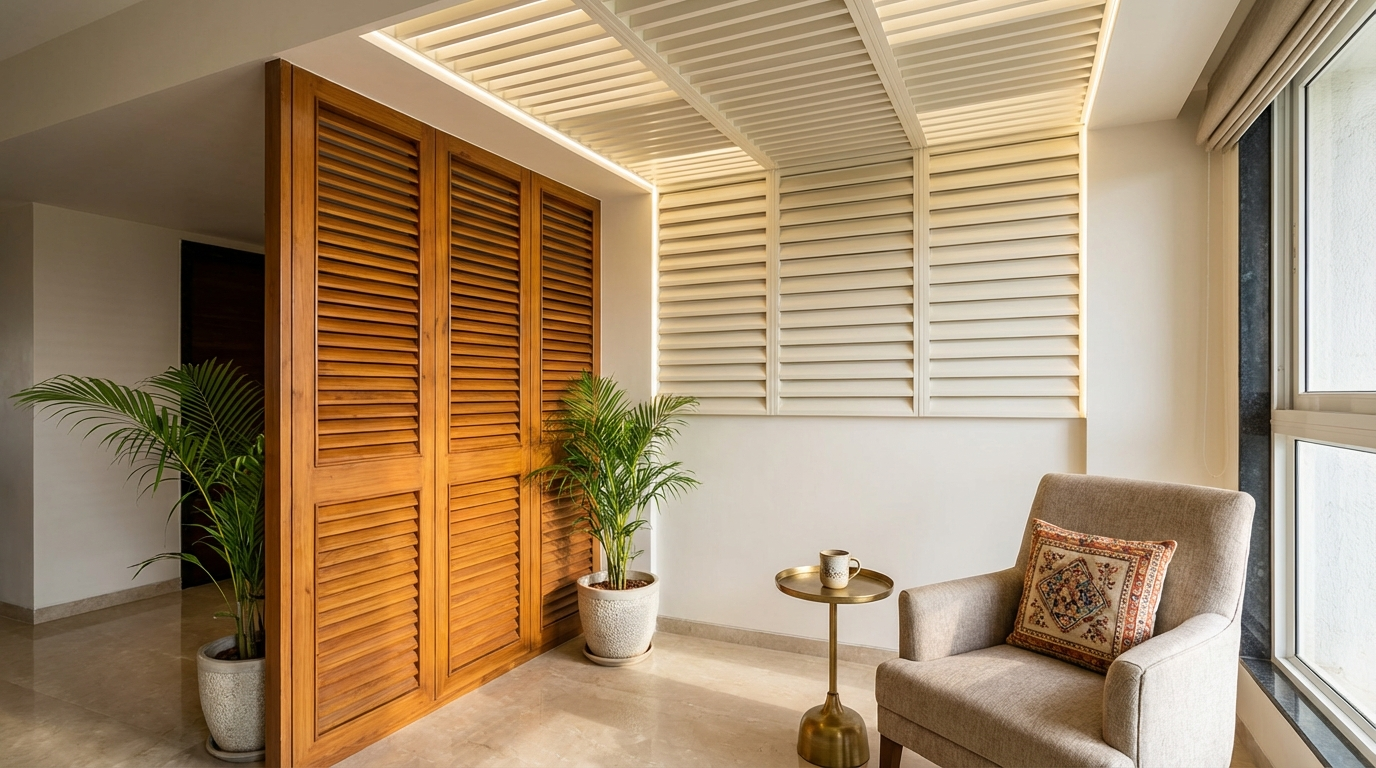
Foam-core WPC: Lighter weight versions with a cellular structure inside. Good for door frames and panels where weight matters. Not as strong for shelving applications—I'd avoid these for anything that needs to carry books or heavy items.
By Density Grade
Higher density generally means better screw-holding and structural strength. Standard WPC runs around 550-650 kg/m³. Premium grades hit 700+ kg/m³. The difference shows up when you're mounting hinges or trying to get screws to hold under load.
By Surface Finish
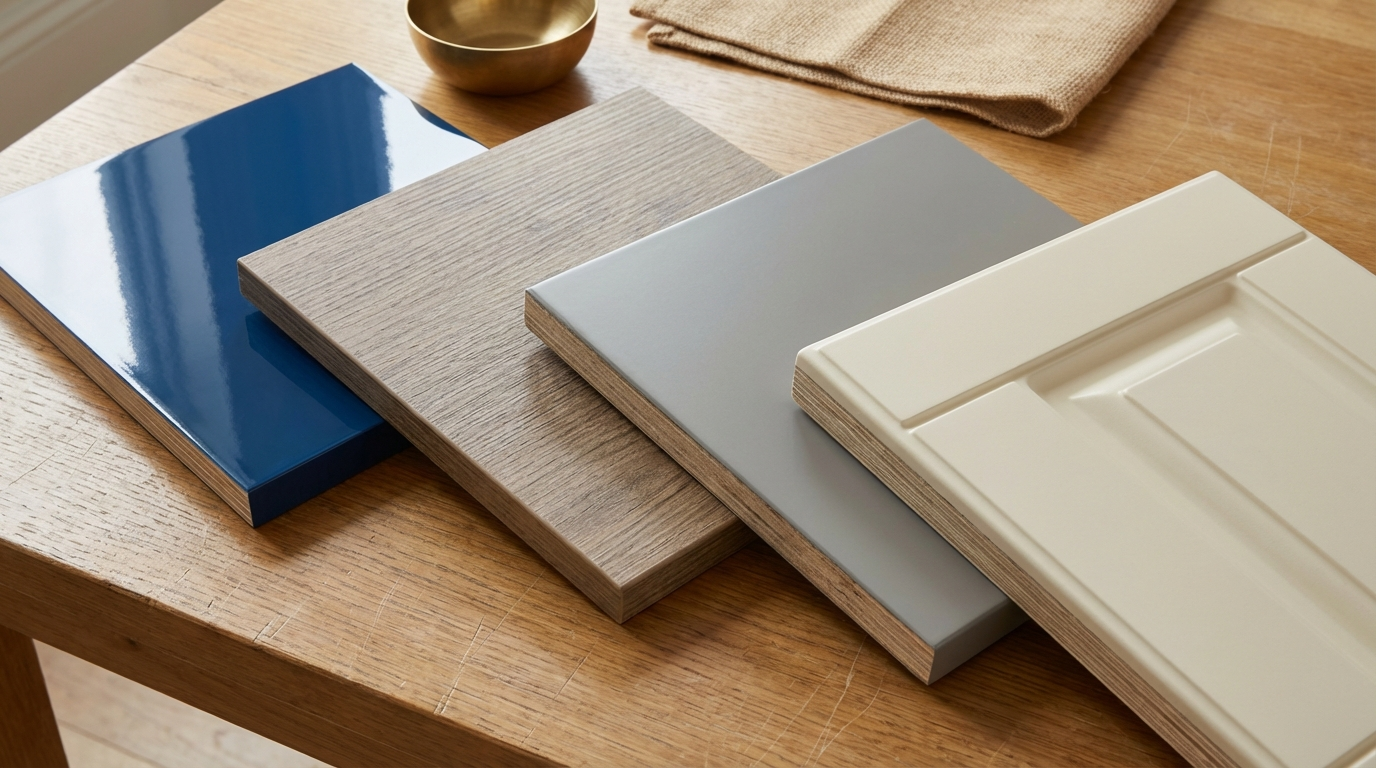
Some WPC boards come pre-laminated or with textured surfaces that mimic wood grain. Honestly, I'm not a huge fan of the pre-finished options—the texture quality varies wildly between manufacturers. Plain WPC that you laminate yourself usually looks better and gives you finish flexibility.
Comparison: WPC Types at a Glance
| Type | Best For | Density Range | UV Resistance | My Take |
|---|---|---|---|---|
| PVC-based WPC | Indoor cabinets, bathroom vanities | 550-650 kg/m³ | Moderate | Your default choice for most furniture |
| PE/PP-based WPC | Outdoor furniture, balcony cabinets, garden elements | 500-600 kg/m³ | Good | Worth the premium for anything that sees sunlight |
| Foam-core WPC | Door frames, lightweight panels, partition walls | 400-500 kg/m³ | Moderate | Useful but limited—don't use for load-bearing shelves |
| High-density WPC | Heavy-use cabinets, commercial applications | 700+ kg/m³ | Varies | Expensive but closest to plywood in structural performance |
Price Reality Check (2026 Market)
If I'm being honest, WPC isn't cheap. Expecting plywood prices and getting WPC quotes shocks most first-time buyers.
Here's roughly what you should expect per 8×4 sheet as of early 2026:
By Thickness:
- 6mm WPC: ₹90-120 per sq ft (useful for backing panels, partitions)
- 12mm WPC: ₹140-180 per sq ft (shutters, lighter cabinet components)
- 18mm WPC: ₹180-240 per sq ft (cabinet carcasses, standard furniture applications)
- 25mm WPC: ₹250-320 per sq ft (heavy-duty applications, countertop bases)
Compare that to BWR plywood at ₹80-110 per sq ft for 18mm and you see the gap. Marine plywood gets closer at ₹120-160 per sq ft, but WPC still commands a premium.
What actually affects your final bill:
Brand reputation matters—established names like Century, Greenply, and Alstone charge 20-30% more than newer entrants. Sometimes justified by consistency, sometimes not. The density grade creates huge price variation even within the same thickness. A 600 kg/m³ board costs noticeably less than a 700 kg/m³ one.
Surface treatment adds up. Pre-laminated WPC costs more than plain sheets but saves lamination labor. Do the math for your specific project.
Regional availability affects pricing too. Mumbai and Bengaluru have better WPC supply chains than tier-2 cities. I've seen 15-20% markup in places where dealers have to specially order the material.
How much does a typical bathroom vanity cost in WPC vs plywood?
For a standard 4-foot bathroom vanity with mirror cabinet above, WPC material cost runs roughly ₹8,000-12,000 for the boards alone. Equivalent in BWR plywood: ₹5,000-7,000. But here's what dealers don't emphasize—the maintenance cost over five years. Plywood in bathroom conditions typically needs edge re-sealing, possibly laminate repair, and in some cases complete replacement of swollen sections. WPC just... sits there. Works fine. The total cost of ownership over 8-10 years often favors WPC despite the higher upfront number.
WPC vs Plywood: Direct Comparison
This is the question everyone asks, and honestly, the answer frustrates people because it's genuinely "it depends."
| Parameter | WPC Board | BWR/BWP Plywood | My Preference |
|---|---|---|---|
| Water Resistance | Excellent—won't swell or delaminate | Good but degrades over time with repeated exposure | WPC wins clearly |
| Termite Resistance | Completely immune | Treated ply resists but not 100% | WPC |
| Screw Holding | Moderate—needs pilot holes, can strip | Excellent—grips well even in edges | Plywood, hands down |
| Weight | Heavier (18mm sheet ~40-45 kg) | Lighter (18mm sheet ~30-35 kg) | Depends on application |
| Flexibility | Rigid, can crack if bent too much | More forgiving, slight flex OK | Plywood for curved work |
| Surface Finish Options | Takes laminate but adhesion needs attention | Excellent laminate adhesion | Plywood slightly better |
| Price (18mm) | ₹180-240/sq ft | ₹80-160/sq ft | Plywood cheaper |
| Lifespan in Wet Conditions | 15-20 years with basic care | 8-12 years, more with good sealing | WPC for moisture areas |
| Eco Credentials | Mixed—plastic content complicates recycling | Renewable wood source if FSC certified | Depends on priorities |
Choose WPC when: The application involves regular water exposure, you're in a termite-prone area and don't want to gamble, or maintenance access will be difficult (like built-in bathroom cabinets behind tiles).
Choose plywood when: You need strong screw-holding for hinges and hardware, you're building heavy wardrobes with lots of hanging load, budget matters and the area stays reasonably dry, or you need slight flex tolerance.
The trade-off in plain terms: You gain peace of mind about water and termites. You lose some structural strength, especially at edges and fastening points. For a kitchen sink cabinet? WPC every time. For a master bedroom wardrobe? Plywood makes more sense unless you're in a waterfront apartment with extreme humidity.
How to Choose: Decision Framework
Rather than vague advice, here's how I actually help clients decide:
Step 1: Identify the water exposure level. Daily splash zone (bathroom vanities, kitchen sink cabinets)? WPC. Occasional humidity (bedroom, living room)? Plywood usually fine.
Step 2: Check the load requirements. Bookshelves holding 30kg+ per shelf? Plywood. Light storage, clothes, utensils? Either works.
Step 3: Assess termite history. Previous infestations in the building? WPC for ground-floor and cabinet-base applications. No history and proper building treatment? Plywood acceptable.
Step 4: Calculate the long game. If you're selling the flat in 3 years, maybe cheaper plywood makes sense. Staying 10+ years? WPC's durability math works out.
Step 5: Match to your carpenter's comfort. Some older mistris really struggle with WPC—different cutting feel, fastening approach. If your guy hasn't worked with it before, account for learning curve or find someone experienced.
Decision Matrix
| Your Situation | Recommendation | Why |
|---|---|---|
| Bathroom vanity under 3 feet wide | WPC, 18mm | Daily water, high humidity, low load |
| Kitchen sink base cabinet | WPC, 18mm | Most water-damaged spot in any kitchen |
| Kitchen upper cabinets | Either—plywood usually fine | Less water exposure, need good screw-holding for hinges |
| Master wardrobe | BWR plywood | Heavy hanging load, lots of hardware |
| Balcony storage cabinet | WPC with UV-resistant grade | Rain exposure, sun, extreme conditions |
| Door frames in bathroom | WPC or treated wood frame | Constant humidity, termite risk at floor level |
| TV unit in living room | Plywood | Dry area, decorative finish matters, better value |
| Shoe rack near entrance | WPC | Wet shoes, monsoon exposure, termite vulnerability at floor contact |
Exception: High-density WPC (700+ kg/m³) can work for wardrobes if you're absolutely committed to termite-proofing. But you'll pay a significant premium and should still use plywood reinforcement strips at hardware mounting points.
Red flags to walk away from:
- Dealer claims WPC is "exactly like plywood, just better"—it's not
- Unusually low prices (below ₹150/sq ft for 18mm)—quality corners have been cut
- No clear brand or manufacturer information on the sheet
- Claims of "lifetime warranty"—nothing lasts forever, especially outdoors
Common Mistakes People Make with WPC
Using regular wood screws at normal speed: WPC needs pilot holes. Always. I've seen cabinets where the installer just drove screws straight in like plywood—half of them stripped within a year. The material doesn't have wood's natural grab.
Skipping edge banding because "it's waterproof anyway": The flat surface resists water. Cut edges are a different story. They're not catastrophically vulnerable like MDF, but they can absorb moisture over time. A flat in Versova had WPC bathroom cabinets that looked fine everywhere except the edges—that's where the first signs of swelling appeared after four years.
Treating it exactly like plywood during cutting: WPC machines differently. Standard carbide blades work, but you need slower feed rates and proper support near cut lines. Too aggressive and you get chipping on the backside. One carpenter in Thane learned this mid-job—the client's laminate couldn't hide the rough edges on visible panels.
Assuming all WPC is equal: This one really frustrates me. A ₹170/sq ft sheet from an unknown brand is not the same as a ₹220/sq ft sheet from an established manufacturer. The polymer quality, wood fiber consistency, UV additives—all vary wildly. I've seen cheap WPC crack and fade within two years outdoors.
Not accounting for weight in upper cabinets: WPC is 20-30% heavier than similar plywood. Overhead kitchen cabinets in WPC stress wall fixings more. Use proper wall plugs, distribute loads, and don't skip the back panel thinking it's unnecessary weight.
Installing without acclimatization: WPC expands and contracts with temperature changes. Not as much as wood, but enough to matter. Boards stored in a cool godown going straight into a hot site can cause fitting issues. Let material sit for a day or two in the installation environment.
Using contact adhesive alone for lamination: This works on plywood. On WPC's smoother surface, you'll get better results with PU adhesive or at least priming the surface before contact cement. Two projects taught me this—laminate lifting after 18-24 months, both times on WPC with contact adhesive only.
Ignoring the temperature limitation: WPC can soften and warp under sustained high heat. Not a problem for most furniture, but don't use it as the base for anything that'll sit next to an oven or hob without adequate heat shielding.
Quality Checks You Can Do Yourself
Visual checks at the shop:
- Surface uniformity—run your palm across it. Should feel consistent, no rough patches or dips.
- Edge inspection—look at the cut edge. You should see relatively uniform material, not visible layers or voids.
- Check for warping—lay the sheet on a flat surface if possible. Any noticeable bow or twist is a bad sign.
- Color consistency—if buying multiple sheets, compare them side by side. Batch variation happens.
- Brand and thickness marking—reputable manufacturers mark their sheets. Unmarked boards are suspicious.
- Weight—pick up two competing options. Heavier usually means denser. Under 35kg for an 18mm 8×4 sheet? Probably lower density.
Questions to ask the dealer:
- What's the density rating on this board? (Good answer: 600+ kg/m³)
- Is this PVC-based or PE-based? (Matters for outdoor use)
- What warranty does the manufacturer provide? (Should be in writing)
- Do you have the technical datasheet from the manufacturer?
- How long has this particular batch been in your godown?
Simple field tests:
Tap test: Knock on the surface. Should sound solid and consistent. Hollow spots or varying sounds indicate internal voids or delamination.
Flex test: Apply moderate pressure to the center of a supported sheet. Should feel rigid. Excessive flex suggests low-density or poor-quality polymer mix.
Scratch test: Run a fingernail firmly across the surface. Shouldn't leave an obvious mark. Easy scratching means soft material.
Water drop test: If the dealer allows, drop water on the surface and leave for 5 minutes. Wipe off—no stain or absorption mark should remain.
Warning signs to watch for:
- Strong chemical smell—off-gassing indicates poor manufacturing
- Visibly inconsistent thickness—measure at multiple points if you can
- Surface cracks even before use—stress fractures from poor storage
- Extremely low price—quality WPC costs what it costs
- Reluctance to show manufacturer information
- Damaged edges or corners on multiple sheets—indicates poor handling throughout the supply chain
Here's a trick most dealers don't like: Ask to see the back of a random sheet from the middle of the stack, not the display piece. Display pieces are often the best-looking boards; the real story is in the stack.
Workmanship and Installation
Cutting requirements:
WPC cuts reasonably well with standard circular saw blades, but use tungsten carbide tipped (TCT) blades rated for composites or plastics. Run the saw at moderate speed—too fast generates heat that can slightly melt the polymer content. Support the sheet properly on both sides of the cut to prevent edge chipping.
For curves or intricate cuts, a jigsaw works, but use a fine-tooth blade. Rougher teeth leave visible marks that even laminate won't fully hide.
Edge sealing and banding:
This matters more than most people realize. While WPC core resists water, cut edges expose the wood fiber content. Hot melt edge banding works fine, but ensure good adhesion—some cheaper edge bands don't stick as well to WPC's smoother surface. PVC edge bands (1mm or 2mm) are my preference for bathroom and kitchen applications.
Quick detour: Our edge banding guide for plywood covers adhesive options that also apply here.
Fastener guidance:
Always pre-drill pilot holes. Seriously—I've said this three times now because it's the most ignored advice. Use screws at least 25-30% longer than you'd use in plywood for equivalent holding strength. Coarse-thread screws grip better than fine-thread in WPC. For heavy-duty applications, consider Euro screws or confirmat fasteners designed for engineered boards.
At edges, maintain at least 20mm distance from the edge to prevent cracking. More than you'd need with plywood, but WPC is more brittle.
What to tell your carpenter:
- Pre-drill everything. No exceptions.
- Use TCT blades, moderate feed rate for clean cuts.
- Edge band all visible edges, even in "dry" areas.
- Don't overtighten screws—stop when flush, don't keep driving.
- Leave 2-3mm expansion gap where panels meet walls in large installations.
- Use proper adhesive for lamination—contact cement alone isn't enough, consider PU adhesive or primer first.
Storage and acclimatization:
Store sheets flat, supported across their length. Leaning sheets against walls causes bowing. Keep away from direct sunlight during storage—even indoors, window sun can cause surface temperature differentials.
Let material sit in the installation area for 24-48 hours before cutting and fitting. Temperature equilibration prevents post-installation gaps or tight joints as the material adjusts.
I've seen carpenters skip this acclimatization step and then blame the material when things don't fit perfectly. Installed some bathroom cabinets in Andheri last year—carpenter brought the sheets from a cold warehouse and installed the same day. By the following week, one panel had developed a visible bow. Had to redo that section.
How Long WPC Actually Lasts
In my experience, well-maintained WPC in appropriate applications lasts 15-20 years without significant degradation. That's indoor use with normal humidity and no extreme conditions.
Outdoor applications are different. UV exposure, thermal cycling, and weather extremes reduce lifespan to 8-12 years for standard WPC. Premium UV-stabilized grades do better, maybe 12-15 years, but nothing lasts forever in Indian sun and monsoon.
What affects longevity:
- Quality of the original board—cheap WPC fails faster
- Installation quality—proper edge sealing adds years
- Usage conditions—bathroom vanities see more stress than bedroom furniture
- Hardware quality—good hinges and drawer slides reduce stress on the board
- Maintenance attention—occasional cleaning, checking edge seals
Signs of wear to watch for:
- Surface fading or chalking (especially outdoor applications)
- Edge swelling—first sign that moisture is getting in
- Screw holes becoming loose—indicates the board is degrading around fasteners
- Hairline cracks near edges—stress fractures from thermal cycling
- Laminate lifting—usually means moisture infiltration underneath
When to consider replacement:
If multiple screw points have failed, structural replacement is usually more economical than repeated repairs. Surface issues can often be addressed with re-lamination if the core is still sound. Edge deterioration spreading more than 5mm from the edge typically means the entire panel needs replacement.
How does WPC compare to marine plywood for bathroom use?
Marine plywood (IS 710 grade) is designed for severe moisture conditions and does hold up well in bathrooms. The difference comes down to maintenance and long-term performance. Marine ply still absorbs some atmospheric moisture over years—it's resistant, not immune. WPC has zero absorption. In a 10-year comparison, marine ply often needs edge re-sealing around year 5-6, while WPC typically needs nothing. Initial cost? Marine ply is usually 15-25% cheaper. Total cost including maintenance? Often comparable. My honest take: marine ply works fine in bathrooms if you're diligent about edge sealing during installation and willing to do touch-ups. WPC is the lower-maintenance option.
Alternatives Worth Considering
HDHMR (High Density High Moisture Resistance) boards:
If budget is tight but you still need moisture handling, HDHMR sits between regular MDF and WPC. Costs roughly 30-40% less than WPC while offering decent moisture resistance—not as good as WPC, but significantly better than standard MDF or HDF. Our HDHMR vs MDF comparison guide covers this in more detail. Good middle-ground option for kitchen cabinets where WPC feels too expensive.
Marine plywood (BWP grade):
The traditional choice for wet areas. Proven performance over decades, excellent screw-holding, familiar to all carpenters. Better for structural applications where fastening strength matters. If you need to span larger distances without support, marine ply usually wins over WPC.
PVC boards:
Pure PVC foam boards (no wood content) exist and offer even better water resistance. Useful for certain applications—display boards, signage, partition panels—but terrible for furniture. Can't hold screws at all, too soft for structural use. Don't confuse these with WPC despite the similar naming.
Frequently Asked Questions
Is WPC board good for making full wardrobes?
It's usable but not ideal. The main issue is screw-holding for hinges and internal fittings. Wardrobes have lots of hardware—hanging rods, drawer slides, shelf supports—all requiring secure fastening. WPC can handle this if you use proper pilot holes, longer screws, and possibly reinforcement at high-stress points. But honestly, for a standard bedroom wardrobe without moisture concerns, plywood is still my recommendation. Use WPC for wardrobe bases (floor contact) and plywood for the rest—best of both worlds.
Can WPC be used for modular kitchen carcasses entirely?
Many people do this and it works reasonably well. The sink base cabinet and areas near the dishwasher benefit most from WPC. Upper cabinets can be WPC too, though plywood works fine there since moisture exposure is lower. The weight of WPC upper cabinets does mean better wall fixing is necessary. In my experience, hybrid approaches work best: WPC for everything below counter level, plywood for uppers.
Is it true that WPC is eco-friendly?
This claim gets thrown around loosely. WPC uses recycled wood fibers and doesn't require cutting new trees, which is positive. However, the plastic content complicates recycling at end-of-life. Most WPC boards can't be easily recycled through standard channels. They're not biodegradable either. "Eco-friendly" compared to solid timber harvesting? Somewhat. Eco-friendly in absolute terms? That's debatable. I'd call it "resource-efficient" rather than truly eco-friendly.
What if I live in a coastal city like Chennai or Kochi?
WPC becomes significantly more attractive in coastal areas. The salt-laden air accelerates corrosion and moisture damage on conventional materials. Plywood—even BWP grade—deteriorates faster in these conditions. WPC's complete termite immunity also matters more in humid coastal climates where termite pressure is extreme. For coastal homes, I'd extend WPC use beyond just bathrooms and kitchens to include any furniture within 3-4 meters of windows facing seaward. The premium is worth it.
Can WPC boards be repaired if damaged?
Minor surface damage—scratches, small dents—can be addressed with filler compounds similar to what you'd use on any laminated surface. Deeper damage is harder to fix. Unlike plywood, WPC doesn't sand and refinish well; the composition doesn't behave like wood. For structural damage or significant swelling (rare but possible at unsealed edges), panel replacement is usually necessary. One advantage: replacing a single damaged panel is easier because WPC maintains dimensional stability over time—the replacement piece will match the original dimensions accurately.
Is it true that WPC boards are fire-proof?
Fire-retardant is the accurate term, not fire-proof. Quality WPC boards contain additives that slow combustion and reduce flame spread. They're generally classified as Class B or Class C fire-rated materials—better than raw wood, not as good as gypsum board or cement-fiber panels. In a fire, WPC will eventually burn, but it resists ignition better than plywood and produces less toxic smoke than some plastics. For commercial spaces with fire safety requirements, check the specific rating of the board against local fire codes.
Why do some carpenters refuse to work with WPC?
Old habits, mostly. Carpenters trained on solid wood and plywood find WPC's different characteristics annoying. It doesn't cut quite the same, screws behave differently, and the material is heavier to handle. Some genuinely have had bad experiences with low-quality WPC in the past and now avoid all of it. If your carpenter is resistant, two options: find someone with WPC experience, or have them do a small test piece first. Once they understand the pilot hole requirement and cutting approach, most adapt quickly. The really stubborn ones, well, there are plenty of carpenters in Mumbai.
Can WPC be painted or only laminated?
You can paint WPC, though preparation matters. The surface doesn't absorb paint like wood or MDF does. For painted finishes, apply a PVC primer first, then standard enamel or acrylic paint. Adhesion will be decent but not as permanent as paint on wood. For best results, lamination or pre-finished WPC boards are more reliable. Duco paint finishes work well on WPC with proper priming—several high-end kitchen projects I've consulted on used Duco on WPC successfully.
What thickness of WPC should I use for kitchen shutters?
18mm is standard for kitchen shutters and doors. Some designers use 16mm to reduce weight, which works for smaller shutters (under 400mm width) but can flex on larger doors. For tall units or shutters over 600mm wide, stick with 18mm. Anything below 16mm is too thin—you lose structural rigidity and hinge-holding capacity. Glass-insert shutters might use thicker frames (20-25mm) but that's a specialized requirement.
Is it true that WPC boards expand and contract significantly?
Less than wood, more than steel or glass. Thermal expansion is the main factor—temperature changes cause WPC to expand and contract approximately 0.05-0.07mm per meter per degree Celsius. In practical terms, a 1-meter panel in a room that varies from 25°C to 35°C might change by 0.5-0.7mm. Not huge, but enough to matter in long runs like wardrobe panels spanning 3+ meters. Leave small expansion gaps at fixed points, especially where panels meet walls or structural elements. Most installation problems I've seen trace back to ignoring this.
How does WPC perform in extremely hot climates like Rajasthan?
Hot but dry climates are actually quite manageable for WPC. The material handles dry heat better than extreme humidity. Interior temperatures in Jodhpur or Jaipur don't typically exceed what WPC can handle (softening happens above 70-80°C, which interiors don't normally reach). The bigger consideration in such climates is UV exposure if there's direct sunlight through windows. Use UV-stabilized grades for any furniture in sunlit areas, and you should be fine. Honestly, WPC's termite immunity is valuable in these regions too—dry wood attracts different termite species that can be equally destructive.
Can I use WPC for outdoor garden furniture?
Yes, but choose the right type. Standard PVC-based WPC meant for interior use will fade and potentially crack within 2-3 years outdoors. PE/PP-based WPC with UV stabilizers is designed for outdoor applications and lasts significantly longer—8-10 years with reasonable care. For outdoor furniture like garden benches or balcony seating, specify outdoor-grade WPC and expect to pay more. The alternative—treated wood—requires regular re-treatment every few years; WPC is more hands-off in that regard.
Oh, one more thing—for door frames specifically, our WPC door frame guide covers sizing and installation details that I haven't repeated here.
That's the practical picture on WPC boards. It's a useful material in the right situations, overhyped in others. The dealers pushing "WPC for everything" are usually just chasing margins. But for bathrooms, kitchen bases, and anywhere you're fighting moisture and termites? Genuinely worth the premium. Just make sure your carpenter knows what they're doing. And seriously—edge band everything.
Disclaimer: This content is provided for general informational purposes based on industry practices and publicly available information. Product specifications, standards, prices, and availability may vary by manufacturer, region, and time. Readers should independently verify details with manufacturers, dealers, or qualified professionals before making purchase or construction decisions.Want Plywood Suggestions?
Share a few details and a Sainik 710 specialist will suggest suitable brands and connect you to responsive dealers.