WPC Door Frame: Types, Sizes, Price & Installation Guide for Indian Homes
Complete WPC door frame guide—types, standard sizes, price range & installation steps. Compare WPC vs wooden frame for termite-free, waterproof solution.

Quick Decision Summary
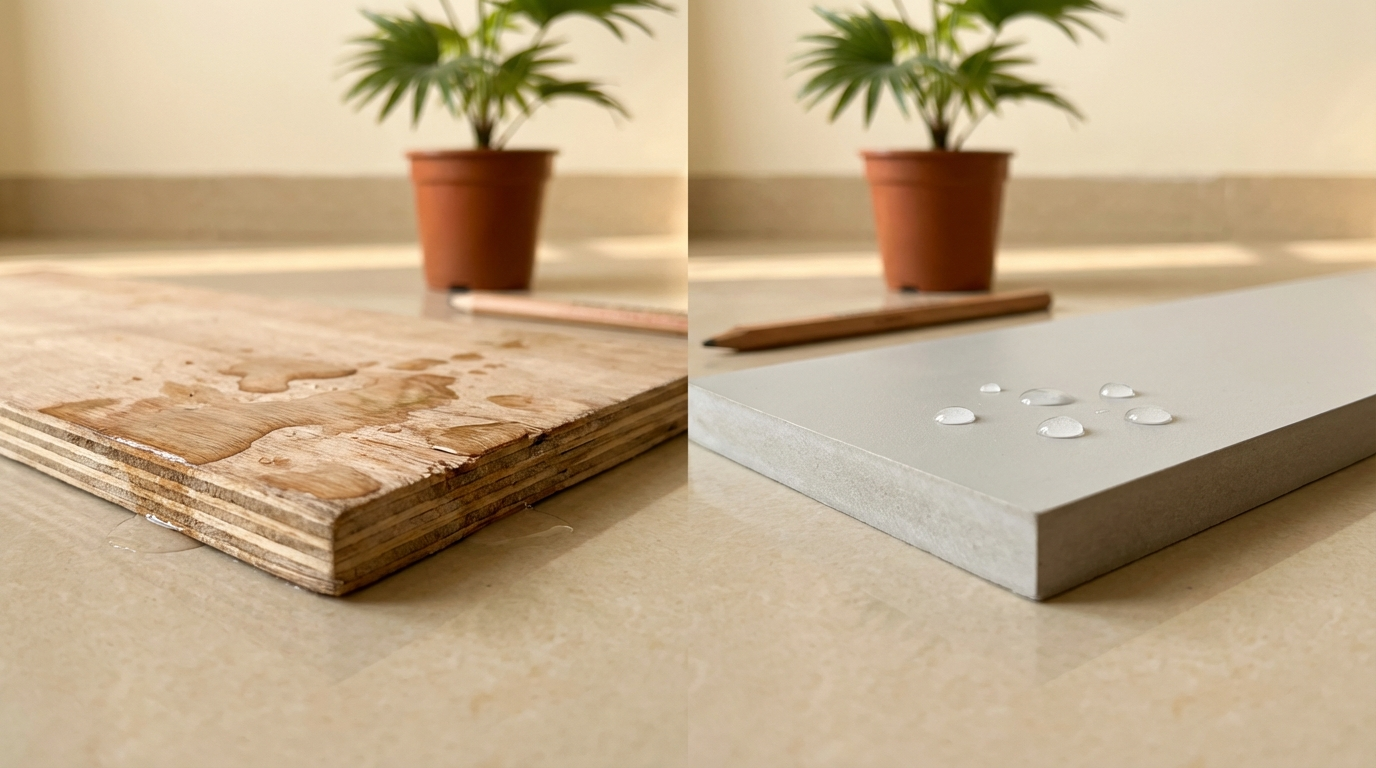
WPC door frames are 100% waterproof, termite-proof composite frames made from wood fiber and thermoplastics, ideal for moisture-prone areas in Indian homes where traditional wooden frames fail within years.
If you're pressed for time: WPC (Wood Plastic Composite) door frames eliminate the two biggest problems Indian homeowners face—termite damage and moisture swelling. They cost more upfront than standard wooden frames (typically 1.5 to 2.5 times) but require zero anti-termite treatment, no repainting, and last 15-25 years without warping. For bathroom doors, kitchen entries, and homes in humid coastal cities like Mumbai, Chennai, or Kolkata, WPC frames are practically essential. For purely interior applications in dry northern cities, quality seasoned wood or engineered alternatives may offer better value.
- Choose WPC door frames if: Your home is in a humid/coastal area, the frame faces a bathroom or wet area, you want zero termite risk, or you're building for long-term rental property with minimal maintenance
- Avoid WPC door frames if: You're on a tight budget and the location is dry interior-only, you prefer natural wood grain aesthetics and can invest in premium teak, or local carpenter availability for WPC installation is uncertain
Key takeaway: WPC frames trade higher initial cost for elimination of India's two worst door frame problems—termites and moisture damage.
What WPC Door Frames Actually Are: Material, Construction, and Grade Logic
WPC door frames are engineered profiles made by combining wood fiber (typically 40-60%) with thermoplastic polymers like PVC or HDPE, creating a composite material that behaves like wood during installation but resists moisture and insects completely. Unlike solid wood that absorbs water and provides food for termites, WPC's plastic matrix encapsulates the wood fibers, making biological attack impossible.
Note: sainik710.com is an independent informational site and is not affiliated with any manufacturer.
The manufacturing process involves heating wood powder and plastic granules together, then extruding them through dies that create the door frame profile. This extrusion method produces frames with uniform density throughout—something impossible with natural wood where heartwood and sapwood have different densities. Better manufacturers achieve densities between 900-1100 kg/m³, which directly affects screw holding capacity and overall durability.
Understanding WPC Grades and Density Variations
WPC door frames in India typically come in two density grades. Standard WPC runs around 850-950 kg/m³, suitable for most residential applications. Premium or "Pro" grade WPC achieves 1000-1100 kg/m³ density, offering superior screw retention and recommended for heavy doors or high-traffic commercial installations. The density difference becomes apparent when you lift two frames side by side—the premium grade feels noticeably heavier for the same dimensions.
Common misconceptions about WPC frames include believing they're hollow plastic tubes (quality WPC is solid throughout) or that they can't hold screws as well as wood (high-density WPC actually outperforms most Indian market sal or pine frames). Some buyers confuse WPC with PVC foam boards, which are entirely different—PVC foam is lightweight, hollow, and unsuitable for load-bearing frame applications.
India-Specific Reality Check: Monsoons, Termites, and Contractor Practices
Indian construction sites present unique challenges that make WPC frames particularly relevant. Monsoon humidity ranging from 70-90% in coastal and eastern regions causes wooden frames to absorb moisture, swell, and eventually warp—often within the first rainy season after installation. Coastal cities like Mumbai, Chennai, Kochi, and Visakhapatnam add salt-air corrosion to the mix, accelerating deterioration of both wood and metal components.
Termite pressure across India is severe. Even in apartment buildings, termites travel through masonry and electrical conduits to reach wooden frames. The standard practice of applying anti-termite chemical treatment provides protection for only 5-10 years, after which retreatment becomes difficult once walls are finished. WPC eliminates this recurring concern entirely—there's simply nothing for termites to consume.
Regional Variations Across India
Frame requirements vary significantly by region. Coastal cities demand 100% waterproof solutions, making WPC almost mandatory for bathroom and external door frames. Humid eastern zones (Kolkata, Guwahati, Bhubaneswar) face similar moisture challenges. Dry northern regions (Delhi, Jaipur, Lucknow) can use wooden frames more safely for interior applications, though termite risk remains. Hill stations with extreme temperature swings need WPC's dimensional stability advantage—wood frames in Shimla or Darjeeling often crack within winters due to humidity cycling.
On-site storage remains a common problem. Wooden frames left uncovered on Indian construction sites absorb moisture, get stained, and sometimes develop fungal growth before installation. WPC frames tolerate such conditions far better, though proper storage under cover is still recommended to prevent surface dirt accumulation.
WPC Door Frame Types: Solid vs Hollow and Profile Variations
WPC door frames come in two primary constructions: solid profiles and hollow profiles, each serving different applications and budget points. Understanding this distinction prevents costly specification errors.
Solid WPC Door Frames
Solid WPC frames are extruded as completely filled profiles with consistent material throughout. They offer maximum screw holding strength, best sound dampening, and superior durability for heavy doors. The higher material content makes them heavier and more expensive, but for main entrance doors or high-security applications, solid profiles are the appropriate choice. Weight typically runs 15-20% higher than equivalent hollow profiles.
Hollow WPC Door Frames
Hollow WPC frames feature internal chambers while maintaining solid outer walls. This design reduces weight by 20-30% and costs by 15-25% compared to solid profiles. The hollow construction is adequate for interior doors, bathroom doors, and anywhere weight reduction matters. However, hinge screw placement becomes critical—screws must engage the solid outer walls, not punch through into hollow chambers. Reputable hollow frames include internal reinforcement ribs at common hinge positions.
| Feature | Solid WPC Frame | Hollow WPC Frame | Best For |
|---|---|---|---|
| Weight | Heavier (3-4 kg/rft) | Lighter (2-2.5 kg/rft) | Solid for security doors |
| Screw Holding | Excellent throughout | Good at outer walls only | Solid for heavy doors |
| Cost | Higher (20-30% premium) | More economical | Hollow for budget projects |
| Sound Insulation | Better mass dampening | Adequate for residential | Solid for bedrooms |
| Thermal Stability | Equivalent | Equivalent | Both suitable |
| Application | Main doors, heavy doors | Bathrooms, internal doors | Match to door weight |
Standard WPC Door Frame Sizes Available in India
WPC door frame sizes in India follow standard dimensional conventions matching traditional wooden frames, ensuring compatibility with standard door shutters. The most common profile dimensions accommodate typical residential and commercial door requirements.
Common Profile Dimensions
Standard width and depth combinations available across most manufacturers include:
- 75mm x 50mm (3" x 2"): Light-duty applications, bathroom doors, store rooms
- 100mm x 55mm (4" x 2.25"): Standard interior doors, bedroom and kitchen entries
- 100mm x 62mm (4" x 2.5"): Most common residential specification
- 125mm x 62mm (5" x 2.5"): Main entrance doors, heavy shutters
- 150mm x 62mm (6" x 2.5"): Commercial applications, double-leaf doors
Frame lengths typically come in 8 feet (2440mm) sections, sufficient for standard door heights. For taller doors or commercial specifications, some manufacturers offer 9-10 feet lengths on order.
How to Calculate Frame Requirement
For a standard single door opening, you need two vertical jamb pieces (each equal to door height plus 50-75mm) and one horizontal head piece (equal to door width plus twice the frame depth plus clearance). A typical 7' x 3' door opening requires approximately 18-19 running feet of frame material. Always order 10% extra to account for cutting waste and potential damage during transport or installation.
WPC Door Frame Price Range and Cost Drivers (2026 Market)
WPC door frame prices in India vary significantly based on density grade, profile size, brand positioning, and regional availability. Understanding these cost drivers helps budget accurately rather than facing surprises.
Indicative Price Ranges by Profile Size
For standard density (900 kg/m³) WPC frames, expect running foot prices approximately in these ranges:
- 75mm x 50mm: ₹160-200 per running foot
- 100mm x 55mm: ₹250-300 per running foot
- 100mm x 62mm: ₹280-340 per running foot
- 125mm x 62mm: ₹350-420 per running foot
- 150mm x 62mm: ₹400-480 per running foot
Premium density (1100 kg/m³) frames command a 15-20% premium over these ranges. Add architrave/moulding costs separately—typically ₹25-45 per running foot depending on profile width.
Why Prices Vary Significantly
Several factors create price variation beyond profile size:
- Density grade: Higher density means more raw material per meter, directly increasing cost
- Brand premium: Established brands with quality track records charge 10-20% more than newer entrants
- City variation: Metro cities with better distribution typically see 5-10% lower prices than tier-2/3 towns
- Quantity discounts: Project-scale orders (50+ frames) can negotiate 8-15% discounts
- Colour/finish: Standard white or wood-grain finishes are base price; custom colours add 10-15%
- Transport: Heavy WPC frames incur significant freight costs from manufacturing clusters
Is WPC Door Frame Worth the Extra Cost?
Compared to treated sal wood frames (typically ₹120-180 per running foot), WPC costs 1.5-2.5 times more initially. However, total cost of ownership favors WPC when you factor in anti-termite treatment (every 5-7 years), repainting (every 3-5 years), and potential replacement due to termite damage or warping. For bathroom door frames specifically, WPC pays back within 5-7 years through avoided repairs and replacements.
Head-to-Head Comparison: WPC vs Wooden Door Frames
The choice between WPC and wooden door frames depends on location, budget, aesthetic priorities, and maintenance willingness. This comparison addresses each factor systematically.
| Parameter | WPC Door Frame | Wooden Door Frame (Sal/Teak) | Verdict |
|---|---|---|---|
| Water Resistance | 100% waterproof, zero absorption | Absorbs moisture, requires sealing | WPC wins decisively |
| Termite Resistance | Completely immune | Requires treatment (sal) or naturally resistant (teak) | WPC wins (except vs premium teak) |
| Dimensional Stability | No expansion/contraction | Seasonal movement 2-5mm | WPC wins |
| Screw Holding | Good to excellent (density dependent) | Excellent (especially teak) | Premium wood slightly better |
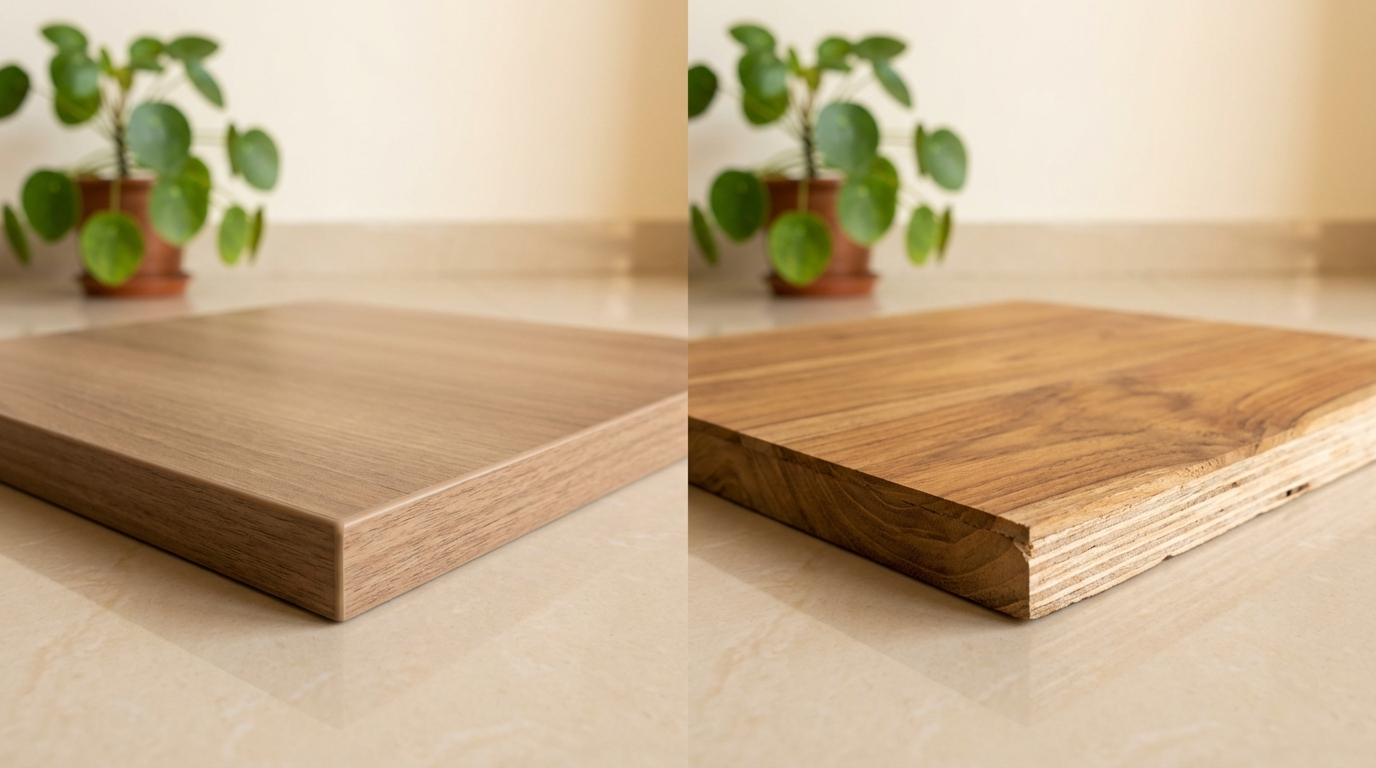
| Natural Aesthetics | Wood-grain texture (simulated) | Genuine wood grain and warmth | Wood wins for purists |
| Painting/Finishing | Comes pre-finished, paint optional | Requires finishing and periodic refinishing | WPC wins for maintenance |
| Initial Cost | Higher (1.5-2.5x sal wood) | Lower (sal) to Higher (teak) | Sal wood cheaper initially |
| Lifetime Cost | Lower (no treatment/repainting) | Higher (ongoing maintenance) | WPC wins over 10+ years |
| Environmental Impact | Recycled wood fiber, partially recyclable | Contributes to deforestation | WPC more sustainable |
| Fire Resistance | Fire retardant grades available | Naturally combustible | WPC (with FR grade) |
Decision Framework: When to Choose What
| Scenario | Recommended Choice | Reasoning |
|---|---|---|
| Bathroom door frame | WPC (mandatory) | Constant moisture exposure destroys wood within 3-5 years |
| Kitchen entry frame | WPC (strongly recommended) | Cooking humidity and occasional splashes |
| Main entrance (ground floor) | WPC or premium teak | Rain exposure risk, security door weight needs good screw holding |
| Interior bedroom door | Either (budget decides) | Low moisture, either performs well |
| Rental property | WPC | Zero maintenance burden on tenants/owners |
| Heritage/traditional aesthetic | Wood (teak preferred) | Natural grain character cannot be replicated |
| Coastal city home | WPC | Salt air accelerates wood deterioration dramatically |
| Budget-constrained dry-climate interior | Treated sal wood | Adequate performance at lower initial cost |
WPC Door Frame Installation: Complete Step-by-Step Process
WPC door frame installation follows a systematic process that differs from traditional wooden frame installation in several critical aspects. Proper installation ensures the frame performs to its full potential without common problems like misalignment or insufficient fixing.
Pre-Installation Requirements
Before installation begins, verify these prerequisites:
- Wall opening dimensions: Check that opening is 10-15mm larger than frame outer dimensions on each side
- Wall surface: Plumb, level, and structurally sound—repair any loose plaster or cracks first
- Frame components: All pieces present—two jambs, one head, architraves, fixing hardware, inner L-corners
- Door shutter ready: Have the door available for fitting alignment during installation
Step-by-Step Installation Process
Step 1: Assemble the frame flat on ground. Most WPC frames come as separate pieces requiring assembly. Place the three frame sections (two verticals, one horizontal) on a flat surface. Insert the manufacturer-provided L-corners at joints to align sections perfectly. Use adhesive (PU adhesive works well) and screws at joints as specified.
Step 2: Pre-mark hinge positions. Before lifting the frame, mark hinge positions on the relevant jamb. Standard three-hinge configuration places hinges at 7", 35", and 63" from bottom for a 7-foot door. Pre-drill pilot holes for hinge screws—critical for hollow WPC frames to ensure screws engage solid material.
Step 3: Position frame in opening. Lift assembled frame and position in wall opening. Use wooden wedges or packers to center the frame with even gaps on all sides. Check plumb (vertical) using a spirit level on both jambs. Check level (horizontal) on the head piece.
Step 4: Secure frame temporarily. Once plumb and level are confirmed, insert temporary screws or clamps to hold position. Do not fully tighten—adjustments may be needed.
Step 5: Test-fit the door shutter. This critical step is often skipped. Hang the door temporarily to verify alignment, clearances, and swing operation. Adjust frame position if needed before permanent fixing.
Step 6: Apply PU foam filling. Spray polyurethane expanding foam into the gap between frame and wall. PU foam serves triple duty: it fixes the frame firmly, provides insulation, and seals against dust/moisture. Do not overfill—foam expands 2-3 times its dispensed volume.
Step 7: Install anchors and permanent fixings. Once foam has cured (typically 4-6 hours), drill through frame into wall at anchor points (typically 4-5 per jamb). Insert wall plugs and drive screws. The foam provides initial grip while anchors provide long-term structural fixing.
Step 8: Fix architraves/mouldings. Apply adhesive to architrave backs and position against wall, covering the frame-wall junction. Some installers also use finishing nails for additional security. Architraves complete the aesthetic finish and hide any PU foam visible at edges.
Can WPC Frames Be Installed by Regular Carpenters?
Yes, but with specific briefing. Most Indian carpenters (mistris) are trained on wooden frame installation, which involves nailing directly into wood. WPC installation requires understanding of pilot drilling, PU foam usage, and screw selection. Brief your carpenter specifically on pilot hole requirements, foam expansion rates, and the importance of not over-tightening screws (WPC can crack under excessive torque). Many WPC manufacturers provide installation training—ask your supplier about this.
Common Buyer Mistakes with WPC Door Frames
Field experience reveals recurring errors that undermine WPC frame performance or value. Avoiding these mistakes ensures you get the full benefit of your investment.
Mistake 1: Choosing Hollow Frames for Heavy Doors
What goes wrong: Hollow WPC frames used with heavy main doors develop hinge screw loosening within 1-2 years, causing door sagging. Why it happens: Hollow frames have limited material at screw engagement points. Heavy doors exert repeated stress that eventually strips the plastic. How to avoid: Match frame type to door weight. Doors over 25-30 kg need solid WPC or reinforced hollow profiles.
Mistake 2: Skipping Pilot Holes
What goes wrong: Screws driven directly into WPC without pilot holes cause surface cracking around screw heads. Why it happens: Unlike wood, WPC doesn't compress easily—displaced material has to go somewhere, creating stress cracks. How to avoid: Always drill pilot holes 70-80% of screw diameter. Use sharp drill bits designed for plastic/composite materials.
Mistake 3: Ignoring Density Specifications
What goes wrong: Lower density WPC (below 850 kg/m³) shows poor screw retention and surface dents from normal use. Why it happens: Price-focused buying without understanding density implications. How to avoid: Ask for density certification. Reputable manufacturers provide density specifications. For door frames, minimum 900 kg/m³ is recommended.
Mistake 4: Over-Tightening Screws
What goes wrong: Excessive torque crushes WPC material around screw, reducing holding power and potentially cracking the frame. Why it happens: Carpenters accustomed to wood apply same force to WPC. How to avoid: Tighten screws until snug, then stop. Consider using torque-limited drivers for consistent results.
Mistake 5: Using Wrong Adhesives
What goes wrong: Regular wood adhesives (fevicol) don't bond well to WPC's plastic surface, leading to joint failures. Why it happens: Assuming WPC behaves like wood in all respects. How to avoid: Use PU adhesive or manufacturer-recommended bonding agents. Clean surfaces with solvent wipe before adhesive application.
Mistake 6: Not Accounting for Thermal Expansion
What goes wrong: Frames installed too tightly in masonry openings bow or crack when temperature changes cause expansion. Why it happens: WPC has higher thermal expansion coefficient than wood. How to avoid: Maintain minimum 5-8mm gap between frame and masonry, filled with flexible PU foam that accommodates movement.
Mistake 7: Buying Without Sample Inspection
What goes wrong: Delivered frames differ in finish, density, or profile from expectations, leading to disputes or compromise. Why it happens: Relying on catalog images or verbal descriptions. How to avoid: Always inspect physical samples before ordering. Check cross-section for uniform density, surface finish quality, and dimensional accuracy.
Workmanship and Installation Tips for Contractors
Professional-grade WPC frame installation requires attention to details that separate lasting installations from problem jobs. These tips address practical concerns contractors face on Indian sites.
Cutting and Edge Sealing
WPC cuts cleanly with standard woodworking tools—circular saws, jigsaws, and hand saws all work. Use fine-tooth blades (24+ TPI) for cleaner cuts with less chipping. Unlike wood, WPC doesn't require edge sealing for moisture protection. However, exposed cuts do look raw—paint or matching laminate tape improves appearance at visible joints.
Hinge Zone Reinforcement
For hollow frames, reinforce hinge zones with solid WPC blocks or hardwood inserts before installation. Mark hinge positions, route out a channel, and glue in reinforcement material. This distributes hinge stress across larger area and dramatically improves long-term performance with heavy doors.
Fastening and Hardware Selection
Use coarse-thread screws rather than fine-thread—they grip WPC better. Stainless steel screws are worth the premium in coastal areas to prevent rust staining. For wall anchors, choose nylon or plastic plugs over metal—they're more forgiving of WPC's expansion characteristics and don't crack the material.
Site Storage Best Practices
Though WPC tolerates moisture, proper storage prevents unnecessary handling damage. Store frames flat on level surface with support at third points to prevent bowing. Keep under cover to avoid dust accumulation and surface staining. Allow frames to acclimatize to site conditions for 24-48 hours before installation—this equalizes any temperature-related dimensional variations.
Carpenter Briefing Checklist
Before your carpenter begins WPC frame installation, ensure they understand:
- Pilot hole requirement for all screws
- PU foam expansion rate (don't overfill)
- Torque limits (snug, not crushed)
- Adhesive type (PU, not fevicol)
- Expansion gap requirement (5-8mm to masonry)
- Support during curing (don't remove wedges until foam sets)
- Surface protection (avoid scratches from tools/equipment)
Quality Checks Without Lab Tests
You don't need sophisticated equipment to assess WPC door frame quality. These field-practical checks help evaluate frames before purchase and after delivery.
Visual Inspection Points
- Surface consistency: Look for uniform color and texture across length. Variations indicate inconsistent raw material mixing.
- Profile straightness: Sight along frame length—any bow or twist indicates poor extrusion control or storage damage.
- Cross-section uniformity: Check cut ends for consistent density. Visible voids, bubbles, or density variations are quality red flags.
- Edge quality: Edges should be crisp and defined, not rounded or rough from poor die maintenance.
- Surface finish: Run hand across surface—it should feel smooth without pits, bumps, or rough patches.
Simple Physical Tests
- Weight test: Compare same-size samples from different suppliers. Significantly lighter samples indicate lower density or hollow construction when solid is claimed.
- Tap test: Tap frame with knuckles. Solid WPC gives dull thud; hollow or low-density material sounds hollow or tinny.
- Flex test: Apply moderate bending pressure across short section. Quality WPC returns to straight; poor material retains bend or shows stress whitening.
- Scratch test: Attempt to scratch surface with fingernail. Good WPC resists scratching; soft surface indicates low-quality compound.
- Screw test: If possible, drive and remove a test screw. Quality WPC grips screw firmly; poor material strips easily or cracks around hole.
Questions to Ask Dealers
- What is the density specification (kg/m³)?
- Is this solid or hollow profile?
- What warranty is provided and what does it cover?
- Can I see the cross-section of a cut piece?
- What adhesive and fixing hardware do you recommend?
- Do you provide installation training or support?
- What is your return policy for manufacturing defects?
Warning Signs to Walk Away From
- Dealer cannot provide density specifications
- Cross-section shows visible voids or inconsistent material
- Surface has visible defects being sold as "minor"
- Price is significantly below market range (indicates quality compromise)
- No warranty documentation available
- Different batch samples show obvious color/finish variations
Environmental and Sustainability Considerations
WPC door frames offer genuine environmental advantages over traditional wooden frames, though the picture is nuanced. For environmentally conscious buyers, understanding these factors helps make informed choices.
WPC utilizes wood fiber that's often sourced from sawmill waste, furniture manufacturing offcuts, and recycled wood—materials that would otherwise be burned or landfilled. This reduces pressure on forests compared to solid wood frames that require fresh timber harvesting. The plastic component is increasingly being sourced from recycled plastics in better-quality products.
At end of life, WPC is partially recyclable—it can be reground and used in lower-grade products. However, the wood-plastic combination makes full recycling more complex than single-material products. WPC doesn't biodegrade naturally, so landfill disposal isn't ideal. Still, considering the 15-25 year lifespan and avoided forest impact, the overall environmental footprint compares favorably to repeatedly replaced wooden frames.
Is WPC Door Frame Eco-Friendly Compared to Wood?
The comparison depends on your environmental priorities. If forest preservation matters most, WPC wins clearly. If end-of-life recyclability matters most, well-managed wood sourcing might be preferable. For most practical purposes, WPC's long lifespan and use of waste materials make it the more sustainable choice for Indian conditions where wooden frames often fail prematurely.
Frequently Asked Questions About WPC Door Frames
What is the lifespan of WPC door frames in Indian conditions?
Quality WPC door frames typically last 15-25 years in normal Indian residential conditions, significantly outlasting wooden frames in humid or termite-prone areas. The lifespan depends on density grade (higher density lasts longer), installation quality, and exposure conditions. Bathroom door frames see slightly shorter lifespans due to constant moisture cycling, while interior bedroom door frames can exceed 25 years. Unlike wood, WPC doesn't have a degradation curve that accelerates over time—performance remains consistent throughout its service life until eventual material fatigue.
Can WPC door frames be painted or polished?
Yes, WPC door frames accept paint well, though they don't require painting for protection like wood does. If you want to change colors or match specific décor, use primer designed for plastic surfaces followed by acrylic or PU-based paints. Polish or clear coat application is possible but less common since WPC comes with factory-finished surfaces in various colors and wood-grain textures. Most homeowners prefer the pre-finished look, painting only when décor changes require it. Avoid oil-based paints which may not adhere well to WPC's plastic content.
Are WPC door frames suitable for main entrance doors?
WPC door frames are excellent for main entrance applications, provided you choose solid profiles (not hollow) with density above 1000 kg/m³. Main doors are typically heavier than interior doors and experience more stress from daily use. The waterproof nature of WPC is particularly valuable for entrance doors that face weather exposure. For security doors weighing over 35-40 kg, ensure the frame includes reinforced hinge zones or use through-bolt hinge fixing rather than screws alone. Many premium WPC frame manufacturers specifically offer main door specifications with enhanced construction.
How do WPC frames perform in extreme heat conditions?
WPC frames handle Indian summer temperatures (up to 45-48°C ambient) without structural issues, though surface temperatures in direct sun can cause minor dimensional changes. The thermal expansion coefficient of WPC is higher than wood, which is why installation guidelines specify expansion gaps between frame and masonry. Well-installed frames accommodate this expansion without visible effects. Color fading under prolonged direct sunlight is possible with lower-quality products—premium WPC includes UV stabilizers that minimize fading. For west-facing openings receiving afternoon sun, confirm UV stabilization with your supplier.
Is WPC door frame fire resistant?
Standard WPC has better fire resistance than wood but is not inherently fireproof. It typically doesn't support continuous combustion—remove the flame source and WPC self-extinguishes. Many manufacturers offer fire-retardant (FR) grade WPC with additives that further improve fire performance. These FR grades meet specific fire safety standards and are recommended for commercial buildings, hospitals, and multi-story residential projects where fire codes apply. For normal residential use, standard WPC's fire behavior is adequate and superior to wooden frames which actively fuel fires once ignited.
Can termites or borers damage WPC door frames at all?
No. WPC is completely immune to termite and borer attack because the wood fiber is fully encapsulated in plastic matrix, making it inaccessible and unrecognizable to insects. Even subterranean termites that build mud tubes across WPC to reach other wood in your home cannot damage the WPC itself. This immunity is permanent—it doesn't wear off like chemical treatments applied to wood. This single advantage often justifies WPC's higher initial cost, especially in ground-floor installations or areas with known termite pressure.
What thickness of WPC door frame should I choose for bathroom doors?
For bathroom doors, the 100mm x 55mm (4" x 2.25") profile is most commonly specified and adequate for standard bathroom doors weighing 15-20 kg. This provides sufficient depth for secure hinge mounting while keeping costs reasonable. If your bathroom door is heavier (solid core, decorative glass panels), consider stepping up to 100mm x 62mm profile for additional screw engagement depth. Hollow WPC profiles work fine for bathrooms since door weights are typically moderate—just ensure hinge positions align with solid sections of the profile.
Do WPC door frames expand and contract with weather changes?
WPC exhibits minimal dimensional change with humidity variations—far less than wood which can move 3-5mm seasonally. However, WPC does respond to temperature changes through thermal expansion, typically 0.5-1mm per meter over a 20°C temperature swing. This is why installation requires expansion gaps filled with flexible material (PU foam) rather than rigid fixing directly against masonry. Properly installed, this expansion is entirely accommodated without visible effects or operational problems. The key advantage over wood is that WPC's movement is predictable and purely thermal, not affected by monsoon humidity.
How does WPC door frame pricing compare to UPVC frames?
WPC and UPVC serve similar purposes but differ in composition and pricing. UPVC (Unplasticized Polyvinyl Chloride) frames are hollow extruded profiles used primarily for windows, though door frame applications exist. WPC is generally 10-20% less expensive than equivalent UPVC frames while offering better screw holding (especially solid WPC) and a more wood-like appearance. UPVC has superior weather sealing properties for window applications but this advantage is less relevant for door frames. For door frame specifically, WPC usually offers better value unless you're matching existing UPVC windows and want consistent appearance.
Can WPC door frames be used for exterior applications?
Yes, WPC frames perform excellently in exterior applications exposed to weather—balcony doors, terrace access doors, external bathroom entries. The 100% waterproof nature makes them ideal where rain exposure is unavoidable. However, choose premium grades with UV stabilization for exterior use to prevent color fading. Surface temperatures on dark-colored WPC frames in direct afternoon sun can become quite hot during peak summer—consider lighter colors for west-facing external applications. Our detailed exterior door material guide covers this application in depth.
What happens if a WPC door frame gets damaged? Can it be repaired?
Minor surface scratches can be addressed with color-matched touch-up paint or wax fillers designed for laminate surfaces. Deeper gouges or cracks are more problematic—WPC doesn't accept wood filler well due to its plastic content. For significant damage, section replacement is usually more practical than repair. This involves cutting out the damaged section and splicing in new material, requiring professional work for invisible results. The good news is that impact damage sufficient to crack WPC would typically destroy a wooden frame completely—WPC's damage resistance means repairs are rarely needed.
Is it true that WPC door frames are completely maintenance-free?
Nearly maintenance-free is more accurate than completely maintenance-free. WPC doesn't need painting, termite treatment, or sealing like wood. Regular cleaning with damp cloth removes accumulated dust. Hinges and other hardware still require periodic tightening and lubrication. Inspect foam seals and architrave joints annually for any gaps that might have developed. Over many years, surface fading may warrant re-painting for aesthetic reasons, though this is optional. Compared to wooden frames requiring treatment every 3-5 years, WPC maintenance is minimal enough that "maintenance-free" is fair description for practical purposes.
Are WPC frames suitable for areas with high humidity like Kolkata or Chennai?
WPC frames are ideal for high-humidity cities like Kolkata, Chennai, Mumbai, and Kochi. The 70-90% relative humidity during monsoon months causes wooden frames to absorb moisture, swell, jam doors, and eventually warp permanently. WPC's zero moisture absorption eliminates these problems entirely. In fact, the humidity argument is strongest for these coastal and eastern cities where WPC's premium over wood pays back fastest through avoided problems. For homes in these regions, WPC should be considered standard specification for all door frames, not just bathrooms.
Can existing wooden door frames be replaced with WPC without major construction work?
Yes, replacement is straightforward if opening dimensions match standard WPC profiles. The process involves removing old wooden frame (including embedded portions in masonry), cleaning the opening, and installing new WPC frame using PU foam fixing method. Minor masonry adjustment may be needed if old frame was significantly different size. Most replacements complete within 3-4 hours per door including new frame installation. The messy part is old frame removal—expect some plaster damage requiring touch-up. Our door frame replacement guide covers the complete process with contractor briefing notes.
Making Your Final Decision
WPC door frames represent a practical material evolution that addresses real problems faced by Indian homeowners—termite damage, moisture warping, and ongoing maintenance burden. The higher initial investment returns value through eliminated treatment costs, avoided repairs, and peace of mind especially in challenging climates.
For bathroom doors and homes in humid regions, WPC is essentially mandatory for long-term satisfaction. For dry interior applications on tight budgets, traditional treated wood remains viable. Premium teak still offers unmatched natural beauty for those prioritizing aesthetics over practicality.
The key is matching your specific conditions—location climate, application type, budget constraints, and maintenance willingness—to the right frame choice. Avoid the extremes of dismissing WPC as "plastic" or treating it as universally superior. Each material has its appropriate application zone.
Get physical samples before ordering, verify density specifications, brief your carpenter on WPC-specific installation requirements, and maintain realistic expectations about both capabilities and limitations. With informed selection and proper installation, WPC door frames deliver excellent value over their multi-decade service life in Indian homes.
Disclaimer: This content is provided for general informational purposes based on industry practices and publicly available information. Product specifications, standards, prices, and availability may vary by manufacturer, region, and time. Readers should independently verify details with manufacturers, dealers, or qualified professionals before making purchase or construction decisions.Want Plywood Suggestions?
Share a few details and a Sainik 710 specialist will suggest suitable brands and connect you to responsive dealers.