Wooden Sofa Design (20+): Styles, Frame Materials, Board Choices + Durability Checklist
Explore 20+ wooden sofa styles and learn the best frame materials, board choices and finishing tips to improve durability in Indian weather conditions.
Quick Decision Summary
For durable wooden sofas in Indian homes, prioritize BWP-grade plywood or seasoned sheesham frames (18-25mm thick) with proper edge sealing and polyurethane finishing to combat monsoon humidity.
If you're in a hurry: Indian climates demand moisture-resistant materials like BWP plywood for frames or reinforcements over cheaper MR grades, paired with solid hardwoods like sheesham or sal for high-stress areas. Opt for 20-25mm thickness in load-bearing parts, reinforced joints, and breathable upholstery fabrics. This setup balances cost, longevity (10-15 years), and style, avoiding warping or termite issues common in coastal or humid regions like Mumbai or Chennai. Always acclimatize materials on-site for 7-10 days before assembly.
- Choose this if: Building for high-traffic living rooms, need modular flexibility, or live in humid/monsoon zones—BWP ply + hardwood combo offers best screw-holding and stability.
- Avoid this if: Ultra-low budget (under basic ranges) or dry interiors only—skip marine ply and use BWR for savings, but reinforce edges heavily.
Design Ideas with Material Choices
Wooden sofa designs blend aesthetics, functionality, and material durability tailored to Indian living spaces. Here are 20+ practical styles grouped by room/use, with recommended frame materials, board thicknesses, and finishes. Focus on 18-25mm thick components for stability, using BWP plywood for moisture-prone areas and hardwoods for visible accents. Typical dimensions range from 1.8-2.4m length for 3-seaters, scaling down for loveseats.
Living Room Classics (High-Traffic Daily Use):
- Classic straight 3-seater: Sheesham frame (solid 25mm legs/arms) + BWP plywood base (18mm); teak veneer finish; suits 2.2m x 0.9m spaces.
- L-shaped sectional (5-7 seater): Sal wood frame + HDHMR panels (19mm) for corners; PU polish; ideal for 3m x 2.5m open plans.
- Low-profile minimalist 2+1 set: Acacia hardwood frame (20mm) + calibrated plywood slats; matte laminate; fits compact 2m walls.
- Chesterfield tufted-back 3-seater: Mango wood frame + BWR ply reinforcements (22mm); leatherette upholstery; vintage vibe for 2.4m lounges.
- Roll-arm traditional: Solid teak frame (25mm) + blockboard seat base (18mm); oil-wax finish; for ethnic decors in 2.1m setups.
Modular/Multi-Use Designs (Space-Savers):
- Sofa-cum-bed (3-in-1): Engineered sal frame + BWP plywood mechanism (25mm thick slides); fabric cover; 2m x 1.5m footprint.
- Recliner single/2-seater: Sheesham frame with HDHMR backrest (20mm); spring-loaded; PU coat for lever zones.
- Corner sofa with storage: Mixed core plywood frame (19mm) + solid acacia drawers; veneer top; monsoon-proof for 2.8m corners.
- Daybed with bolsters: Lightweight sal slats (18mm BWP) + hardwood arms; cotton upholstery; balcony use in 1.9m x 0.8m.
- Modular L with ottoman: Calibrated plywood modules (22mm) + sheesham connectors; easy reconfigure for rentals.
Balcony/Patio Styles (Outdoor-ish Exposure):
- Rattan-weave frame hybrid: BWP plywood core (20mm) + mango wood weave; weather varnish; 1.8m ventilated spots.
- Swing sofa (jhoola-style): Solid teak chains + sal seat frame (25mm); canopy fabric; traditional verandas.
- Futon low-seater: HDHMR frame (18mm) + acacia legs; jute webbing; casual 2m patios.
Premium/Accent Pieces:
- Mid-century curved 2-seater: Teak frame (22mm) + BWP curved panels; walnut veneer.
- Scandinavian slatted-back: Acacia slats (19mm plywood) + sheesham base; natural oil.
- Art Deco high-back: Solid sal with inlays + blockboard (20mm); gloss polish.
- Bohemian pallet-inspired: Mixed plywood pallets (25mm BWP) + reclaimed hardwood; distressed finish.
- Contemporary chaise lounge: HDHMR frame (18mm) + teak arm; modular extensions.
These ideas prioritize Indian room sizes (10-20 sqm living areas) and climates—thicker boards (22-25mm) for kids/pets, lighter (18mm) for guest rooms. Pair with foam density 28-32kg/cum for seats.
What This Actually Means (Grade, Construction, and Use)
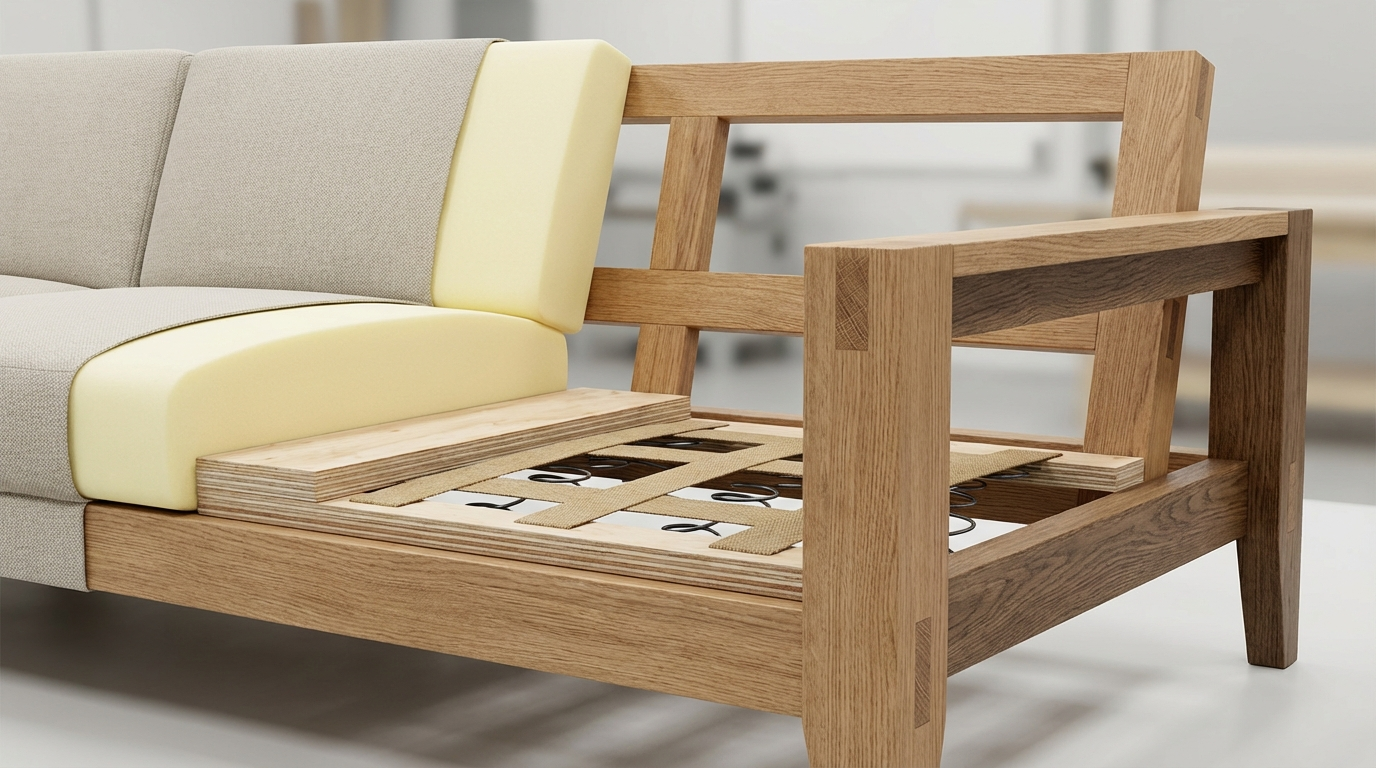
Wooden sofa design refers to upholstered seating with exposed or partially visible wood frames, built for 4-8 person households in Indian homes. Construction involves a load-bearing frame (legs, arms, backrest) from solid timber or engineered boards like plywood/blockboard, topped with webbing, foam, and fabric/leatherette. Grades matter: hardwood frames (sheesham, teak) offer natural strength but vary by seasoning; plywood grades like MR (interior dry), BWR (boiled water resistant for semi-wet), BWP (boiling water proof/marine for high humidity) define moisture tolerance.
Typical build: 20-25mm thick frame rails joined via mortise-tenon or screws/dowels, with 18mm plywood/MDF slats for seat base to prevent sagging. Use cases span daily lounging (3-seaters bear 300-500kg), guest overflow (modular), or accents (balconies). In India, "wooden" often mixes solid for aesthetics and ply for cost/stability—pure solid warps without kiln-drying, while ply needs calibration for flatness. Durability hinges on glue (PF resin best), screw-holding (hardwood cores excel), and finishing (PU/NC lacquer seals pores). Expect 8-15 years lifespan with proper care, less in humid zones without upgrades.
Key parts breakdown: Arms/legs (25mm solid to avoid wobble), backrest (18-20mm ply for flex), seat frame (19mm reinforced). Poor construction shows as loose joints after 2 monsoons or foam breakdown from sweat.
India-Specific Reality Check (Moisture, Termites, and Workmanship)
Indian weather—90%+ monsoon humidity in Kerala/Mumbai, coastal salt air in Chennai, dry heat in Delhi—accelerates wood failures like swelling (MR ply absorbs 20% moisture), warping (unseasoned solid), and termite infestation (softwood cores). Coastal homes see 30% faster delamination without BWP; inland termites target untreated sapwood. Storage mishaps like ground-stacking cause mold; always elevate 6-12 inches, cover loosely.
Contractor practices vary: Tier-1 cities use CNC-cut calibrated ply, but small carpenters rely on manual saws leading to gaps. Common shortcuts: Skipping edge sealing (exposes core to spills), under-sizing frames (18mm everywhere fails under adults), or cheap urea glue (dissolves in humidity). On-site acclimatization (7-14 days at room temp) prevents cupping post-install. Ventilation matters—avoid enclosed cabinets near sofas. Termite-proofing via borate sprays pre-assembly extends life 5+ years; check for ISI-marked treatments. Workmanship red flags: Uneven polish, visible voids when tapped, or weak screw pulls.
Frame Material Options: Solid Wood vs Engineered Boards
Sofa frames demand strength, stability, and climate resilience. Solid woods like sheesham (Indian rosewood) or sal offer superior screw-holding and aesthetics but require 12-18 months seasoning to minimize cracks—unseasoned pieces warp 10-15% in monsoons. Teak excels in premium durability (20+ years) but at higher costs; acacia/mango suit budgets with good density.
Engineered boards shift trade-offs: BWP plywood (hardwood core) resists boiling water (ideal for spills/humidity), calibrates flat for CNC, and halves weight vs solid. Blockboard provides void-free cores for screw zones but swells if edges leak. HDHMR/MDF works for non-load panels but needs lamination. Table below compares for Indian scenarios:
| Material | Strength/Screw Hold | Moisture Resistance | Cost Driver | Best For |
|---|---|---|---|---|
| Sheesham Solid | Excellent (25mm holds 50kg/screw) | Good if seasoned | Thickness + kiln-dry | Visible frames, heavy use |
| BWP Plywood | Very Good (layered glue) | Excellent (marine grade) | Core type + calibration | Humid zones, modular |
| Sal Solid | Good | Fair (needs polish) | Regional sourcing | Budget traditional |
| HDHMR | Fair (dense but brittle) | Good laminated | Thickness | Backrests, accents |
| Blockboard | Good (no voids) | Poor unsealed | Face quality | Seat bases if sealed |
Hybrid wins: Solid legs/arms + ply rails cut costs 20-30% while boosting stability.
Board Choices for Sofa Components and Finishing Tips
Boards fill non-structural roles like seat bases, arm panels, or back slats. BWR (18-19mm) suits interiors; upgrade to BWP (20-22mm) for coastal. Calibrated plywood ensures even upholstery; mixed-core risks gaps under foam. HDHMR handles routing for curves; avoid MDF in wet zones (swells 5-8%). Finishing seals it: PU varnish (2-3 coats) for hardwoods resists scratches; laminates (0.6-1mm) on ply hide imperfections but need edge-banding.
Layering logic: 28-32D foam over 5-7mm felt on ply base prevents bottoming out. Veneers (0.6mm teak) add premium look cheaply. Trade-off: Gloss polish shows dust in Indian homes—matte better. Edge sealing with 2mm PVC/ABF tape stops moisture wicking; skip it, and core delaminates in 1-2 years.
Durability Checklist and Quality Checks You Can Do Without Lab Tests
Pre-buy checklist: Tap frame—hollow thuds signal voids; flex test legs (minimal bend under 50kg); sniff for chemical odors (urea glue). Check calibration (flat edge-to-edge, no waves); moisture content ideally 10-12% (use vendor meter). Ask: Glue type (PF best), seasoning months, termite treatment. Warning signs: Gaps >1mm, uneven faces, sapwood streaks.
On-site: After cutting, inspect core (no crumbly strips); screw test pulls (prime wood holds 40N+). Polish uniformity—no bubbles/orange peel. Post-install: 24hr settle check for squeaks.
Common Buyer Mistakes and How to Avoid Them
1. Picking MR plywood frames: Swells in humidity—avoid by specifying BWR/BWP.
2. Ignoring thickness: 16mm sags fast—insist 20mm+ for seats.
3. Skipping acclimatization: Warps joints—stack indoors 7 days pre-cut.
4. Cheap upholstery over solid base: Foam punches through—use 30D min + ply slats.
5. No edge sealing on ply: Delams edges—apply tape + sealant always.
6. Unseasoned solid wood: Cracks seasonally—demand 12+ months air-dry proof.
7. Weak joinery: Screws loosen—specify dowels + glue in mortise.
8. Termite neglect: Infests in 2 years—pre-treat + elevate off floors.
9. Overlooking load zones: Thin arms fail kids—reinforce 25mm.
Workmanship and Installation Tips
Cutting: CNC for precision curves; manual needs straight edges first. Edge seal immediately post-cut with epoxy + tape. Fastening: 2-3 screws/dowel per joint; pre-drill to avoid splits. Hinges (recliners): HDHMR reinforcements around pivots. Acclimatize full frame 10 days. Install level on even floors; use L-brackets for walls if modular. Upholstery: Stretch fabric taut, staple into ply grooves.
Decision Framework Table
| Your Scenario | Frame Material | Board Thickness | Finish/Extra | Expected Life |
|---|---|---|---|---|
| Monsoon-heavy (Mumbai) | BWP Ply Hybrid | 22-25mm | PU + Sealing | 12-15 yrs |
| Budget Family (Tier-2) | Sal Solid + BWR | 18-20mm | NC Polish | 8-10 yrs |
| Modern Apartment | HDHMR + Acacia | 19mm | Laminate Matte | 10 yrs |
| Coastal Guest | Teak Frame | 20mm Block | Marine Varnish | 15+ yrs |
| High-Traffic Kids | Sheesham Full | 25mm Ply Base | Double Coat PU | 12 yrs |
Use this for quick picks; factor local carpenter skill.
FAQs
Can plywood frames match solid wood durability for sofas? Plywood frames, especially BWP with hardwood cores, often outperform solid in humid India by resisting warping and delamination, provided joints are glued/screwed properly and edges sealed. Solid wood shines in screw-holding for repairs but needs perfect seasoning; hybrids (ply rails + solid accents) give balanced 12-year life in monsoons without high costs.
What's the ideal thickness for wooden sofa seats? Aim for 18-22mm plywood or blockboard bases under foam to prevent sagging under 4 adults; thinner risks bottoming out in 2 years. Reinforce high-stress mid-sections with 25mm for kids/pets, varying by design—L-shapes need thicker corners.
How to termite-proof wooden sofas? Apply borate-based sprays to raw wood pre-assembly, use PF glue (resists insects), and elevate 6 inches off floors. Annual checks in termite-prone North India; BWP ply with treated veneers reduces risks 70% vs untreated solid.
BWP vs BWR for sofa frames—which in coastal areas? BWP handles boiling water and 95% humidity better, ideal for Chennai/Kochi sofas; BWR suffices inland but seals extra. Costlier BWP pays off by avoiding replacements every 5 years.
How long to acclimatize sofa materials on-site? 7-14 days in assembly-area conditions prevents cupping/swelling post-install; stack horizontally, ventilate, avoid direct sun. Crucial in humid Delhi summers or Kerala rains.
Best finishing for Indian dust/humidity? Polyurethane (2-3 coats) on hardwoods/ply seals pores against spills/dust; matte variants hide fingerprints. Laminates add scratch resistance but edge-band meticulously.
Common signs of poor sofa frame quality? Hollow taps (voids), wavy surfaces (poor calibration), loose flex (thin joints), or glue smells (urea). Test screw pull—easy removal means weak core.
Modular wooden sofas: Material tips? Calibrated BWP modules (19-22mm) with dowel connectors for easy shifts; HDHMR for lightweight panels. Ensures flat mating in humid storage.
Solid wood vs ply cost trade-offs? Solid starts higher (thickness/seasoning) but no glue failures; ply saves 25-40% with better consistency. City variation: South cheaper sal, North premium sheesham.
Upholstery impact on frame choice? Heavy leatherette needs 25mm solid for sag resistance; light fabrics allow 18mm ply. Foam density ties in—32D over reinforced bases.
Repairing warped wooden sofa frames? Sand/reset joints if early; replace ply sections easily vs solid re-seasoning. Prevention via proper grades trumps fixes.
Disclaimer: This content is provided for general informational purposes based on industry practices and publicly available information. Product specifications, standards, prices, and availability may vary by manufacturer, region, and time. Readers should independently verify details with manufacturers, dealers, or qualified professionals before making purchase or construction decisions.Want Plywood Suggestions?
Share a few details and a Sainik 710 specialist will suggest suitable brands and connect you to responsive dealers.