Wash Basin Cabinet Design: 25+ Modern Vanity Ideas with Storage for Indian Bathrooms
Explore 25+ wash basin cabinet designs—modern vanity with storage for Indian bathrooms. Waterproof materials, size guide & countertop options for wet areas.
Quick Answer: The Best Wash Basin Cabinet Designs for Indian Bathrooms
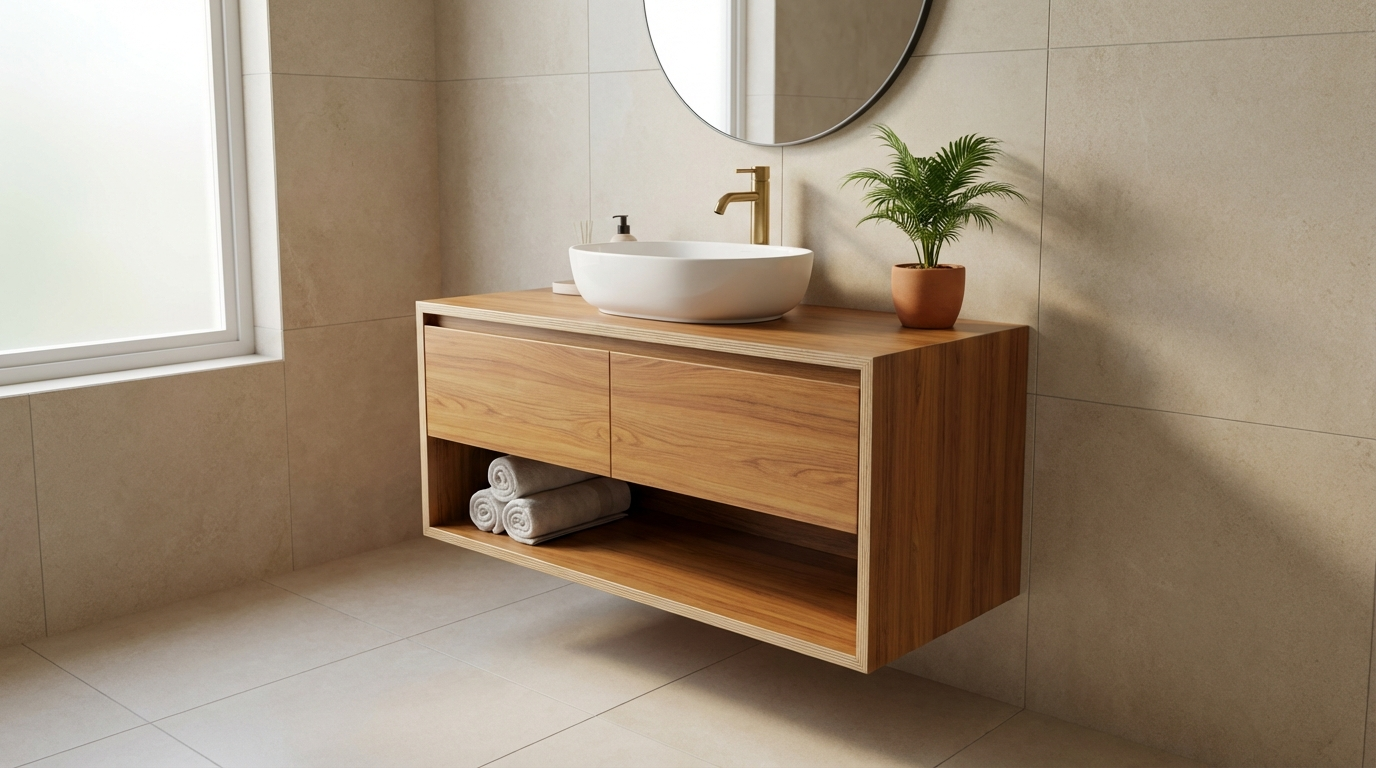
A wash basin cabinet is essentially a vanity unit—a storage cabinet positioned below or around your wash basin that hides plumbing, stores toiletries, and transforms a basic bathroom into something that actually looks designed. Short version: For Indian homes dealing with monsoon humidity and frequent water splashes, you need cabinets built from waterproof materials like BWP plywood, HDHMR, or PVC—not the MR-grade stuff dealers push because it's cheaper. The best designs combine wall-mounted or floating styles with moisture-resistant cores and proper countertop materials like quartz or Corian.
This is right for you if:
- Your bathroom currently has a pedestal basin and zero storage
- You're renovating and want that clean, modern look with hidden plumbing and organized toiletries
- You live in humid cities like Mumbai, Chennai, or Kolkata where MR-grade furniture swells up within two monsoons
- You need practical storage but don't want the bathroom looking like a godown
Skip this if:
- Your bathroom is under 25 sq ft—a cabinet might just crowd the space
- You're renting short-term and can't modify the bathroom
Bottom line: A well-designed wash basin cabinet is the single fastest way to upgrade both the look and functionality of an Indian bathroom—but only if you get the material choice right.
Note: sainik710.com is an independent informational site and is not affiliated with any manufacturer.
What a Wash Basin Cabinet Actually Means
A wash basin cabinet is a furniture unit that integrates storage space with your bathroom sink setup. It typically sits below a countertop-mounted or undermount basin, providing concealed storage for toiletries, cleaning supplies, and bathroom essentials while hiding all the unsightly plumbing. Homeowners are increasingly replacing pedestal basins with cabinet designs that combine practicality and personality, as a stylish wash basin cabinet can anchor a bathroom, add elegance, and keep spaces neat.
Most people think any wooden cabinet can go in a bathroom. Actually, that's the fastest way to ruin ₹30,000. Standard furniture-grade plywood will swell, warp, and delaminate within 8-12 months in Indian bathrooms—especially if you're anywhere on the coast or in a humidity-prone area. The cabinet material needs to be specifically rated for wet environments.
Go for waterproof plywood for fabricating the basic framework of the cabinet—it is the best choice because the material is very stable and highly resistant to moisture. Avoid materials like MDF (medium density fibre). That last part is something I wish more interior designers would tell their clients upfront. MDF looks great in the showroom. Give it two monsoons in a Mumbai bathroom, and you'll see what I mean.
Why This Matters Specifically for Indian Homes
Here's where the climate makes all the difference. Indian bathrooms face unique challenges that vanity cabinets in, say, California or London simply don't. We're talking about relative humidity levels that hit 85-90% during monsoon months in coastal cities. That's not occasional dampness—that's sustained moisture attack on any wood-based product.
In places like Chennai, Mumbai, or Kolkata, I've seen bathroom cabinets fail within the first year when clients used the wrong materials. Moisture is the single biggest enemy of wood and wood-based panels in Indian homes—whether it's the under-sink cabinet in a modular kitchen, a bathroom vanity unit, or storage placed against an outside wall, excess humidity, accidental spills, and slow leaks can compromise both structural strength and surface finish.
Coastal Karnataka, the Konkan belt, humid Bengal—these regions need BWP-grade or marine plywood as a baseline, not a premium upgrade. Meanwhile, drier areas like Rajasthan or interior Maharashtra can get away with HDHMR for vanity shutters, though I'd still recommend BWP for the cabinet base.
And here's something most guides won't tell you: the tile-grout junction where your cabinet meets the floor is a water-trap waiting to happen. That's why floating or wall-mounted designs aren't just aesthetic choices in India—they're survival strategies for your furniture.
Types of Wash Basin Cabinet Designs for Indian Bathrooms
Is a wall-mounted vanity actually better for Indian bathrooms?
Honestly? Yes, for most situations. Wall-hung wash basins with cabinet designs are a good choice for smaller bathrooms since they keep the floor visible, ensuring that space is not wasted. The floating effect makes for an excellent stylistic choice as well—wall-mounted basins paired with floating cabinets feel light and contemporary, without sacrificing storage.
But beyond aesthetics, there's a practical reason: no floor contact means no water damage from mop puddles or splash accumulation. I've seen this make a 5-year difference in cabinet lifespan.
Here's the breakdown of main cabinet types:
| Cabinet Type | Best For | Storage Capacity | Water Resistance | My Take |
|---|---|---|---|---|
| Wall-mounted/Floating | Small to medium bathrooms, modern aesthetics | Moderate | Excellent (no floor contact) | My go-to recommendation for 90% of projects |
| Floor-standing with legs | Large bathrooms, traditional look | High | Good if elevated 4-6 inches | Works if you keep the base off wet floors |
| Corner cabinet | Odd-shaped bathrooms, powder rooms | Limited | Depends on installation | Underutilized option—great for tight spaces |
| Full-height vanity unit | Master bathrooms with space | Maximum | Variable | Overkill for most Indian bathrooms honestly |
| Open shelf + cabinet hybrid | Contemporary designs, display items | Moderate | Mixed | Looks great but needs discipline to keep tidy |
When space is a concern in modern bathroom layouts, corners often offer untapped potential. A corner wash basin with a floating cabinet places your sink diagonally in a corner, instantly freeing up wall space. The floating cabinet underneath adds storage while keeping essentials within reach, and the floor remains clear, making the bathroom feel more extended than it actually is.
Material Selection: What Actually Works in Wet Areas
This is where most bathroom renovations go wrong. Let me be blunt about what I've seen work and fail over 18 years in this business.
Can you use HDHMR for bathroom vanities?
It depends—and this matters. If your project has high humidity and routine splashes but little risk of standing water, HDHMR shines for its surface quality, routing possibilities, dimensional stability, and overall value. It makes shutters and visible panels look premium and last long—provided you edge-seal and elevate modules from wet floors.
But here's the caveat: Marine ply is best for use in boats, exterior furniture, bathrooms, and kitchens with excessive exposure to water. For the cabinet carcass—the structural box that holds everything—I still recommend BWP plywood. Use BWR plywood for the cabinet base, which is resistant to moisture, and HDHMR shutters with high-quality finishes that prevent swelling and warping.
| Material | Water Resistance | Price Range (₹/sq ft) | Best Used For | Avoid If |
|---|---|---|---|---|
| BWP/Marine Plywood | Excellent—boil-proof | ₹70-150 | Cabinet carcass, floor-touching elements | Budget is extremely tight |
| HDHMR | Very good for humidity, not immersion | ₹60-110 | Shutters, visible panels, overheads | Direct water exposure likely |
| PVC boards | 100% waterproof | ₹50-90 | Fully wet areas, budget projects | You want a premium wood finish look |
| MR Plywood | Poor for bathrooms | ₹40-70 | Dry areas only | Any bathroom application—seriously |
| Standard MDF | Terrible | ₹30-50 | Nothing in wet areas | All bathroom use |
HDHMR boards are designed to offer superior moisture resistance compared to regular plywood, making them well-suited for high-humidity environments such as kitchens and bathrooms. But if your project has frequent direct water—leaks, mop puddles, or potential standing water—Marine Plywood (BWP, IS 710) remains the safest structural choice for carcasses and floor-touching elements.
For most Indian kitchens and bathrooms, the smartest path is a hybrid: BWP where the water risk is real and HDHMR where humidity is high but immersion is unlikely. That's exactly what I recommend to clients.
Standard Sizes and Dimensions for Indian Bathrooms
Sizes can get confusing because there's no universal standard. But here's what works for typical Indian bathroom dimensions.
Most Indian homes use basin sizes between 16" and 22", depending on available space. These dimensions strike a balance between comfort and functionality, while maintaining a stylish appearance.
For the cabinet unit itself:
- Width: 18" to 36" for single basins (24" is the sweet spot for most bathrooms)
- Depth: 16" to 20" (deeper cabinets look bulky in small bathrooms)
- Height: Cabinet base height of 28" to 32" from floor to countertop—though this varies based on basin type
The standard height of a wash basin is between 80 to 85 cm (around 32 to 34 inches) from the floor to the top of the basin. This range is considered comfortable for adults and allows convenient use without straining the back or arms.
The standard size of a single bathroom vanity is 30 inches, and it is available in different sizes—32 inches, 35 inches, 42 inches. You can buy according to your bathroom cabinet size.
Quick tip: measure your bathroom door swing before finalizing cabinet depth. I've seen clients install beautiful 22" deep vanities only to realize the door now scrapes against it every time they open it.
Price Reality Check (2026 Market)
Let me give you honest price expectations because online estimates are often outdated or wildly optimistic.
For a basic single-basin vanity unit with storage:
- Budget range (PVC/basic laminate): ₹8,000-15,000 complete with basin
- Mid-range (HDHMR with acrylic/laminate finish): ₹20,000-40,000
- Premium (BWP ply + quartz/Corian top): ₹45,000-80,000+
As of 2025, HDHMR boards are priced moderately higher than standard plywood but typically more affordable than premium marine plywood. Prices for HDHMR boards range from ₹60 to ₹110 per square foot depending on finish and brand, whereas commercial plywood can range from ₹30 to ₹150 per square foot based on quality and type. Marine plywood often costs between ₹70 and ₹150 per square foot.
What actually affects your final bill:
- Cabinet material (BWP vs HDHMR vs PVC)
- Countertop choice (granite is cheaper than quartz, quartz is cheaper than Corian in most cases)
- Basin type (undermount costs more to install than drop-in)
- Hardware quality (soft-close hinges add ₹800-1500 per cabinet)
- Labour and installation (varies wildly by city—Mumbai rates are 30-40% higher than Tier 2 cities)
Countertop Options: What Works Above the Cabinet
The countertop takes the most direct abuse—water splashes, toothpaste drops, makeup stains. Choose wrong, and you'll regret it within months.
| Countertop Material | Pros | Cons | Price Range (₹/sq ft) | My Preference |
|---|---|---|---|---|
| Quartz | Non-porous, stain-resistant, many design options | Can't be repaired if chipped, heat sensitive | ₹250-600 | Best overall choice for bathrooms |
| Corian/Solid Surface | Seamless look, repairable, integrated sinks possible | Scratches more easily, needs proper finishing | ₹650-1000+ | Great for custom designs |
| Granite | Natural beauty, heat resistant, affordable | Needs sealing, porous, can stain | ₹100-300 | Good budget option if sealed properly |
| Marble | Stunning aesthetics | Stains easily, scratches, high maintenance | ₹200-500 | Avoid for high-use bathrooms |
| Laminate | Cheap, easy to replace | Water damage at edges, looks budget | ₹80-150 | Only for very tight budgets |
Corian Quartz is easy-to-clean—it's nonporous, so stains do not penetrate the surface. With proper cleaning, Corian Quartz also resists the growth of mold, mildew and bacteria.
Quartz is an excellent option for long-lasting surfaces, especially for kitchen countertops, bathroom walls and floor, vanity tops and even floorings.
Between you and me, I recommend quartz for most bathroom vanities. It handles the constant water exposure better than granite (no sealing needed), looks more natural than Corian, and sits at a reasonable price point for most renovation budgets.
How to Choose the Right Wash Basin Cabinet: Decision Framework
Step 1: Measure your bathroom precisely. And I mean precisely—wall to wall, door swing clearance, existing plumbing positions. Take photos of current plumbing outlets.
Step 2: Determine your basin type first. Tabletop/vessel sinks need different cabinet heights than undermount. Small bathrooms should opt for small wash basins around 15-20 inches. Wall-mounted or corner basins can be excellent space-saving options.
Step 3: Assess moisture exposure. Is this a master bath with good ventilation, or a windowless common bathroom that stays damp? This directly affects material choice.
Step 4: Budget honestly. Include countertop, basin, faucet, hardware, and installation—not just the cabinet box.
| Situation | Recommended Cabinet Style | Material | Why |
|---|---|---|---|
| Small bathroom (<40 sq ft) | Wall-mounted, compact | PVC or HDHMR | Maximizes floor space, easy cleaning |
| Large master bath | Floor-standing double vanity | BWP ply + quartz top | Space for premium materials, maximum storage |
| Coastal/high humidity area | Wall-mounted | BWP carcass, HDHMR shutters | Elevation prevents water damage |
| Budget renovation | Ready-made PVC unit | PVC | Completely waterproof, affordable |
| Designer/luxury project | Custom floating with integrated basin | BWP + Corian | Seamless look, maximum customization |
Red flags to walk away from:
- Dealer insists MR-grade ply is "fine for bathrooms"—it's not
- No clear answer on what adhesive/glue the cabinet uses
- Cabinet has no provision for ventilation or has a fully sealed base
- Price seems too good to be true (it is)
Common Mistakes People Make with Bathroom Vanities
1. Using MR-grade plywood. This one really frustrates me because it's the most common mistake. MR stands for moisture-resistant, not waterproof. Standard plywood is not recommended for bathrooms. However, marine-grade plywood, which has better moisture resistance, can be used. The ₹5,000 you save on materials will cost you ₹40,000 in replacement later.
2. Ignoring edge sealing. Every cut edge on HDHMR or plywood is a moisture entry point. I've seen carpenters skip this step, and by the next monsoon the laminate is peeling off like old wallpaper.
3. Placing floor-standing cabinets directly on wet tiles. There was this flat in Andheri—beautiful Italian marble floor, expensive teak-finish vanity. Client called me 14 months later. The cabinet base had completely rotted where it touched the floor because water kept pooling there after every shower. Always elevate or go wall-mounted.
4. Choosing style over ventilation. Closed cabinets look sleek, but moisture needs somewhere to go. If you're storing damp towels or sponges inside, you need ventilation holes or open shelving.
5. Not accounting for plumbing access. Your waste pipe will clog someday. If the cabinet design makes it impossible to access the P-trap without dismantling everything, you'll curse that decision during an emergency.
6. Matching bathroom vanity to bedroom furniture. That gorgeous rosewood finish from your wardrobe? It won't survive bathroom humidity unless it's properly sealed marine ply underneath. Aesthetic matching shouldn't override material appropriateness.
7. Skipping the waterproofing around countertop edges. The joint between countertop and wall needs silicone sealing. Water seeps through unsealed gaps and rots the cabinet from above.
8. Oversizing for the space. A 36" vanity in a 35 sq ft bathroom will make it feel like a cupboard. Better to have less storage than a claustrophobic space.
Quality Checks You Can Do Yourself
Visual checks when buying:
- Look at the edge finish—are laminate edges sealed or raw?
- Check inside the cabinet for the core material (should be visible at hinge cutouts)
- Inspect hardware quality—branded soft-close hinges vs generic ones
- Look for ISI markings on plywood if they claim it's BWP grade
- Check if drawers run smoothly and close properly
Questions to ask the dealer:
- "What's the core material—MR, BWR, or BWP grade?"
- "What adhesive is used for laminate bonding?"
- "Is this IS 710 certified marine ply?"
- "What's the warranty, and does it cover swelling from moisture?"
- "Can I see the material spec sheet?"
Simple field tests:
- Tap test: Solid plywood gives a dull thud, hollow-core gives a resonant sound
- Weight check: Genuine BWP ply is noticeably heavier than MR grade
- Edge inspection: Real marine ply has dense, void-free edges with no gaps between layers
- Scratch the underside: If they allow it, genuine HDHMR is very hard to scratch with a fingernail
Here's a trick most dealers don't like: ask to see the cabinet from underneath or the back panel. That's where they cut corners. If the back panel is thin hardboard instead of proper ply, the whole unit is compromised.
Workmanship & Installation Tips
A good cabinet poorly installed is worse than an average cabinet installed properly.
Wall-mounted cabinet requirements:
- Wall must be solid brick or concrete (not hollow blocks without proper anchors)
- Use heavy-duty wall plugs rated for the cabinet weight plus stored items
- Level twice before drilling—uneven vanities look terrible and affect drainage
Edge sealing protocol:
Every cut edge needs sealing. Use either PVC edge banding (for visible edges) or liquid sealant (for hidden cuts). HDHMR makes shutters and visible panels look premium and last long—provided you edge-seal and elevate modules from wet floors.
What to tell your carpenter:
- All cut edges must be sealed before laminate application
- Cabinet base must be at least 4 inches off the floor or wall-mounted
- Include ventilation holes at the back or bottom
- Use stainless steel or brass screws, not regular MS screws that rust
- Apply silicone sealant at wall-countertop junction
- Leave 5mm gap at the back for wall moisture to not transfer directly
I've seen carpenters skip the ventilation holes because "it looks cleaner." Two years later, the inside of the cabinet is a mold colony. Not worth it.
How Long Does a Bathroom Vanity Cabinet Last?
Honest lifespan expectations:
- PVC cabinets: 10-15+ years (virtually indefinite if not physically damaged)
- BWP plywood cabinets: 12-20 years with proper maintenance
- HDHMR cabinets: 8-15 years if edge-sealed and kept away from standing water
- MR plywood: 2-5 years in humid bathrooms (told you to avoid it)
Marine Plywood can be kept for decades if it is taken care of, simply as it was meant to be used in very tough environments.
What affects longevity:
- Bathroom ventilation (exhaust fans make a huge difference)
- Quality of edge sealing
- How quickly water splashes are wiped
- Whether floor-standing cabinets are elevated
- Climate zone (coastal = faster degradation)
Signs it's time to replace:
- Laminate lifting or bubbling at edges
- Musty smell that doesn't go away
- Cabinet doors not closing properly (warping)
- Visible swelling or soft spots in the board
- Hardware rusting despite being "stainless"
Alternatives Worth Considering
If a full vanity cabinet isn't right for your situation, here are alternatives:
Open metal shelving with vessel basin: Industrial look, completely waterproof, but zero concealed storage. Works in very small bathrooms where you just need a place to wash hands.
Ready-made PVC vanity units: Waterproof and moisture-resistant—the combination of aluminium and PVC ensures the cabinet remains unaffected by dampness or direct water contact, making it perfect for bathrooms or wet areas. These are affordable and genuinely waterproof, though the finish isn't as premium as custom woodwork.
Pedestal basin with wall-mounted storage: Keeps the basin area simple while adding storage elsewhere. Works when floor space is tight but wall space is available.
Our BWP plywood guide covers material selection in more detail if you're considering custom fabrication. And if HDHMR interests you, the HDHMR vs plywood comparison article breaks down when each material makes sense.
Frequently Asked Questions
Q: What is the best material for bathroom vanity cabinet in India?
For most Indian kitchens and bathrooms, the smartest path is a hybrid: BWP where the water risk is real and HDHMR where humidity is high but immersion is unlikely. Use marine-grade BWP plywood for the cabinet carcass (the structural box) and HDHMR for shutters and visible panels. This combination balances cost, durability, and finish quality. PVC is an alternative if budget is tight or you want zero moisture worries—it's 100% waterproof but doesn't have the natural wood aesthetic.
Q: Is it true that MR plywood works fine for bathroom cabinets?
No—this is dealer talk, and I've seen this fail dozens of times. Standard plywood is not recommended for bathrooms. MR (moisture-resistant) is designed for occasional humidity, not the constant wet environment of an Indian bathroom. In coastal cities or during monsoon, MR-grade cabinets will swell and delaminate within 1-3 years. The extra cost of BWP or HDHMR is worth it.
Q: What if I live in coastal Chennai or Mumbai—what special precautions should I take?
In high-humidity coastal areas, go wall-mounted wherever possible to avoid floor moisture. Use BWP plywood as the baseline—HDHMR only for overhead cabinets that won't contact water. Ensure every cut edge is sealed with edge banding or sealant. Consider stainless steel or powder-coated hardware instead of chrome-plated (which rusts faster in salt-laden coastal air). Add an exhaust fan if your bathroom doesn't have one.
Q: How much space should I leave around the wash basin on the countertop?
Leave at least 2–3 inches of counter space around the basin for usability. This gives you room for soap dispensers, toothbrush holders, and general splashing without water immediately running off the edge. For tabletop/vessel basins, you'll also need to account for basin height to ensure the total countertop-to-rim height is comfortable.
Q: Is it true that quartz countertops are better than granite for bathroom vanities?
For most situations, yes. Quartz, unlike natural stones such as granite or marble, does not have a porous feature. A permanent seal is established on their surfaces during the production process. Quartz stone slabs are extremely stain-resistant and do not require sealing of any kind. Granite needs periodic sealing to prevent staining and water absorption. In bathrooms, where toothpaste, hair dye, and cosmetics regularly contact the surface, quartz's non-porous nature is a significant advantage.
Q: Can I install a wash basin cabinet myself, or do I need a professional?
Floor-standing vanities are relatively DIY-friendly if you have basic skills and the plumbing is already roughed in. Wall-mounted cabinets are trickier—freestanding vanities are simple to install, but wall-mounted or custom vanities may need to be professionally installed to guarantee correct piping and fitting. A poorly anchored wall-mounted vanity that falls is dangerous and damages expensive components. My advice: unless you're confident in wall construction and load calculations, hire a professional for wall-mounted units.
Q: What's the ideal height for a wash basin cabinet countertop?
The standard height of a wash basin is between 80 to 85 cm (around 32 to 34 inches) from the floor to the top of the basin. This range is considered comfortable for adults. However, if you're taller or shorter than average, adjust accordingly. For homes with children, some designers recommend a lower secondary basin—but honestly, kids grow fast, so a standard-height unit with a step stool often makes more sense.
Q: Is it true that floating cabinets are harder to clean behind?
Actually, it's the opposite. Floating designs are popular as they give a modern look and make cleaning easier. Because the floor underneath is open, you can mop directly under the cabinet without obstruction. Floor-standing cabinets trap dust and water at the base, which is much harder to access and clean.
Q: How do I prevent mold growth inside bathroom cabinets?
Three things: ventilation, dry storage, and material choice. Ensure cabinets have ventilation holes or aren't fully sealed. Don't store damp towels or sponges inside closed cabinets—let them dry first. Use non-porous materials like HDHMR or PVC that don't absorb moisture. For high-humidity bathrooms, consider leaving cabinet doors open for a few hours daily to air out.
Q: What's the best wash basin type to pair with a vanity cabinet—undermount, drop-in, or vessel?
Undermount basins create the cleanest countertop look—you can wipe water directly into the sink with no rim catching debris. Drop-in (self-rimming) are easier to install and replace. Vessel/tabletop basins are stylish but raise the total basin height significantly—consider this if household members are shorter. For most Indian homes, undermount with a quartz top or vessel with a properly sized cabinet works best.
Q: Is it true that you need a specific type of plywood for the cabinet back panel?
Many manufacturers cheap out on back panels, using thin hardboard or MDF. This is a mistake in bathrooms. The back panel sits against the wall where moisture can accumulate—it should be at least 6mm waterproof ply or commercial-grade moisture-resistant board. A swelled back panel can push the entire cabinet structure out of alignment.
Q: What countertop edge profile works best for bathroom vanities?
Bullnose or eased edges are safest—no sharp corners to bump against in a small bathroom. Beveled or ogee profiles look fancier but have more surface area to catch water and are harder to clean. Skip any extremely detailed edge profiles—they trap moisture and soap scum.
Right, that covers most of what you need to know about wash basin cabinet designs for Indian bathrooms. The material choice matters more than the aesthetic in our climate—get that wrong and everything else is irrelevant. And seriously, don't let any dealer convince you that MR-grade is acceptable for bathroom use. It's not.
Good luck with your bathroom project. And if you're unsure about material grades, ask for IS marking certificates—any reputable supplier will have them.
Disclaimer: This content is provided for general informational purposes based on industry practices and publicly available information. Product specifications, standards, prices, and availability may vary by manufacturer, region, and time. Readers should independently verify details with manufacturers, dealers, or qualified professionals before making purchase or construction decisions.Want Plywood Suggestions?
Share a few details and a Sainik 710 specialist will suggest suitable brands and connect you to responsive dealers.