Wooden Ceiling Design: 30+ False Ceiling Ideas with Panels, Planks & Beams
Get 30+ wooden ceiling designs—false ceiling panels, planks & beam styles. Material options, lighting integration & cost guide for warm Indian interiors.
Quick Answer: What's the Deal with Wooden False Ceilings?
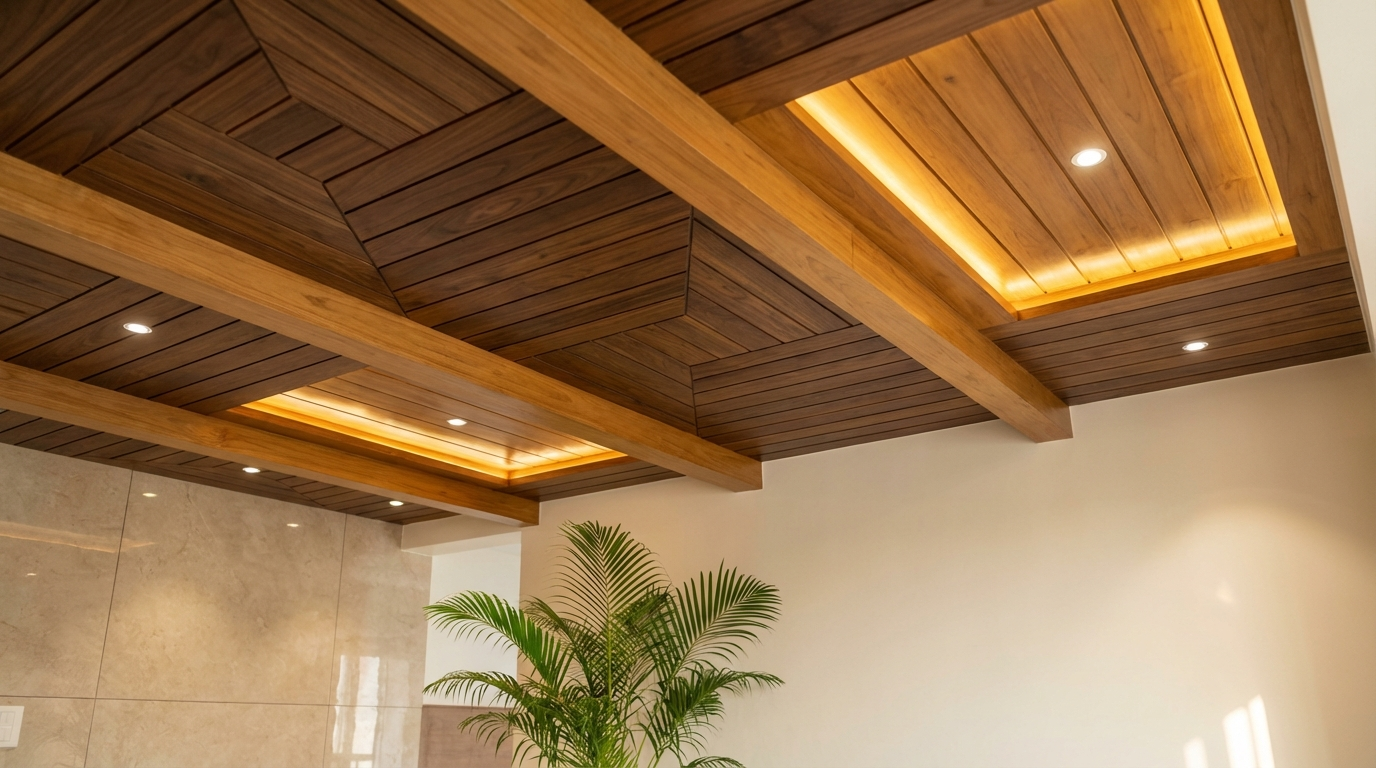
Wooden ceiling design transforms ordinary rooms into warm, inviting spaces by using natural wood or engineered wood panels, planks, and beams as false ceiling elements—hiding structural slabs while adding character that paint simply can't achieve.
Short version: Wooden false ceilings work brilliantly in Indian homes when you choose the right material for your climate. Plywood-based panels suit humid coastal cities, while MDF works fine in drier regions like Jaipur or Pune. Budget anywhere from ₹80 to ₹350 per square foot depending on wood type and finish. The real magic happens when you integrate proper lighting—cove lights, recessed spots, or exposed bulbs—into the wooden framework.
This is right for you if:
- You want warmth that gypsum or POP ceilings simply can't deliver
- Your living room or bedroom needs a statement element without going overboard on decor
- You're okay with slightly higher costs for a ceiling that ages beautifully—unlike painted surfaces that look tired after three years
- Natural textures appeal to you more than the sterile white look everyone else has
Skip this if:
- Budget is extremely tight (under ₹60/sqft all-in)—stick with POP
- Your room has serious moisture issues you haven't addressed yet
Bottom line: A well-designed wooden ceiling becomes the room's personality—get the material choice wrong, and you'll be staring at warped panels within two monsoons.
What Wooden False Ceilings Actually Mean in Practice
A wooden false ceiling is a secondary ceiling surface suspended below your structural RCC slab, constructed primarily using wood-based materials like plywood, MDF, veneer-finished boards, or actual solid wood planks. It serves both aesthetic and functional purposes—concealing wiring, enabling recessed lighting, improving acoustics, and adding visual warmth.
Most people think wooden ceilings mean using expensive teak or sal wood throughout. Actually, that's rarely the case anymore. About 85% of the wooden ceilings I've seen installed in Mumbai and Pune over the past decade use engineered wood as the base—commercial or BWR-grade plywood, HDHMR, or MDF—with decorative veneer, laminate, or paint finish on top. Real solid wood appears mainly as accent beams or exposed rafters, not as the primary ceiling surface.
The "wooden" look comes from three approaches: actual wood planks (expensive, heavy, genuine grain), wood-based panels with veneer finish (mid-range, looks authentic up close), or laminate-clad boards printed with wood patterns (budget-friendly, obvious on close inspection). Each has its place. A farmhouse aesthetic demands real wood. A modern apartment works fine with quality veneer on plywood.
The framework underneath matters too. Most installations use either aluminum grid systems or wooden battens—typically 1.5" x 1.5" or 2" x 2" sal wood or treated pine frames suspended on threaded rods. Your choice here affects both durability and how the ceiling handles building settlement over time.
Why Wooden Ceilings Hit Different in Indian Conditions
Here's the thing—India throws challenges at interior materials that European or American design guides don't even consider. We're dealing with humidity swings from 40% in December to 90%+ in July. That's brutal on wood-based materials.
In Mumbai, especially the western suburbs, I've measured indoor humidity crossing 85% during peak monsoon even with windows closed. Chennai's not much better. Kolkata's humid season stretches longer. Coastal Karnataka gets hit hard too. What does this mean? MDF swells. Particle board disintegrates. Even plywood needs proper treatment.
For places like Bengaluru, Pune's central areas, or Hyderabad—where humidity stays more moderate (typically 50-70% year-round)—you have more material flexibility. MDF performs reasonably. Budget-grade plywood lasts longer. But in coastal cities? BWR plywood minimum, edge-sealed properly, with moisture-resistant primer on all surfaces.
Do wooden ceilings work in humid coastal cities?
Absolutely—but only with the right material and preparation. I've seen beautiful wooden ceilings in Bandra apartments lasting 12+ years because the owner insisted on marine-grade plywood and proper sealing. The flat next door? They went cheap with commercial ply, skipped edge treatment. Total replacement needed after four monsoons. For coastal installations, always factor in BWR-grade minimum, edge banding, moisture-resistant primer, and adequate ventilation gap behind panels. The gap is non-negotiable—trapped humid air destroys even good-quality boards over time.
Wooden Ceiling Design Styles: Finding What Fits Your Space
Not all wooden ceilings look the same—and they shouldn't. The style should match your room's character and your tolerance for maintenance. Let me break down what actually works.
Panel-Based Designs
The most common approach. Large plywood or MDF sheets (usually 8'x4') get cut to size, finished with veneer or laminate, and installed on battens with minimal visible joints. Clean, modern, works everywhere from bedrooms to offices. Cost-effective because installation is relatively quick. The drawback? Looks a bit flat compared to more textured options. Best when you want warmth without drama.
Plank Ceilings
Individual planks—usually 4-6 inches wide—installed side by side with visible grooves between them. This creates rhythm and texture. Can be real wood (expensive, heavy, beautiful), or engineered boards designed to mimic planks (more practical, lighter). Works beautifully in living rooms, bedrooms, restaurants. Takes longer to install, costs more per square foot, but the result has personality panel ceilings can't match.
Beam and Rafter Designs
Here's where things get interesting. Exposed wooden beams—either load-bearing structural elements revealed by design, or decorative hollow boxes clad in wood—create dramatic visual impact. Particularly effective in double-height spaces, farmhouse-style homes, or rustic restaurants. Real solid wood beams are heavy and expensive. Most residential projects use hollow plywood boxes wrapped in veneer—they look identical from below but weigh a fraction and cost less.
Coffered Ceilings
Grid patterns with recessed sections—think waffle-like appearance. Traditional, formal, makes rooms feel grander. Usually combines wooden beams with POP or gypsum recessed sections. Complex to execute, requires skilled carpentry, but the result is undeniably impressive. I've seen this done beautifully in Juhu penthouses and horribly in overambitious apartments where the ceiling height couldn't support the scale. You need at least 10-11 feet floor-to-ceiling for coffered designs to breathe.
Slatted Ceilings
Parallel wooden strips with gaps between them, mounted on a backing frame. Contemporary, plays beautifully with light, allows some acoustic management. Increasingly popular in commercial spaces—restaurants, offices, lobbies. The gaps can be tight (half-inch) or wide (2-3 inches) depending on the aesthetic. Material is typically finger-jointed pine, WPC battens, or plywood strips.
| Style | Best For | Complexity | Cost Range (₹/sqft) | My Take |
|---|---|---|---|---|
| Panel ceilings | Modern apartments, bedrooms, offices | Low | 80-150 | Most practical choice for most homes |
| Plank ceilings | Living rooms, bedrooms, restaurants | Medium | 150-280 | Worth the premium if you value texture |
| Exposed beams | Double-height spaces, farmhouse style | High | 200-400 (decorative), higher for real wood | Stunning when done right, disaster when forced |
| Coffered | Formal spaces, high ceilings only | Very High | 250-450 | Don't attempt below 10ft ceiling height |
| Slatted | Contemporary homes, commercial spaces | Medium-High | 180-320 | Currently trendy—consider if you like the look long-term |
Materials Breakdown: What Actually Goes Into Your Ceiling
The material choice determines everything—durability, cost, maintenance, and how the ceiling handles your climate. Here's what you're actually choosing between.
Plywood (Commercial, BWR, or Marine Grade)
Workhouse of Indian interior construction. Commercial grade (MR) works for dry areas—bedrooms in Pune, Ahmedabad, Delhi. BWR grade handles moderate humidity—mandatory for Mumbai, Chennai, Kolkata, coastal areas. Marine plywood is overkill for ceilings unless you have extreme conditions. Thickness for ceilings is typically 12mm for panels, 18mm for structural beam cladding. Always check for IS 303 or IS 710 marking. Our detailed plywood grades guide covers this extensively if you want to dig deeper.
MDF (Medium Density Fibreboard)
Smooth, takes paint beautifully, cheaper than plywood. But—and this matters—MDF hates moisture. Swells, doesn't recover. Fine for Bengaluru, Hyderabad, Pune's drier months. Terrible idea for Mumbai unless you're climate-controlling the space. I tell clients: MDF for painted finishes in dry climates only. Thickness commonly used is 12mm or 16mm.
HDHMR (High-Density High Moisture Resistant)
The middle ground people keep asking about. More moisture-resistant than regular MDF but not as robust as BWR plywood. Works well for ceilings since they don't face direct water exposure. Costs more than MDF, less than good plywood. Smooth surface is excellent for veneers. The HDHMR applications article we've published has more details on where it performs best.
Veneered Boards
Pre-veneered plywood or MDF—saves on-site lamination costs, more consistent finish. Available in oak, walnut, teak, ash patterns. Quality varies enormously. Cheap veneer peels. Quality veneer develops patina over time. Always check edge quality before buying—the veneer shouldn't lift at corners.
Solid Wood
Teak, sal, sheesham, imported pine, oak. Real grain, real weight, real cost. Used primarily for beams, accent planks, or premium installations. Requires proper seasoning—green wood warps. Expect to pay 3-5x what engineered alternatives cost. Worth it? Depends on your budget and whether you'll appreciate the difference.
WPC (Wood Plastic Composite)
Newer entrant. Handles moisture well, dimensionally stable, no termite risk. Works well for outdoor ceilings, covered balconies, bathrooms even. Doesn't have real wood warmth but comes in convincing wood-pattern finishes. Our WPC material guide covers this if you're considering it for high-moisture areas.
Price Reality Check: What Wooden Ceilings Actually Cost in 2026
I'm going to be straight with you—pricing varies wildly based on material, finish, design complexity, and where you are in India. But here's a realistic framework.
Base material costs (per sqft):
- Commercial plywood 12mm: ₹35-50
- BWR plywood 12mm: ₹55-80
- MDF 12mm: ₹25-40
- HDHMR 12mm: ₹40-55
- Pre-veneered boards: ₹90-180 depending on veneer quality
- WPC planks: ₹70-120
- Solid wood (pine): ₹150-250
- Solid wood (teak): ₹400-700+
Framework and installation:
- Batten framework (material + labour): ₹30-50/sqft
- Aluminum grid system: ₹45-70/sqft
- Installation labour: ₹25-60/sqft depending on complexity
Finishing costs:
- Lamination: ₹15-35/sqft
- On-site veneer application: ₹50-120/sqft
- Painting (primer + 2 coats): ₹10-20/sqft
- Melamine/PU finish: ₹25-50/sqft
Realistic all-in costs:
- Basic panel ceiling with laminate: ₹120-180/sqft
- Quality veneer panel ceiling: ₹180-280/sqft
- Plank ceiling (engineered): ₹200-320/sqft
- Decorative beam ceiling: ₹250-400/sqft
- Coffered ceiling: ₹300-500/sqft
Here's what actually affects your final bill—design complexity more than material grade. Simple panel ceiling with premium veneer might cost less than a basic laminate coffered ceiling because of the labour difference. Get multiple quotes, and ask for material and labour breakdowns separately.
Lighting Integration: Where Wooden Ceilings Really Shine
A wooden ceiling without thoughtful lighting is like buying a nice car and never cleaning it. The texture, grain, and warmth only come alive with proper illumination.
Cove Lighting
LED strips hidden in a peripheral recess, washing the ceiling surface with indirect light. Creates dramatic effect with minimal visible fixtures. Works beautifully with panel and plank ceilings. Use warm white (2700K-3000K) for maximum wood warmth. Cool white makes wooden ceilings look clinical—don't do it.
Recessed Downlights
The practical choice. Cut-outs in panels accommodate standard LED downlights. Works with any style. Spacing matters—typically 4-5 feet apart for ambient lighting, closer for task areas. Make sure your panel thickness accommodates the fixture depth—some ultra-slim panels need surface-mounted lights instead.
Pendant and Chandelier Integration
Wooden ceilings actually help here—easier to mount heavy fixtures securely than gypsum. Reinforce the mounting point with solid wood backing. The contrast of modern pendants against rustic wooden planks creates interesting tension. Traditional chandeliers work beautifully with coffered ceilings.
Track Lighting
Increasingly popular in contemporary wooden ceiling designs. Surface-mounted tracks with adjustable spots. Great for highlighting art or creating flexible illumination. Works particularly well with slatted ceilings.
What about natural light interaction?
Rooms with good natural light need different approach than windowless spaces. Heavy grain patterns can look dark in low-light rooms—go for lighter wood tones. Rooms with abundant sunlight can handle darker walnut or teak finishes. Also consider how the ceiling looks at different times—morning light versus evening artificial lighting. A Bandra flat I worked on looked perfect during site visits at noon but felt cave-like at night until we added supplementary cove lighting.
30+ Design Ideas for Different Rooms
Living Room Wooden Ceilings
The showpiece room deserves showpiece treatment. Panel ceilings with peripheral lighting create clean modern look. Plank ceilings add texture without overwhelming. Exposed beams work if ceiling height permits—9 feet minimum, 10+ feet ideal. Coffered designs make large rooms feel grander. For smaller living rooms (under 200 sqft), stick with simple panels—complex designs shrink the space visually.
Bedroom Ceiling Designs
Warmth matters here. Wood naturally adds cosiness that bedrooms need. Back-lit panels behind the headboard extending to ceiling create dramatic focus. Plank ceilings running parallel to the bed create visual flow. Avoid heavy beams directly over sleeping areas—psychologically uncomfortable and practically risky in earthquake zones. Lighter tones (oak, ash, whitewashed pine) work better than dark walnut for bedrooms.
Kitchen Wooden Ceilings
Controversial territory. Kitchens have moisture, grease, temperature variations. But—well-executed wooden ceilings in open kitchens look stunning. Requirements: exhaust ventilation is non-negotiable, use BWR-grade or better materials, sealed finishes only, avoid directly above cooking zone if possible. Open-plan kitchen-dining areas can have wood ceiling in dining section transitioning to gypsum over cooking area.
Dining Area Designs
Personal favourite application. Wooden ceiling defines the dining zone in open layouts. A chandelier or statement pendant dropping from wooden panels creates instant intimacy. Coffered designs work well for formal dining rooms. Rustic plank ceilings suit casual dining spaces.
Bathroom Wooden Ceilings
Yes, it's possible. No, most materials won't work. WPC is your friend here. Proper exhaust mandatory. Marine plywood with waterproof finish is an option for attached dressing areas but not directly over wet zones. PVC with wood-print laminate is the practical compromise—looks decent, handles moisture fine. Real wood? Only in powder rooms with no shower.
Balcony and Outdoor Ceiling Ideas
Covered balconies can have wooden ceilings beautifully—creates indoor-outdoor flow. Requirements: treated wood, WPC, or exterior-grade materials only. Even covered areas get moisture exposure. Slatted designs work particularly well—allow airflow, look contemporary. Proper drainage slope above the ceiling if there's any chance of water infiltration.
Decision Framework: Choosing Your Ceiling Design
Feeling overwhelmed by options? Here's how to narrow down.
| Your Situation | Recommended Style | Material Choice | Why This Works |
|---|---|---|---|
| Modern apartment, 9ft ceiling, moderate budget | Panel ceiling with cove lighting | BWR plywood with veneer | Clean look, cost-effective, handles humidity |
| Villa, 12ft+ ceilings, premium budget | Coffered or beam design | Combination—plywood structure, solid wood accents | Takes advantage of height, creates drama |
| Coastal city, humidity concerns | Simple panel or slatted design | Marine plywood or WPC | Moisture resistance priority over complexity |
| Bangalore/Pune, comfortable climate | Any style possible | HDHMR or MDF acceptable | Climate permits wider material range |
| Rental property, reversible changes needed | Lightweight panels on removable frames | Pre-finished boards | Can be removed without major damage |
| Commercial restaurant, acoustic needs | Slatted ceiling with acoustic backing | Engineered wood or WPC | Gaps allow sound management, looks contemporary |
| Tight budget, bedroom only | Small feature ceiling over bed area | MDF with laminate | Focus investment on visible area, save on full room |
Is a wooden ceiling worth the extra cost over POP?
Depends entirely on what you value. POP/gypsum costs roughly ₹50-80/sqft installed—wooden ceilings start at ₹120-150 and go up significantly. But wooden ceilings age better, develop character, and can be refinished rather than replaced. POP yellows, cracks with building settlement, needs repainting every 5-7 years. A quality wooden ceiling installed in 2015 still looks good today. A 2015 POP ceiling? Probably showing its age. My take: if it's a home you'll live in long-term, wood is worth the premium. For rental properties or quick flips, stick with POP.
Common Mistakes People Make with Wooden Ceilings
Seen these disasters unfold too many times. Learn from others.
Ignoring climate requirements. A builder in Vashi used interior-grade MDF throughout a residential project. By the second monsoon, panels had swelled visibly. Complete redo required. ₹4 lakh mistake across 12 flats.
Skipping the ventilation gap. Panels need breathing room—at least 25-50mm gap behind the false ceiling. Direct mounting against concrete traps moisture.
Wrong fixture planning. This one frustrates me. People finalize ceiling design, then realize they need fan points or AC vents. Retrofit cutting looks terrible. Plan electrical, HVAC, and fixtures before finalizing ceiling layout. Not after.
Ignoring access needs. Concealed wiring, junction boxes, AC units—you'll need to access them eventually. Build in access panels. Make them blend with the design. A Mumbai flat I visited had beautiful seamless panels—and no way to reach the AC drain pan when it leaked.
Heavy designs on weak structures. Solid wood beams weigh significantly. Your suspended ceiling grid needs to handle the load. Old buildings especially—get structural advice before adding heavy ceiling elements.
Mismatched wood tones. Ceiling veneer that clashes with floor or furniture wood. Bring samples, compare in actual room lighting. What looks matching in the showroom might look off in your space.
Overcomplicated designs in small rooms. Coffered ceiling in a 10x12 bedroom makes it feel like a coffin. Scale appropriately. Simple is better for compact spaces.
Skipping edge sealing. Exposed plywood edges absorb moisture faster than surfaces. Seal all edges—especially cut edges. Every single one. Non-negotiable.
Choosing style over substance. That Instagram-worthy slatted ceiling is gorgeous but collects dust like crazy. Consider your tolerance for maintenance before picking complex designs.
Quality Checks Before and During Installation
Material inspection (before purchase):
- Check boards for warping—sight down the edge, should be straight
- Tap test—solid sound, not hollow or inconsistent
- Edge quality—no delamination, proper veneer adhesion
- ISI markings on plywood—should show IS number and grade
- Moisture content if possible—should be under 12%
- Colour consistency across panels if pre-veneered
Questions to ask your dealer:
- "What's the core material—what grade plywood or MDF?" Not just the finish.
- "Is this suitable for [your city] humidity levels?"
- "What warranty do you provide against manufacturing defects?"
- "Can I see the IS certification?" For plywood.
- "What's the recommended finish for this material?"
Here's a trick most dealers don't like—ask for a sample piece, take it home, leave it in your room for a week. Any swelling or warping indicates problems.
During installation:
- Framework level check—use spirit level, don't trust eyes
- Proper suspension spacing—threaded rods maximum 3 feet apart
- Edge sealing before installation—not after
- Ventilation gaps maintained
- Electrical work completed before final panels go up
- Consistent joint gaps if using plank design
Workmanship: What to Tell Your Carpenter
Your carpenter or contractor determines the final result more than material choice. Here's your briefing checklist.
Share these specifics:
- Exact ceiling height finished floor to ceiling soffit—measured, not assumed
- Location of all electrical points, fan hooks, AC vents, light fixtures—provide marked drawings
- Direction of planks/grain if relevant—parallel to room length usually works better
- Access panel locations—near AC units, junction boxes
- Edge treatment expectations—visible edges need finishing
- Lighting fixture coordination—recessed lights need specific cut-out sizes
Materials handling:
- Store panels flat, not leaning—they'll warp
- Acclimatize materials in the actual room for 2-3 days before installation—especially important in humid seasons
- Keep away from direct sunlight and moisture during storage
I've seen carpenters skip the acclimatization and then scratch their heads when panels don't align properly after a week. Wood-based materials adjust to ambient humidity—let them adjust before cutting and fixing.
How Long Do Wooden Ceilings Actually Last?
In my experience, well-maintained wooden ceilings last 15-25 years minimum—often longer. But "well-maintained" carries weight here.
Factors affecting lifespan:
- Material quality—BWR plywood outlasts commercial grade significantly
- Installation quality—proper framework, ventilation gaps
- Climate exposure—coastal cities are harder on materials
- Finish quality—sealed surfaces last longer than raw
- HVAC situation—climate-controlled rooms preserve better
Signs of aging to watch:
- Sagging between supports—indicates moisture damage or framework failure
- Visible warping or buckling
- Finish deterioration—peeling laminate, faded veneer
- Musty smell—possible hidden moisture damage
- Visible joint gaps widening—seasonal movement or frame loosening
Maintenance that extends life:
- Annual dust cleaning—vacuum or dry wipe
- Address leaks immediately—water damage spreads fast
- Touch up finish every 5-7 years if needed
- Check suspension points during any ceiling access
When to consider replacement? If more than 20-25% shows damage, replacement often makes more sense than patchwork repair. Partial damage can sometimes be addressed by replacing individual panels if your design allows.
Alternatives Worth Considering
Wooden ceilings aren't always the answer. Here's when to consider other options.
POP/Gypsum with wood accents: If budget is tight, do gypsum ceiling with wooden beam accents or a wooden border. Gets you the warmth factor at 40-50% of full wood ceiling cost. Particularly effective for large rooms where full wood coverage would be expensive.
PVC ceiling panels with wood prints: For bathrooms, balconies, or high-moisture areas. Modern PVC panels have surprisingly realistic wood grain printing. No maintenance, handles moisture, budget-friendly. Won't fool anyone up close, but works fine functionally.
Acoustic ceiling tiles with wood finish: For home theaters, offices, or rooms where sound management matters. Combines acoustic performance with wood aesthetics. Not the same as real wood but serves a different purpose.
If you're specifically interested in moisture-resistant options, our BWP plywood guide and HDHMR material comparison cover the technical differences in detail.
FAQs About Wooden Ceiling Design
Is it true that wooden ceilings make rooms feel smaller?
The opposite, actually—if done right. Dark heavy beams in a low ceiling can feel oppressive, yes. But light wood tones with appropriate design actually add visual interest without shrinking the space. The key is proportion—simple designs for compact rooms, elaborate designs for generous ceiling heights. I've seen 8-foot ceiling rooms feel perfectly comfortable with light oak panels and subtle cove lighting.
What if I live in Goa or coastal Kerala—will wood survive?
It survives if you respect the conditions. Marine-grade plywood or WPC, mandatory edge sealing, ventilation gaps, proper finishing. A resort in South Goa has maintained beautiful wooden ceilings for over a decade—they used marine ply, PU finish, and ensure regular maintenance. It's possible; it just requires more careful material selection and better finishing standards than inland projects.
Can I install wooden ceiling over existing POP ceiling?
Technically possible but generally not recommended. The POP adds weight, hides potential moisture issues, and complicates future repairs. Better approach is removing existing POP, inspecting the slab, and installing fresh wooden ceiling properly. If you absolutely can't remove the POP, at least cut inspection holes to check conditions above before committing.
Do wooden ceilings attract termites?
Untreated softwood can, yes. Solutions: use treated wood, apply termite-resistant treatment during installation, or choose termite-proof alternatives like WPC for structural elements. Plywood with BWR/marine grade typically has better resistance than raw timber. In termite-prone areas, the framework should use metal or treated wood regardless of panel choice.
What's the minimum ceiling height needed for wooden false ceiling?
Practical minimum is 9 feet floor-to-slab height. False ceiling typically drops 6-10 inches minimum (more if ducted AC or major electrical work needs concealment). You'll end up with 8+ feet finished ceiling height, which feels acceptable. Below 9 feet original height, false ceilings feel oppressive—stick with direct-applied panels or paint instead.
Is it true that wooden ceilings are fire hazards?
Wood is combustible—that's fact. But residential wooden ceilings aren't the fire risk people imagine. Treated wood with fire-retardant finish meets safety codes. The bigger risks in buildings are electrical issues and furnishings. That said, for commercial projects, check local fire safety requirements—some jurisdictions require specific fire ratings for ceiling materials. For homes, sensible precautions apply: proper electrical work, smoke detectors, avoiding heat sources near ceiling.
How do I clean wooden ceilings?
Dry methods mostly. Vacuum with soft brush attachment quarterly. Microfiber duster for regular maintenance. Avoid wet mopping—moisture damages finishes and can reach substrate. For stubborn stains, lightly damp cloth with mild soap, immediately followed by dry cloth. Never use harsh chemicals or abrasive materials. Finished surfaces are easier to maintain than raw wood.
What if my wooden ceiling develops mold?
Mold indicates moisture problem that needs addressing first—find and fix the source. For surface mold on finished wood, clean with diluted bleach solution, dry thoroughly, refinish affected area. If mold has penetrated the material, replacement is usually necessary. Prevention is better—proper ventilation, addressing roof leaks immediately, maintaining humidity levels.
Can I paint over existing wooden ceiling instead of refinishing?
Yes, but it changes the aesthetic entirely—you'll lose the wood grain visibility. Works if you want solid colour rather than natural wood look. Process: clean, sand lightly, prime with wood primer, then paint. Quality primer is essential—don't skip it or you'll see bleed-through and adhesion issues. Consider whether you'll regret losing the wood look before painting.
Should I match ceiling wood with floor wood exactly?
Not necessarily—and sometimes contrast works better. Matching exactly can look monotonous, especially in smaller rooms. Complementary tones within the same wood family (light ceiling, medium floor) often work better than identical shades. Bring samples of both materials together in your actual room lighting before finalizing. What matches in showroom fluorescent light may look off in your room's natural light.
What's better—site-laminated or factory-veneered panels?
Factory-veneered for consistency, site-laminated for flexibility. Factory work has better edge adhesion and finish uniformity but limits you to available sizes and patterns. Site lamination allows custom sizes and patterns but quality depends heavily on your contractor's skill. For most projects, factory-veneered panels with careful measurement produce better results.
Is it true that wooden ceilings improve acoustics?
Yes, but not as dramatically as dedicated acoustic materials. Wood is denser than gypsum, absorbs some sound, and reduces flutter echo. The effect is noticeable in large hard-surfaced rooms. For serious acoustic needs (home theaters, studios), combine wooden aesthetic with acoustic backing materials or perforated designs that trap sound. The slatted ceiling guide we've published covers acoustic applications in more detail.
That covers most of what you need to know. Your carpenter might have opinions on specific approaches—worth listening to them, especially if they've done similar projects in your area. Every city, every building has its quirks. Good luck with the project—and seriously, don't skip that edge sealing.
Disclaimer: This content is provided for general informational purposes based on industry practices and publicly available information. Product specifications, standards, prices, and availability may vary by manufacturer, region, and time. Readers should independently verify details with manufacturers, dealers, or qualified professionals before making purchase or construction decisions.Want Plywood Suggestions?
Share a few details and a Sainik 710 specialist will suggest suitable brands and connect you to responsive dealers.