Waterproof Plywood Explained: MR vs BWR vs BWP (IS Codes) + What to Buy for Each Room
Understand MR, BWR and BWP plywood with IS codes, real moisture performance, and a room-by-room buying guide for kitchens, wardrobes and bathrooms.
Quick Decision Summary
Go for BWP plywood (IS 710) in kitchens and bathrooms, BWR (IS 303) for wardrobes in humid areas, and MR (IS 303) for dry bedrooms.
If you're in a hurry, pick plywood based on moisture exposure: MR grade handles normal indoor humidity but swells in spills; BWR resists short-term water contact like kitchen splashes during monsoons; BWP survives boiling water tests and constant dampness in coastal homes or bathrooms. Always check for proper edge sealing and acclimatization to avoid warping in India's variable climate. Thickness matters—use 18mm for load-bearing shelves, 12mm for partitions.
- Choose MR if: Low budget, dry rooms like bedrooms, good ventilation, no spills expected.
- Choose BWR if: Moderate humidity, kitchens/wardrobes with occasional water, monsoon-prone cities like Mumbai or Bangalore.
- Choose BWP if: High moisture zones like bathrooms, coastal areas, heavy spills, or long-term durability needed.
- Avoid MR if: Wet areas or poor ventilation—leads to delamination.
- Avoid BWR/BWP if: Purely dry interiors—overkill on cost without benefits.
Comparison That Actually Helps
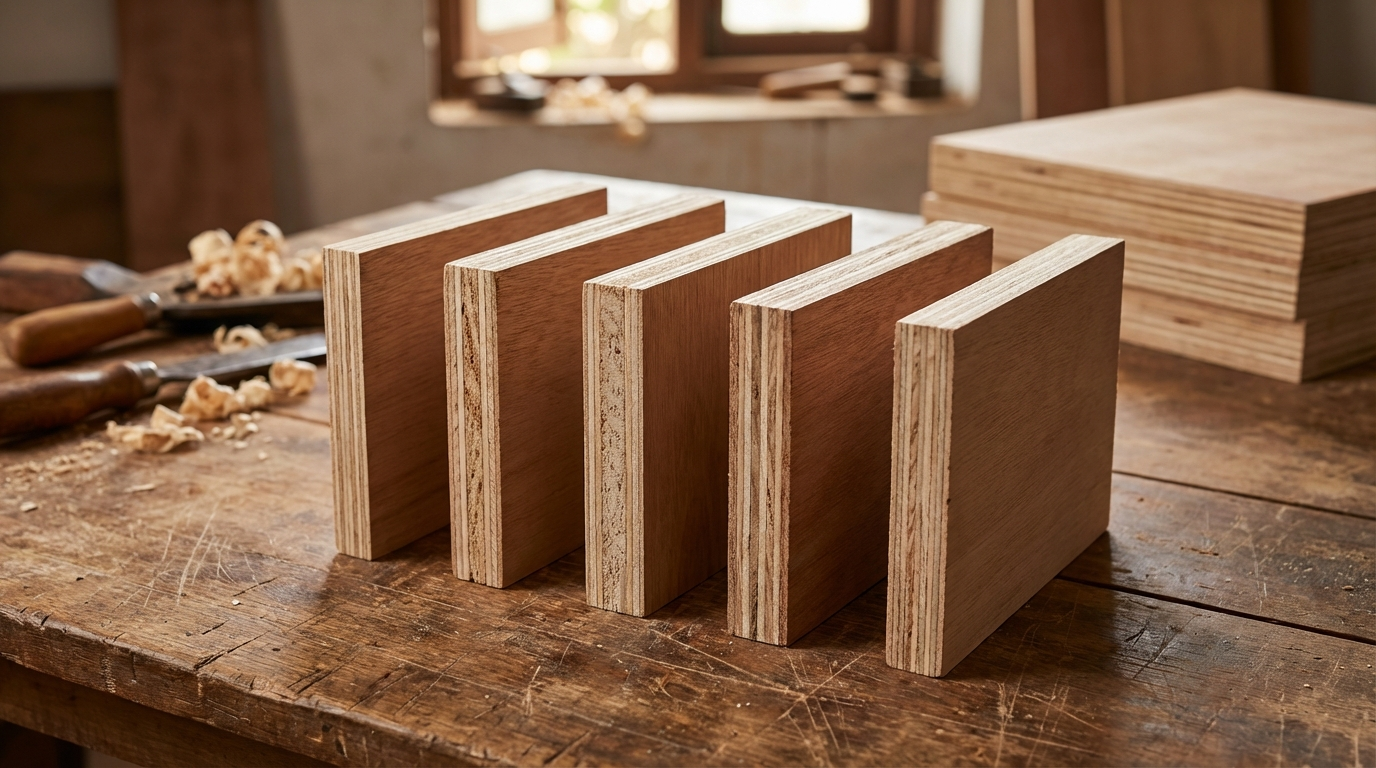
Understanding MR, BWR, and BWP goes beyond labels; it's about glue type, test performance, and real-world survival in Indian homes. MR uses urea-formaldehyde glue, passing basic moisture tests but failing under prolonged dampness. BWR upgrades to phenol-formaldehyde, enduring boiling water for hours without delaminating. BWP takes it further with premium resins and construction, boiling for 72 hours intact.
Here's a scannable comparison table focusing on key decision factors:
| Aspect | MR (IS 303) | BWR (IS 303) | BWP (IS 710) |
|---|---|---|---|
| Glue Type | Urea-Formaldehyde | Phenol-Formaldehyde | Premium Phenolic |
| Boiling Water Test | Fails quickly | 4-8 hours resistance | 72+ hours proof |
| Best For | Bedrooms, dry wardrobes | Kitchens, humid wardrobes | Bathrooms, marine exteriors |
| Termite Resistance | Basic treatment | Better preservatives | Highest standards |
| Typical Thickness Options | 6-18mm | 12-18mm | 12-25mm |
This table highlights why BWP costs more—superior resins and denser cores reduce swelling by 50-70% in humid tests. In practice, MR suits 70% of home interiors, but switch to BWR/BWP for the wet 30%. Trade-off: Higher grades weigh more, needing stronger fixings.
How to Choose in 5 Steps
- Assess Room Moisture: Dry (bedroom)? MR. Splashes (kitchen)? BWR minimum. Constant damp (bathroom)? BWP only. Factor monsoon humidity in cities like Chennai or Kolkata.
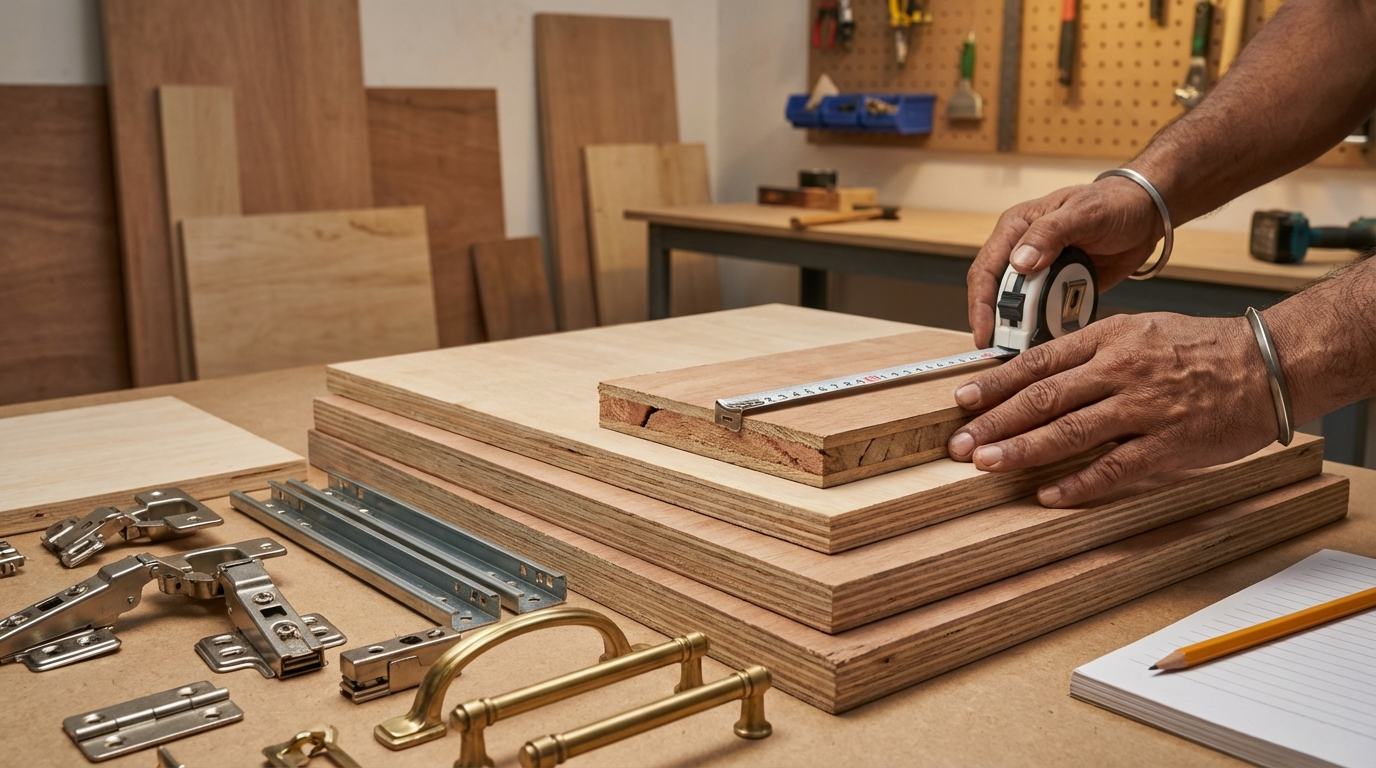
- Check Load and Use: Shelves over 50kg? 18mm thickness. Partitions? 12mm. Verify screw-holding via knock test—solid thud means good core.
- Inspect Certification: Look for IS 303 stamp for MR/BWR, IS 710 for BWP. Ask for boil test proof if possible.
- Evaluate Core and Face: Hardwood core preferred over mixed; uniform face veneer without patches.
- Budget and Acclimatize: Compare quotes, then store sheets flat in site humidity for 48 hours before cutting.
Follow these to avoid 80% of regrets. For modular kitchens, step 1 often pushes to BWP due to steam and spills.
What This Actually Means (Grade, Construction, and Use)
MR plywood, under IS 303, uses moisture-resistant urea glue bonding softwood/hardwood veneers. It handles 40-60% humidity typical in air-conditioned bedrooms but swells 10-15% on water exposure. Construction: 5-9 plies, calibrated faces for laminates.
BWR, also IS 303 but superior grade, employs phenol glue surviving short boils. Ideal for wardrobes in humid cupboards—resists tape peeling or edge lifting. Cores are denser, reducing voids that cause screw pull-out.
BWP (IS 710) is marine-grade: fully crosslinked phenolic resins, tropical hardwood cores, tested for 72-hour boiling without layer separation. Used in shipbuilding, it shrugs off India's coastal salt spray or bathroom steam. Thicknesses up to 25mm for structural beams.
Use wisely: MR for cost-saving in low-risk spots; BWR bridges to semi-wet; BWP for zero-compromise longevity. All benefit from termite treatments, but BWP's density adds natural resistance.
India-Specific Reality Check (Moisture, Termites, and Workmanship)
India's monsoons (80-95% humidity) and coastal fog expose plywood weaknesses. MR delaminates in unventilated Mumbai flats; BWR holds in Bangalore kitchens with exhausts; BWP thrives in Kerala bathrooms. Poor storage—stacked vertically in rain—voids even BWP warranties.
Termites feast on urea-glued MR faster; phenol in BWR/BWP deters better, but coastal salinity accelerates borer attacks—insist on IS 5539 preservatives. Workmanship pitfalls: Carpenters skip edge sealing, causing capillary water ingress. In Delhi winters, rapid drying warps uncured sheets.
Site acclimatization (7 days at room temp) prevents 60% of buckling. Contractor habits like wet cutting or no spacers lead to core gaps—always oversee stacking horizontally on pallets.
Price Range and Cost Drivers
Typical ranges per square foot (2026 estimates, 18mm thickness): MR ₹60-110, BWR ₹90-140, BWP ₹120-190. Thinner 12mm drops 20-30%; 6mm for false ceilings saves more. City variation: Mumbai/Coastal 15-25% higher due to logistics; inland like Lucknow lower.
Drivers: Glue/resin (40% cost—phenolic doubles it), core (hardwood +20% vs poplar), calibration/polishing (+10%), brand premium (verified IS adds 15%). For a 10x6ft wardrobe (30sqft sheets), MR budget ₹2500-4000; BWP ₹5000-7000. Factor 10% waste, transport.
Estimate: Multiply sqft x grade rate x 1.2 (waste/logistics). Negotiate bulk; verify no hidden voids inflating weight.
Room-by-Room Buying Guide
Kitchens
BWP 18mm essential—counters face oil, steam, spills. Pair with laminate, seal edges thrice. BWR viable if modular with steel sinks, good chimney.
Wardrobes
BWR 18mm for humid closets; MR 12-16mm for dry. Reinforce shutters with 3 hinges.
Bathrooms
BWP 16-18mm only—vanities endure showers. Avoid particle boards; use marine putty for joints.
Other Rooms
Bedrooms/Beds: MR 18mm. TV Units: BWR if near AC drips. Partitions: MR 12mm.
Trade-offs and Limitations
BWP's strength costs 50-100% more, weighs heavier (harder for DIY), and overkill in AC rooms. BWR balances but fails prolonged submersion. MR cheapest/lightest but swells 2x faster in monsoons. All warp if not sealed; higher grades harder to route precisely without chipping.
Decision table:
| Scenario | Recommended Grade | Why/Trade-off |
|---|---|---|
| Budget Bedroom | MR | Cost savings; minimal moisture |
| Monsoon Kitchen | BWP | Durability; higher upfront cost |
| Coastal Wardrobe | BWR | Balance; not fully waterproof |
Common Buyer Mistakes and How to Avoid
- Mistake: Buying MR for kitchens. Avoid: Map moisture first.
- Ignoring thickness—6mm shelves sag. Use 18mm for loads.
- No acclimatization—warps post-install. Store 48hrs site-side.
- Skipping edge seal—water wicks in. Apply 2 coats silicone.
- Trusting labels sans IS stamp. Verify stamps, ask test reports.
- Mixed cores with voids. Knock test: uniform sound.
- Wet storage. Insist horizontal, covered stacks.
- Cheap glues fail termites. Demand phenol confirmation.
Quality Checks You Can Do Without Lab Tests
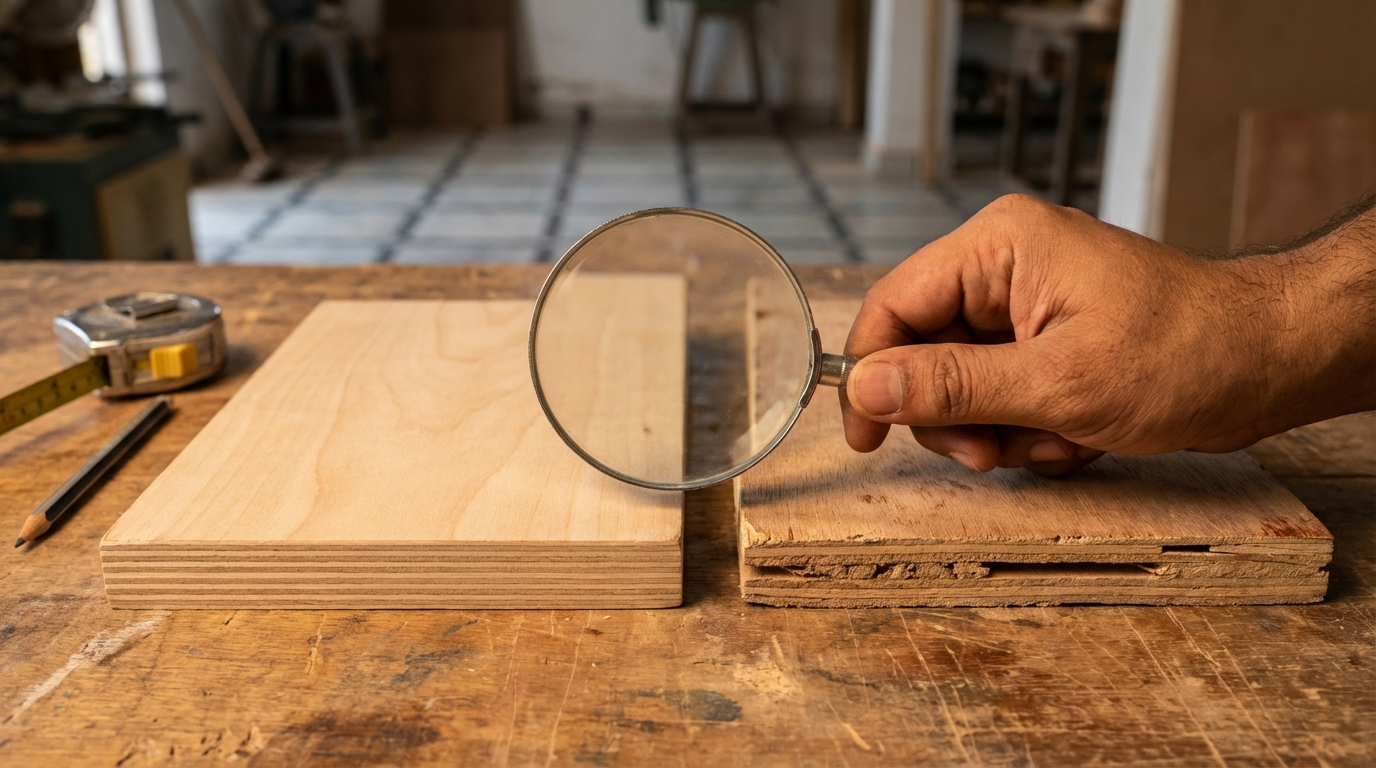
Visual: Uniform color, no knots/cracks on faces. Edges straight, no glue lumps. Knock across surface—consistent thud signals void-free core.
Questions: "IS 303/710 certified? Glue type? Boil test duration? Core wood?" Warning signs: Overweight (adulterated), soft flex (weak plies), musty smell (pre-damped).
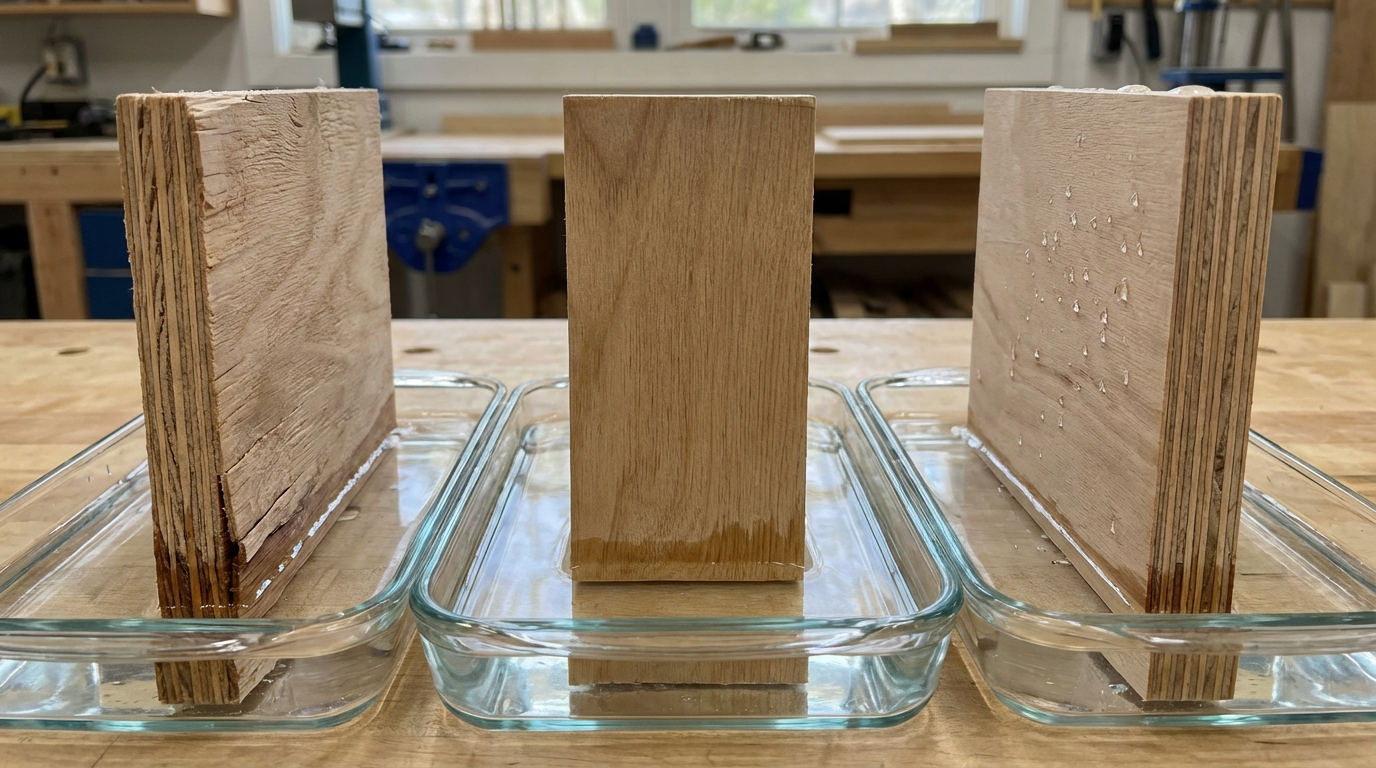
Spill test proxy: Wet corner 30min—minimal swell for BWR+. Finger-press edges—no dents.
Workmanship and Installation Tips
Cutting: CNC or table saw with zero-clearance; clean kerf prevents chipping. Edge sealing: 2-3 coats polyurethane/silicone, especially ends.
Fastening: Pre-drill for screws; BWP holds 2x better. Hinges: 3 per door on 18mm, reinforce with blocks if particle edges.
Storage: Flat, vertical props, 150mm air gaps. Acclimatize 72hrs. Polish post-install for breathability.
FAQs
Is BWR plywood truly waterproof?
BWR offers strong resistance to boiling water for short durations and handles humidity or splashes well in ventilated Indian kitchens, but it is not fully waterproof like BWP. In monsoons, proper sealing extends life, though prolonged submersion causes swelling—ideal for semi-wet zones with exhaust fans.
Can MR plywood be used in wardrobes?
Yes, in dry, air-conditioned wardrobes away from bathrooms, MR performs reliably with good screw holding for shelves. However, in humid coastal cities, upgrade to BWR to prevent tape bubbling or delamination from steam migration.
What thickness for kitchen cabinets?
Typically 18mm for carcasses and shutters to bear utensils and withstand steam; 12mm for internal partitions saves cost without compromising. Always calibrate for even laminate adhesion in high-heat zones.
Does BWP prevent termites completely?
BWP's dense phenolic glue and preservatives deter termites effectively, outperforming MR, but no plywood is 100% immune. Combine with site fumigation and sealed joints for monsoon-prone homes.
How to spot fake IS certification?
Check stamped details match sheet size/thickness; faded or sticker labels are red flags. Request batch test docs and weigh—genuine BWP feels hefty without excess moisture.
Is BWP worth the extra cost for bathrooms?
Absolutely in shower-adjacent vanities, as it resists 72-hour boils versus BWR's limits, preventing mold in poorly ventilated Indian bathrooms during humid summers.
What if plywood warps after install?
Often from poor acclimatization or unsealed edges; disassemble, dry, reseal. Prevention: Match site humidity pre-cut, use shims during fixing.
BWR vs BWP for modular kitchens?
BWP for sinks/under counters due to spills; BWR suffices for uppers with laminates and chimneys, balancing cost in standard Mumbai flats.
Core types in these grades?
All prefer hardwood for strength; mixed/poplar cheaper but void-prone. Insist on full hardwood for BWP to maximize screw pull-out resistance.
Storage tips before use?
Stack horizontally on pallets, cover loosely, elevate 6 inches off ground. Avoid direct sun/rain—aims for 12-15% moisture equilibrium with site.
Edge banding necessity?
Mandatory for all; unsealed ends absorb moisture fastest, leading to core failure. Use PVC or sealant matching laminate grade.
Disclaimer: This content is provided for general informational purposes based on industry practices and publicly available information. Product specifications, standards, prices, and availability may vary by manufacturer, region, and time. Readers should independently verify details with manufacturers, dealers, or qualified professionals before making purchase or construction decisions.Want Plywood Suggestions?
Share a few details and a Sainik 710 specialist will suggest suitable brands and connect you to responsive dealers.