Plywood Grades Explained: MR, BWR, BWP, Marine & Commercial—Complete Guide for India
Understand all plywood grades—MR, BWR, BWP, Marine & Commercial. IS standards, water resistance levels & best uses for each grade in Indian conditions.
The Short Answer on Plywood Grades
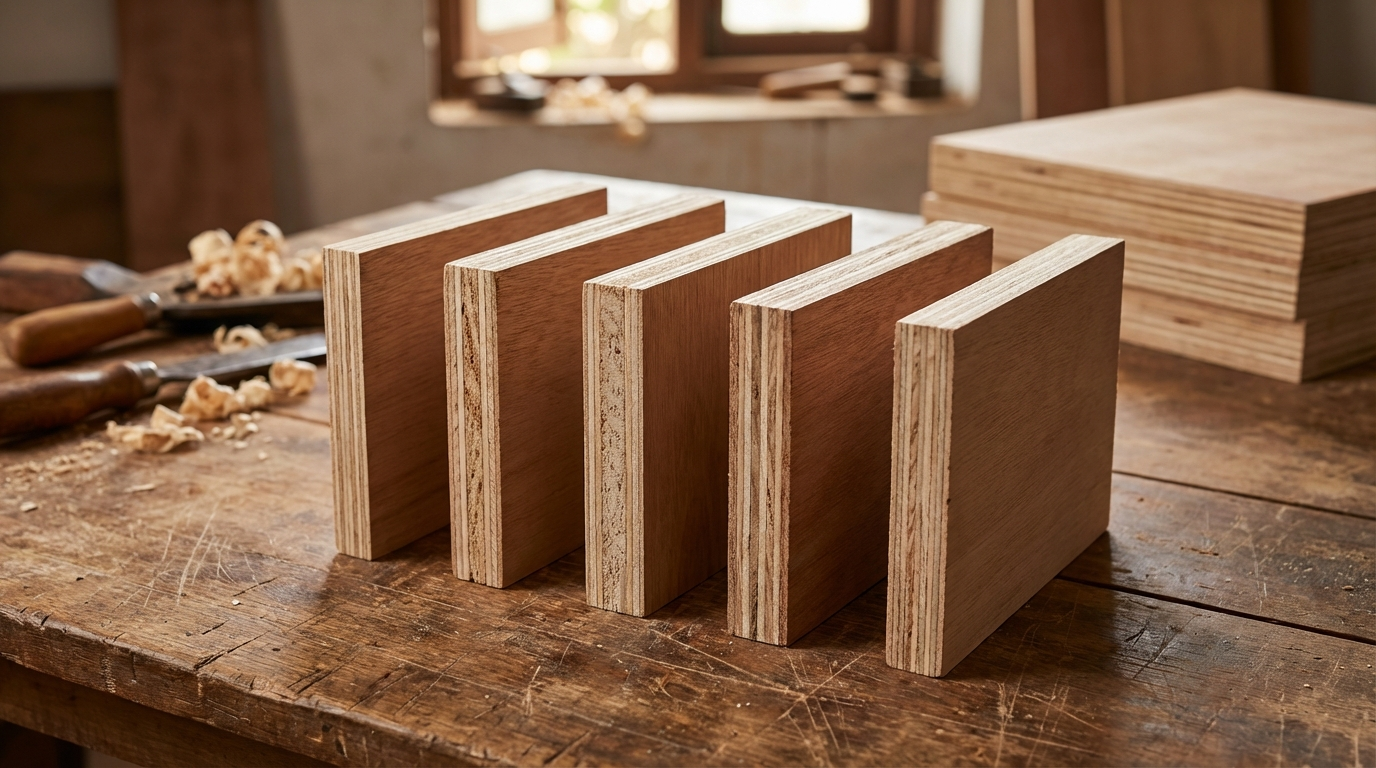
Plywood grades in India are classified based on water resistance—MR (Moisture Resistant), BWR (Boiling Water Resistant), BWP (Boiling Waterproof), and Marine grade. According to the Indian grading system, plywood is classified under 3 categories: moisture resistant/water resistant or MR Grade; boiling water-resistant or BWR Grade plywood; and boiling water-proof grade or BWP Grade plywood.
Short version: There are three common types of plywood in India: MR, BWR, and BWP. MR grade works fine for dry interiors like bedroom wardrobes. BWR handles humidity and occasional water—think kitchen cabinets. BWP (also called marine grade) laughs at water and is meant for bathrooms, outdoor use, and yes, even boats. As per Indian standards IS 303 plywood specification stands for Moisture resistant and Boiling Water Resistant grades of plywood. IS 710 specification, on the other hand, stands for marine-grade plywood.
This is right for you if:
- You're planning interiors and confused why the dealer quoted three different prices for "plywood"
- You want to understand what those IS 303 and IS 710 marks actually mean before you sign off on the quotation
- You want to check certifications—ensure ISI marks on the plywood for Indian standards, and choose the right grade: BWR or BWP plywood for areas where moisture is quite high.
Skip this if: You're already a contractor who knows the difference and just wants a quick price comparison—scroll down to the price section.
Bottom line: Always match the plywood grade with the use environment. Using MR plywood in a kitchen or bathroom may lead to premature swelling, while using BWP in dry furniture can unnecessarily inflate costs.
Note: sainik710.com is an independent informational site and is not affiliated with any manufacturer.
What Plywood Grades Actually Mean
Plywood grade is a classification based on water resistance and bonding quality—it tells you how the wood will perform when exposed to moisture. Plywood grade refers to the quality of the plywood, which is determined by the appearance of the veneers on the front and back faces, as well as the strength and durability of the plywood.
Most people think "waterproof plywood" means they can dunk it in a bucket and it'll be fine. Actually, that's only true for BWP grade. MR stands for Moisture Resistant, but don't be misled. It means that the plywood can resist humidity and dampness, but it is NOT waterproof. See the difference? MR handles the humidity in your Andheri flat during monsoon—it doesn't handle water dripping from a leaky pipe under your kitchen sink.
Here's where it gets technical (but stay with me, this matters):
MR (Moisture Resistant) plywood, also known as commercial plywood, is ideal for areas that stay dry most of the time. It's made using urea-formaldehyde resin and is a cost-effective option for everyday interior work.
BWR stands for Boiling Water Resistant. This grade uses phenol formaldehyde resin, offering better moisture protection than MR plywood. It's ideal for areas that occasionally come into contact with water.
BWP (Boiling Waterproof) plywood—also known as Marine Plywood or 710 Grade Plywood—is made with the highest quality phenol-formaldehyde resin, making it completely waterproof, boil-proof, and durable under harsh conditions.
Is BWR the same as BWP?
No. This confusion drives me crazy. BWR plywood can handle moisture like steam or occasional spills. It can resist water better than the Interior grade MR or moisture-resistant plywood. So, it is generally used for meeting those furniture requirements in the home, where the plywood may be exposed to water, such as kitchen cabinets and kitchen furniture.
BWP plywood, on the other hand, is fully waterproof. It's made for areas that see a lot of water over time, such as bathrooms or outdoor spaces.
Think of it this way: BWR handles the splash. BWP handles the soak.
Why This Matters in Indian Homes
Here's what you need to understand about Indian conditions—we don't have the luxury of "moderate humidity" that European or American standards assume.
In places like Chennai or Mumbai, you'll notice humidity hitting 85-90% during monsoon months. I've seen MR grade plywood start swelling within the first September in coastal flats. There was this builder in Andheri—must have been 2021—who insisted on using MR grade for his kitchen cabinet base. Called me eight months later. Complete disaster. The mistri had to rip everything out.
Homes near the coast experience high humidity, which can damage MR and BWR plywood. BWP plywood provides long-term protection against moisture.
Now, if you're in Pune or Bengaluru—drier climates, better ventilation—MR grade for bedroom furniture is absolutely fine. Wardrobes and partitions are not exposed to moisture, so MR plywood is sufficient. It's also the most economical choice.
The Konkan belt, coastal Karnataka, humid Bengal—these areas need you to think more carefully. Even bathroom doors in these regions should ideally be BWP or at minimum BWR with proper edge sealing.
Types and Grades: The Full Breakdown
MR Grade (Commercial Plywood) – IS 303
Although MR plywood—also known as commercial plywood—offers sufficient defense against ambient moisture, it should be noted that it is not completely waterproof. Adhering to IS 303 standards, MR plywood's thickness options span from 3mm to 25mm, providing a balance between price and versatility. For indoor furniture and structures that won't be in direct contact with water, this grade is ideal.
The MR grade plywood is manufactured using urea formaldehyde, which is a type of synthetic resin used to manufacture the MR grade plywood.
Best for: Bedroom wardrobes, TV units, bookshelves, study tables, living room cabinets—basically anywhere that stays dry. Bedroom Furniture: MR or BWR plywood is ideal for beds, side tables, and headboards. Wardrobes & Cupboards: MR grade plywood offers a good balance between cost and durability.
My take: If your budget is tight and the room is air-conditioned most of the time, MR grade does the job. But I've been saying this for years—don't use it anywhere near water. Not worth the risk.
BWR Grade (Boiling Water Resistant) – IS 303
BWR (Boiling Water Resistant) plywood is manufactured using phenol-formaldehyde resin, which imparts superior water resistance properties to the plywood. This type of plywood is capable of withstanding prolonged exposure to water and is commonly used in exterior applications such as doors, window shutters, and other outdoor furniture. BWR plywood is also suitable for areas with high humidity levels, such as kitchens and bathrooms, where moisture resistance is essential.
BWR is superior to MR in strength, durability and is termite and borer proof. While not waterproof, it is much more moisture resistant than MR ply and can be used in kitchens too.
Best for: Kitchens have high humidity from steam and water. BWR plywood is resistant to short-term water exposure, making it ideal for kitchen cabinets. Also good for bathroom vanities (upper cabinets, not sink bases), balcony furniture with some cover.
Honestly: For most Mumbai and Chennai kitchens, BWR is the minimum standard I recommend. MR just won't survive the masala grinding, the pressure cooker steam, the constant cooking moisture.
BWP Grade (Boiling Waterproof) / Marine Grade – IS 710
Boiling Waterproof (BWP) Grade Plywood, sometimes called Marine Grade Plywood, is the highest grade and strongest plywood available. BWP plywood, made from a single select hardwood species and bonded using boiling water-proof synthetic undiluted phenol formaldehyde adhesive, is the preferred material for marine applications such as ship and boat building.
The IS 710 certification is the highest standard for plywood. It makes sure that the plywood can work even under the toughest conditions.
Marine plywood can be submerged in water for 72 hours without any kind of damage. Phenol formaldehyde resin is used for bonding the piles of veneer in marine plywood.
Best for: This type of plywood is ideal for places that experience torrential rain for many months a year. The BWP plywood can also be used in places in the house interior where exposure to water is almost continuous—kitchen sinks, bathroom cabinets, outdoor furniture, and doors.
My take: If budget allows, I always specify BWP for under-sink cabinets. Always. The price difference is maybe ₹30-40 per sq ft more, but you're avoiding a complete replacement down the line.
Marine Plywood vs BWP – Are They the Same?
Here's something most guides won't tell you. Marine plywood is manufactured out of single species tropical hardwood and jointed using waterproof glue. No voids are left in the core, hence making it a very dense and water-resistant material. Each layer of wood is laid with the grain running at right angles to the next layer and bonded with boiling waterproof synthetic undiluted phenol-formaldehyde adhesive.
True marine plywood (the kind used in boats) has zero core voids. Regular BWP might still have small gaps. For home furniture, standard BWP grade is usually sufficient—you don't need boat-building specifications for your bathroom cabinet. But for actual outdoor decks near swimming pools or boat construction, you want the real marine grade with zero voids.
Commercial Plywood – What Does This Term Mean?
Commercial plywood refers to the grade of plywood, generally referring to MR (Moisture Resistant) grade plywood. This type is generally considered the most affordable option in the market.
When dealers say "commercial ply," they mean MR grade. Not BWR. Not BWP. Just the basic moisture-resistant stuff. Don't let anyone upsell you by calling it something fancier.
Comparison Table: All Grades at a Glance
| Parameter | MR Grade (Commercial) | BWR Grade | BWP / Marine Grade |
|---|---|---|---|
| IS Standard | IS 303 | IS 303 | IS 710 |
| Water Resistance | Handles humidity, not water | Handles occasional water exposure | Fully waterproof—can be submerged |
| Adhesive Used | Urea-formaldehyde | Phenol formaldehyde synthetic resin | Undiluted Phenol Formaldehyde resin |
| Termite Resistance | Limited—needs anti-termite treatment | Good—built into the resin | Excellent |
| Best Application | Dry interiors—wardrobes, shelves | Kitchens, humid areas | Bathrooms, outdoor, marine |
| Approximate Price Range (18mm) | ₹40–₹60 per sq ft (budget), ₹60-90 (branded) | ₹95–₹125 per sq ft | ₹150–₹300 per sq ft |
| Boiling Water Test | Limited duration | Several hours | 72 hours without damage |
| My Recommendation | Fine for AC rooms, bedrooms | Minimum for any kitchen work | Under-sink, bathroom, coastal areas |
Price Reality Check (2026 Market)
The plywood rate per sq ft in India can start as low as ₹40 and go beyond ₹150 depending on quality. For most household furniture and interior work, plywood in the range of ₹60–₹100 per sq ft is commonly used.
Here's a quick thickness-wise breakdown:
MR Grade (Commercial):
- 12mm: ₹50–₹60 per sq ft in cities like Mumbai
- 16mm: ₹60–₹75 per sq ft, offering a balance between cost and quality
- 18mm: ₹80–₹95 per sq ft depending on quality and brand
BWR Grade:
- 19mm boards can cost between ₹60 and ₹150 per sq ft depending on brand
- General range: ₹95–₹125 per sq ft
BWP / Marine Grade:
- 19mm boards: ₹100–₹200 per sq ft
- Marine plywood price usually starts from ₹90 and can go up to ₹150 per sq ft for standard quality
- Premium brands can go higher—sometimes ₹200+
What actually affects your final bill?
Quality and Brand: Reputable brands are often more expensive, but their quality is reliable. Location: Prices vary across regions in India. Thickness: Thicker plywood naturally costs more because of the volumes of materials. Market Demand and Supply: The prices will fluctuate based on seasonal demands and raw material availability.
Due to Mumbai's location as a major port and commercial hub, transportation costs, demand, and market conditions often result in slightly higher prices.
Budget estimation approach: For a typical 3BHK in Mumbai, if you're doing full interior work with kitchen (BWR/BWP), wardrobes (MR or BWR), and TV unit (MR), expect plywood alone to cost roughly ₹1.5-2.5 lakhs depending on brand choice. That's before laminate, labour, and hardware.
How to Choose: Decision Framework
Here's what I tell my clients:
Step 1: List every furniture piece you're making and where it's going. Kitchen? Bathroom? Bedroom? Write it down.
Step 2: For each piece, ask: "Will this touch water directly? Ever?" If yes—BWP. If occasionally humid but no direct water—BWR. If always dry—MR is fine.
Step 3: Consider your city's climate. Homes near the coast experience high humidity, which can damage MR and BWR plywood. Mumbai, Chennai, Kolkata coastal areas—default to BWR minimum for kitchens.
Step 4: Check your budget. If tight, prioritize BWP only for under-sink and bathroom base cabinets. Use BWR for rest of kitchen. Use MR for bedroom furniture.
| Situation | Recommendation | Why |
|---|---|---|
| Bedroom wardrobe, AC room | MR Grade | No moisture exposure, save money |
| Kitchen upper cabinets | BWR minimum | Steam rises, condensation happens |
| Under-sink cabinet | BWP only | Pipe leaks will happen eventually |
| Bathroom vanity (upper) | BWR or BWP | Depends on ventilation quality |
| Bathroom vanity (base/sink) | BWP | Non-negotiable—water contact certain |
| Balcony furniture (covered) | BWR | Humid but not wet |
| Outdoor furniture (exposed) | BWP/Marine | Rain, sun, everything |
| Coastal city, any furniture | Consider upgrading one level | Salt air corrodes faster |
Red flags to walk away from:
- Dealer can't show ISI mark on the plywood
- Commercial plywood is re-coloured and sold as marine plywood in the local market. Watch for this scam.
- Price seems too good to be true—it usually is
- No manufacturer test certificate available
- Uneven thickness when you check edges (more on this below)
Common Mistakes People Make
1. Using MR grade in kitchens to "save money"
MR (Moisture Resistant) plywood works fine in dry interiors. Kitchens, however, deal with steam, spills, and frequent water exposure. BWR or BWP plywood will last longer and perform better in those conditions. I've seen this happen so many times—someone saves ₹10,000 on the plywood, then spends ₹80,000 on replacement two years later.
2. Not checking the ISI mark
Always purchase from a very good brand and obtain Manufacture test certificate. No ISI mark = no guarantee of the grade you're paying for. Simple as that.
3. Trusting the dealer's word on "waterproof"
This one really frustrates me. Dealers will call BWR "waterproof" because it sounds better. It's water-resistant, not waterproof. Big difference. Ask specifically: "Is this IS 303 or IS 710?" Get it in writing.
4. Ignoring edge sealing
Even BWP grade will absorb water through unsealed edges. Most carpenters skip this step because they're paid per piece, not per hour. The problem is that unsealed edges absorb moisture over the first monsoon, and by December you'll see the laminate lifting at corners. I've seen this happen in at least thirty kitchens across Mumbai and Thane. Frustrating to watch.
5. Buying based on thickness alone
Thicker doesn't mean better grade. A 19mm MR ply is still moisture-resistant only. A 12mm BWP is still waterproof. Don't confuse thickness with water resistance.
6. Not considering the core quality
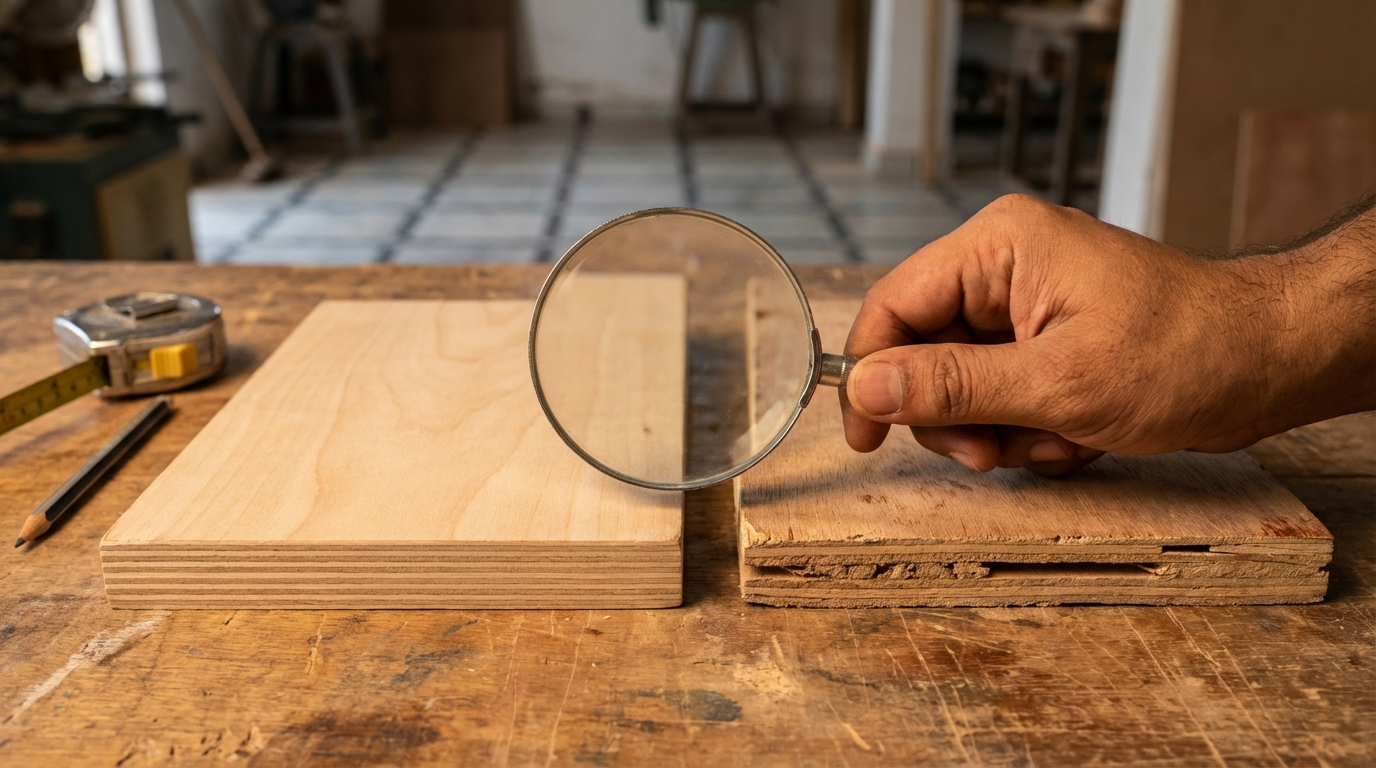
Core Gaps: It is indeed common for plywood boards to have gaps between the different layers of ply that are bonded together. Check the side profile. Too many gaps = weaker plywood, regardless of grade.
7. Forgetting about the application environment
A flat in Borivali might need different specs than a sea-facing flat in Worli. The Ghatkopar side gets more humid than some interior parts of the city. Think local.
Quality Checks You Can Do Yourself
Visual checks (takes 2 minutes):
- Check the surface for any defects, ensure the plywood is flat and free from warping, and check the edges for gaps in the layers.
- Look at the ISI mark—should be clearly stamped, not stuck on with a sticker
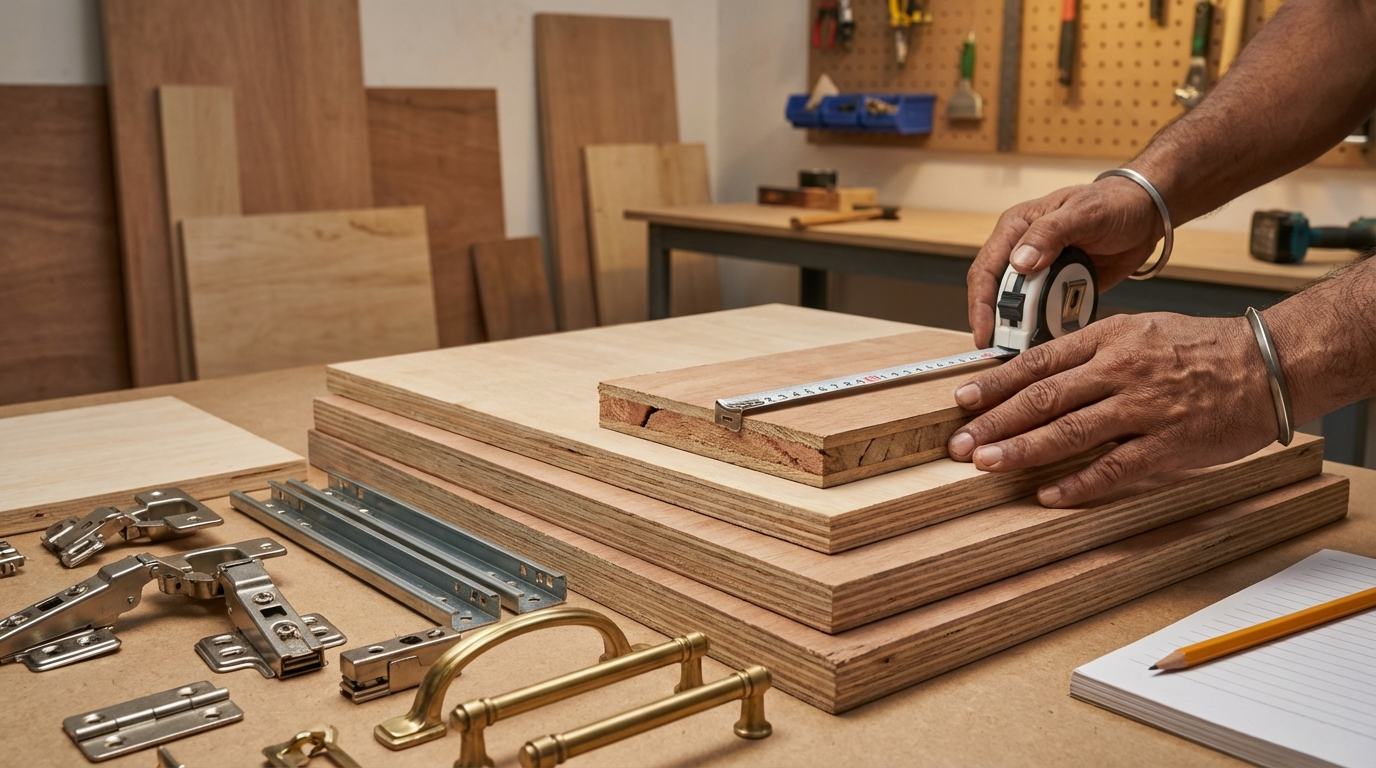
- Count the plies from the edge—more plies for the same thickness usually means better quality
- Check for consistency in color across the sheet
- Look for any delamination starting at corners
Questions to ask the dealer:
- "Is this IS 303 or IS 710 certified?"
- "Can I see the manufacturer test certificate?"
- "What species of wood is this made from?"
- "Is this calibrated plywood?" (uniform thickness throughout)
- "What's the warranty, and what does it cover?"
Simple field tests:
Tap test: Knock on the surface. Solid, consistent sound = good. Hollow spots = core voids.
Weight check: Lift the sheet. Heavier usually means denser core with fewer gaps. But don't just go by weight—some inferior ply is heavy because of excess glue or moisture.
Edge inspection: Look at the side profile. Layers should be uniform without large gaps between them.
Flex test: For smaller pieces, try to flex slightly. Should have some give but spring back. Doesn't apply to thick boards.
Here's a trick most dealers don't like: Ask to see a cross-section cut. If they won't cut a sample from the batch you're buying, that's suspicious. The good dealers understand this.
Warning signs:
- Rough, uneven surface (indicates poor sanding)
- Strong chemical smell (excess formaldehyde, poor curing)
- Visible gaps when looking at edges
- Price significantly below market rate
- No clear ISI marking
- Dealer gets defensive when you ask questions
Workmanship and Installation Tips
The best plywood grade won't save you from bad workmanship. Here's what matters:
Edge sealing—why it matters:
Every cut edge is exposed wood that will absorb moisture. Even BWP grade. Use edge banding tape or PVC edge strips on all exposed edges. For kitchen cabinets, some people use aluminum edge profiles for extra protection. Adds maybe ₹15-20 per running foot to your cost, but worth it.
Fastener guidance:
- For 18-19mm ply: Use screws 25-32mm long
- Pre-drill pilot holes to prevent splitting—especially near edges
- Don't screw too close to the edge—minimum 25mm from any edge
- For moisture-prone areas, use stainless steel or coated screws
What to tell your carpenter—briefing checklist:
- "All edges need edge banding. No exceptions."
- "Pre-drill every screw hole."
- "Use BWR/BWP grade for kitchen and bathroom—I'll verify."
- "Don't store the ply sheets directly on floor—use battens underneath."
- "Keep cut pieces covered if work extends over monsoon."
- "Show me the plywood before you start cutting."
I've seen carpenters skip edge sealing to save time. Had this one job in Powai back in 2019—the mistri insisted he knew better. Six months later, every cabinet corner was lifting. The client blamed the plywood, but it was the workmanship. Edge banding is not optional.
Storage and acclimatization:
Plywood should ideally sit in the same room where it'll be installed for 48-72 hours before cutting. This lets it adjust to local humidity. Sounds excessive, but it reduces warping later. Store flat, not leaning—leaning leads to bowing over time.
How Long Does Each Grade Last?
In dry, indoor conditions, MR plywood can last 8 to 10 years, sometimes more. With proper maintenance and in air-conditioned environments, I've seen MR grade furniture going strong after 12-15 years.
BWR grade in kitchens typically lasts 10-15 years if edges are properly sealed and there are no major water incidents (leaky pipes, flooding).
BWP/Marine grade can last 15-20+ years even in high-moisture environments. Marine plywood is extremely durable and preferred for applications where the plywood has prolonged exposure to water.
What affects longevity:
- Edge sealing quality (biggest factor for kitchens)
- Ventilation in the room
- Frequency of water exposure
- Quality of the laminate/finish on top
- Initial plywood quality (voids, bonding strength)
Signs of wear to watch for:
- Laminate or veneer lifting at corners or edges
- Soft spots when you press on the surface
- Visible swelling or warping
- Musty smell (indicates moisture trapped inside)
- Hardware (hinges, handles) coming loose repeatedly
When to consider replacement:
If you're seeing delamination spreading, or the ply feels soft/spongy, it's too late to repair. Better to replace the affected piece before it damages adjacent furniture or causes hygiene issues (mold growth in kitchens is a real problem).
Alternatives Worth Considering
Plywood isn't the only option for furniture anymore. Depending on your needs:
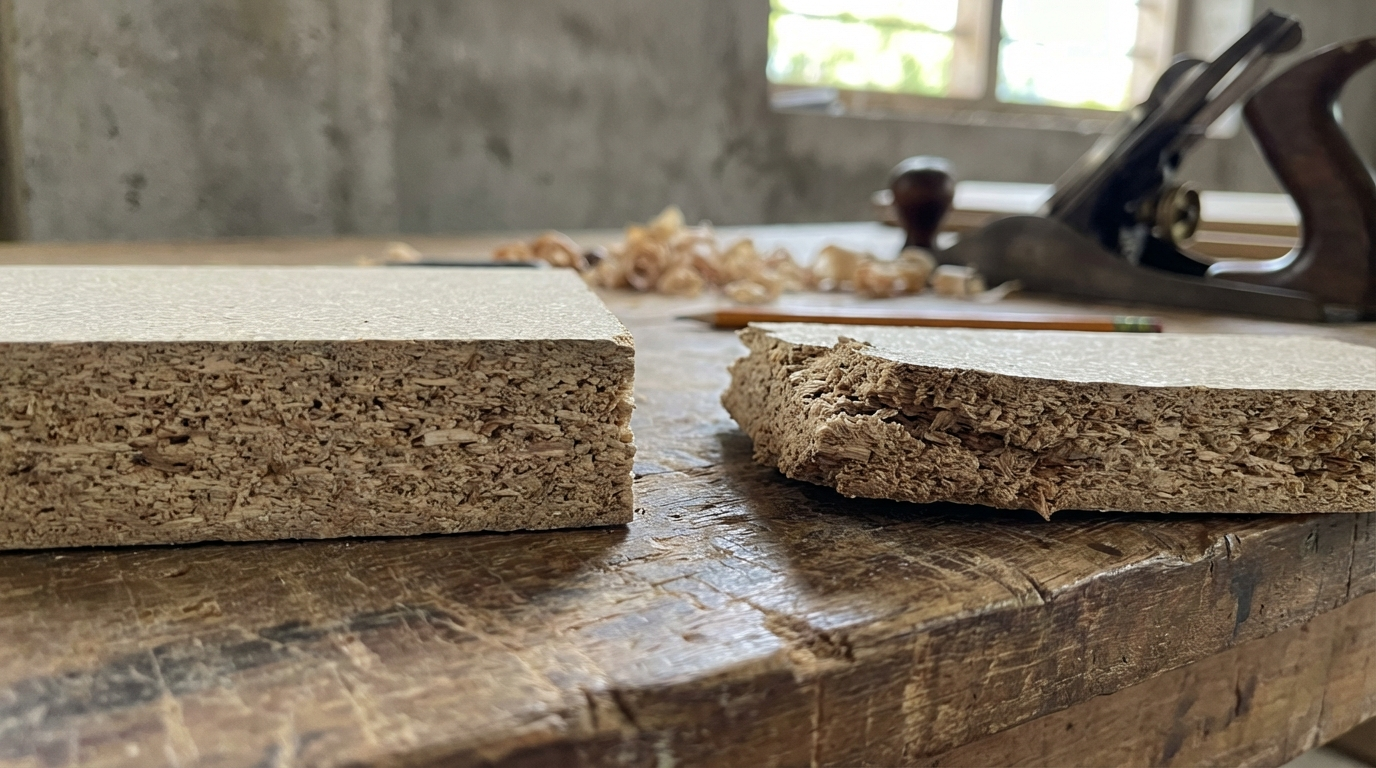
HDHMR (High Density High Moisture Resistant) boards: These are engineered wood boards that handle moisture better than MR plywood. Good for modular kitchen shutters. Often more consistent in thickness and easier for CNC cutting. Our HDHMR guide covers this in more detail if you're considering modular furniture.
WPC (Wood Plastic Composite): Genuinely waterproof—can be used for bathroom doors, door frames, and outdoor applications. Won't swell like plywood. But heavier and more expensive. The WPC door frame guide has more on this if you're doing bathroom renovations.
Blockboard: Good for large flat surfaces like tabletops and long shelves. Has a solid timber core. Less likely to sag over long spans compared to plywood. But not great for carved or detailed work.
If budget is tight, consider using BWR for critical areas (kitchen sink base, bathroom) and MR everywhere else. This targeted approach saves money without compromising on problem areas.
If you need better moisture resistance than standard grades but can't afford full marine ply throughout, look at calibrated BWR from reputed brands—Calibrated plywood is always the same thickness, which makes sure that all of the panels fit together perfectly. This is vital for making sure the joints are clean and sharp, and the final look is excellent.
Frequently Asked Questions
Is MR grade plywood waterproof?
No, MR-grade plywood is not suitable for outdoor use as it is not designed to withstand high humidity or moisture. It handles indoor humidity—like the general dampness during monsoon—but it cannot handle direct water contact. If water drips on it regularly, it will eventually swell and delaminate. For anything water-related, you need BWR minimum or BWP.
Can I use BWR plywood for bathrooms?
It depends on the specific application. BWR plywood is designed to resist water exposure, making it ideal for areas that may come into contact with moisture. Applications: Kitchens, bathrooms, and other spaces where occasional water exposure is expected. However, for sink base cabinets or areas directly under showers, I'd recommend BWP instead. BWR works for upper bathroom cabinets and vanity mirrors with good ventilation.
What's the difference between IS 303 and IS 710 plywood?
IS 303 is moisture-resistant and suited for indoor furniture, while IS 710 is boiling water-proof and ideal for high moisture areas. The 303 standard covers both MR and BWR grades (commercial use), while 710 is specifically for marine/BWP grade (waterproof applications). The most essential distinction between the two grades is the boiling water test, which is required for IS certification. For example, to achieve the IS 303 standard, plywood must be able to survive in hot water for a particular amount of time without coming apart. The IS 710 standard, on the other hand, is substantially harsher.
Is it true that marine plywood is only for boats?
No, that's a misconception. It can bear extreme weather conditions hence counters or panels exposed to humidity or moisture for a long time can be crafted with it. BWP grade is highly recommended for washrooms, kitchen and all the water prone areas. The "marine" name comes from its ability to handle water like boat construction requires, but it's perfectly suitable—and often recommended—for bathroom furniture, outdoor decks, and kitchen sink bases.
What if I live in a coastal city like Mumbai or Chennai—should I use BWP everywhere?
Homes near the coast experience high humidity, which can damage MR and BWR plywood. BWP plywood provides long-term protection against moisture. You don't need BWP everywhere, but I'd recommend it for kitchens and bathrooms. For bedroom wardrobes in coastal cities, BWR is a safer choice than MR—the salt air and humidity are harsher than inland cities. If the flat is sea-facing with lots of natural ventilation (read: salt air coming in), definitely upgrade your material choices.
How can I verify if the plywood I'm buying is genuine BWP grade?
It should carry an IS:710 certification, have termite resistance, and be bonded with phenol formaldehyde resin. These factors help it stay strong in damp areas. Look for the ISI mark stamped directly on the plywood (not a sticker). Ask for the manufacturer's test certificate. Reputed brands will have this documentation readily available. The dealer should be able to show you batch-wise certification. If they can't, that's a red flag.
Is fire-retardant plywood a separate grade from MR/BWR/BWP?
Fire Retardant Plywood is treated with chemicals that make it resistant to ignition and slow the spread of flames. It is designed to provide additional safety in fire-prone environments. This type of plywood maintains structural integrity under high temperatures and complies with fire safety standards. Fire-retardant is a treatment, not a water-resistance grade. You can have fire-retardant MR grade or fire-retardant BWR grade. For commercial spaces like restaurants, hotels, and offices, fire-retardant treatment is often required by building codes regardless of the moisture grade.
Why is there such a big price difference between brands for the same grade?
Several factors: wood species used (gurjan vs poplar vs eucalyptus), core quality (number of voids and gaps), adhesive quality, manufacturing process, and warranty terms. Market participants differentiate through product quality, brand reputation, distribution reach, and pricing strategies. A no-name brand might use lower quality veneers, have more core gaps, and offer minimal warranty. You often get what you pay for, though not always—some mid-tier brands offer excellent value.
What thickness should I use for kitchen cabinets?
For cabinet carcasses (the main body), 18mm or 19mm is standard. For shelves inside, 12mm works if the span is short (under 60cm). For back panels, 6mm or 9mm is sufficient. In India, the most commonly available sizes are 8 ft x 4 ft (2440 mm x 1220 mm). Thinner plywood is ideal for wall panelling and drawer bases, while thicker boards are preferred for beds, countertops, and wardrobes.
Can I use plywood in a pooja room with daily water offerings?
This is a common question in Indian homes. If water is offered daily and there's regular moisture, use BWR minimum. If there's a lot of water used (abhishekam regularly), consider BWP for the base cabinet and surfaces that might get wet. Also ensure the top surface has a waterproof laminate or stone. Better yet, consider a solid stone shelf for the area directly under the offerings.
Is it true that checking plywood weight tells you its quality?
Partially true. Denser plywood (fewer voids, better core) tends to be heavier. It is a superior grade of plywood which is higher in quality and strength as compared to both MR and BWR plywood. But weight alone isn't conclusive—some low-quality ply is heavy because it's absorbed moisture or has excess adhesive. Combine weight check with visual inspection of edges and surface quality for a better assessment.
How do I maintain plywood furniture to make it last longer?
To maintain plywood, ensure it is properly sealed and protected from moisture and environmental factors. Regularly inspect and repair any damages to prolong its lifespan. Wipe spills immediately. Ensure bathroom and kitchen ventilation is working. Check edges periodically for any lifting or damage. Don't place hot vessels directly on laminated surfaces. Fix any leaking pipes immediately—even BWP has limits.
Wrapping Up
Look, I've been in this business eighteen years now. The one thing that hasn't changed is that people overspend on grades they don't need in some areas and underspend where it matters. Use this guide to match the grade to the application, and you'll save money while getting better results.
Quick reference: Bedroom = MR is fine. Kitchen = BWR minimum, BWP under sinks. Bathroom = BWP for anything below waist height.
And seriously—don't let your carpenter skip the edge banding. That's where most plywood problems start.
Disclaimer: This content is provided for general informational purposes based on industry practices and publicly available information. Product specifications, standards, prices, and availability may vary by manufacturer, region, and time. Readers should independently verify details with manufacturers, dealers, or qualified professionals before making purchase or construction decisions.Want Plywood Suggestions?
Share a few details and a Sainik 710 specialist will suggest suitable brands and connect you to responsive dealers.