Carpenter Rate Guide 2026: Labour Charges for Furniture, Wardrobe & Kitchen in India
Updated carpenter rate guide 2026—labour charges for furniture, wardrobe & kitchen. Per sq ft rates, city-wise variations & negotiation tips for India.
Carpenter Labour Charges in 2026: What You'll Actually Pay
Carpenter labour rates in India range from ₹200 to ₹600 per square foot for furniture work, or ₹800 to ₹1,500 per day depending on skill level and city. Short version: If you're getting wardrobes, kitchen cabinets, or beds made, expect the mistri to charge somewhere between ₹240-350 per sq ft for labour-only contracts in most metros. Add another ₹800-1,200 per sq ft if he's also supplying materials like plywood, laminates, hardware, and fevicol. These numbers swing wildly based on where you live, how complex your design is, and honestly—how good your negotiation skills are.
This guide is right for you if:
- You're about to get interiors done and want to know if you're being quoted fair rates
- You've never hired a carpenter before and the whole sq ft calculation thing confuses you (trust me, you're not alone—it confused me for my first five years in this business)
- You want to understand the difference between labour-only contracts and full contracts with materials
- You're in a metro like Mumbai, Bangalore, Delhi, or Chennai and wondering why rates seem higher than what your cousin paid in Lucknow last year
Skip this if:
- You're looking for modular furniture rates—that's a different calculation altogether
- You need construction carpentry rates for shuttering and formwork
Bottom line: Get at least three quotes, understand exactly what's included in each, and never—I repeat never—pay more than 30% advance.
What Carpenter Labour Rates Actually Mean
Carpenter labour charges refer to the cost you pay the mistri for his work—cutting plywood, assembling furniture, applying laminates, fitting hardware—without the cost of materials. This is different from a "with material" quote where the carpenter procures everything and charges you a combined rate per square foot. Most people confuse these two, and that's where the trouble starts.
Square foot pricing is a straightforward method where you're charged a fixed rate per square foot of the area being worked on. Percentage pricing involves the carpenter charging a percentage of the total project cost—this percentage can vary widely, from 27% to 40% in India.
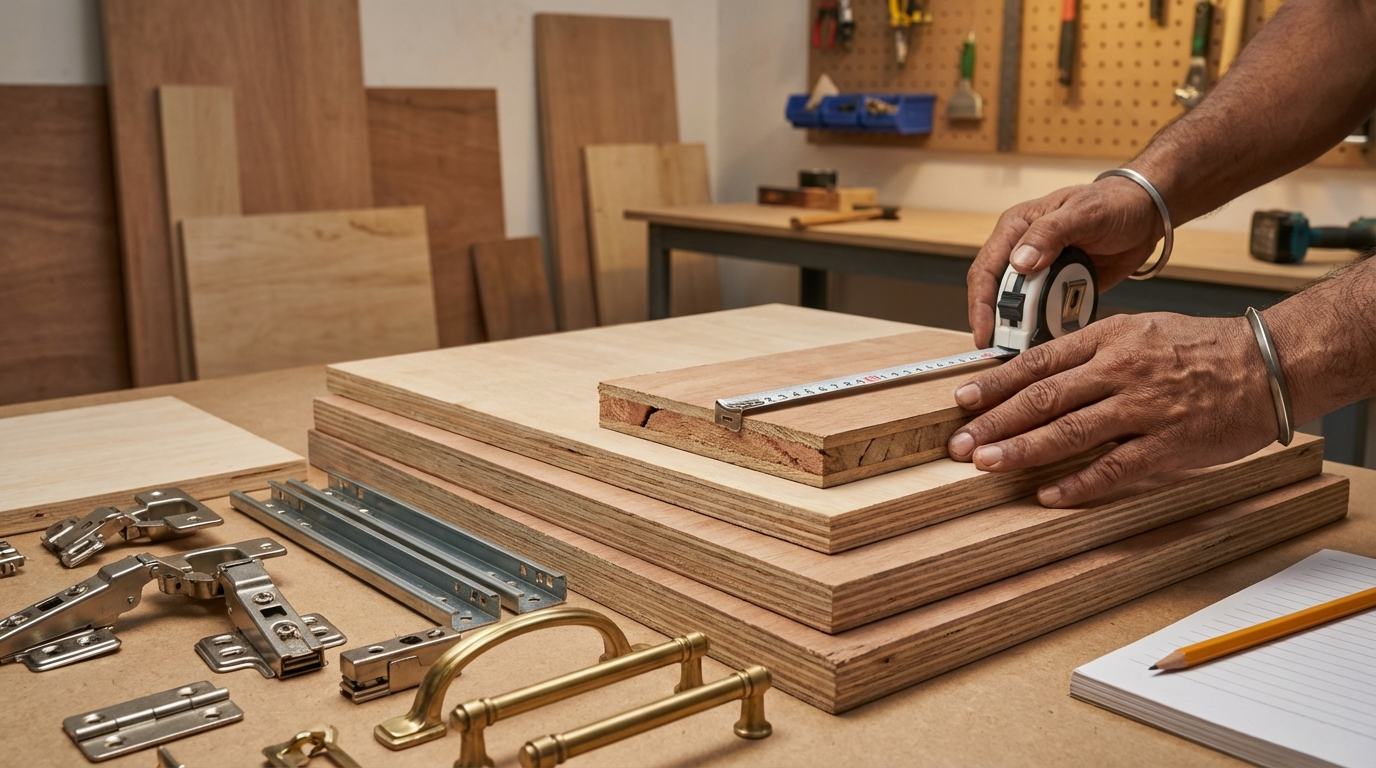
Most people think the "sq ft" in carpentry is the same as carpet area. Actually, it's not even close. The per square feet in interiors is actually calculated by measuring the surface area of the exposed furniture using two adjacent sides. For example, in case of a wardrobe of 7ft height and 6ft width—that's 42 sq ft, not the floor space it occupies. The total length of the wardrobe should be multiplied by the height to get the size of the wardrobe. For example, if the wardrobe is 6 feet long and 7 feet high, then the size of the wardrobe will be 42 square feet.
So when a carpenter says "₹300 per sq ft," he means ₹300 multiplied by the height times width of your wardrobe front—not the space it takes on your floor. This trips up almost everyone I work with.
Why Carpenter Rates Vary So Much Across Indian Cities
Here's the thing about India. A carpenter in Bandra will charge you almost double what one in Dombivli quotes. Same city, technically. Completely different economics.
India, with its diverse geographies, witnesses varying carpenter rates. Urban cities like Mumbai and Delhi often have carpenters who charge higher rates compared to smaller towns and rural areas. On an average, a carpenter might charge anywhere from INR 800 to INR 1500 per day based on their expertise and the nature of the job.
Carpenters in posh neighborhoods or commercial districts usually charge more than those in residential or less developed parts of the city. I've seen this play out countless times in Mumbai—the Powai carpenter expects ₹550/sq ft while the Chembur guy asks ₹380 for identical work.
Climate plays a role too, though not in the way you'd expect. In Chennai and coastal Karnataka, carpenters dealing with marine ply and moisture-resistant materials charge a premium because the work is trickier. Edges need better sealing. Joints need more attention. The 80-85% humidity during monsoon doesn't forgive sloppy work—and good carpenters know this.
Then there's demand. Post-Diwali to March is peak interior season. Try getting a decent carpenter in Bangalore's Whitefield during January—you'll either wait three weeks or pay 15-20% more. That's just how it is.
How are carpenter charges different in South India vs North India?
Funny thing—the difference isn't as dramatic as people assume. In a city of Mumbai, an experienced carpenter would charge you around 30% of the cost of the raw materials. If you bring materials such as plywood, laminates, glue, and other accessories for around 10000 rupees, then the carpenters would charge the labour cost of rupees 3000. Such as in Bangalore, a carpenter might charge 25%, sameway in Pune it might be 25% approximately.
What does differ? Work culture. My experience says South Indian carpenters—particularly in Chennai and Coimbatore—tend to be more systematic about measurements and finishing. North Indian mistris, especially those from UP and Bihar working in Delhi-NCR, work faster but you need to supervise more closely. Generalizations, sure. But after 18 years, patterns emerge.
Types of Carpenter Work and Their Typical Rates
Not all carpentry is priced the same. Kitchen work costs more than a simple wardrobe. A TV unit with lots of design work costs more than a plain one. Here's how it breaks down:
| Type of Work | Labour Only (₹/sq ft) | With Material (₹/sq ft) | My Take |
|---|---|---|---|
| Wardrobe (Commercial Ply + Laminate) | ₹240-350 | ₹1,400-1,800 | Most common request. Don't overpay. |
| Wardrobe (Marine Ply + Laminate) | ₹280-400 | ₹1,800-2,200 | Worth it if you're in a humid city |
| Kitchen Cabinets | ₹275-450 | ₹1,500-2,500 | Complexity drives this up fast |
| Bed with Storage | ₹250-380 | ₹1,400-1,700 | Hydraulic mechanisms cost extra—always |
| Loft/Storage | ₹180-250 | ₹900-1,200 | Simplest work. Don't let them charge wardrobe rates. |
| TV Unit | ₹220-350 | ₹1,100-1,600 | Depends heavily on design |
| Wall Panelling | ₹160-280 | ₹800-1,400 | Veneer finish pushes this higher |
| Study Table | ₹200-320 | ₹1,000-1,400 | — |
Usual Labour Charges for Wardrobe = 240-250/sqft, Loft = 180-200/Sqft, Kitchen = 275/Sqft, Panelling = 180/Sqft. These are baseline figures from Bangalore—adjust 10-15% higher for Mumbai, similar for Delhi.
Honestly? Quoted rates can run higher—wardrobe at Rs 350 per sqft, Kitchen at Rs 400 per sqft, TV unit Box at Rs 350 per sqft, TV unit box paneling at Rs 200 per sqft, Loft at Rs 220 per sqft. If someone quotes these rates, they're not necessarily cheating you—they might just be more skilled or in higher demand. But you should know what's "normal" before agreeing.
Price Reality Check: What Actually Affects Your Final Bill
Here's what actually affects your final bill—and most of it has nothing to do with the base labour rate.
Design Complexity: Some wardrobe designs are complex. Some include more number of drawers which increases time as well as material. Some wardrobe doors have complex designs which have to be cut out or carved by the workers. Complexity of design results not just in determining time required but also wastage of material. A plain shutter wardrobe might cost ₹280/sq ft labour. Add CNC cut designs, grooves, handles in unusual positions? Now you're at ₹400+.
Hardware Quality: Sliding doors will increase the price because the cost of channels is usually many times the cost of hinges which they replace. Some vendors do say that they do not charge anything extra but be careful since lot of local channels come for a fraction of cost of a Hettich, Ebco or Hafele channel. Under no circumstances should any unknown brand be accepted.
Soft-Close Mechanisms: Loft addition adds ₹1,500 per sq. ft. Soft-close hinges and channels add ₹80-150 per piece depending on brand. Seems small, but a kitchen has 20-30 hinges minimum.
Finish Type: The carpentry costs per square foot for laminate-finish cabinets range between ₹1200 to ₹1500 and the carpentry rates for veneer finish cabinets range between ₹2000 to ₹2500 per square foot. Yes, that's old data (2018), but the ratio still holds—veneer costs 40-60% more than laminate finish.
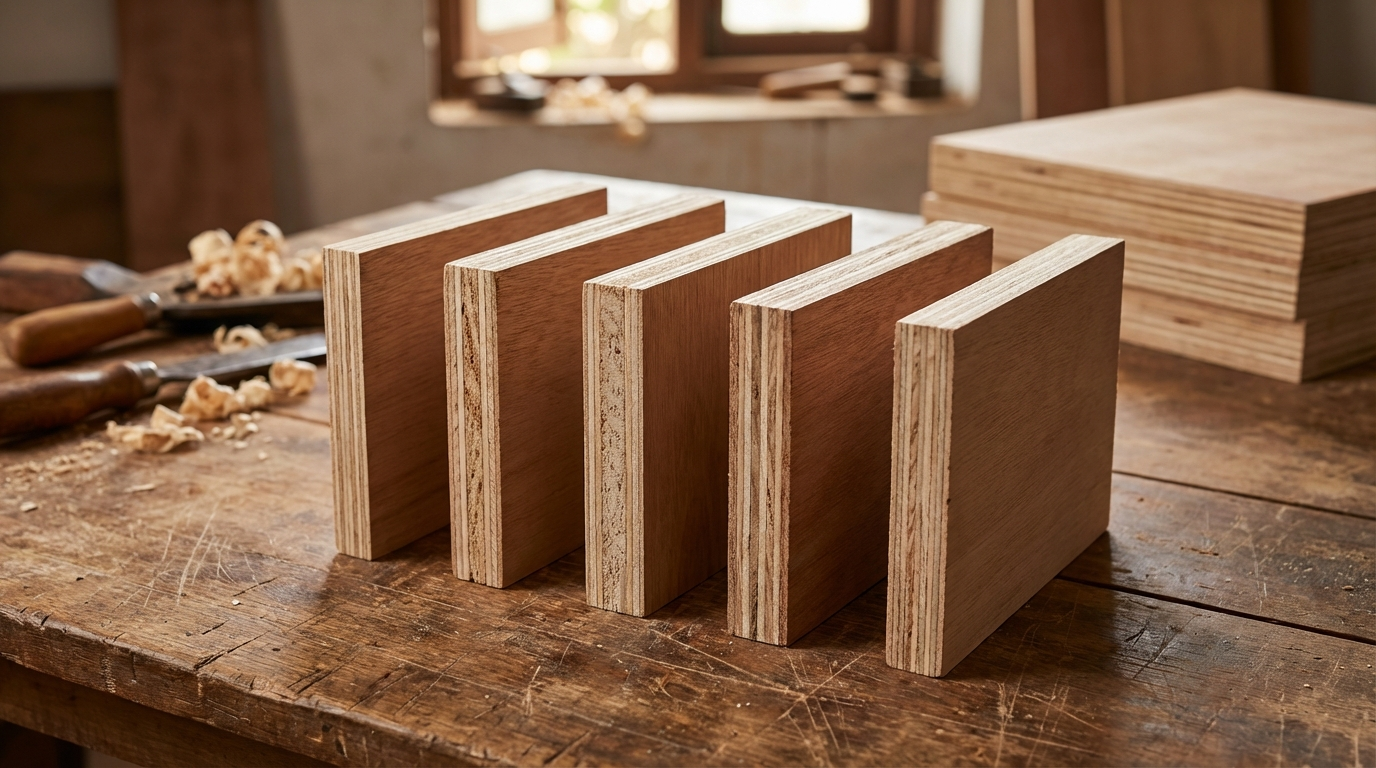
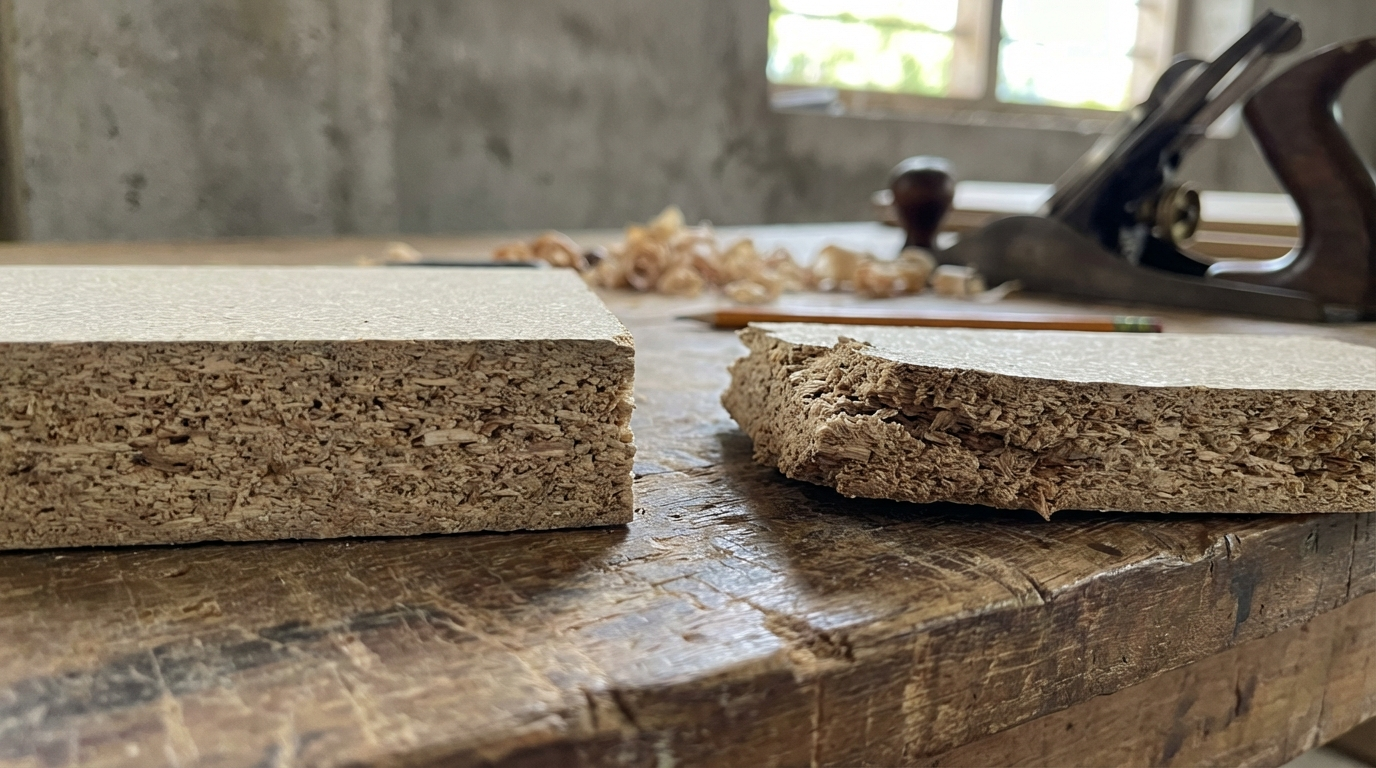
Plywood Grade: Plywood can be replaced by particle board (please no!) or MDF (well…depends…) but even plywood comes in many different qualities. You have garjan plywoods which are very cheap (some even as low as Rs.30 or so per square feet for a 18 mm commercial ply) but not durable to some amazing plywoods which could go upto few 100's.
Is labour-only contract actually cheaper?
Usually yes. But there's a catch nobody tells you about.
Working with the carpenter on only a labour contract, where the homeowner procures all the raw materials—keep in mind that this way of working will require a lot of your personal time and energy, because the workers might require raw materials at odd times of the day, which you might not be able to provide. This can result in unnecessary delay of the project.
I've seen this happen. Client chooses labour-only to save money. Carpenter needs 8mm ply for back panels on a Tuesday afternoon. Client is in office. Work stops. Project extends by a week. Sometimes the "savings" aren't worth the headache—especially if you have a regular 9-to-6 job.
City-Wise Carpenter Rate Comparison
Let me break this down by city since that's what most people actually want to know:
| City | Daily Rate (₹) | Per Sq Ft Labour (₹) | Notes |
|---|---|---|---|
| Mumbai | 800-1,200 | 400-600 | Mumbai Labour – Rs.550 sq. ft. With Material – Rs.1750 Sq. ft. |
| Navi Mumbai | 700-1,000 | 350-500 | Navi Mumbai Labour – Rs.500 sq. ft. |
| Thane | 650-950 | 320-450 | Slightly lower than core Mumbai |
| Delhi-NCR | 750-1,100 | 350-550 | Carpenter labour rates can be anywhere between Rs 100 and Rs 500 per sq ft. |
| Bangalore | 700-1,000 | 280-450 | Some clients report paying 180 per sqft for entire wood work including kitchen and wardrobes. |
| Chennai | 650-900 | 260-400 | Generally 10-15% lower than Bangalore |
| Hyderabad | 600-850 | 250-380 | Competitive market, good rates |
| Pune | 650-950 | 280-420 | Rising fast, was cheaper 3 years ago |
| Kolkata | 550-800 | 220-350 | Generally lower than other metros |
| Ahmedabad | 500-750 | 200-320 | Budget-friendly market |
For interior carpentry work, carpenter labor prices in Mumbai can range from Rs. 200 to Rs. 1200 per square foot. The materials you choose also affect this charge. That's a huge range, I know. The low end is basic repairs; the high end is complex kitchen work with premium finishes.
In Kerala, Average Daily Wage Rate for Carpenter was reported at 1,047.620 INR in Feb 2025. Kerala is an outlier—highest daily rates in the country. If you're building a home in Kochi or Trivandrum, budget 20-30% more than what you'd pay in Chennai or Bangalore.
How to Choose the Right Carpenter and Contract Type
Step 1: Decide if you want labour-only or full contract. If you have time to supervise and buy materials yourself, labour-only saves 15-25%. If you're busy, full contract is less headache.
Step 2: Get minimum three quotes. Not two. Three. Make sure to take separate quotations for each job and cross-check the rates before finalisation. It is recommended to take parallel quotations or the cost of carpentry work from at least two or three other carpenters before you finalise.
Step 3: Ask for a detailed breakdown. Not just "wardrobe ₹45,000." You need: area in sq ft, rate per sq ft, hardware costs, edge banding, polishing if any. Everything itemized.
Step 4: Check previous work. Visit a site where they've worked if possible. Photos can be misleading—I've seen gorgeous Instagram pictures from carpenters who deliver mediocre work.
Step 5: Negotiate on scope, not just price. Sometimes getting a lower rate means they'll cut corners. Better to negotiate what's included—like adding soft-close hinges at the same rate.
| Your Situation | Recommended Contract | Why |
|---|---|---|
| Working full-time, limited availability | Full contract with material | Less supervision needed, carpenter manages everything |
| Tight budget, flexible schedule | Labour-only | Save 20-25% by buying materials yourself |
| Large project (full flat interiors) | Full contract, milestone payments | Follow a target-oriented way to pay the carpenter. The steps may include small part-payments which are to be paid on procurement of raw material, completion of basic fabrication of furniture, pasting of laminates or veneer, followed by polishing and final handover. |
| Just one wardrobe or small item | Either works | For small jobs, convenience matters more than savings |
| Want factory-finish quality | Modular vendor, not local carpenter | Factory finish compared to Manual work is top class. |
Red flags to walk away from:
- Refuse to provide a quotation—a transparent carpenter will be happy to provide a detailed quote.
- Offer unusually low prices—extremely low prices could indicate poor workmanship or the use of substandard materials.
- Pressure you to make a quick decision—a reputable carpenter will give you time to consider your options and compare quotes.
- Demand more than 30-40% advance before starting
- Won't specify brand of plywood and hardware in writing
Common Mistakes People Make with Carpenter Contracts
1. Not measuring properly before getting quotes. Get your room dimensions measured accurately. A 7x6 ft wardrobe is 42 sq ft. A 7x8 ft one is 56 sq ft. That's a 33% difference in cost. I've seen clients shocked at final bills because they eyeballed measurements.
2. Comparing labour-only quotes with full quotes. This drives me crazy. Someone will say "But the other carpenter quoted ₹280/sq ft and you're saying ₹1,400!" Yes, because one includes material and one doesn't. Apples and oranges.
3. Ignoring hardware quality. A kitchen might have 40 hinges, 20 drawer channels, 15 handles. Cheap hardware fails in 2 years. Premium Hettich or Hafele lasts 10-15 years. The ₹3,000-5,000 extra upfront saves ₹15,000 in repairs later. I've seen this play out in at least fifty kitchens across Mumbai and Pune.
4. Not getting edge banding included in the quote. Unsealed plywood edges absorb moisture. By the second monsoon, they swell. Laminate starts lifting at corners. Do not forget to ask for the application of an anti-termite chemical before finishing the furniture or woodwork with veneer or laminate in the scope of work.
5. Making design changes mid-project. This one really frustrates me. If there are constant changes during fabrication of furniture at site, it will not only delay the project but also increase the carpentry costs, cause wastage of raw materials and result in unnecessary disagreements (or fights) between the homeowner and the carpenter.
6. Paying full amount before completion. Some big projects hold back a payment of 5 per cent after completion of the carpentry work for one month so that the carpenters are available to resolve minor issues at site. For the smaller projects, one must make the final payment only after completion of work.
7. Skipping the written agreement. A comprehensive carpenter agreement should include the project scope, detailed material specifications, timeline with milestones, payment terms, warranty information, and a dispute resolution clause. Doesn't need to be fancy—even a WhatsApp message with all details confirmed works.
8. Choosing the cheapest quote without understanding why it's cheap. There was this flat in Andheri—2022, I think—where the owner went with the lowest bidder. Saved about ₹30,000. The carpenter used garjan ply (the really cheap variety). Within 18 months, wardrobe back panels were sagging. Complete redo cost ₹85,000. False economy.
9. Not specifying plywood brand in writing. "Commercial ply" can mean Century, Greenply, or some no-name garbage. Always insist on Good materials (Greenply/Century Ply etc..) and Fittings from (Hettich/Ebco).
10. Ignoring the carpenter's helper costs. Carpenter charges Maximum ₹600 per day. If he takes assistant it will be ₹400 per day for him. For large projects, the helper's cost adds up—make sure it's included in the quote.
Quality Checks You Can Do Yourself
Visual Checks During Work:
- Plywood edges should be straight, not wavy or splintered
- Laminate alignment at joints—gaps shouldn't be visible from arm's length
- Check if they're using proper fevicol or some cheap substitute (ask to see the can)
- Shutters should close flush, not stick out at angles
- Drawers should slide smoothly, not scrape
- Back panels shouldn't bow inward when you press them
Questions to Ask Your Carpenter:
- "What grade plywood are you using—MR or BWR?" (For kitchens, should be BWR)
- "Which brand of hardware—can I see the packaging?"
- "Are you sealing all edges, including back panel edges?"
- "What's included in the rate—edge banding? Anti-termite treatment?"
- "How long will this take, and what happens if it goes over?"
Simple Tests at Final Inspection:
- Tap test: Knock on the surface. Hollow sound everywhere is fine. Hollow in some spots, solid in others means glue didn't spread evenly.
- Level check: Put a glass of water on shelves. If it slides, the shelf isn't level.
- Shutter alignment: Close all doors and look along the edge. Gaps should be uniform, not wider at top than bottom.
- Hardware test: Open and close every drawer, every door, at least 10 times. Stiffness or scraping means improper installation.
- Edge inspection: Run your finger along all edges. Rough spots mean poor finishing.
Warning Signs of Poor Work:
- Sawdust left inside cabinets (lazy cleanup)
- Screw heads visible on laminated surfaces
- Uneven spacing between shutters
- Hinges not aligned in a straight line
- Handles crooked or at different heights
- White glue visible at laminate joints
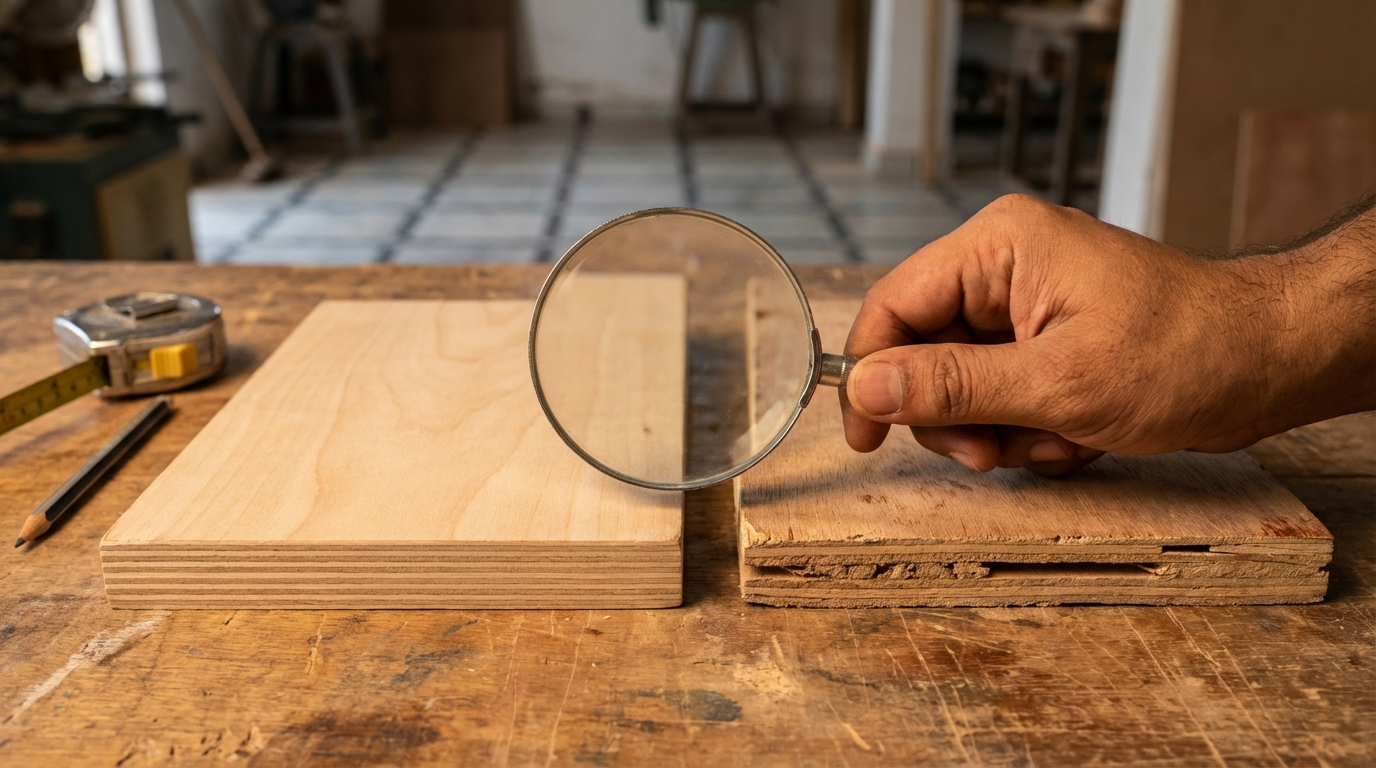
Here's a trick most carpenters don't like—ask them to show you a piece of leftover plywood from your job. Check the thickness with a scale. 18mm ply should actually be 17-18mm, not 15-16mm. Some suppliers sell undersized sheets as full thickness, and carpenters pocket the difference.
What to Tell Your Carpenter: A Briefing Checklist
Before work starts, sit down with your carpenter and cover these points. Write them down. Both of you sign or at least acknowledge on WhatsApp.
- Plywood specification: Brand (Century/Greenply/etc.), grade (MR/BWR/Marine), thickness for each application (19mm for structure, 12mm for shelves, 6-8mm for back panels)
- Laminate details: Brand, texture (matte/glossy), and specific shade codes if possible
- Hardware brand: Hettich/Ebco/Hafele for premium, or specify if budget options are okay
- Edge treatment: PVC edge banding (1mm or 2mm), sealing all exposed edges including back panels
- Payment milestones: 30% advance, 30% after basic structure, 30% after laminate, 10% after final handover
- Timeline: Start date, expected completion date, penalty clause for delays if you want (most carpenters won't agree, but worth asking)
I've seen carpenters skip edge sealing on back panels because "it's not visible." Within two monsoons in Mumbai's humidity, those edges absorb moisture, and the whole cabinet base swells. Insist on it in writing.
What thickness of plywood should I use for wardrobes?
Material rates includes non-branded commercial plywood, fevicol, designer laminate, white laminate, handle, hinges, screws, biding patti, lock & labour. Commercial plywood thickness 6 mm, 12 mm, 19 mm. For wardrobes specifically: 19mm for sides, top, and bottom; 12mm for fixed shelves; 6-8mm for back panels. Some carpenters try using 12mm for main structure to save costs—don't allow it. The wardrobe will feel flimsy and won't last.
How Long Does Carpenter-Made Furniture Actually Last?
Here's what I tell my clients honestly: well-made furniture with good plywood and hardware should last 15-20 years minimum. The reality? It depends heavily on three things—material quality, maintenance, and where you live.
In humid coastal cities like Mumbai, Chennai, or Mangalore, moisture is your enemy. Marine ply kitchens last 12-15 years if edges are properly sealed. Commercial ply in the same conditions? Maybe 7-8 years before you see swelling.
In drier climates—Bangalore, Pune, most of North India—commercial ply lasts longer. 10-12 years is common. Hyderabad is interesting—dry for most of the year but brutal during monsoon. I recommend BWR grade minimum for any furniture that might contact water.
Signs of wear to watch for:
- Laminate peeling at edges (moisture damage or poor edge banding)
- Sagging shelves (overloaded or thin plywood used)
- Stiff hinges (need oiling or replacement)
- Warping of doors (humidity changes or poor quality ply)
- Drawer fronts coming loose (hinge screws pulling out—usually means MDF core, not plywood)
When to consider replacement: If repairs are costing you more than 30% of new furniture cost annually, it's time to replace. Also, if structural members (sides, bottom) are damaged, repairs rarely make economic sense.
Alternatives Worth Considering
Modular Furniture from Brands: Companies like Livspace, HomeLane, and local modular vendors offer factory-finished furniture. The starting prices are offered by carpenters and semi-modular vendors, while the high end prices are usually quoted by most reputed brands. Between these two extremes are the modular vendors and interior designers. While a modular vendor provides with better quality than a semi-modular vendor or carpenter, a good interior designer will provide with classy design services as well. Costs more (₹1,800-2,500/sq ft typically) but finish quality is superior.
Ready-Made Furniture: For items like shoe racks, small cabinets, bookcases—sometimes ready-made from Pepperfry or Urban Ladder makes sense. No waiting, fixed price, easy to replace later. Not ideal for wardrobes though.
Factory-Finish from Local Fabricators: Many cities now have small factories that do CNC cutting and edge banding, then send for site assembly. Better consistency than pure on-site carpentry, cheaper than big brands. Ask around in your city—Bangalore has dozens of these in Bommanahalli and Hebbal areas.
For more guidance on plywood selection for furniture, our plywood grades guide covers the MR vs BWR vs Marine comparison in detail. If you're specifically looking at kitchen work, the HDHMR board guide discusses when engineered boards make sense over traditional plywood.
FAQs
What is the average carpenter daily rate in India in 2026?
There are no uniform carpenter labour charges applicable across India. The cost is determined not only by the number of hours worked, but also by the carpenter's skill level and the task's intricacy. From repairing a door to designing a modular cabinet, labour charges vary greatly. For basic tasks like minor fittings and adjustments, a carpenter labour cost can range from Rs. 450 to Rs. 550 per day. For moderate tasks such as installing shelves or wooden doors, a carpenter can charge anywhere between Rs. 750 to Rs. 900 per day. For advanced jobs like modular kitchens or bespoke furniture, a carpenter can charge anywhere between Rs. 1,150 to Rs. 1,300 per day.
Is it true that percentage-based pricing is always cheaper than per sq ft rates?
Common belief: Percentage pricing (25-30% of material cost) is simpler and cheaper. Reality: While percentage pricing may seem simpler initially, it can lead to unexpected costs. Some carpenters might charge a lower percentage but inflate the prices of materials like plywood. I've seen carpenters buy ply at ₹80/sq ft and bill the client at ₹110/sq ft, then charge 30% on top. You end up paying more than a straightforward per sq ft rate. Always ask for material bills if going percentage route.
What if I live in a coastal city like Chennai or Mumbai—should I budget more?
Yes, 10-15% more at minimum. The humidity (75-90% during monsoon months) demands better materials. Marine ply instead of commercial, BWR instead of MR, more careful edge sealing. Also, skilled carpenters who understand moisture management charge a premium. But skimping here costs you much more in repairs over 5-10 years. I've seen Bandra kitchens disintegrate in 4 years because owners insisted on commercial ply to save money.
Is it true that carpenters always overcharge for hardware?
Not always, but commonly—yes. Percentage pricing involves the carpenter charging a percentage of the total project cost. This percentage can vary widely, from 27% to 40% in India. If the carpenter supplies hardware, he'll typically mark it up 15-30%. Buying hardware yourself (from a trusted dealer, not Amazon) can save money, but then you need to know exactly what's needed—hinge types, channel lengths, soft-close mechanisms. It's a trade-off between savings and convenience.
What is the ideal payment schedule for a carpentry project?
Ask for the time target or the number of weeks that will be required by the carpenter to complete the job. Divide the payment into the number of weeks and pay accordingly week-wise. You can also follow a target-oriented way to pay the carpenter. The steps may include small part-payments which are to be paid on procurement of raw material, completion of basic fabrication of furniture, pasting of laminates or veneer, followed by polishing and final handover. My recommendation: 20-30% advance maximum, 30% after structure, 30% after laminate/veneer, 10% held back for 2 weeks after completion.
Is it true that Delhi carpenters are more expensive than Bangalore carpenters?
Slightly, on average—maybe 5-10% difference. But the variation within each city is far greater than the variation between cities. A premium carpenter in Whitefield costs more than a budget one in Dwarka. Metro cities like Delhi, Mumbai, and Bangalore have higher rates compared to tier-2 cities, but among the metros themselves, differences are marginal.
Can I negotiate carpenter rates, and by how much?
Be prepared to walk away if a carpenter's rates are unreasonable. Bundle projects—if you have multiple projects, you might be able to negotiate a better rate by bundling them together. In my experience, 5-10% negotiation is usually possible on large projects (full flat interiors). For single wardrobe jobs, carpenters have less flexibility—maybe ₹10-20/sq ft at most. Never push so hard that they compromise on materials to hit your price.
What if the carpenter uses MDF instead of plywood—is that acceptable?
Plywood can be replaced by particle board (please no!) or MDF (well…depends…). MDF works for certain applications—back panels, drawer bottoms, some internal components. For main structural parts like wardrobe sides, plywood is non-negotiable. MDF swells badly with moisture and doesn't hold screws as well over time. If your carpenter wants to use MDF for visible parts or load-bearing areas, find another carpenter.
Is it true that factory-finish interiors are always better than on-site carpentry?
Factory finish compared to Manual work is top class. Even if you invest additional amount it is worth compared to Manual Interior Work. Just ensure in Factory Finish interiors not to use the MDF board. For consistency and finish quality—generally yes. But on-site carpentry allows more customization, adjustments for uneven walls, and sometimes better material choices. The ideal is probably hybrid: factory-cut components, site assembly by skilled carpenter.
What happens if the carpenter delays the project?
Unless you have a written penalty clause (rare for residential work), not much legally. Practically, you can hold back payments. Most delays happen because of material availability issues or the carpenter taking parallel jobs. Ask upfront: "Are you working on other projects simultaneously?" Get the expected completion date in writing. If they're consistently missing deadlines, withhold payment and consider changing contractors—though mid-project switches are messy.
How do I calculate total furniture cost for a 2BHK flat?
Rough calculation method: Count your wardrobes (typically 2-3), multiply by average size (say 50 sq ft each). Add kitchen (70-100 sq ft usually). TV unit (20-30 sq ft). Study if needed. Multiply total sq ft by rate per sq ft. On average, the kitchen construction cost in India ranges between ₹1,200 – ₹3,500 per sq ft in 2025. For example, a standard 100 sq ft kitchen may cost anywhere from ₹1.2 lakh to ₹3.5 lakh. For 2BHK interiors with 3 wardrobes + kitchen + TV unit: expect ₹3.5-5 lakh at mid-range quality in metros. Budget and premium options vary widely on either side.
Is it better to hire multiple specialized carpenters or one team for everything?
Some carpenters also work as contractors, as they have their personal team of electricians, false-ceiling fabricators, flooring team and others. You can consider hiring the entire team for the interior work of your home. This mode of working shall make coordination between different agencies much easier. One team is almost always better for residential projects. Coordination between multiple contractors is a nightmare—someone's always waiting for someone else to finish. The slight premium for a team that handles everything is worth the reduced headache.
Right, that's about everything I know about carpenter rates. Your local market might be different—these are general guidelines, not bible. Talk to at least three carpenters, get everything in writing, and don't pay the final 10% until you've lived with the furniture for a week or two. Small issues always emerge after the dust settles. Good luck with your project.
Disclaimer: This content is provided for general informational purposes based on industry practices and publicly available information. Product specifications, standards, prices, and availability may vary by manufacturer, region, and time. Readers should independently verify details with manufacturers, dealers, or qualified professionals before making purchase or construction decisions.
Want Plywood Suggestions?
Share a few details and a Sainik 710 specialist will suggest suitable brands and connect you to responsive dealers.