Wall Panel Design Ideas: 35+ WPC, PVC & Wooden Panels for Living Room & Bedroom
Explore 35+ wall panel designs—WPC, PVC & wooden options for living room & bedroom. Material guide, installation tips & price comparison for India.
Wall Panel Designs: The Quick Answer You Actually Need
Wall panel design is the art and science of covering walls with pre-fabricated sheets—WPC, PVC, or wood-based—to add texture, depth, and character without the mess of traditional painting or tiling. Short version: If you want a quick room transformation with minimal labour hassles, wall panels are your best bet. WPC gives you the wood look without termite worries, PVC works where budget is tight and moisture is high, and solid wood or veneer panels deliver that premium warmth nothing else quite matches. The right choice depends on your room, your climate, and honestly—your budget.
This is right for you if:
- You want an accent wall that doesn't need repainting every few years
- Your living room or bedroom needs texture but you don't want the hassle of traditional woodwork—especially true in humid cities like Mumbai or Chennai where solid wood can warp within a season
- You're tired of dealing with carpenters for weeks
- Budget is anywhere between ₹40-500 per sq ft depending on material choice
Skip this if:
- You're looking for something purely temporary—panels are a commitment, not a quick fix you'll change next year
- The wall has serious dampness issues (fix that first, then panel)
Bottom line: For most Indian homes in 2026, WPC fluted panels offer the best balance of looks, durability, and value—PVC for bathrooms and utility areas, solid wood or veneer only if budget allows and you're in a drier climate zone.
What Wall Panelling Actually Means (No Jargon)
Wall paneling is a decorative and functional panel that is added to interior walls to improve the overall aesthetic of the room and add structural depth. Think of it as dressing your walls in something more interesting than paint. Originally, wall panelings were used for insulation and protection, but modern wall paneling focuses not only on insulation but on style as well.
Most people think wall panels are just about looks. Actually, they serve three functions—acoustic dampening (especially the fluted and grooved varieties), thermal insulation in extreme climates, and yes, covering up imperfect walls without replastering. That last one? More common than anyone admits. I've done probably forty accent wall projects where the real motivation was hiding cracks or uneven plaster, not aesthetics.
The three main material categories you'll encounter:
- WPC (Wood Plastic Composite): WPC stands for Wood Plastic Composite, which is a material made from a combination of wood fiber and plastic. WPC wall panels, also known as Wood-Plastic Composite wall panels, are an innovative building material that combines the natural look and texture of wood with the durability and low-maintenance properties of plastic. They are made by mixing wood fibers or sawdust with plastic resin and additives, which are then formed into panels through a process of extrusion or compression molding.
- PVC (Polyvinyl Chloride): PVC usually refers to polyvinyl chloride, a man-made plastic polymer. PVC wall panels are usually made from polyvinyl chloride resin and other additives. Due to the nature of the material, PVC wall panels are lightweight, easy to install, and resistant to moisture and mold.
- Wood/Veneer: Solid wood, engineered wood (MDF, plywood base), or veneer-on-substrate—the traditional option that still beats everything for that authentic warmth
Why Wall Panels Matter Specifically in Indian Homes
Here's the thing most international guides miss completely. Indian conditions are brutal on interior materials. In Mumbai, we hit 85-90% relative humidity for months during monsoon. Chennai stays hot and humid year-round. Kolkata gets both—humid summers and damp winters. Even "dry" cities like Delhi swing between 20% RH in peak summer to 80%+ during August-September.
WPC wall panels combine the natural beauty of wood with the durability of plastic, making them ideal for Indian climates prone to humidity, heat, and monsoons. This is why WPC has exploded in popularity here over the last five years. Traditional solid wood panelling? Beautiful, but I've seen teak panels in a Bandra flat start warping within one monsoon because the AC wasn't run consistently.
Coastal regions—Goa, Kerala coast, Konkan belt, Chennai—need extra moisture resistance. Panels here should be BWP grade if wood-based, or WPC/PVC exclusively. Yes, WPC panels are moisture-resistant, making them ideal for humid and coastal regions.
In places like Bengaluru or Pune with more moderate climates, you have more flexibility. Veneer panels, MDF-based designs, even some natural wood options work well if maintained properly. But the moment you move to the coastal belt or high-humidity metros, your material choice narrows significantly.
Is WPC actually worth the extra cost over PVC?
When it comes to cost, PVC is usually cheaper than WPC because it is easier to make and uses cheaper materials. So is the premium worth it? For living rooms, bedrooms, and anywhere aesthetics matter—absolutely yes. Aesthetically, WPC panelling offers a more authentic wood-like appearance, complete with grain patterns that can mimic various types of wood. It can be manufactured in a wide range of colors and finishes, including those that resemble natural wood stains. PVC always looks a bit plasticky no matter what the dealer tells you. But for utility areas, bathrooms, service balconies? PVC makes perfect sense. Why pay premium when function matters more than form?
Types of Wall Panels: What Actually Works Where
Right, let me break this down properly. There are many types of wall panelling, from traditional wood panel designs to 3D wall panels, suiting best for minimalist and luxury interiors.
WPC Panels (My Current Recommendation for Most Projects)
Wood-Plastic Composite panels are an excellent alternative to traditional building materials such as wood, metal, and concrete. One of the key things to know of WPC panels is their durability and resistance to weathering, rot, and insect damage.
Best when: You want wood looks without wood problems. Living rooms, master bedrooms, office reception areas, TV accent walls.
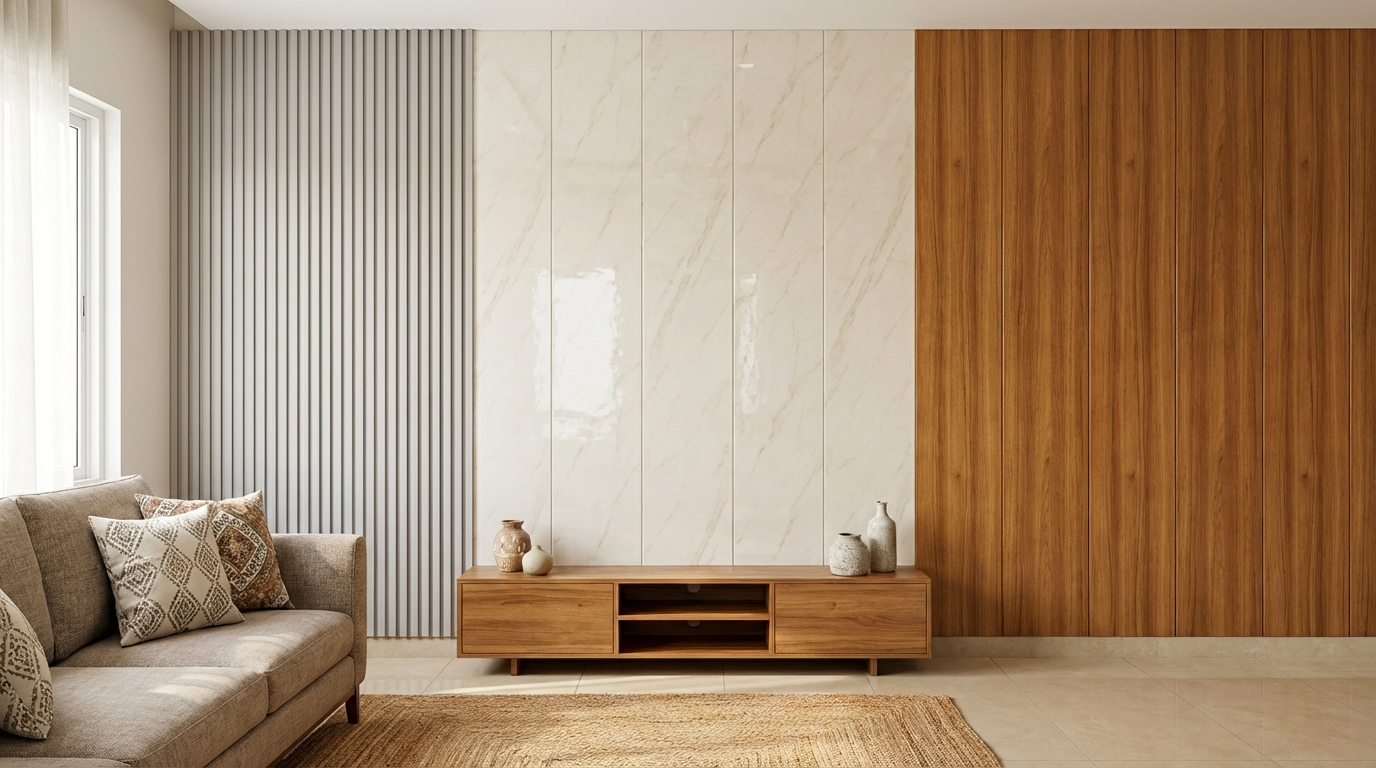
Fluted panels with vertical or horizontal grooves are dominating modern interior design. They create a sleek, premium look, ideal for living rooms, office receptions, or boardrooms. These panels are perfect for feature walls or TV backdrops, adding depth and texture without overwhelming the space.
Honestly, about 60-70% of my panel recommendations now go to WPC fluted designs. They hide imperfections brilliantly, install reasonably fast, and the maintenance is basically just wiping with a damp cloth.
PVC Panels
PVC panels are inherently waterproof, making them ideal for areas prone to moisture or humidity, such as bathrooms and kitchens. They require minimal maintenance, usually just a wipe-down with a damp cloth.
Best when: Bathrooms, kitchen backsplash areas, utility spaces, tight budgets. Also good for rental properties where you might want to remove them later.
With dust a constant companion in most Indian homes, having a wall panel that can be cleaned without fuss becomes a prerequisite. Thankfully, a PVC panel can be wiped off with a damp or wet cloth, keeping it squeaky clean at all times.
Wood and Veneer Panels
The premium option. Decorative wooden wall panels are a great way to infuse a warm and comfortable vibe to the overall decor of the living room. Additionally, wood is an amazing medium that not only makes the home feel more inviting but effortlessly mixes with a variety of design styles, such as modern, traditional and transitional.
Best when: Budget isn't the primary constraint, you're in a moderate-humidity zone, and you want that unmistakable real wood warmth. Chestnut, oak, teak, mahogany and Sal are good for wall panelling. However, we recommend opting for engineered wood options like HDF-HMR, plywood or MDF to reduce costs.
Comparison Table: WPC vs PVC vs Wood Panels
| Parameter | WPC | PVC | Wood/Veneer |
|---|---|---|---|
| Look & Feel | WPC wall panels look more like solid wood with a distinct grain and texture. PVC wall panels, on the other hand, have a shiny, smooth surface with no visible texture. | Smooth, uniform—looks like what it is: plastic | Authentic warmth, unique grain patterns |
| Moisture Resistance | WPC wall panels are more water-resistant than PVC wall panels due to the presence of wood fibers, which absorb moisture and prevent warping. | Inherently waterproof | Variable—needs treatment for humid areas |
| Durability | WPC panelling generally outperforms PVC wall panelling in terms of resistance to impact, scratching, and denting. This is due to the presence of wood fibers within the composite, which provide a more rigid and robust structure. | PVC wall panels may require more frequent replacement or repair due to their tendency to become brittle over time. | Excellent if maintained, 15-25+ years |
| Installation Weight | WPC wall panel is heavier than PVC wall panel | Lightweight material, which can simplify installation | Heavy, needs proper wall anchoring |
| Fire Resistance | Both WPC and PVC wall panel are fire resistant, but WPC wall panels are more fire and heat resistant. | Less fire resistant than WPC wall panel because PVC has a lower ignition point. | Needs fire-retardant treatment |
| Eco-Friendliness | WPC panels are often considered an eco-friendly choice. Constructed of recycled plastic and wood waste, WPC panels provide a sustainable option. Their wood content typically comes from byproducts from the lumber industry. | PVC poses serious environmental concerns. PVC, as an inorganic material, cannot decompose biodegradably, while its production involves chemicals. | Sustainable if from certified sources |
| Price Range (per sq ft) | ₹65-200+ depending on design | ₹25-80 | ₹150-500+ for quality veneer |
Design Trends That Actually Look Good in 2026
Geometric patterns, waves, and ribbed designs give interiors a dynamic and futuristic appeal. 3D WPC panels are especially popular in offices, hotels, and high-end residential projects, where a statement wall can transform the entire room.
Fluted/Grooved Panels
The undisputed king right now. Vertical or horizontal grooves that catch light beautifully and add dimension without being overwhelming. Perfect behind TV units, bed headboards, or as a full accent wall. My personal favourite for living rooms.
3D Textured Panels
3D wooden surfaces are one of the strongest design movements today. These panels turn plain walls into sculptural elements by creating shadows and dimension.
Wood-Finish Panels
Wood-like finishes in walnut, teak, and oak remain a classic trend. Matte textures provide a luxury look without the drawbacks of natural wood, making them suitable for bedrooms, living areas, and executive office cabins.
Backlit Panels
LED-integrated WPC panels create dramatic feature walls. They are trending in modern offices, lounges, and upscale homes, offering both ambient lighting and artistic appeal. Just make sure your electrician plans the wiring before panel installation—I've seen this messed up more times than I can count.
Acoustic Panels
Sound-absorbing wooden walls are trending in offices, studios and home theatres. They reduce echo and add texture to modern spaces. Sound-absorbing WPC panels are perfect for conference rooms, studios, and open-plan offices.
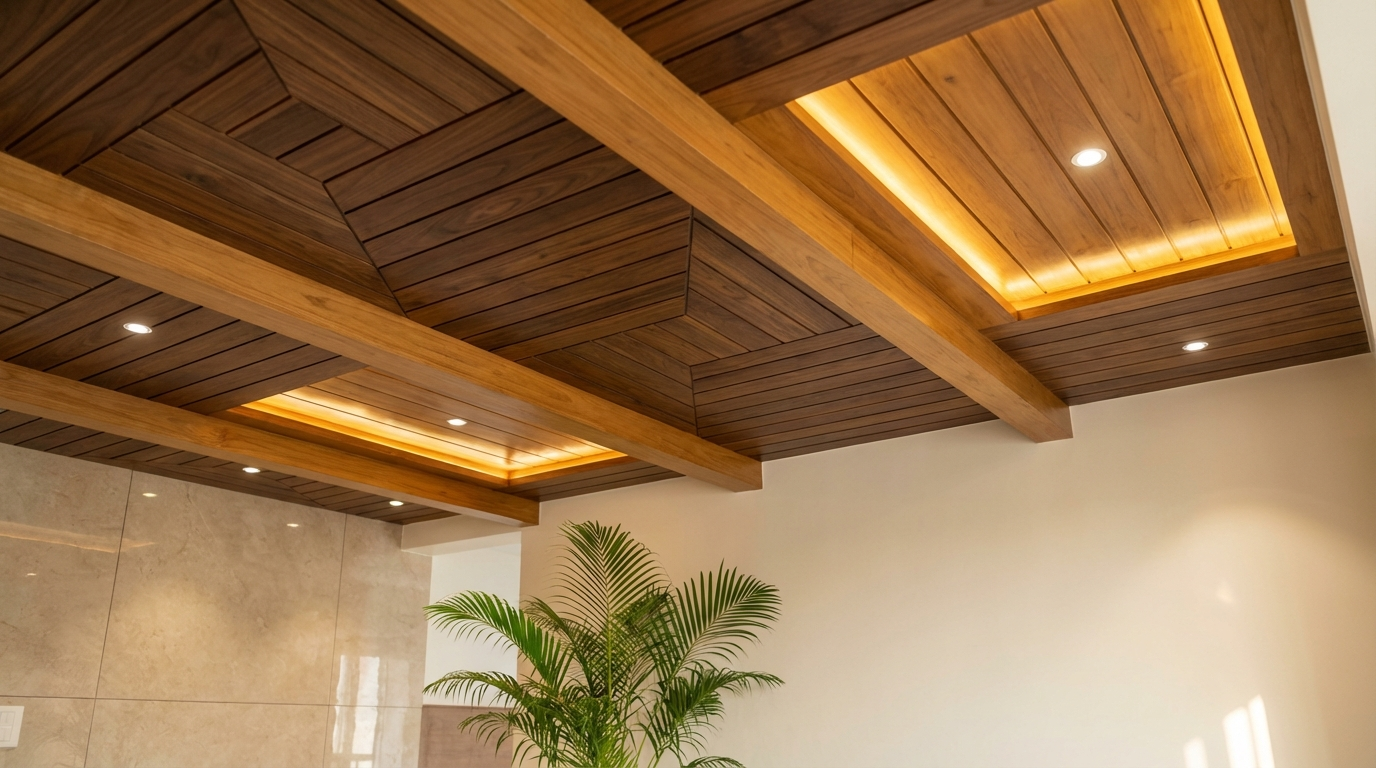
Integrated Wall-Ceiling Designs
Integrated designs covering walls and ceilings give rooms a cohesive, modern aesthetic. This trend is gaining popularity in living rooms, conference halls, and hotel lobbies. Looks spectacular but needs precise carpentry. Don't attempt this with an inexperienced contractor.
Price Reality Check (2026 Market)
Here's what actually affects your final bill—
The proportion and quality of wood fibers and plastics determine the cost. High wood content usually leads to more natural texture but higher price. Premium blends (more wood, less filler) are more expensive.
WPC Panel Pricing
WPC panels range from around ₹495-700 per sq ft for standard varieties in metros like Bengaluru, Chennai, and Pune. Price ranges from Rs. 850-3800 per piece for premium options. For a typical 100 sq ft TV accent wall, expect to spend ₹8,000-20,000 on materials alone, plus another ₹3,000-6,000 for installation.
PVC Panel Pricing
The cheapest way to panel a wall is using MDF or PVC panels, as they are cost-effective and easy to install compared to traditional wood. Budget around ₹25-80 per sq ft for decent quality PVC. Bathroom or kitchen walls typically cost ₹3,000-8,000 total including installation.
Wood/Veneer Pricing
Solid wood panels can go from ₹200-500+ per sq ft. Veneer-on-MDF is more affordable at ₹150-300. A full bedroom accent wall in quality veneer will run ₹25,000-50,000 easily.
What Drives Price Variations
- Thicker and larger panels cost more due to higher material use. Panel size examples include 160mm × 2900mm, 195mm × 3000mm, etc.
- Special finishes such as 3D wood grain, brushed texture, or co-extrusion layer increase production complexity and cost.
- City matters: Mumbai and Delhi are 15-20% pricier than tier-2 cities
- Brand premium: Established brands cost 30-40% more than local manufacturers
- Design complexity: Simple flat panels vs. fluted vs. 3D textured—each step up adds cost
WPC vs PVC: The Decision Framework
PVC is cheaper than WPC panels due to its composition and cost of production. This makes PVC panels a more affordable option.
| Situation | Recommendation | Why |
|---|---|---|
| Living room accent wall | WPC | Better aesthetics, premium look |
| Bathroom wall | PVC | In areas exposed to moisture, such as bathrooms or kitchens, PVC panels are the better option due to their waterproof nature. |
| Master bedroom | WPC or Wood veneer | Warmth matters here; plastic look won't cut it |
| Kitchen backsplash | PVC or WPC | Both work; PVC if budget-conscious |
| Office reception | WPC or Wood | They are perfect for reception areas, conference rooms, and executive cabins. |
| Rental property | PVC | Easy removal, lower investment |
| Coastal home | WPC or PVC | Avoid wood unless heavily treated |
| Tight budget, any room | PVC | Gets the job done affordably |
My preference: If you want the warmth and charm of real wood without the maintenance hassles, WPC panels are a great choice. They work well in outdoor decking and wall cladding projects. For anything in direct water contact, PVC. For premium projects where budget allows, veneer or solid wood still can't be beaten.
What thickness works best for wall panels?
Common thicknesses of WPC decorative wall panels include 8mm for homes and offices, such as living rooms and bedrooms. For residential interiors, 8-12mm is standard and works fine. Commercial spaces or areas with higher impact risk might benefit from 15-18mm. Anything thicker is usually overkill for walls—save the thick stuff for outdoor cladding or high-traffic commercial zones.
How to Choose: Step by Step
Step 1: Identify the room and its moisture level. Bathroom? Kitchen? Living room? This narrows your material choice immediately.
Step 2: Check your wall condition. Uneven walls? Cracks? Dampness? Fix dampness first—no panel will solve that. Minor unevenness is fine; panels hide it well.
Step 3: Set your budget per square foot. Under ₹50? PVC only. ₹50-150? PVC or entry-level WPC. ₹150-300? Good WPC or veneer. Above ₹300? Premium WPC, quality veneer, or solid wood.
Step 4: Consider installation. PVC wall panels are easier to install than WPC wall panels because they usually only require glue. In addition, WPC wall panels are more difficult to install because they are heavier than PVC wall panels. If you're doing DIY, PVC is more forgiving.
Step 5: Think long-term. High-quality WPC panels typically last 20–25 years. PVC might need replacement in 8-12 years. Wood with proper care? Decades. Factor this into your cost calculation.
Exception: If you're in a rented place and might move in 2-3 years, go PVC regardless of budget. Easy to remove, less heartbreak when you leave.
Red flags to walk away from:
- Dealer can't tell you the exact wood-to-plastic ratio in WPC
- No sample pieces available to examine
- "Special discount only today" pressure—good products don't need this
- Unusually lightweight WPC (might be mostly filler)
- Panels with visible bubbles, warping, or colour inconsistency in the sample
Common Mistakes People Make With Wall Panels
1. Ignoring wall preparation. Most people think panels hide everything. They don't. Major dampness will eventually show through, and panels might even trap moisture making things worse. Always fix underlying issues first.
2. Choosing based on showroom lighting. That fluted panel looks gorgeous under the dealer's spotlights. In your north-facing living room with different light? Might look completely different. Always take a sample home and see it in your actual room's lighting. I tell every client this. Maybe half actually do it.
3. Skipping acclimatization. This one really frustrates me—WPC and especially wood panels need 48-72 hours in your room before installation. They need to adjust to your home's temperature and humidity. Install them straight from the warehouse and they'll expand or contract later, causing gaps or buckling.
4. Forgetting electrical planning. Had a client in Powai last year—beautiful WPC feature wall, but they forgot to plan for the wall socket behind the TV. Had to cut through the fresh panel. Looked terrible. Plan all your switches, sockets, and any future wiring before the panels go up.
5. Using interior panels outdoors. These panels are widely used in Homes, Offices, Commercial buildings, Religious places, Hotels, Restaurants, Kitchens and Washing rooms. But standard interior panels aren't meant for balconies or exterior walls. You need specifically rated exterior-grade WPC for that. Different UV resistance, different moisture handling.
6. Ignoring expansion gaps. Panels expand and contract slightly with temperature. Leave 2-3mm gaps at edges, covered by moulding or trim. Skip this and you'll get buckling in summer.
7. DIY on complex patterns. Simple flat panels? Sure, DIY works. Fluted panels needing perfect alignment? 3D designs with pattern matching? Leave it to professionals unless you're very handy. The alignment precision needed is higher than most people realize.
8. Buying the cheapest PVC for visible areas. PVC quality varies enormously. The ₹20/sq ft stuff will yellow, crack, and look cheap within two years. For anything guests will see, spend at least ₹40-50/sq ft on PVC, or upgrade to WPC.
9. Not checking fire ratings. For commercial spaces especially, this matters. Ask for fire rating certificates. For homes, less critical but still worth knowing.
Quality Checks You Can Do Yourself
Visual Inspection
- Colour consistency across multiple panels—take out 3-4 and compare
- Surface finish uniformity—run your hand across, feel for bumps or rough patches
- Edge straightness—sight along the edge like you're aiming a rifle
- No visible bubbles, voids, or delamination
- Check both faces—some manufacturers skimp on the back face quality
Questions to Ask Your Dealer
- "What's the wood-to-plastic ratio?" (For WPC—anything below 40% wood content is questionable)
- "Where is this manufactured?" (Indian vs. Chinese vs. European—each has quality implications)
- "What's the warranty period and what does it cover?"
- "Can I see installation references in this city?"
- "What's your return policy if panels arrive damaged?"
Simple Field Tests
- Tap test: Knock on the panel. Solid thunk = good density. Hollow sound = possibly high filler content or voids
- Weight check: WPC panels typically weigh about 2.8-4.6 kg per panel. Unusually light panels might be cutting corners on material
- Edge inspection: Look at the cut edge closely—uniform material distribution or visible layering/voids?
- Flex test: Gently bend a sample. Good WPC should have some flex without cracking. Pure PVC will be more flexible. If WPC snaps easily, filler content is too high
- Scratch test: Run your fingernail across. Quality panels won't scratch easily
Here's a trick most dealers don't like: Ask for an offcut or damaged piece you can take home and actually test—soak it in water overnight, leave it in sun for a day, scratch it with keys. Shows you real durability, not just showroom promises.
Can you use wall panels in bathrooms?
Yes, PVC wall panels are a great choice for homes as they are durable, moisture-resistant, and easy to maintain, making them perfect for bathrooms or kitchens. WPC wall panels are strong, durable, and resistant to moisture and rot, making them ideal for use in high-moisture environments such as bathrooms and kitchens. That said, avoid solid wood in bathrooms unless you're okay with intensive maintenance. And even with WPC, ensure proper ventilation—no panel material likes continuous direct water exposure. For shower walls specifically, tiles are still better; use panels for dry areas of the bathroom.
Workmanship & Installation: What Your Contractor Needs to Know
These panels can be installed using standard construction methods, such as screws or clips, and require no special tools or skills. That's technically true, but "standard" and "quality" aren't the same thing.
Prep Work
- Wall must be reasonably smooth—minor imperfections okay, major unevenness needs plaster repair
- Any dampness must be completely resolved before panelling
- Mark all electrical points, switches, sockets clearly
- Create a level reference line—this is crucial for fluted panels where alignment shows every error
Installation Methods
WPC wall panel can be installed using a variety of methods, including tongue and groove, clips and screws, and adhesives. However, PVC wall panel is easier to install than WPC wall panel because they are usually installed using only adhesives.
For WPC, I prefer mechanical fixing (screws or clips with battens) over pure adhesive. More work, but much more reliable long-term—panels won't fall off if adhesive fails in humidity.
What to Tell Your Carpenter
- Acclimatize panels for 48-72 hours in the installation room
- Use stainless steel or galvanized screws only—regular screws will rust in humid climates
- Leave 2-3mm expansion gaps at edges
- Start installation from the most visible corner—any cut pieces should go to less visible edges
- Don't hammer panel edges directly—use a block to distribute force
- For fluted panels: alignment must be checked every 2-3 panels, not at the end
Storage Notes
Keep panels flat, not standing. Store in the actual room where they'll be installed if possible. Never store in direct sunlight or exposed to rain (even in packaging). I've seen carpenters leave panels on a balcony overnight during monsoon—entire lot was ruined by morning.
How Long Wall Panels Actually Last
High-quality WPC panels typically last 20–25 years. That's for good quality products with proper installation. WPC Panels have low maintenance requirements. Hence, you don't have to worry about spending too much time or money on the maintenance of the panels. This not only saves time and money on maintenance, but also helps to reduce the environmental impact of building materials.
Realistic Lifespans
- Quality WPC: 15-25 years with minimal maintenance
- Standard WPC: 10-15 years
- Quality PVC: 8-12 years before noticeable fading/brittleness
- Budget PVC: 4-7 years before it looks cheap
- Veneer panels: 15-20+ years with occasional refinishing
- Solid wood: 25+ years with proper care—can be refinished multiple times
What Affects Longevity
- Direct sunlight exposure accelerates fading in all materials
- Humidity fluctuations stress all panels—AC rooms do better than non-AC
- Coastal salt air is particularly harsh on all materials
- Cleaning with harsh chemicals damages finishes
- Impact and scratch damage (especially in homes with kids or pets)
Signs of Wear to Watch
- Colour fading, especially uneven fading
- Warping or buckling
- Gaps appearing between panels
- Surface becoming chalky or powdery (PVC)
- Delamination at edges
How long do wall panels really last in Indian conditions?
Here's my honest take from seeing hundreds of installations. In Mumbai or Chennai humidity, subtract 2-3 years from manufacturer claims. In air-conditioned rooms running 12+ hours daily, panels last longer. In non-AC coastal homes, expect the lower end of lifespan ranges. I've seen cheap PVC panels in a Thane flat look terrible within 3 years, while quality WPC in a Pune apartment still looks new after 8 years. Material quality and climate control matter more than anything.
Alternatives Worth Considering
Wall panels aren't the only option. Depending on your needs:
Textured Paint
If budget is very tight, consider textured or designer paints. Won't give you the same depth as panels, but modern textured finishes have come a long way. Cost: ₹15-40/sq ft including labour.
Wallpaper
For pure aesthetics without acoustic or insulation benefits. Modern vinyl wallpapers are fairly moisture-resistant. Easier to change than panels. But—doesn't hide wall imperfections like panels do.
Tile Panels
For wet areas especially, large-format tiles or tile panels offer a premium look. More expensive than PVC but often cheaper than quality WPC with similar durability.
If you're comparing veneer panels with HDHMR or MDF substrates, our plywood selection guide covers the substrate options in more detail. For kitchen-specific applications, the modular kitchen materials comparison has relevant information.
Frequently Asked Questions
Is it true that WPC panels are completely waterproof?
Due to the presence of wood fibers, WPC wall panel is more water-resistant than PVC wall panel, absorbing moisture and resisting deformation, which makes them ideal for use in high-humidity environments. But "water-resistant" isn't "waterproof." Don't put them in direct shower spray. For occasional splashes, they're fine. For areas with constant water exposure, tiles remain better. I tell clients: treat WPC like you'd treat wood that's been treated well. Respect it, but don't soak it.
Can I install wall panels over existing wallpaper?
Technically possible but not recommended. The wallpaper adhesive might fail over time, taking your panels with it. Best practice: remove wallpaper, prepare wall surface, then install panels. Yes, it's more work. Yes, it's worth it. I've had to redo panel installations twice because clients insisted on shortcuts here.
Is it true that PVC panels release toxic fumes?
Quality PVC panels manufactured to standards are safe for normal indoor use. The concern is about burning—PVC can release harmful gases when burned. For normal installation in living spaces, no significant health concerns with quality products. Cheap, unbranded panels might have issues—stick to reputable manufacturers.
What if I live in a coastal city like Mumbai or Chennai?
Coastal salt air corrodes and deteriorates materials faster. For exterior-facing walls, go WPC or PVC only—no wood without extensive treatment. For interior walls in AC rooms, you have more flexibility. WPC panels are highly durable, UV-resistant, and scratch-proof. The material's ability to withstand extreme weather conditions makes it perfect for exterior use, providing a long-lasting and attractive finish. But even then, annual inspection for any moisture ingress is smart.
Do wall panels reduce noise?
WPC panelling is also known for its thermal and acoustic insulation properties, making it a popular choice for both residential and commercial spaces. Fluted and grooved panels offer modest sound absorption. For serious acoustic control—home theatres, recording spaces—you'll need specialized acoustic panels, not standard decorative ones. Regular decorative panels reduce echo somewhat but won't soundproof.
Is it true that WPC panels can't be painted?
Not true. You can paint them, though most people don't need to since they come pre-finished. If you ever want to change colour, light sanding and primer, then regular paint works. Some manufacturers void warranty if you paint, so check before buying if this matters to you.
How do I clean WPC wall panels?
WPC wall panels are virtually maintenance-free and do not require painting, staining, or sealing. Regular dusting with a dry cloth works. For deeper cleaning, damp cloth with mild soap. Never use abrasive cleaners or harsh chemicals—they damage the surface finish. For stubborn stains, slightly diluted dish soap is usually enough.
What if I want to hang pictures or shelves on panelled walls?
This needs planning. Light items—photo frames, small decorations—can go directly into quality panels using appropriate anchors. Heavy items—shelves, TVs—should be anchored through the panel into the wall behind. Mark stud or batten positions during installation for future hanging needs. If your contractor doesn't offer this, ask for it.
Is it true that panels make rooms look smaller?
Depends entirely on design choice. Dark, heavy panels can make small rooms feel cramped. Light-coloured, vertical fluted panels actually make ceilings feel higher. Horizontal patterns make rooms feel wider but ceilings lower. Match the design to your room's needs—this is where a good interior designer earns their fee.
Can damaged panels be replaced individually?
Depends on the installation method. Tongue-and-groove or interlocking systems make individual replacement difficult—often need to remove multiple panels. Clip-mounted or screw-fixed panels are easier to replace individually. Something to consider if you have kids or pets who might damage walls.
What's the difference between WPC louvers and WPC panels?
Louvers have visible slats with gaps, allowing airflow and light filtration—more decorative, less full coverage. Panels are solid sheets—full coverage, no gaps. Louvers work for screens, partitions, or areas where you want partial visibility. Panels work for accent walls and full coverage applications.
Why do carpenters sometimes prefer MDF over WPC for panels?
MDF is easier to cut, shape, and work with using standard woodworking tools. It's also cheaper. But MDF can't handle moisture—swell and damage happens fast in humid conditions. Carpenters might prefer MDF because it's familiar and easier, but that doesn't make it better for your specific situation. MDF is one of the best materials for wall panelling while also being relatively cost-effective. Just not for humid areas or places with moisture risk.
—
That's the essentials. Before you finalize anything, get samples of your shortlisted panels and live with them for a few days—see them in morning light, evening light, with your existing furniture colours. Panels are a multi-year commitment. The extra few days of decision-making is worth it.
Disclaimer: This content is provided for general informational purposes based on industry practices and publicly available information. Product specifications, standards, prices, and availability may vary by manufacturer, region, and time. Readers should independently verify details with manufacturers, dealers, or qualified professionals before making purchase or construction decisions.Want Plywood Suggestions?
Share a few details and a Sainik 710 specialist will suggest suitable brands and connect you to responsive dealers.