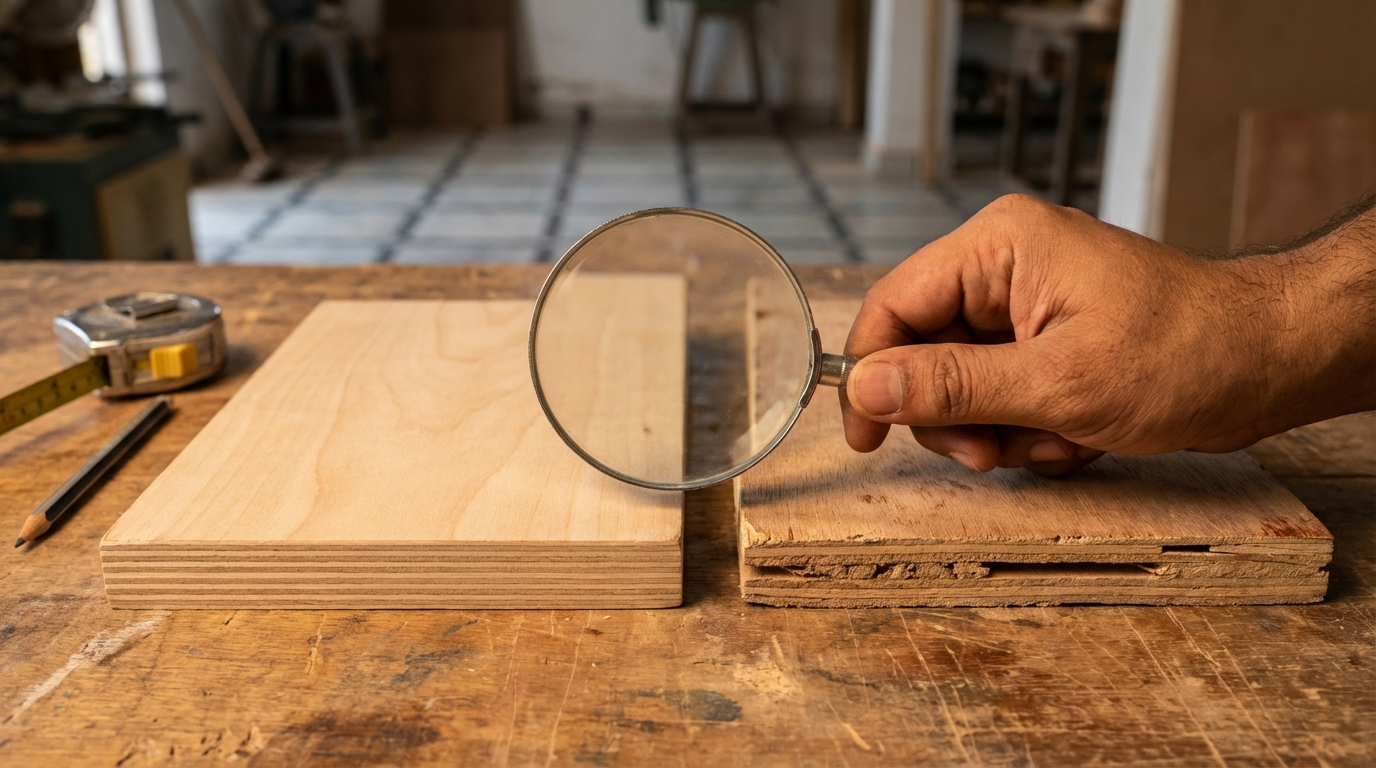
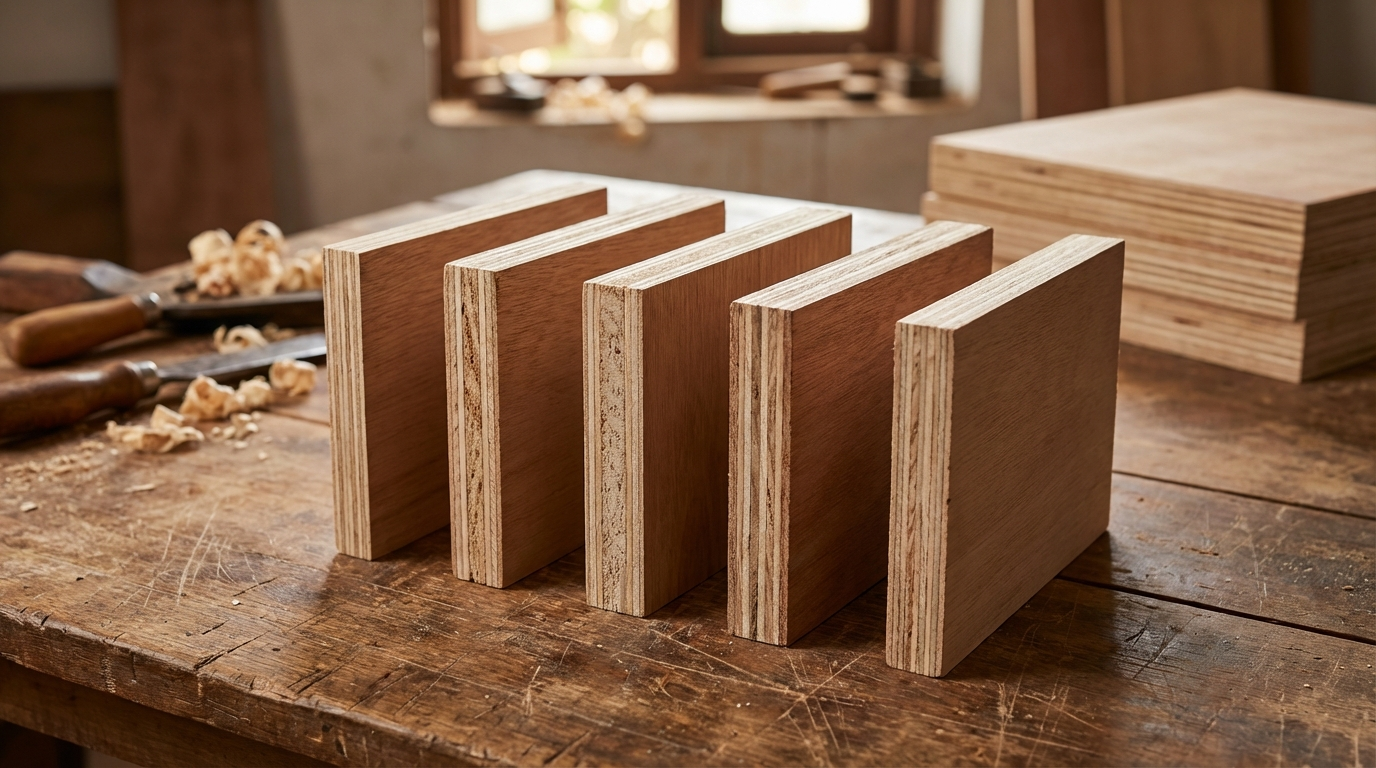
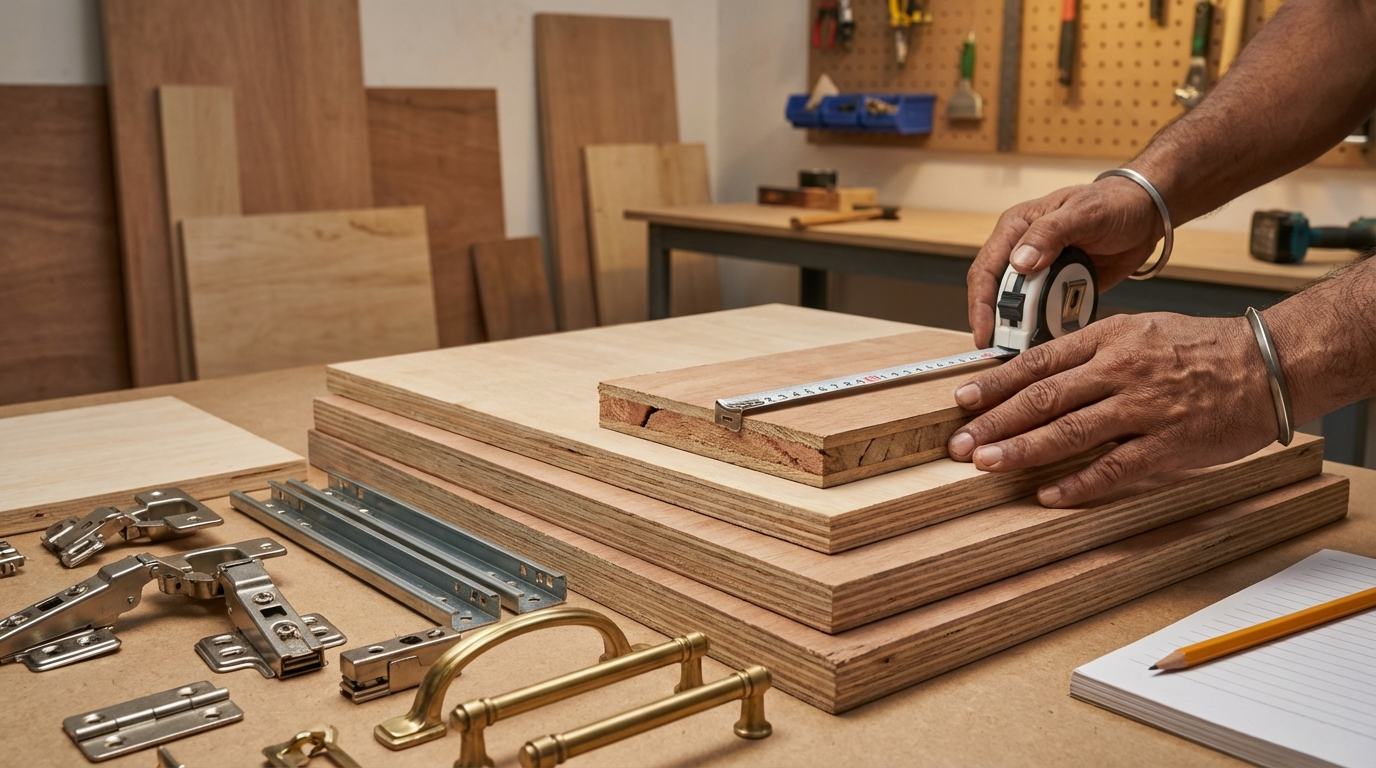
Veneer Wood Guide: Types, Uses, Price & How to Choose Veneer for Furniture
Complete veneer guide—natural vs engineered types, uses for furniture & price comparison. Learn how to choose right veneer for doors, wardrobes & panels.
Veneer Wood: What It Is and Who Should Use It
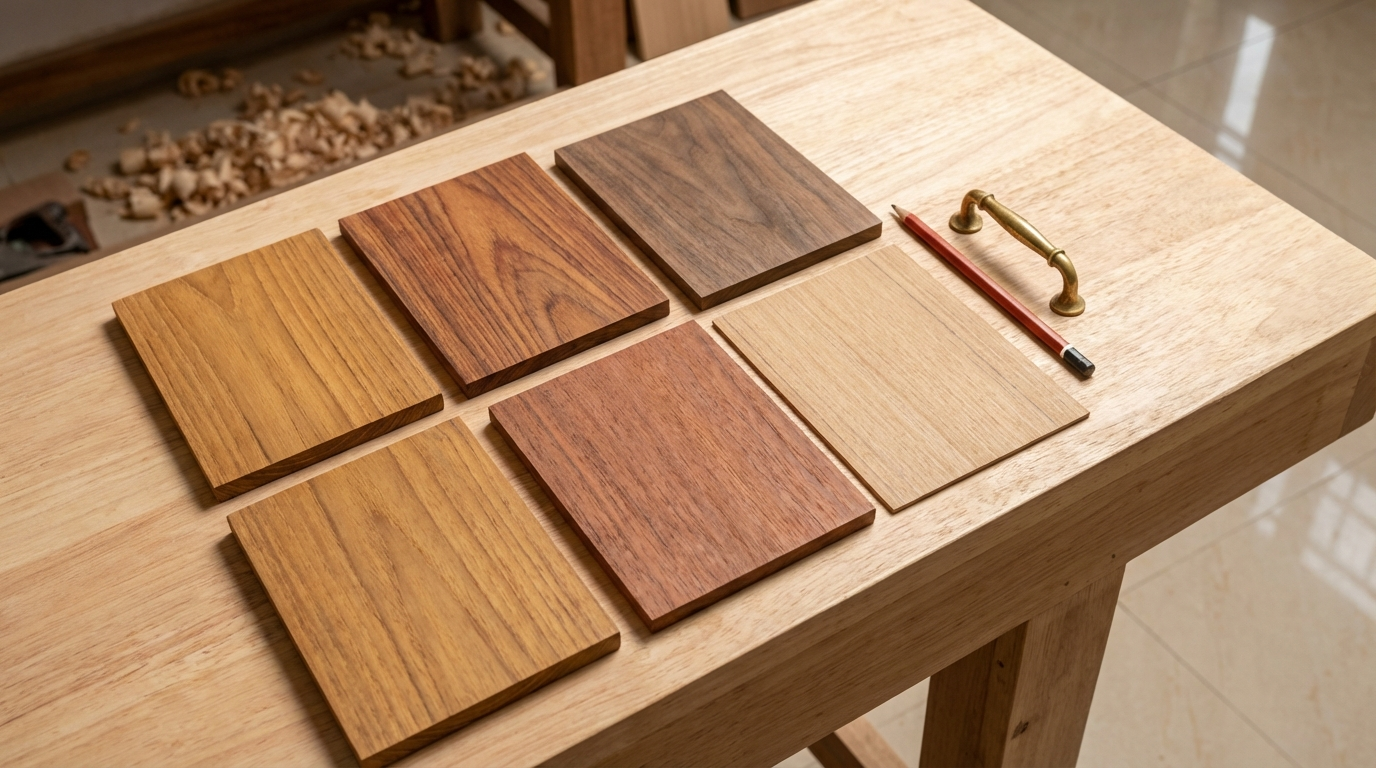
Veneer is a thin slice of real wood—usually 0.5mm to 0.6mm thick—bonded onto a substrate like plywood or MDF to give furniture the look and warmth of solid timber at a fraction of the cost. That's the simple version.
Short version: Wood veneer sheets are thin sheets of wood obtained by peeling the log of a tree. You're essentially getting the beauty of teak, walnut, or oak without paying for a solid block of it. In furniture construction, veneer offers the look of solid wood while being more cost-effective, stable, and eco-friendly. It works beautifully for wardrobe shutters, main doors, TV units, and wall panels—anywhere you want that premium wooden finish.
This is right for you if:
- You want the authentic grain and texture of real wood
- Your budget allows for polishing and finishing work on top of the veneer cost—roughly ₹130-500 per sq ft additional
- You're working with an interior designer who understands veneer matching and installation, and you have a carpenter skilled in veneer work
- The furniture won't face heavy daily abuse—think statement pieces, not kitchen cabinets near the sink
Skip this if:
- For families with kids or people who don't have time for regular maintenance, wood veneer may not be the best choice
- You need moisture-resistant surfaces for bathrooms or kitchens—laminate handles that better
Bottom line: Veneer gives you real wood aesthetics and can be sanded and refinished over years, but it demands proper installation, finishing, and ongoing care that laminate doesn't.
Note: sainik710.com is an independent informational site and is not affiliated with any manufacturer.
What Veneer Actually Means (Beyond the Jargon)
Natural wood veneer is a thin layer of real wood that has been sliced or peeled from logs. Each sheet has the unique characteristics of the tree species from which it originates. Most people think veneer means "fake wood." Actually, it's 100% real wood—just sliced thin enough that one log can cover dozens of furniture pieces instead of just one.
Here's what I tell my clients: imagine slicing an apple very thin. Each slice is still apple, right? Same principle. Wood veneer is a thin slice of real wood (usually 0.1–6 mm thick) bonded to a stable substrate like MDF, particle board, or plywood.
The confusion comes because people lump veneer with laminate and assume both are "prints." No. Decorative Wood Veneer is actually a thin sheet of real hardwood timber glued onto plywood surfaces, whereas laminate (also known as sun mica in India) is an artificial product made by pressing together paper and plastic resin. That's the fundamental difference.
In the Indian market, the standard thickness for decorative face veneer is typically 0.5mm to 0.6mm, conforming to standards like IS 1328 for decorative plywood surfaces. When you hear someone say "4mm veneer," they usually mean a pre-pressed panel where the thin face veneer is already bonded to a plywood backing.
Is veneer as strong as solid wood?
Not on its own—but that's not the point. Bonded to solid supports, wood veneer sheets create a durable, long-lasting finish, resistant to warping and cracking. Think of it like this: the substrate (plywood, MDF) provides the strength, the veneer provides the beauty. Unlike solid wood, which is biologically hygroscopic and highly susceptible to warping due to India's fluctuating humidity levels, a high-quality veneer panel is engineered for stability. I've seen solid teak wardrobe doors bow out in Mumbai flats. Properly veneered panels on good gurjan ply? Still flat after eight years.
Why Veneer Matters Specifically in Indian Homes
Here's something most guides skip: India's climate is brutal on wood. Mumbai hits 85-90% humidity during monsoon. Chennai stays humid almost year-round. Kolkata gets the double whammy of heat and moisture. Pune's relatively dry—but then the rains come and everything changes.
Solid wood furniture expands and contracts with these swings. Doors stick. Drawers jam. Veneer on engineered substrates handles this much better because the plywood or MDF base is dimensionally stable.
But—and this is critical—if you spill water, clean it roughly, or place veneer in a humid room, it can swell or fade. The veneer itself is real wood, remember? So while the substrate stays stable, that thin wood surface still reacts to moisture.
In coastal cities like Mumbai, Mangalore, or Vizag, you need to be extra careful about:
- Edge sealing—unsealed edges absorb moisture first
- Finish quality—PU polish creates a moisture barrier; NC lacquer doesn't
- Placement—don't put veneered furniture where water splashes regularly
There was this flat in Bandra I consulted for back in 2022. Beautiful walnut veneer dining table. The client placed it near a window that stayed open during monsoon. By September, one corner had lifted. Not the carpenter's fault—just poor placement plus no edge protection. ₹45,000 to fix.
How long does veneer really last in Indian conditions?
Honestly? It depends on three things: the quality of the substrate underneath, the finish applied on top, and how you treat it. You can retain veneer's original look by polishing it from time to time like any other wood article. In case of superficial damage, such as scratches, it can be sanded and refinished like original wood. A well-maintained veneer panel can easily last 15-20 years in a bedroom or living room. Kitchen? Maybe 8-10 years with good care. Bathroom? I wouldn't recommend it at all.
Types of Veneer: Natural, Engineered, and Everything Between
Wood veneer comes in two basic forms: natural veneer and reconstituted veneer (also called "engineered veneer" or "technical veneer"). Let me break these down in a way that actually helps you decide.
Natural Veneer
Natural veneer uses natural wood directly sliced into a thin veneer with a thickness of about 0.5mm. This is the real deal. The manufacturing process retains the natural beauty and imperfections of the wood, such as knots and grain variations.
Popular species in India:
- Teak – Teak is projected to account for 50.4% of India's decorative veneer market in 2025. The golden-brown colour, the familiar grain—it's what most Indian homes gravitate toward
- Walnut – Valued for its rich, dark tones and fine grain, walnut veneer imparts a sense of luxury and warmth
- Oak – Known for its prominent grain and durability, oak veneer adds a classic and robust appearance
- Sapele – With its reddish-brown hue and interlocking grain, sapele veneer provides an exotic and dynamic aesthetic
My take: Natural veneer is unbeatable for richness. But no two trees, even from the same species, have identical patterns. This means getting consistent matching across large surfaces—like a full wall panel—is tricky and expensive.
Engineered (Reconstituted) Veneer
Engineered wood veneer is manufactured by processing thin sheets of fast-growing tree species. A veneer marketed as Dark Gray Oak will have the appearance of oak wood but the actual wood is poplar. Leading manufacturers make reconstituted veneers from faster-growing species such as poplar, African whitewood (also known as ayous), or koto logs.
The veneer is engineered through templates and pre-developed dye moulds, meaning engineered veneers will be more consistent in terms of appearance and colour—and generally free of surface knots and natural characteristics, while still maintaining the natural wood grain from the core species.
Honestly: If you need to cover a 50-foot wall with matching veneer, engineered is your friend. Engineered wood veneers make a viable choice where the design demands colour variances and textures over large surfaces. It's also often lower cost than natural veneer due to the utilization of fast-growing trees.
But here's what I've noticed over the years—high-quality engineered veneer looks great. Cheap engineered veneer looks... engineered. That artificial uniformity gives it away.
| Parameter | Natural Veneer | Engineered Veneer |
|---|---|---|
| Source | Sliced from real logs of specific species | Made from fast-growing trees, processed and dyed |
| Appearance | Unique grain, natural variations, occasional knots | Uniform, consistent, no natural defects |
| Cost (India) | ₹100-250+ per sq ft | ₹60-150 per sq ft |
| Best for | Statement furniture, premium interiors where uniqueness matters | Large wall panels, commercial projects needing consistency |
| Matching | Difficult across large surfaces | Easy—sheets come pre-matched |
| Sustainability | Depends on sourcing (look for FSC certification) | Environmentally friendly alternative to exotic species; uses renewable sources |
| Colour over time | Changes naturally—some species darken, some lighten | Particularly susceptible to colour alteration and only suitable for indoor use |
Cutting Methods and What They Mean for Your Furniture
The four common cuts for veneer are rotary, plain sliced, quarter sliced and rift cut. Quick breakdown:
- Rotary Cut – Veneers are peeled from a log like paper coming off a roll. Produces large pieces with flat, random grain patterns. Generally the least expensive cutting method, but can have a bland appearance.
- Plain Sliced (Flat Cut) – Cut along a log's growth rings, typically presenting a cathedral grain pattern. The most common method as it produces highest yield. Ideal for wall panels, doors and furniture.
- Quarter Sliced – Cut perpendicular to growth rings producing very straight grain. Veneer leaves are cut consecutively and easy to match. In many species, this reveals decorative elements like flake patterns in white oak. Produces smaller leaves and is generally more expensive.
- Rift Cut – Sliced at 15 degrees to the radius to produce straight, striped grain without flakes. Most often used for oak. The most expensive because it results in most waste.
For wardrobes and doors, plain sliced works perfectly. If you want that modern linear look for wall panels, quarter sliced is worth the extra cost.
Price Reality Check: Veneer Costs in 2026
Let me be straight with you about pricing. The price of veneer sheets lies between Rs 50-Rs 150 per sq ft in India. It varies according to finish, application, brand, and durability. But that's just the raw veneer.
Veneers are more expensive than laminates. In the Indian market you can find veneers from Rs. 100/sqft to Rs.250/sqft. Polish and lamination cost is additional—from Rs.130/sqft to Rs.500/sqft. Thus, the total cost of finished veneer application may range from Rs.230/sqft to Rs.750/sqft.
So here's what actually affects your final bill:
- Species – Burma teak veneer costs significantly more than sapele or maple
- Natural vs Engineered – Natural runs 30-50% higher typically
- Cut type – Quarter sliced costs more than rotary
- Matching requirements – Book-matched panels for a feature wall need carefully selected sequential leaves—that's premium pricing
- Finish – Basic NC lacquer is cheap; high-gloss PU with multiple coats is expensive
For a typical 10x10 bedroom wardrobe with teak veneer finish (both shutters and sides), expect to budget roughly:
- Veneer: ₹10,000-15,000
- Polish/Finishing: ₹12,000-25,000
- Application labour: Included in carpenter cost usually
That's on top of the plywood, hardware, and carpentry charges. Between you and me, veneer work often ends up costing 40-60% more than equivalent laminate work when you factor in the polish.
Veneer vs Laminate: The Real Comparison
This is probably the most common question I get. Veneers and laminates (commonly called Sun Mica in India) are the most common finishing materials for furniture made of MDF, particleboard, plywood or solid wood.
| Parameter | Veneer | Laminate | My Take |
|---|---|---|---|
| Material | Real wood | Paper + plastic resin | If "real" matters to you, veneer wins |
| Look | Natural grain, each piece unique | Printed pattern, consistent | Veneer has depth laminate can't replicate |
| Cost | Higher (including polish) | Lower, no polish needed | Budget-tight? Laminate makes sense |
| Durability | Not as durable as laminates. More prone to scratches. | Scratch and moisture resistant | High-use areas? Laminate |
| Repair | Can be sanded and refinished like original wood | If damaged, can't be repaired—needs replacement | Long-term investment? Veneer |
| Maintenance | Needs periodic polishing | Wipe clean, done | Busy household? Laminate |
| Moisture | Susceptible to swelling | Resistant | Kitchen cabinets? Laminate |
| Environment | Biodegradable and renewable, being made from natural wood | Uses resins, plastics and adhesives—not environment-friendly | Eco-conscious? Veneer |
Choose veneer when: You want the richness of real wood, can invest in maintenance, and the furniture is for living rooms, bedrooms, or formal spaces.
Choose laminate when: Kitchens, bathrooms, office furniture, and areas where durability, ease of cleaning, and budget are top priorities.
What I've seen work well: Many modern homes combine both—laminates for everyday furniture and storage, veneers for statement pieces. That master bedroom wardrobe in veneer, the kids' room wardrobe in laminate. Makes perfect sense.
How to Choose Veneer: A Decision Framework
So you've decided veneer is right for your project. Now what? Here's how I walk clients through the selection:
Step 1: Define the application
Wall panel? Wardrobe? Door? TV unit? Veneer is best suited for luxury furniture, custom cabinetry, and high-end interiors where the authentic look of real wood is desired. Statement pieces, not utility furniture.
Step 2: Decide natural vs engineered
Large, uniform surfaces → Engineered. Feature piece where uniqueness matters → Natural. Budget under ₹100/sq ft → Engineered only.
Step 3: Pick your species based on aesthetic
Want warmth and familiarity? Teak. Modern and dramatic? Walnut. Light and contemporary? Oak or maple. Don't pick based on what's trendy—pick what works with your existing flooring, door frames, and overall palette.
Step 4: Consider grain direction and matching
For doors and shutters, you want grain running vertically typically. For feature walls, discuss matching patterns with your designer—book-matched, slip-matched, or random.
Step 5: Specify the substrate
High-quality veneer panel is typically bonded to a dimensionally stable substrate such as Gurjan plywood or High-Density Fiberboard. Don't let anyone apply veneer directly on commercial ply. MR grade minimum. BWP for humid areas—though I'd question using veneer there anyway.
Step 6: Choose your finish
Melamine sealer + PU top coat is standard for good durability. NC lacquer is cheaper but offers less protection. High-gloss mirror finish is expensive and shows every fingerprint—think twice.
| Situation | Recommendation | Why |
|---|---|---|
| Full wall TV panel | Engineered veneer, quarter cut | Needs consistency across large surface |
| Master bedroom wardrobe | Natural teak or walnut | Statement piece, worth the investment |
| Study table | Laminate with wood texture | Heavy daily use, prone to scratches |
| Main door interior | Natural veneer matching interiors | First impression, should look premium |
| Kitchen cabinets | Laminate or acrylic | Moisture exposure, needs easy cleaning |
| Living room coffee table | Natural veneer with thick PU coat | Gets spills but focal piece—extra protection helps |
Red flags to walk away from:
- Veneer sold without specifying thickness (should be 0.5-0.6mm minimum for quality)
- Pre-veneered panels at suspiciously low prices—often thin paper veneer that peels
- No option to see multiple sheets for matching
- Dealer can't tell you species or origin
Common Mistakes People Make With Veneer
1. Treating it like laminate
This one really frustrates me. People order veneer thinking it's just "fancier laminate" and then complain when it scratches or needs maintenance. Many people think it's as strong as solid wood, but it's not. Know what you're getting into.
2. Skipping the finish conversation
Raw veneer is just the start. The finish determines 50% of how it looks and 80% of how it performs. I've seen ₹200/sq ft veneer look terrible with poor polish, and ₹80 veneer look stunning with proper PU work.
3. Ignoring grain direction
Had a client once who didn't care about matching—"just put it however." The wardrobe looked like a patchwork quilt. Grain should flow consistently, especially on adjacent doors and panels.
4. Using veneer where laminate belongs
Wood veneer is not the easiest to manage in Indian homes—especially in kitchens. I keep telling people: that countertop edge, that backsplash area, anywhere water lands regularly—just use laminate. Save veneer for where it shines.
5. Not budgeting for polish
The veneer costs ₹15,000. Great. Now add ₹20,000 for polish. Wait, you only budgeted ₹20,000 total? This conversation happens more often than I'd like.
6. Buying without seeing physical samples
Photos lie. Screens lie. Every time someone asks me "can you send a picture of how it'll look"—I tell them to visit the dealer, hold the sheet, see it in different lighting. Each veneer has a wood grain pattern different from other veneers.
7. Trusting the carpenter to handle everything
Your mistri might be excellent with plywood. Veneer application is specialist work. Bubbles, lifting edges, mismatched joints—I've seen it all when experienced carpenters tried veneer work for the first time. Either ensure your carpenter has veneer experience or hire separately for that step.
8. Ignoring edge banding
Standard edge banding rolls have thickness of 0.3mm, 0.45mm, or 0.5mm. Many people focus on the face veneer and forget that exposed plywood edges look terrible and absorb moisture. Match your edge banding to the face veneer or at least use complementary solid colour.
9. Not considering ageing
Natural wood changes colour over time—some species get lighter, others darken. That brand new teak veneer will look different in five years. Plan for it.
Quality Checks You Can Do Yourself
Visual Checks:
- Hold the sheet against light—any pinholes or thin spots?
- Check edges for cracks or splits
- Look for uniform thickness across the sheet
- Examine grain for natural flow—artificial-looking patterns suggest low-quality engineered
- Check for colour consistency (within reasonable natural variation)
Physical Tests:
- Flex test: Quality veneer should flex slightly without cracking. If it's brittle and snaps, pass
- Surface feel: Run your hand across—it should feel smooth, not rough or splintery
- Moisture check: Shouldn't feel damp. Store away from direct floor contact
Questions to Ask the Dealer:
- "What's the veneer thickness?" (Should be 0.5-0.6mm minimum for furniture)
- "Natural or engineered?" (And if engineered, what's the base wood?)
- "Can I see sequential sheets for matching?"
- "What substrate do you recommend for this species?"
- "How should this be stored before application?"
Here's a trick most dealers don't like: Ask to see the back of the veneer sheet. Good quality veneer has clean backing without excessive adhesive residue or paper remnants. Paper-backed veneer is easier to work with for curves but may not suit all applications.
Warning Signs:
- Prices significantly below market range—likely thin or defective
- No clarity on species origin
- All sheets look perfectly identical (natural veneer shouldn't)
- Reluctance to show multiple sheets
- Pre-finished panels with bubbling or edge lifting
Workmanship and Installation: What to Tell Your Carpenter
Veneer application isn't just gluing wood to wood. Here's what proper installation requires:
Surface Preparation:
- Substrate must be sanded smooth—any bumps show through thin veneer
- Clean, dust-free surface before adhesive application
- If using plywood, ensure it's acclimatized to room conditions for 48-72 hours
Application:
- Use appropriate adhesive—synthetic resin adhesive for standard use, cross-linking adhesive for moisture-prone areas
- Apply even pressure during bonding—vacuum bag or veneer press is ideal
- Maintain consistent grain direction across panels
- Leave slight overlap at joints if doing manual application, then trim
Edge Sealing:
- Never leave plywood edges exposed on veneer furniture
- Options: matching veneer edge banding, solid wood lipping, or PVC edge tape for less visible areas
- Heat-applied edge banding needs proper adhesive activation—check with finger test (should not lift)
Tell your carpenter:
- "Store the veneer flat, not rolled, for at least 24 hours before applying"
- "I want to see grain matching before you finalize positions"
- "Edge banding on all exposed edges—don't skip the internal ones either"
- "Check with me before sending for polish—I want to inspect joints"
- "Use PVA or synthetic resin adhesive, not fevicol alone"
- "Maintain grain direction—all verticals running the same way"
I've seen carpenters skip the acclimatization step dozens of times. Here's what happens: veneer sheets stored in an air-conditioned shop get applied in a non-AC workshop. Temperature and humidity difference causes the veneer to expand slightly after application. Result? Bubbling within weeks. Frustrating for everyone.
Can you use veneer in bathrooms?
Can you? Technically yes. Should you? Almost certainly not. Even with marine-grade substrate and multiple coats of polyurethane, bathroom moisture levels—steam from hot showers, water splashes—will eventually compromise veneer. Use PVC, acrylic, or solid surface materials for bathroom vanities. If you absolutely must have a wood look, go for synthetic wood-textured laminates. Save yourself the regret.
How Long Veneer Lasts: Durability Reality
Good question. Veneers are good while they last based on their usage and care. Over time, they can wear and become prone to tear because of their softness compared to laminate sheets.
Realistic lifespan expectations:
- Bedroom wardrobe: 15-20+ years with periodic polish refreshing
- Living room TV unit: 12-15 years—gets more touching and cleaning
- Dining table: 8-12 years—depends heavily on maintenance habits
- Office desk: 8-10 years—daily use takes a toll
What affects longevity:
- Quality of initial finish and number of coats
- Placement—direct sunlight causes fading
- Humidity exposure—coastal cities are harder on veneer
- Regular maintenance—simple wiping with damp cloth, annual polish touch-up
- Usage intensity—statement piece vs daily workhorse
Signs it's time to refinish:
- Finish looks dull despite cleaning
- Visible scratches that catch when you run a finger across
- Edges showing lifting
- Colour has faded noticeably
Signs it's time to replace:
- Veneer peeling away from substrate
- Swelling or bubbling that won't press down
- Deep gouges that have gone through the veneer to the substrate
- Extensive water damage or warping
In my experience, well-maintained veneer work outlasts most people's expectations. The problem is the "well-maintained" part—most families don't do annual touch-ups, and that's okay. Just set realistic expectations.
Alternatives Worth Considering
Before you commit to veneer, know your other options:
If budget is tight:
High-quality wood-textured laminate has come a long way. Companies now make laminates with synchronized textures—the printed grain and the physical texture match, creating surprisingly convincing wood effects. At ₹50-100/sq ft without polish needed, it's worth considering for secondary furniture.
If you need better moisture resistance:
Acrylic panels or high-gloss PU-finished MDF work well. Not the same warmth as wood, but practical for kitchens. Our HDHMR guide covers waterproof alternatives extensively if that's your concern.
If sustainability matters most:
Bamboo veneer is gaining traction—faster-growing than most hardwoods, visually distinct. Also consider certified FSC veneers that ensure sustainable forestry practices.
If you want something different:
Charred wood (shou sugi ban) panels create a dramatic effect. Stone veneer exists too—actual thin slices of natural stone. Metal laminates and fabric-backed panels are used in commercial interiors.
Our plywood buying guide covers substrates in detail if you're unsure what to pair with your veneer choice.
Frequently Asked Questions
What is the difference between veneer and solid wood?
Wood veneer is a versatile and economical material. By applying thin slices of wood to a base, veneer offers the beauty of wood without the high cost and weight of solid wood. A solid teak door might weigh 40kg; a veneered flush door weighs 20kg. The surface looks identical—it IS real wood, just a thin slice of it. Solid wood can be carved and shaped; veneer cannot. Solid wood can warp severely; properly veneered panels are more stable.
Is veneer cheaper than laminate?
No—opposite, actually. Veneers are more expensive than laminates. Raw veneer sheet costs ₹80-250/sq ft. Laminate costs ₹30-80/sq ft. And veneer requires polish (₹130-500/sq ft additional) while laminate doesn't. Total installed cost for veneer is typically 2-3x laminate.
Is it true that veneer peels off easily?
Common belief: veneer always peels. Reality: properly applied veneer with good adhesive and sealed edges rarely peels. Problems happen when cheap adhesive is used, edges are left unsealed, or moisture infiltrates. Low-quality "paper veneer" (extremely thin, almost print-like) does peel easily—that's not the same as proper 0.5mm decorative veneer.
What if I live in a coastal city like Mumbai or Chennai?
Extra precautions needed. Use BWR-grade plywood as substrate. Insist on PU finish rather than NC lacquer—PU creates a moisture barrier. Seal all edges including internal ones. Avoid placing veneered furniture directly against external walls. Consider engineered veneer over natural for better dimensional stability. And really think twice about veneer in any area where water splashes.
Can veneer be repaired if scratched?
Minor scratches—yes. In case of superficial damage such as scratches, veneer can be sanded and refinished like original wood. Deep gouges that go through the veneer to the substrate—no, that section needs replacement. The advantage over laminate is this repair potential; damaged laminate has to be fully replaced.
Is it true that veneer looks fake compared to solid wood?
Opposite, actually. Natural wood veneer is a thin layer of real wood sliced from logs—each sheet has unique characteristics of the tree species. It looks real because it IS real. What looks fake is low-quality engineered veneer or wood-print laminates trying to mimic wood. Quality natural veneer is indistinguishable from solid wood visually.
How do I maintain veneer furniture?
Daily: dust with soft dry cloth. Weekly: wipe with slightly damp cloth, dry immediately. Monthly: use furniture polish sparingly. Annually: consider professional polish touch-up for high-visibility pieces. Never: use harsh chemicals, excessive water, or abrasive cleaners. Veneered finishes are simple to dust and polish, demanding little maintenance beyond occasional polish.
What thickness veneer should I ask for?
The industry standard for wood veneer thickness on furniture is between 0.4 and 0.8 mm. The average and most common thickness is 0.6mm. A reliable standard for most home projects is 0.6mm, as this provides good quality and stability against changing temperatures. Below 0.4mm is too thin—sanding for refinishing becomes impossible.
Is it true that engineered veneer is lower quality than natural?
Common belief: engineered means cheap. Reality: While natural veneer provides unmatched authenticity from real trees, engineered alternatives deliver consistent quality at lower costs. High-end engineered veneers are used in premium projects where uniformity across large surfaces matters more than the unique character of natural wood. Both have their place.
Can veneer be applied on existing furniture?
Yes, if the surface is properly prepared. Old laminate needs sanding or removal. Old polish needs stripping. The substrate must be sound—no rot, warping, or swelling. It's more work than new construction, and matching grain to adjacent pieces is nearly impossible, but it's done regularly for refurbishment projects.
What questions should I ask my interior designer about veneer?
"What species are you specifying and why?" "Natural or engineered?" "How will grain matching be handled across panels?" "What's the substrate grade?" "What finish do you recommend and what's the cost breakdown?" "Who applies the veneer—is your carpenter experienced with this?" Any hesitation on these questions suggests they may be specifying veneer without fully understanding the implications.
Is teak veneer better than walnut for Indian homes?
Depends on what you mean by "better." Teak is familiar—every Indian recognizes it, it matches traditional furniture, it ages gracefully. Walnut is darker, more contemporary, makes a statement. Teak accounts for over 50% of India's decorative veneer market—that tells you what people prefer. But walnut with modern minimal interiors? Stunning. Neither is objectively better; they serve different aesthetics.
A Final Word
Look, veneer isn't complicated—it's just different from what most people expect. It's real wood, it needs care, it rewards you with warmth and depth that no printed laminate can match. But it's not for every surface, every room, or every budget.
If you've read this far, you probably know whether veneer makes sense for your project. And if you're still unsure—just ask your interior designer to show you physical samples, side by side with laminate alternatives. Touch them. Look at them in different light. The difference usually becomes obvious.
Good luck with the project. And seriously—don't skip the edge banding. That's where most veneer jobs fail first.
Disclaimer: This content is provided for general informational purposes based on industry practices and publicly available information. Product specifications, standards, prices, and availability may vary by manufacturer, region, and time. Readers should independently verify details with manufacturers, dealers, or qualified professionals before making purchase or construction decisions.
Want Plywood Suggestions?
Share a few details and a Sainik 710 specialist will suggest suitable brands and connect you to responsive dealers.