Veneer Door Design: 20+ Luxury Wooden Door Ideas with Types & Maintenance Guide
Discover 20+ luxury veneer door designs—natural wood, teak & walnut finishes. Learn veneer types, application process & maintenance for lasting beauty.
Quick Decision Summary
Veneer door design offers the authentic beauty of natural wood at a fraction of solid timber cost, making it the smartest choice for luxury-looking doors in Indian homes. Veneer doors use thin slices of real wood bonded to engineered cores, delivering rich grain patterns and premium aesthetics without the warping risks of solid wood.
If you're in a hurry: Choose natural teak or walnut veneer on BWR-grade plywood core for main doors, and reconstituted veneer on MDF core for bedroom doors where moisture exposure is minimal. Budget around ₹8,000–₹25,000 per door depending on wood species, door size, and finish quality. The key is matching veneer type to your specific location—coastal areas need marine-grade cores while dry northern regions can use standard BWR.
- Choose veneer doors if: You want genuine wood aesthetics, plan to finish with polish or lacquer, need design flexibility with exotic wood patterns, or want better dimensional stability than solid wood
- Avoid veneer doors if: The door faces direct rain exposure, your budget is extremely tight (laminate may work better), or you cannot ensure proper edge sealing during installation
Key takeaway: Veneer doors deliver 80% of solid wood luxury at 40% of the cost, but only when you match the right veneer and core combination to your specific room conditions and climate zone.
What Veneer Door Design Actually Means
A veneer door is constructed by bonding thin slices of real wood (typically 0.25mm to 3mm thick) onto a stable core material like plywood, MDF, or blockboard. Unlike laminate which is synthetic printed paper, veneer is genuine wood that displays natural grain variations, knots, and colour depth that cannot be replicated artificially. This construction method maximises the visual impact of expensive timber species while using engineered cores for structural stability.
Understanding Veneer Door Construction Layers
A quality veneer door consists of multiple layers working together. The outermost veneer sheet provides the aesthetic appeal—this could be teak, walnut, oak, or reconstituted veneer. Beneath this sits a cross-band veneer layer that prevents telegraphing of core irregularities. The core itself varies based on application: flush doors use hollow cores with ladder frames, while premium doors use solid blockboard or calibrated plywood cores. Finally, a backing veneer balances the door to prevent warping.
The face veneer thickness matters significantly. Thicker veneers (1mm+) allow for sanding and refinishing over the years, while paper-thin veneers (0.25mm) are single-use and cannot be repaired if damaged. For main doors that will see decades of use, always specify minimum 0.5mm face veneer thickness.
Common Misconceptions About Veneer Doors
Many buyers confuse veneer with laminate, but they are fundamentally different materials. Veneer is sliced from real logs and retains wood's natural characteristics—each sheet is unique. Laminate is manufactured decorative paper with printed wood patterns, offering consistency but lacking authenticity. Another misconception is that veneer doors are fragile; properly constructed veneer doors with quality cores actually outperform solid wood in dimensional stability, especially in Indian climate conditions where humidity swings are extreme.
Bottom line: Veneer doors combine the irreplaceable beauty of natural wood with modern engineering that prevents the warping, cracking, and expansion issues that plague solid timber doors in Indian conditions.
India-Specific Reality Check: Moisture, Termites, and Workmanship
Indian climate presents unique challenges for veneer doors that international design guides rarely address. Monsoon humidity ranging from 70-90% in coastal and eastern regions, followed by dry winters dropping to 30-40%, creates expansion-contraction cycles that stress door constructions. Understanding these factors prevents costly failures within the first few years.
Monsoon and Coastal Risk Factors
Coastal cities like Mumbai, Chennai, Kochi, and Visakhapatnam face salt-laden air that accelerates deterioration of inadequately sealed veneer edges. The combination of high humidity and salt creates conditions where even BWR-grade cores can fail if edges remain exposed. For these regions, specify marine-grade (BWP/IS 710) plywood cores and ensure all edges receive minimum two coats of edge sealer before hanging.
Inland cities with extreme humidity during monsoon—Kolkata, Guwahati, parts of Karnataka—need BWR-grade minimum with particular attention to bathroom-adjacent bedroom doors. The water vapour migration from bathrooms creates localised high-humidity zones that affect doors within 2-3 feet of bathroom entrances.
Storage and Handling on Indian Sites
Most veneer door failures in India trace back to poor site storage rather than product defects. Doors delivered and stored in half-constructed buildings absorb moisture from wet concrete, unplastered walls, and monsoon humidity. Best practice requires storing doors in completed, dry rooms with doors standing vertically with spacers between them. Laying doors flat causes bowing, while storing against damp walls causes localised swelling.
Acclimatisation period of 7-10 days in the actual installation room helps veneer doors reach equilibrium moisture content before hanging. This simple step prevents the post-installation warping that plagues rushed projects.
What Carpenters Often Get Wrong
Common contractor practices that damage veneer doors include using water-based fillers that raise grain, applying excessive pressure during hardware installation that cracks veneer, and failing to seal cut edges when trimming doors to fit. Experienced mistris understand that veneer requires gentler handling than laminate surfaces—you cannot use abrasive cleaners or rough cloths during cleaning.
Another frequent issue is using inappropriate screws for hinges. Veneer door frames need proper pilot holes drilled to prevent veneer surface cracking around screw heads. Self-tapping screws driven directly through veneer cause radial cracks that worsen over time.
Types of Veneer for Door Applications
Veneer for doors falls into three primary categories: natural veneer from solid logs, reconstituted veneer from engineered wood blocks, and paper-backed veneer for commercial applications. Each serves different price points, aesthetic preferences, and practical requirements in Indian homes.
Natural Wood Veneer Options
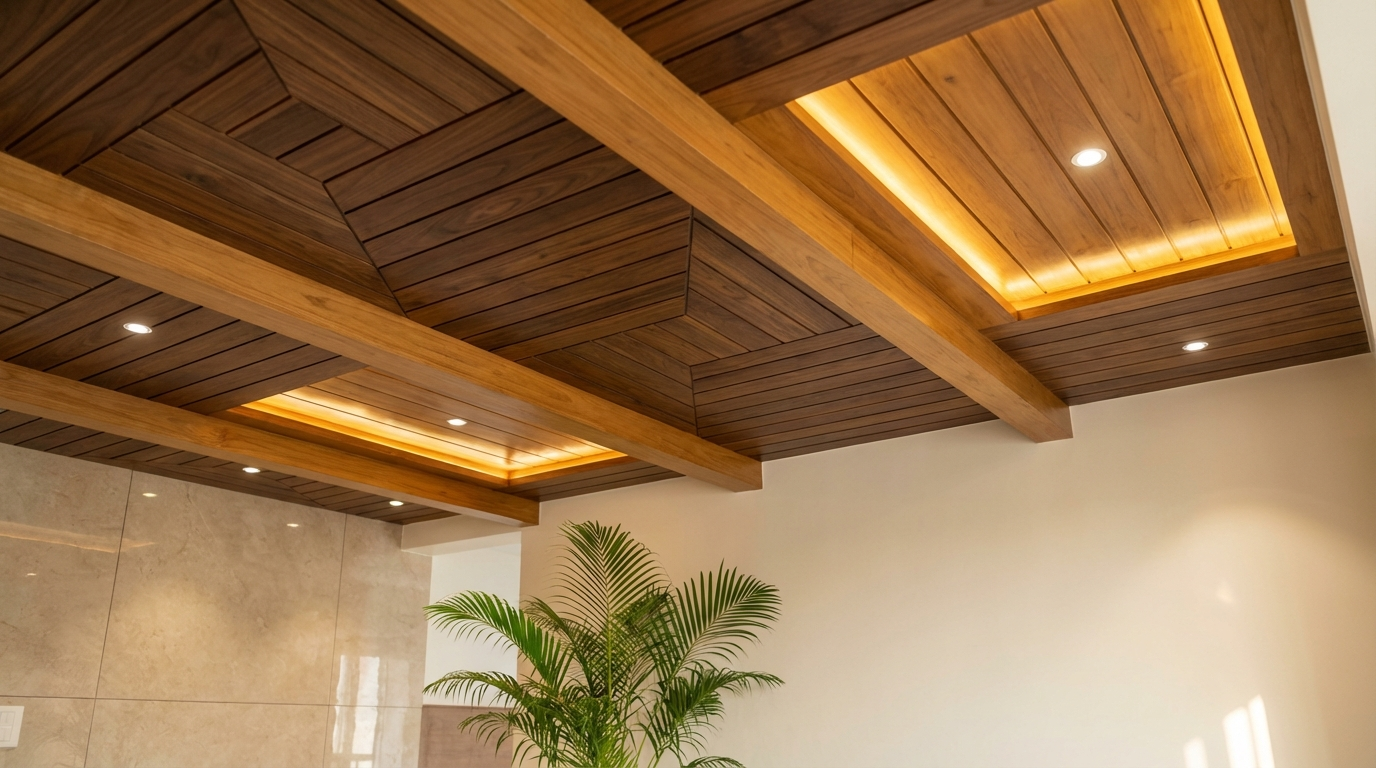
Teak Veneer: The gold standard for Indian door design, teak veneer offers rich golden-brown tones with distinctive grain patterns. Natural teak veneer costs ₹80-₹200 per square foot depending on grade and thickness. Best suited for main doors, pooja room doors, and premium bedroom applications where its natural oils provide some moisture resistance.
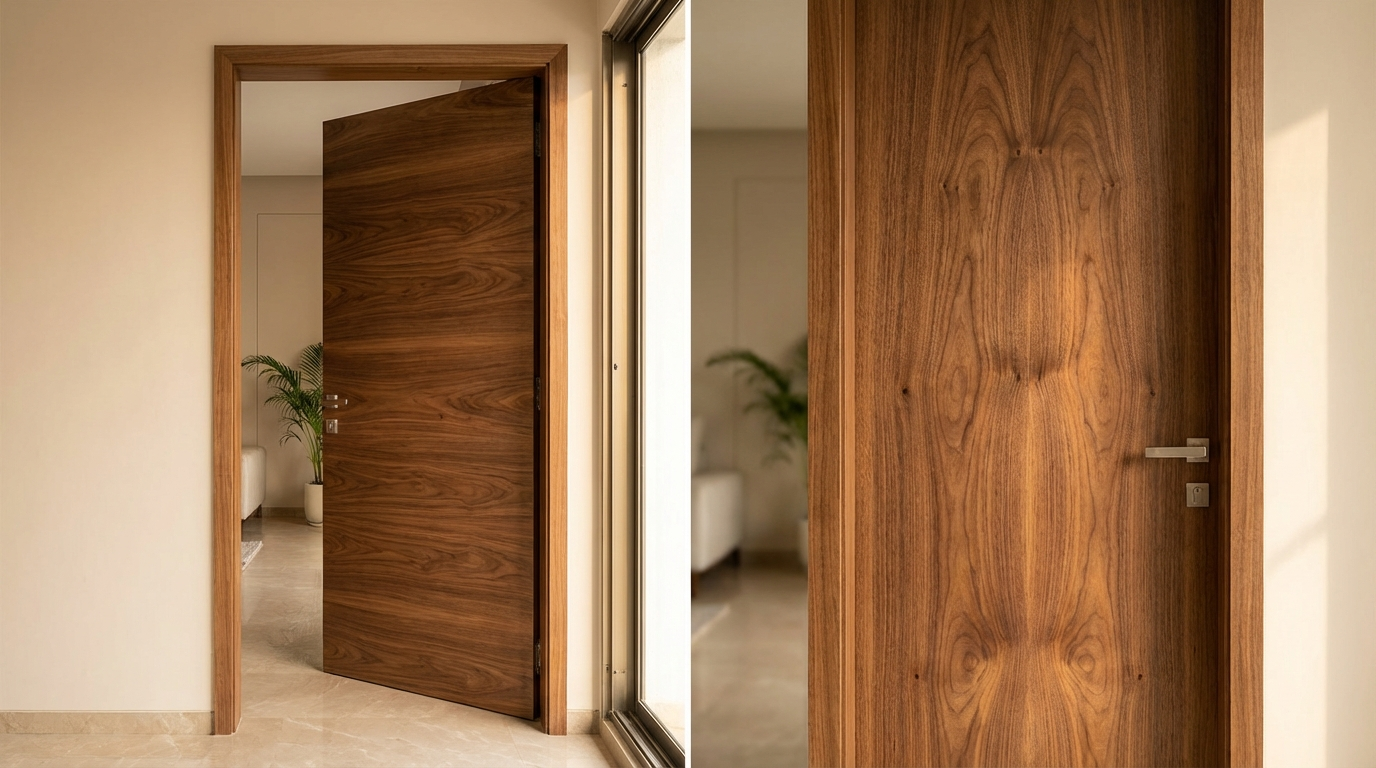
Walnut Veneer: Darker chocolate-brown tones make walnut veneer popular for contemporary luxury interiors. American black walnut is the premium choice, while Indian walnut offers more economical options. Walnut veneer doors create dramatic statements in master bedrooms and living room partitions.
Oak Veneer: Lighter tones with prominent grain make oak veneer suitable for Scandinavian and minimalist interior themes gaining popularity in Indian metros. Oak requires careful sealing as it lacks teak's natural oils.
Reconstituted Veneer Advantages
Reconstituted or engineered veneer is manufactured by slicing fast-growing timber, dyeing it, and reassembling into blocks that mimic exotic species. This produces consistent grain patterns across large areas—impossible with natural veneer. For clients wanting matched doors throughout a home, reconstituted veneer ensures uniformity.
Reconstituted veneer costs 30-50% less than natural equivalents while offering better consistency. Popular options include reconstituted teak, oak, and ebony patterns. The environmental benefit is significant: reconstituted veneer uses plantation timber rather than slow-growing tropical hardwoods.
Is Reconstituted Veneer as Good as Natural Veneer?
Reconstituted veneer performs identically to natural veneer in durability and maintenance requirements. The difference is purely aesthetic—trained eyes can identify the slightly mechanical grain repetition in reconstituted products. For most residential applications, reconstituted veneer delivers excellent value without compromising quality. However, for prestige applications where clients specifically want rare wood species authenticity, natural veneer remains irreplaceable.
20+ Luxury Veneer Door Design Ideas
Veneer door design possibilities span traditional Indian aesthetics to ultra-contemporary minimalism. The material's versatility allows intricate carving work, geometric inlays, and seamless integration with glass and metal elements. Below are practical design directions with material specifications that work in Indian homes.
Traditional and Heritage-Inspired Designs
- Classic Teak Panel Door: Raised and fielded panels in natural teak veneer on blockboard core. Ideal for 8-foot main doors. Specify 32mm door thickness with 0.6mm veneer minimum.
- Carved Border Frame: CNC-routed decorative border on teak veneer with flat centre panel. Works for pooja room entrances at 7x3 feet standard size.
- Antique Finish Teak: Distressed teak veneer with wire-brushed texture for vintage appeal. Apply oil finish rather than polyurethane to maintain aged character.
- Temple-Style Arched Top: Arched veneer door with brass studs and carved motifs. Requires custom frame fabrication.
- Kerala-Style Panelled Door: Multi-panel design with 6-8 rectangular panels mimicking traditional wooden doors. Best in teak or rosewood veneer.
Contemporary and Minimalist Designs
- Full-Height Flush Door: Floor-to-ceiling veneer door in walnut or grey oak. Use concealed hinges and magnetic catches for seamless appearance. Requires 40mm thick core minimum for 9-foot heights.
- Horizontal Grain Pattern: Book-matched veneer with horizontal grain orientation creates modern statement. Works excellently in master bedroom applications.
- Geometric Groove Pattern: CNC-machined V-grooves creating geometric patterns on veneer surface. Popular for living room partition doors.
- Two-Tone Veneer: Contrasting veneer species (light oak + dark walnut) in geometric arrangements. Requires careful edge banding where species meet.
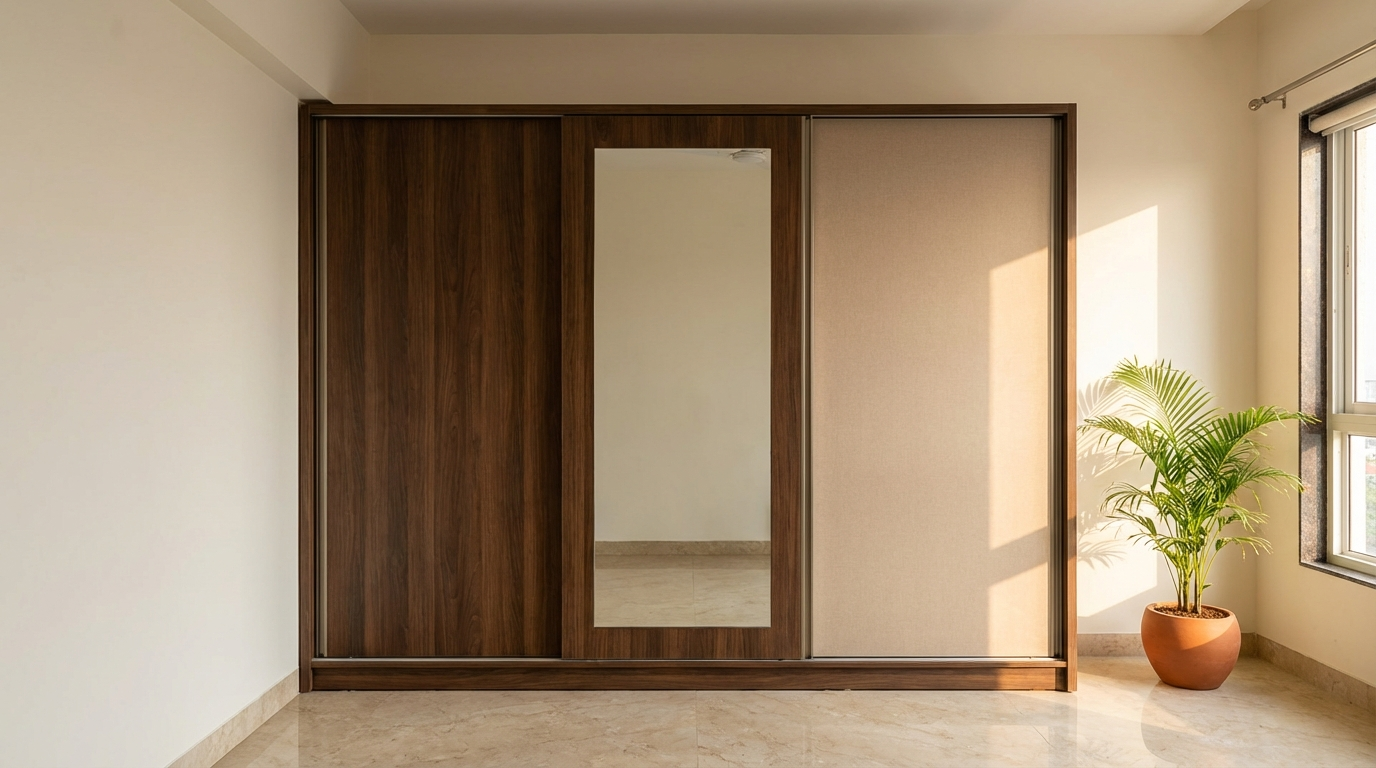
- Handleless Push-Open: Veneer door with integrated groove handle and push-latch mechanism. Perfect for modular wardrobe integration.
Veneer and Glass Combinations
- Centre Glass Strip: Vertical frosted glass panel flanked by veneer surfaces. Ideal for study room doors needing light transmission.
- Circular Glass Insert: Round frosted or fluted glass porthole in solid veneer door. Works for kitchen entries in open-plan homes.
- Glass Top Third: Upper portion in clear or tinted glass, lower two-thirds in veneer. Suitable for internal doors where privacy below eye level suffices.
- Narrow Glass Margins: Slim glass strips at door edges with veneer centre panel. Creates elegant appearance for formal dining room entries.
Metal Accent Designs
- Brass Inlay Lines: Thin brass strips inlaid into veneer surface in geometric patterns. Premium choice for main doors in contemporary homes.
- Metal Frame Border: Black metal frame wrapping veneer door edges. Industrial-contemporary aesthetic.
- Antique Metal Studs: Decorative brass or iron studs arranged in traditional patterns. Suitable for heritage-style main doors.
- Brushed Steel Handle Plates: Large rectangular handle back-plates in brushed stainless steel contrasting with warm veneer tones.
What Veneer Design Works Best for Indian Kitchens?
Kitchen-adjacent doors face higher humidity and grease exposure than other interior doors. For kitchen entries, choose reconstituted veneer over natural variants—the consistent density prevents uneven absorption of cooking vapours. Opt for darker tones that mask fingerprints better than light oak or maple. Always specify PU (polyurethane) finish rather than lacquer for kitchen-adjacent doors; PU provides superior resistance to moisture and cleaning chemicals.
Veneer Application Process and Quality Benchmarks
Understanding how veneer is applied helps identify quality doors and spot substandard work. The bonding process directly affects durability, and certain techniques indicate premium versus economy production standards.
Veneer Pressing Methods
Hot-press application uses heat (90-120°C) and pressure (8-12 kg/cm²) with thermosetting adhesives to bond veneer to core. This creates permanent bonds that withstand Indian humidity cycles. Cold-press methods using PVA adhesives are cheaper but fail in high-humidity conditions—avoid cold-pressed veneer doors for any exterior-facing or bathroom-adjacent applications.
Vacuum pressing produces superior bonds by eliminating air pockets between veneer and substrate. Premium door manufacturers use membrane vacuum presses that conform veneer to three-dimensional surfaces without creasing. Flat-press methods work for flush doors but cannot handle profiled or moulded door designs.
Quality Indicators to Check
Examine door edges closely: quality doors show tight veneer-to-core bond with no visible gaps. Run your finger along edges feeling for any veneer lift at corners. Check both faces under raking light to spot any bubbles, dips, or telegraphing of core irregularities through the veneer surface.
Grain matching indicates quality control. On multi-panel doors, grain direction should be consistent across all panels. Book-matching (where adjacent veneer sheets mirror each other) demonstrates premium production. Random grain orientation suggests lower-quality assembly.
How Thick Should Veneer Be for Doors?
Minimum recommended veneer thickness for residential doors is 0.5mm for interior applications and 0.8mm for main doors. Thicker veneer (1mm+) allows future sanding and refinishing—valuable for main doors expected to last 20+ years. Economy doors using 0.25mm veneer are essentially single-use; any damage requires complete resurfacing. When comparing door prices, always verify veneer thickness as this significantly affects longevity.
Core Material Selection for Veneer Doors
The core beneath veneer determines structural integrity, screw-holding capacity, and moisture resistance. Core selection should match application requirements rather than defaulting to cheapest available options.
| Core Type | Best Applications | Moisture Resistance | Screw Holding | Cost Level |
|---|---|---|---|---|
| Blockboard (BWR) | Main doors, heavy-use internal doors | Good | Excellent | Medium-High |
| BWR Plywood | All internal doors, moderate external | Good | Very Good | Medium |
| BWP/Marine Plywood | Bathroom doors, coastal locations | Excellent | Very Good | High |
| MDF | Painted doors, budget internal | Poor | Moderate | Low |
| HDHMR | Modular doors, CNC-routed designs | Moderate | Good | Medium |
| Particle Board | Budget internal only | Poor | Poor | Low |
Why Core Choice Matters More Than Veneer Species
A beautiful teak veneer on particle board core will fail faster than reconstituted veneer on quality blockboard. The core handles structural loads, holds hardware, and resists moisture penetration. Investing in premium veneer on economy core is poor value; balanced quality across all layers produces better outcomes.
For main doors, blockboard core is essential—the solid wood battens provide superior screw holding for heavy-duty hinges handling daily opening cycles. For bedroom and internal doors, BWR plywood offers adequate performance at moderate cost. MDF cores work only for painted veneer doors in dry, air-conditioned environments.
Price Range and Cost Drivers for Veneer Doors
Veneer door pricing in India varies dramatically based on veneer species, core material, door size, and finish quality. Understanding cost drivers helps set realistic budgets and identify value-for-money options.
Indicative Price Ranges (2026 Market)
Economy segment (₹6,000–₹10,000 per door): Reconstituted veneer on MDF or particle board core. Basic hardware, standard 7x3 feet size. Suitable only for dry internal applications in budget projects.
Mid-range segment (₹10,000–₹18,000 per door): Natural or quality reconstituted veneer on BWR plywood or blockboard core. Includes edge banding and basic finish. Appropriate for most residential bedroom and internal door requirements.
Premium segment (₹18,000–₹35,000 per door): Premium natural veneer (teak, walnut) on marine-grade or superior blockboard core. CNC-machined designs, premium hardware, professional finishing. Main door and statement door applications.
Luxury segment (₹35,000+ per door): Exotic veneer species, custom dimensions, metal inlays, designer hardware, multiple finish coats. Architect-specified doors for high-end residences.
Factors That Increase Costs
Non-standard sizes (above 8 feet height or 4 feet width) significantly increase costs due to material wastage and handling complexity. Curved or arched designs require custom pressing equipment adding 40-60% to base prices. Glass integration, metal inlays, and CNC detailing each add incrementally. In metro cities, installation charges and delivery add ₹1,500–₹3,000 per door; tier-2 cities typically charge less but may have limited design options.
Veneer Door Maintenance Guide
Proper maintenance extends veneer door life from 10-15 years to 25+ years. Unlike laminate which is essentially maintenance-free, veneer requires periodic attention to preserve its natural beauty.
Daily and Weekly Care
Dust veneer doors weekly using soft, dry microfiber cloth. Avoid feather dusters that can scratch. For fingerprints and light soiling, use barely damp cloth followed immediately by dry cloth—never leave moisture sitting on veneer surface. Do not use general-purpose cleaners; the chemicals can strip finish coats and dull veneer appearance.
Quarterly Maintenance Tasks
Apply furniture polish specifically formulated for wood veneer every 3-4 months. Avoid silicone-based polishes that create buildup; wax-based polishes are preferable. Check all hardware—hinges, handles, locks—and tighten screws that may have loosened. Inspect edges for any veneer lift and address immediately before moisture enters.
Annual Professional Care
Consider annual professional cleaning and re-polishing for main doors exposed to dust and pollution. In coastal areas, annual inspection for any salt damage or finish deterioration is essential. Refinishing requirements vary: well-maintained doors in air-conditioned environments may not need refinishing for 8-10 years, while doors facing environmental exposure may need attention every 4-5 years.
How Long Do Veneer Doors Last in Humid Indian Conditions?
With proper core selection, edge sealing, and maintenance, veneer doors last 20-25 years in Indian conditions. The critical factor is preventing moisture ingress through unsealed edges. Doors that swell, warp, or delaminate within 5 years almost always failed due to improper installation (unsealed edges) or inappropriate core selection (MDF in humid locations) rather than inherent material defects.
Common Buyer Mistakes and How to Avoid Them
Veneer door purchases frequently go wrong due to preventable errors. Understanding these common mistakes protects your investment and ensures satisfaction.
Mistake 1: Choosing Core Based on Veneer Appearance
What goes wrong: Buyers select doors based on attractive veneer, ignoring core specifications. The door fails structurally within 2-3 years.
Why it happens: Showrooms display veneered faces prominently while core details require asking.
How to avoid: Always request core specification in writing. Check door edges where core construction is visible.
Mistake 2: Using MDF Core in Moisture-Prone Areas
What goes wrong: MDF cores absorb moisture, swell irreversibly, and delaminate veneer surface.
Why it happens: MDF costs 30-40% less, tempting budget-conscious buyers.
How to avoid: Never use MDF-core veneer doors within 3 feet of bathrooms or in non-air-conditioned spaces during monsoon.
Mistake 3: Skipping Edge Sealing After Trimming
What goes wrong: Cut edges expose raw core to moisture. Door absorbs humidity, swells, and warps.
Why it happens: Carpenters trim doors to fit and install immediately without sealing.
How to avoid: Specify edge sealing requirement in carpenter briefing. Provide edge sealer material.
Mistake 4: Ignoring Veneer Thickness Specifications
What goes wrong: Paper-thin veneer (0.25mm) damages easily and cannot be repaired.
Why it happens: Sellers rarely volunteer veneer thickness information.
How to avoid: Ask specifically for veneer thickness. For main doors, accept nothing under 0.5mm.
Mistake 5: Installing Before Acclimatisation
What goes wrong: Doors installed immediately after delivery warp as they adjust to room conditions.
Why it happens: Project timelines pressure immediate installation.
How to avoid: Store doors in installation room for 7-10 days before hanging.
Mistake 6: Using Wrong Hardware
What goes wrong: Heavy hinges on thin cores cause screw pullout. Light hinges on heavy doors cause sagging.
Why it happens: Hardware selected based on appearance rather than door weight and core type.
How to avoid: Match hinge weight rating to door weight. Use hinge reinforcement plates on veneer doors.
Mistake 7: Selecting Based on Showroom Lighting
What goes wrong: Veneer appearance changes dramatically between showroom and home lighting conditions.
Why it happens: Showrooms use optimised lighting; homes have varied natural and artificial light.
How to avoid: Request veneer samples to evaluate in your actual space under different lighting conditions.
Decision Framework: Choosing the Right Veneer Door
Use this framework to match veneer door specifications to your specific requirements, ensuring appropriate choices for each application.
| Application | Recommended Veneer | Core Type | Min. Thickness | Finish Type |
|---|---|---|---|---|
| Main door (metro) | Natural teak/walnut | Blockboard BWR | 40mm | PU matte/satin |
| Main door (coastal) | Natural teak | Marine plywood | 40mm | Marine-grade PU |
| Master bedroom | Natural or recon premium | BWR plywood | 35mm | PU or melamine |
| Secondary bedroom | Reconstituted veneer | BWR plywood | 32mm | NC lacquer |
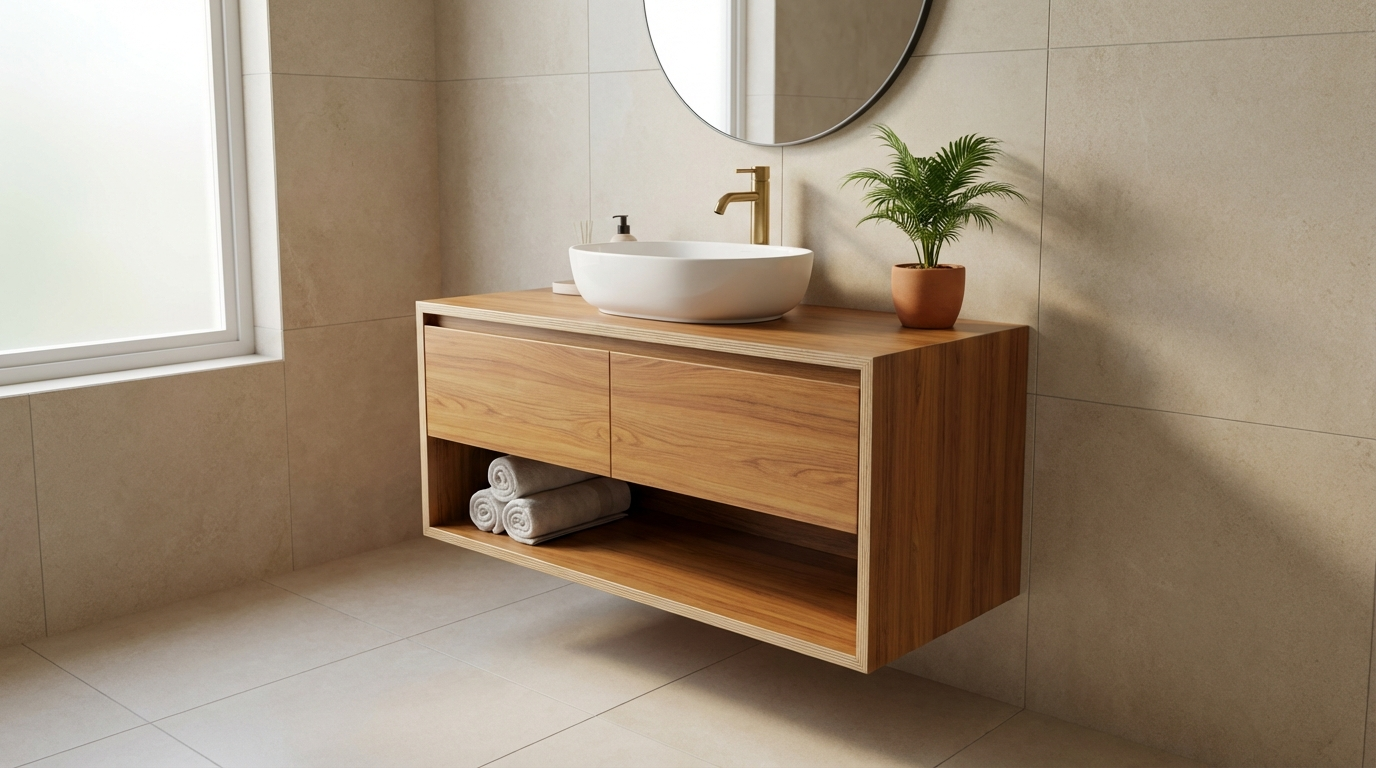
| Bathroom door | Reconstituted veneer | BWP marine grade | 35mm | Marine PU |
| Kitchen entry | Reconstituted veneer | BWR plywood | 32mm | PU satin |
| Pooja room | Natural teak | Blockboard | 35mm | Traditional oil finish |
| Wardrobe shutters | Reconstituted veneer | MDF/HDHMR | 18mm | PU or melamine |
Installation Tips and Carpenter Briefing Checklist
Successful veneer door installation requires clear communication with carpenters (mistris) and attention to details that differ from standard laminate or paint-grade doors.
Pre-Installation Checklist
- Verify door dimensions against frame opening—allow 3-5mm clearance each side
- Check door for any transport damage—veneer chips, edge damage, surface scratches
- Confirm acclimatisation period completed (minimum 7 days in installation room)
- Ensure frame is plumb, level, and square before attempting installation
- Have edge sealer ready if any trimming is required
Carpenter Briefing Points
Communicate these requirements clearly to your carpenter:
- Drill pilot holes for all screws—no direct driving through veneer surface
- Use hinge reinforcement plates or longer screws in blockboard cores
- Seal all cut edges immediately after any trimming, before overnight storage
- Handle doors by edges, not faces—veneer surfaces scratch easily
- Clean any adhesive residue immediately; dried adhesive damages finish
- Do not plane veneer surfaces—only core edges if adjustment needed
Can Veneer Doors Be Trimmed to Fit?
Veneer doors can be trimmed up to 10-15mm on each edge without compromising structure, depending on core construction. Beyond this, you risk cutting into hollow sections or weakening frame joints. Always trim from bottom edge first, then side edges if needed. Top edge trimming should be last resort as it affects visual balance. Most critically, every cut edge must be sealed within hours to prevent moisture absorption.
Quality Checks Without Laboratory Tests
You don't need laboratory equipment to assess veneer door quality. These field checks help identify problems before purchase and installation.
Visual Inspection Points
- Edge examination: Look for tight veneer-to-core bond with no gaps or bubbling at edges
- Surface flatness: Sight along door surface under raking light—any waves indicate core irregularities or poor pressing
- Grain consistency: Check grain direction is consistent and intentional across all panels
- Finish uniformity: Colour and sheen should be consistent across entire surface
- Corner condition: Corners are most vulnerable—check for any veneer lift or damage
Simple Physical Tests
Weight check: Lift door by one edge. Quality doors feel substantial due to solid cores. Unusually light doors indicate hollow construction or low-density cores.
Tap test: Knock on door surface at multiple points. Consistent sound indicates solid construction. Hollow sounds at unexpected locations suggest core voids or delamination.
Flex test: Support door at ends and press centre gently. Quality doors show minimal flex. Excessive bending indicates weak core construction.
Questions to Ask Suppliers
- What is the face veneer thickness?
- Is this natural or reconstituted veneer?
- What core material is used?
- What adhesive type bonds veneer to core?
- Is this hot-pressed or cold-pressed?
- What warranty applies to delamination?
- Can you provide test reports for core moisture resistance?
Frequently Asked Questions
What is the difference between veneer and laminate doors?
Veneer doors use thin slices of real wood bonded to engineered cores, while laminate doors use synthetic decorative paper with printed wood-like patterns. Veneer displays natural grain variations, knots, and depth that vary from piece to piece—no two veneer doors look exactly identical. Laminate offers perfect consistency since it's manufactured with printed patterns. Veneer requires periodic maintenance and can be refinished; laminate is essentially maintenance-free but cannot be repaired if damaged. Veneer develops a patina over time that many consider desirable; laminate appearance remains static. Cost-wise, quality veneer typically costs 30-50% more than equivalent laminate options.
Are veneer doors suitable for bathrooms in India?
Veneer doors can work for bathrooms when proper precautions are taken, though they're not the ideal choice for wet areas. Success requires marine-grade (BWP) plywood core rated for boiling water resistance, not standard BWR cores. All edges must be factory-sealed or sealed before installation. Marine-grade polyurethane finish is essential—standard lacquer fails in bathroom humidity. Even with these precautions, avoid doors directly in shower spray zones. For bathroom applications, reconstituted veneer generally outperforms natural veneer due to more consistent density and absorption characteristics. Consider laminate or solid core options for budget bathroom doors in high-humidity regions.
How much does a veneer door cost in India?
Veneer door prices in India range from approximately ₹6,000 for economy internal doors to ₹35,000+ for premium main doors. A typical mid-range bedroom door (7x3 feet) with reconstituted veneer on BWR plywood core costs ₹12,000–₹16,000. Main doors in natural teak veneer on blockboard typically range ₹20,000–₹28,000. Prices vary significantly by city—Mumbai and Delhi command 15-20% premiums over tier-2 cities. Other factors affecting price include veneer species (teak costs more than oak), veneer thickness, core material grade, door dimensions, design complexity, and finish type. Always get itemised quotes showing veneer, core, and finishing costs separately.
Can veneer doors be repaired if damaged?
Minor veneer damage can often be repaired, though success depends on damage type and veneer thickness. Surface scratches on thick veneer (0.5mm+) can be sanded lightly and refinished. Small chips can be filled with colour-matched wood filler, though this remains visible on close inspection. Delaminated sections can sometimes be reglued using veneer-specific adhesives and clamping, though results are inconsistent. Extensive damage, water swelling, or damage to paper-thin veneer typically requires professional re-veneering or door replacement. For valuable main doors, professional restoration is worthwhile; for internal doors, replacement often proves more economical than repair.
Which veneer species is best for main doors in Indian climate?
Teak veneer remains the preferred choice for main doors in Indian conditions due to its natural oils that provide inherent moisture resistance and its proven performance over decades in Indian homes. Teak's golden-brown tones suit both traditional and contemporary architecture. Walnut veneer offers excellent aesthetics but requires more careful sealing in humid regions. Oak veneer works well in air-conditioned environments but needs additional protection in areas with monsoon exposure. For coastal locations, teak's natural properties make it significantly more reliable than alternatives. Reconstituted teak offers teak appearance at lower cost while maintaining good durability for budget-conscious projects.
How do I identify genuine teak veneer from imitations?
Genuine teak veneer displays characteristic golden-brown colour with darker grain lines and occasional figure marks. Natural teak has a subtle oily feel and distinctive scent when freshly cut—though this fades on finished surfaces. Examine grain patterns closely: natural teak shows random variation, while printed laminates show mechanical repetition. Request to see raw (unfinished) veneer samples where wood characteristics are most evident. Ask suppliers for sourcing documentation. Price is also indicative—genuine teak veneer cannot be produced at extremely low prices. When in doubt, purchase from established manufacturers with verifiable supply chains rather than unbranded local fabricators.
Is veneer door a good investment compared to solid wood?
For most Indian residential applications, veneer doors offer better value than solid wood. Solid timber doors face significant warping and cracking risks in Indian climate conditions with extreme humidity variations between monsoon and dry seasons. Veneer on engineered cores provides superior dimensional stability while delivering authentic wood aesthetics. Cost savings of 40-60% compared to equivalent solid wood doors can be redirected to better hardware, finishing, or additional doors. Solid wood makes sense only for heritage restoration projects or when clients specifically value the perceived prestige of solid timber. Functionally, quality veneer doors meet or exceed solid wood performance in Indian conditions.
What thickness of veneer door is recommended for bedrooms?
For bedroom doors, 32mm overall door thickness with minimum 0.4mm face veneer provides adequate performance for most residential requirements. This specification balances structural integrity, sound dampening, and cost-effectiveness. Premium bedrooms may warrant 35mm thickness for improved sound insulation between rooms. The veneer layer thickness matters for longevity—0.5mm or thicker allows future refinishing if needed. For children's bedrooms where more surface abuse is likely, consider 0.6mm+ veneer thickness. MDF-core veneer doors can work in air-conditioned bedrooms, but BWR plywood cores are safer choices in naturally ventilated homes or humid climates.
How often do veneer doors need refinishing?
Refinishing intervals depend heavily on door location and maintenance quality. Well-maintained veneer doors in air-conditioned bedrooms may not need refinishing for 10-15 years. Main doors facing environmental exposure—dust, pollution, UV light, temperature extremes—typically need refinishing every 5-7 years to maintain appearance and protection. Signs that refinishing is needed include visible wear patterns, fading colour, surface roughening, or finish checking (tiny cracks in finish coat). Regular maintenance with appropriate wood polish extends intervals significantly. When refinishing, light sanding followed by fresh finish coats usually suffices; complete stripping and refinishing is rarely necessary unless prior finishes have failed extensively.
Can I install veneer doors myself or is professional installation necessary?
DIY installation is possible for skilled individuals with proper tools, but professional installation is recommended for veneer doors due to their higher cost and need for careful handling. Unlike laminate doors that tolerate some handling abuse, veneer surfaces scratch easily and require gentle treatment. Professional carpenters understand proper hinge placement, clearance requirements, and edge sealing procedures. For main doors, professional installation ensures proper weather sealing and security hardware integration. If choosing DIY, practice on less visible internal doors first, ensure you have proper piloting bits to prevent veneer cracking around screws, and allow adequate time—rushing installation causes most damage.
Are veneer doors eco-friendly compared to other options?
Veneer doors represent a relatively sustainable choice when responsibly sourced. One log processed into veneer covers many times more door surface area than the same log as solid timber, maximising resource efficiency. Reconstituted veneer uses plantation timber rather than slow-growing tropical species, further improving environmental credentials. However, sustainability depends on sourcing: veneer from sustainably managed forests with FSC or equivalent certification offers genuine environmental benefits. The core material also matters—plywood cores from plantation timber are more sustainable than those from natural forests. Compared to PVC doors or aluminium doors, wood veneer has lower embodied energy and is biodegradable at end of life.
What finish is best for veneer doors in Indian homes?
Polyurethane (PU) finish offers the best all-round performance for veneer doors in Indian conditions, providing excellent moisture resistance, durability, and clarity that showcases wood grain. PU comes in matte, satin, and gloss sheens—satin (semi-gloss) balances appearance and maintenance best for most applications. NC (nitrocellulose) lacquer costs less and dries faster but offers inferior moisture resistance, making it unsuitable for humid climates. Traditional oil finishes suit heritage applications but require more frequent maintenance. For main doors, marine-grade PU provides additional weather protection. Melamine finishes work for interior applications where budget constraints apply. Avoid wax-only finishes in Indian humidity—they provide insufficient moisture barrier.
How do I prevent veneer door edges from peeling or lifting?
Edge protection starts with quality manufacturing—hot-pressed veneer with proper edge banding resists peeling better than economy alternatives. During installation, seal any cut or trimmed edges immediately with appropriate edge sealer; exposed raw edges absorb moisture within hours in humid conditions. Avoid installing doors where edges will receive direct water contact (rain splash near entrances, shower spray in bathrooms). If you notice early signs of edge lift, act immediately—apply veneer adhesive under the lifted section, clamp flat, and allow curing before use. Regular inspection of edges, especially at bottom and hinge-side where stress concentrates, catches problems early when repair remains practical.
What hardware works best with veneer doors?
Hardware selection for veneer doors requires attention to both aesthetics and structural requirements. For hinges, use ball-bearing hinges rated for door weight plus 20% safety margin. Three hinges are essential for doors over 7 feet height or significant weight. Always drill pilot holes for screws—driving screws directly through veneer causes surface cracking. Consider concealed (European-style) hinges for contemporary veneer doors where minimal visible hardware is desired. For handles, heavier doors need sturdier mortise locks rather than tubular mechanisms. Metal finishes should complement veneer tones—antique brass with traditional teak, brushed nickel or black with contemporary designs. Avoid magnetic catches that require strong pulling—this stresses veneer door construction.
Making Your Veneer Door Decision
Veneer doors occupy the sweet spot between solid timber luxury and laminate practicality, delivering authentic wood character at accessible price points. Success depends on matching specifications to application—a beautiful teak veneer door fails when installed on an unsuitable core or in conditions exceeding its moisture tolerance. The Indian market offers excellent veneer door options across all price segments, from economy reconstituted veneer on MDF to premium natural teak on marine-grade cores.
For design guidance on complete door planning for homes, refer to our comprehensive main door design guide. Those specifically considering modular wardrobe integration with veneer shutters will find our wardrobe material selection guide useful. The key is treating veneer door selection as a system decision encompassing veneer species, core material, finish type, hardware, and installation quality rather than focusing on any single element in isolation.
Your veneer doors will serve as silent statements of taste and quality for decades—invest the time to choose wisely, specify clearly, and maintain properly. The natural warmth of real wood grain is irreplaceable, and modern veneer technology makes this luxury accessible to thoughtful homeowners across India.
Disclaimer: This content is provided for general informational purposes based on industry practices and publicly available information. Product specifications, standards, prices, and availability may vary by manufacturer, region, and time. Readers should independently verify details with manufacturers, dealers, or qualified professionals before making purchase or construction decisions.Want Plywood Suggestions?
Share a few details and a Sainik 710 specialist will suggest suitable brands and connect you to responsive dealers.