Top Waterproof Plywood Brands in India: How to Compare (IS 710), Warranty, Core Quality & Authenticity
Compare waterproof plywood brands in India using an IS 710 checklist: bonding, core gaps, calibration, warranty terms and authenticity checks before you buy.
Quick Decision Summary
Pick BWP plywood certified to full IS 710 specs with solid hardwood core, precise calibration, and verifiable warranty—prioritize on-site core checks over brand hype.
If you're in a hurry: In India's humid climates, true waterproof plywood (BWP grade per IS 710) must withstand boiling water tests, show no core gaps or voids, hold screws firmly without crumbling, and resist delamination in kitchens or bathrooms. Skip brands lacking visible IS 710 stamps or third-party test marks. Field-test by tapping edges for hollow sounds and checking glue lines. Expect to pay more for calibrated sheets with uniform thickness, but they save rework costs long-term. Coastal or monsoon-zone buyers: Insist on acclimatization before cutting.
- Choose this if: High-moisture areas like modular kitchens, coastal homes, or poorly ventilated bathrooms; budget allows 20-30% premium over MR grade.
- Avoid this if: Dry interiors like bedrooms—opt for cheaper BWR; or if carpenter skips edge sealing, as even top plywood fails without it.
Note: sainik710.com is an independent informational site and is not affiliated with any manufacturer.
What This Actually Means (Grade, Construction, and Use)
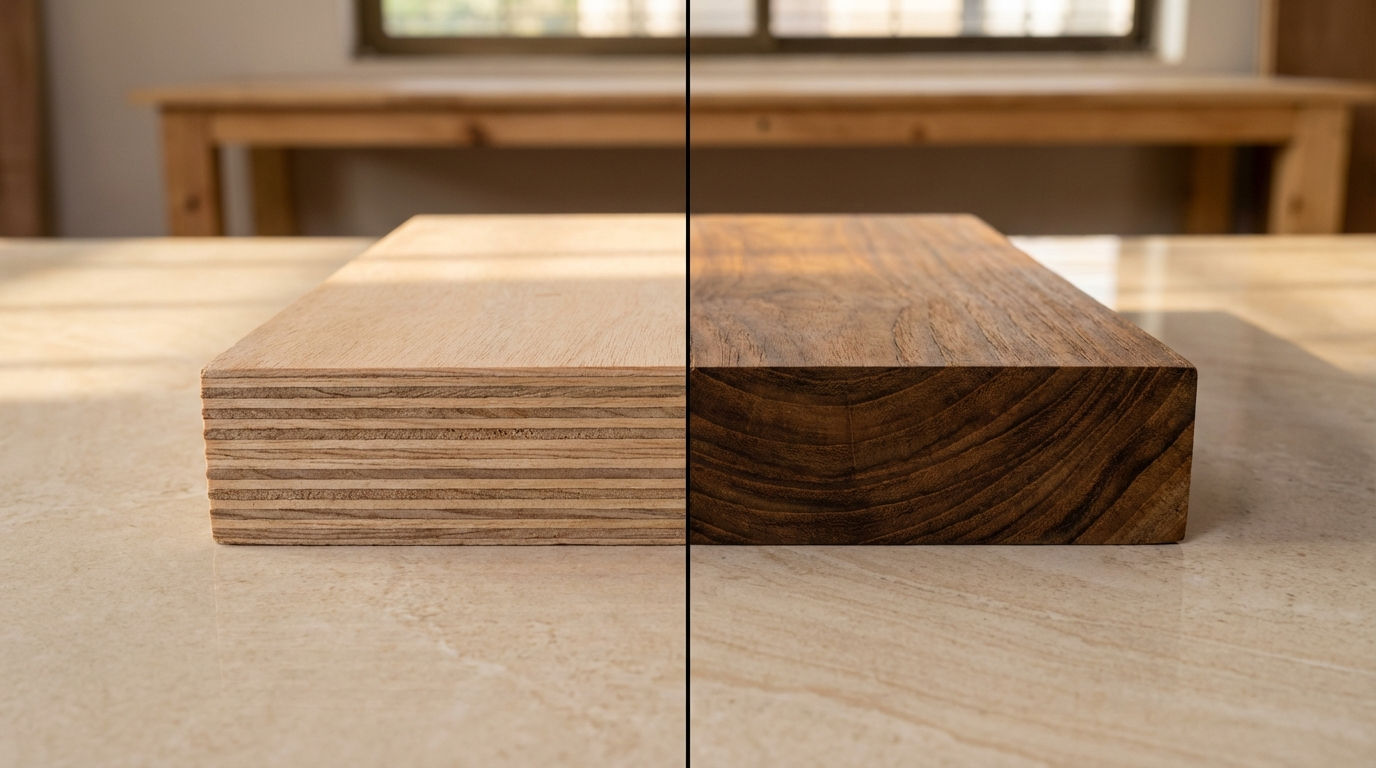
Waterproof plywood, often labeled BWP (Boiling Water Resistant), refers to panels built to IS 710 standards, using phenolic resins that endure prolonged water exposure without separating layers. Unlike MR (Moisture Resistant) plywood for general use, BWP undergoes rigorous boil tests—immersed for hours at 100°C—ensuring bonds hold in India's steamy monsoons or splash-prone zones. Construction starts with 9-13 veneer layers (odd number for balance), glued under high pressure, with face veneers typically 1.0-1.2mm thick for laminate adhesion.
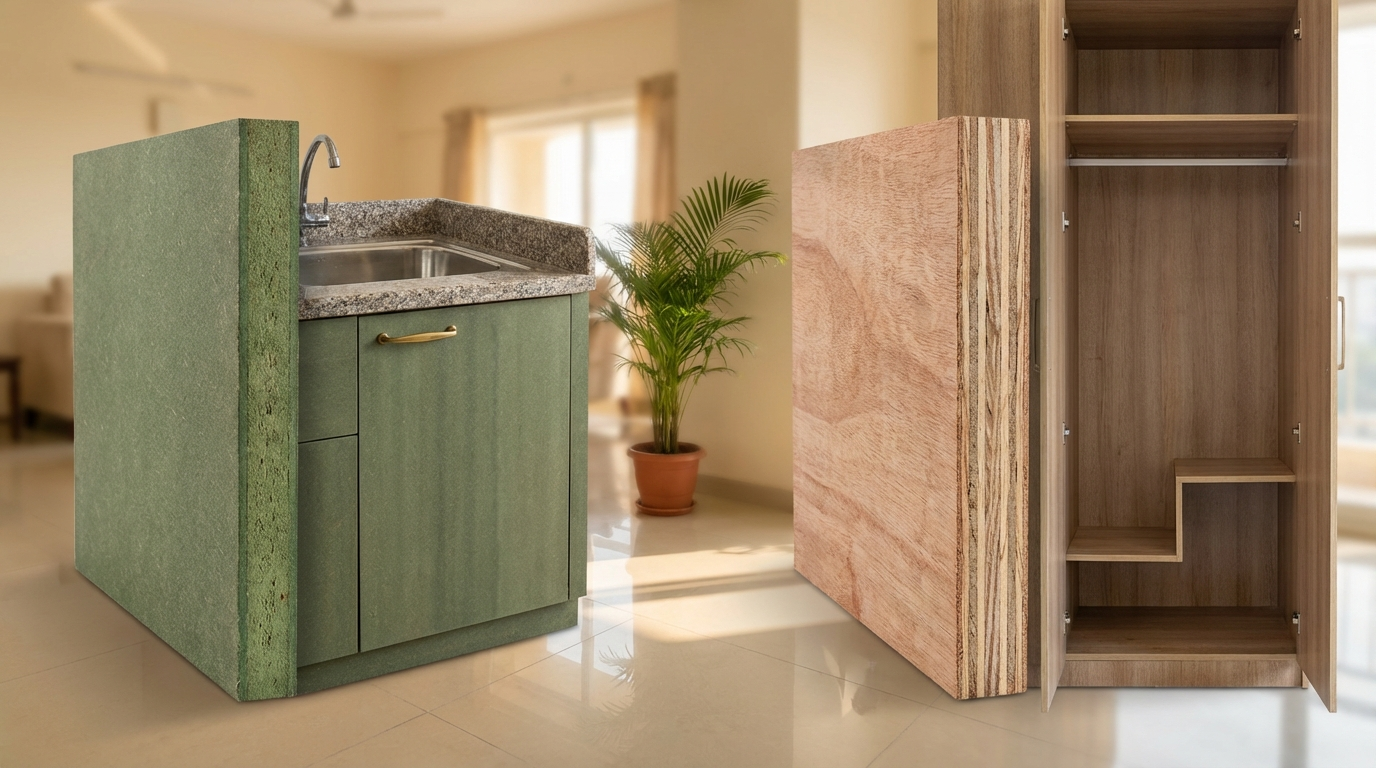
Core matters most: Hardwood cores (poplar, eucalyptus) offer superior screw holding versus mixed softwood, which crumbles under hinges. Calibration sands faces to exact thickness (e.g., 18mm sheet stays uniform at ±0.3mm), preventing wavy finishes post-lamination. Use cases shine in modular kitchens (cabinets under sinks), wardrobes in humid Mumbai flats, bathroom vanities, or coastal Goa partitions—anywhere swelling exceeds 5% risks warping.
Limitations hit hard: No plywood is 100% waterproof like solid plastic; edges remain vulnerable without sealing. In practice, BWP handles 90% of Indian wet-area needs but demands skilled workmanship—lazy carpenters cause 70% of failures via poor edge treatment or rushed installs.
Grade Breakdown: BWP vs. BWR vs. MR
BWP (IS 710) tops for immersion; BWR (IS 303) suits occasional splashes but delaminates faster in boils. MR fails quickly in humidity. For kitchens, BWP 18mm; wardrobes, 16-19mm BWP if coastal.
India-Specific Reality Check (Moisture, Termites, and Workmanship)
India's 80-95% monsoon humidity, coastal salt air (Chennai, Kerala), and erratic AC usage amplify plywood woes—unacclimatized sheets swell 10-15% on-site, cracking laminates. Termites thrive in untreated cores post-monsoon floods; even BWP needs anti-termite glue (C-type per IS). Storage blunders like ground stacking invite moisture wicking, causing core rot before install.
Contractor habits worsen it: 40% skip 48-hour site acclimatization, leading to cupping. In tier-2 cities like Pune or Jaipur, vendors mix rejected MR as BWP—visually identical until cut. Ventilation-poor homes (common in apartments) trap steam from cooking, delaminating edges in 2-3 years without polish or PVC strips.
Real-world fix: Buy from depots with covered stacks; insist on 7-day covered storage on-site. For termites, pair with borate preservatives. Homeowners in high-risk zones (Kerala backwaters, Mumbai chawls) report BWP lasting 15+ years with proper sealing versus 5 years otherwise.
Regional Variations: Coastal vs. Inland
Coastal (Goa, Vizag): Prioritize zero-void cores for salt corrosion. Inland (Delhi NCR): Focus calibration for dry-swelling cycles.
Comparison That Actually Helps: IS 710 Checklist Framework
Brand names like Greenply, CenturyPly, or Kitply dominate discussions, but true comparison hinges on IS 710 compliance—not logos. Use this checklist to pit samples side-by-side at dealers: demand cut-off test pieces from each. No lab? Field proxies reveal 80% of issues.
| Criteria | IS 710 Requirement | Good Example Traits | Red Flags | Your Score |
|---|---|---|---|---|
| Bonding Strength | Passes 6-hr boil test, no delam | Glue lines invisible, no bubbles | Layer separation on knife pry | |
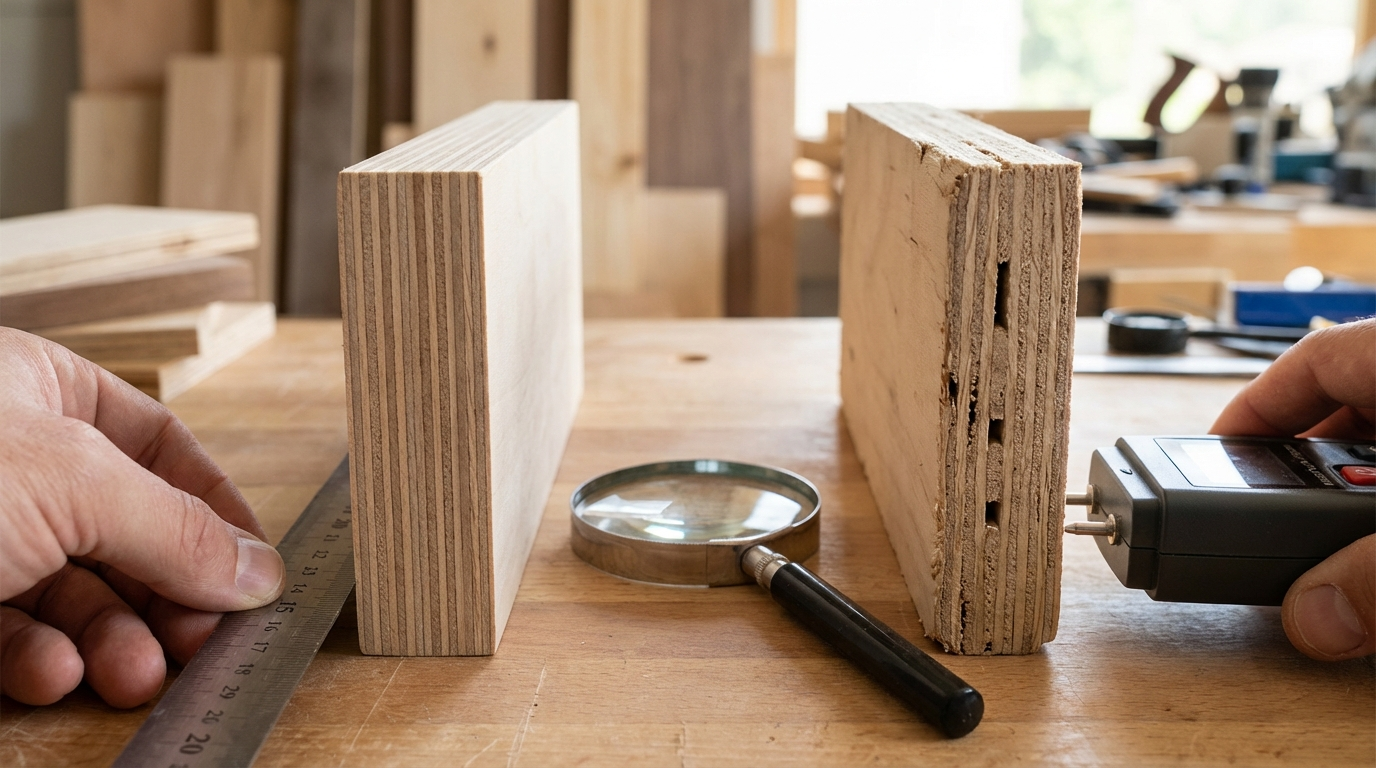
| Core Quality | No gaps >1mm, hardwood plies | Solid tap sound, no voids | Hollow echo, crumbly strips | |
| Calibration | ±0.3mm uniformity | Feels flat, ruler-consistent | Wavy faces, thickness variance | |
| Thickness Swell | <10% after soak | Minimal puff post-water test | Expands >12%, warps | |
| Screw Holding | 200N pull-out min | Firm grip, no crumble | Spins loose after 3 screws |
Top scorers (4-5 across board) justify premiums; mix 3s signal shortcuts. For example, some popular brands excel in bonding but skimp on cores—trade-off for volume production. Test 2-3 brands per city; coastal dealers often stock better due to demand.
How to Choose in 5 Steps: Field-Tested Process
Step 1: Verify IS 710 stamp—faded ink? Demand fresh cert or mill test report. Step 2: Cut test—ask for 30x30cm scrap; check core gaps by splitting. Step 3: Moisture meter read (<12%); tap edges for voids. Step 4: Screw/nail test in scrap—5 screws per zone, pull hard. Step 5: Warranty scrutiny—read fine print for pro-rating, installation clauses.
For architects: Bulk buyers, request batch samples. Carpenters: Carry toolkit (vernier, knife). Homeowners: Visit with checklist. This weeds out 60% fakes in open markets like Delhi's Bhagirath Palace.
Scenario-Based Tweaks
- Modular kitchen OEM: Emphasize calibration for CNC routing.
- Coastal contractor: Double-check termite glue.
Price Range and Cost Drivers
Typical ranges for 8x4ft BWP: 16mm Rs. 2,800-3,800/sheet; 18mm Rs. 3,200-4,500; 19mm Rs. 3,500-5,000—varies 20-30% by city (Mumbai higher logistics, Tier-2 lower). Drivers: Hardwood core (+25%), calibration (+15%), brand premium (10-20% for trusted names), glue type (PF resin pricier). Thickness swells costs 15-20%; full IS 710 adds 10%.
Budget estimate: Wardrobe (20 sheets 18mm) Rs. 70,000-90,000 ply alone. Avoid rock-bottom (<Rs. 2,500/18mm)—signals mixed core. Negotiate bundles but test first; monsoon hikes 10% due to shortages.
Quality Checks You Can Do Without Lab Tests
Visual: Uniform color, no patches—warped edges signal storage abuse. Knife test: Slice face; clean glue, no fiber pull. Tap test: Hammer along edges—solid thud good, hollow bad (voids). Water drop: 30min no dark halo. Screw pull: Drill 4mm holes, insert 8 screws/ply edge; yank—no tear-out.
Questions for vendor: Batch number? Test reports? Return policy? Warning signs: Puffed faces (pre-swelled), crumbly core strips, mismatched stamps. In humid depots, reject sweat-beaded stacks.
Advanced: Acclimatization Proxy
Stack sample overnight in your space; re-measure thickness.
Common Buyer Mistakes and How to Avoid Them
1. Brand obsession sans checks: Fix—score via table above. 2. Ignoring core: Mixed softwood fails screws; demand hardwood. 3. Skipping acclimatization: Swells ruin fits; mandate 72hrs. 4. Poor edge sealing: Delams in 1 year; use 2-coat PU + strips. 5. Cheapest bid: Hidden rework costs 2x; budget 20% buffer. 6. No warranty read: Many exclude workmanship; photograph terms. 7. Dry-area overkill: BWP waste in bedrooms; use BWR. 8. Ground storage: Wicks moisture; elevate 6 inches. 9. CNC without calibration: Rips router bits; verify flatness. 10. Termite neglect: Core eats away; ask C-grade glue proof.
Workmanship and Installation Best Practices
Cutting: CNC or table saw with zero-clearance insert; clean kerf prevents glue-up. Edge sealing: 2-3 silicone coats pre-laminate, post with PU polish. Fastening: 45mm screws for 18mm ply, pre-drill 3mm; space 150mm edges. Hinges: Reinforce with 2x ply blocks in zones—BWP holds 150kg/screw pair.
Storage: Vertical racks, 150mm off ground, covered. Acclimatize 5-7 days matching site humidity. Monsoon tip: Plastic wrap till cut. Failures spike from rushed gluing—clamp 24hrs.
Zone-Specific Tips
Kitchen sinks: Double-seal bottoms. Bathrooms: Ventilation gaps mandatory.
Decision Framework: Match Your Project to Plywood Traits
| Project | Recommended BWP Traits | Thickness | Core Type | Budget Tier | Risk if Wrong |
|---|---|---|---|---|---|
| Modular Kitchen | Full IS 710, calibrated | 18mm | Hardwood | High | Delam under sink |
| Wardrobe (Coastal) | Zero voids, termite glue | 16-19mm | Hardwood | Medium-High | Swelling, screw fail |
| Bathroom Vanity | High screw hold, sealed edges | 16mm | Mixed OK | Medium | Warping |
| Partitions | Calibration priority | 12-16mm | Hardwood | Low-Medium | Uneven finish |
Use this to spec quotes; adjust for site humidity.
FAQs
Is IS 710 the same as 'marine plywood'?
IS 710 defines BWP standards, often called marine plywood in trade lingo, but not all 'marine' labels meet it—verify stamps. True IS 710 passes boil tests for boat-like durability, ideal for Indian wet zones, but marine implies extra seaworthiness rarely needed home use. Always cross-check core and calibration beyond labels.
How long does BWP warranty typically last?
Warranties often span 5-25 years against delamination, but pro-rated after year 5 and exclude workmanship, moisture damage, or termites. Read exclusions: many void if not edge-sealed or installed professionally. In practice, coastal sheets last 12-15 years with care; inland 20+. Confirm transferability for resale.
Hardwood vs mixed core—which for kitchens?
Hardwood cores excel in screw holding for heavy cabinets, resisting crumble under utensils drawers—essential kitchens. Mixed (poplar/softwood) suits light wardrobes but fails repeated loads. Pay 15-20% more for hardwood; test by screwing scrap. Monsoon kitchens demand it to avoid hinge pull-outs.
Can I use BWP without lamination?
Possible with polish or paint, but edges need triple-sealing against capillary action. Bare BWP darkens in humidity; laminate boosts aesthetics and protection. For budget bathrooms, polish + varnish works 8-10 years if ventilated well—carpenters often skip, causing early blotch.
How to spot fake IS 710 certification?
Fakes have blurry stamps, no batch codes, or generic papers. Demand mill-embossed marks; cross-verify with vendor's principal office via phone (not email). Cut test reveals truth—genuine shows tight plies. Dealers in competitive markets like Hyderabad mix fakes; test multiple sheets.
Does calibration really matter for screw holding?
Yes—uncalibrated sheets have thin spots crumbling under screws, especially edges. Uniform ±0.3mm ensures even load distribution, vital for modular units. Feel with straightedge; wavy ones warp post-install, hiking rework 30%. CNC fabricators reject non-calibrated outright.
Termite risk in waterproof plywood?
BWP glues often include C-grade termiticides, but untreated cores invite attacks in soil-contact zones. Coastal soil amps risk; pair with barriers. Inspect yearly for powder trails—replacements rare if sealed. Inland drier areas see less, but Mumbai apartments report surges post-monsoon.
Best thickness for Indian wardrobes?
18mm balances strength and weight for full-height sliders; 16mm for top shelves saves cost. Heavier 19mm for base plinths in humid homes. Factor carpenter spans—longer need thicker. Typical wardrobe (8x7ft) uses 15-20 sheets; overweight doors sag without frames.
Edge delamination fixes post-install?
Early stage: Scrape, re-seal with epoxy filler + PU. Advanced needs panel replacement. Prevention trumps: Seal pre-cut, use matching humidity ply. 50% kitchen failures trace here—contractors rush, homeowners pay.
BWP vs MDF for wet areas?
BWP wins for structural loads (shelves, cabinets); MDF swells irreversibly despite HDHMR variants. BWP handles immersion better, but MDF laminates easier for curves. Trade-off: BWP costlier but repairable; use MDF only vanities with steel frames in ventilated baths.
How much swelling is acceptable?
IS 710 caps 10-12% thickness swell after 24hr soak—good brands hit <8%. Field test: Soak scrap edge 2hrs; >10% rejects it. Monsoon-stored ply starts high; acclimatize drops it. Swollen installs guarantee cracks.
Disclaimer: This content is provided for general informational purposes based on industry practices and publicly available information. Product specifications, standards, prices, and availability may vary by manufacturer, region, and time. Readers should independently verify details with manufacturers, dealers, or qualified professionals before making purchase or construction decisions.Want Plywood Suggestions?
Share a few details and a Sainik 710 specialist will suggest suitable brands and connect you to responsive dealers.