Sainik 710 Plywood (IS 710 BWP): Specs, Uses, Sizes, Warranty & Authenticity Checklist
Complete guide to Sainik 710 IS 710 (BWP) plywood—specs, thickness, sizes, ideal uses, warranty basics, and a quick authenticity checklist before you buy.
Quick Decision Summary
Sainik 710 plywood offers reliable IS:710 BWP performance at an affordable price for moisture-heavy Indian applications.
If you're in a hurry: Opt for Sainik 710 if building kitchens, bathrooms, or coastal furniture where monsoon humidity or spills demand boiling water-proof strength without premium costs. It features a hardwood core with phenolic resins, uniform sizing in 8x4 and 7x4 feet, thicknesses from 4mm to 25mm, and typically a 10-year warranty claim against delamination and pests. Ideal for modular wardrobes or cabinets in humid cities like Mumbai or Chennai, but verify authenticity via QR codes and ISI marks before purchase to avoid fakes.
- Choose this if: High-moisture zones (kitchens, bathrooms), budget-conscious durability needed, or termite-prone areas without breaking the bank.
- Avoid this if: Fully dry interiors (use cheaper MR grade), ultra-high-load structures (consider thicker BWP alternatives), or unverified sellers risking counterfeits.
Note: sainik710.com is an independent informational site and is not affiliated with any manufacturer.
What This Actually Means (Grade, Construction, and Use)
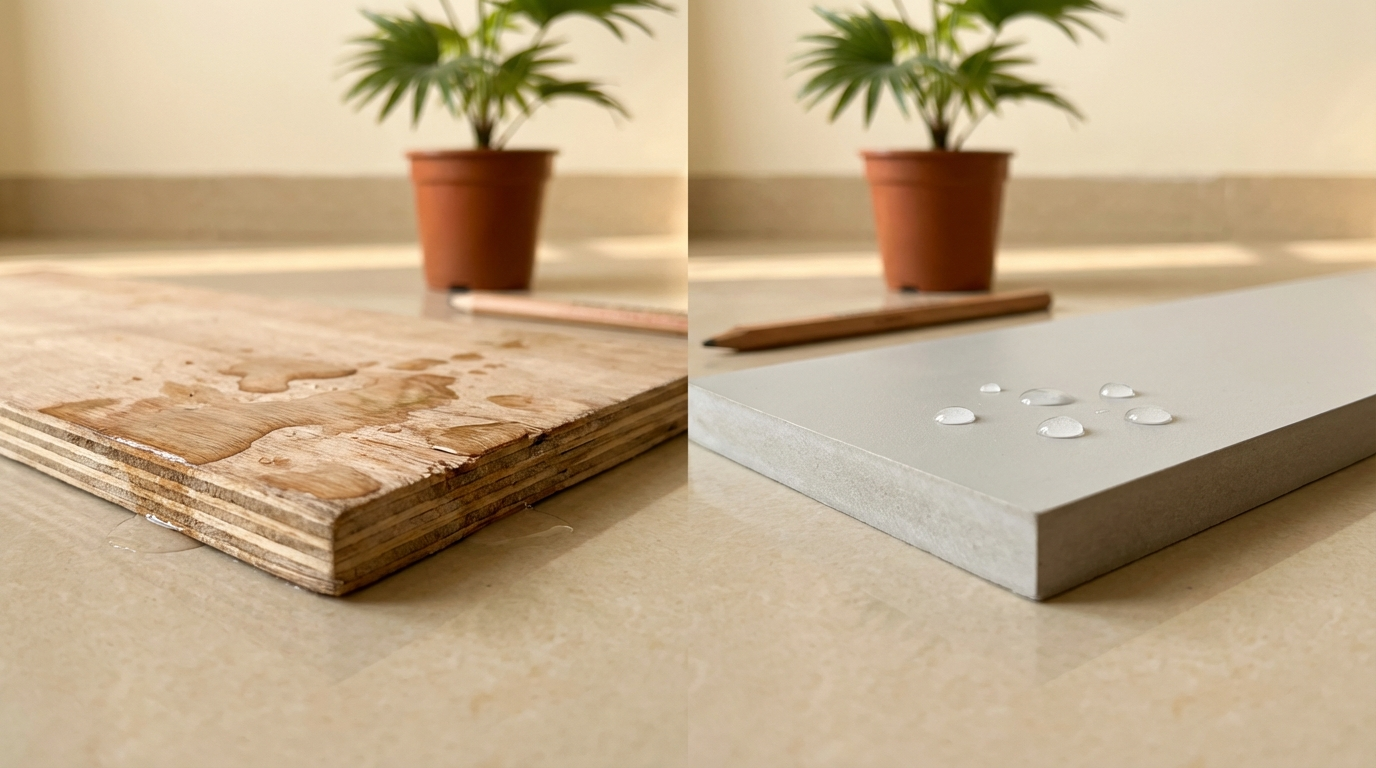
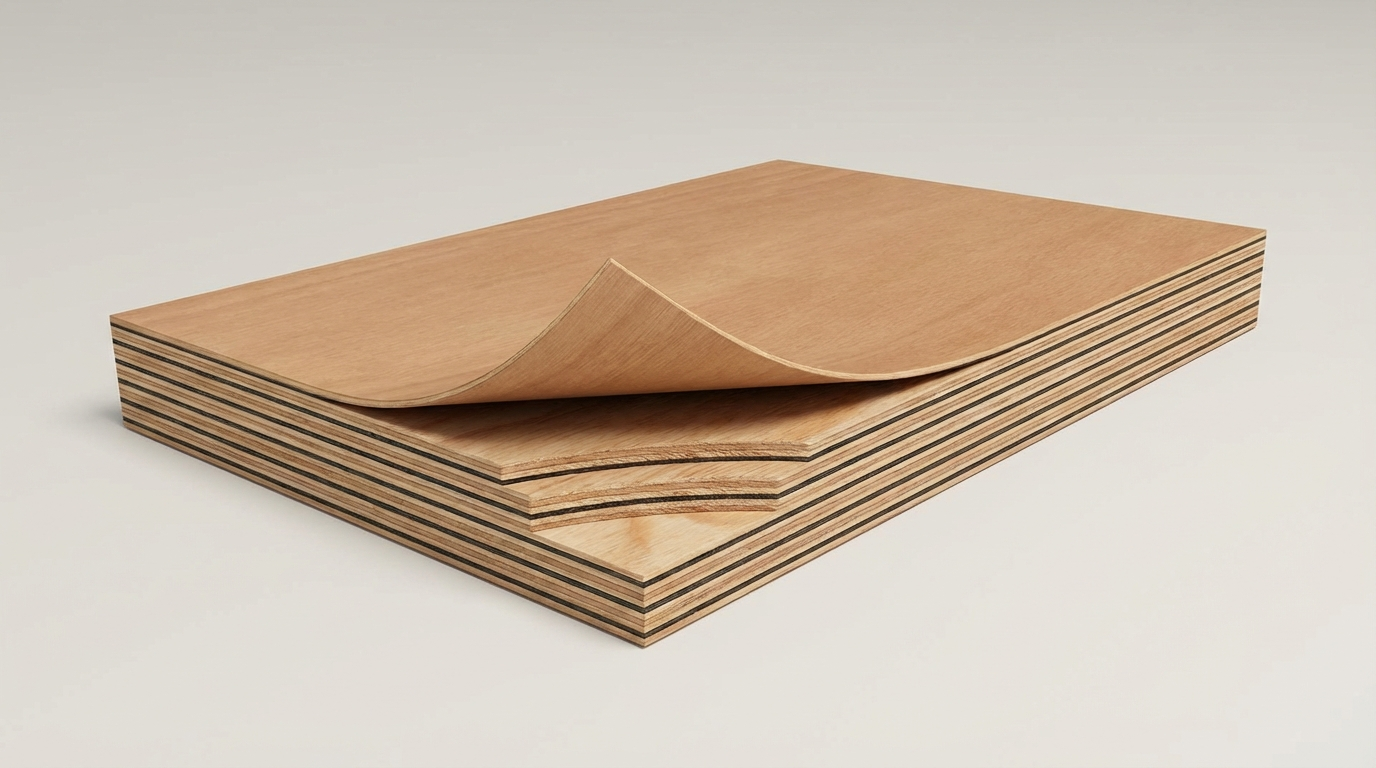
IS:710 certification marks Sainik 710 as genuine BWP (Boiling Water Proof) plywood, the top tier for water resistance under Indian Standards. This grade undergoes rigorous tests like 72-hour boiling water immersion without delamination, using phenolic-formaldehyde resins that create unbreakable bonds between layers. Construction typically involves a 100% hardwood core—often poplar, eucalyptus, or gurjan—for density and stability, with cross-grain plies to prevent warping. Face veneers are uniform grade-A or better, sanded smooth for lamination.
In practical terms, BWP exceeds BWR (IS:303) by handling repeated boiling cycles, making it marine-grade suitable for boats or perpetually damp spots. For Indian homes, this translates to kitchens with steam, bathrooms with poor ventilation, or coastal villas in Goa where salt air accelerates decay. Unlike MR grades that swell in humidity, Sainik 710 maintains screw-holding even after exposure. Thickness dictates use: 6-9mm for shelves/partitions, 12-18mm for cabinets, 19-25mm for heavy doors or beams.
Trade-offs include higher upfront cost than MR but lower long-term repairs from swelling or pest damage. Field reality: Carpenters favor it for CNC routing as calibrated edges reduce waste, but improper storage voids performance. Always acclimatize sheets 48-72 hours on-site to match ambient humidity.
India-Specific Reality Check (Moisture, Termites, and Workmanship)
India's monsoons, 80-90% humidity in coastal belts like Kerala or Odisha, and termite hotspots in Uttar Pradesh demand BWP like Sainik 710 over lesser grades. MR ply delaminates in 2-3 months under wet conditions, but IS:710 resists swelling up to 10-12% moisture absorption max. Coastal users report zero core gaps after years, unlike mixed-core boards that gap in salty air.
Termite risk: Phenolic glues and dense hardwood deter pests better than urea-formaldehyde in MR; pair with site treatment for 15+ year life. Workmanship pitfalls abound—contractors often skip edge sealing, leading to capillary water ingress. In humid Bangalore apartments, unsealed edges cause 20-30% screw pull-out failure in wardrobes. Storage tip: Stack horizontally under cover, elevate 6 inches off ground, use 40-60% RH acclimation.
Installer habits vary: North India carpenters polish directly (risky on BWP), while South prefers laminates. Ventilation gaps in modular units prevent mold—aim 5-10mm behind cabinets. For partitions in Mumbai high-rises, reinforce with battens every 400mm to counter deflection in AC-dry winters versus humid summers.
Available Sizes, Thicknesses, and Key Specifications
Sainik 710 comes in standard Indian sizes: 8x4 feet (2440x1220mm) for full sheets, 7x4 feet for door cuts—practical for transport in urban areas. Thickness options span 4mm (partitions), 6mm (false ceilings), 9mm/12mm (shelves/TV units), 16mm/18mm (wardrobes), up to 19mm/25mm (heavy furniture). Density hovers 0.65-0.75 g/cm³, tensile strength >50 N/mm² per IS:710.
Screw-holding: Superior at 250-400N withdrawal force on 18mm, ideal for hinges. Glue shear: >1.75 MPa post-boil. Calibration tolerance ±0.3mm ensures flush laminates. For CNC, uniform density prevents chipping. Limitations: Thinner sheets (<9mm) flex under load without framing; thicker ones weigh 50-70kg/sheet, straining lifts.
Scenario: Homeowner in Delhi for 10x6ft wardrobe—use 18mm 8x4 sheets (minimal joints). Contractor in Hyderabad: Mix 12mm shelves with 16mm frames for cost balance.
Price Range and Cost Drivers
Typical market range for Sainik 710 falls ₹90-₹130 per sq ft, varying by thickness (₹70-90 for 6mm, ₹110-150 for 19mm), city logistics (10-20% premium in islands like Andamans), and dealer margins. Core type (pure hardwood adds 10%), calibration quality, and batch resin drive ups/downs—cheaper in plywood hubs like Yamunanagar vs metros.
Budget estimate: 8x4ft 18mm kitchen cabinet (20 sqm) ~₹25,000-₹35,000 ply alone. Factors inflating: Peak monsoon transport, branded premium over local BWP. Deflating: Bulk buys, thinner grades. Compare: 20% above MR, but halves repair costs. Always negotiate slabs; check weighing for voids.
Warranty Basics: Coverage and Claims
Manufacturers behind Sainik 710 typically offer 10-year warranty against delamination, borer/termite proofing, subject to proper installation and storage. Covers core failure from moisture or pests, not workmanship errors like poor sealing. Activation via authenticity verification; claims need photos, purchase proof.
Real-world: Coastal users claim success post-monsoon swelling tests, but rejections if unsealed. Pair with termite oil for extension. Limitation: Excludes fire, mechanical damage. Verify terms locally—varies by region. Pro tip: Document pre-install moisture meter readings (<12%).
Authenticity Checklist: Spot Genuine Before Buying
Counterfeits mimic labels; check: 1) IS:710 stamp with BIS license number. 2) QR code scan for batch details/manufacturer match. 3) Hologram sticker (if present) for security features. 4) Uniform color, no patches on edges. 5) Weigh sheet—light means voids. 6) Knock test: Solid thud, no hollows. 7) Vendor invoice with grade specifics.
Ask: Batch number? Test reports? Return policy? Warning: Colored replicas fail boil test in days. Coastal buyers: Insist pre-delivery water spray test (no swelling in 24hrs).
Common Buyer and Installer Mistakes (and Fixes)
1. Skipping acclimatization: Sheets warp post-install; fix: 72hrs horizontal stack. 2. No edge sealing: Water wicks in; use silicone/PU sealant. 3. Undersized thickness: 12mm cabinets sag; upgrade to 18mm. 4. Ignoring core voids: Tap test pre-buy. 5. Dry polishing: Cracks glue line; laminate first. 6. Overloading shelves sans battens: Collapse risk; space 300mm. 7. Monsoon storage outdoors: Delam start; cover/tarp. 8. Fake verification: Rely on QR only after scan. 9. Cost-cutting on accessories: Use SS screws for holding.
Workmanship and Installation Tips
Cut with fine-tooth saw (80T blade) at low speed to avoid tear-out; CNC preferred for curves. Seal all edges/sawn faces with 2-coat epoxy within hours. Fastening: Pre-drill 3mm holes, SS screws 40-50mm long; expect 300N hold on 18mm. Hinges: 35mm zones reinforced with blocks if near edge.
Acclimatize 3-5 days; store flat. For kitchens: 18mm carcass, 12mm shutters. Partitions: Frame every 600mm. Failure mode: Glue shear from humidity—ventilate.
Comparison Table: Sainik 710 vs Common Alternatives
| Feature | Sainik 710 (BWP IS:710) | BWR (IS:303) | MR (IS:303) |
|---|---|---|---|
| Water Resistance | 72hr boil-proof | 72hr cold soak | Humidity only |
| Core | Hardwood | Mixed/Hardwood | Softwood/Mixed |
| Price/sqft (18mm) | ₹110-130 | ₹90-110 | ₹60-80 |
| Best For | Kitchens/Bathrooms | Bedrooms | Dry interiors |
| Screw Hold (N) | 300-400 | 250-350 | 200-300 |
Decision Framework Table
| Use Case | Thickness | Finish | Risk Level | Alternative if Budget Tight |
|---|---|---|---|---|
| Modular Kitchen Carcass | 18mm | Laminate | High Moisture | BWR 16mm |
| Wardrobe Shutters | 12mm | Veneer | Medium | MR 12mm |
| Bathroom Vanity | 16mm | PU Polish | High | None—stick to BWP |
| TV Unit Shelves | 9mm | Laminate | Low | MR 9mm |
FAQs
Is Sainik 710 suitable for coastal homes?
Yes, its IS:710 BWP rating excels in salty, humid coasts like Tamil Nadu beaches, resisting delamination where MR fails seasonally. Pair with sealed edges and ventilation for 15+ years, outperforming BWR in prolonged exposure.
What thicknesses are best for wardrobes?
For carcasses, 16-18mm prevents sagging under clothes; shutters 9-12mm suffice. In humid Pune flats, 18mm holds screws better post-monsoon, reducing hinge failures common in thinner cuts.
How to verify warranty on purchase?
Scan QR code for digital certificate, retain invoice with batch/IS:710 mark. Test water resistance informally on scrap; claims process needs proof of proper storage/install, excluding user errors.
Can it be used for flooring or doors?
19-25mm for heavy doors in wet areas; not primary flooring without subframe. Indian villas use it for marine doors, but polish/seal heavily against foot traffic moisture.
Does it need special cutting tools?
Standard circular saw with 60-80T blade; CNC ideal for precision. Avoid dull blades causing veneer chips, especially on calibrated faces for laminate adhesion.
Price difference across cities?
₹10-25/sq ft variance—lower in production hubs, higher in islands/North-East due to freight. Bulk offsets; compare per sq ft post-GST with local BWP.
Termite treatment required extra?
BWP glues resist naturally, but site-apply oil-based chemicals in endemic zones like Rajasthan for full protection. Warranty often covers if untreated failure proven.
Best finish for kitchens?
High-pressure laminates (1-1.5mm) over sealed edges; resists steam/abrasion. Avoid direct polish in steam-heavy Indian cooking—traps moisture.
Storage tips during construction?
Horizontal stack, covered, 6in off ground, away from walls. In Delhi winters, avoid direct sun post-rain to prevent stress cracks.
Screw holding vs blockboard?
Superior on 18mm BWP (350N+), blockboard pulls out easier in humidity. Use pilot holes, SS for longevity in cabinets.
Can thinner sheets for partitions?
6-9mm with double framing every 400mm; single skin bows in wind. Acoustic panels benefit from density.
Disclaimer: This content is provided for general informational purposes based on industry practices and publicly available information. Product specifications, standards, prices, and availability may vary by manufacturer, region, and time. Readers should independently verify details with manufacturers, dealers, or qualified professionals before making purchase or construction decisions.Want Plywood Suggestions?
Share a few details and a Sainik 710 specialist will suggest suitable brands and connect you to responsive dealers.