Room Decoration Ideas: 50+ Budget-Friendly Home Decor Tips for Indian Homes
Get 50+ room decoration ideas for Indian homes—wall decor, lighting, plants & budget-friendly tips. Transform your living room, bedroom & more.
Quick Answer: Budget Room Decoration for Indian Homes
Room decoration on a budget means using locally available materials, smart furniture choices, and DIY techniques to transform spaces without spending lakhs—most Indian homes can achieve a complete room makeover for ₹15,000-40,000 depending on room size and existing condition.
Short version: You don't need an interior designer or imported decor to make your home look good. Focus on three things—lighting (natural and artificial), textiles (curtains, cushions, rugs), and one statement piece per room. The rest is clutter management and paint. I've seen cramped 1BHKs in Thane look better than 3BHKs in Bandra simply because the owners understood these basics.
This is right for you if:
- You're working with a budget under ₹50,000 for a full room refresh
- You rent your place and can't make permanent structural changes—but still want it to feel like home
- Your home feels cluttered or "off" but you can't figure out why
- You're willing to do some weekend DIY work yourself
Skip this if:
- You're planning a complete renovation with false ceilings, new flooring, and modular furniture—that's a different conversation altogether
- Budget isn't a constraint and you'd rather hire a professional designer
Bottom line: Good room decoration is 70% editing what you already have and 30% adding the right new elements.
What Room Decoration Actually Means in Practice
Room decoration is the process of arranging furniture, selecting colors, adding textiles, and incorporating decorative elements to make a space functional, comfortable, and visually appealing. It's different from interior design—which involves structural changes—and focuses on what you can do with existing walls, floors, and layouts.
Here's what most people get wrong. They think decoration means buying stuff. New curtains, new cushions, new showpieces, new everything. Actually, the first step is removing things. That corner shelf with seventeen items on it? The mismatched photo frames accumulated over five years? The furniture that doesn't fit the space but stays because "we paid good money for it"?
I walked into a client's flat in Andheri last year—they'd spent close to ₹2 lakhs on "decoration" items over three years and the place still looked chaotic. We removed about 40% of their stuff, rearranged what remained, added one good floor lamp and better curtains. Total additional spend: ₹12,000. The transformation was dramatic.
The technical side matters too. Color temperature of lights affects how your room feels—warm white (2700-3000K) for bedrooms and living rooms, cool white (4000-5000K) for kitchens and workspaces. The 60-30-10 color rule actually works: 60% dominant color (usually walls), 30% secondary (furniture, curtains), 10% accent (cushions, art, plants). But honestly? Most people overthink this.
Why Decoration Needs to Be Different in Indian Homes
Here's something most Pinterest-inspired decoration guides ignore completely—Indian homes face specific challenges that European or American homes don't.
Humidity is the big one. During monsoon, relative humidity in Mumbai hits 85-90%, Chennai stays at 70-80% for months, and even Kolkata averages 75-85% from June to September. This affects everything. That beautiful jute rug you saw online? It'll smell musty within two monsoons. Those untreated wooden frames? Warping guaranteed.
In places like Chennai or Mumbai, you'll notice that certain materials just don't survive. Cotton cushion covers develop that damp smell. Metal fixtures rust faster. Wallpaper peels at the edges. I've seen beautiful interiors in coastal Karnataka completely ruined because someone used materials meant for dry climates.
Dust is another factor. In cities like Delhi, Ahmedabad, or Pune—especially areas near construction or main roads—open shelving becomes a nightmare to maintain. Those Instagram-worthy floating shelves with decorative items? You'll be dusting them every three days.
Space constraints matter too. The average Indian urban home is much smaller than Western counterparts. A 2BHK in Bengaluru might be 800-900 sq ft. In Mumbai, you're lucky to get 650. Decoration strategies that assume spacious rooms simply don't translate.
And then there's the joint family factor. Homes that need to accommodate guests frequently, have multi-generational living, or serve multiple purposes (that bedroom that's also a home office that's also a study room for kids) need different approaches than single-use spaces.
Does expensive decor actually last longer in humid climates?
Not necessarily—and this is a mistake I see constantly. Expensive doesn't mean humidity-resistant. A ₹15,000 imported cotton rug will deteriorate faster than a ₹3,000 synthetic one in Mumbai's monsoon. What matters is material choice, not price tag. For humid areas, look for synthetic blends, treated wood, powder-coated metals, and moisture-resistant fabrics. The expensive handloom cotton bedspread might be beautiful, but store it during monsoon and use polyester-blend alternatives. I've seen people spend lakhs on "quality" items that fell apart because they weren't suited for Indian conditions.
50+ Budget-Friendly Decoration Ideas by Room Type
Living Room Ideas (15 Options)
The living room gets the most attention because guests see it first. But here's my unpopular opinion: most people over-decorate living rooms and under-decorate spaces they actually use daily.
1. Rearrange before you buy anything. Pull furniture away from walls. Create conversation areas. That sofa pushed against the wall with the TV directly opposite? Try angling it. Costs nothing.
2. One statement light fixture. Replace that standard ceiling light with something interesting—a pendant lamp, a cluster of bulbs, anything with character. Budget: ₹1,500-4,000.
3. Curtains that hit the floor. Most Indian homes have curtains that stop at the window sill. Floor-length curtains make rooms look taller. Get them hemmed longer than you think you need.
4. Mirror placement. One large mirror opposite a window doubles the natural light. Works especially well in cramped Mumbai flats where natural light is precious.
5. Cushion refresh. You don't need new cushions—just new covers. Pick three colors maximum. Mix textures (one velvet, one cotton, one with embroidery). Budget: ₹200-500 per cover.
6. Plants in odd numbers. Three plants of varying heights look better than two or four. Money plants survive everything. Pothos works in low light. Snake plants handle neglect.
7. Book stacking. Stack books horizontally on coffee tables with a small plant or decorative item on top. Free if you already have books.
8. TV wall treatment. That blank wall around the TV? Add floating shelves on one side, a few framed prints, some small plants. Breaks the monotony.
9. Rug definition. A rug under the coffee table defines the seating area. For humid cities, go synthetic or flat-weave cotton that can be washed.
10. Cable management. This sounds boring but messy cables ruin aesthetics faster than anything. Cable clips and cord covers cost ₹200-500 and make a huge difference.
11. Throw blankets. Draped over sofa arms, they add texture and are practical for AC rooms. Cotton throws for summer, fleece for winter.
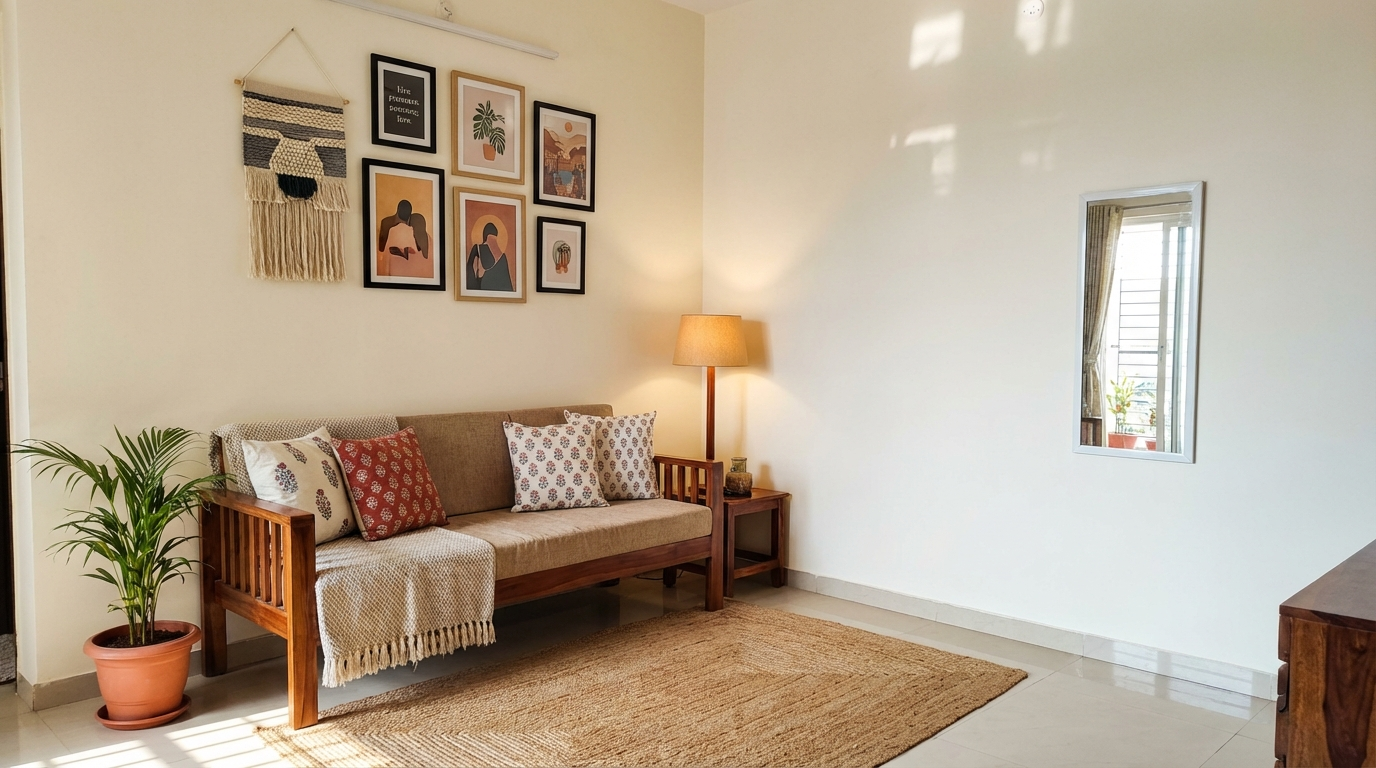
12. Gallery wall. Collect frames over time—mix sizes, mix styles. Print family photos or download free art. The "curated over years" look is more interesting than matching sets.
13. Tray organization. Cluster remote controls, coasters, and small items on a decorative tray. Instantly looks intentional rather than scattered.
14. Window seat. If you have a wide window sill, add a cushion and a few pillows. Creates a reading nook without buying furniture.
15. Corner floor lamp. Dark corners make rooms feel smaller. A tall floor lamp in an empty corner adds warmth and dimension.
Bedroom Decoration Ideas (12 Options)
Bedrooms should prioritize rest over style. But you can have both.
1. Headboard options. No headboard? Hang a large piece of fabric behind the bed, or create a DIY padded panel using plywood and foam (our plywood selection guide covers which grades work for furniture projects). Budget: ₹2,000-5,000 for DIY.
2. Bedside symmetry. Matching lamps on both sides of the bed creates hotel-like balance. They don't have to be identical—same height is enough.
3. Layer your lighting. Overhead light for cleaning, bedside lamps for reading, fairy lights for ambiance. Different light sources for different moods.
4. Bedding upgrade. White or neutral bedsheets make any room look cleaner. Add color through throws and cushions instead.
5. Under-bed storage. Flat storage boxes under the bed reduce visible clutter. Less visual chaos means the room feels bigger.
6. Wall-mounted shelves above nightstands. Saves surface space, adds visual interest. Float them at eye level when sitting in bed.
7. Full-length mirror. Essential for getting dressed and makes rooms feel larger. Lean it against the wall for a modern look.
8. Curtain upgrade. Blackout curtains for better sleep. In Chennai and Hyderabad where afternoons are brutal, this is functional, not just decorative.
9. Rug at bedside. A small rug on the side you get out of bed—your feet will thank you on cold mornings.
10. Plant in the corner. One medium-sized plant adds life. Peace lilies and snake plants are fine in bedrooms despite the low-light myth.
11. Declutter the nightstand. Phone, one book, lamp, maybe water. That's it. Everything else goes in drawers.
12. Art above the bed. One large piece or three smaller ones. Keep it calming—bedrooms aren't the place for busy patterns.
Kitchen Decoration Ideas (10 Options)
Kitchen decoration is tricky because it's a workspace first. Anything you add will get greasy, dusty, and needs to survive heat and moisture.
1. Open shelving. Replace one upper cabinet with open shelves for display items. Only works if you'll actually keep it organized—be honest with yourself.
2. Matching containers. Transfer staples into uniform containers. Looks organized, keeps things fresh. Budget: ₹1,000-2,500 for a full set.
3. Under-cabinet lighting. LED strips under upper cabinets illuminate the counter. Functional and makes evening cooking easier.
4. Backsplash refresh. Peel-and-stick tiles exist now. Not permanent, so renters can use them. Budget: ₹1,500-3,000.
5. Herb garden. Small pots of tulsi, mint, coriander on the windowsill. Useful and decorative.
6. Fruit bowl. Sounds basic but a nice bowl with fresh fruit adds color naturally. Change fruits seasonally.
7. Tea towel display. Nice tea towels hung on oven handle or hooks add pattern to an otherwise utilitarian space.
8. Fridge organization. Clear containers so you can see contents. Makes the fridge look intentional when opened.
9. Tray for oils and spices. Group frequently used items on a tray near the stove. Easy to clean, looks organized.
10. Chalkboard or whiteboard. For grocery lists, meal planning. Functional decor that serves a purpose.
Bathroom Decoration Ideas (8 Options)
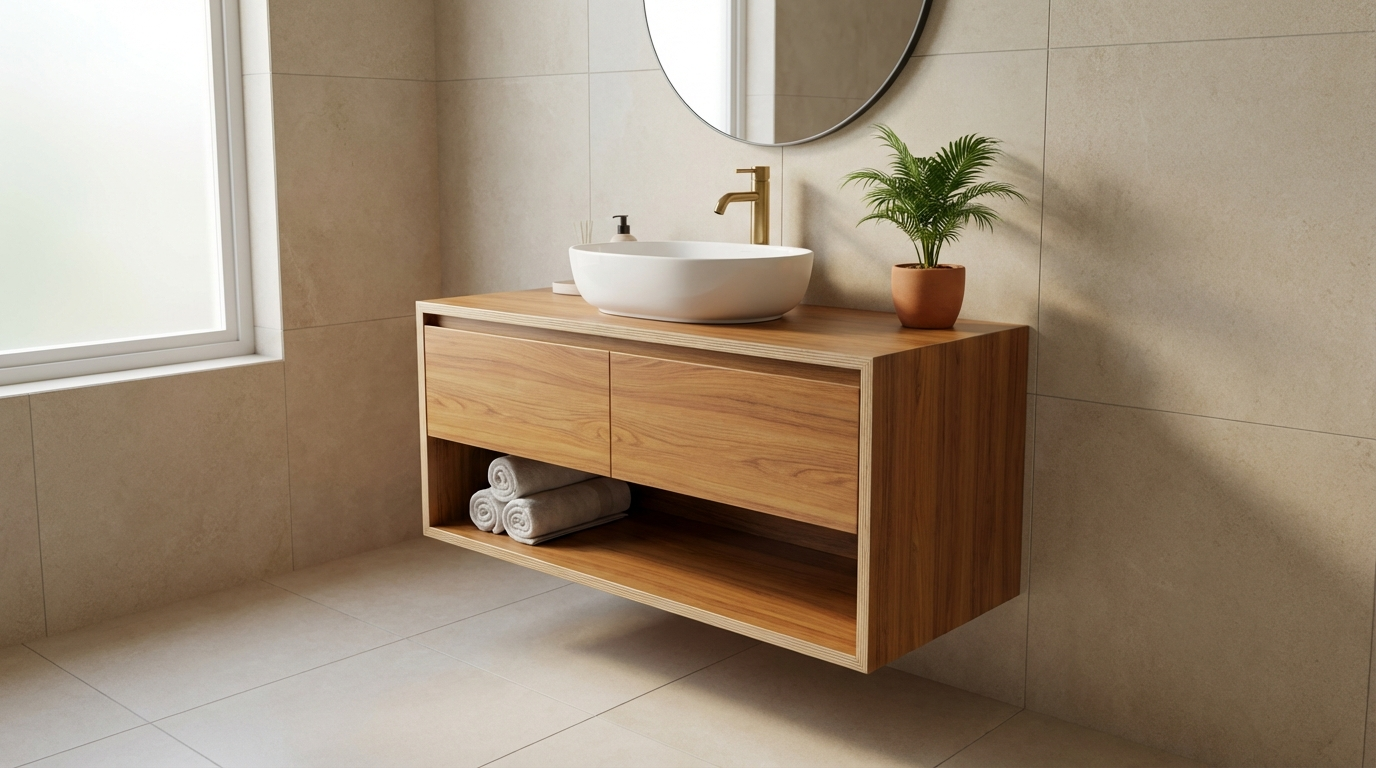
Bathrooms need moisture-resistant everything. The bathroom material guide covers surfaces in detail, but for decoration specifically:
1. Matching accessories. Soap dispenser, toothbrush holder, towel hooks in the same finish. Coordinated metals make a cheap bathroom look expensive.
2. Towel upgrade. White towels, always. Replace stained ones. Display folded nicely or rolled.
3. Plant that survives humidity. Pothos, bamboo, or ferns thrive in bathroom conditions.
4. Mirror upgrade. A better mirror frame transforms the space. DIY frame using moulding if budget is tight.
5. Shower curtain with pattern. If you have a curtain rod, this is the easiest decor change. Something with color or pattern.
6. Basket storage. Wicker or plastic baskets for toiletries. Hides clutter, adds texture.
7. Small shelf above toilet. Utilize vertical space for candles, small plant, or decorative items.
8. Mat coordination. Bath mat and small rug in complementary colors. Replace when they look tired.
Study/Home Office Ideas (5 Options)
1. Desk organization. Pen holders, file organizers, desk mat. Clutter-free desk improves focus.
2. Inspiration board. Corkboard or magnetic board for notes, photos, inspiration. Keeps walls from looking bare.
3. Good task lighting. Desk lamp with adjustable neck. Position to avoid screen glare and hand shadows.
4. Plant on desk. Small succulent or pothos in water. Adds life to work area.
5. Cable management. Under-desk cable tray, clips, labels. Essential for work-from-home setups.
Price Reality Check: What Decoration Actually Costs (2026 Market)
Let me break down realistic budgets because most decoration content either shows impossibly cheap DIYs or designer-level spending.
| Item Category | Budget Option | Mid-Range | What Affects Price |
|---|---|---|---|
| Curtains (per window) | ₹800-1,500 | ₹2,500-5,000 | Fabric quality, length, blackout lining |
| Cushion covers (set of 5) | ₹500-1,000 | ₹1,500-3,000 | Material, embroidery, brand |
| Floor lamp | ₹1,500-3,000 | ₹4,000-8,000 | Design complexity, bulb quality |
| Rug (5x7 feet) | ₹2,000-4,000 | ₹6,000-15,000 | Material (synthetic vs handwoven), pile height |
| Wall art (framed) | ₹500-1,500 | ₹2,000-5,000 | Frame quality, print type, size |
| Indoor plants (medium) | ₹200-500 | ₹800-2,000 | Plant variety, pot included or not |
| Storage baskets (set of 3) | ₹600-1,200 | ₹1,500-3,000 | Material, size, brand |
| Bedding set | ₹1,500-3,000 | ₹4,000-8,000 | Thread count, brand, inclusions |
Here's what actually affects your final bill—buying everything at once from one store versus collecting pieces over time from different sources. Local markets in Dadar (Mumbai), Chickpet (Bengaluru), or T Nagar (Chennai) have much better prices than branded home stores for the same quality. The online vs offline difference can be 30-50% for similar items.
A realistic budget for transforming a standard 2BHK living room? ₹15,000-25,000 if you're strategic. That includes curtains, cushions, one statement lamp, a rug, and some plants. The bedroom? ₹10,000-18,000 for bedding upgrade, lighting, and accessories.
Wall Decoration: The Most Impactful Change
Walls take up the most visual real estate in any room. Yet most Indian homes have bare walls or randomly placed items.
Paint is the biggest bang for your buck. One accent wall in a deeper shade transforms a room. If I'm being honest, paint is where I tell people to spend if they can only do one thing. A single wall in sage green, warm terracotta, or deep blue changes everything. Cost for one wall: ₹1,500-3,000 including primer.
Gallery wall rules that actually work:
- Start with the largest piece in the center, build outward
- Maintain consistent spacing (2-3 inches between frames)
- Mix frame finishes but keep one element consistent (all black mats, or all similar colors)
- Use paper cutouts to plan before hammering nails
Wall shelves for function and form. Floating shelves at varying heights break monotony. Use three shelves at different levels rather than one long shelf. Style them with 60% functional items (books, storage) and 40% decorative (plants, art objects).
I've seen people put too much on walls. One focal wall is enough. A busy gallery wall opposite a busy bookshelf opposite a busy TV unit creates visual chaos. Pick your statement wall and let others breathe.
Is wallpaper worth it in Indian climates?
Honestly, it depends entirely on where you live and which room you're considering. In air-conditioned spaces that stay climate-controlled, wallpaper works fine. In non-AC rooms in Chennai or Mumbai, I've seen wallpaper edges lift within two monsoons—the humidity just gets to the adhesive. Vinyl wallpaper handles moisture better than paper-based options. Bathrooms and kitchens? Hard no, unless it's specifically waterproof vinyl. For a bedroom that runs AC regularly, it's a reasonable choice. But between wallpaper and a good paint job with one textured accent wall, I usually recommend paint—easier to maintain, cheaper to change, no humidity worries.
Lighting: The Decorator's Secret Weapon
If I could give one piece of decoration advice that most people ignore, it's this: your lighting is probably wrong.
Most Indian homes have one central ceiling light per room. This creates harsh, flat illumination with no atmosphere. The fix isn't expensive—it's just adding layers.
Layer 1: Ambient lighting. General room illumination. Can be ceiling light but consider a chandelier, pendant, or flush mount with character.
Layer 2: Task lighting. Desk lamps, reading lights, under-cabinet kitchen lights. Functional, directed light for specific activities.
Layer 3: Accent lighting. Table lamps, floor lamps, string lights. Creates warmth and atmosphere.
The 2700-3000K color temperature range (warm white) works for living rooms and bedrooms. It's flattering, relaxing, and mimics evening sunlight. The cool white (4000-5000K) stuff that comes standard in most LED bulbs? Makes rooms feel like hospitals. Replace those bulbs first—₹100-200 per bulb for warm white alternatives.
Quick story: A client in Powai complained her living room felt cold despite warm-toned furniture and textiles. One visit and I spotted it—five different light sources, all cool white LEDs. Changed all bulbs to warm white, added one floor lamp in the corner. Same room looked completely different.
Textile Choices: What Works in Indian Homes
Textiles add the softness and color that makes a house feel lived-in. But material choice matters more here than anywhere else.
For humid cities (Mumbai, Chennai, Kolkata, coastal areas):
- Synthetic blends over pure cotton—they dry faster and resist musty odors
- Avoid heavy drapes that trap moisture; go for lighter fabrics with blackout lining if needed
- Rugs should be washable or synthetic; natural fibers absorb humidity
- Cushion inserts in synthetic fill, not foam (foam retains moisture)
For dry cities (Delhi, Jaipur, Ahmedabad):
- Cotton works well and feels cooler
- Jute rugs are fine here—they won't develop mildew
- Heavier drapes help with dust filtration
- Natural fiber everything is fair game
The durability question comes up constantly. Here's my experience: polyester-blend curtains last 4-5 years with regular use and washing. Pure cotton curtains fade and weaken faster, maybe 2-3 years before they look tired. Invest more in items you won't change frequently (good quality sofa fabric, durable rugs) and save on items you'll update often (cushion covers, throws).
Common Decoration Mistakes I See Constantly
1. Pushing all furniture against walls. This feels space-efficient but actually makes rooms look smaller. Pull pieces away from walls by even 6-8 inches. Create zones.
2. Matching everything. This one really frustrates me. Complete matching sets—sofa set with matching curtains with matching cushions—look like showroom displays, not homes. Mix textures, vary shades, let things look collected over time.
3. Wrong-height curtain rods. Standard installation puts rods just above the window frame. Mount them 4-6 inches below the ceiling and let curtains pool slightly on the floor. Rooms look taller instantly.
4. Too many small things. Twenty small photo frames don't have the impact of three medium ones. Fewer, larger items always look more intentional than many tiny ones.
5. Ignoring vertical space. Walls go up to the ceiling. Use them. Tall bookshelves, floor-to-ceiling curtains, art hung higher than eye level—vertical elements make compact rooms feel spacious.
6. Buying everything at once. I've seen this happen when people move into new homes. They buy everything in one trip—same store, same style, same everything. Rooms should evolve. Start with essentials, add pieces as you find them.
7. Poor TV placement. TVs centered on walls with nothing around them create dead zones. Add shelving, art, or a console to create a complete composition.
8. Fake plants everywhere. One or two high-quality faux plants? Fine. A room full of dusty plastic greenery? It reads immediately. Real plants or nothing. Or limit fake plants to high shelves where nobody inspects them closely.
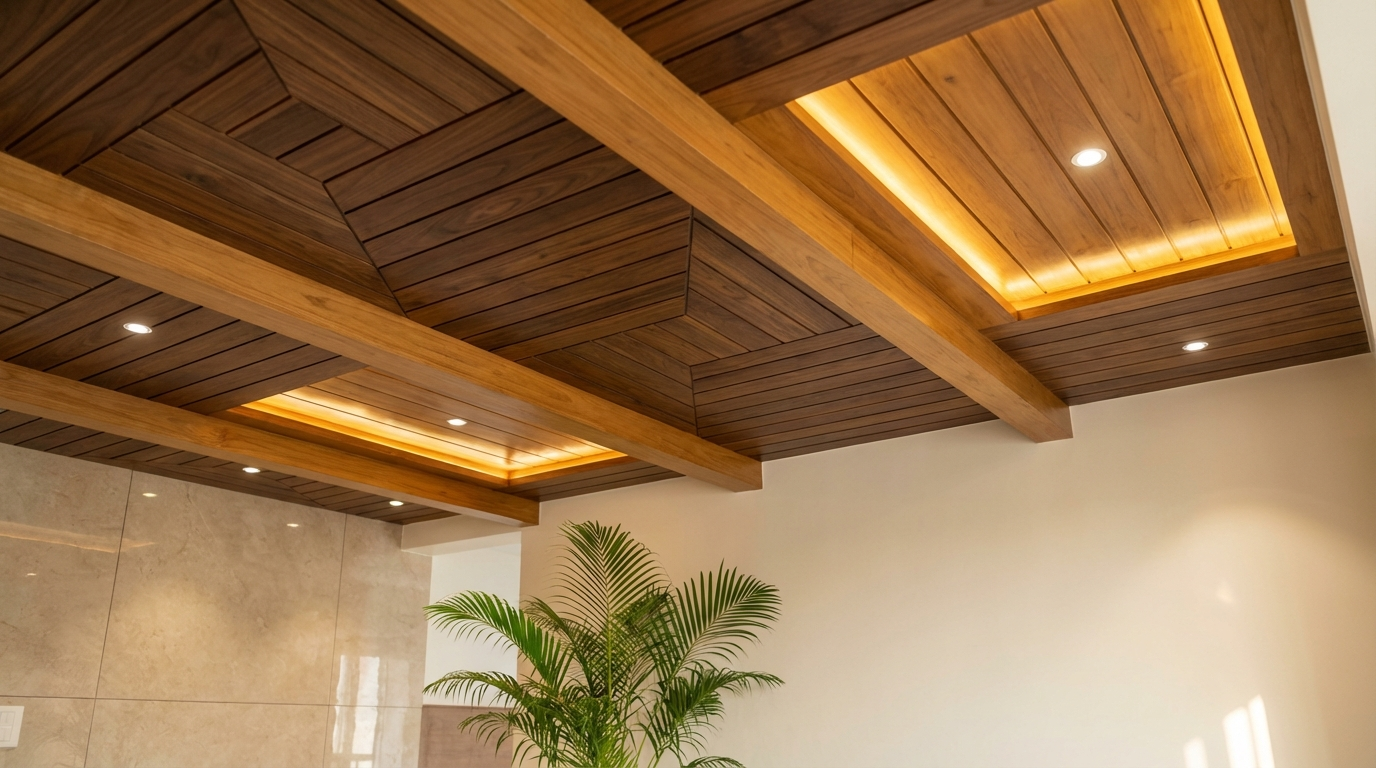
9. Ignoring the ceiling. The fifth wall. A different paint shade, a statement light fixture, exposed beam details—ceilings offer decoration opportunity most people skip entirely.
10. Following trends blindly. Terrazzo everything in 2022, curved furniture in 2023, quiet luxury in 2024. By the time trends hit Indian home stores, they're already dated. Classic choices with trendy accents (easily replaced cushions or art) makes more sense.
DIY Projects Actually Worth Your Time
Most DIY decoration content shows projects that take fifteen hours and require tools nobody owns. These are actually doable:
Cushion covers from old fabric. Old sarees, dupattas, kurta fabric—cut, hem, stuff. No sewing machine? Fabric glue and iron-on hem tape work fine for cushions. I've seen beautiful covers made from grandmother's old Banarasi sarees—sentimental and stylish.
Painted planters. Terracotta pots with acrylic paint and sealant. One afternoon, minimal skill required. Coordinate with room colors.
Photo frame refresh. Old frames spray-painted gold, black, or white. Unifies mismatched frames for gallery walls.
Mason jar storage. Glass jars for bathroom storage, kitchen organization, or filled with fairy lights for ambiance. Zero skill required.
Rope-wrapped containers. Plain plastic containers wrapped in jute rope with hot glue become presentable storage. Good for bathroom and kitchen.
Tray from cardboard box. Strong cardboard box lined with fabric and fitted with handles becomes a serving tray. Sounds crafty but actually looks decent.
How long do DIY decoration projects typically last?
Real talk—it varies wildly based on materials and execution. Painted planters with proper sealant last 2-3 years outdoors, longer indoors. Fabric cushion covers depend on fabric quality; good cotton lasts 1-2 years of regular use, blends longer. Rope-wrapped items unravel eventually, maybe 6-12 months before they need redoing. The key is expecting DIY to be refreshed periodically—that's the trade-off for lower cost. Projects using good base materials (quality fabric, proper sealant, strong adhesive) last longer. The cheap shortcuts (using regular paint instead of acrylic on terracotta, skipping sealant) fail faster.
Shopping Smart: Where to Actually Buy
Here's what I tell my clients about sourcing decoration items:
For textiles (curtains, cushion covers, bedding): Local fabric markets beat branded stores by 40-60% for similar quality. Crawford Market in Mumbai, Chickpet in Bengaluru, Lajpat Nagar in Delhi—these have fabric by the meter and tailors who'll stitch curtains same-day. Online works for standard sizes if you know exact measurements.
For furniture: Local carpenters for custom pieces (our wardrobe plywood guide covers material choices for furniture construction). Ready-made from IKEA or hometown furniture stores for basics. Online furniture is risky unless you've seen the exact piece somewhere.
For plants: Local nurseries, always. Delivery plants from apps often arrive stressed. Bargaining expected at nurseries—start at 60% of asking price.
For lighting: Electrical markets have better prices than home decor stores. Lohar Chawl in Mumbai, Bhagirath Palace in Delhi. Online works if you know what you want.
For decorative items: This is where online works well—marketplace apps, Instagram sellers, Amazon. Compare extensively. Same item varies ₹500-2,000 across sellers.
Seasonal Decoration Adjustments
Indian homes should breathe with seasons. Not talking complete overhauls—subtle shifts.
Summer (March-June):
- Light, breathable fabrics—cotton or linen-look curtains
- White or pastel textiles that reflect heat
- Remove heavy throws and blankets
- Add more plants for natural cooling
Monsoon (June-September):
- Switch to synthetic or quick-dry textiles
- Remove jute or natural fiber rugs, store them
- Check for mold spots and address immediately
- Ensure good ventilation to prevent musty odors
Winter (November-February):
- Layer with throws and heavier cushions
- Bring out warmer-toned textiles
- Add candles and warm lighting
- Rugs can be thicker, natural fibers work
Festive season adjustments:
Rather than Diwali-specific decor that looks tacky by November 15, invest in pieces that work year-round. Brass items, neutral-toned decoratives, quality diyas—these look good always, extra good during festivals. The specific Diwali hangings and stickers can be minimal.
Small Space Decoration Strategies
Mumbai flats, old DDA apartments in Delhi, compact Bengaluru PGs—small spaces need different rules.
Mirrors are non-negotiable. One large mirror per small room minimum. Reflects light and creates depth illusion.
Vertical storage over floor space. Wall-mounted shelves, tall narrow furniture, door-back organizers. Floor space is precious.
Light colors expand space visually. Dark accent walls work in large rooms. Small rooms need lighter palettes with color in accessories.
Multi-functional furniture. Ottoman with storage, coffee table with shelves, bed with drawers underneath. Every piece should work harder.
Reduce visual weight. Transparent furniture (acrylic chairs, glass tables), legs on furniture instead of solid bases, open-back shelving instead of closed cabinets.
Edit ruthlessly. In a small space, every item is amplified. One statement piece instead of several small ones. Quality over quantity becomes mandatory, not optional.
Decision Framework: Where to Spend vs Save
| Category | Spend More | Save Here | Why |
|---|---|---|---|
| Lighting | Statement fixtures you see daily | Basic functional lights in utility areas | Visible lighting affects room perception dramatically |
| Textiles | Sofa fabric, curtains | Cushion covers, throws | Covers replace easily; sofas don't |
| Furniture | Bed frame, main sofa | Side tables, accent chairs | Primary pieces get daily use; accents can be upgraded later |
| Art/Decor | One or two meaningful pieces | Frames, small items | Generic decor is easily sourced cheap |
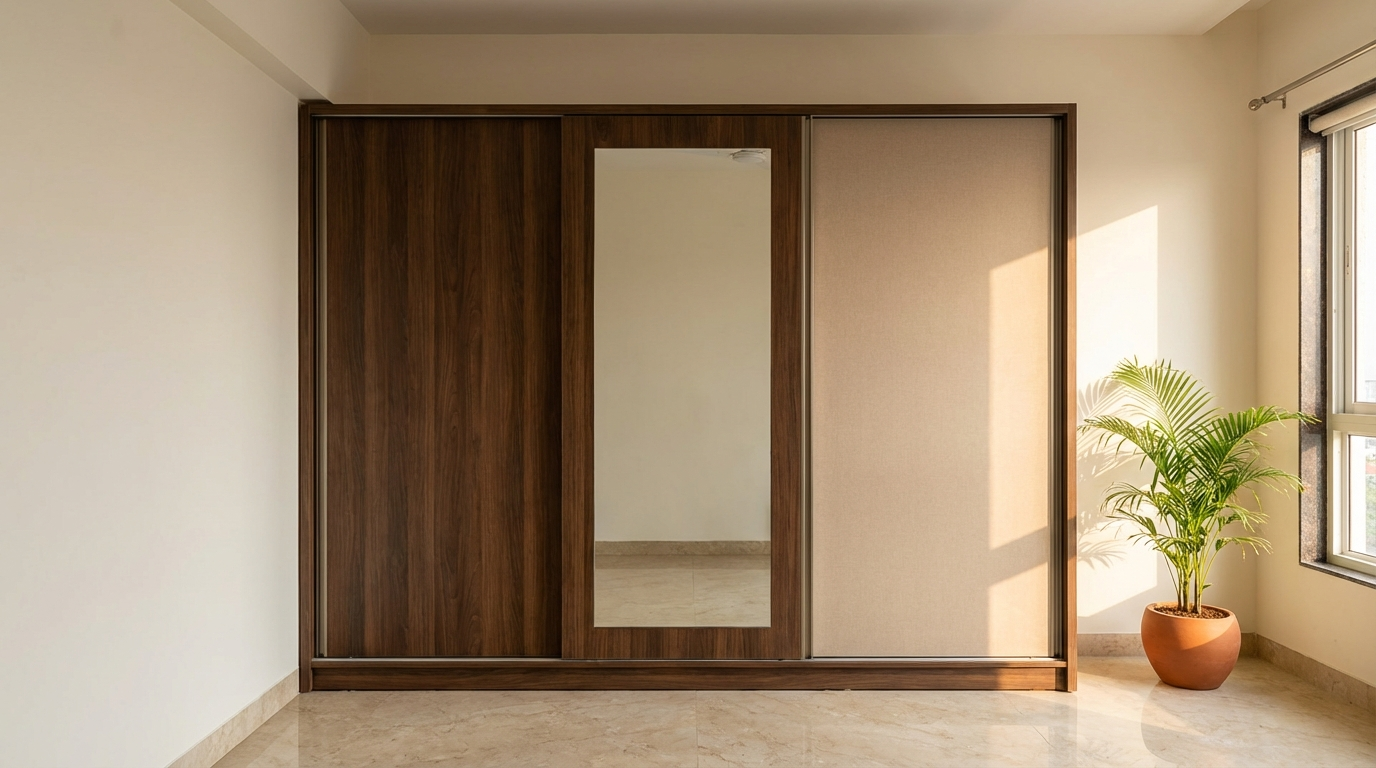
| Storage | Wardrobes, main storage systems | Baskets, organizers | Built-ins are permanent; organizers are temporary fixes |
| Plants | Large statement plants | Small plants | Big plants take years to grow; small ones grow fast and cost less |
FAQs About Room Decoration
Is it true that white walls make rooms look bigger?
Partially true, but not always the best choice. White reflects maximum light, creating an airy feeling that visually expands space. However, off-white or very light warm tones (cream, pale gray, soft beige) often work better in Indian homes—pure white can look stark under certain lighting and shows marks more easily. In north-facing rooms with limited natural light, white can appear grayish and cold. Light colors expand space, but pure white isn't the only option. What matters more is contrast—lighter walls than furniture makes furniture recede, making the room feel larger.
What if I live in a coastal city like Mumbai or Chennai—do I need special decoration materials?
Yes, and ignoring this is the biggest mistake newcomers make. Humidity levels of 80-90% during monsoon damage natural fibers, rust metals faster, and warp untreated wood. Choose synthetic-blend textiles, powder-coated metal fixtures, and moisture-resistant materials. Store natural fiber items (jute rugs, cotton throws, wooden artifacts) in airtight containers with silica packets during monsoon months. Air-conditioning helps but doesn't eliminate the problem entirely. Ventilation matters—ensure air circulation even when AC is running to prevent mold in corners.
How often should I redecorate a room?
Major redecorations every 3-5 years, minor refreshes every 6-12 months. Minor refreshes mean new cushion covers, rearranging furniture, adding or removing items, changing out a few photos. Major redecoration involves new curtains, paint, possibly new furniture. Most people either never change anything for decades or redecorate impulsively whenever they're bored. The middle approach—planned seasonal updates and occasional refreshes—keeps spaces feeling current without constant spending.
Is it true that plants are high maintenance?
Depends entirely on which plants you choose. Snake plants, pothos, ZZ plants, and spider plants survive weeks of neglect. They tolerate low light, irregular watering, and AC environments. The "plants are hard" belief usually comes from trying to keep fussy species alive—fiddle leaf figs, calatheas, ferns. Start with foolproof varieties, learn their patterns, then graduate to pickier plants if you want. One snake plant requires less attention than remembering to dust your showpieces.
Should I match my furniture or go for mixed styles?
Mixed styles look more personal and interesting, but with intention. The key is finding a common thread—same wood tone across different furniture styles, or same metal finish, or same color family. Complete matching looks like a showroom. Complete chaos looks like a thrift store explosion. The sweet spot is 70% cohesive, 30% eclectic. Your inherited grandmother's chair doesn't need to match your modern sofa—but maybe add a cushion in your room's accent color to connect them.
What's the best way to decorate a rental without losing my deposit?
Removable adhesive hooks (Command brand or similar), peel-and-stick wallpaper, curtains on tension rods instead of drilled curtain rods, furniture and textiles over wall modifications. Leaning frames against walls instead of hanging, mirrors propped rather than mounted. Floor-based decoration—rugs, plants, floor lamps—leaves no wall damage. Document existing wall condition with photos before moving in. If you do drill for curtain rods (often unavoidable), small holes are easily filled with putty before moving out—most landlords don't notice.
Is it true that dark colors make rooms look smaller?
Not as simply as people think. Dark colors absorb light, which can make poorly-lit rooms feel cramped. But dark accent walls in well-lit rooms create depth and sophistication. A dark color on one wall with lighter surrounding walls can actually make a room feel deeper. The trick is balancing dark with adequate lighting—natural and artificial. I've seen small rooms with one dark teal wall look beautiful because the other walls were light and the lighting was good. Dark everywhere with poor lighting? Yes, that shrinks space. Dark strategically? That's different.
What if my partner/family disagrees on decoration choices?
Common problem. The solution is separating spaces where possible—let different people control different zones. For shared spaces, stick to neutral bases (walls, major furniture) and let individuals express themselves in accents (their side of the bedroom, personal desk area). When consensus is needed, the person who spends more time in that space gets more say. Living room where one person works from home? Their preference matters more. Kitchen where one person cooks daily? Same logic. Compromise on neutrals, express personality in personal zones.
How do I make a room look more expensive than it is?
Several tricks work. First, editing—fewer items styled well looks expensive. Second, good lighting—warm ambient light hides cheap finishes and creates atmosphere. Third, textiles—quality fabric elevates everything (focus spending here). Fourth, paint—fresh, well-applied paint makes even old rooms look cared for. Fifth, cleanliness and organization—expensive homes are tidy. Sixth, one good investment piece—a quality lamp, a proper rug, real art—surrounded by budget items raises the whole room's perception. What makes rooms look cheap? Clutter, poor lighting, visible price tags (keep packaging minimal), and trying too hard with excessive decor.
Is it true that trends should be avoided for home decoration?
Not entirely—but approach trends strategically. Trend-proof your major investments (sofa, wall colors, main furniture) and express trends through easily-changed items (cushions, throws, small decoratives, art). The velvet green sofa that was everywhere in 2022 will feel dated soon if it doesn't genuinely suit your style. But velvet green cushions on a neutral sofa? Easy to replace in two years. Follow trends for inspiration, not as shopping lists. If something trendy genuinely resonates with your taste, go for it. If you're only considering it because it's everywhere, wait until you're sure.
What's the single most impactful low-budget change I can make?
Lighting, without question. Changing bulbs to warm white and adding one floor lamp or table lamp transforms rooms more than any other single change. It costs ₹500-2,000 depending on lamp quality and affects how everything else in the room looks. After that, decluttering—which costs nothing. Remove 30% of decorative items from any surface and the remainder looks intentional. Third would be curtain upgrade—floor-length curtains in a better fabric than what you have. These three changes—better lighting, less stuff, better curtains—will do more than spending twice as much on random new decoratives.
How do I decorate when starting from scratch in a new empty home?
Don't rush it. Live in the empty space for 2-3 weeks first. Notice where light falls, which corners feel dark, where you naturally want to sit. Buy functional furniture first—bed, seating, dining table. Add lighting early—you need to see to make other decisions. Then add textiles—curtains, rugs, bedding. Only then consider decoratives. The order matters because decoration should respond to how you actually use the space, not how you imagined using it. Those Pinterest inspiration saves? Revisit them after a month of living in the space. Your actual needs will have clarified by then.
Note: sainik710.com is an independent informational site and is not affiliated with any manufacturer.
Right, that covers most of what I know about decorating Indian homes on a budget. The specifics change—trends shift, prices fluctuate—but the principles stay consistent. Edit before you add, light properly, invest in textiles, and don't fall for the idea that good decoration requires designer budgets. Some of the best-looking homes I've visited belonged to people who simply understood their space and made thoughtful choices over time. That costs attention, not necessarily money.
Disclaimer: This content is provided for general informational purposes based on industry practices and publicly available information. Product specifications, standards, prices, and availability may vary by manufacturer, region, and time. Readers should independently verify details with manufacturers, dealers, or qualified professionals before making purchase or construction decisions.Want Plywood Suggestions?
Share a few details and a Sainik 710 specialist will suggest suitable brands and connect you to responsive dealers.