Pooja Room Design Ideas: 40+ Modern Mandir Designs with Materials & Vastu Tips
Explore 40+ pooja room designs—modern mandir, wooden temple & wall-mounted options. Get Vastu tips, material guide & size recommendations for homes.
The Quick Answer on Pooja Room Design
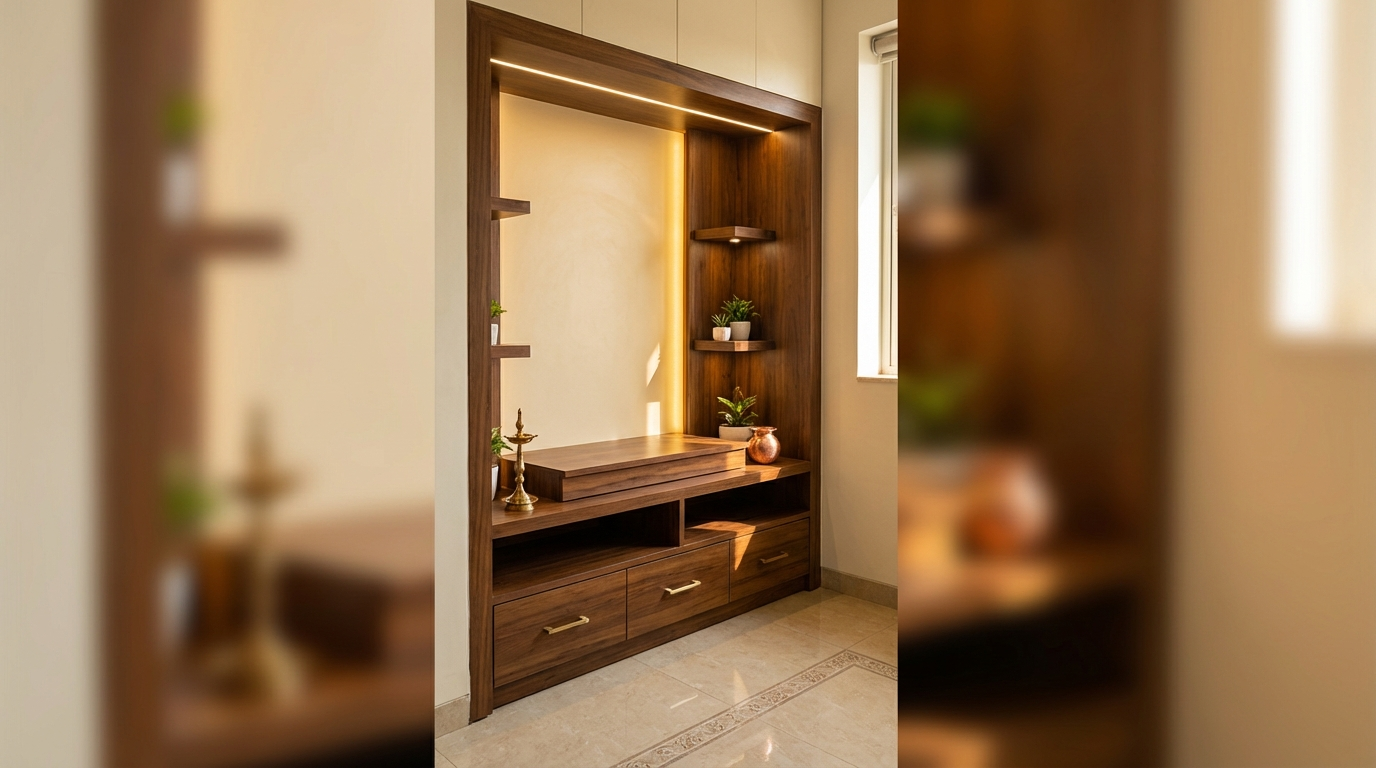
A well-designed pooja room is a sacred space that balances Vastu principles, practical materials, and your family's worship style. A pooja room is a sacred space where you can practice rituals and connect with the higher being. Short version: In 2026, modern pooja rooms combine traditional elements with contemporary aesthetics — creating spaces that feel sacred yet stylish. Whether you're working with a dedicated 5x7 feet room or just a wall-mounted unit in your 2BHK, the key is getting the direction right (northeast or east), choosing moisture-resistant materials for humid cities like Mumbai or Chennai, and planning storage that keeps your pooja essentials organized without clutter.
This is right for you if:
- You're building a new home or renovating and want to get the mandir placement right the first time
- Your current pooja corner feels cramped, disorganized, or just doesn't have the right energy
- You're wondering how to fit a pooja unit in a small apartment—wall-mounted shrines, corner units, and compact wooden mandirs work beautifully in both tight spaces and larger homes.
- You want modern aesthetics without compromising on traditional Vastu guidelines
Skip this if:
- You're looking for portable travel pooja kits—that's a different discussion entirely
- You need a large temple hall design for a villa—we're focusing on typical Indian homes here
Bottom line: The best pooja room design is one that respects Vastu direction (northeast is ideal), uses quality plywood or solid wood with proper sealing, and fits your daily worship routine without feeling cramped.
What Pooja Room Design Actually Means Today
Pooja room design is the thoughtful planning of a dedicated worship space in your home—covering everything from placement direction and material selection to lighting, storage, and visual aesthetics. Designing the perfect interior for a pooja room is one of the most meaningful aspects of home interior planning. Whether you have a dedicated room, a small wall-mounted mandir, or a compact pooja corner in your living room, the right design can bring peace, harmony, clarity, and spiritual energy into your home.
Most people think pooja room design is just about buying a nice-looking mandir from some online store. Actually, it's much more than that. The design starts with your floor plan—where does northeast fall in your flat? What's on the other side of that wall? Is there a toilet above or behind where you're planning to place idols? These aren't just Vastu formalities; they affect how you'll feel in that space day after day.
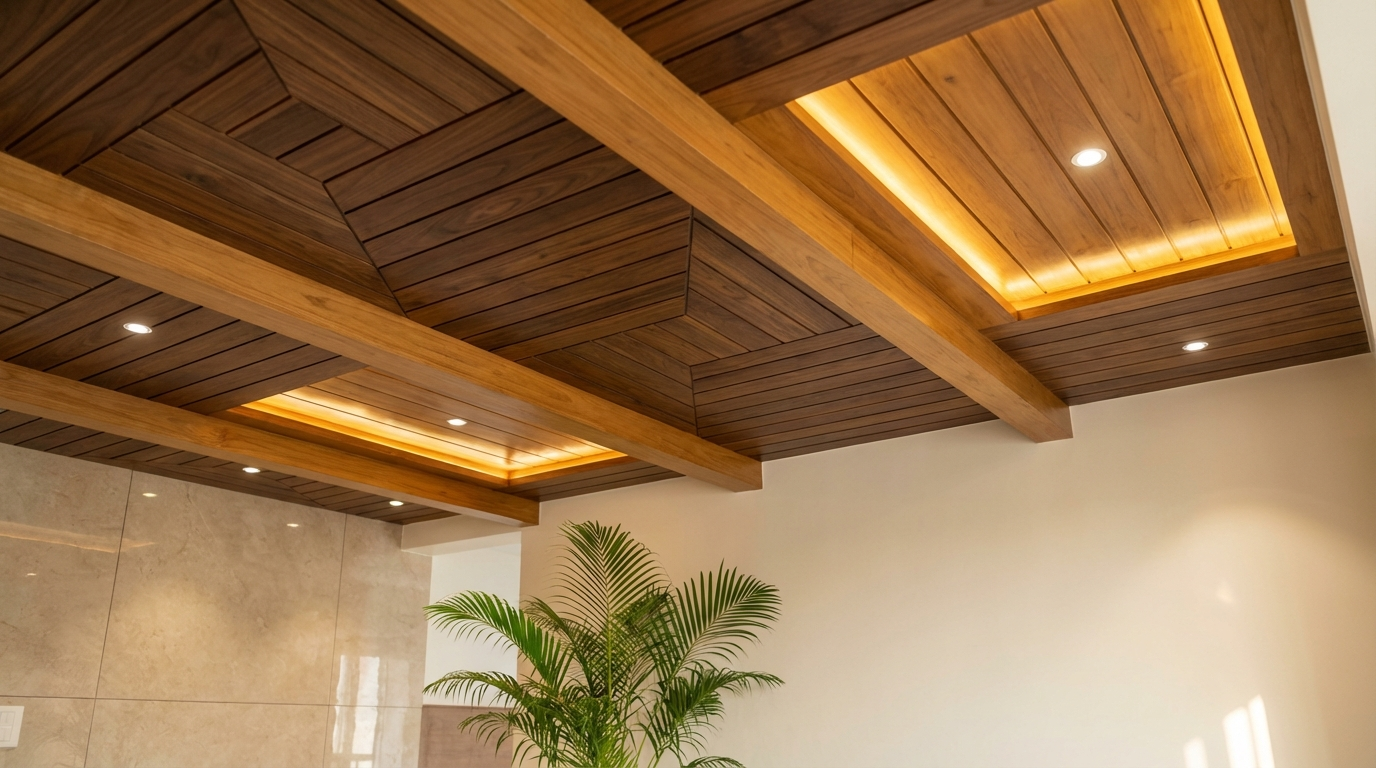
Expect to see laser-cut jaali panels, brass accents, marble backdrops, and warm integrated lighting—perfect for creating a calm, serene vibe. The 2026 trends I'm seeing in Mumbai and Bengaluru projects lean heavily toward this combination of traditional craftsmanship with modern finishing. 2025 trends feature compact mandirs, jaali work, LED backlit panels, and floating shelves for urban Indian homes. Materials like teak wood, marble, and engineered wood are trending.
Why This Matters in Indian Homes
Here's the thing about pooja rooms in India—we're not dealing with California weather. Mumbai hits 85-90% relative humidity during monsoon. Chennai isn't far behind. And if you've used the wrong grade of plywood or skipped edge sealing, you'll see warping, laminate lifting, and sometimes even fungal growth behind your idols. Not exactly the sacred energy you were hoping for.
In coastal cities like Mumbai, Chennai, and Kolkata, moisture is your biggest enemy. Modern design for pooja rooms calls for the use of durable and aesthetically pleasing plywood such as moisture-resistant or marine-grade plywood. I've seen beautiful teak mandirs develop cracks within two years because the wood wasn't seasoned properly for humid conditions. The Bengaluru and Pune crowd has it slightly easier—less humidity—but even there, the October-November transition can cause issues if your materials aren't right.
To enhance the vibration of this room, placing things in the pooja room interior design, according to Vastu, is essential. North-east is considered the best location to plan a mandir interior design in the house. This isn't just superstition—the northeast corner typically gets morning light in most Indian homes, which creates a naturally serene atmosphere for morning prayers. These zones attract maximum sunlight, positive vibrations, and mental clarity — perfect for prayers and meditation.
Is teak wood really worth the extra cost for pooja rooms?
High-quality options like teak, rosewood, and mango wood are ideal for their sturdiness and natural elegance. Teak wood is a premium choice, known for its ability to withstand wear and tear. Is it worth it? If you're in a humid city and want a mandir that lasts 20-30 years without issues, yes. Teak wood has a rich amount of oil, making it decay and insect-resistant, and a reliable material for a designer pooja mandir. But honestly, if your budget is tight, good quality BWR plywood with proper laminate and edge banding works just fine for most situations. I've seen 12-year-old plywood mandirs in Thane that still look great because the carpenter did the edge sealing properly.
Types of Pooja Room Designs: Breaking It Down
Temple design at home can be broadly categorised from individual rooms to freestanding mandirs to pooja room corners and wall mandir designs to create a heavenly backdrop within the living space. Let me give you the real breakdown:
| Type | Best For | Space Needed | Material Options | My Take |
|---|---|---|---|---|
| Dedicated Pooja Room | Homes above 1500 sq ft, families with elaborate daily puja | The measurement of an enclosed medium-sized puja room should be at least 5x7 feet so that two or three people can comfortably pray together. | Teak, marble flooring, solid wood doors | Ideal if you have the space. Worth the investment. |
| Wall-Mounted Mandir | 2BHK apartments, rental homes | Width is 12-18 inches | Wood and teak are the most trusted because they age well and feel traditional. Plywood and MDF work when you want clean lines, lighter care, and CNC patterns at a friendlier cost. | Best for most urban apartments. Focus on quality hardware for wall mounting. |
| Standalone Floor Mandir | Homes without dedicated room but floor space available | Available in varied sizes ranging from 2 feet 6 inches to 5 feet across. | Engineered wood, solid wood, MDF with laminate | Good middle ground. Easy to move if you relocate. |
| Corner Pooja Unit | Utilizing dead corners, studio apartments | Triangular, fits 2-3 sq ft corner | Plywood with laminate, glass doors | Often overlooked but very practical for small spaces. |
| Niche/Wall Recess | New construction, accent wall integration | The minimum length, width and height of the niche should be at least 15 inches each. | Marble, POP work, backlit glass | Looks premium if done during construction. Difficult retrofit. |
| Cabinet Style (Closed) | Living rooms, multipurpose areas | 2-3 feet wide, can close doors when not in use | Plywood with laminate finishes in earthy tones. | Practical for families who want discreet worship space. |
Honestly, the wall-mounted and standalone options cover 80% of what I see in Mumbai-Thane-Navi Mumbai projects. Wall-mounted home temple design is gaining rapid popularity because of its high customizability.
Vastu Guidelines: What Actually Matters
According to Vastu, the ideal mandir direction in a home is the northeast. This is the one rule I tell everyone to follow if possible. But let's be practical—not every flat layout allows this. If the northeast corner is unavailable, the following directions are also suitable: East – Represents sunrise, vitality, and spiritual awakening. North – Associated with prosperity, growth, and positive energy.
The core Vastu principles for pooja rooms:
- Direction placement: According to Vastu Shastra, the northeast corner of the house, also called the Ishan Kona, is the most sacred and powerful zone for placing a mandir.
- Idol facing: Ideally, the idols in the mandir should face east or north. Placing them in these directions is believed to invite divine blessings and channel auspicious energies within the space.
- Your facing direction: According to Vastu principles, you should face east or north while praying. These directions are associated with positive energy, clarity, and spiritual growth.
- What to avoid: One of the most important Vastu rules is to not place the mandir in the kitchen or near a bathroom. The sanctity of the space must be maintained. Bathrooms are considered impure and should never be adjacent to or above/below the mandir.
- Lamp and diya placement: According to Vastu, you must place the lamps and the mandir's agni kunds in the southeastern direction.
Can you place a mandir in the bedroom?
Yes, a mandir can be placed in the bedroom if space is limited, but certain precautions must be taken. If you live in a compact space and must place the mandir in the bedroom, use a curtain to separate it and avoid placing it directly at your feet when sleeping. I've set this up for clients in 1BHK apartments in Andheri—works fine as long as you maintain the separation. The curtain isn't just Vastu; it also protects the idols from dust and keeps the space feeling sacred.
Materials Guide: What Works for Indian Conditions
This is where I see the most mistakes. People spend lakhs on beautiful carved mandirs and then wonder why the wood is cracking or the laminate is peeling. Climate matters.
| Material | Pros | Cons | Best For | Climate Suitability |
|---|---|---|---|---|
| Solid Teak | Known for its ability to withstand wear and tear. Natural oils resist termites. | Expensive, heavy, needs proper seasoning | Premium dedicated pooja rooms, heirloom pieces | Excellent for all climates |
| Sheesham/Rosewood | Beautiful grain, traditional look, durable | Can crack if not maintained, heavy | Traditional carved mandirs | Good for dry climates, careful in coastal areas |
| BWR Plywood + Laminate | Moisture-resistant or marine-grade plywood works well, affordable, easy to customize | Edges need proper sealing, less "prestige" factor | Wall-mounted units, modern designs | Excellent for humid cities |
| MDF with Veneer | Smooth finish, good for CNC cutting, affordable | Water damage risk, heavier than plywood | Budget standalone mandirs, interior placements only | Only for dry, well-ventilated areas |
| Marble | Marble pooja room designs are widely suggested by luxury interior designers for their majestic appearance. Marble floors can set the tone of a luxurious home temple design. | Expensive, requires skilled installation, cold to touch | Flooring, back panels, dedicated rooms | Excellent all climates, stays cool |
| Glass (Backlit Panels) | Glass-enclosed pooja units are among the latest luxurious home temple design trends. Modern look, easy to clean | Fingerprints, can feel less traditional | Contemporary homes, backdrops | All climates |
| Engineered Wood | Engineered wood home temples are our bestselling material as they are light in weight, making them a hit for small spaces, and are highly affordable with optimal utility. | Less durable long-term, water-sensitive | Budget-friendly standalone units | Dry climates, AC homes |
Between you and me, the best value for most apartments is good quality BWR plywood (19mm thickness) with high-pressure laminate or veneer. Our kitchen cabinet material comparison covers the plywood grades in detail—same principles apply for pooja room carpentry.
Price Reality Check (2026 Market)
I can't give you exact prices because they vary wildly between cities and dealers. But here's a realistic framework:
Wall-Mounted Mandirs (Readymade):
- Basic MDF/engineered wood: ₹5,000-12,000
- Plywood with laminate, good quality: ₹15,000-35,000
- Solid wood with carving: ₹40,000-1,50,000+
Standalone Floor Mandirs:
- Large units like 72 inches (H) x 30 inches (W) x 18 inches (D) in engineered wood: ₹15,000-40,000
- Custom plywood with CNC work: ₹50,000-1,00,000
- Solid teak with traditional carving: ₹1,50,000-5,00,000+
Dedicated Pooja Room (Full Interior):
- Basic plywood work with laminate, simple design: ₹50,000-1,00,000
- Marble flooring + wooden mandir + jaali partition: ₹1,50,000-3,00,000
- Premium with solid wood, marble, brass accents, LED lighting: ₹4,00,000-10,00,000+
Here's what actually affects your final bill: the carpenter's day rate (skilled religious carving specialists charge premium), whether you're buying readymade or custom, transportation from the manufacturing hub (Gujarat and Rajasthan for marble, Saharanpur for carved wood), and how much CNC cutting or hand-carving is involved.
Size Recommendations: Getting the Dimensions Right
Generally, the ideal height for a Puja Mandir should be between 5 to 7 feet. This allows for a comfortable viewing experience while also leaving space above for decorative elements or lighting.
Standard Width: The typical width of a Puja Mandir ranges from 2 to 4 feet. This provides ample space for multiple idols and decorative items without overcrowding.
Quick sizing guide:
| Situation | Recommended Size | Why |
|---|---|---|
| Studio apartment, single idol | Minimum 15 inches each (L x W x H) | Functional minimum, keeps essentials accessible |
| 2BHK, wall-mounted, family use | 24-36" wide x 30-48" high | Fits multiple idols, storage for daily essentials |
| 3BHK, standalone mandir | 30-48" wide x 60-72" high | Room for elaborate puja setup, drawer storage |
| Dedicated room, 2-3 people praying | At least 5x7 feet | Comfortable for daily use and festivals |
| Large villa, elaborate temple | 8x10 feet or larger | Accommodates walk-in design, multiple seating |
According to puja room location as per Vastu, the deity should be above the level of the navel when one stands and prays. So, the height between the floor and the base of the mandir/niche should range between 32-36 inches. This is the detail most readymade mandir sellers don't tell you—the idol platform height matters for comfortable worship.
What if you have a very small space?
A Pooja room should have a minimum size of 2.5 feet by 2.5 feet to allow for the storage of necessary religious artifacts and to create a calm atmosphere for praying and doing meditation. Below that, you're really looking at a symbolic pooja corner rather than a functional daily worship space. An easier way to incorporate a symbolic mandir is with 8- to 10-inch-deep wooden or glass shelves. I've helped clients in Mumbai's Powai and Andheri areas create beautiful pooja setups in literally 2 feet of wall space using floating shelves with a small canopy—works surprisingly well.
Common Mistakes People Make
I've been doing this for 18 years. These are the mistakes I see repeatedly:
1. Ignoring what's on the other side of the wall. There was this flat in Mulund—beautiful carved mandir installed against what turned out to be the neighbor's bathroom wall. The client was devastated when I pointed it out. The temple shouldn't be in opposition to a wall that conceals a bathroom. Additionally, it shouldn't be placed below a toilet on a higher floor. Check this before you finalize placement.
2. Using interior-grade materials in humid conditions. MR grade plywood is not BWR grade. Big difference. Especially in Mumbai, Chennai, or any coastal city. The first monsoon will tell you.
3. Overcrowding the mandir with idols. The idols should not be more than 15 inches in height. Avoid overly large or imposing idols in home mandirs. More idols don't mean more blessings—they mean more dust collection points and a cluttered sacred space.
4. Skipping proper lighting planning. I've seen gorgeous mandirs that look dead because nobody planned the electrical points. Soft ambiance lighting, LED strips, and backlit panels can create a divine atmosphere in pooja room design ideas. Plan this during construction, not after.
5. Placing idols directly against the wall. Keep a minimum distance of 1 inch from the wall so air can circulate behind the idol. Also, you must note that the idols must be placed away from the walls. Keep at least a distance of six inches from the walls. This prevents moisture buildup and makes cleaning easier.
6. Forgetting about storage. Where will you keep the camphor, incense, extra wicks, matchboxes, prayer books? A well-designed wooden pooja room should provide adequate storage for all essential items like holy books, diyas, incense sticks, and utensils. Look for designs that include drawers, cabinets, or built-in shelves.
7. Ignoring ventilation. Jaali latticework allows ventilation. Daily incense and camphor burning creates smoke. Without proper ventilation, your beautiful white marble backdrop will turn yellow within a year. This one really frustrates me—so easy to plan, so often ignored.
8. Going too modern and losing the sacred feel. Modern-designed Pooja room are where the emphasis is on clarity and simplicity. It could include minimalistic shelving for alcoves with a subtle color scheme and modern materials like glass, metal, or marble. Modern is fine, but don't make it so minimalist that it feels like a display shelf rather than a sacred space.
9. Not considering daily maintenance. Cleanliness is a major aspect of Vastu. A dirty or neglected mandir defeats its purpose. Clean the area daily. Choose materials and designs that you can realistically maintain. That intricate carving looks beautiful—until it's full of dust and incense residue.
10. Keeping broken or damaged idols. Refrain from placing broken or chipped idols, as per Vastu, this can disturb the energy of the home. I've seen families keep damaged idols out of sentiment. Better to do visarjan respectfully and replace them.
Quality Checks for Your Mandir
Visual checks to do yourself:
- Run your hand along all edges—they should be smooth with no exposed wood fiber
- Check corner joints for gaps or misalignment
- Look for laminate bubbling or uneven surfaces under angled light
- Verify drawer slides operate smoothly without sticking
- For solid wood, check for visible cracks or knots that might expand
- Ensure doors close flush without gaps
Questions to ask the dealer:
- What grade of plywood/wood is this? (Ask for specific—BWR, marine, commercial?)
- Is the wood properly seasoned? How long was the drying period?
- What's the warranty against termite damage and warping?
- Will you provide touch-up materials for minor scratches?
- What's the assembly and installation included?
Simple field tests:
- Tap test: Solid wood gives a dull thud; hollow or thin panels sound hollow
- Weight check: Lift it—engineered wood is noticeably lighter than solid wood or good plywood
- Edge inspection: Look at any visible edges—you should see solid wood layers, not sawdust compressed
- Flex test: Shelves shouldn't flex noticeably under moderate hand pressure
Here's a trick most dealers don't like—ask to see the back panel of the unit. Many readymade mandirs have beautiful fronts but use 3mm hardboard for backs, which warps in humidity. The back should be at least 6mm plywood for wall-mounted units.
Installation and Workmanship Notes
For wall-mounted mandirs:
- Use proper wall anchors rated for the weight—not just regular rawl plugs
- Check if the wall is brick, concrete, or hollow block—each needs different fasteners
- Leave 1-2 inches gap from ceiling for ventilation
- Electrical points for LED lighting should be planned before mounting
For custom-built pooja rooms:
- Marble flooring should be laid on cement-sand bed, not adhesive, for durability
- Wooden framework needs anti-termite treatment regardless of wood type
- All plywood edges must be edge-banded or sealed—this is non-negotiable
- Door hinges should be soft-close for sacred space—no loud banging
What to tell your carpenter:
- All exposed edges need proper edge banding—no shortcuts
- Use BWR grade minimum for the main structure, marine grade if budget allows
- Drawer bottoms should be 6mm plywood, not hardboard
- Check electrical rough-in before closing any panels
- Leave provision for cable routing if we're adding LED strips later
- No nails visible from the outside—use proper joinery or concealed fasteners
There was this carpenter in Borivali—experienced guy, 20 years in the trade. He skipped edge sealing on the shelf bottoms because "nobody sees them." Six months later, the shelves warped from bottom-side moisture absorption. Had to redo the entire thing. Don't let anyone skip the basics.
How Long Does It Last?
Honest lifespan expectations:
- Solid teak, properly maintained: 25-40+ years (can be generational)
- Good quality BWR plywood with laminate: 12-18 years before showing wear
- Engineered wood/MDF: 5-8 years before issues in humid conditions
- Marble elements: Decades—essentially permanent with care
What affects longevity:
- Daily incense smoke (deposits residue, yellows surfaces)
- Monsoon humidity (expands wood, lifts laminates)
- Direct sunlight (fades colors, dries out wood)
- Proximity to kitchen (oil and smoke damage)
In my experience, well-maintained plywood mandirs in Mumbai last about 12-15 years before needing significant refresh. Solid wood lasts much longer but needs annual polishing. The marble and stone elements basically last forever.
Signs of wear to watch for:
- Laminate edges lifting or peeling
- Drawers becoming stiff or misaligned
- Wood showing cracks or splits
- Yellowing of white surfaces from incense
- Hinges becoming loose or squeaky
Alternatives Worth Considering
If budget is tight, consider starting with a quality wall-mounted shelf unit (around ₹8,000-15,000) with a simple canopy. You can always upgrade later. Better to have a modest but well-made setup than an elaborate one in poor materials.
If you need better moisture resistance than standard plywood offers, look at marine-grade or consider HDHMR for the main structure. Our HDHMR guide covers this material in detail—it's essentially waterproof MDF and works well in humid conditions.
For rental homes where you can't drill walls, standalone mandirs are perfect. Many come with casters or can be placed on a sturdy table. For renters, modular plywood units—easy to assemble and move—add convenience without permanent alterations.
If you're into very contemporary aesthetics but want the traditional function, 'Jaali pooja room doors' are a true Indian interior heritage that is predicted to make a comeback in the year 2026. CNC-cut jaali patterns on plywood give you that traditional look with modern precision and easier maintenance than hand-carved wood.
Frequently Asked Questions
Is it true that you can't have a pooja room facing south?
It is important to note that the mandir should never be placed in the south or southwest direction of the house. These directions are considered inauspicious as they are associated with negative energies. Placing the mandir in the south or southwest direction can lead to financial losses, health issues, and other problems. Now, I've seen plenty of homes where layout constraints made south-facing unavoidable. In such cases, consult a Vastu expert for remedial measures—there are usually workarounds, though northeast remains ideal.
What's the best lighting for a pooja room?
Warm white LED strips (2700-3000K color temperature) work beautifully for creating that divine glow. Avoid harsh cool white lights—they feel clinical rather than sacred. Backlit marble or glass panels with LED strips behind them are trending heavily in 2026. The year 2026 is bringing a new wave of divine design aesthetics. Soft LED lighting behind marble backdrops creates a glowing divine aura. Always use dimmable options for flexibility between daily puja and special occasions.
Is it okay to keep family photos in the pooja room?
Photographs of deceased family members (ancestors) can be placed in the pooja room as it's a way of paying respect. However, avoid photos of living family members in the same space as deities—keep those in the living room or bedrooms. The pooja space should be focused on divine worship.
What if I live in a coastal city like Mumbai or Chennai—do I need special materials?
Absolutely. Standard MR-grade plywood will fail within 2-3 monsoons in coastal humidity. You need BWR (boiling water resistant) grade minimum, and marine-grade is even better for areas near the sea. Use moisture-resistant plywood to avoid damage. Waterproof and termite-resistant plywood enhances the lifetime of the cupboard. Also consider stainless steel or brass hardware instead of iron which rusts quickly in salty air.
How do I keep the pooja room clean with daily incense burning?
Clean the area daily. Change the water in any copper or brass kalash or lamp daily. Avoid using artificial flowers or dusty cloth for decoration. Dispose of old flowers, leaves, and used incense sticks properly. For surfaces, wipe with a slightly damp cloth weekly. For marble, use only water and mild soap—never acidic cleaners. For wood, occasional polish (every 6-12 months) keeps it looking fresh.
Can I use artificial flowers instead of fresh ones?
Avoid using artificial flowers or dusty cloth for decoration. Traditional Vastu advises against this. Fresh flowers are preferred because they're offerings from nature. If fresh flowers aren't feasible daily, better to skip flowers than use plastic ones. Some families use fresh flowers only for special puja days.
What about putting the mandir above a refrigerator or washing machine?
No. Just no. The vibrations from appliances aren't compatible with the peaceful energy a pooja space needs. Similarly, avoid placing the mandir adjacent to or sharing walls with toilets, sinks, or heavy electrical panels. The sanctity of the space should be protected.
Is glass okay for pooja room doors, or is wood mandatory?
Is glass a good choice for pooja doors? A glass door for your simple pooja room design is perhaps one of the most trendy, stylish instalments you can make in your home. Imagine a clear or frosted glass panel being illuminated with LED lights and offering you a peek of the serene space within. It separates the pooja ghar from the rest of the home without making it feel overwhelmed by walls. Glass works well for modern designs. A tempered fluted glass is both sturdy and easy to maintain, making it safe for families with children who want to make a bold architectural statement.
How many idols should I have in a home mandir?
If multiple idols are present in the mandir, each should be positioned in a way that they do not directly face each other. There's no fixed number, but quality over quantity. Better to have 3-5 well-maintained idols than 15 crowded ones collecting dust. A rule of thumb is to avoid placing the idols in front of each other.
Is it true that broken idols bring bad luck?
Broken and damaged idols are radiators of negative energy and should be disposed of without delay. Whether you believe in energy or not, a broken idol looks neglected and doesn't create the right atmosphere for worship. Do visarjan respectfully (immersion in flowing water is traditional) and replace with new idols.
What's the difference between a pooja corner and a pooja room?
A pooja corner is part of another room—typically a niche or wall section in the living room or bedroom with a mandir unit. A pooja room is a dedicated enclosed space with its own walls and door. Rather than selecting a separate room for your pooja room design, a simple corner of your house is more than enough! You can look into modern pooja room designs that look sleek, stylish, and fit perfectly in a compact space. Both serve the purpose—choose based on your space availability.
Can I renovate an existing mandir or should I replace it entirely?
Depends on the structure. If it's solid wood with surface issues only, refinishing works well. If there's warping, termite damage, or structural problems in plywood, replacement is often more cost-effective than repair. Get a carpenter's opinion—sometimes what looks like major damage is just surface-level.
One Last Thing
Your pooja room doesn't have to be the most expensive part of your home, but it should be the most thoughtful. Take your time with the direction, be realistic about maintenance, and don't let anyone rush you into decisions. The trends will keep changing—popular trends include wooden mandirs with intricate carvings, marble backdrops, wall niches, glass panels with soft lighting, and minimalist designs that maintain a serene atmosphere—but a well-made mandir in the right spot will serve your family for decades.
And seriously—don't skip the edge sealing. Your future self will thank you during the next monsoon.
Disclaimer: This content is provided for general informational purposes based on industry practices and publicly available information. Product specifications, standards, prices, and availability may vary by manufacturer, region, and time. Readers should independently verify details with manufacturers, dealers, or qualified professionals before making purchase or construction decisions.Want Plywood Suggestions?
Share a few details and a Sainik 710 specialist will suggest suitable brands and connect you to responsive dealers.