Plywood vs MDF vs Particle Board: What to Use for TV Units, Wardrobes, Kitchens & Beds (Simple Guide)
A clear comparison of plywood, MDF and particle board by strength, moisture resistance, screw holding and cost—plus best picks for each furniture type.
Quick Decision Summary
Plywood wins for most furniture like wardrobes, kitchens, and beds due to superior strength and screw holding; MDF suits painted TV units in dry areas; avoid particle board for heavy-use items.
If you're in a hurry, opt for BWR-grade plywood (18mm for wardrobes/beds, 12mm for shelves) in humid Indian homes—it's the safest all-rounder balancing durability, termite resistance, and cost. MDF works for low-moisture TV cabinets with laminates, offering smooth finishes cheaply, but particle board limits to lightweight, enclosed shelves in air-conditioned spaces. Factor in your local climate: coastal or monsoon zones demand waterproof plywood over fiberboards.
- Choose plywood if you need load-bearing shelves, frequent door slams, or humidity exposure—handles Indian site realities best.
- Choose MDF if prioritizing ultra-smooth laminate/paint finishes on non-structural parts in dry interiors.
- Choose particle board only for budget-tight, hidden, low-stress components like back panels.
- Avoid particle board if screws must hold hinges long-term; avoid MDF in kitchens without heavy sealing.
What This Actually Means (Grade, Construction, and Use)
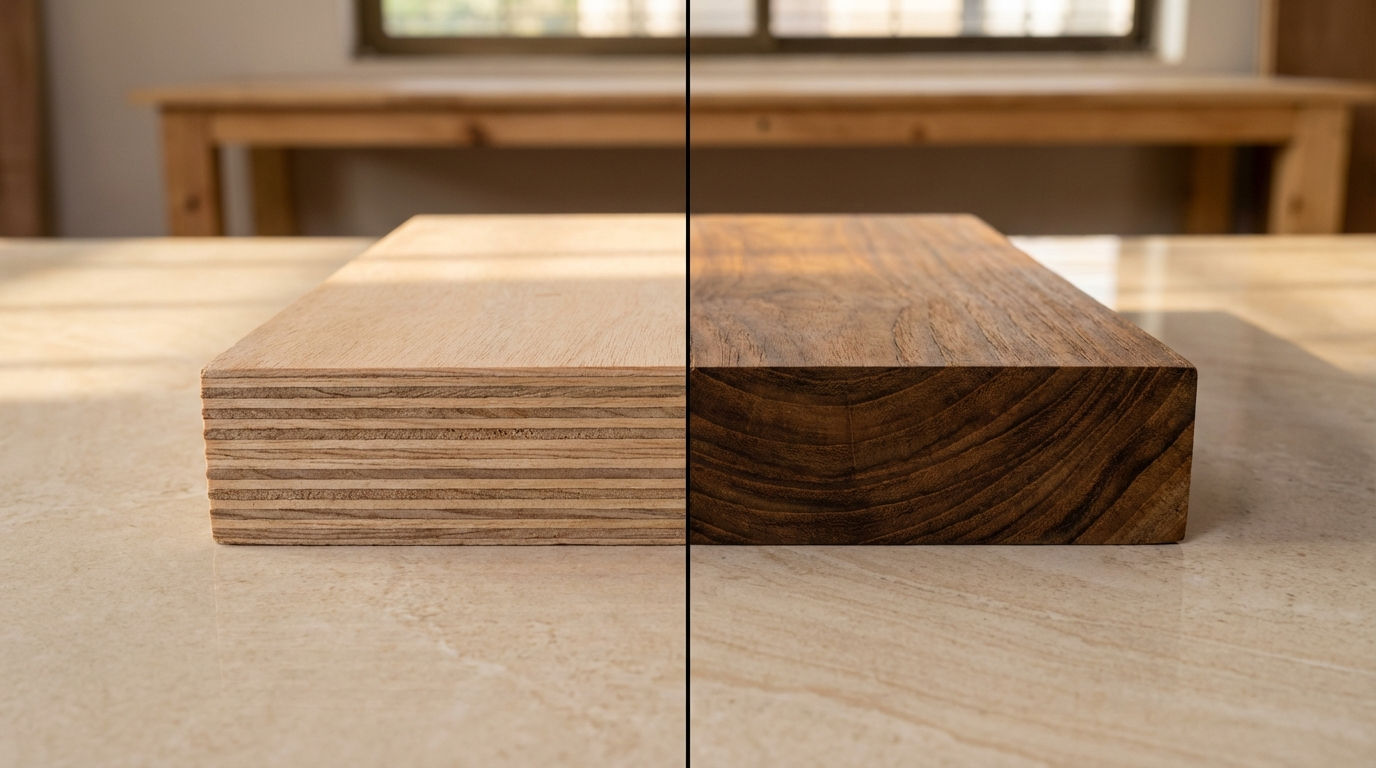
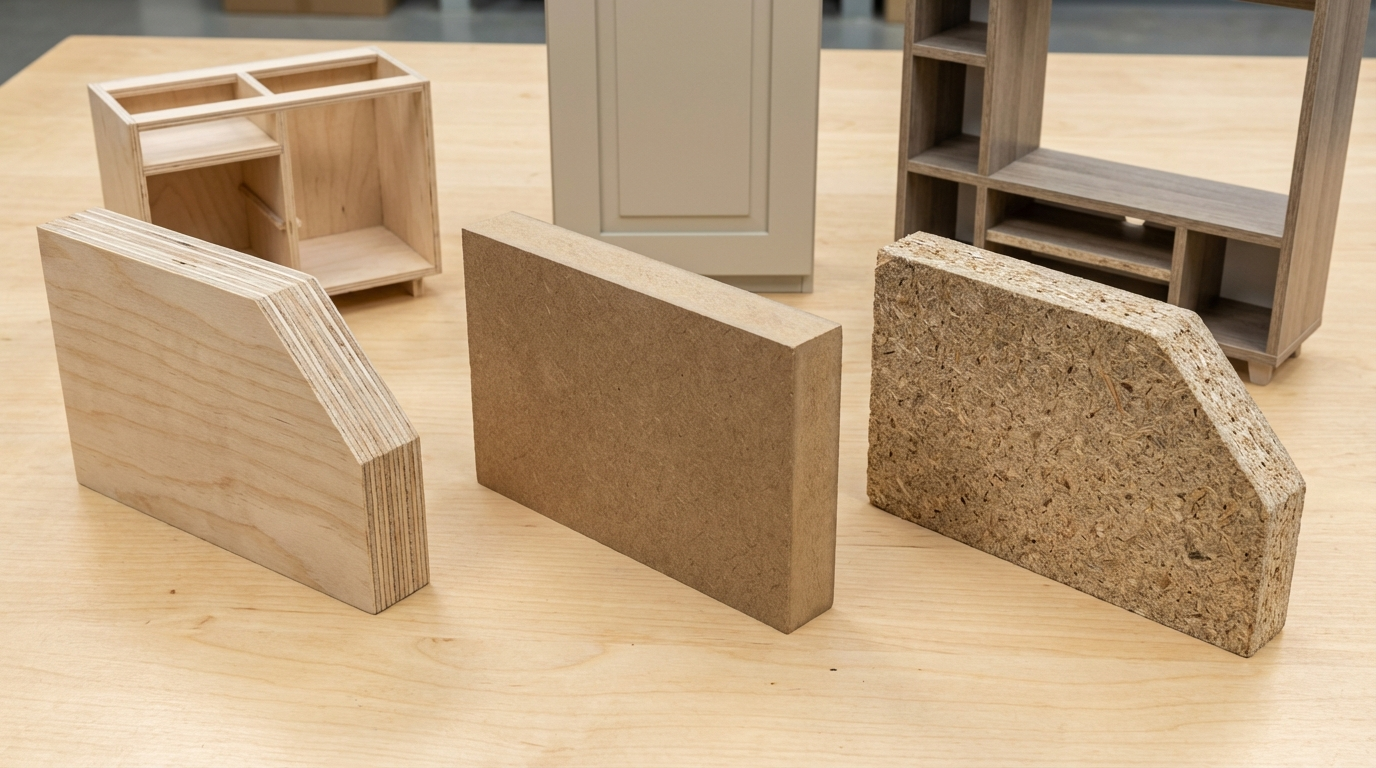
Plywood consists of thin wood veneers glued cross-grain in layers, creating a strong, stable panel. In India, grades like MR (moisture-resistant) use urea-formaldehyde glue for basic interiors; BWR (boiling water-resistant) employs phenolic resins for semi-wet areas; BWP marine grade offers full waterproofing for extreme conditions. Thicknesses from 6mm to 25mm suit shelves to carcasses. It's ideal for load-bearing furniture where screws grip multiple layers without stripping.
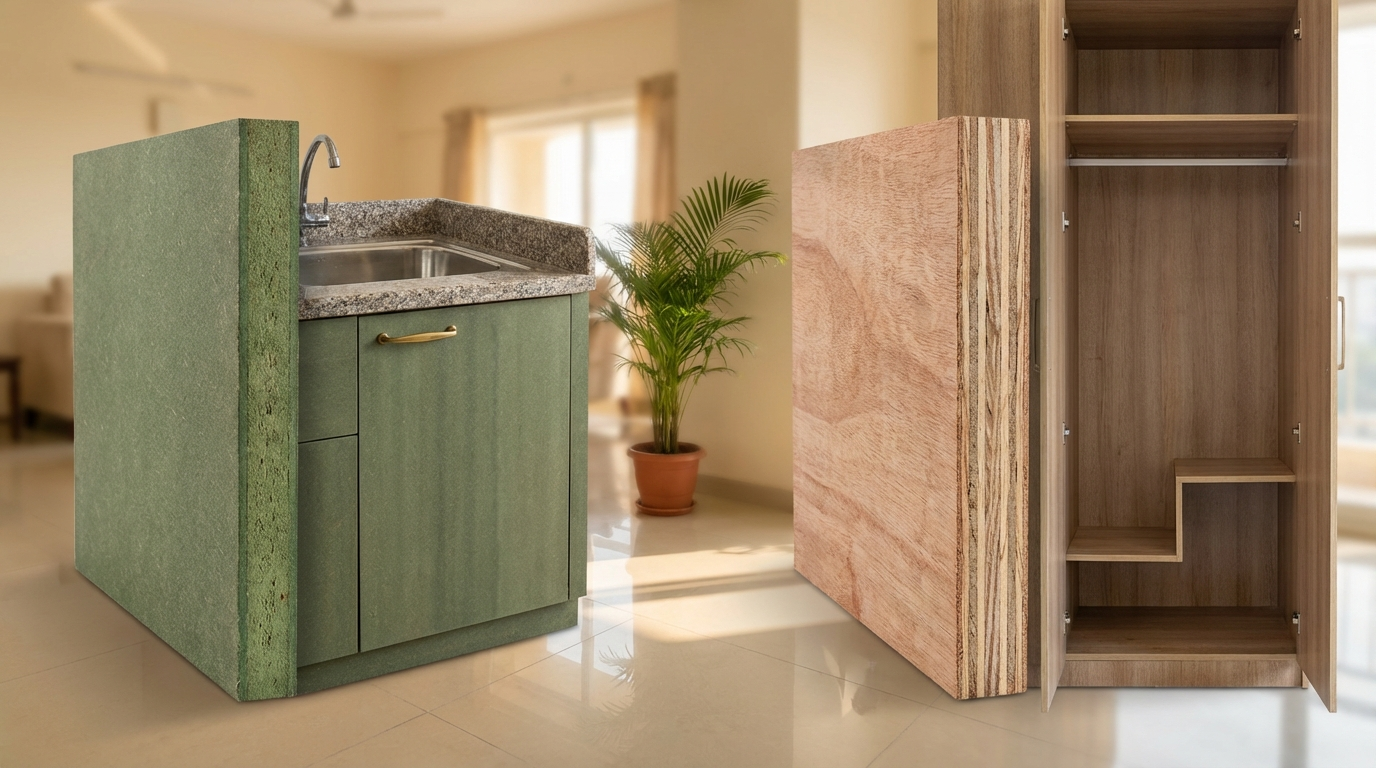
MDF, or medium-density fiberboard, mashes wood fibers with resins under heat and pressure into uniform sheets. No grain means flawless surfaces for paints, veneers, or laminates—perfect for intricate router work in modular designs. But its density (650-800 kg/m³) makes it heavy, and edges absorb moisture easily, causing swelling. Common in 9-18mm for cabinets, it's favored by carpenters for speed but fails under sustained weight or dampness.
Particle board (PB), aka chipboard, compresses wood particles with adhesives into economical boards. Lowest density (550-700 kg/m³), rougher texture, and weak core limit it to non-exposed parts. Available in MR grades, it crumbles under screws after repeats and warps in humidity. Used thinly (16-19mm) for backs or fillers, it's the entry-level choice but demands perfect edge banding to survive.
In practice, plywood's layered build resists warping across India's varying temperatures; MDF shines in finish quality but needs protection; PB prioritizes cost over longevity, common in mass-market flats.
India-Specific Reality Check (Moisture, Termites, and Workmanship)
India's monsoons, coastal humidity (70-90% RH in Mumbai, Chennai), and poor ventilation amplify material failures. Plywood's cross-layers and better glues (BWR/BWP) handle 24-48 hour boiling tests, unlike MDF/PB which swell 10-20% in lab humidity cycles—real-world delamination hits within a season without sealing. Termites devour PB/MDF fastest due to exposed glue lines; opt for plywood treated with preservatives, stored off-ground in godowns.
Contractor habits worsen issues: rushed acclimatization skips 48-72 hour site adjustment, causing post-install gaps. Coastal carpenters cut corners on edge sealing, leading to plywood veneer peels or MDF bloating. In North India dry belts (Delhi winters), MDF holds, but Kerala homes see PB cabinets sag yearly. Always insist on calibrated plywood (sanded uniform thickness) for flush modular fits—avoids CNC router jams common with uneven PB/MDF.
Workmanship varies city-to-city: Bangalore favors calibrated ply for kitchens; Pune modular firms mix MDF cores with ply faces. Pro tip: buy from organized dealers with batch testing; avoid roadside stacks exposed to rain.
Comparison That Actually Helps
This head-to-head breaks myths with practical metrics for Indian homes—strength for 50kg shelf loads, screw cycles before failure, and monsoon survival.
| Factor | Plywood (BWR 18mm) | MDF (18mm) | Particle Board (19mm) |
|---|---|---|---|
| Strength (Bending Load) | High: 300-500kg/m | Medium: 200-350kg/m | Low: 100-200kg/m |
| Moisture Resistance | Good (5-8% swell) | Poor (15-25% swell) | Very Poor (20-30% swell) |
| Screw Holding (Cycles) | 20-50 pulls | 10-20 pulls | 5-10 pulls |
| Finish Suitability | Good with laminate | Excellent smooth | Fair, needs heavy banding |
| Termite Risk | Low with treatment | Medium | High |
| Weight | Medium (35-45kg/sheet) | Heavy (50-60kg/sheet) | Light (25-35kg/sheet) |
Use this for quick scans: plywood dominates durability; MDF for aesthetics; PB for fillers.
Price Range and Cost Drivers
Expect plywood at ₹80-150/sqft (12mm BWR), rising to ₹120-220 (18mm); MDF ₹50-100/sqft; PB ₹30-70/sqft—varies 20-40% by city (higher in metros). Thickness adds 30-50% per mm jump; BWP ply premiums 40-60%. Core matters: hardwood ply costs more but grips screws; calibration/febattling hikes 10-15%.
Glue/resin upgrades (PF over UF) prevent delam; brand tiers add 20-50% for consistency. Logistics: South India sources cheaper for Kerala; North pays freight. Budget a wardrobe (6x4ft, 18mm): ply ₹25,000-40,000; MDF ₹15,000-28,000; PB ₹10,000-20,000. Factor labor: MDF cuts faster, saves 10% on carpenter bills. Confirm local rates—monsoon stockpiles inflate 15%.
Best Material by Furniture Type
Match to use: kitchens demand moisture-proof; beds need screw grip for slats.
| Furniture | Best Pick | Why (Key Risks Avoided) | Thickness/Grade Tips |
|---|---|---|---|
| TV Units | MDF or Calibrated Plywood | Smooth for paints; shelves hold 30-50kg TVs. Avoid PB sag. | 18mm carcass, 12mm shelves; MR/MDF ok dry indoors. |
| Wardrobes | BWR Plywood | Door hinges pull 100+ cycles; humidity warps MDF. | 18-25mm carcass; edge seal all cuts. |
| Kitchens | BWP PWP | Steam/spills swell PB/MDF 2x faster. | 18mm base, BWP glue; laminate seal. |
| Beds | BWR Plywood | Slat screws hold 10-20 years; PB crumbles. | 18mm frame; hardwood core. |
Common Buyer Mistakes (and Fixes)
Mistake 1: Ignoring core type—mixed-core ply hides voids, snaps under weight. Fix: Tap for hollow sounds; demand hardwood core cert.
Mistake 2: Skipping acclimatization—MDF warps post-install in humid Pune. Fix: Stack onsite 72 hours, fans on.
Mistake 3: Thin boards for heavy loads—12mm PB wardrobe shelves buckle. Fix: Minimum 18mm structural.
Mistake 4: No edge sealing—kitchen MDF edges bloat in monsoons. Fix: 2mm PVC/ABA tape immediately post-cut.
Mistake 5: Termite neglect—untreated PB in Rajasthan soil infested fast. Fix: Boric acid dip + plywood preference.
Mistake 6: Over-relying on looks—glossy MDF hides weak grip. Fix: Test screw pull on sample.
Mistake 7: Bulk-buy without checks—warped batch ruins project. Fix: Inspect 10% sheets for flatness.
Mistake 8: Modular without calibration—uneven MDF jams drawer slides. Fix: Sanded to 0.5mm tolerance.
Decision Framework Table
| Your Scenario | Priority Factor | Recommended Material | Backup if Budget Tight |
|---|---|---|---|
| Coastal kitchen, spills likely | Moisture + Strength | BWP Plywood 18mm | BWR Plywood |
| Dry bedroom wardrobe | Screw Holding + Cost | BWR Plywood 18mm | HDHMR |
| Budget TV unit, painted | Smooth Finish | MDF 18mm | Calibrated MR Ply |
| Slatted bed frame | Durability | Hardwood Plywood | MDF reinforced |
| Partition/light shelves | Cost | Particle Board | Avoid if humid |
Workmanship and Installation Tips
Cutting and Edge Sealing
Use carbide blades for clean ply cuts; MDF dusts less but gums blades. Seal all edges within hours—kitchen MDF needs silicone + tape; PB demands full perimeter PVC to block moisture wicking.
Fastening and Screw Holding
Pre-drill plywood 3/4 depth; MDF plugs first pulls. Reinforce hinge zones with 25mm blocks—wardrobe doors on PB fail Year 1. Use SS screws in coastal areas.
Hinges/Handles and Zones
Top-load wardrobe hinges on 18mm ply; reinforce MDF with dowels. Bed slats: 75mm spacing on plywood battens.
Storage and Acclimatization
Vertical stack, shrink-wrapped; 3-5 days site exposure. Monsoon: tarpaulin covers.
Quality Checks You Can Do Without Lab Tests
Visual: Flatness—place on floor, no rock >2mm. Core voids: drill sample hole, check uniformity. Moisture: hand-feel cold/damp sheets reject.
Sound test: tap edges—dull thud signals delam. Screw test: insert/remove 5x on scrap—ply holds firmest. Weight bend: 18mm shelf with 20kg—minimal sag ok.
Questions for vendor: Glue type? Core wood? Calibration tolerance? Batch boil test? Warning signs: Faded labels, mismatched thicknesses, ground-stored stacks.
FAQs
Can MDF handle a kitchen cabinet in Mumbai?
MDF struggles in Mumbai's 80%+ humidity unless heavily sealed with marine laminates and silicone edges—expect edge swelling after spills. Better BWR plywood for cabinets; use MDF only for dry uppers with ventilation. Long-term, plywood saves replacement costs in coastal setups.
Is particle board ever worth it for wardrobes?
Particle board suits budget backs or lightweight kids' wardrobes in AC rooms, but hinges strip fast on repeated opens. Avoid for main carcass—sag under clothes. Seal meticulously and pair with ply doors for hybrid savings without total failure.
How thick for bed platforms: plywood vs MDF?
18-19mm minimum for both, but plywood's layers prevent slat pull-through over years. MDF sags under couples; add center support. In humid Bihar, plywood acclimatizes better, avoiding monsoon cupping.
Which for modular kitchens from Bangalore suppliers?
BWP plywood carcasses with HDHMR shelves strike balance—handles steam, routers cleanly. MDF popular for speed but bloats near sinks. Check supplier calibration for flush CNC fits common in IT city projects.
Termite-proofing: does grade matter across boards?
All need treatment, but plywood's dense layers slow termites vs PB's glue feasts. Apply borate pre-install; North Indian soil demands extra for MDF. Annual sprays extend life regardless.
Screw holding fails on MDF—how to fix?
Insert wooden plugs/toothpicks with glue for repairs; prevent with pilot holes + washers. Plywood rarely needs this—its grain grips inherently. For TV units, test pre-assembly.
Best finish for each in Indian homes?
Laminates hide PB/MDF flaws; veneers elevate plywood. Paints seal MDF best but chip on ply edges. Monsoon tip: PU polish on plywood for water beading.
Cost to switch from PB to plywood for full wardrobe?
Add 40-60% upfront (₹10-15k more), but lasts 10+ years vs PB's 3-5. Factor labor savings on fewer fixes. City variance: cheaper in plywood hubs like Yamunanagar.
Warping risks in Delhi summers?
Dry heat cracks PB glue; plywood stable. MDF ok painted. Acclimatize all; ventilate wardrobes to evade 45°C spikes.
Hybrid use: MDF face with ply core?
Common in premium TV units—smooth MDF skin on plywood strength. Ensures screw grip + finish. Carpenters charge extra routing; seal joints tightly.
Storage before install in monsoon?
Elevate pallets, plastic wrap, dehumidifiers if possible. Plywood tolarates brief exposure; PB/MDF reject if wet. Plan delivery timing wisely.
Disclaimer: This content is provided for general informational purposes based on industry practices and publicly available information. Product specifications, standards, prices, and availability may vary by manufacturer, region, and time. Readers should independently verify details with manufacturers, dealers, or qualified professionals before making purchase or construction decisions.Want Plywood Suggestions?
Share a few details and a Sainik 710 specialist will suggest suitable brands and connect you to responsive dealers.