Plywood Thickness Guide: Which Thickness to Use for Furniture, Doors & Cabinets
Complete plywood thickness guide—which mm to use for furniture, doors & cabinets. 6mm to 25mm recommendations with strength & application chart.
Quick Answer: Which Plywood Thickness Do You Actually Need?
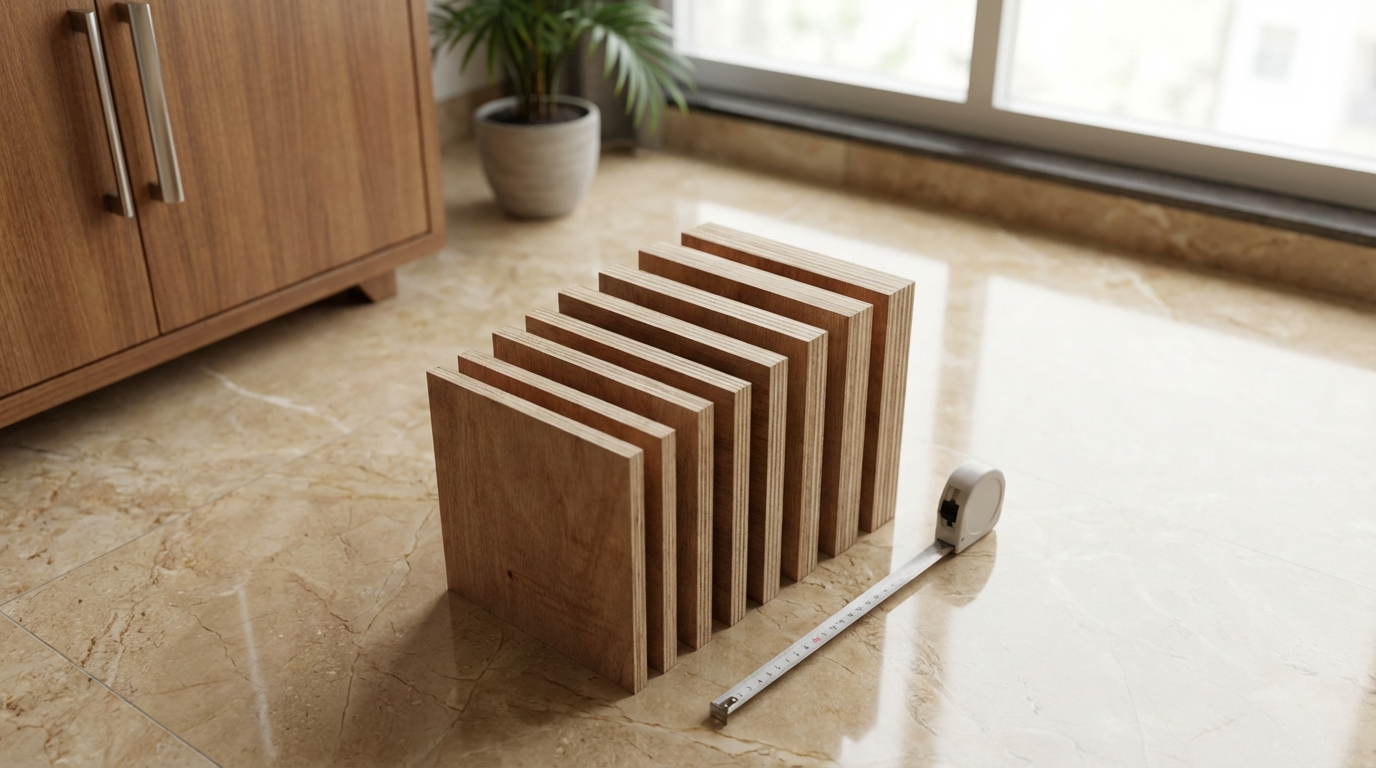
The right plywood thickness depends on what you're building—use 6mm for backs and panels, 12mm for shelves and partitions, 18mm for most furniture carcasses, and 25mm for heavy-duty applications like bed frames and doors.
Short version: For 80% of home furniture projects in India, you'll use either 12mm or 18mm plywood. Wardrobes, kitchen cabinets, TV units—all of these need 18mm for the main structure. Shelves inside can be 12mm. Backs are 6mm. Doors and bed frames need 19-25mm. That's genuinely the gist of it, though the details matter more than people realize.
This guide is right for you if:
- You're about to get furniture made and the carpenter's asking what thickness you want
- You've been quoted different thicknesses by different vendors and you're not sure who's trying to cut corners
- You want to understand why that wardrobe your landlord installed feels flimsy while your parents' 20-year-old furniture still feels solid
- You're comparing quotes and one uses 16mm while another uses 18mm—and you're wondering if it actually matters
Skip this if:
- You're looking for industrial-grade plywood specifications—this is focused on home interiors
- You need marine plywood for boat-building or actual outdoor structures
Bottom line: Using the wrong thickness doesn't just mean weaker furniture—it means sagging shelves by year two, warped doors by the first monsoon, and repairs that cost more than doing it right the first time.
What Plywood Thickness Actually Means
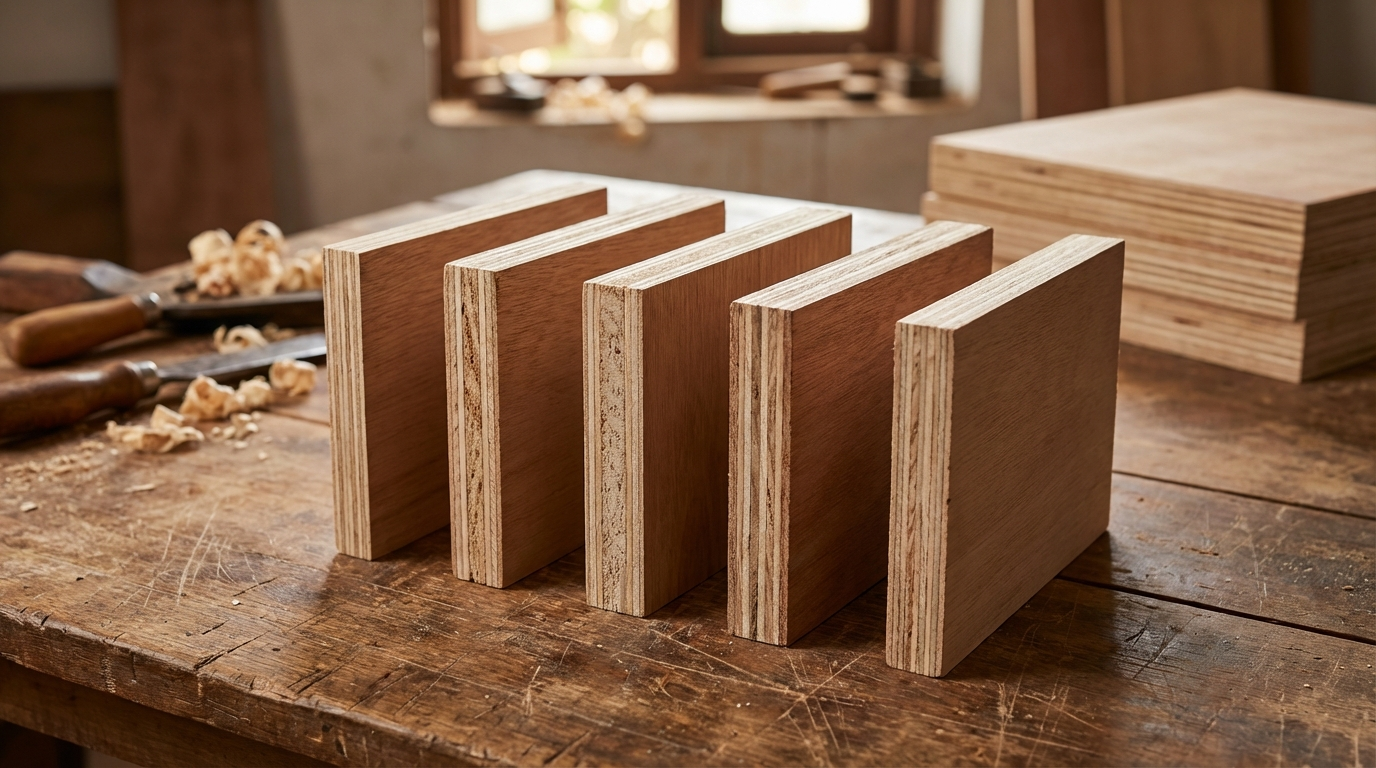
Plywood thickness refers to the measured depth of the board in millimetres, ranging from 4mm to 30mm for most residential applications. This thickness directly determines how much weight the board can support, how much it will flex under load, and how well it holds screws.
Now here's where most people get confused. They think thicker automatically means better. Not true. A 25mm board for a simple TV unit back panel? That's wasted money. A 12mm board for a kitchen cabinet base that'll hold a heavy stone countertop? That's asking for trouble.
Most people think plywood thickness is just about strength. Actually, it's about three things working together—structural load capacity, dimensional stability, and screw-holding power. A thinner board might technically support the weight but won't hold the hinges properly. I've seen cabinet doors rip right off because someone used 12mm for a door that needed 18mm.
The thickness also affects how the board behaves when cut. Thinner boards (6-9mm) are easier to curve and shape but will flex. Thicker boards (19mm+) are rigid but harder to work with and heavier—which matters when you're mounting wall cabinets.
Does nominal thickness match actual thickness?
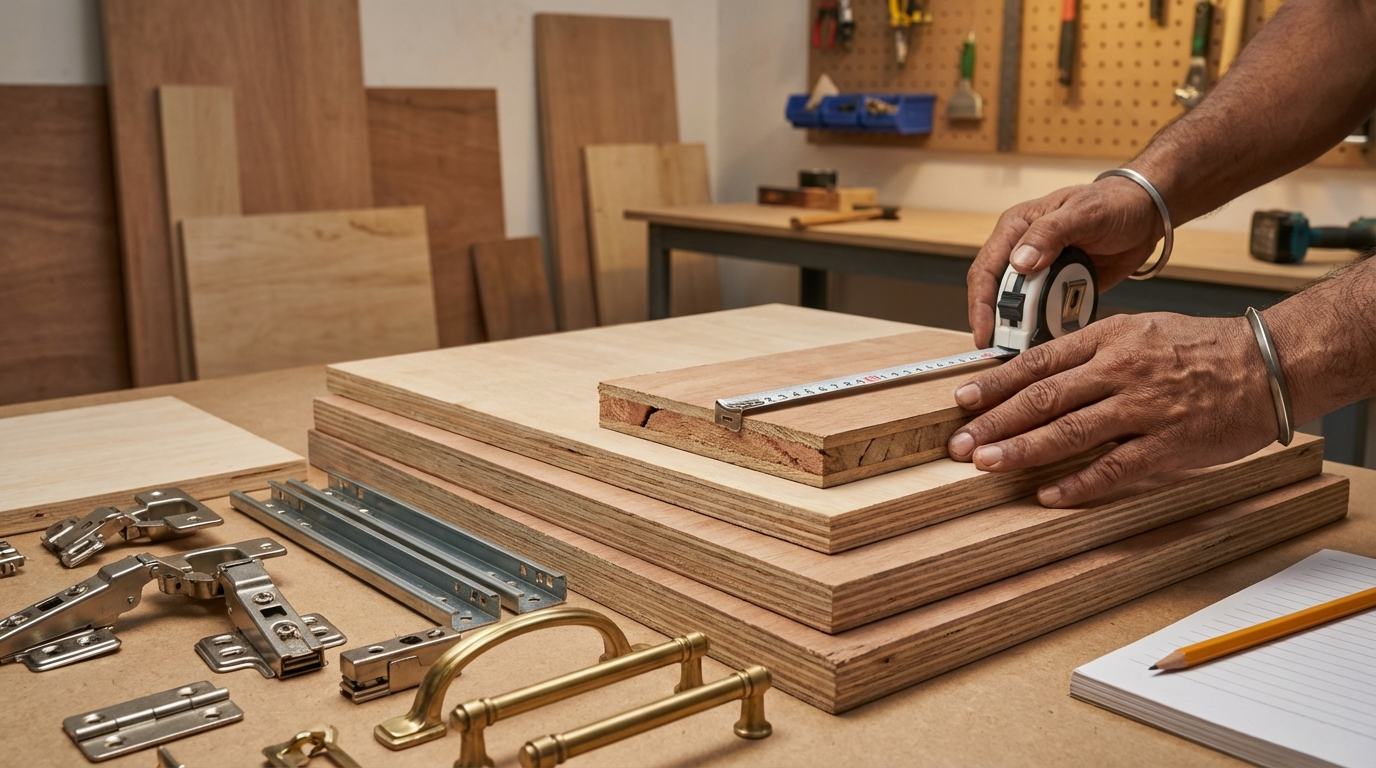
Here's something that drives me slightly crazy. A board labeled 18mm often measures 17mm or even 16.5mm when you actually check it with a caliper. This happens because of sanding during manufacturing and, honestly, because some manufacturers push tolerances. IS standards allow a tolerance of +/- 1mm for most grades, but the better brands stay within 0.5mm. Always carry a measuring tape when buying—if a board labeled 18mm measures 16mm, walk away. That's not tolerance, that's cheating.
Why Thickness Choice Matters More in Indian Homes
Indian humidity changes everything about plywood performance. We're not talking about mild seasonal variation—we're talking about 40% relative humidity in Delhi winters jumping to 85% in July. In Mumbai, it rarely drops below 65% even in "dry" season. Chennai stays at 70-80% year-round.
This humidity cycling causes plywood to expand and contract constantly. Thinner boards show this stress faster. That 6mm back panel in your bedroom wardrobe? Might be fine in Jaipur. In Kolkata? It'll probably warp within two monsoons.
In places like Chennai or Mumbai, you'll notice that furniture brought from drier regions often develops problems within the first year. The wood hasn't acclimatized. A friend shifted from Pune to Mumbai in 2022—his study table, which was perfectly flat for six years, developed a noticeable bow within eight months. Same table, different climate. Thickness alone wouldn't have fixed this, but starting with a thicker board would have reduced the visible warping.
Coastal cities add salt air to the equation. The Konkan belt, Kerala coast, parts of Tamil Nadu—here you need not just the right thickness but also proper edge sealing. An unsealed 12mm BWR board will deteriorate faster in Kochi than a properly sealed 9mm board in Bangalore. Thickness and treatment work together.
Plywood Thickness Options: Complete Breakdown
Let me walk you through each thickness and where it actually belongs. I'll be honest about where I've seen people make mistakes.
4mm Plywood
Basically decorative or backing material only. Used for wardrobe backs, drawer bottoms, and some laminate substrates. Has almost no structural strength—you can flex it with your hands easily. Don't let anyone convince you this works for anything load-bearing. My take: even for backs, I prefer 6mm. The price difference is minimal and 4mm feels cheap.
6mm Plywood
The standard for cabinet backs, false ceiling panels, and decorative paneling. Light enough to handle easily but rigid enough for non-load-bearing applications. Used extensively in modular furniture backs. Honestly, this is fine for what it's designed for—just don't push it into service for shelves or anything that takes weight.
9mm Plywood
A bit of an in-between thickness. Works for light shelving (books only, nothing heavy), partition panels, and sometimes drawer sides. Carpenters in Mumbai seem to love 9mm for partition work. I find it's neither here nor there—either commit to 6mm for pure backing work or go 12mm if you need any structural integrity.
12mm Plywood
The workhorse for interior shelving. Kitchen cabinet internal shelves, bookshelf shelves, wardrobe shelving—12mm handles all of this if spans are reasonable (under 60cm typically). Drawer boxes often use 12mm for sides. For spans longer than 60cm with any real weight, you'll see sagging over time. I've seen beautiful library shelves bow in the middle because someone went 12mm on 90cm spans. Looks fine at installation, gives up within two years.
16mm Plywood
This thickness confuses people. It exists because some manufacturers offer it as a "premium" option between 12mm and 18mm. Truthfully? In my eighteen years, I've found limited genuine use cases for 16mm. If 12mm isn't enough, you probably need 18mm anyway. Some carpenters prefer it for drawer fronts. Budget projects sometimes use it instead of 18mm to save costs—this is where problems start.
18mm/19mm Plywood
The backbone of furniture making in India. Wardrobe carcasses, kitchen cabinet boxes, table tops under laminate, TV units, study desks—18mm handles all of this comfortably. The difference between 18mm and 19mm is mostly about manufacturing standards; 19mm is common in IS 710 marine-grade boards. For most purposes, treat them as equivalent. If I'm being honest, 18mm BWR is what 70% of home furniture should use.
25mm Plywood
Heavy-duty thickness. Bed frames, door shutters, conference tables, heavy equipment platforms. The weight is noticeable—a full 8x4 sheet in 25mm is genuinely difficult for one person to handle. Cost jumps significantly too. Use this where you need rigidity and can't have any flex. For doors especially, 25mm (or flush door construction with 30mm rails) is worth the investment.
Thickness Comparison Table
| Thickness | Weight (approx per 8x4 sheet) | Best Applications | Load Capacity | Screw Holding | My Take |
|---|---|---|---|---|---|
| 4mm | 3-4 kg | Backing only | None | Poor | Skip it |
| 6mm | 5-7 kg | Cabinet backs, drawer bottoms, ceiling panels | Minimal—non-structural only | Marginal—use panel pins not screws | Good for its purpose |
| 9mm | 8-11 kg | Light partitions, drawer sides | Low—books only, short spans | Acceptable for small screws | Limited use cases |
| 12mm | 13-17 kg | Shelves, cabinet internals, drawer boxes | Medium—works under 60cm spans | Good with proper pilot holes | Essential—buy quality here |
| 16mm | 18-22 kg | Drawer fronts, budget furniture bodies | Medium-high | Good | Why not just use 18mm? |
| 18-19mm | 23-28 kg | All furniture carcasses, table tops, desks | High—handles typical loads easily | Excellent | The standard for good reason |
| 25mm | 35-42 kg | Doors, beds, heavy tables | Very high | Excellent—can take larger hardware | Worth it for doors and beds |
Price Reality Check: 2026 Market Rates
Plywood pricing varies dramatically based on grade, brand, and location. Here's what you should roughly expect in the current market.
For MR grade (commercial ply, indoor use only): 6mm runs ₹28-45 per sq ft, 12mm about ₹45-70 per sq ft, 18mm roughly ₹65-95 per sq ft. These are for decent regional brands, not the cheapest options available.
For BWR grade (moisture-resistant, suitable for kitchens): Expect to pay 15-25% more than MR. So 18mm BWR falls roughly ₹80-120 per sq ft depending on brand and city. Mumbai and Bangalore tend toward the higher end, smaller cities are often cheaper.
BWP/Marine grade (IS 710, waterproof): This is the premium tier. 18mm BWP from reputable brands runs ₹110-160 per sq ft. Worth it for bathroom vanities and under-sink cabinets, overkill for bedroom furniture.
Here's what actually affects your final bill—the grade matters more than thickness for pricing. An 18mm BWR board costs more than a 25mm MR board in most cases. Core wood species matters too: gurjan and hardwood cores command premiums over poplar or eucalyptus.
Budget estimation approach: For a typical 3BHK interior project, you'll need roughly 35-50 sheets depending on scope. A mid-market approach using branded BWR for kitchen and MR for bedrooms, mostly 18mm with 12mm shelving and 6mm backs, runs about ₹50,000-80,000 just for plywood. Add another 40-60% for laminates, hardware, and labour.
Application-Specific Recommendations
Let me get specific about what thickness to use where. This is what I tell clients when they ask.
What thickness works best for kitchen cabinets?
Use 18mm BWR for all cabinet carcasses—base units, wall units, tall units. The carcass takes the load of everything stored inside plus handles moisture from cooking and washing. For internal shelves, 12mm BWR works fine since spans are typically 45-55cm. Under-sink base panels should ideally be 18mm BWP (marine grade) because this is where water damage hits first. Backs can be 6mm BWR. Don't use MR grade anywhere in the kitchen—the humidity from cooking alone will damage it within a few years.
Wardrobes and Bedroom Furniture
Main wardrobe structure: 18mm MR or BWR (BWR if your bedroom has an attached bathroom or if you're in a coastal/humid city). Internal shelving: 12mm is enough for clothes and linens. Drawer boxes: 12mm sides, 6mm bottoms. Wardrobe backs: 6mm. For sliding door wardrobes, the door panels need 18mm to prevent warping from the weight of handles and mirrors.
Doors and Frames
Solid plywood doors (not flush doors) need 25mm minimum. Even then, most doors use a frame-and-panel construction rather than a single solid sheet because solid 25mm will warp over time in most Indian climates. For flush door construction, the rails and stiles are typically 30mm solid timber with plywood facing. Door frame lining uses 18mm typically. If you're considering WPC frames, there's a separate door frame guide worth checking.
Beds and Heavy Furniture
Bed platform base: 18mm for lighter use, 25mm for anything commercial or if you want serious durability. Headboard panels: 18mm is plenty. Support slats under mattress: 18mm at 6-inch widths works well. The storage drawers underneath: 12mm sides, 6mm or 9mm bottoms depending on what you're storing. A builder in Powai learned the hard way last year—used 12mm for a king bed platform base. Took about eight months before it started flexing noticeably under the mattress.
Study Tables and Desks
Table tops under laminate: 18mm. Some people go 25mm for large desks (over 150cm wide) to prevent any flex when leaning on the surface. Modesty panels and sides: 18mm. Internal drawers: 12mm. If the desk supports a heavy monitor arm or multiple monitors, reinforce the back panel or use 18mm there too.
Application Decision Matrix
| Application | Recommended Thickness | Grade | Why This Works |
|---|---|---|---|
| Kitchen cabinet carcass | 18mm | BWR minimum | Handles moisture, supports heavy loads |
| Kitchen internal shelves | 12mm | BWR | Adequate for dishes/groceries at typical spans |
| Under-sink cabinet | 18mm | BWP (Marine) | Direct water exposure risk |
| Wardrobe carcass | 18mm | MR or BWR | Standard for structural furniture |
| Wardrobe shelves | 12mm | MR | Clothes aren't that heavy |
| Door shutter | 25mm or flush construction | BWR or BWP | Rigidity, warp resistance, hardware support |
| Bed platform | 18-25mm | MR or BWR | Must handle dynamic body weight |
| Study table top | 18mm | MR | Standard for furniture surfaces |
| False ceiling | 6mm | MR | Non-structural, just needs rigidity |
| Cabinet/wardrobe backs | 6mm | MR (BWR in wet areas) | Minimal load, just dust protection |
| Drawer sides | 12mm | MR | Supports drawer slides properly |
| Bathroom vanity | 18mm | BWP only | Constant moisture exposure |
How to Choose: A Practical Decision Framework
When deciding on thickness, walk through these steps. I've learned to do this almost automatically now, but it took making some expensive mistakes first.
Step 1: Identify the load type. Is this bearing static weight (stored items), dynamic weight (people sitting or moving), or essentially no weight (backing panels)? Static loads are more forgiving than dynamic. A shelf holding books experiences different stress than a bed platform holding moving humans.
Step 2: Measure the span. This is critical and most people skip it. A 60cm shelf span at 12mm performs very differently than a 90cm span. General rule—for every 15cm additional span beyond 60cm, consider moving up one thickness grade.
Step 3: Check the moisture exposure. Kitchen and bathroom? BWR minimum, BWP for direct water contact zones. Bedroom in a humid city? BWR is safer than MR. Bedroom in Jaipur or Jodhpur? MR is usually fine.
Step 4: Consider the hardware. Heavy hinges, drawer slides, handles—all need adequate thickness for screw grip. Soft-close hinges put more stress on mounting points than basic hinges. If you're using premium European hardware, don't cheap out on the plywood thickness holding it.
Step 5: Think about longevity expectations. Rental flat furniture you'll leave behind in three years? You can optimize for cost. Forever home furniture? Optimize for durability—go one grade or one thickness higher than the minimum.
Exception worth noting: If you're building modular furniture with knock-down fittings (minifix/confirmat systems), you need 18mm minimum regardless of load. These fittings require specific depth to work properly and won't hold in thinner boards.
Red flags to walk away from:
- Carpenter suggesting 12mm for cabinet carcasses to "save cost"
- Using MR grade anywhere moisture might reach
- 16mm presented as "equal to 18mm, same thing"
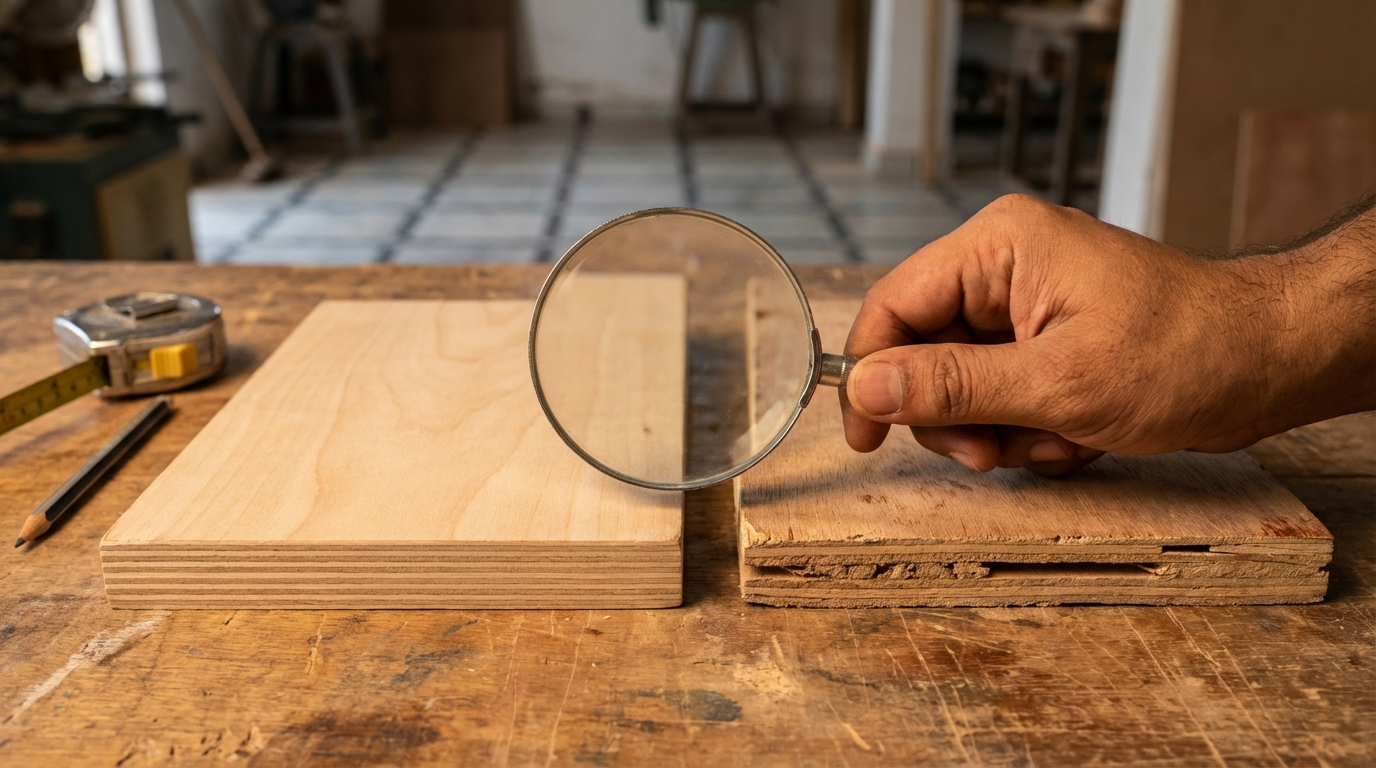
- Plywood with visible gaps in the core layers
- Any thickness significantly under what's labeled on the board
Common Mistakes People Make With Plywood Thickness
Using 12mm for wardrobe carcasses. This one really frustrates me because I see it constantly in budget projects. The wardrobe looks fine at handover. Six months later, the sides start bowing outward from the weight of clothes. Doors don't close properly anymore. 18mm costs maybe ₹2,000-3,000 more for a full wardrobe. That's nothing compared to fixing structural issues later.
Ignoring span calculations. People choose thickness based on what the neighbour used or what sounds reasonable. But physics doesn't care about vibes. A 12mm shelf at 80cm span will sag visibly within a year under moderate load. Same board at 45cm span works fine for a decade. I've seen this happen when people copy kitchen designs without understanding why certain shelving configurations work.
Going cheap on kitchen cabinets specifically. The kitchen is the worst place to cut costs on plywood. It has moisture, heat, grease, heavy stored items, and gets opened and closed hundreds of times monthly. Saw a kitchen in Kandivali last year where the client had saved maybe ₹15,000 using 16mm MR instead of 18mm BWR. Complete remodeling needed after three monsoons. ₹2.5 lakh job.
Skipping proper backing. Some people use 4mm or even hardboard for cabinet backs to save money. The back panel actually adds rigidity to the whole structure—it's not just a dust cover. Without proper backing, cabinets rack and twist over time. Use 6mm minimum.
Mixing grades inappropriately. Using MR grade for internal shelves while the carcass is BWR. If moisture gets in (and it does), the shelves deteriorate first. Either commit to BWR throughout for kitchen/bathroom or accept you'll need repairs sooner.
Forgetting about edge exposure. Every cut edge on plywood is vulnerable. Thinner boards have proportionally more surface area exposed relative to their volume. If you're using 12mm and not edge-banding every exposed edge, you're asking for moisture problems.
Over-specifying everywhere. The opposite mistake. Using 25mm for everything because "stronger is better." This wastes money, makes furniture unnecessarily heavy, and can actually cause problems—wall cabinets become too heavy for standard mounting systems.
Not accounting for laminate/veneer thickness. If you're applying 1mm laminate to both faces of an 18mm board, your final thickness is 20mm. Matters for fitting into spaces, door clearances, drawer calculations. I've seen drawers that don't close because the laminate thickness pushed them past the available depth.
Quality Checks You Can Do Yourself
You don't need to be an expert to spot bad plywood. Here's what to look for.
Visual checks:
- Look at the edge—core layers should be consistent thickness with no visible gaps or voids
- Face veneer should be smooth with no bubbles or lifting at edges
- Check for warping—lay the sheet flat and look along its length from one end
- No bark inclusions or patches of different colored wood in the core
- Thickness should be uniform—measure at multiple points
- ISI mark should be clearly printed (IS 303 for MR/BWR, IS 710 for marine)
Questions to ask the dealer:
- "Can I see the test certificate for this batch?" (Legitimate brands provide these)
- "What's the core species?" (Hardwood cores like gurjan are better than softwood)
- "What's the actual measured thickness?" (Have them measure in front of you)
- "Is this calibrated?" (Calibrated boards have uniform thickness, important for lamination)
- "What's the face veneer thickness?" (Should be at least 0.5mm for durability)
Simple field tests:
- Tap test—knock on the surface with your knuckles. Solid, consistent sound is good. Hollow or variable sounds suggest voids in the core
- Weight check—lift the sheet. For the same dimensions and thickness, heavier boards typically have denser, better cores
- Edge inspection—run your finger along the cut edge. Rough, fibrous edges suggest poor quality veneers or improper pressing
- Flex test—for thinner boards (6-12mm), apply gentle pressure. Should flex evenly, not crack or crease
Here's a trick most dealers don't like—ask to see the edge of a freshly cut piece, not just the factory edge. The factory edge is always perfect. The cut edge shows the core quality.
Can you identify plywood grade by looking at it?
Not reliably. MR and BWR look almost identical visually. The difference is in the adhesive used, which you can't see. This is why ISI marks and test certificates matter. Some people claim BWR has a slightly darker glue line—this is true for some manufacturers but not a reliable indicator. The only real test is the boiling water test, and you're not doing that in the shop. Buy from reputable dealers, insist on branded sheets with proper markings, and keep your purchase receipts.
Workmanship and Installation Guidelines
The best plywood in the world performs poorly if installed wrong. Here's what matters.
Cutting requirements: Plywood should be cut with fine-toothed blades to prevent edge chipping. Circular saws work fine with the right blade (minimum 60 teeth for clean cuts). Always cut with the good face up when using a circular saw, face down for a table saw. Score the cut line first with a knife to prevent tear-out on laminated surfaces.
Edge sealing—why it matters: Every exposed plywood edge is a moisture entry point. Even BWR grade will absorb water through cut edges. Seal edges with edge banding (PVC or ABS strips) for visible edges, or at minimum, apply a coat of primer or sealant to hidden edges. The difference in longevity between sealed and unsealed edges in humid climates is dramatic—we're talking years of additional service life.
Fastener and screw guidance:
- For 18mm plywood: Use 35-40mm screws for through-face fixing, 25mm for edge fixing
- For 12mm plywood: Use 25-30mm screws for face fixing, 20mm for edge fixing (be careful with edge screws—pre-drill always)
- Always pre-drill pilot holes, especially near edges—plywood splits easier than solid wood
- Minimum edge distance: 12mm from any edge to prevent splitting
- For edge-to-face joints, use cam locks or confirmat screws designed for this purpose
What to tell your carpenter—the briefing checklist:
- Specify thickness for each component explicitly in writing
- Insist on edge banding for all exposed edges, no exceptions
- All screws must have pilot holes drilled first
- Plywood sheets should acclimatize in the room for 48-72 hours before cutting
- Keep 2-3mm expansion gap at edges where plywood meets walls
- Lamination should happen after acclimatization, not before
Storage and acclimatization: Store plywood flat, not leaning. Leaning causes warping over time. Before installation, let sheets sit in the room they'll be installed in for 2-3 days. This is especially important in AC environments—the wood needs to reach equilibrium with the room's humidity level.
I've seen carpenters skip the acclimatization step and then blame the plywood when doors warp. Had one project in 2021 where the bedroom had AC running constantly at 24 degrees. The carpenter cut and installed the wardrobe the same day the plywood arrived from the godown. By February, every door needed adjustment because the plywood had shrunk in the air-conditioned environment. Proper acclimatization would have prevented this entirely.
How Long Plywood Actually Lasts
This depends heavily on grade, climate, and how the furniture is used. Let me give you realistic numbers, not marketing claims.
MR grade (indoor, dry conditions): In properly dry environments like air-conditioned bedrooms or in dry cities like Jaipur, expect 15-25 years with no significant issues. In naturally humid environments without climate control, more like 8-15 years before you see deterioration.
BWR grade: Kitchens typically show wear after 10-15 years, mainly at edges and hinges. The plywood itself may be fine, but hardware mounting points loosen over time. In moderately humid conditions, BWR holds up well for 15-20 years.
BWP/Marine grade: Should last 20+ years even in demanding applications if edges are properly sealed. In my experience, well-maintained marine plywood in bathroom vanities goes 15-20 years without structural issues—the laminate or hardware usually fails first.
What affects longevity:
- Edge sealing quality—unsealed edges reduce lifespan by 30-50%
- Climate control—AC environments are gentler on plywood
- Usage intensity—kitchen cabinets opened 10x daily wear faster than bedroom wardrobes
- Hardware quality—cheap hinges cause more stress on mounting points
- Original installation quality—gaps, improper support, poor fastening accelerate failure
Signs of wear to watch for:
- Swelling or soft spots, especially near edges
- Screws that no longer hold—they spin freely without grip
- Visible delamination—layers separating at edges
- Sagging in shelves or horizontal panels
- Musty smell indicating moisture damage
When to consider replacement: If structural panels (carcass sides, bases) show delamination or moisture damage, replacement is usually more practical than repair. Surface damage to doors or tops can often be addressed by replacing just those panels. As a general rule, if repair costs exceed 40% of replacement cost, replace.
Alternatives Worth Considering
Plywood isn't always the only option. Depending on your needs and budget, consider these alternatives.
HDHMR (High Density High Moisture Resistant): Engineered boards that work well for kitchen carcasses and drawer boxes. Better moisture resistance than MR plywood, similar to BWR in many applications. Denser than standard plywood so heavier, but uniform throughout—no core voids. Our HDHMR guide covers this in more detail, but briefly: consider HDHMR for kitchens where you want uniform density and don't mind the weight.
Block board: Solid timber core sandwiched between veneer faces. Better than plywood for long spans and door construction because it's less prone to warping. Available in 18mm and 25mm commonly. Costs slightly more than equivalent plywood but worth it for doors and large table tops. The door frame guide discusses when to use blockboard versus plywood.
Particle board/MDF: If budget is tight, consider particle board for internal carcasses that won't see moisture. It's significantly cheaper but has no moisture resistance and poor screw holding on edges. MDF works well for painted cabinet doors because it has no grain to telegraph through paint. Neither is suitable for structural applications or kitchens.
Flush door shutters: For actual doors, purpose-built flush doors (30mm frame with honeycomb or solid core) often outperform solid plywood panels. They're designed for door applications with proper cross-bracing against warping.
FAQs: Practical Questions Answered
What's the difference between 18mm and 19mm plywood?
In practical terms, almost nothing for the end user. The 19mm specification comes from IS 710 marine plywood standards while 18mm is more common in IS 303 commercial and BWR standards. Some manufacturers produce 18mm, some produce 19mm—both work identically for furniture applications. Don't reject a board because it's 18mm when you expected 19mm or vice versa. Just check that actual measured thickness matches what's labeled.
Is it true that thicker plywood means better quality?
Common belief: thicker is always better. Reality: completely wrong. Quality depends on core wood species, veneer quality, adhesive type, and manufacturing consistency—not thickness. A well-made 12mm plywood from a reputable brand will outperform a cheap 18mm board with voids in the core. Choose thickness based on application requirements, choose quality based on brand, ISI certification, and visual inspection.
Can I use 12mm plywood for kitchen cabinets to save money?
You can, but you probably shouldn't. For internal shelves at standard spans under 55cm, 12mm BWR works fine. For the cabinet carcass (sides, top, bottom), 18mm is the minimum I recommend. The cost savings from using 12mm throughout is maybe ₹3,000-5,000 for a typical kitchen. The repair cost when cabinets fail is ₹50,000-100,000. Not a smart trade-off.
What if I live in Chennai—does that change thickness recommendations?
Chennai's constant high humidity (rarely below 70% RH) means you should prioritize moisture resistance over pure thickness. An 18mm BWR board is better than a 25mm MR board for Chennai conditions. Consider marine grade for bathroom vanities and under-sink areas. Edge sealing becomes critical—don't skip it. For wardrobes against exterior walls, leave a 10mm gap between the wardrobe back and the wall to allow air circulation.
Is it true that calibrated plywood is better than regular plywood?
Calibrated plywood has been sanded to achieve more uniform thickness across the entire sheet—typically within 0.2mm tolerance versus 1mm for standard. This matters a lot for lamination (uneven boards cause laminate bubbling) and for CNC work. For regular carpenter-made furniture, calibrated is nice but not essential. For modular furniture factories or if you're applying HPL laminate yourself, it's worth the 10-15% premium.
Why do carpenters sometimes prefer 16mm over 18mm?
Honestly? Usually cost and availability. Some dealers stock 16mm heavily and offer it at attractive prices. It's also slightly easier to handle. But most experienced carpenters doing quality work insist on 18mm for carcasses because they've seen the problems 16mm causes over time. If your carpenter pushes hard for 16mm on structural components, ask why and evaluate their reasoning. Sometimes there's a legitimate reason, often there isn't.
How thick should plywood be for floating shelves?
Floating shelves have no visible support, so the internal bracket system does all the work. The plywood just provides the visible surface. For shelves under 60cm, 18mm works. For longer spans, consider 25mm or use a hollow construction with internal bracing. The bracket system matters more than plywood thickness here—make sure the wall anchoring is solid. Floating shelves in plasterboard walls without finding studs will fail regardless of plywood thickness.
Is it true that marine plywood is always better?
Marine plywood (IS 710) offers the best moisture resistance, but it's also the most expensive and genuinely overkill for most applications. Using marine grade for bedroom furniture wastes money. It belongs in bathrooms, exterior applications (under shade), and extreme humidity environments. For a standard kitchen in a city like Pune or Bangalore, BWR is sufficient. Chennai, Mumbai, Kolkata—marine grade under sinks is worth considering.
What happens if I use the wrong thickness?
Too thin: sagging, structural failure, screws pulling out, doors misaligning. Too thick: unnecessary weight, higher cost, potentially overloading wall mounting systems for upper cabinets. Using 12mm where 18mm is needed usually shows problems within 2-3 years. Using 25mm where 18mm suffices is wasteful but won't cause failures.
Can I use different thicknesses in the same piece of furniture?
Absolutely—in fact, you should. A well-designed wardrobe uses 18mm for the carcass, 12mm for internal shelves, 6mm for the back, and might use 18mm or 19mm for doors. Using 18mm everywhere is unnecessarily expensive. Using 12mm everywhere is structurally risky. Match thickness to the function of each component.
Does plywood thickness affect termite resistance?
Not directly. Termite resistance comes from treatment (chemical or borate-based), not thickness. A treated 12mm board resists termites better than an untreated 25mm board. In termite-prone areas, look for boards labeled as treated or specify termite treatment during furniture making. Thickness affects how quickly termites would damage the board if they get to it, but prevention through treatment is the real answer.
What's the best thickness for a computer desk?
For the desk surface, 18mm with laminate on top works well for most home offices. If you're mounting monitor arms or have a particularly large desk (over 150cm wide), consider 25mm to prevent any flex when leaning on the surface. Keyboard trays and pull-out shelves can use 12mm. For stand-sit desks with motorized frames, check the manufacturer's specifications—some require specific thickness for their mounting brackets.
A Final Word on Getting This Right
Plywood thickness isn't complicated once you understand the basic principles. Use 6mm for backs, 12mm for internal shelving, 18mm for carcasses and main structures, 25mm for doors and heavy applications. Match the grade to the moisture exposure. Seal every edge. Trust brands with ISI certification over cheap alternatives.
And seriously—don't let anyone convince you that 16mm is "just as good as 18mm" for wardrobe carcasses. It's not. The carpenters who've been doing this for twenty years know the difference.
Good luck with your project. The wardrobe plywood guide goes deeper into bedroom-specific considerations if that's your focus.
Disclaimer: This content is provided for general informational purposes based on industry practices and publicly available information. Product specifications, standards, prices, and availability may vary by manufacturer, region, and time. Readers should independently verify details with manufacturers, dealers, or qualified professionals before making purchase or construction decisions.Want Plywood Suggestions?
Share a few details and a Sainik 710 specialist will suggest suitable brands and connect you to responsive dealers.