Plywood Price Guide 2026: Thickness-wise Rates, Grade Comparison & Buying Tips for India
Updated plywood price guide 2026—thickness-wise rates, grade comparison & buying tips. Get MR, BWR, BWP plywood prices per sq ft for informed purchase.
Quick Answer: What Plywood Really Costs in 2026
Plywood prices in India for 2026 range from ₹45 to ₹220 per square foot depending on grade, thickness, and core wood species—with MR grade starting lowest, BWR in the mid-range, and BWP/Marine commanding premium rates.
Short version: If you're budgeting for a basic wardrobe using 18mm BWR plywood, expect roughly ₹95-125 per square foot at decent dealer shops. Kitchens with BWP grade will push that to ₹150-180. Add another 15-20% for branded options with ISI certification. Your actual bill depends heavily on whether you're buying in Mumbai or Indore—regional price gaps are real and frustrating.
This guide is right for you if:
- You're planning interior work and need realistic budget numbers
- Your contractor quoted something that feels too high or suspiciously low, and you want to cross-check
- You keep hearing MR, BWR, BWP thrown around and want clarity on what you're actually paying for
- First-time home buyer or renovator
Skip this if:
- You're looking for industrial-grade shuttering plywood—that's a different market entirely
- You need prices for export-quality marine ply for actual boats
Bottom line: In 2026, decent quality BWR plywood at 18mm thickness costs ₹100-130 per square foot in most metros—anything significantly below ₹85 deserves serious scrutiny.
What Plywood Pricing Actually Means
Plywood price per square foot is the standard measurement in India's retail market, calculated by dividing the sheet cost by its area (typically 8×4 feet = 32 sq ft per sheet). This per-square-foot rate varies based on grade, thickness, core wood species, brand reputation, and regional supply factors.
Most people think plywood is plywood. Actually, you're paying for three distinct things bundled together: the core wood species (gurjan costs more than poplar), the adhesive grade (phenolic resin for BWP is pricier than urea formaldehyde for MR), and the manufacturing precision (calibrated sheets command a premium because they save lamination headaches later). Understanding this breakdown helps you figure out where you can compromise and where you shouldn't.
Here's what confuses most buyers. A dealer might quote ₹75 per square foot for "BWR plywood" and another quotes ₹110 for the same. Both could be technically accurate—the first might be 12mm poplar core, the second 18mm eucalyptus core. Without specifying thickness and core species, price comparisons are meaningless. I've seen people drive across town to save ₹5 per square foot only to realize they were comparing completely different products.
The technical bit for those who want it: IS 303 covers MR and BWR grades (the distinction is in the adhesive and testing standards), while IS 710 specifically covers BWP and marine-grade plywood with phenol formaldehyde bonding. That IS number on the stamp? It actually matters for moisture performance, not just dealer bragging rights.
Why Plywood Prices Hit Different in Indian Conditions
India's climate makes plywood selection—and pricing—more consequential than in temperate countries. We're not dealing with gentle European humidity. We're dealing with monsoons that push relative humidity to 85-95% for three months straight, followed by dry winters that can drop below 40% RH in northern plains.
In places like Chennai or Mumbai, you'll notice plywood swelling during June-September if the grade isn't appropriate. I had a client in Bandra whose MR-grade kitchen cabinets looked fine for eight months. Come second monsoon, the base panels near the sink had visibly warped. That's ₹60,000 in replacements because he saved ₹8,000 initially by not going BWR.
Coastal cities have it rough. Mumbai, Chennai, Kolkata, Kochi—the salt-laden air accelerates everything. Plywood that survives five years in Pune might last three in Mangalore. This isn't dealer scare tactics; it's basic material science. The adhesive in lower-grade plywood degrades faster with constant moisture cycling.
Inland cities like Bangalore, Hyderabad, or Ahmedabad have more forgiving conditions. You can stretch MR grade further here, though I still wouldn't use it near water sources. The price gap between MR and BWR feels less justified in these places—until you remember that one unexpected pipe leak can test your assumptions real fast.
Does climate really affect which grade you need?
Absolutely, and more than most buyers realize. If you're in a coastal city with humidity regularly above 75%, BWR becomes your baseline, not an upgrade. Mumbai, Chennai, Kolkata residents should budget for BWP near any water source—sinks, bathrooms, balcony edges. Delhi and Jaipur folks can often get away with MR in dry zones, but the air-conditioner-on, AC-off cycle creates its own humidity swings that stress the adhesive. Your grandfather's "we always used commercial ply" worked because homes were ventilated differently and expectations were lower. Today's modular kitchens with membrane finishes trap moisture in ways older furniture never did.
Breaking Down Plywood Grades and What You Pay For
Right, let's get into the actual grades. This is where dealers sometimes blur lines because the margin differences are significant.
MR Grade (Moisture Resistant) – IS 303
MR plywood handles indoor humidity but isn't waterproof. Best when you're doing bedroom furniture, study tables, or TV units in non-humid rooms. Uses urea-formaldehyde adhesive. The most affordable option by far.
My take: Fine for 80% of a typical home's furniture needs. Just don't push it into kitchens or bathrooms. Not even "dry zones" of bathrooms—the humidity spikes affect everything in that room.
BWR Grade (Boiling Water Resistant) – IS 303
BWR handles steam, occasional splashes, and high humidity. Uses phenolic or melamine-fortified resins. This is your workhorse grade for kitchens, dining areas, and utility rooms. Can handle the occasional spill or cooking steam without delaminating.
Honestly: If I had to pick one grade for an entire home on a moderate budget, BWR at 18mm would cover most bases. The price premium over MR is typically 30-40%, and the durability improvement justifies it for most applications.
BWP/Marine Grade – IS 710
BWP is what you need for prolonged water exposure. Under-sink cabinets, bathroom vanities, outdoor furniture under covered areas. Uses phenol formaldehyde bonding and survives the boiling water test that gives it its name.
Reality check: True marine-grade plywood meant for boats is overkill for home interiors. Most dealers sell BWP as "marine ply" because it sounds premium. For home use, regular BWP meeting IS 710 standards is sufficient—you don't need naval-grade pricing.
Calibrated Plywood
This isn't a water-resistance grade—it's about dimensional precision. Calibrated sheets have uniform thickness across the surface (within 0.2mm tolerance), which matters enormously for laminate application and modular furniture. Premium pricing but saves money on sanding and lamination issues later. If your carpenter is doing CNC work, insist on calibrated.
| Grade | IS Standard | Water Resistance | Best Applications | Price Range (18mm) | My Recommendation |
|---|---|---|---|---|---|
| MR (Commercial) | IS 303 | Humidity only | Bedrooms, study, wall panels | ₹55-90/sq ft | Budget interiors, dry rooms |
| BWR | IS 303 | Steam, splashes | Kitchens, dining, utility | ₹95-135/sq ft | Best all-rounder for most homes |
| BWP/Marine | IS 710 | Prolonged water contact | Under-sink, bathrooms, balconies | ₹150-220/sq ft | Essential for wet zones |
| Calibrated BWR | IS 303 | Steam, splashes | Modular furniture, CNC work | ₹120-170/sq ft | Worth it for premium finishes |
Thickness-Wise Price Reality for 2026
Here's what actually affects your final bill—thickness drives cost more dramatically than most buyers expect. Doubling the thickness doesn't double the price, but it adds significantly.
For MR grade plywood in 2026:
- 6mm: ₹45-60 per sq ft – backboards, drawer bottoms
- 9mm: ₹55-75 per sq ft – internal shelving, light-duty panels
- 12mm: ₹65-85 per sq ft – partition work, false ceiling base
- 18mm: ₹80-100 per sq ft – wardrobe carcasses, main furniture bodies
- 25mm: ₹110-140 per sq ft – heavy-duty furniture, countertop substrates
For BWR grade:
- 6mm: ₹60-80 per sq ft
- 12mm: ₹85-110 per sq ft
- 18mm: ₹95-135 per sq ft – this is your kitchen cabinet sweet spot
- 19mm: ₹100-140 per sq ft – some brands offer this instead of 18mm
For BWP grade:
- 12mm: ₹110-150 per sq ft
- 18mm: ₹150-200 per sq ft
- 19mm: ₹160-210 per sq ft
Quick detour: Why the price ranges are so wide? Core wood species. Gurjan (hardwood) commands premium pricing—sometimes 25-30% over poplar or eucalyptus cores. Gurjan gives better screw-holding and stability, which matters for heavy-use furniture like kitchen cabinets. For bedroom wardrobes where stress is lower, eucalyptus core BWR works fine.
What thickness works best for kitchen cabinets?
18mm BWR or BWP is standard for kitchen cabinet carcasses—this is non-negotiable if you want hinges to hold and shelves not to sag under vessel weight. I've seen people try 12mm to save costs and regret it within two years when the soft-close hinges start pulling out. For cabinet backs and drawer bottoms, 6mm is acceptable. Some premium modular kitchen companies use 19mm because certain hardware specifications are designed around that thickness. If your hardware supplier specifies 19mm, don't force 18mm into those fittings.
Why Prices Vary So Much Between Dealers
So here's the thing. You'll get quotes ranging 30-40% for seemingly identical specifications. Not all of this is dealer margin manipulation—though some of it definitely is.
Legitimate price drivers:
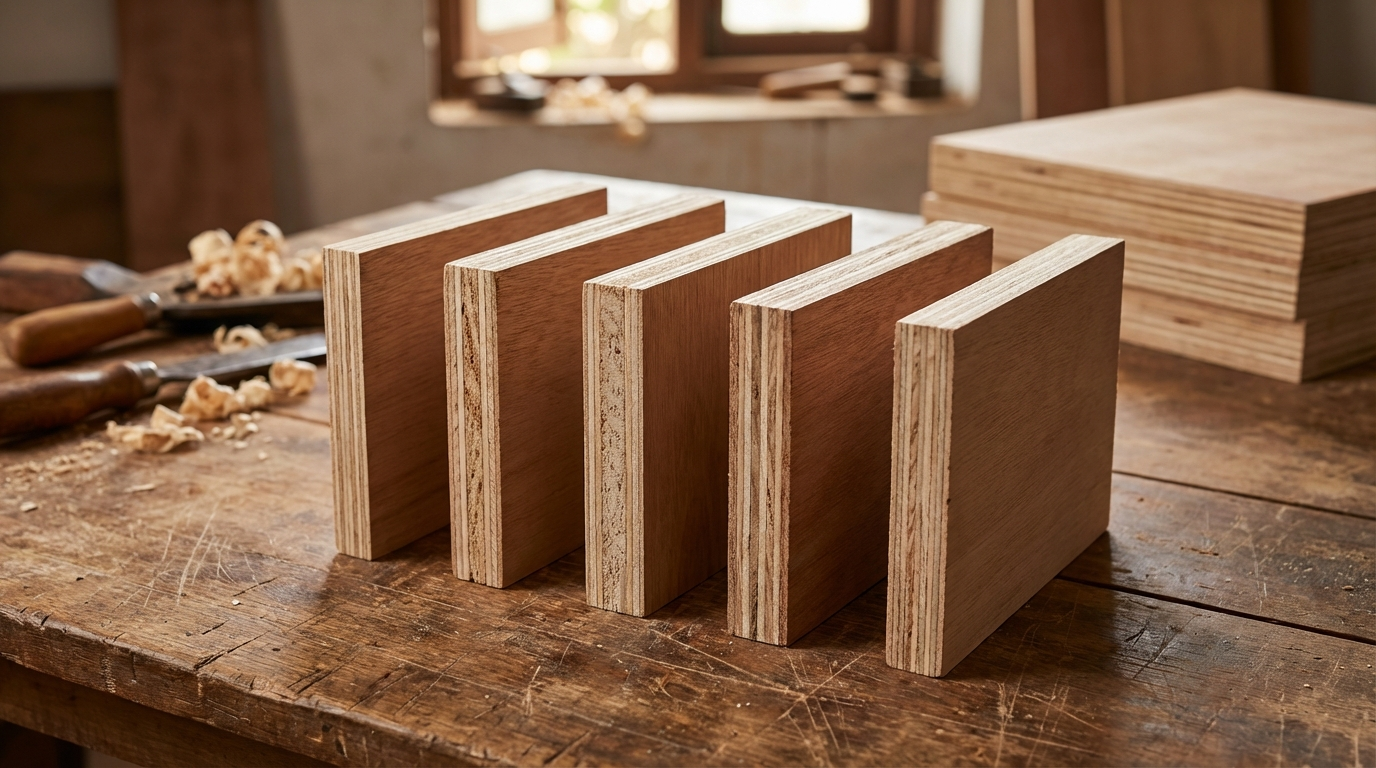
- Core species: Gurjan vs poplar vs eucalyptus creates significant gaps
- Veneer quality: Face veneer thickness and grade affects finish and price
- Calibration: Factory-calibrated sheets cost more but save lamination hassle
- Brand certification: ISI-marked products from audited facilities command premiums
- Regional transport: A Yamunanagar-manufactured sheet costs less in Delhi than Chennai
Questionable price drivers:
- "Imported adhesive" claims without documentation
- Fancy brand names without ISI certification
- Terms like "premium commercial" or "enhanced MR"—marketing fluff
- "Zero defect" claims on products without calibration certificates
A builder friend in Powai learned this the hard way last monsoon. Bought "premium BWR" at ₹85 per square foot—about 20% below market rate. Looked fine. By October, the cabinet bases near the kitchen sink had started swelling. Turned out to be MR grade with BWR stickers. The ₹15,000 he saved cost ₹95,000 in replacements and re-work. Always verify grade through the sheet stamp, not just dealer claims.
Grade-by-Grade Direct Comparison
Let me break this down properly because the MR vs BWR vs BWP decision is the most important one you'll make.
| Parameter | MR Grade | BWR Grade | BWP Grade |
|---|---|---|---|
| Water resistance | Humidity only | Steam, occasional splashes | Prolonged water contact |
| Adhesive type | Urea formaldehyde | Phenolic/melamine | Phenol formaldehyde |
| IS standard | IS 303 | IS 303 (BWR spec) | IS 710 |
| Typical 18mm price | ₹55-90/sq ft | ₹95-135/sq ft | ₹150-200/sq ft |
| Expected life (maintained) | 8-12 years | 15-20 years | 20-25+ years |
| Best climate zones | Dry inland cities | Most of India | Coastal, high-humidity areas |
| Overkill for | - | Bedroom furniture (mostly) | Dry zone wardrobes |
| My verdict | Budget option only | Best value for most | Essential near water |
Choose MR when: You're on a tight budget, the furniture is in a permanently dry room, and you can accept 8-10 year lifespan. Study tables in Jaipur? Fine. TV unit in Nagpur? Probably fine.
Choose BWR when: You want durability without premium pricing. Kitchens, dining areas, utility rooms, wardrobes in humid cities. This is where most of your plywood budget should go.
Choose BWP when: Water contact is likely or possible. Under-sink cabinets, bathroom vanities, shoe cabinets near entrances where wet umbrellas drip, balcony furniture under covered areas.
The trade-off is straightforward: you gain moisture protection but lose nothing except money. If budget allows, I'd rather see people use BWR everywhere than MR anywhere. But I understand that's not always realistic.
How to Choose: A Practical Decision Framework
Step 1: Identify the room and proximity to water sources. Bathroom? BWP. Kitchen counter area? BWP. Kitchen upper cabinets? BWR is usually fine. Bedroom? MR or BWR depending on city humidity.
Step 2: Factor in your city's climate. Coastal metros like Mumbai, Chennai, Kolkata—default to BWR minimum everywhere. Inland cities like Bangalore, Hyderabad, Pune—you have more flexibility with MR in dry zones.
Step 3: Determine thickness by application. Main furniture bodies need 18mm. Shelves and partitions can work with 12mm if span is under 60cm. Backs and drawer bottoms at 6mm. Don't let anyone convince you that 16mm is "just as good" as 18mm for carcasses—the hardware is designed for 18mm.
Step 4: Verify ISI certification. Look for the stamp on the sheet itself, not just dealer certificates. The stamp should show IS 303 or IS 710 along with the manufacturer's license number.
Step 5: Check if calibrated sheets make sense for your project. If you're doing membrane or veneer finish, calibration matters. If you're doing laminate that the carpenter will trim anyway, standard sheets work.
| Situation | Recommended Grade | Recommended Thickness | Why |
|---|---|---|---|
| Bedroom wardrobe in Bangalore | MR or BWR | 18mm carcass, 6mm back | Low humidity, low water risk |
| Kitchen base cabinets | BWP | 18mm throughout | Proximity to sink, splashes |
| Kitchen wall cabinets | BWR | 18mm doors, 12mm sides | Steam exposure but no direct water |
| Bathroom vanity in Chennai | BWP only | 18mm | High humidity + water contact |
| Study table in Jaipur | MR | 18mm top, 12mm sides | Dry climate, zero water risk |
| Modular entertainment unit | Calibrated BWR | 18mm | Precision needed for membrane |
| Shoe cabinet near entrance | BWR or BWP | 18mm | Wet footwear, monsoon exposure |
Red flags to walk away from:
- Dealer refuses to show you the ISI stamp on actual sheets
- Price is more than 25% below market rate for claimed grade
- Terms like "equivalent to BWR" or "BWR-type"—either it meets IS 303 BWR specification or it doesn't
- Sheets look visibly different from each other in the same stack
- No proper storage—sheets lying flat on ground, exposed to elements
Mistakes That Cost More Than the "Savings"
Using MR grade in kitchens. This one really frustrates me because I see it constantly. The carpenter says it'll be fine, the dealer says it's fine, everyone saves ₹10-15 per square foot. Then monsoon hits, cooking steam does its work, and by year two you've got swelling and delamination. I've seen this happen in at least thirty kitchens across Mumbai and Thane. The repair costs 4-5x what BWR would have added initially.
Skipping edge sealing. Unsealed edges absorb moisture first. Even BWP plywood needs edges sealed—the grade refers to the adhesive bond, not some magical moisture barrier on raw surfaces. Use edge banding tape or at minimum a coat of enamel paint on all exposed edges. Every single edge.
Buying by price alone. That suspiciously cheap quote is cheap for a reason. Either it's lower grade than claimed, thinner than stated, or compromised core wood. A client in Andheri saved ₹12,000 on plywood and spent ₹75,000 fixing it two years later.
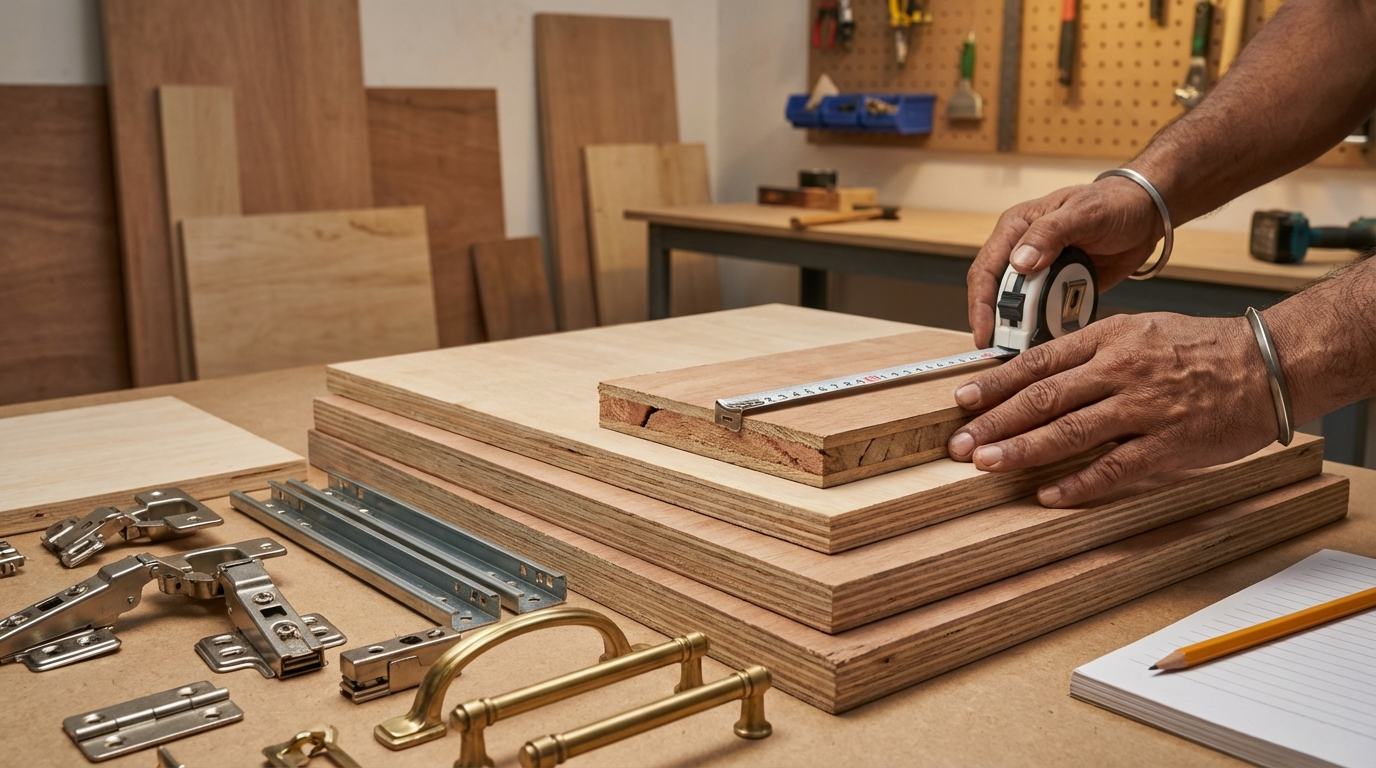
Not verifying thickness. Carry a vernier caliper or at least a measuring tape. "18mm" plywood that measures 16.5mm exists in the market. You're paying for material that isn't there, and more importantly, your hardware is designed for 18mm.
Trusting dealer certificates alone. The certificate on the wall means nothing if the sheets don't have ISI stamps. Some dealers mix stock—certified sheets up front, questionable ones in the back. Check the actual sheets you're buying.
Ignoring core species. Poplar core BWR at ₹95 versus gurjan core BWR at ₹125—that's not just a price difference. Gurjan holds screws better and has higher density. For kitchen cabinets with heavy vessels, the extra ₹30 per square foot matters. For a TV unit that holds a 15kg TV, maybe not.
Using 12mm where 18mm is needed. The price difference feels significant when you're buying 50+ sheets. But 12mm carcasses sag, hinge holes strip out faster, and the whole thing feels flimsy. There are places to economize—main carcass thickness isn't one of them.
Not accounting for wastage. Standard sheets are 8×4 feet. Your design might not tile efficiently onto that. Budget 10-15% extra for cutting waste. I've seen projects stall because someone calculated exact square footage and came up short.
Is branded plywood actually worth the premium?
It depends—and I know that's an annoying answer, but hear me out. Branded plywood from established manufacturers with ISI certification gives you two things: consistency and accountability. Every sheet in the batch meets the same specification, and you have recourse if there's a manufacturing defect. Unbranded or locally-manufactured options can be excellent or terrible—you're essentially trusting the dealer's word. If you have a trustworthy dealer relationship built over years, local options can save 15-20%. If you're a first-time buyer or new to an area, branded options reduce risk. For a full home interior running into lakhs, I'd rather pay the branded premium than gamble.
Quality Checks You Can Do at the Dealer Shop
Visual inspection:
- Look at the face veneer—consistent grain, no patches or fills
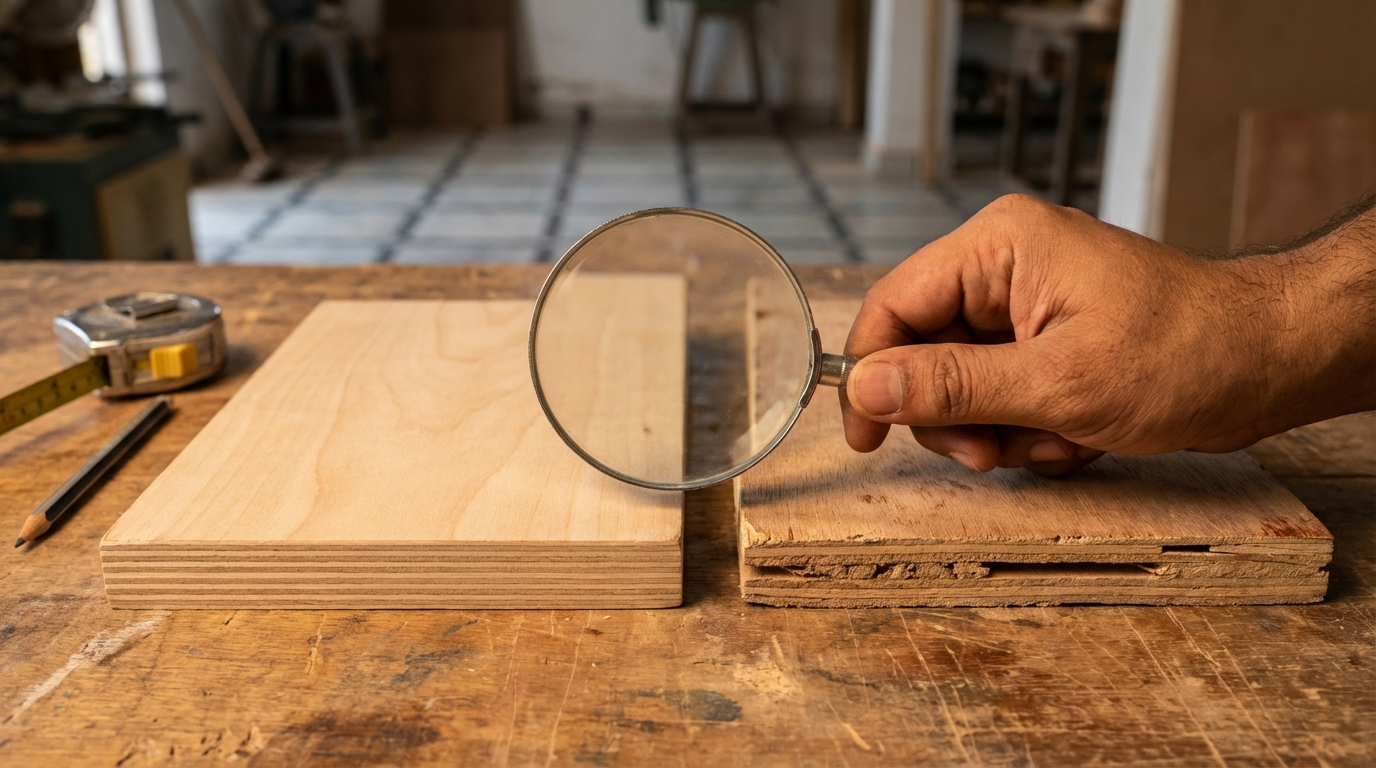
- Check edges—core layers should be uniform, no visible gaps or voids
- Surface should be flat—sight along the length and look for warping
- No discoloration or water stains on stored sheets
- ISI stamp clearly visible on every sheet (not just some)
- All sheets in your lot should match in appearance
Questions to ask:
- "Can I see the ISI license certificate for this specific brand?"
- "What's the core wood species in this lot?"
- "When did this stock arrive?" (fresher is better—sheets sitting in poor storage degrade)
- "Is this calibrated or standard?"
- "Can I return sheets that don't measure to thickness?"
Simple tests:
- Tap test: Knock on different areas—should sound consistent. Hollow sounds indicate voids in the core.
- Weight check: Compare similar sheets by lifting them. Significantly lighter sheets for the same dimensions suggest lower density core or missing layers.
- Edge inspection: Look closely at the layer bonding. Gaps between veneers = poor adhesive application.
- Flex test: Hold one end and let it cantilever—excessive flex for thickness indicates weak core.
- Thickness check: Measure in multiple spots. Variation beyond 0.5mm indicates non-calibrated or poorly manufactured sheets.
Here's a trick most dealers don't like—ask to see sheets from the middle of the stack, not just the top. The display sheets are often the best ones. What's underneath tells you more about actual batch quality.
Working with Your Carpenter: The Briefing That Saves Trouble
Your carpenter might have twenty years of experience. That doesn't mean they'll automatically know your priorities or the specific material you've bought. A quick briefing prevents expensive misunderstandings.
What to tell your carpenter:
- This is [grade]—treat edge sealing accordingly (BWR still needs it, BWP definitely needs it)
- All exposed edges must get edge banding or minimum two coats of sealer
- Use proper pilot holes for screws—don't force them in
- For hinges and fittings, stick to 18mm specs (don't use 16mm adjustments)
- Cut panels need 24-48 hours to acclimatize before fitting, especially in humid weather
- Save the biggest pieces for main visible areas—use offcuts for shelves and backs
Screw specifications: For 18mm plywood, 25-30mm screws work for most fittings. Hinge screws should be minimum 16mm to grip properly. If using cam locks for modular assembly, ensure the hardware is designed for your exact thickness.
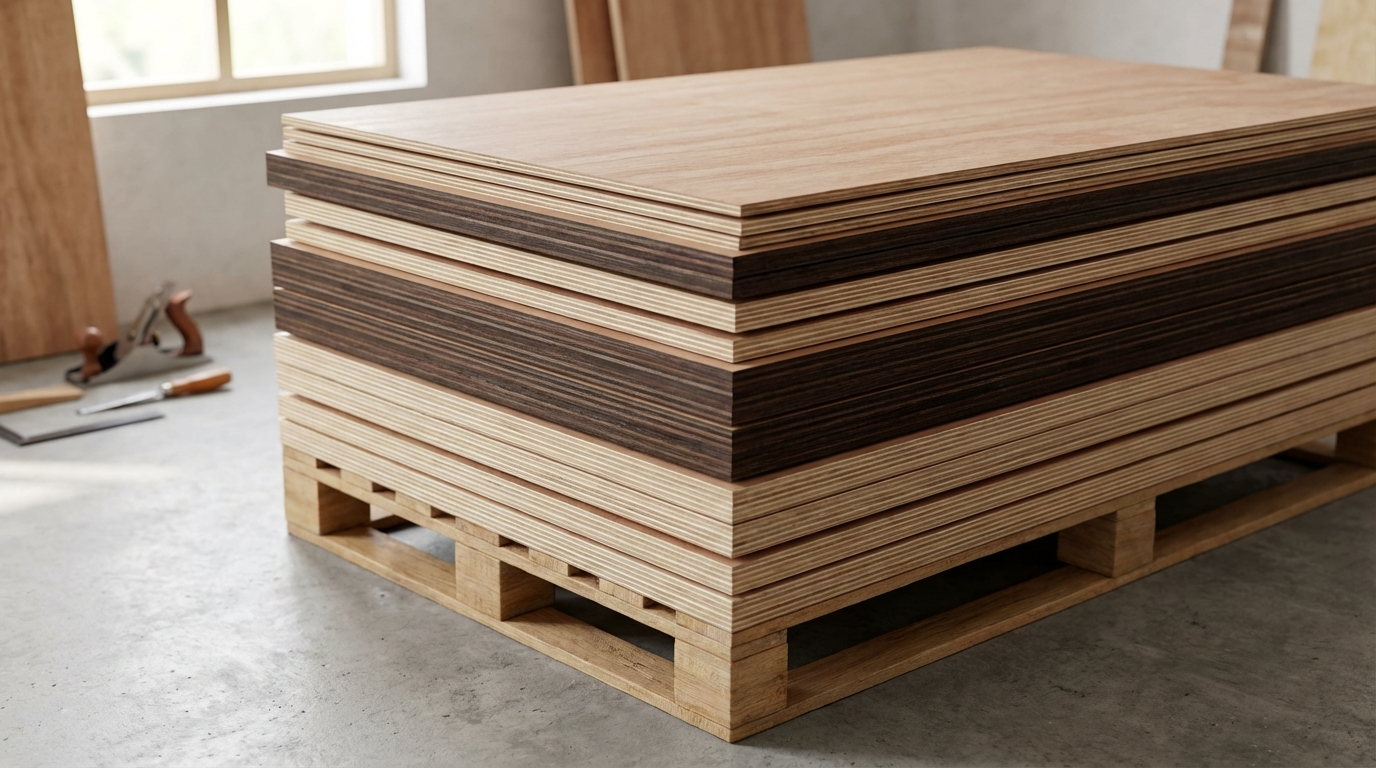
Storage before use: Keep sheets horizontal on a flat surface. Never lean them against walls—they'll warp. If the sheets have been in transit or stored in a different humidity environment, give them 2-3 days to adjust to your site conditions. This isn't laziness; it prevents warping after installation.
I've seen carpenters skip edge sealing because they're paid per piece, not per hour. The problem shows up after first monsoon—laminate lifting at corners, edges swelling. Make sealing a non-negotiable part of the work order and verify it's been done before final payment.
How Long Will Your Plywood Actually Last?
In my experience, well-maintained furniture with appropriate plywood grades lasts:
- MR grade: 8-12 years in dry conditions, less if humidity is high
- BWR grade: 15-20 years with proper edge sealing
- BWP grade: 20-25+ years even in bathroom conditions
These numbers assume proper edge sealing, reasonable use, and no major water damage events. A single flood or sustained leak can shorten any plywood's life dramatically—this isn't a material failure, it's an event failure.
What affects longevity:
- Edge sealing quality—this is the single biggest factor after grade selection
- Ventilation around the furniture—closed cabinets in humid rooms trap moisture
- Cleaning habits—harsh chemicals damage finish and can penetrate to core
- Hardware quality—cheap hinges failing creates stress on plywood structure
- Weight loading—overloaded shelves sag and eventually crack
Signs of wear to watch:
- Edge swelling or discoloration—first sign of moisture damage
- Surface laminate bubbling or lifting
- Hinges becoming loose despite tightening—screw holes may be stripping
- Visible sagging in shelves or cabinet floors
- Musty smell from inside cabinets—indicates trapped moisture
When you see edge swelling, it's already too late for that panel. The fix is replacement, not repair. Catching moisture issues early—through regular inspection of under-sink areas especially—can limit damage.
Alternatives Worth Knowing About
Plywood isn't the only option anymore, and depending on your application, alternatives might make sense.
HDHMR (High Density High Moisture Resistant): A engineered wood board with better moisture resistance than MDF. Works well for kitchen shutters and bathroom vanities. More stable than plywood in terms of not warping, but doesn't hold screws as well. Usually priced between BWR and BWP plywood. Our HDHMR guide covers when this makes sense over plywood.
Block Board: Solid wood strips between veneer faces. Great for large surfaces like tabletops and shelving where span without support is long. Better rigidity than plywood for given thickness. Priced similar to BWR plywood but screw-holding on edges is weaker.
Marine-grade MDF: If budget is tight and you need moisture resistance for vertical applications (not structural), marine MDF can work for cabinet doors. Wouldn't use it for carcasses though—structural strength isn't comparable to plywood.
If budget is tight, consider using BWP only for base cabinets and near water, BWR for mid-level applications, and MR for completely dry zones. This hybrid approach can save 15-20% on material costs while protecting critical areas.
For kitchen cabinets specifically, the kitchen cabinet material comparison on this site goes deeper into HDHMR vs BWP vs marine ply trade-offs.
Frequently Asked Questions
What's the actual difference between BWR and BWP in practical terms?
BWR handles humidity and occasional water contact—think cooking steam, the odd splash near a sink. BWP handles sustained water contact—think under-sink cabinets where a pipe connection might drip, or bathroom vanities where water sits on surfaces. The adhesive chemistry is different. BWR uses phenolic or melamine-fortified resins that resist moisture penetration for limited durations. BWP uses phenol formaldehyde that maintains bond integrity even after prolonged water exposure. For most kitchen applications, BWR is sufficient for everything except directly under the sink. Bathroom furniture should default to BWP because the environment is consistently humid.
Is it true that calibrated plywood is just marketing hype?
Not at all—but it depends on your finish type. Calibrated plywood has uniform thickness across the sheet (tolerance within 0.2mm) achieved through precision sanding. If you're applying membrane finish, veneer, or doing CNC-routed patterns, this consistency matters enormously. The membrane pulls and bubbles over thickness variations. However, if you're doing high-pressure laminate that gets edge-trimmed anyway, standard sheets are fine. Most modular furniture factories insist on calibrated because it saves them sanding labor and reduces rejection rates. For hand-crafted carpentry work, the premium is often unnecessary.
How do I verify if plywood is really ISI certified?
Check the sheet itself, not certificates on the dealer's wall. Every ISI-certified sheet has a stamp showing the IS number (303 or 710), the manufacturer's license number, and the grade designation. This stamp is either printed or branded onto the sheet surface. You can verify the manufacturer's license number on the BIS (Bureau of Indian Standards) website. If a dealer shows you a certificate but the sheets don't have stamps, walk away. Some smaller manufacturers get certified and then produce non-certified batches using the same branding—the sheet stamp is your only reliable verification.
What if I live in a coastal city like Mumbai—does that change everything?
It changes your baseline, yes. In Mumbai, with humidity regularly hitting 85-90% during monsoon and salt air accelerating corrosion, MR grade becomes risky for any application I'd consider safe inland. Default to BWR minimum for dry zones, BWP for anything within two meters of water sources. Pay extra attention to edge sealing—the humidity will find any gap. Consider using stainless steel hardware instead of regular zinc or steel, because rust from failing hardware creates problems for the plywood too. Many of my Mumbai clients budget 15-20% higher for plywood specifically to account for grade upgrades that wouldn't be necessary in Pune or Nagpur.
Can I use MR plywood for kitchen wall cabinets if they're away from the sink?
Technically yes, practically risky. Kitchen wall cabinets don't contact water directly, but they're exposed to cooking steam that rises. That steam condenses on surfaces and inside cabinets. In a well-ventilated kitchen with a powerful chimney, MR might survive. In a typical Indian kitchen with heavy frying and steaming, BWR makes more sense. The cost difference over say 10 wall cabinet doors is maybe ₹3,000-4,000. The risk of failure and replacement costs ₹30,000+. I've stopped recommending MR for any kitchen application after seeing too many failures, even for wall units.
Is it true that gurjan core is always better than eucalyptus?
Gurjan is denser and holds screws better, but "always better" overstates it. For heavy-use applications like kitchen base cabinets where hinges take daily stress and shelves hold heavy vessels, gurjan's density advantage matters. For a bedroom wardrobe that opens once or twice a day and holds clothes, eucalyptus core BWR is perfectly adequate. Gurjan adds ₹25-40 per square foot to your costs. Multiply that by 100+ square feet for a full home, and you're talking ₹2,500-4,000 extra. Worth it for kitchens, probably unnecessary for low-stress furniture.
Why do carpenters sometimes prefer certain brands over others?
Several reasons, some legitimate and some not. Legitimate: certain brands have more consistent thickness (less sanding needed), cleaner core layers (easier cutting), and reliable availability. Less legitimate: some brands offer better margins to carpenters who recommend them, or carpenters develop habits around specific products and resist change. Ask your carpenter why they prefer a brand. If the answer is about workability and consistency, listen to them. If the answer is vague, do your own research. A good carpenter can work with any decent quality plywood—brand preference shouldn't override specification requirements.
How much wastage should I budget for?
Standard is 10-15% for most furniture projects. Complex designs with curves or unusual dimensions push this higher—sometimes 18-20%. Modular furniture with standardized panel sizes tends toward lower wastage if properly planned. Here's the thing: wastage depends heavily on your carpenter's planning skills. A skilled carpenter will optimize cuts across sheets to minimize waste. Less experienced ones cut as they go and waste more. If you're buying in large quantities, consider hiring a professional to do cut-list optimization before purchasing—can save 5-8% on material costs.
What's the best way to store plywood before the carpenter starts work?
Horizontal on a flat surface, off the ground. Use wooden battens or blocks to keep sheets raised—direct ground contact transfers moisture. Stack sheets with paper or thin cardboard between faces to prevent surface damage from friction. Keep away from direct sunlight which can cause differential expansion. Most importantly, store in a space with similar humidity to where the furniture will be installed. Sheets stored in an air-conditioned flat and then used in a non-AC construction site will adjust—give them 2-3 days before cutting. I've seen expensive warped panels because sheets went from godown to installation same day during monsoon.
Is thicker plywood always stronger?
For bending strength, yes—18mm is significantly stiffer than 12mm. But thickness isn't everything. Core quality matters more than extra millimeters. An 18mm sheet with voids in the core can be weaker than a well-made 15mm sheet. And for some applications, thickness adds weight without meaningful structural benefit. A wardrobe back panel doesn't need 18mm—6mm is fine. A TV unit shelf holding 50kg of equipment needs 18mm or more. Match thickness to structural requirement, don't just default to thicker equals better.
Should I worry about formaldehyde emissions from plywood?
Valid concern, especially for children's rooms and spaces with poor ventilation. Urea formaldehyde adhesive in MR grade has higher emission potential than phenolic resins in BWR/BWP. Look for E1 or E0 emission ratings if this concerns you—some brands now market low-emission variants. BWR and BWP grades generally have lower emissions because phenolic resin outgasses less. Regardless of grade, new furniture should be aired out for a few days in ventilated space before being placed in bedrooms. If you're particularly sensitive, HDHMR and some newer engineered boards have even lower emissions than plywood.
How do wholesale and retail prices compare?
Wholesale rates are typically 15-25% below retail for the same product. But wholesale means buying in quantity—often minimum 50 sheets for meaningful discounts. Some dealers offer semi-wholesale rates at 20-30 sheets. If you're doing full home interiors requiring 80+ sheets, absolutely negotiate wholesale pricing or buy directly from distributors. For a single room renovation needing 10-15 sheets, retail with some negotiation is your reality. Building contractor contacts can help access wholesale rates for smaller quantities through their relationships.
That's the gist of what you need to know about plywood pricing in 2026. Your specific situation will have wrinkles I can't predict—unusual room layouts, specific humidity conditions, carpenter preferences. Use this as a framework, but verify pricing locally because regional variations can be significant. And seriously—don't compromise on grade for wet zones. That ₹10,000 you save today becomes ₹80,000 in replacement costs within three years.
Disclaimer: This content is provided for general informational purposes based on industry practices and publicly available information. Product specifications, standards, prices, and availability may vary by manufacturer, region, and time. Readers should independently verify details with manufacturers, dealers, or qualified professionals before making purchase or construction decisions.Want Plywood Suggestions?
Share a few details and a Sainik 710 specialist will suggest suitable brands and connect you to responsive dealers.