Plywood IS Standards in India: IS 303 vs IS 710 + How to Verify ISI Mark Before Buying
Understand IS 303 and IS 710 standards and learn how to verify genuine ISI marks, edge stamps and invoices so you don’t buy counterfeit plywood.
Quick Decision Summary
Opt for IS 710 plywood in moisture-prone areas like kitchens and bathrooms; stick to IS 303 for dry interiors, but verify ISI marks rigorously on both.
If you're in a hurry, IS 710 offers superior boiling water proofing with phenol formaldehyde glue for long-term wet exposure, while IS 303 suits general use with moisture-resistant urea formaldehyde bonding. Always inspect edge stamps for clear ISI, IS number, and CM/L license code before purchase—fakes abound in Indian markets, leading to delamination failures during monsoons. Prioritize CM/L verification through official channels for authenticity.
- Choose IS 710 if: modular kitchens, coastal homes, bathrooms, or any high-humidity zone with poor ventilation.
- Choose IS 303 if: bedrooms, living rooms, wardrobes in low-moisture interiors with good airflow.
- Avoid IS 303 if: direct water contact expected, like sink cabinets or exterior partitions.
- Avoid unverified plywood if: buying in bulk for contractors who cut corners on storage.
What This Actually Means (Grade, Construction, and Use)
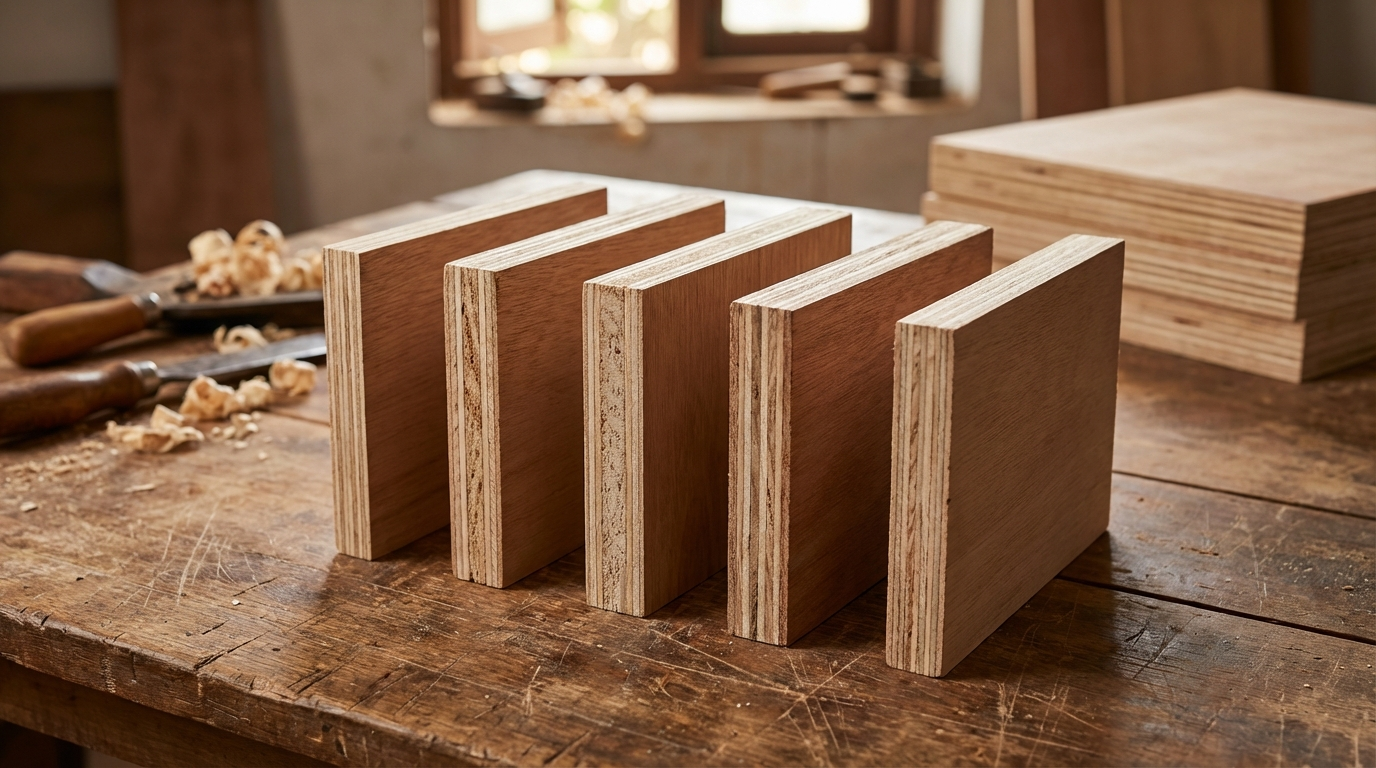
IS standards from the Bureau of Indian Standards define plywood quality through construction, glue type, and performance tests tailored to Indian conditions. IS 303 covers plywood for general purposes, including commercial and moisture-resistant grades suitable for everyday furniture and paneling. These boards typically use urea or melamine formaldehyde resins, which resist occasional humidity but degrade under prolonged water exposure. Construction involves 3-13 plies depending on thickness, with hardwood or mixed cores, and face veneers graded as select (S), standard (M), or commercial for surface finish.
IS 710 specifies marine or boiling water proof plywood, built for extreme durability. It mandates phenol formaldehyde glue, fully waterproof, and undergoes rigorous 72-hour boil-dry cycles without delamination. Cores are denser, often 100% hardwood, with tighter glue lines and enhanced fungal resistance. Thicknesses range from 4mm to 25mm, ideal for structural uses like doors and heavy cabinets. In practice, IS 303 handles interior dry zones like TV units, while IS 710 excels in wet areas, preventing swelling in humid Indian climates.
Use cases differ sharply: IS 303 for cost-effective wardrobes or beds where moisture is incidental; IS 710 for modular kitchens facing steam or coastal salt air. Both require proper finishing, but IS 710's glue allows thinner edge sealing in high-risk installs.
India-Specific Reality Check (Moisture, Termites, and Workmanship)
India's monsoon humidity (80-100% RH), coastal salinity, and poor site ventilation amplify plywood failures. IS 303 boards swell 10-15% in core voids during prolonged dampness, common in Mumbai or Chennai godowns without covers. Termites thrive in untreated urea-glued plies, especially in North Indian soil. Workmen often stack sheets wet from rain, causing warping before installation.
IS 710 fares better with PF glue repelling water ingress, but still needs termite oil treatment. Coastal Kerala homes see IS 303 delaminate in 2-3 years sans acclimatization; IS 710 lasts 10+. Contractor practices like rushed cutting expose edges to humidity, worsening outcomes. Store vertically in shaded, dry areas 48-72 hours pre-install; acclimatize 7 days in site conditions. Neglect this, and even premium boards fail in ventilated-poor apartments.
Comparison That Actually Helps
IS 303 and IS 710 differ in glue, tests, and suitability, impacting real-world longevity. Here's a scannable breakdown:
| Parameter | IS 303 (MR/BWR) | IS 710 (BWP/Marine) |
|---|---|---|
| Glue Type | Urea/Melamine Formaldehyde | Phenol Formaldehyde |
| Water Test | 3-6 hour boil; limited cycles | 72-hour boil-dry; 4+ cycles |
| Core Material | Mixed hardwood/softwood | 100% hardwood preferred |
| Typical Uses | Interiors, wardrobes, furniture | Kitchens, bathrooms, exteriors |
| Termite Resistance | Requires add-on treatment | Better inherent; enhanced tests |
| Cost Premium | Baseline | 30-50% higher |
Use this to match site risks: dry bedrooms favor IS 303 savings; steamy kitchens demand IS 710 durability.
Price Range and Cost Drivers
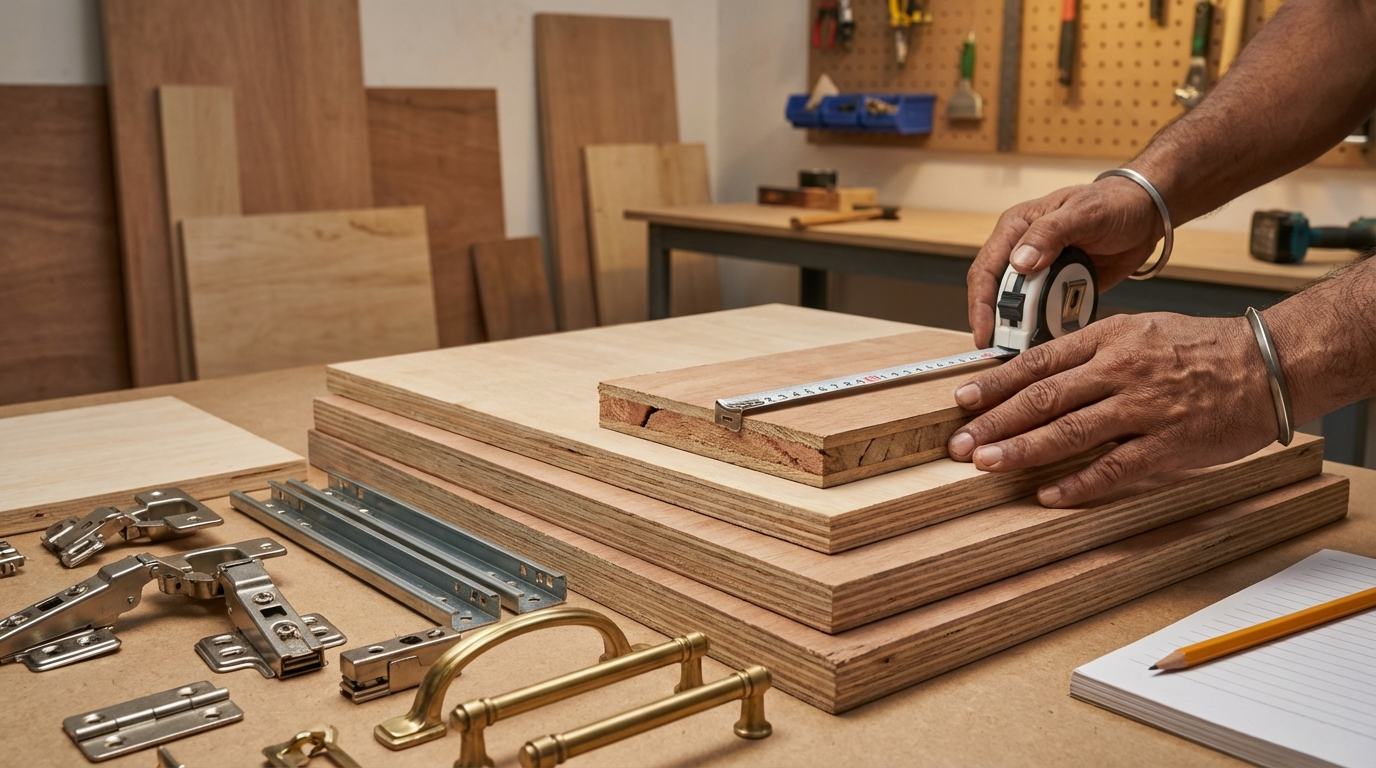
Typical market ranges for 18mm thickness vary by city: IS 303 at 70-110 rupees per square foot in Delhi interiors, rising 20% in Mumbai logistics. IS 710 starts 110-180 rupees per square foot, peaking in remote areas. Thickness drives 40% variance—12mm halves costs vs 19mm. Core type (hardwood vs mixed) adds 15-25%; calibrated edges for CNC another 10%.
Glue grade and veneer quality push premiums; monsoon stockpiles inflate 10-15%. For a 10x6 ft wardrobe (15 sqm), budget 15,000-25,000 rupees IS 303, double for IS 710. Factor city variation (South 10% higher humidity logistics), batch glue consistency, and vendor storage—always negotiate bulk with invoice proofs.
How to Verify Genuine ISI Mark and Edge Stamps
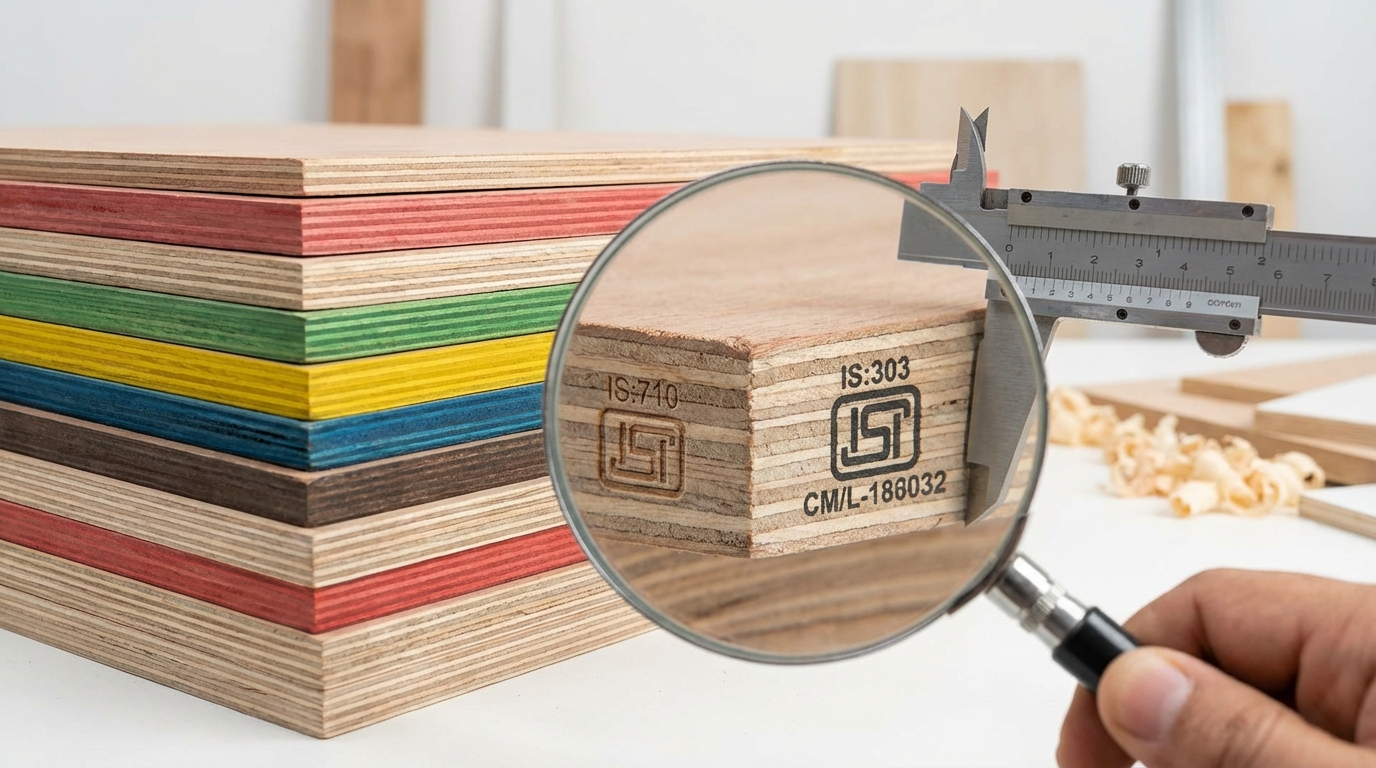
Counterfeit ISI floods markets; genuine marks are embossed or ink-stamped clearly on all four edges and surface. Look for the triangular ISI logo with "IS:303" or "IS:710" beside it, plus CM/L number (e.g., CM/L-XXXXX), manufacturing month/year, thickness, and batch code. Fakes show fuzzy prints, missing CM/L, or mismatched IS numbers.
Verify CM/L via official BIS directories—valid licenses list manufacturers. Demand GST invoice detailing IS standard, CM/L, quantity, and rate; cross-check with edge stamps. Reputable dealers provide this; evasive ones signal fakes. For bulk buys, request recent BIS test reports showing compliance. In field, rub stamp—if ink smears, fake.
Quality Checks You Can Do Without Lab Tests
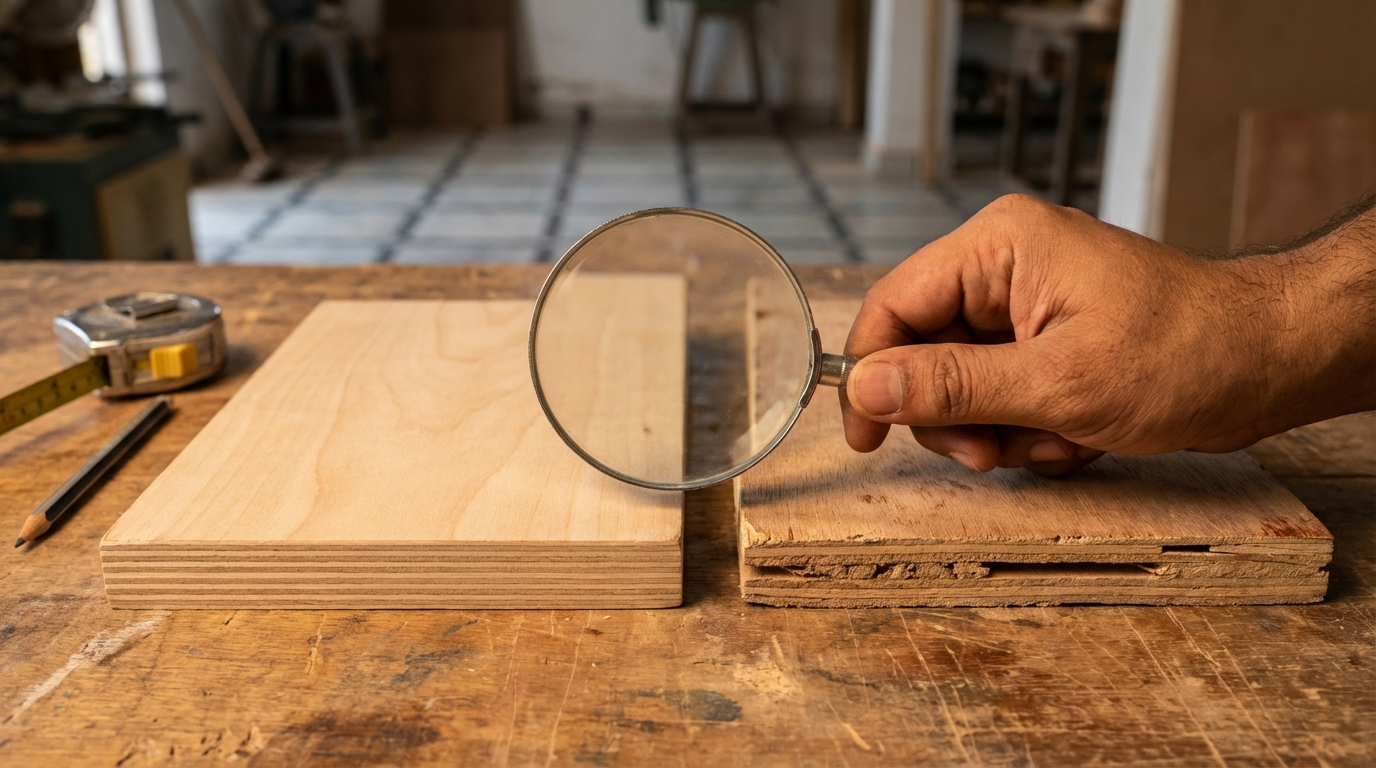
Visual scan: Uniform veneer without bubbles, patches, or dead knots; edges straight, no overhangs. Tap edges—hollow thuds indicate core voids. Smell for chemical sharpness (urea vs phenolic). Weight test: Genuine 18mm weighs 25-35kg per sheet; light ones have fillers.
Flex test: Bend gently—no creases or snaps. Water splash on edge: IS 710 repels longer. Ask: "Show CM/L verification? Recent boil test?" Warning signs: Uneven glue lines on cut samples, soft core plugs, prices 20% below market. Contractor trick: Buy cut pieces first, inspect innards.
Common Buyer Mistakes and How to Avoid Them
- Mistake: Trusting surface ISI without CM/L check. Avoid: Always note and verify license number on-site.
- Mistake: Ignoring edge stamps on all sides. Avoid: Flip sheets; stamps must match invoice.
- Mistake: Buying monsoon-stocked cheap lots. Avoid: Check storage—vertical, covered stacks only.
- Mistake: Assuming MR=BWP. Avoid: Confirm IS number for wet zones.
- Mistake: Skipping acclimatization. Avoid: 7-day site stack before cutting.
- Mistake: Poor edge sealing post-cut. Avoid: Immediate 2-coat sealant on exposed plies.
- Mistake: Overloading screws sans pilot holes. Avoid: Pre-drill for 12mm+ thickness.
- Mistake: No invoice for warranty claims. Avoid: Insist on detailed bill with standards noted.
- Mistake: Coastal use of IS 303. Avoid: Upgrade to IS 710 for salt air.
Decision Framework Table
Scan this for your project:
| Use Case | Risk Level | Recommended IS | Thickness | Extra Checks |
|---|---|---|---|---|
| Wardrobe/Bed | Low moisture | IS 303 | 18mm | Screw hold test |
| Modular Kitchen | High steam | IS 710 | 18-19mm | Boil resistance |
| Bathroom Vanity | Very high | IS 710 | 12-18mm | Edge seal priority |
| TV Unit/Partition | Medium | IS 303 BWR | 9-12mm | Veneer grade |
| Exterior Wall Panel | Extreme | IS 710 | 19mm+ | Termite oil |
Workmanship and Installation Tips
Cut with fine-tooth blades to minimize splintering; CNC calibration on IS 710 holds tighter. Seal all edges immediately with polyurethane—twice for monsoons. For screw holding, pre-drill 3/4 diameter; IS 710 grips 50% better in wet. Hinges on cabinets: Reinforce with 19mm ply blocks in door zones.
Acclimatize 7-10 days flat-stacked at site RH. Polish only after 4 weeks cure. In humid installs, use SS screws to avoid rust migration. Common fail: Exposed cores in routing—tape before machine work.
FAQs
What's the main difference between IS 303 and IS 710?
IS 303 plywood targets general and moisture-resistant applications using urea-based glues suitable for interiors with occasional dampness, passing basic water boil tests. IS 710, designed for marine conditions, employs waterproof phenol glues enduring extended boiling without bond failure, making it ideal for kitchens and bathrooms where steam and splashes prevail in Indian homes.
Can I use IS 303 plywood for a kitchen cabinet?
IS 303 works for low-use kitchen shelves in dry-ventilated spaces but risks delamination near sinks or stoves during humid seasons. For modular kitchens with cooking steam, switch to IS 710 to prevent swelling and core gaps after 1-2 monsoons, ensuring cabinets last beyond 8 years with proper sealing.
How do I spot a fake ISI mark on plywood?
Examine for crisp embossing of ISI triangle, exact "IS:303" or "IS:710", and full CM/L code—fuzzy or sticker-applied marks are red flags. Cross-verify CM/L validity officially, check matching batch on invoice, and test edge water repellence; genuine ones show uniform stamps on every sheet edge.
Is termite treatment included in these standards?
Neither mandates built-in termite proofing; IS 710 offers better glue resistance to fungi aiding termite deterrence, but apply CIB-approved oils post-purchase. In termite-hotspots like Bangalore outskirts, treat all plywood—IS 303 needs it more due to softer cores.
Which thickness for wardrobe shutters using IS 303?
18mm calibrated IS 303 balances strength and weight for wardrobes, holding screws firmly in mixed cores. Thinner 15mm suits lightweight sliders; always check for voids by knocking before buying, as thin plies warp faster in un-AC Indian bedrooms.
Does IS 710 justify the higher cost for bedrooms?
No, overkill for dry bedrooms—save with IS 303 unless humidity exceeds 70% RH regularly. Cost trade-off favors IS 710 only where water exposure risks rework expenses exceeding 40% premium.
How long to store plywood before installation?
Acclimatize 7-14 days vertically in site-shaded area to match ambient RH, preventing cupping during humid installs. Rush jobs in contractor haste cause 30% failures; cover loosely for airflow.
What if the invoice lacks IS details?
Reject—insist on invoices citing IS standard, CM/L, and thickness. This protects against fakes and enables claims; vague bills signal dealer shortcuts common in tier-2 cities.
Can I do a home boil test on plywood?
Cut 150x150mm sample, boil 4-6 hours, dry 20 hours—genuine IS 710 stays intact through cycles; IS 303 may separate on third. Dealers resist, but insist for doubt; wet strength indicates glue quality.
IS calibrated plywood mandatory for these standards?
Not required but practical for CNC routing in modern kitchens—ensures uniform thickness, better laminate adhesion. Non-calibrated cheaper but risks machine snags and wavy finishes.
Disclaimer: This content is provided for general informational purposes based on industry practices and publicly available information. Product specifications, standards, prices, and availability may vary by manufacturer, region, and time. Readers should independently verify details with manufacturers, dealers, or qualified professionals before making purchase or construction decisions.Want Plywood Suggestions?
Share a few details and a Sainik 710 specialist will suggest suitable brands and connect you to responsive dealers.