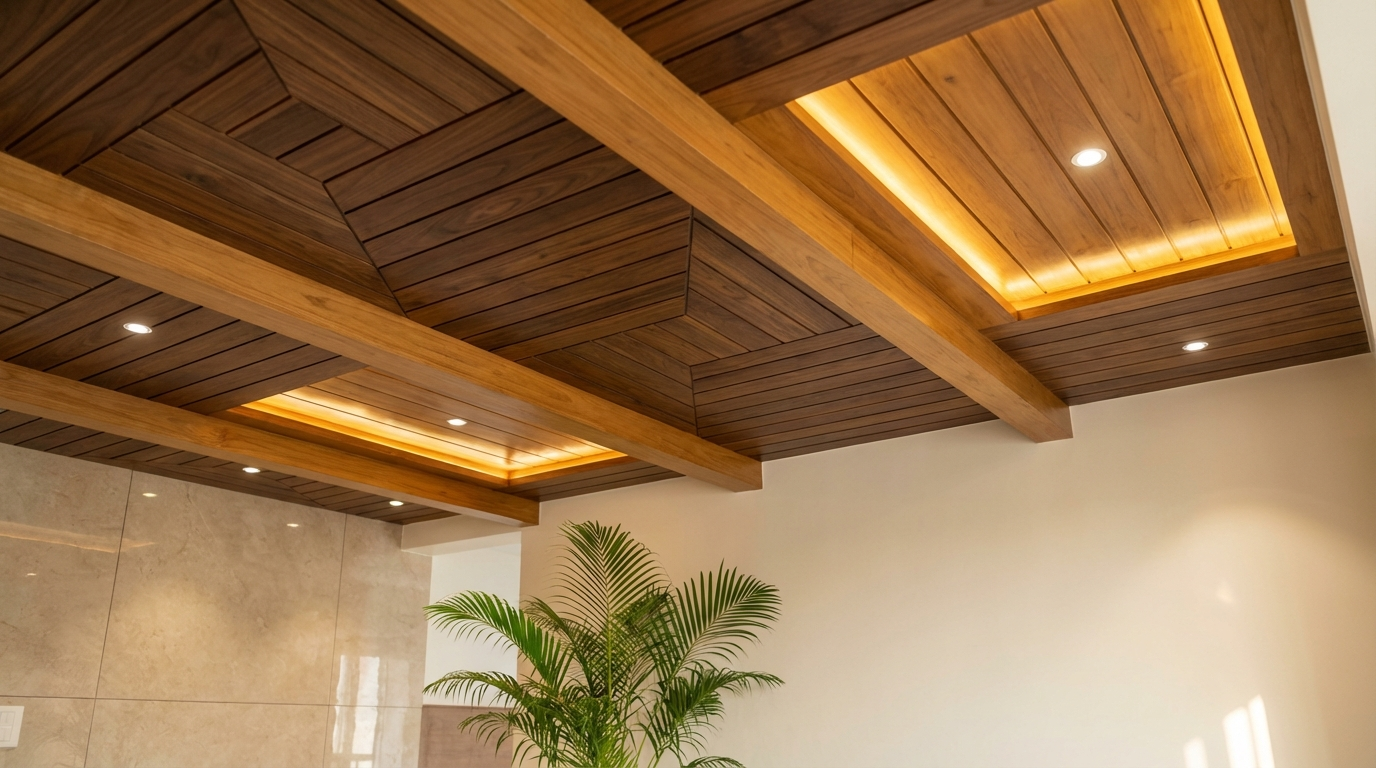
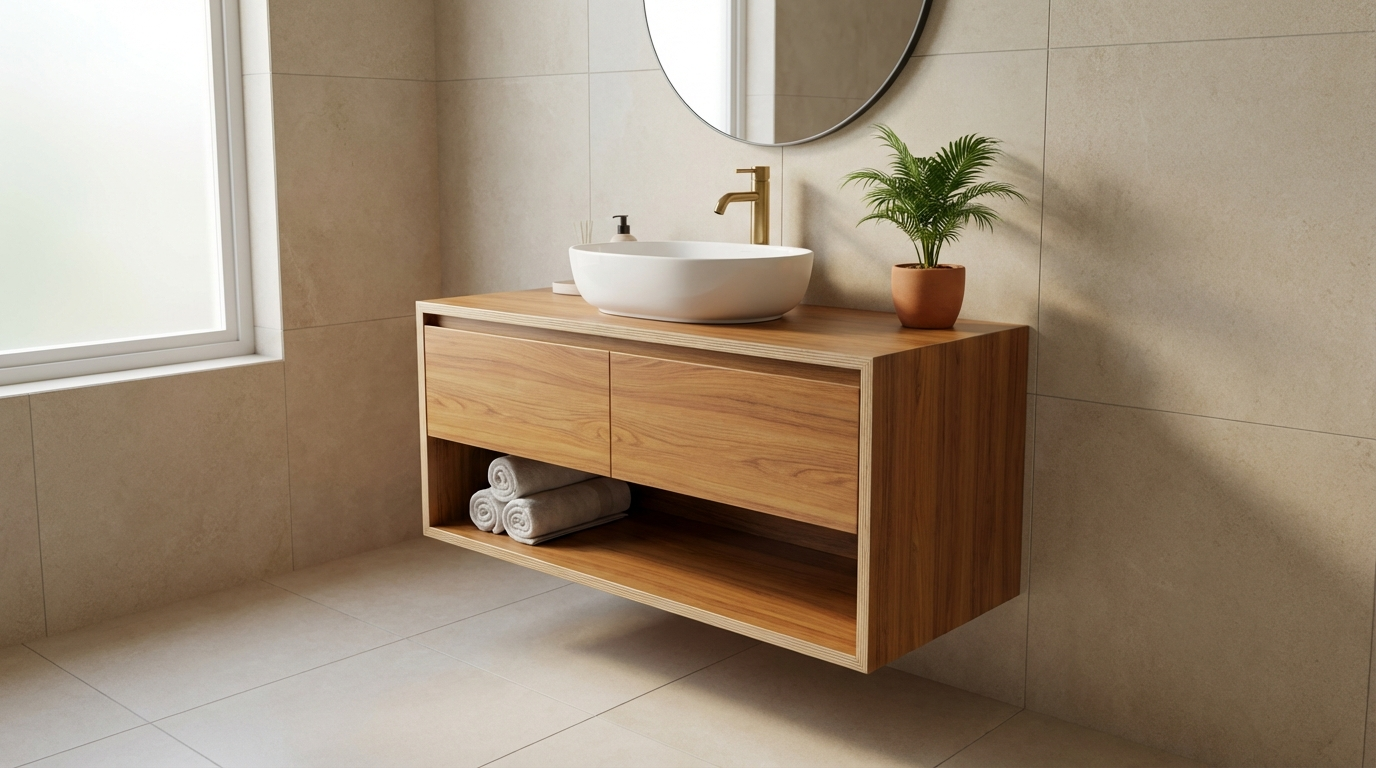
Plywood Door Design: 25+ Modern Ideas with Thickness, Core Type & Finish Guide
Explore 25+ plywood door designs—bedroom, bathroom & main door options. Get thickness guide, core type selection & finish options for durable doors.
Quick Decision Summary
The best plywood door design for most Indian homes uses 30-35 mm BWR-grade plywood with a blockboard or solid hardwood core, finished with laminate or veneer for durability and aesthetics.
If you're in a hurry: For main doors, use 32-38 mm thickness with BWP/marine-grade plywood in coastal or high-humidity areas. Bedroom doors work well with 25-30 mm MR or BWR grade. Bathroom doors absolutely require BWP grade with proper edge sealing. The core type matters more than face finish for long-term performance—hardwood cores hold screws better and resist warping compared to poplar or mixed softwood cores.
- Choose plywood doors if: You want cost-effective, customizable doors with good dimensional stability, easy availability across India, and compatibility with various finishes like laminate, veneer, or paint.
- Avoid plywood doors if: Budget is extremely tight (consider flush doors with commercial ply), you need fire-rated doors (specialized panels required), or the installation site has direct water exposure without proper waterproofing.
Key takeaway: Match plywood grade to moisture exposure, choose core type based on hardware requirements, and never skip edge sealing regardless of the grade you select.
What Plywood Doors Actually Mean: Grade, Construction, and Use
A plywood door is a door shutter made using engineered wood panels where thin veneers are layered and bonded with adhesive under pressure, creating a stable, warp-resistant structure suitable for interior and exterior applications. Unlike solid timber doors that can cost two to four times more and may warp in Indian humidity, plywood doors offer predictable performance when the right grade and construction are selected.
The construction of a plywood door typically involves three main components: the core (which provides structural strength), the crossbands (intermediate layers for stability), and the face veneers (visible surface for finishing). Understanding this layered construction helps you evaluate quality—doors with uniform core material, tight gluelines, and consistent veneer thickness perform better over years of use.
Core Types That Actually Matter
The core determines how well your door holds screws, resists sagging, and maintains flatness. Hardwood cores (using species like gurjan, eucalyptus, or mixed tropical hardwoods) provide superior screw-holding strength—critical for hinges and handles that undergo daily stress. Softwood cores (poplar, pine) are lighter and cheaper but may not hold hardware as securely over time.
Blockboard cores use strips of solid wood sandwiched between veneers, offering excellent rigidity for larger door sizes. For doors exceeding 7 feet height or 3 feet width, blockboard construction reduces the risk of warping compared to standard plywood. Particle board or MDF cores in budget doors should be avoided for main entries or high-traffic areas—they lack the screw-holding capacity and moisture resistance needed for Indian conditions.
Common Misconceptions Cleared
Many buyers assume "marine plywood" means waterproof. It actually means boiling-water-proof (BWP) adhesive that resists prolonged moisture exposure—the wood itself can still absorb water if edges aren't sealed. Another misconception: thicker always means better. A 19 mm door with hardwood core and BWR glue often outperforms a 30 mm door with softwood core and MR glue in humid conditions. Grade and core quality matter more than raw thickness for durability.
Note: sainik710.com is an independent informational site and is not affiliated with any manufacturer.
India-Specific Reality Check: Moisture, Termites, and Workmanship
Indian climate conditions vary dramatically—from 70-90% humidity during monsoons in Mumbai or Kolkata to relatively dry winters in Delhi or Jaipur—and this variation directly impacts plywood door performance. Doors installed in Chennai or coastal Kerala face salt-laden air that accelerates adhesive degradation in lower-grade plywoods, while doors in Rajasthan may crack from excessive dryness if not properly finished.
Monsoon and Coastal Risk Factors
During peak monsoon, even interior doors absorb ambient moisture through exposed edges and unsealed surfaces. MR-grade plywood in a Mumbai bathroom doorframe typically shows edge swelling within two to three monsoons if not properly sealed. Coastal cities add salt corrosion to the mix—metal hinges and handles corrode faster, and the surrounding plywood absorbs moisture through these corroded contact points.
For coastal installations (within 10-15 km of the sea), BWP-grade plywood with marine-grade adhesive is the baseline, not a premium choice. Even then, edge banding or edge sealing with PU-based sealers extends door life significantly. Interior designers working in Goa or Kochi typically specify BWP for all doors regardless of room type—the marginal cost increase prevents callbacks and replacements.
Storage and Handling on Indian Sites
Construction sites across India rarely maintain ideal storage conditions. Plywood sheets left leaning against walls absorb ground moisture, warp from uneven support, or get damaged by debris. Insist on flat, covered storage elevated on wooden battens. Doors delivered during monsoon should acclimatize for 48-72 hours in the installation environment before fitting—this prevents post-installation warping as the material adjusts to room humidity.
What Happens on Most Sites
The typical Indian carpenter (mistri) receives plywood, cuts it quickly, and installs without edge treatment. This works temporarily but fails within two to four years as moisture infiltrates through unsealed edges. Better practice involves applying wood primer or PU sealer to all cut edges before installation—a step that adds minimal cost but significantly extends door life.
Regional Variations to Consider
Tier-1 cities like Bangalore or Hyderabad have better access to calibrated plywood and branded products, while tier-2 and tier-3 markets often stock only local or semi-branded options. Price differences between metros and smaller cities can reach 15-25% for the same grade, partly due to logistics and partly due to dealer margins. However, don't assume metro pricing always means metro quality—verify ISI marks and grade stamps regardless of location.
Design Ideas with Practical Material Choices
Modern plywood door designs balance aesthetics with practical material selection, ensuring the visual appeal lasts beyond the first few years. The key is matching design ambitions with appropriate grade, thickness, and finish combinations that suit Indian homes and maintenance habits.
Main Door Designs (25+ Ideas)
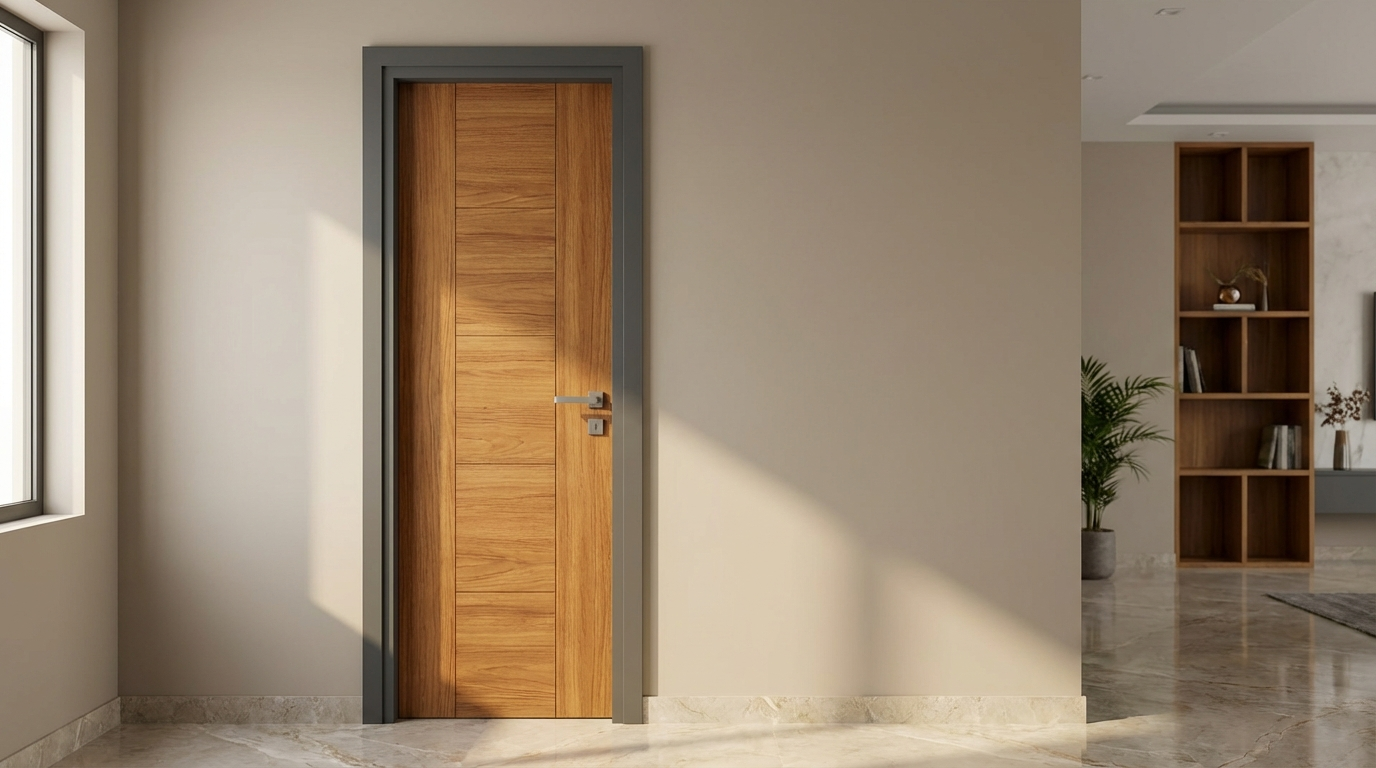
- Contemporary flush with horizontal grooves: 32-35 mm BWR plywood, laminate finish, accentuates width in narrow entrances
- Geometric pattern with CNC routing: 30 mm hardwood core BWR, requires veneer or paint finish for routed areas
- Two-tone laminate combination: 32 mm blockboard core, high-pressure laminate in contrasting shades
- Vertical plank illusion: 30 mm BWR with groove detailing, works well with wood-grain laminate
- Minimalist solid panel: 35 mm BWP for exposed locations, matte laminate or PU paint
- Traditional paneled look: 32 mm with overlay mouldings, suitable for veneer finish
- Glass insert modern: 30 mm frame with tempered glass panel, requires precise carpentry
- Metal accent combination: 32 mm core with brass or steel strip inlays
Bedroom Door Designs
- Silent-close flush design: 25-28 mm MR grade adequate, laminate finish for easy cleaning
- Louvered ventilation panels: 25 mm MR with factory-made louver inserts
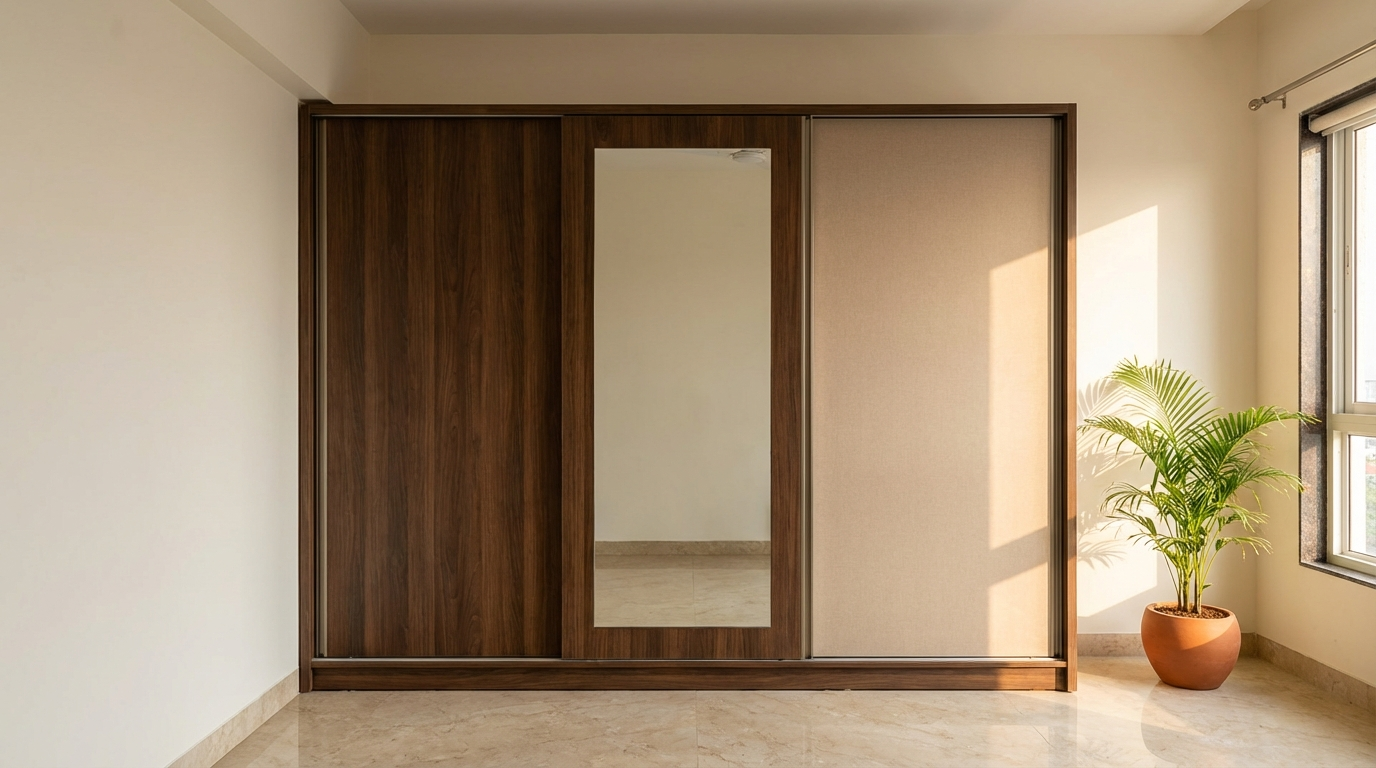
- Full-height wardrobe-matching design: 25 mm MR, same laminate as wardrobe shutters
- Frosted glass upper panel: 28 mm MR frame, allows light while maintaining privacy
- Sliding barn-style: 30 mm BWR for larger panels, requires robust track hardware
- Kids room themed: 25 mm MR with durable laminate, easy to clean and repair
Bathroom Door Designs
- Compact waterproof panel: 25-28 mm BWP mandatory, PVC edge banding essential
- Frosted glass ventilation: 28 mm BWP frame with sealed glass panel
- Louvered bottom for airflow: 28 mm BWP, aluminum or PVC louvers preferred over wood
- Minimalist white laminate: 25 mm BWP, high-gloss or matte white acrylic finish
- Compact sliding option: 25 mm BWP for space-constrained bathrooms
Kitchen and Utility Area Doors
- Half-glass pantry door: 28 mm BWR minimum, allows visibility while containing odors
- Fire-rated kitchen entry: Specialized fire-retardant core, consult local suppliers
- Service entry flush: 25-28 mm BWR, durable laminate for frequent cleaning
- Utility room ventilated: 25 mm BWR with louver insert, handles moisture and airflow
What Works in Indian Homes
Indian homes typically have door openings of 2.1 meters (7 feet) height and 0.9 meters (3 feet) width for main doors, with bedroom and bathroom doors slightly smaller at 2.0 x 0.75 meters. Standard plywood sheets of 8x4 feet accommodate these sizes with minimal wastage. For non-standard openings in older buildings, custom sizing adds 10-15% to material costs but ensures proper fit.
Thickness Guide: Matching Door Type to Plywood Thickness
Plywood door thickness determines structural strength, sound insulation, and hardware compatibility—with 25 mm being the minimum for interior doors and 32-38 mm recommended for main entries in most Indian homes.
Thickness Recommendations by Application
| Door Type | Recommended Thickness | Minimum Grade | Core Type | Key Consideration |
|---|---|---|---|---|
| Main door (ground floor) | 32-38 mm | BWR/BWP | Blockboard or hardwood | Security, weather exposure |
| Main door (apartment) | 30-35 mm | BWR | Hardwood core | Fire safety, sound insulation |
| Bedroom doors | 25-30 mm | MR/BWR | Mixed hardwood | Privacy, noise reduction |
| Bathroom doors | 25-28 mm | BWP | Waterproof core | Moisture resistance critical |
| Kitchen entry | 25-30 mm | BWR | Hardwood | Grease, humidity exposure |
| Balcony/terrace access | 30-35 mm | BWP | Marine-grade | Direct weather exposure |
| Internal partitions | 19-25 mm | MR | Standard | Budget optimization |
Why Thickness Alone Doesn't Guarantee Quality
A common mistake is equating thickness with durability. A 35 mm door with poplar core and MR adhesive will underperform a 28 mm door with hardwood core and BWR adhesive in humid conditions. The layered construction, adhesive quality, and core density collectively determine performance. When comparing prices, ensure you're comparing equivalent grades—a cheap 35 mm option likely compromises on one or more of these factors.
Is 19 mm Plywood Sufficient for Doors?
While 19 mm plywood is commonly used for furniture shutters, it's generally insufficient for door applications in Indian homes. The reduced thickness compromises hinge screw depth, makes the door prone to flexing under regular use, and provides minimal sound insulation. However, 19 mm can work for lightweight internal partitions or decorative door panels where structural load isn't a concern. For any functional door—one that needs to close securely, hold hardware long-term, and provide privacy—25 mm is the practical minimum.
Core Type Selection: What the Carpenter Won't Tell You
Core construction is the hidden factor that separates doors lasting fifteen years from those failing in five—yet most buyers focus only on surface finish and price while ignoring this critical specification.
Hardwood Core vs. Softwood Core
Hardwood cores (gurjan, eucalyptus, tropical mixed hardwoods) provide denser, more uniform internal structure. This density translates to better screw-holding strength—essential for hinges that undergo thousands of opening cycles annually. Softwood cores (poplar, rubberwood, plantation pine) are lighter and more affordable but may show screw loosening within three to five years of regular use.
The practical test: ask your supplier about core species. Reputable manufacturers specify core materials; vague answers like "imported core" or "mixed wood" often indicate lower-grade options. Hardwood core plywood typically costs 15-25% more but delivers noticeably better long-term performance for doors.
Blockboard Construction for Large Doors
For doors exceeding 2.1 meters height or 0.9 meters width, blockboard construction offers superior rigidity. The solid wood strip core sandwiched between veneers resists sagging and warping better than standard veneer-only plywood. Double-door entries, large bedroom doors in premium apartments, and custom-height openings benefit from blockboard cores even if the additional cost reaches 20-30% over standard plywood.
Can Plywood Doors Be Used for Main Entries?
Yes, plywood doors are entirely suitable for main entries when correctly specified. Use minimum 32 mm thickness with BWR grade (BWP for ground floors or exposed locations), hardwood or blockboard core, and ensure proper edge sealing. Main door plywood should carry IS 303 or IS 710 certification depending on grade. The key is combining appropriate grade with proper installation—plywood main doors in quality-conscious Indian projects regularly perform well for 15-20 years.
Finish Options: Laminate, Veneer, Paint, and PU Coating
The finish applied to plywood doors determines visual appeal, maintenance requirements, and long-term durability—with laminate being most common in Indian homes due to its balance of aesthetics, durability, and cost.
High-Pressure Laminate (HPL)
HPL finishes dominate Indian door applications because they resist scratches, moisture, and daily wear while offering extensive color and pattern options. Thickness matters—0.8 mm laminate provides adequate protection for internal doors, while 1 mm laminate suits high-traffic areas. Post-forming laminates allow curved edges, creating seamless looks impossible with standard laminates. Brands vary significantly in UV stability and adhesive quality, affecting how well the laminate holds up to sunlight exposure in south or west-facing rooms.
Natural Wood Veneer
Veneer finishes appeal to buyers wanting authentic wood aesthetics at lower cost than solid timber. Quality veneer doors require skilled application—bubbles, uneven seams, and lifting edges indicate poor workmanship. Veneer needs additional finishing (clear lacquer or PU) to protect against moisture and scratches. Teak, oak, and walnut veneers are popular in premium Indian projects, though veneer authenticity varies widely—reconstituted veneers mimic expensive woods at lower cost but may look artificial under close inspection.
PU Paint and Enamel Finishes
Polyurethane paint offers seamless, uniform color with excellent durability when applied correctly. Professional PU finishing involves multiple coats, sanding between layers, and proper curing time—shortcuts result in peeling or yellowing within two to three years. White and off-white PU finishes remain popular for contemporary Indian interiors but require more careful handling to avoid visible scratches compared to darker shades.
What Thickness of Plywood Is Best for Laminate Doors?
For laminate-finished doors, 25-30 mm plywood provides the ideal substrate for interior applications. This thickness offers sufficient depth for edge banding, adequate screw-holding for hardware, and good dimensional stability. Thinner substrates (19 mm) may telegraph imperfections through the laminate over time, while excessive thickness (above 35 mm) adds unnecessary weight and cost without proportional benefits for laminate doors. Ensure the plywood surface is calibrated (sanded to uniform thickness) before lamination—uncalibrated surfaces cause uneven laminate adhesion and eventual lifting.
Head-to-Head Comparison: Plywood vs. Alternatives
Understanding how plywood doors compare to alternatives helps buyers make informed decisions based on their specific requirements, budget constraints, and performance expectations.
| Parameter | Plywood Door | Solid Wood Door | WPC/PVC Door | HDHMR Door |
|---|---|---|---|---|
| Cost (relative) | Medium | High (2-4x) | Low-Medium | Medium-High |
| Moisture resistance | Grade-dependent | Variable | Excellent | Good |
| Screw holding | Good-Excellent | Excellent | Limited | Good |
| Customization | Excellent | Limited by cost | Factory-limited | Good |
| Weight | Medium | Heavy | Light | Medium |
| Termite resistance | Treatment-dependent | Treatment-dependent | Excellent | Good |
| Repair ease | Moderate | Difficult | Replace only | Moderate |
| Lifespan (typical) | 10-20 years | 25-40 years | 8-15 years | 12-18 years |
| Best for | All-round use | Premium main doors | Bathrooms, budget | Moisture-prone areas |
Decision Rules for Material Selection
Choose plywood when: You need customization flexibility, moderate budget, good hardware holding, and are willing to invest in proper edge treatment. Plywood suits most interior doors, main entries (with appropriate grade), and situations requiring specific sizes or designs.
Choose solid wood when: Budget permits premium investment, traditional aesthetics are paramount, and the door will serve as a long-term architectural feature. Solid wood suits heritage homes, farmhouses, and luxury main entries where the investment justifies the cost.
Choose WPC/PVC when: Maximum moisture resistance is needed without budget for marine plywood, or when termite resistance is critical in vulnerable areas. WPC suits bathroom doors, utility areas, and ground-floor entries in termite-prone zones.
How to Choose: 5-Step Decision Framework
A systematic approach to door selection prevents costly mistakes and ensures long-term satisfaction with your investment in plywood doors.
Step 1: Assess Moisture Exposure
Map each door location against moisture risk. Direct water exposure (bathrooms, external entries) requires BWP grade. High humidity areas (kitchens, ground floors in humid cities) need minimum BWR grade. Low-risk internal rooms (bedrooms in air-conditioned homes) can use MR grade safely.
- ✓ List all door locations
- ✓ Categorize by moisture exposure level
- ✓ Match minimum grade to each category
Step 2: Determine Thickness Requirements
Consider door dimensions, security needs, and sound insulation requirements. Main doors need 32-38 mm for security and presence. Bedrooms balance privacy with weight at 25-30 mm. Bathrooms prioritize waterproofing over thickness at 25-28 mm.
- ✓ Measure door openings accurately
- ✓ Confirm frame depth accommodates chosen thickness
- ✓ Factor in finish thickness (laminate adds 0.8-1 mm per side)
Step 3: Select Core Type Based on Hardware Load
Heavy doors with elaborate hardware need hardwood or blockboard cores. Standard internal doors work fine with mixed hardwood cores. Budget priorities may accept softwood cores for low-traffic internal doors.
- ✓ Plan hinge type and weight
- ✓ Confirm lock and handle requirements
- ✓ Match core density to hardware demands
Step 4: Choose Finish for Lifestyle Match
High-traffic, kid-heavy homes benefit from durable laminate. Design-focused spaces may justify veneer or PU for premium aesthetics. Maintenance-averse owners should avoid high-gloss finishes that show fingerprints.
- ✓ Assess cleaning and maintenance commitment
- ✓ Consider sun exposure for UV-stable finishes
- ✓ Match finish to overall interior design language
Step 5: Verify Before Purchase
Check ISI certification, verify grade stamps, and inspect sample cuts. Ask dealers about warranty coverage and claims process. Document specifications in writing before placing orders.
- ✓ Confirm ISI mark presence (IS 303 for MR, IS 710 for BWR/BWP)
- ✓ Request manufacturer warranty documentation
- ✓ Get specification list in purchase order
Red Flags to Avoid
Dealers offering "marine quality" without BWP certification, unusually low prices for claimed premium grades, resistance to showing cut samples or certification documents, and pressure to decide without inspection time—all indicate potential quality compromises that become expensive problems post-installation.
Common Buyer Mistakes and How to Avoid Them
Understanding frequent errors helps first-time buyers and experienced homeowners alike make better decisions when selecting plywood for doors.
Mistake 1: Choosing MR Grade for Bathroom Doors
What goes wrong: Edge swelling begins within one to two monsoon seasons, hinges loosen, door won't close properly.
Why it happens: MR (moisture resistant) sounds adequate but actually only handles atmospheric humidity, not direct moisture exposure.
How to avoid: Always specify BWP grade for any bathroom application, regardless of ventilation quality.
Mistake 2: Ignoring Edge Sealing
What goes wrong: Water infiltrates through cut edges, causing internal delamination that spreads from edges inward.
Why it happens: Carpenters prioritize visible surfaces; edge treatment adds labor without immediately visible results.
How to avoid: Include edge sealing in carpentry scope, verify application before door installation, consider PVC edge banding for high-moisture areas.
Mistake 3: Specifying Incorrect Thickness for Frame Depth
What goes wrong: Door either sits recessed in frame (looks unprofessional) or protrudes beyond frame edge (catches on frame).
Why it happens: Standard frames assume specific door thickness; finish layers add to total thickness.
How to avoid: Measure frame rebate depth, subtract 2-3 mm clearance, select plywood thickness that fits after adding finish thickness.
Mistake 4: Buying Uncalibrated Plywood for Laminate Doors
What goes wrong: Laminate bonds unevenly, shows surface undulations, may lift in patches.
Why it happens: Standard plywood has minor thickness variations; laminate application requires flat, uniform surfaces.
How to avoid: Specify calibrated plywood for any laminate application; accept the 10-15% cost premium for factory-sanded sheets.
Mistake 5: Over-Specifying for Budget Projects
What goes wrong: Project cost escalates, corners get cut elsewhere, overall quality suffers despite expensive doors.
Why it happens: Buying highest grade everywhere without assessing actual requirements.
How to avoid: Use decision framework to match grade to location—BWP only where needed, MR where acceptable.
Mistake 6: Not Allowing Acclimatization Time
What goes wrong: Doors warp or bind post-installation as material adjusts to room humidity.
Why it happens: Tight project timelines push immediate installation without material stabilization.
How to avoid: Store doors in installation room for 48-72 hours before fitting, especially during monsoon.
Mistake 7: Assuming Brand Premium Guarantees Quality
What goes wrong: Premium price paid but installation issues arise; brand warranty doesn't cover workmanship.
Why it happens: Branded products still require proper handling, storage, installation, and edge treatment.
How to avoid: Understand that brand warranty covers manufacturing defects, not installation errors; invest in qualified installation alongside quality materials.
Workmanship and Installation Tips
Proper installation determines whether quality plywood delivers its full potential—even premium materials fail when installation shortcuts compromise the assembly.
Cutting and Edge Treatment
Use sharp, fine-toothed saw blades to minimize edge splintering. Cut slightly oversize (2-3 mm extra) for final trimming with hand plane. Apply wood primer or PU sealer to all cut edges within 24 hours of cutting—exposed edges absorb moisture quickly. For laminate-faced doors, cut laminate-side up on table saws to minimize face chipping.
Fastening and Hardware Installation
Pre-drill all screw holes to prevent edge splitting, especially within 25 mm of edges. Use screws long enough to penetrate minimum 75% of door thickness for secure hardware mounting. Hinges should attach to solid portions of core—if core reveals voids during drilling, reposition slightly or fill with wood filler and re-drill after curing.
Hinge Placement and Reinforcement
Standard doors use three hinges: one at 175 mm from top, one at 275 mm from bottom, one centered. Heavy doors (above 30 kg) may need four hinges or heavier gauge hardware. Check hinge recess depth doesn't cut into face veneer on opposite side. For doors in high-use areas, consider Euro hinges with built-in adjustment for long-term alignment maintenance.
Site Storage Requirements
Store doors flat on level supports at minimum 100 mm above floor. Stack maximum five doors per pile with spacers between. Cover with breathable material (not plastic sheet directly on surface). Keep away from direct sunlight, rain exposure, and cement dust which can stain surfaces.
Carpenter Briefing Checklist
- Specify edge sealing requirement before installation
- Confirm hardware placement doesn't hit core voids
- Verify frame preparation for specific door thickness
- Discuss gap tolerance (2-3 mm floor gap standard)
- Agree on finish protection during installation
- Plan hardware fitting sequence to minimize handling damage
Quality Checks Without Lab Tests
Field inspection skills help buyers identify quality issues before purchase and during delivery—protecting against substandard materials that cause problems post-installation.
Visual Inspection Points
Examine sheet edges for core uniformity—visible gaps, voids, or inconsistent layer thickness indicate manufacturing quality issues. Face surface should be smooth without patches, discoloration, or visible repairs. Look for delamination signs: bubbles, lifting edges, or separation visible at corners.
Simple Field Tests
Weight test: Lift a corner of the sheet—consistent weight across similar-grade sheets indicates uniform density. Unusually light sheets may have void-filled cores.
Tap test: Tap across the sheet surface with knuckles—uniform sound indicates consistent core. Hollow sounds reveal internal voids.
Flex test: Gently flex a sheet corner—quality plywood shows controlled flex and returns to flat. Excessive flex or creaking suggests weak bonding.
Edge check: Run fingernail along cut edge—smooth, tight layers indicate good bonding. Crumbling or separating layers show poor adhesive quality.
Questions to Ask Dealer/Supplier
- What is the core species used in this grade?
- Can you show the IS certification for this product?
- What is the warranty coverage and claims process?
- Are these sheets calibrated or standard thickness?
- How long has this batch been in storage?
Warning Signs Requiring Rejection
Refuse delivery if you observe: visible mold or water staining, warped sheets that don't lie flat, missing or illegible grade stamps, face veneer patches covering defects, chemical odor suggesting inadequate adhesive curing, or significant thickness variation within single sheet.
Price Range and Cost Drivers (2026 Market Context)
Plywood door costs vary significantly based on grade, core type, thickness, and regional market conditions—understanding cost drivers helps buyers evaluate quotes accurately.
Typical Price Ranges by Grade and Thickness
MR-grade 19 mm plywood for door applications typically ranges from Rs 45-70 per square foot in metro markets. BWR-grade 25 mm ranges from Rs 80-120 per square foot. BWP/marine-grade 25-30 mm ranges from Rs 110-170 per square foot. These ranges represent material cost only—fabrication, hardware, and installation add substantially to total door cost.
Blockboard for doors commands premiums of 20-35% over equivalent plywood grades due to superior dimensional stability. Calibrated sheets add 10-15% over standard sheets but are essential for laminate applications.
Factors Causing Price Variation
Core species: Hardwood cores (gurjan, eucalyptus) cost 15-25% more than softwood cores (poplar, rubberwood) but deliver better screw-holding and durability.
Adhesive quality: Within same grade designation, adhesive quality varies—premium brands use higher-quality phenol-formaldehyde resins with better long-term performance.
Calibration: Factory-sanded sheets with uniform thickness command premiums but eliminate site-level thickness correction.
Brand premium: Established brands typically cost 15-30% more than local or semi-branded options but offer better quality consistency and warranty support.
City and logistics: Metro pricing often runs 10-20% higher than tier-2 cities for equivalent grades due to real estate and operating costs, but availability of premium grades is better.
Budget Estimation for Common Door Projects
A standard bedroom door (7 x 3 feet, 25 mm BWR, laminate finish) typically costs Rs 8,000-14,000 including material, fabrication, hardware, and installation in most Indian cities. Main doors (7 x 3.5 feet, 32 mm BWR/BWP, premium finish) range from Rs 15,000-30,000 depending on design complexity and hardware quality. Bathroom doors with BWP grade and complete waterproofing treatment typically fall between Rs 6,000-12,000.
For complete home door budgeting, multiply per-door estimates by quantity and add 10-15% contingency for design modifications, hardware upgrades, or quality improvements discovered during execution.
How Long Do Plywood Doors Last in Indian Conditions?
Well-specified and properly installed plywood doors typically last 12-20 years in Indian homes, with lifespan varying significantly based on grade selection, installation quality, and maintenance practices.
MR-grade doors in dry interior applications (air-conditioned bedrooms, internal rooms in dry climate cities) regularly achieve 15-18 years without major issues. BWR-grade doors in moderately humid environments (kitchens, ground floor rooms, non-AC spaces in humid cities) typically deliver 12-16 years of good service. BWP-grade doors in bathrooms or external applications, when properly sealed and maintained, commonly last 10-15 years before requiring replacement.
Factors shortening lifespan include improper grade selection (MR in moisture-prone areas), skipped edge sealing, loose hinges causing stress on mounting points, and deferred maintenance on finish degradation. Factors extending lifespan include appropriate grade selection, complete edge treatment, quality hardware with proper installation, and periodic refinishing (especially for veneer or painted doors).
Compared to solid wood doors that can last 25-40 years or WPC doors at 8-15 years, plywood occupies the middle ground—offering reasonable longevity at moderate cost when properly specified for the application.
Frequently Asked Questions
What is the ideal plywood thickness for main door?
The ideal plywood thickness for main doors is 32-38 mm, providing adequate structural strength for security, proper screw-holding depth for heavy-duty hinges and locks, and substantial presence that suits primary entry points. Ground floor main doors exposed to weather should use minimum 35 mm BWP-grade plywood with hardwood or blockboard core. Apartment main doors can use 30-32 mm BWR grade since weather exposure is limited. The thickness should accommodate finish material (laminate or veneer adds 0.8-1.5 mm per side) while fitting properly within frame rebate depth. Thinner main doors (below 30 mm) may appear insubstantial and provide insufficient security feel for primary entries.
Can MR plywood be used for bathroom doors?
MR plywood should not be used for bathroom doors as it cannot withstand the direct moisture exposure and high humidity typical in Indian bathrooms. MR (moisture resistant) grade uses urea-formaldehyde adhesive that handles atmospheric humidity but degrades when exposed to water splashes, steam, and condensation common in bathrooms. Within two to three monsoon seasons, MR-grade bathroom doors typically show edge swelling, hinge loosening, and surface degradation. Always use BWP (boiling water proof) grade for bathroom applications—the additional cost (approximately 40-60% more than MR) prevents premature door failure and replacement expense. Even with BWP grade, complete edge sealing remains essential for bathroom doors.
What is the difference between BWR and BWP plywood for doors?
BWR (boiling water resistant) plywood uses phenol-formaldehyde adhesive that withstands prolonged moisture exposure without delamination, while BWP (boiling water proof) plywood meets stricter testing standards including extended boiling water immersion and humidity cycling tests. For practical purposes, BWR suits indoor applications with elevated humidity—kitchens, ground floor rooms in humid cities, non-AC spaces—while BWP is mandatory for direct water exposure areas like bathrooms, external doors, and coastal installations. BWP typically costs 20-35% more than BWR but offers better insurance against moisture-related failures. Both grades should carry IS 710 certification; verify this marking before purchase rather than relying solely on dealer claims.
How much does a plywood door cost in India?
Plywood door costs in India vary widely based on grade, thickness, size, finish, and hardware quality. A basic interior flush door (7 x 3 feet, 25 mm MR grade, budget laminate) typically costs Rs 5,000-8,000 complete with hardware and installation. Standard bedroom doors (25-28 mm BWR grade, decent laminate finish) range from Rs 8,000-14,000. Premium main doors (32-35 mm BWP grade, designer laminate or veneer finish, quality hardware) cost Rs 15,000-30,000 or higher depending on design complexity. Bathroom doors with BWP grade and proper waterproofing treatment fall between Rs 6,000-12,000. These ranges reflect 2025-2026 metro city pricing; tier-2 cities may show 10-20% lower costs while material and finish quality choices create significant variation within each category.
Is plywood door better than solid wood door?
Plywood doors offer better value for most Indian homes, providing good durability at 40-60% lower cost compared to solid wood doors, with superior dimensional stability that resists warping in humid Indian climates. However, solid wood doors offer unmatched aesthetics, longer lifespan (25-40 years versus 12-20 years), and premium presence that suits luxury homes, heritage properties, and traditional architecture. Plywood wins on customization flexibility, uniform availability, easier repairs, and cost-effectiveness. Solid wood wins on longevity, character, sound insulation, and resale value perception. For budget-conscious projects prioritizing durability over premium aesthetics, quality plywood doors deliver excellent performance. For showcase main entries or heritage restoration, solid wood justifies its premium.
Which plywood is best for kitchen doors?
BWR-grade plywood is the recommended choice for kitchen doors, offering adequate moisture resistance for cooking steam and humidity while avoiding the cost premium of BWP grade unless the kitchen faces particularly humid conditions. The core should be hardwood for better screw-holding in cabinet hinges that undergo frequent use. For kitchen cabinet shutters, 18-19 mm calibrated BWR plywood with laminate finish provides the optimal balance of weight, durability, and cost. Kitchen entry doors (swing doors separating kitchen from dining/living) should use 25-28 mm BWR with complete edge sealing. Always choose calibrated sheets for laminate application to ensure smooth, uniform surfaces that won't show undulations after finishing.
How do I check plywood quality before buying for doors?
Quality checking involves visual inspection, simple physical tests, and document verification. Visually examine edges for uniform layer thickness without gaps or voids, check face surfaces for patches or repairs, and look for ISI certification stamps (IS 303 for MR, IS 710 for BWR/BWP). Conduct a tap test across the sheet surface—uniform sound indicates consistent core, while hollow areas suggest voids. Lift corners to assess weight consistency; unusually light sheets may have low-density cores. Run a fingernail along cut edges to check layer bonding—tight, smooth edges indicate good adhesive quality. Ask dealers to show certification documents and specify core species. Reject sheets showing warping, moisture stains, delamination signs, or missing grade stamps. For premium projects, request factory test certificates from established brands.
What is the best finish for plywood doors?
High-pressure laminate (HPL) is the best finish for most plywood doors in Indian homes, offering excellent durability against scratches, moisture, and daily wear while providing extensive color and pattern options at reasonable cost. Use 0.8 mm laminate for standard internal doors and 1 mm laminate for high-traffic areas. For premium aesthetics, natural wood veneer finished with clear lacquer or PU coating delivers authentic wood appearance but requires more careful maintenance. PU paint suits contemporary designs wanting seamless, uniform color but demands skilled application and careful handling to maintain appearance. Acrylic finishes offer high-gloss modern looks but show fingerprints easily. Match finish choice to usage intensity, maintenance commitment, and design aesthetic rather than selecting purely on appearance or cost.
Can plywood doors be repaired if damaged?
Plywood doors offer moderate repairability depending on damage type and extent. Surface scratches on laminate can be addressed with laminate repair wax or touch-up markers. Deeper damage may require patch-laminating affected areas—skilled carpenters can execute this with reasonable color matching. Edge damage from moisture exposure typically requires cutting back to sound material and re-sealing, though extensive edge deterioration often makes replacement more practical. Loose hinges can be fixed by filling worn screw holes with wooden dowels and redrilling, or by relocating hinges slightly. Core delamination is generally non-repairable and indicates door replacement need. For veneer or painted doors, refinishing can address surface wear, though significant moisture damage affecting core integrity typically requires replacement rather than repair.
Are plywood doors termite-proof?
Standard plywood doors are not naturally termite-proof but can be made termite-resistant through preservative treatment. Quality manufacturers offer termite-treated plywood that has undergone pressure impregnation with anti-termite chemicals, providing protection for 10-15 years under normal conditions. Check for "preservative treated as per IS 401" marking when termite resistance is important—untreated plywood in termite-prone areas (ground floor installations, coastal regions, older buildings with termite history) risks infestation that can destroy doors within a few years. Additional protection includes maintaining gap between door bottom and floor (2-3 mm minimum), avoiding direct wood-to-floor contact, and periodic inspection for mud tubes or frass that indicate termite activity. For maximum termite protection, consider WPC or HDHMR alternatives in high-risk locations.
What hardware works best with plywood doors?
Hardware selection for plywood doors should prioritize screw-holding capacity and material compatibility. Use screws long enough to penetrate minimum 75% of door thickness—typically 25-30 mm screws for standard doors. Hinges should be 100-125 mm (4-5 inch) size for standard doors, with three hinges for doors up to 2.1 meters height. Heavy doors need four hinges or heavy-duty hardware. Pre-drill all screw holes to prevent edge splitting. For internal doors, mortise locks or cylindrical locks work well; main doors should use multi-point locking systems for security. Avoid self-tapping screws in plywood—they create weaker threads compared to properly pre-drilled pilot holes. Quality hardware from established brands costs more initially but provides better alignment, smoother operation, and longer life than budget alternatives.
How often should plywood doors be maintained?
Plywood doors require annual inspection and periodic maintenance to achieve maximum lifespan. Check hinge tightness every 6-12 months—loose hinges cause stress on mounting points and accelerate wear. Inspect edges annually for moisture damage signs, especially in humid seasons; address any delamination or swelling promptly before damage spreads. Clean laminate surfaces monthly with damp cloth and mild detergent; avoid abrasive cleaners that damage surface finish. Veneer and painted doors need recoating every 4-6 years to maintain protective finish; more frequently in high-UV or high-moisture locations. Lubricate hinges and lock mechanisms annually with light machine oil. Post-monsoon inspection is particularly important in humid cities—catching moisture damage early prevents expensive replacements. Properly maintained plywood doors typically last 15-20 years; neglected doors may fail within 8-10 years.
Is marine plywood necessary for all doors?
Marine plywood (BWP grade) is not necessary for all doors—it's essential only for bathrooms, external doors, and doors in coastal or extremely humid environments. Using marine grade throughout a home unnecessarily increases costs by 40-60% without proportional benefit for internal dry-area doors. Interior bedroom and living room doors in air-conditioned homes can safely use MR grade. Ground floor doors, kitchen entries, and doors in non-AC spaces in humid cities should use BWR grade as minimum. Reserve BWP/marine grade for actual moisture exposure—bathrooms, balcony access, external service entries, and coastal installations where salt air accelerates degradation. The decision framework should match grade to specific location requirements rather than applying highest specification everywhere.
What is the difference between flush door and plywood door?
A flush door is a door construction type featuring flat, smooth surfaces on both faces with internal framework and core material, while plywood is a material that can be used to construct various door types including flush doors. Most flush doors in India use plywood as facing material over a timber or blockboard framework—so "plywood flush door" describes a flush door with plywood faces. Alternatively, flush doors can use MDF, particle board, or other panel materials as faces. Panel doors, another construction type, feature raised or recessed panels and may also use plywood components. When specifying doors, clarify both construction type (flush, panel, solid) and material (plywood grade, MDF, solid wood) to ensure accurate quotes and appropriate material selection for the application.
Disclaimer: This content is provided for general informational purposes based on industry practices and publicly available information. Product specifications, standards, prices, and availability may vary by manufacturer, region, and time. Readers should independently verify details with manufacturers, dealers, or qualified professionals before making purchase or construction decisions.Want Plywood Suggestions?
Share a few details and a Sainik 710 specialist will suggest suitable brands and connect you to responsive dealers.