Olive Green Color in Interior Design: 30+ Ideas for Walls, Kitchen & Furniture
Discover 30+ olive green interior ideas—walls, kitchen, furniture & laminate options. Color combinations, paint codes & design tips for Indian homes.
Olive Green in Interiors: The Quick Answer
Olive green is a warm, earthy shade sitting between green and brown on the color spectrum—it works as both a statement color and a sophisticated neutral in Indian homes. Perfect for walls, kitchen cabinets, wardrobes, and furniture laminates.
Short version: Olive green somehow seems ancient yet familiar and fresh in home interiors. It merges the tonal palette of beiges, browns, and grays with the vitality of green, anchoring spaces with ease and quiet character—creating depth without drama, and color without confusion. It's stepping forward as the modern neutral.
This is right for you if:
- You want color but not something that screams at visitors
- You're craving a sense of calm, warmth, and connection to nature in your home—earth tones like olive green bring exactly that mood
- Your existing furniture has warm wood tones like teak, walnut, or sheesham—olive pairs beautifully with these
- You want an auspicious color per Vastu that represents growth, prosperity, and positivity
Skip this if:
- Your home gets very little natural light—darker olives will feel heavy in north-facing Mumbai flats
- You prefer the clinical look of pure whites and grays
Bottom line: Olive green is the color for people who want sophistication without trying too hard—earthy enough to feel grounded, refined enough to feel luxurious.
What Olive Green Actually Means in Interior Design
Olive color is a versatile and earthy hue that falls between green and brown on the color spectrum. It is often associated with nature, tranquility, and sophistication. Unlike sage green which has cool gray-blue undertones, olive has a warm yellowish quality—think unripe olives on the tree.
Most people think any muted green is olive. Actually, there's a difference. Olive green takes its name from the colour of unripe or green olives, and is a warm yellowish-green shade, as opposed to the cooler tone of sage green that holds hints of grey-blue.
Here's where it gets interesting for the Indian market. Designers emphasize that saturated colors like burgundy, terracotta, chocolate, navy, and olive green are now in vogue, with homeowners embracing hues that create warmth and depth. This isn't just Western trend-following—olive actually makes sense for Indian homes where we already use a lot of warm wood tones and brass accents.
If I'm being honest, olive is forgiving. Fingerprints don't show up like they do on white laminates. Dust isn't as obvious. For kitchens where you're cooking with oil and spices daily? That matters more than most color guides will tell you.
Why Olive Green Makes Sense for Indian Homes
Green is stepping out of the accent shadows to become a defining hue in home design. Designers report strong demand for sage, olive, forest and deep green tones, especially in cabinetry, tile, upholstery and stone. Once used sparingly, green is now anchoring entire rooms, shaping the mood of kitchens, bathrooms and living spaces. Designers are often pairing green with handmade tile, deeply veined marble and warm wood tones.
Now think about Indian conditions specifically. In Mumbai, Chennai, and Kolkata where humidity hits 75-90% during monsoons, wall colors behave differently than in dry cities like Jaipur or Ahmedabad. Darker olive shades can absorb excess humidity visually—making a damp-feeling room seem less oppressive. Strange but true.
Olive green is a highly auspicious colour in Vastu, representing growth, prosperity, and positivity. It's an ideal choice for many areas of your home, especially those facing east and southeast, where it can amplify the benefits of these directions. I've had clients in Thane specifically ask for olive greens for their pooja room adjacent walls because of this.
Does olive green work in small Indian apartments?
Yes, but with conditions. In a 600-800 sq ft 2BHK—common across Bengaluru, Pune, and Mumbai suburbs—you need to be strategic. Use olive on one accent wall, not all four. Pair with plenty of white or cream to bounce light around. Use olive as an accent color—think a single statement wall, a sofa, or curtains. Balance it with light neutrals, warm woods, and textured fabrics like linen to maintain brightness.
The Ghatkopar side of Mumbai gets more humidity than Borivali, just for reference. In damper apartments, matte finishes work better than gloss for olive walls—gloss shows moisture patches more obviously.
30+ Olive Green Ideas: Room by Room Breakdown
Olive Green Walls: Paint Codes and Application Tips
Fresh Olive (7725) from Asian Paints offers versatility and a warm, inviting tone. This shade is ideal for kitchens, hallways, and living rooms, creating a cozy yet sophisticated atmosphere. To complement Fresh Olive, consider using cream or off-white for a classic, timeless look.
Other Asian Paints codes worth sampling:
- Diced Olive (7784) — a medium light shade of yellow-green, works well in bedrooms
- Italian Olive (7823) — slightly warmer, beautiful for living room feature walls
- Olive Path (7622) — a shade of green with 15% saturation and 49% lightness, good for those wanting a muted look
Quick tip from experience: Always, always get a swatch sample before committing. Order a Swatch (30 cms X 30 cms) of the actual painted surface. Each Swatch can be peeled and stuck to your wall and will help you visualize the actual colour under different lighting conditions. The color you see at the paint shop under fluorescent lights is not what you'll get in your living room with evening sunlight streaming in. Big difference.
Olive Green Kitchen Cabinets: The Hot Trend
Kitchens in 2026 are moving away from all-white designs toward painted cabinets in deep colors like teal, dark blue, and taupe. The trend emphasizes mixing painted cabinets with natural wood finishes, particularly white oak, to add warmth. Olive fits perfectly into this shift.
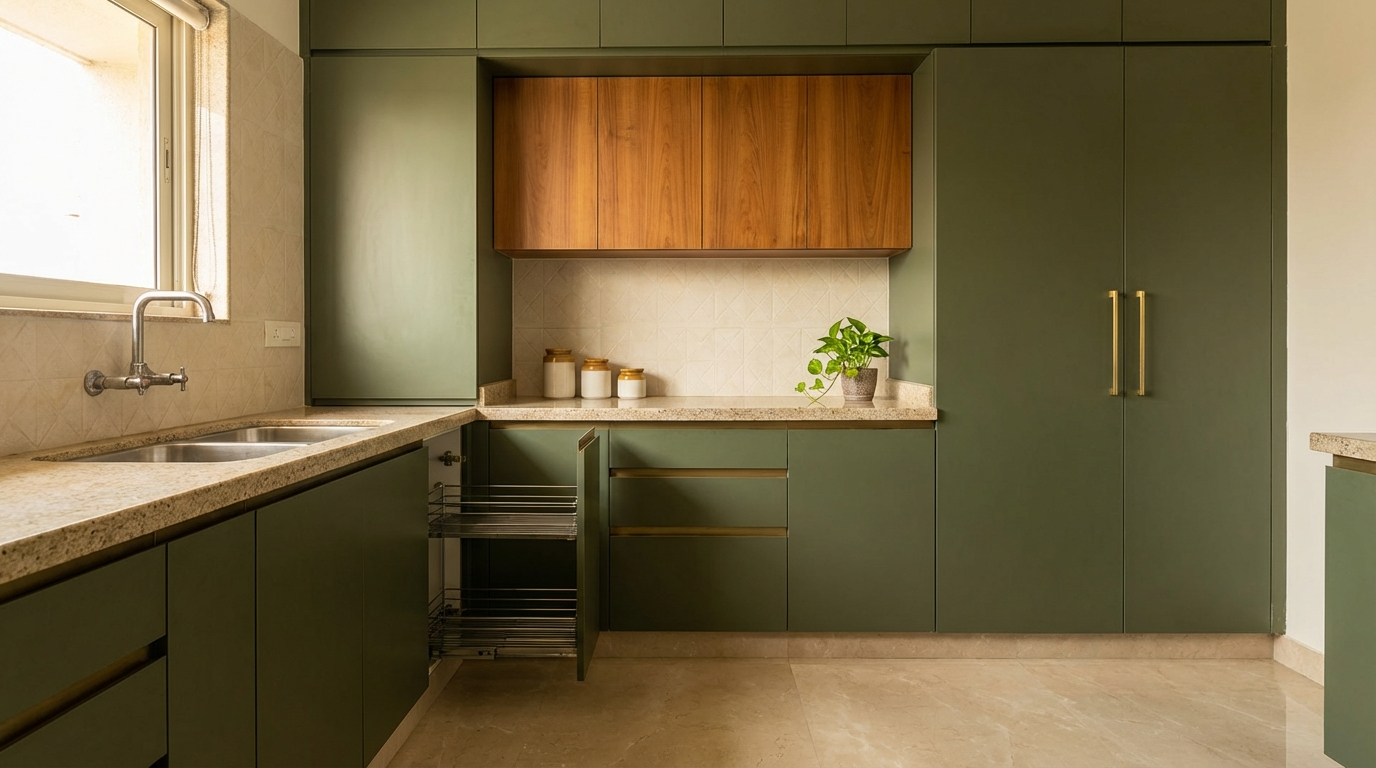
Olive green kitchens bring a natural feel to home decor. Many believe they are the best choice because they create a calming atmosphere. An olive green kitchen can have soft, earthy walls or striking accent pieces. If you want a neat look, olive green cupboards and cabinets keep everything organised while looking elegant.
A spacious parallel kitchen with a convenient work triangle can feature dark olive green lower cabinets that provide a stark contrast to beige upper cabinets and geometric dado designs. Ceiling-touch cabinets maximize storage.
What I tell my clients in Powai and Andheri: If you're doing olive cabinets, go matte finish. Steer clear of overly glossy finishes unless you're intentionally going for a retro look. In Indian kitchens with oil splatters from tadka, matte hides marks better. Honestly, this is practical advice that most Instagram-worthy kitchen photos don't mention.
| Kitchen Style | Olive Application | Best Pairings | My Take |
|---|---|---|---|
| Modern Minimal | All base cabinets in matte olive | White upper cabinets, white quartz countertop | Works beautifully in apartments with good natural light |
| Farmhouse/Rustic | Shaker-style olive cabinets | Brass hardware, wooden shelves, marble backsplash | Trending now but requires more maintenance |
| Two-Tone Contemporary | Olive island, neutral perimeter | Walnut or teak countertop, black fixtures | Safest option for indecisive clients |
| Full Color Drench | Olive cabinets AND walls | Brass accents, natural wood floor | Bold. Only for confident homeowners. |
Olive Green Furniture: Sofas, Wardrobes, and TV Units
The market for green sofas, particularly olive green, is experiencing a significant resurgence driven by a desire for nature-inspired interiors and retro aesthetics. This trend is moving away from traditional neutrals like grey, with green now holding the top spot for popular sofa colors. The versatility of green, from muted sage and olive to vibrant emerald and forest tones, allows it to fit various design schemes.
Google search data indicates a growing interest in specific olive green sofa styles, particularly "olive sectional sofa" and "olive velvet couch." While search volumes were low for most of 2025, there was a notable increase in November and December for "olive sectional sofa." Velvet olive sofas especially are having a moment.
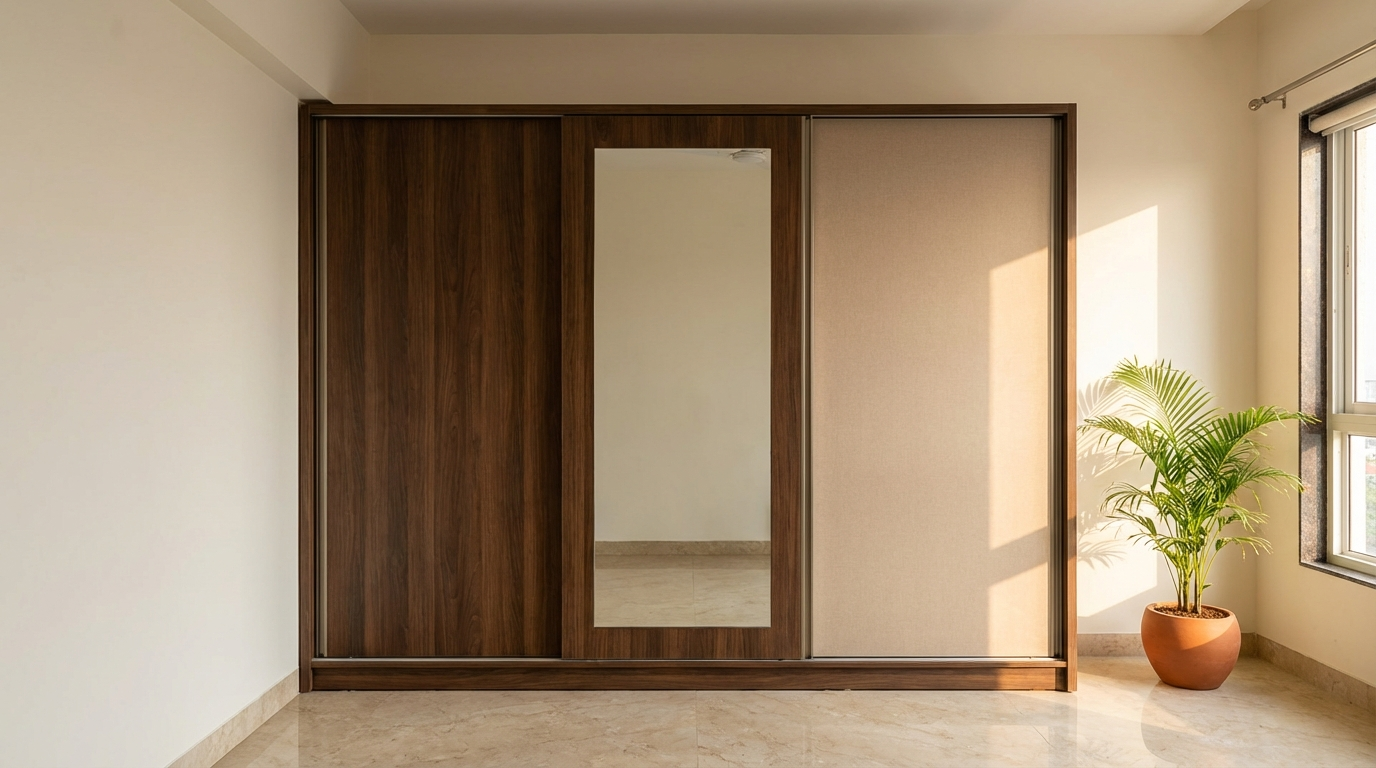
For wardrobes and TV units, deep greens like hunter or olive can be used for accent elements or bed frames for a bolder, sharper look. These deep colors give bedrooms a sense of elegance and richness, making it feel like a luxurious haven. This beautiful vibe can be further enhanced by combining metallic accents like brass or gold with dark green laminate.
Olive Green Laminate Options for Indian Markets
Green colour laminate is a type of surfacing material commonly used in interior design and furniture construction. It consists of multiple layers of resin-impregnated paper compressed under high pressure to create a durable and decorative surface. The green colouration can vary from light pastel shades to deep, rich hues.
For Indian homeowners, several laminate brands offer olive green options:
- Merino Laminates offers olive green options in 0.8mm thickness, suitable for modern interiors
- Greenlam offers olive laminates in various finishes for different applications
- Royale Touche, known for quality and durability, is among the best laminates manufacturers in India offering green options
Green laminates are known for their durability. They are resistant to scratches, stains, and wear and tear, ensuring that surfaces maintain their aesthetic appeal for a long time. They can be used for various applications such as kitchen countertops, furniture surfaces, wall panelling, and more—suitable for both residential and commercial spaces.
Is olive green laminate worth the extra cost over painted MDF?
Compared to other surfacing materials like natural stone or solid wood, laminates are often more budget-friendly without compromising on quality or style. Green colour laminate offers comparable aesthetics to natural materials but at a lower cost. It is also more durable and easier to maintain.
In my experience with projects across Mumbai and Pune, laminate outlasts painted finishes by 5-7 years in kitchen environments. The upfront cost difference is maybe ₹40-60 per sq ft, but you save on repainting costs down the line. Worth it.
Best Color Combinations with Olive Green
Olive green is an incredibly timeless color, and pairs well with many colors since it's often seen as neutral. Whether you want to create a contrasting scheme by pairing it with opposite hues on the color wheel like red, or create a pared-back scheme with other neutrals, olive green is a great color to incorporate into your home.
| Color Combination | Mood Created | Best For | Works in Indian Context? |
|---|---|---|---|
| Olive + Beige/Cream | Calm, sophisticated | Living rooms, bedrooms | Excellent—complements existing teak furniture |
| Olive + White | Fresh, modern | Kitchens, bathrooms | Good, but needs textures to avoid clinical feel |
| Olive + Gold/Brass | Luxurious, warm | Pooja rooms, formal dining | Perfect with Indian brass décor |
| Olive + Terracotta/Rust | Earthy, bohemian | Living rooms, balconies | Trending in Bengaluru interiors right now |
| Olive + Navy Blue | Dramatic, masculine | Studies, master bedrooms | Bold—use carefully in small spaces |
| Olive + Mustard Yellow | Energetic, retro | Kids rooms, informal spaces | Works but can feel overwhelming |
| Olive + Black | Modern, edgy | Modular kitchens, TV units | Stunning with matte finishes |
| Olive + Blush Pink | Contemporary, playful | Teen bedrooms, guest rooms | Surprisingly elegant when balanced |
As two neutral colours, olive green and beige are a match made in heaven for interiors. A popular colour combination in kitchens, with olive green cabinetry and beige worktops or surrounds.
"I love layering olive green with deeper greens, browns and beiges, and pops of orange or other unexpected bright colors," explains designer Bethany Adams. "It really is reminiscent of a walk in the woods, where everything is mossy and green and then suddenly you'll come upon a flower or a butterfly that shakes up the whole scene."
How to Choose the Right Olive Shade for Your Space
Here's the framework I use with clients:
Step 1: Assess your natural light. North-facing rooms in Mumbai get diffused light—go for lighter olive shades. South and west-facing rooms can handle deeper olives without feeling cave-like.
Step 2: Look at your existing wood tones. Tan and natural wood tones work exceptionally well with olive green as it provides a neutral, and uncomplicated pairing. If you have dark rosewood furniture, lighter olives create contrast. With light oak or ash veneer, you can go darker.
Step 3: Consider the room's purpose. Soft greens like olive or sage appear more refined and subdued on desktops or woodwork. These muted hues create a calming background that reduces stress and sharpens attention. For bedrooms and studies, this matters.
Step 4: Factor in maintenance reality. Darker greens, such as olive or forest, contrast elegantly with lighter cabinets and walls, giving countertops and backsplashes more depth and style. These colors are excellent at hiding stains and smudges. In kitchens with heavy use, that's not just aesthetic—it's practical.
| Your Situation | Recommended Olive Shade | Why |
|---|---|---|
| Small apartment, limited light | Light olive/olive-beige | Won't shrink the space visually |
| Spacious flat, large windows | Medium to deep olive | Can handle drama without feeling oppressive |
| Kitchen with heavy cooking | Deep matte olive | Hides oil marks and fingerprints |
| Bedroom for relaxation | Soft, muted olive | Promotes calm, not stimulating |
| Modern minimal aesthetic | Gray-olive hybrid | Reads more neutral, less "green" |
| Traditional Indian home | Warm golden-olive | Pairs with brass and existing warm tones |
Red flags to walk away from:
- Painters who want to mix olive "on-site" without matching to a code
- Laminates that look different under showroom halogen vs. natural light
- Vendors who can't provide a physical sample before ordering
Common Mistakes People Make with Olive Green
1. Going full olive on all walls. This works in large European homes with 10-foot ceilings. In a 10x12 bedroom in Gurgaon? Disaster. One accent wall maximum. The rest should be cream, white, or a very light complementary shade.
2. Ignoring undertones. Olive green is a specific shade that carries a hint of brown, giving it a warm, earthy quality. This color is often associated with peace, harmony, and connection to nature. It's versatile enough to be used in various settings. But some olives lean yellow, some lean gray. Match to your existing décor or you'll have a clash that bothers you for years.
3. Using glossy finish in kitchens. Steer clear of overly glossy finishes unless you're intentionally going for a retro look. Oil splatters, water marks, fingerprints—all show up dramatically on high-gloss olive surfaces. Matte or satin, please.
4. Combining olive with too many competing colors. Even timeless colors can go wrong without balance. Avoid pairing olive green with too many competing colors. Stick to one or two accent tones. I've seen living rooms with olive walls, mustard sofa, turquoise cushions, and orange curtains. It looked like a box of crayons exploded.
5. Forgetting about lighting. Strategic lighting ensures your olive green cabinets and complementary materials shine: Warm LED lighting brings out the richness of olive tones. Under-cabinet lights highlight countertops and backsplash. Statement pendants incorporating metallic finishes echo hardware. Cool white LEDs make olive look sickly. Warm 3000K lights bring out the beauty.
6. Not testing in actual conditions. This one really frustrates me. Clients pick colors from a fan deck in the showroom, then complain when it looks different at home. Different light temperature, different wall texture, different time of day—all affect how olive appears. Test. Always test.
7. Mismatching with flooring. Olive with red-toned tiles creates visual tension. Olive with gray-toned marble works beautifully. Dark olive green kitchen cabinets pair nicely with hardwood flooring, especially when combined with beige limestone countertops.
Quality Checks for Olive Green Laminates and Paints
Visual checks at the dealer:
- Look for color consistency across multiple sheets—batch variation is common
- Check edges for chipping or delamination
- View under multiple light sources if possible
- Look for surface scratches or imperfections
- Verify the thickness matches specifications
Questions to ask your dealer:
- What's the UV resistance rating? High-quality laminates are manufactured with UV-resistant properties to prevent fading due to sunlight exposure. However, prolonged exposure to direct sunlight may still cause some degree of fading over an extended period.
- Is this suitable for kitchen/bathroom use? (moisture resistance matters)
- What's the warranty period and what does it cover?
- Can you provide a sample I can take home?
Simple field tests:
- Tap test for laminates: Hollow sound indicates poor bonding to substrate
- Scratch test: Run your fingernail across—quality laminate shouldn't mark easily
- Flex test: For paint, apply to a sample board and flex slightly—good paint shouldn't crack
- Rub test for paint: Once dry, rub with damp cloth—shouldn't transfer color
Here's a trick most dealers don't like—ask them to show you the laminate after 1-2 years of installation. Any showroom worth its salt will have aged samples. Fresh samples always look good. It's the aging that separates quality from garbage.
Working with Your Carpenter: Olive Green Execution Tips
For olive green kitchen cabinets and furniture, different materials available for green kitchen cabinets include wood, marble, paint finishes, and laminate. Your carpenter needs to know which you're using.
What to tell your carpenter:
- Specify matte vs. glossy finish clearly—mistri will default to what's in stock otherwise
- Edge banding color should match exactly—ask for samples
- Hardware placement matters more with colored surfaces—discuss before drilling
- Ensure proper substrate preparation—MDF needs sealing before laminate application
- Storage requirements—keep laminates flat, away from moisture before installation
- Acclimatization period—let materials sit in the room for 24-48 hours before cutting
There was this contractor in Andheri—must have been early 2023—who installed beautiful olive laminate on kitchen shutters without proper edge sealing. By August, during the first serious monsoon rains, moisture had crept into the MDF core. The shutters swelled at the bottom, wouldn't close properly. Complete replacement needed. ₹1.2 lakh job. All because of skipped edge banding.
Laminates can be installed on existing surfaces like old countertops or cabinets, provided the surface is clean, dry, and structurally sound. Proper surface preparation is crucial for a successful installation.
How Long Does Olive Green Stay Relevant?
Here's what I tell my clients: Olive green cabinets are a timeless color choice that works both in modern as well as in classic kitchen designs. This natural yet sophisticated color can be paired with a wide variety of materials and colors.
Olive green is a colour that is set to stay in our interiors. An incredibly earth warming and gorgeous neutral that works so well with a multitude of patterns and shades.
Interior design predictions for 2026 include palettes with "more depth and a continuing shift toward earthy, organic mid-tones: chalky rose, smoky blue, tobacco brown, dusty olive, sunbaked terracotta, soft charcoal."
"Twenty twenty-six is all about 'earthy vibrancy'—rich ochres, olive greens, muddy blues, and deep plums. These tones feel grounding yet adventurous, a nod to nature but elevated," say designers who coined the term.
For laminate surfaces, expect 8-12 years of good appearance with proper maintenance. For painted walls, you might want to touch up every 4-5 years depending on traffic and humidity exposure. In coastal cities like Chennai or Mumbai, factor in additional wear from salt air and dampness.
Alternatives If Olive Green Doesn't Work for You
If olive feels too "green" for your taste, consider:
Sage green: Cooler, grayer undertones. More contemporary, less earthy. Works well with stainless steel and modern finishes.
Khaki/Taupe: Similar warmth without the green. Safer if you're nervous about color. Pairs with almost everything.
Forest green: Deeper, more dramatic. Designers report strong demand for sage, olive, forest and deep green tones, especially in cabinetry, tile, upholstery and stone. But be careful—can feel heavy in small spaces.
Our color selection guide for Indian homes covers more options if you're still exploring. For kitchen-specific applications, the modular kitchen color guide goes deeper into laminate and finish options.
FAQs About Olive Green in Interiors
Q: What colors go best with olive green walls in Indian homes?
Olive green walls pair well with neutrals like cream and beige, earth tones like terracotta, and deep jewel tones like emerald green. Warm wood accents and soft pastels also complement olive green nicely. For a distinctly Indian aesthetic, try olive with brass décor pieces and teak furniture—the warmth of both elements creates something special.
Q: Is olive green suitable for north-facing rooms with less light?
Opt for lighter green tones in compact or dimly lit rooms to visually expand the space. Incorporate tactile materials like linen, wood, or rattan for added depth. If you're set on olive for a darker room, use it on just one wall and pair with plenty of white and mirrors to bounce available light around.
Q: Can I use olive green in bathrooms?
Green laminate in the bathroom can create a serene, spa-like atmosphere that offers both aesthetic appeal as well as practical advantages. For paint, use waterproof or moisture-resistant variants specifically rated for bathrooms. Avoid using regular interior paint—it will peel within a year in humid Indian bathrooms.
Q: Is it true that olive green makes rooms feel smaller?
Not necessarily. It depends on the shade and application. Lighter olives with gray undertones actually recede visually. Darker, saturated olives do feel more enclosed—but "enclosed" and "cozy" can be the same thing depending on your goal. In a bedroom, that cozy feeling might be exactly what you want.
Q: What if I live in Chennai or Kochi with high humidity?
Humidity between 70-90% is common in coastal cities. Use premium waterproof paints with anti-fungal properties. For laminates, ensure marine-grade or BWP (Boiling Water Proof) substrates. Edge sealing is absolutely critical—I can't stress this enough. To extend the lifespan of your green laminates, avoid exposing them to extreme heat or moisture. Use coasters and trivets to protect the surface from hot pans, and wipe up spills immediately to prevent staining.
Q: How do I clean olive green laminate surfaces?
Clean your green laminates regularly with a damp cloth and mild detergent. Avoid using abrasive cleaners or scrubbers, as these can scratch the surface. For stubborn stains or spills, use a mild cleaning solution and a soft-bristled brush to gently scrub the surface. Rinse with clean water and dry with a soft cloth.
Q: Is it true that olive green is good for Vastu?
Olive green is a highly auspicious colour in Vastu, representing growth, prosperity, and positivity. It's an ideal choice for east and southeast facing areas. I'm not a Vastu expert, but I've had multiple clients specifically request olive for these reasons. Whether you believe in Vastu or not, the color psychology of green promoting calm and balance is well-documented.
Q: Can I repaint over olive green easily if I change my mind?
Yes, but with a primer coat first. Olive is a medium-tone color, so it won't bleed through white paint as badly as red or dark blue would. But skipping primer is a mistake—you'll need 3-4 coats of topcoat versus 2 coats with proper priming. Not worth the false economy.
Q: What thickness laminate should I use for olive green kitchen cabinets?
For kitchen cabinets, 0.8mm to 1mm thickness is standard. Don't go thinner than 0.8mm—it won't hold up to daily use. For countertops or heavy-use surfaces, consider 1.5mm or compact laminates for added durability.
Q: Is it true that olive green is going out of style soon?
Designer Ariel Okin notes that "Muddy tones, such as olive greens, deep chocolates, and plummy aubergines, reflect the countryside and bring the outdoors back in," reinforcing that earth tones will be the uniting thread of 2026. The earthy color trend has been building for years and shows no signs of slowing. Olive is not a flash-in-the-pan trend like neon colors or stark gray interiors—it's a return to something more timeless.
Q: How do I incorporate olive green if my landlord won't let me paint?
"Incorporating these colors into your home can be as simple as buying a throw pillow or art with the right tones, using natural materials like wood and stone, or adding greenery around your house." Focus on textiles—rugs, curtains, and cushions. An olive velvet sofa can anchor an entire room without touching the walls.
Q: What metal finishes work best with olive green?
Gold can easily be woven through the home by way of decor, furnishings and interior hardware. Brushed brass sockets and switches contrast beautifully with olive green, making the brass pop. A fail-safe combination that always works. Avoid chrome or silver-toned metals—they create a cold, disconnected feeling with warm olive. Bronze and antique brass also work wonderfully.
That's the essentials on olive green for Indian homes. The color has staying power because it actually solves problems—hides marks, feels warm in AC-cooled rooms, works with our existing wood furniture. Sample before you commit, choose the right finish for your application, and don't forget proper edge sealing if you're using laminates. Your carpenter might have opinions—hear them out, but trust the color science over habit.
Disclaimer: This content is provided for general informational purposes based on industry practices and publicly available information. Product specifications, standards, prices, and availability may vary by manufacturer, region, and time. Readers should independently verify details with manufacturers, dealers, or qualified professionals before making purchase or construction decisions.
Want Plywood Suggestions?
Share a few details and a Sainik 710 specialist will suggest suitable brands and connect you to responsive dealers.