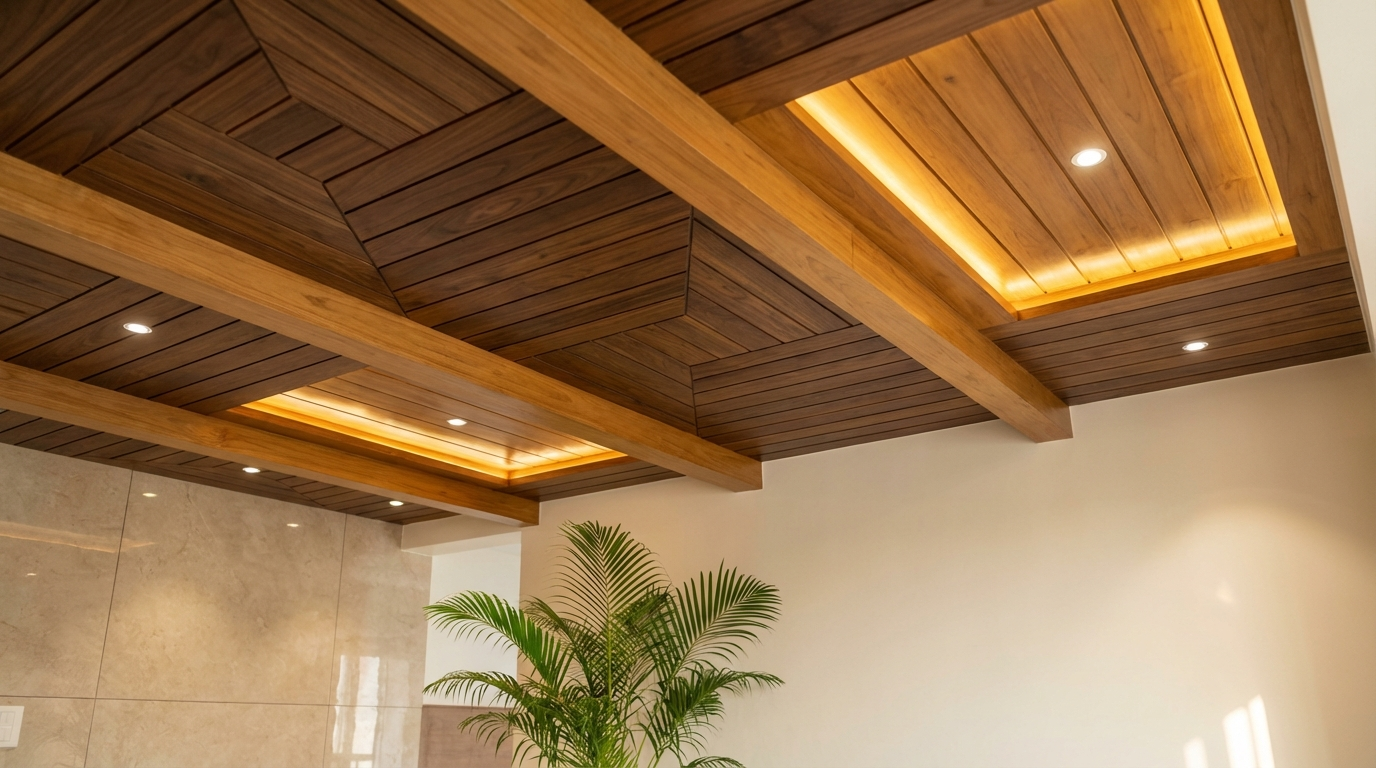
Living Room Design Ideas: 50+ Modern, Small & Indian Style Layouts for 2026
Explore 50+ living room designs—modern, small space & Indian style layouts. Get furniture tips, color schemes & TV unit placement for perfect interiors.
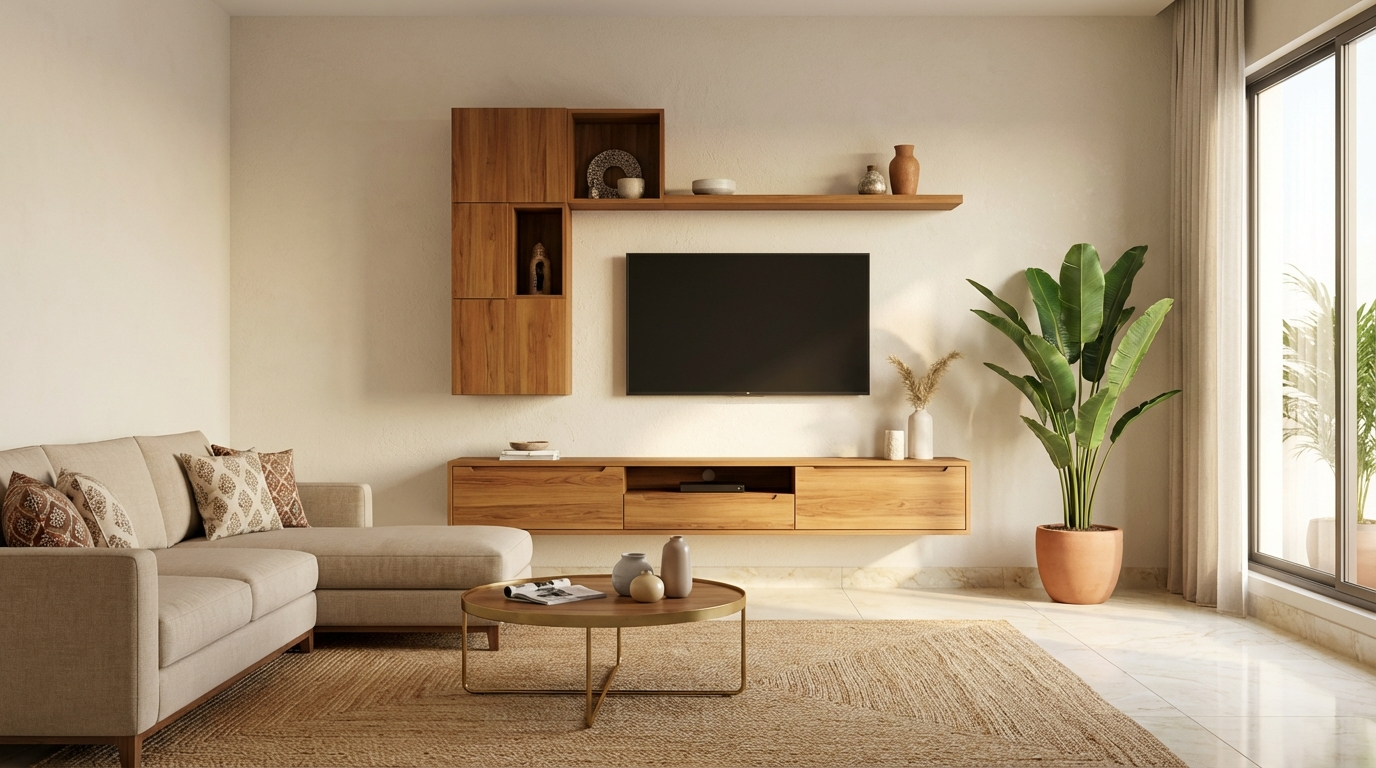
Living Room Design Ideas: What Actually Works in 2026
A good living room design balances three things—how you actually use the space, what fits your budget, and what makes sense for your city's climate. This year, it's all about "layered lighting, earthy tones, textured walls, and multi-functional furniture." Short version: stop copying Pinterest boards designed for Scandinavian apartments. Your Thane 2BHK needs a different approach than a villa in Coimbatore.
This is right for you if:
- You're setting up a new flat or renovating an existing hall
- Your living room doubles as everything—TV room, work-from-home space, kids' play area, guest entertainment zone
- You want ideas that work with Indian furniture sizes and weather, not imported magazine concepts that fall apart in our humidity
- Budget matters
Skip this if:
- You're looking for luxury villa interiors with unlimited budgets—this isn't that
Bottom line: The best living room designs in 2026 prioritize comfort and practicality over Instagram aesthetics, especially for Indian homes dealing with space constraints and multi-purpose usage.
What "Modern Living Room Design" Actually Means
Modern living room design is a style focusing on clean lines, functional furniture, and intentional decor rather than cluttered traditional setups. It doesn't mean cold or minimal—it means purposeful. The shift is "from what looks good to what feels good, works well and ages intelligently."
Most people think modern means all-white walls and Scandinavian furniture. Actually, that trend is fading. "Overly Minimalist Decor Plain, white walls with no texture or character are no longer trending. People are now choosing layered textures, soft colours, and meaningful decor." What's replacing it? Warmth. Texture. Things that look like someone actually lives there.
"Gone are the days when furniture, curtains, and walls all matched perfectly. 2026 is about mixing styles, materials, and tones for a more curated and lived-in feel." If I'm being honest, this is good news for Indian homes. We've always been collectors—antiques from grandmother, gifts from relatives, that one painting from the local art fair. Modern design finally caught up to our reality.
Why This Matters in Indian Homes Specifically
Here's the thing most design blogs skip. They'll show you beautiful rooms from London or New York and pretend the same works here. It doesn't.
Humidity is the silent killer of living room aesthetics. In Mumbai, Chennai, or Kolkata, you're dealing with 70-90% relative humidity for months. That fabric sofa you bought? It'll smell musty by July if you don't plan for ventilation. Those untreated wooden shelves? Warping within two monsoons. I've seen beautiful setups in Bandra flats turn sad within a year because nobody thought about moisture.
Then there's the space issue. "The furniture market in India nearly doubled in the last ten years, making it the world's fourth-largest." But our average apartment sizes didn't double—they actually shrank in most metros. A 150 sq ft living room in Powai needs completely different planning than a 300 sq ft hall in a Jaipur independent house.
Climate zones matter too. Coastal Karnataka and the Konkan belt need different material choices than dry Rajasthan or the Deccan plateau. Ahmedabad summers hit 45°C—you want light, breathable fabrics and good air circulation. Bengaluru's milder weather gives you more flexibility with heavier upholstery. Humid Bengal means you prioritize materials that don't absorb moisture.
Do you really need a formal living room in 2026?
"Living room layouts are more about being social, entertaining, and encouraging conversation in 2026 rather than passively watching TV. They're returning to their roots, becoming multifunctional salons." The answer is: probably not in the traditional sense. The old "sofa set facing TV" arrangement is giving way to flexible zones. "Expect to see distinct zones within the living room—reading nooks, writing desks, conversation clusters, and even built-in bars—all thoughtfully arranged within a single space."
I've been saying this for years. Most Indian families don't need a formal drawing room anymore. You need a space that works for WFH on weekdays, movie nights on weekends, relatives visiting during festivals, and kids doing homework after school. Plan for reality, not formality.
Living Room Design Styles: What Works and What's Fading
"Living room trends for 2026 are all about warmth, comfort, and personal style." But let me break this down by specific styles that actually translate to Indian contexts.
| Style | Best For | Indian Home Suitability | Budget Level | My Take |
|---|---|---|---|---|
| Contemporary/Modern | Urban apartments, young couples | Excellent—works with compact spaces | ₹1.5-4 lakhs for full setup | Safe choice, ages well |
| Traditional Indian | Independent houses, joint families | Perfect if you have the space | ₹3-8 lakhs depending on craftsmanship | Don't half-do this—commit or skip |
| Indo-Fusion | Most metro homes | Highly adaptable | ₹2-5 lakhs | What most clients actually want |
| Minimal | Studios, 1BHKs, bachelors | Works but feels cold to most families | ₹1-2.5 lakhs | Fading trend—add warmth |
| Boho/Eclectic | Creative types, informal setups | Good for rentals—easy to move | ₹80k-2 lakhs | Easy to overdo, needs restraint |
| Industrial | Lofts, converted spaces | Limited—needs high ceilings, specific architecture | ₹2-5 lakhs | Only if your space already has the bones |
"Glossy Finishes Everywhere High-shine surfaces are being replaced by matte, natural, and earthy textures. This shift gives your living room a softer and more sophisticated look." Honestly? Thank god. Those high-gloss laminates were a nightmare to maintain—every fingerprint, every dust particle showed. Matte finishes are far more forgiving for actual families.
What colors are trending for living rooms in 2026?
"Soft browns, olive greens, and terracotta tones dominate trending living room colours for 2026, bringing warmth and calm." This is a big shift from the grey-everything phase we saw for years. "Deep, saturated color will be a major theme in 2026. Darker, layered colors, like greens, aubergines, and plums, feel collected and full of depth."
Here's what I tell my clients in different cities:
- Mumbai/Chennai (high humidity): Stick to lighter versions of these tones—sage green, soft terracotta. Dark colors absorb moisture and can feel oppressive.
- Bengaluru/Pune (moderate climate): You have flexibility. Go deeper with olive, forest green, rich browns.
- Delhi/Ahmedabad (extreme heat): Whites and creams aren't dead here. Light reflects heat. Use earthy tones as accents, not full walls.
Small Living Room Layouts That Actually Work
This is where 60-70% of my consultations end up. Not everyone has 500 sq ft halls. Let's talk about what works in compact spaces.
"If you like flexibility or live in a multipurpose space, a modular setup is your best choice. Modular or sectional furniture can be rearranged easily to fit your needs."
The biggest mistake I see? Pushing all furniture against the walls. Counterintuitive, but "Float furniture when you can: Don't push everything against the walls. Pull the sofa out a little to make the space feel more intentional."
| Room Size | Recommended Layout | Seating Capacity | Key Tip |
|---|---|---|---|
| Under 100 sq ft | 2-seater + 1 accent chair | 3-4 people | Skip the coffee table—use side tables |
| 100-150 sq ft | L-shaped sectional or 3-seater + ottoman | 4-5 people | One wall for TV unit, opposite for seating |
| 150-200 sq ft | 3-seater + 2 accent chairs + center table | 5-6 people | Create conversation grouping, not TV-facing rows |
| 200-300 sq ft | Flexible—add zones for reading/work | 6-8 people | Define areas with rugs, not walls |
| Over 300 sq ft | Multiple seating arrangements | 8+ people | Create intimate clusters, avoid the bowling alley effect |
"An L-shaped seater is the best way to make a small living room feel bigger by maximizing the space, allowing several people to use it at once." I agree with this for most Indian homes. The L-configuration works brilliantly because we entertain frequently—festivals, relatives, impromptu chai sessions. You need seating that accommodates guests without looking empty on regular days.
Can curved furniture work in small living rooms?
Yes—and this surprised me too. "Incorporating curved sofas into a small living room layout is especially advantageous. Not only do they enhance the aesthetics of a compact space, but they also promote better, more intimate conversations." Curved pieces soften harsh corners and make rooms feel less boxy. But don't overdo it. One curved piece—a sofa or accent chair—is enough.
Price Reality Check (2026 Market)
"Redoing a living room in India can cost anywhere between ₹1.5 lakhs to ₹6 lakhs, depending on size, materials, and finishes." This is roughly accurate, but let me break it down more honestly.
Budget tier (₹80k-1.5 lakhs): Basic renovation. Ready-made furniture from mainstream brands, paint refresh, new curtains, budget lighting. Works for rentals or first homes.
Mid-range (₹1.5-3.5 lakhs): Where most families land. Mix of custom and ready-made furniture, decent quality wood or engineered wood pieces, some statement lighting, textured walls.
Premium (₹3.5-6 lakhs): Custom furniture, solid wood or premium laminates, designer lighting, false ceiling work, full flooring change.
Luxury (₹6 lakhs+): No ceiling. Italian marble, imported furniture, designer consultations, smart home integration.
Here's what actually affects your final bill:
- Flooring changes: Can add ₹40-200 per sq ft depending on material. Biggest single expense after furniture.
- Custom vs ready-made: Custom joinery costs 30-50% more but fits your space perfectly.
- City differences: Same design costs 15-25% more in Mumbai than Pune, 10-15% more in Bengaluru than Chennai (labor costs).
- Finish quality: That ₹15,000 TV unit and that ₹45,000 one might look similar in photos. The difference is in hardware, material thickness, and longevity.
TV Unit Placement: Practical + Vastu Guidelines
Now here's where I'll probably get some disagreement. Let me give you both perspectives—practical and Vastu—because many Indian homes care about both.
Practical placement rules:
- Viewing distance: 1.5 to 2.5 times the diagonal screen size. A 55" TV needs roughly 7-11 feet viewing distance.
- Eye level: Center of screen should be at seated eye level, typically 42-48 inches from floor.
- Avoid glare: Don't place opposite windows unless you have good blinds.
- Ventilation: Leave 4-6 inches behind wall-mounted units for heat dissipation.
"Big, bulky TV units are out. In 2025, sleek, multi-functional solutions dominate. Wall-mounted units with storage are now preferred, offering more space and efficiency."
Vastu considerations:
"Ideally, the TV should be installed in the southeast corner of the living room. The north east or the south west directions are best avoided." "Southeast is ruled by Agni, the fire god. TV is an electronic item that has energy and heat. It fits well in the southeast corner of the room."
"North-East corner – leads to stress, lack of concentration, and disharmony. South-West – interferes with stability and causes frequent arguments."
If I'm being honest, I tell clients to prioritize practical placement first. If you can accommodate Vastu within that framework, great. But don't sacrifice viewing comfort for directional compliance. Many modern apartments simply don't allow the "ideal" placement, and that's okay.
How to Choose: The Decision Framework
Stop scrolling Pinterest endlessly. Here's a practical framework.
Step 1: Measure everything. Not just floor dimensions—ceiling height, window positions, door clearances, AC unit locations. Accurate measurements save you from buying that beautiful 8-foot sofa that won't fit through your 6-foot entrance.
Step 2: List your actual uses. Not aspirational—actual. How many people live here? How often do guests come? Do kids play in this space? Does anyone WFH here? This determines your furniture choices more than any trend.
Step 3: Set a realistic budget. Add 15-20% buffer for unexpected costs. Everyone underestimates electrical work, curtain costs, and installation charges.
Step 4: Identify your climate reality. Coastal humid, inland dry, moderate—this affects material choices for everything from upholstery to wood type.
Step 5: Pick a focal point. Every room needs one anchor. Usually the TV wall or a window with a view. Design around this, not around furniture.
| Situation | Recommendation | Why |
|---|---|---|
| Rented apartment, 2-3 year stay | Modular, moveable furniture | You'll take it with you—portability matters |
| Owned flat, nuclear family | Mid-range custom + quality ready-made mix | Best value for money, lasts 8-10 years |
| Joint family, frequent guests | Prioritize seating quantity and durability | Comfort for elders, space for gatherings |
| Bachelor/couple, minimal entertaining | Statement pieces over quantity | One great sofa beats three mediocre ones |
| Coastal city with humidity issues | Engineered wood, synthetic fabrics | Solid wood warps, cotton holds moisture |
| Hot dry climate | Light colors, natural fabrics | Reflects heat, breathes better |
Red flags to walk away from:
- Designers who push one "signature style" regardless of your input
- Quotes that don't itemize costs—you can't negotiate what you can't see
- Pressure to decide immediately on custom furniture
- No warranty or service commitment in writing
- Refusal to show material samples or previous work
Common Mistakes People Make
Mistake 1: Buying the sofa first. I've seen this happen so many times. Someone falls in love with a sofa at a showroom, buys it, and then tries to design the room around it. Disaster. Measure your space first, plan your layout, then shop for furniture that fits the plan.
Mistake 2: Ignoring traffic flow. You need clear pathways of at least 3 feet width through the living room. I worked with a family in Malad who had a beautiful room that nobody used because the furniture arrangement made it awkward to walk through. Rearranging cost nothing but made the space functional again.
Mistake 3: Matching everything. "Gone are the days when furniture, curtains, and walls all matched perfectly." That matchy-matchy coordinated set look from the 2000s is dated. Mix materials, textures, and finishes. Your grandmother's brass lamp can absolutely coexist with a modern sectional.
Mistake 4: Underestimating storage needs. This one really frustrates me—people design beautiful minimalist rooms and then complain about clutter within six months. Where will you store festival decorations? Extra cushions? Blankets? The remote controls and random stuff that accumulates? Plan storage into every TV unit, every seating arrangement.
Mistake 5: Ignoring lighting completely. Most people think about lighting last. Wrong approach. "Statement light fixtures will continue to reign supreme as a must-have living room feature in 2026." You need layered lighting—ambient (ceiling), task (reading lamps), and accent (wall lights or strip LEDs). Plan electrical points before painting.
Mistake 6: Choosing materials wrong for your climate. That velvet sofa in your Chennai apartment? It'll collect humidity and smell odd by August. Leather in Rajasthan? It'll crack without serious conditioning. Know your climate, choose accordingly.
Mistake 7: Over-decorating. There was this flat in Bandra—the owners had visited Jaipur and bought every beautiful thing they saw. Blue pottery, block prints, brass work, wooden carvings. Beautiful individually. Together in one living room? Visual chaos. Edit ruthlessly. Less is usually more.
Mistake 8: Skipping the rug. In small Indian homes, rugs define spaces without walls. A rug under your seating area creates a distinct zone. Without it, furniture just floats. But choose wisely—loop pile rugs are dust traps if you have allergies.
Quality Checks You Can Do Yourself
Visual checks for furniture:
- Sit on sofas fully—not just the edge. Does the cushion compress unevenly?
- Look underneath. Exposed staples and rough finishing indicate poor construction.
- Check drawer slides on TV units—soft-close mechanisms should work smoothly without wobbling.
- Examine edges and corners. Sharp edges are a safety issue, especially with children.
- Inspect fabric seams. Crooked stitching suggests the same for internal construction.
Questions to ask dealers:
- "What's the frame made of?" (Hardwood like Sal or Sheesham is better than soft pine)
- "Is this high-density foam or regular?" (36+ density is good, anything below 30 flattens quickly)
- "What's the warranty on the mechanism/springs/frame?"
- "Can I see the same piece that's been on display for 6+ months?"—the used floor model tells you how it ages
Simple tests:
- Weight test: Quality solid wood furniture feels heavy. If a dining chair feels lightweight, it's hollow or veneer on MDF.
- Tap test: Solid surfaces have a dull thud. Hollow or cheap construction sounds tinny.
- Flex test: Push on shelf centers—if they flex more than a few millimeters, they'll sag with weight over time.
- Edge inspection: Run your finger along laminate edges. Bubbles or lifting indicate poor adhesion.
Warning signs:
- Prices too good to be true (60-70% off on "branded" furniture usually means seconds or returns)
- No clear warranty terms
- Unwilling to let you see display models up close
- Pressure tactics ("this price only today")
- Vague material descriptions ("solid wood look" instead of actual wood type)
Here's a trick most dealers don't like—ask to see the same model that's been in their showroom for months. Fresh pieces look great. Showroom pieces that customers have sat on daily show you the truth about cushion recovery, fabric pilling, and finish durability.
Workmanship & Installation: What to Tell Your Carpenter
If you're getting custom TV units or storage built, your mistri needs specific instructions.
Material specifications to insist on:
- Plywood: BWR grade minimum for TV units—MR grade absorbs moisture and swells near electronics generating heat.
- Thickness: 18mm for shelves supporting weight, 12mm for internal partitions is fine.
- Edge banding: Always. Exposed plywood edges absorb moisture and look unfinished within months.
- Back panels: Don't skip this. Many carpenters use thin 4mm boards that warp. Insist on 6mm minimum.
Briefing checklist for your carpenter:
- Share accurate measurements—have him verify before cutting
- Specify all electrical requirements (wire hideaways, outlet positions)
- Discuss ventilation slots behind TV mounting area
- Confirm hardware quality (soft-close hinges cost ₹80-150 more per pair but last years longer)
- Set timeline expectations with penalty clause for delays
- Get staged payment terms in writing—30% advance, 30% on material delivery, balance on completion
I've seen carpenters skip edge banding to save time and then pass it off as "we'll do it later." It never happens. Insist on seeing finished edges before final payment.
Storage and acclimatization: If you're getting solid wood furniture delivered, let it acclimatize in your home for 3-4 days before heavy use. Wood expands and contracts with humidity changes—especially relevant in coastal cities.
How Long Living Room Furniture Actually Lasts
Most brands won't tell you this honestly. Here's my experience after 18 years in this business.
| Item | Budget Quality | Mid-Range | Premium | What Fails First |
|---|---|---|---|---|
| Fabric sofa | 2-4 years | 6-8 years | 10-15 years | Cushion foam, then fabric wear |
| Leather sofa | 4-6 years | 8-12 years | 15-20 years | Surface cracking (especially in dry climates) |
| TV unit (laminated) | 3-5 years | 7-10 years | 12-15 years | Hinge mechanisms, edge delamination |
| Center table (wood) | 4-6 years | 10-15 years | 20+ years | Surface scratches (repairable) |
| Curtains | 2-3 years | 4-6 years | 8-10 years | Sun fade, fabric weakening |
| Rugs | 2-3 years | 5-8 years | 15+ years | Pile flattening, edge fraying |
What affects longevity most? Usage intensity and maintenance. A sofa in a family of five with kids ages faster than one used by a working couple. But also—and people forget this—sunlight exposure. Direct afternoon sun destroys fabric color within 2-3 years. Use blinds or sheer curtains on west-facing windows.
Signs of wear to watch for: cushions that don't spring back after sitting, creaking frames, wobbly legs, fabric thinning at armrests. Catch these early and repairs are affordable. Wait too long and replacement is the only option.
Alternatives Worth Considering
If budget is tight: Consider the phased approach. Start with a quality sofa and coffee table. Add accent chairs, storage, and decor over 1-2 years. Better to have fewer good pieces than a complete set of cheap furniture that needs replacing in 3 years.
If you're renting: Focus on moveable pieces. Modular sectionals that break down for moving. Furniture with legs (easier to shift than bulky platforms). Avoid custom built-ins—you're paying for your landlord's property appreciation.
If you want low maintenance: Look at premium engineered wood options like HDHMR or marine ply with laminate finishes. Our HDHMR guide covers this in more detail—it's more stable than solid wood in humid climates and requires less conditioning.
If durability is the priority: Teak or sheesham solid wood with proper finishing. Higher upfront cost, but generations of use. My parents' living room furniture is 35 years old—still structurally perfect because it was solid sheesham.
Frequently Asked Questions
Is it true that light colors make small living rooms look bigger?
Generally yes, but it's not magic. Light colors reflect more light, creating a sense of openness. "If your room is small, light colors like cream or pale peach might make it look bigger." However, a small room with good natural light can handle deeper colors on accent walls without feeling cramped. The key is contrast—don't make everything the same shade. That actually feels flat and dull, not spacious.
What if I live in a coastal city—does that change furniture choices?
Absolutely. Coastal cities like Mumbai, Chennai, Kochi deal with salt-laden air and high humidity. Avoid pure cotton upholstery—it absorbs moisture. Polyester blends or synthetic fabrics are better. For wood, engineered options with waterproof cores outperform solid wood which tends to warp. Metal hardware should be stainless steel or coated—regular hinges rust within a year. I've seen beautiful wrought iron pieces from a Worli apartment turn orange with rust within two monsoons.
Is it true that TV units need to face southeast as per Vastu?
"The most ideal direction for a TV is the southeast direction in the living room. A television kept in this direction tends to bring positive energy." Many families follow this strictly. But practically speaking, if your apartment layout makes southeast impossible, the east or north walls are acceptable alternatives. Don't compromise viewing comfort for directional compliance—a neck-straining TV position defeats the purpose of having one.
How much should I spend on a sofa for Indian conditions?
For a quality 3-seater that lasts 7-10 years, expect ₹45,000-90,000 for mid-range brands. Below ₹35,000, you're usually getting foam that flattens within 2-3 years and frames that creak. Above ₹1.5 lakhs, you're paying for brand premium or design imports. The sweet spot for value is that mid-range—local manufacturing, decent materials, reasonable margin. Avoid the ₹15,000 "sofa sets" you see online unless it's purely temporary.
Is modular furniture better than traditional fixed furniture?
Depends on your situation. "Flexible furniture is gaining in popularity. Modular sofas, convertible coffee tables, and foldable dining sets offer both flexibility and functionality. These options are ideal for saving space." For renters or those who move frequently—definitely modular. For homeowners planning to stay put 10+ years—traditional custom furniture can be more durable and better fitted to your exact space. The hybrid approach works well too: modular seating with custom storage.
What if my living room has no windows or poor natural light?
This is common in many Mumbai and Kolkata apartments where living rooms face light wells or are L-shaped. Invest heavily in lighting. You need multiple sources—a central fixture alone won't work. Add floor lamps, table lamps, wall sconces. Use light-colored walls with matte finish (reflects ambient light better than glossy). Mirrors opposite light sources help. And don't fight it—embrace warm-toned artificial lighting rather than trying to fake natural light.
Is it true that open floor plans are going out of style?
"The popularity of open-concept spaces may be nearing the end of its reign. Closed or 'broken' floor plans are gaining traction. Individual rooms are becoming smaller and more intimate." This is interesting for Indian context because we never fully adopted open plans anyway—most apartments have defined living areas. The trend now is flexible definition: use furniture and rugs to create zones rather than full walls, but maintain the ability to separate spaces when needed.
How do I balance Indian traditional elements with modern design?
Pick your statements carefully. One brass lamp, one traditional textile (a block-print cushion cover or a dhurrie rug), one piece of wooden craft—these integrate beautifully with modern furniture. The mistake is going all-in with every traditional element: brass, woodwork, block prints, terracotta, all at once. That creates a museum, not a home. Modern rooms with one or two traditional anchors feel authentic without being dated.
Should I invest in smart home features for my living room?
"Technology has already entered Indian homes, but 2026 takes it ahead with fully AI-powered and IoT-enabled interiors." If you're building or renovating—yes, plan the infrastructure now. Concealed wiring for smart switches, dedicated circuits for future upgrades, network points in key locations. The devices can come later as prices drop. Retrofitting is expensive and messy. Minimum I'd recommend: smart lighting control, good WiFi coverage, and TV/speaker integration.
What's the one thing most people forget when designing their living room?
Electrical planning. Everyone focuses on furniture and colors but forgets that you need charging points near seating, floor outlets for lamps if you don't want wire trails, dedicated high-points for wall-mounted TVs, and sufficient switches. Getting electrical work done after painting and finishing is a nightmare and looks patched. Plan it first, during the empty room phase.
Is it true that certain plants bring prosperity according to Vastu?
Look, I'm not a Vastu expert. What I can tell you is that indoor plants—regardless of prosperity claims—genuinely improve living room aesthetics and air quality. "Living rooms in 2025 have increased the use of natural light, plants, and other organic items. By including more greenery, people feel more connected to nature and create an eco-friendly atmosphere." If you want low-maintenance options for Indian conditions: money plant, snake plant, ZZ plant, rubber plant. They survive AC, irregular watering, and low light. Avoid ferns unless you're willing to mist them constantly.
How do I make my rental apartment living room feel like home without permanent changes?
Focus on layering. Rugs over existing flooring. Removable wallpaper or fabric panels on one wall. Furniture that makes a statement. Quality lighting—floor lamps and table lamps don't need installation. Artwork with command strips rather than drilling. Curtains on tension rods if your landlord is strict. Plants. Cushions and throws. You can transform a boring rental without spending on things you'll leave behind.
Final Word
After 18 years of seeing living rooms across budgets and cities, here's what I know for sure: the best ones don't follow any single trend. They work for the people who live in them. That ₹8 lakh designer living room feels cold if no one uses it. That modest ₹1.5 lakh setup with comfortable seating and good lighting can feel like home the minute you walk in.
Whatever you choose—measure twice, plan for real life, pick materials that survive your climate, and don't buy everything at once. Start with what you need, add what you love slowly. Your living room will evolve with you, and that's actually the point.
Our furniture plywood guide and interior material comparison covers material selection in more detail if you're going the custom route. Good luck with the project.
Disclaimer: This content is provided for general informational purposes based on industry practices and publicly available information. Product specifications, standards, prices, and availability may vary by manufacturer, region, and time. Readers should independently verify details with manufacturers, dealers, or qualified professionals before making purchase or construction decisions.Want Plywood Suggestions?
Share a few details and a Sainik 710 specialist will suggest suitable brands and connect you to responsive dealers.