Laminate Sheets: Types, Uses, Brands & Price Guide for Kitchen, Wardrobe & Furniture
Complete laminate guide—HPL vs decorative types, uses for kitchen & wardrobe, top brands & price list. Learn how to choose right laminate for furniture.
Quick Decision Summary
Laminate sheets are thin decorative surface materials made by pressing kraft paper layers with resin under heat, used to cover plywood, MDF, and particle board for furniture finishing.
If you're in a hurry: For kitchen shutters and high-use furniture, choose High-Pressure Laminates (HPL) in 1mm thickness from established brands. For wardrobes and bedroom furniture in dry areas, 0.8mm decorative laminates work well. Budget projects can use 0.6mm laminates on MDF, but expect reduced durability. Always check the laminate's moisture resistance grade before purchasing, especially for humid cities or coastal areas.
- Choose HPL (1mm) if: Kitchen cabinets, commercial furniture, high-traffic areas, humid climates, or coastal cities
- Choose decorative laminate (0.8mm) if: Wardrobes, bedroom furniture, study tables, dry inland regions
- Choose compact laminates if: Self-supporting panels, toilet partitions, exterior cladding
- Avoid thin laminates (0.6mm) if: Kitchen applications, areas with heat exposure, long-term durability is priority
Key takeaway: Laminate quality depends more on pressure rating and resin type than brand name—always verify HPL vs LPL classification before purchase.
What Laminate Sheets Actually Are: Construction and Grading
Laminate sheets are composite surfacing materials created by bonding multiple layers of kraft paper saturated with phenolic resin, topped with a decorative printed paper layer and protected by a melamine resin overlay. This layered construction creates a durable, decorative surface that gets bonded to substrates like plywood, MDF, or particle board using contact adhesive.
The construction process involves stacking 6-8 layers of kraft paper (the core), adding a decorative paper with the visible pattern, and finishing with a transparent protective overlay. These layers are infused with thermosetting resins—phenolic for the core layers and melamine for the surface. The stack is then pressed under heat (around 150°C) and pressure. The pressure applied during manufacturing is what distinguishes the two main laminate categories.
High-Pressure Laminate (HPL) vs Low-Pressure Laminate (LPL)
HPL is manufactured under pressure exceeding 1,000 PSI (pounds per square inch), creating a dense, non-porous surface with superior scratch resistance and moisture tolerance. The high pressure forces resin deep into the paper fibers, creating stronger molecular bonds. HPL sheets are typically 0.8mm to 1.5mm thick and require adhesive bonding to substrates.
LPL, also called direct-pressed laminate or melamine-faced boards, uses lower pressure (under 500 PSI) and is pressed directly onto particle board or MDF during manufacturing. This creates pre-laminated boards where the decorative layer becomes permanently fused to the substrate. LPL is generally less durable but more economical.
Common Misconceptions About Laminates
Many buyers confuse laminate with veneer—they're entirely different materials. Veneer is actual wood sliced thin, while laminate is an engineered paper-resin composite. Laminate cannot be sanded or refinished like veneer, but offers superior moisture resistance and consistency. Another misconception is that thicker laminate means better quality; thickness affects impact resistance and edge finishing capability, but the pressure rating matters more for durability.
India-Specific Reality Check: Moisture, Termites, and Workmanship Challenges
Indian climatic conditions demand specific laminate considerations that differ significantly from temperate-climate recommendations. Monsoon humidity routinely reaches 70-90% in coastal cities like Mumbai, Chennai, and Kolkata, creating sustained moisture exposure that tests laminate adhesion and substrate integrity.
Monsoon and Coastal Risk Factors
In high-humidity zones, laminate edges are the primary failure point. Moisture wicks through exposed edges, causing the kraft paper core to swell and delaminate from the substrate. Coastal areas face additional challenges from salt-laden air, which accelerates adhesive degradation. For Mumbai, Chennai, Vizag, or Kerala installations, HPL with proper edge banding is essential—not optional.
The substrate underneath matters equally. BWR-grade plywood or HDHMR boards handle humidity better than MR-grade plywood or standard particle board. Many coastal kitchen failures trace back to using standard particle board with decorative laminate—the particle board swells from moisture ingress through improperly sealed edges.
Storage and Handling on Indian Sites
Construction sites across India rarely have climate-controlled storage. Laminate sheets stacked on concrete floors absorb ground moisture; sheets exposed to direct sunlight can warp before installation. Proper practice requires storing laminate sheets flat on wooden battens, away from walls, in covered areas. The decorative face should face downward to prevent dust accumulation and potential surface scratching.
Acclimatization matters—laminate sheets should ideally spend 48-72 hours in the installation environment before bonding. This allows the material to adjust to local humidity levels, reducing post-installation stress that can cause edge lifting.
Common Contractor Practices and Pitfalls
Many carpenters (mistris) apply laminate before the substrate has dried completely, especially with fresh plywood that hasn't been stored properly. This traps moisture between substrate and laminate, leading to bubbling or delamination within months. Another common issue is insufficient adhesive coverage—particularly at edges and corners where delamination typically begins.
Regional variations matter: Tier-2 cities often have limited access to quality edge-banding materials and equipment, making clean laminate edges harder to achieve. In such areas, using thicker laminates (1mm+) provides more forgiving edge finishing even without professional edge-banding machines.
Types of Laminate Sheets: Complete Classification
Laminate sheets are classified by manufacturing pressure, thickness, surface finish, and specialized properties. Understanding these classifications helps match the right laminate to specific applications and budgets.
Classification by Manufacturing Process
| Type | Pressure Applied | Typical Thickness | Installation Method | Best For |
|---|---|---|---|---|
| High-Pressure Laminate (HPL) | 1,000+ PSI | 0.8mm - 1.5mm | Adhesive bonding to substrate | Kitchen, commercial, high-use furniture |
| Low-Pressure Laminate (LPL) | Under 500 PSI | 0.2mm - 0.5mm | Factory-pressed to substrate | Budget furniture, internal carcass |
| Compact Laminate | 1,400+ PSI | 2mm - 25mm | Self-supporting, no substrate needed | Toilet partitions, exterior cladding, countertops |
| Post-Formed Laminate | Variable | 0.5mm - 0.8mm | Heat-bendable around curves | Rounded edges, curved furniture |
Classification by Surface Finish
Matte finish laminates have a non-reflective surface that hides fingerprints and minor scratches effectively. They're practical for kitchen cabinets and high-touch surfaces but can be harder to clean of oil stains compared to glossy surfaces.
Glossy/high-gloss laminates create a reflective, mirror-like surface that makes spaces appear larger and brighter. However, they show every fingerprint, scratch, and dust particle—requiring frequent cleaning in kitchen applications.
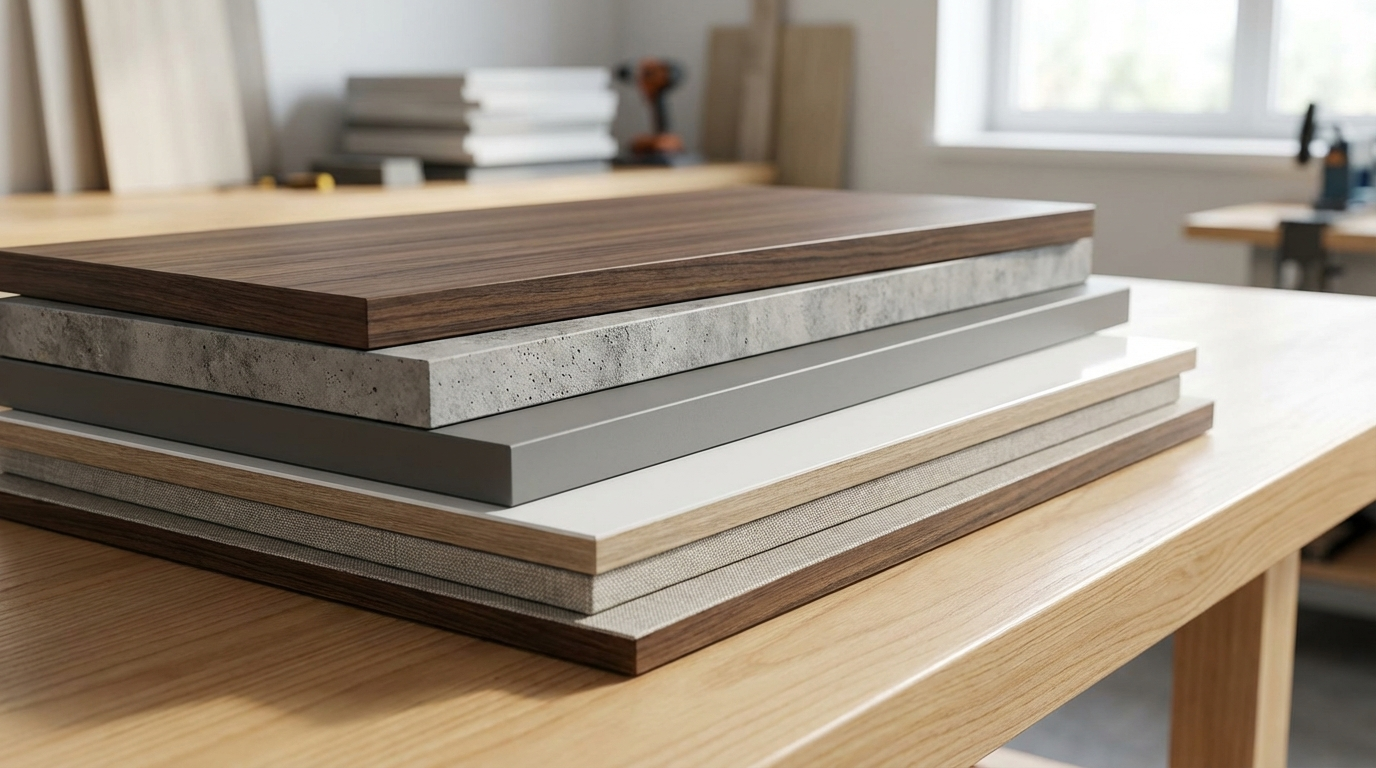
Textured laminates replicate natural materials like wood grain, stone, leather, or fabric. The texture provides visual depth and tactile interest while hiding minor surface imperfections better than smooth finishes.
Anti-fingerprint (AFX) laminates feature specialized surface treatments that resist fingerprint marks and smudges. These command premium pricing but significantly reduce maintenance in kitchens and living areas.
Specialized Laminate Types
Fire-retardant laminates contain additives that resist flame spread—essential for commercial installations, hospitals, and schools where fire safety codes apply. These are typically HPL-grade with specific fire ratings.
Anti-bacterial laminates incorporate silver-ion or similar treatments that inhibit bacterial growth on the surface. Major brands now offer this as a standard feature rather than a premium option, particularly useful for kitchen and healthcare applications.
Digital print laminates use high-resolution printing technology to create custom patterns, including photographic images and complex designs not achievable with traditional printing. These enable unique decorative possibilities but typically cost 20-40% more than standard patterns.
Price Range and Cost Drivers (2026 Market)
Laminate pricing in India varies significantly based on pressure rating, thickness, finish type, brand positioning, and regional availability. Understanding these cost drivers helps buyers budget accurately and identify value versus overpayment.
Thickness-Wise Price Ranges
| Laminate Type | Thickness | Price Range (per 8x4 ft sheet) | Price per Sq.Ft. (approx) |
|---|---|---|---|
| Standard decorative laminate | 0.6mm - 0.7mm | ₹800 - ₹1,400 | ₹25 - ₹45 |
| HPL decorative laminate | 0.8mm | ₹1,200 - ₹2,000 | ₹38 - ₹63 |
| HPL premium finish | 1.0mm | ₹1,800 - ₹3,000 | ₹56 - ₹94 |
| High-gloss laminate | 1.0mm | ₹2,200 - ₹3,500 | ₹69 - ₹110 |
| Anti-fingerprint laminate | 1.0mm | ₹3,500 - ₹5,000 | ₹110 - ₹156 |
| PVC laminate | 0.5mm - 1.0mm | ₹4,000 - ₹11,000 | ₹125 - ₹345 |
| Compact laminate | 6mm - 12mm | ₹8,000 - ₹18,000 | ₹250 - ₹560 |
Why Prices Vary: Key Cost Factors
Manufacturing pressure: HPL costs more than LPL because higher pressure requires specialized equipment and longer pressing cycles. The denser material also uses more resin per sheet.
Surface treatment: Anti-fingerprint, anti-bacterial, and fire-retardant treatments add processing steps and specialized chemicals, increasing costs by 15-50% over standard finishes.
Design complexity: Realistic wood grains, synchronized textures (where the texture aligns with the visual pattern), and digital prints require precision printing technology that adds to manufacturing costs.
Brand positioning: Premium brands invest in quality control, warranty support, and consistent supply—costs that reflect in pricing. However, a lesser-known brand using identical manufacturing processes may offer comparable quality at lower prices.
City and availability: Metro cities typically have competitive pricing due to multiple distributors. Remote areas or tier-3 cities may see 10-20% higher prices due to transportation costs and limited competition.
Budget Estimation for Common Furniture
For a standard modular kitchen (10x10 ft L-shaped layout), laminate costs typically range from ₹15,000 to ₹35,000 depending on the grade chosen. A 6-foot three-door wardrobe requires approximately ₹3,000 to ₹8,000 worth of laminate sheets. These estimates cover material only—factor in adhesive, edge banding, and labor separately.
Laminate Uses: Kitchen, Wardrobe, and Furniture Applications
Laminates serve different functions across applications, and understanding these helps select appropriate grades for each use. The primary distinction lies between horizontal surfaces (countertops, shelves) that face direct wear and vertical surfaces (shutters, panels) that face different stress patterns.
Is HPL Good for Indian Kitchens?
High-Pressure Laminate is well-suited for Indian kitchen environments when properly installed with attention to edge sealing. Indian cooking generates significant heat, steam, and oil spatter—conditions that test surface materials daily. HPL's non-porous surface resists staining from turmeric, oil, and common cooking substances. The 1mm thickness provides adequate impact resistance for cabinet shutters that face regular opening-closing cycles.
However, laminate has limitations: it cannot handle direct hot pan contact without risking surface damage. The area near gas stoves (the "heat zone") should use thicker laminates or alternative materials. For countertops, granite or engineered stone remains more practical than laminate for heavy cooking environments, though laminate works adequately for auxiliary counters and breakfast nooks.
Wardrobe Laminate Selection
Wardrobes face lower moisture and heat stress than kitchens, allowing more flexibility in laminate selection. Standard 0.8mm decorative laminates perform adequately for wardrobe exteriors and internal carcass finishing. The primary concern is scratch resistance—especially for sliding door tracks and frequently accessed shelves.
For wardrobe interiors, pre-laminated boards (particle board or MDF with factory-applied LPL) offer cost efficiency since internal surfaces face minimal wear. Reserve higher-grade HPL for external shutters and visible surfaces. Our detailed wardrobe plywood guide covers substrate selection for different wardrobe configurations.
Furniture and General Applications
Study tables, TV units, shoe racks, and general furniture benefit from textured laminates that hide minor scratches better than glossy finishes. For furniture that moves (like dining chairs or stools), edge durability becomes critical—1mm laminate with proper edge banding prevents chipping from regular contact.
Office furniture and commercial installations require fire-retardant grades in many jurisdictions. Verify local building codes before specifying laminates for commercial projects.
Top Laminate Brands in India: Market Overview
Note: sainik710.com is an independent informational site and is not affiliated with any manufacturer.
The Indian laminate market includes several established manufacturers alongside numerous regional players. Brand selection should balance quality consistency, pattern availability, warranty support, and local dealer network strength.
Major Organized Sector Brands
Greenlam Industries: One of the world's top three laminate manufacturers by volume, offering extensive pattern collections across multiple price segments. Their product range includes standard decorative, HD gloss, digital print, and anti-fingerprint variants. The brand provides anti-bacterial properties as a standard feature across collections.
Century Laminates: Part of the Century Plyboards group, offering integrated solutions with their plywood and board products. Known for consistent availability across India through the established Century dealer network.
Merino Laminates: Strong presence in the premium segment with synchronized texture patterns and design-forward collections. Good specification support for architects and interior designers.
Royale Touche: Known for high-gloss and super-gloss finishes with an emphasis on contemporary European-influenced designs.
Sundek: Focused on the commercial and institutional segment with emphasis on fire-retardant and high-durability grades.
Regional and Value Segment Brands
Numerous regional manufacturers offer competitive products at lower price points. Brands like Virgo, Stylam, Kajaria (decorative laminates division), and various local manufacturers serve specific regions effectively. When considering lesser-known brands, verify the following: consistent thickness across the sheet, proper resin saturation (no dry spots or voids), and accurate color matching across batches.
How to Choose: 5-Step Decision Framework
Selecting the right laminate requires systematic evaluation of application requirements, environmental conditions, budget constraints, and aesthetic preferences. This framework guides the decision process from initial assessment through final purchase verification.
Step 1: Define Application Requirements
Identify where the laminate will be used and what stresses it will face. Kitchen cabinet shutters need moisture resistance, heat tolerance near cooking zones, and stain resistance against oils and spices. Wardrobe exteriors primarily need scratch resistance and aesthetic appeal. Countertops require impact resistance and cleanability.
Checklist:
- Will the surface contact water or high humidity regularly?
- Is heat exposure expected (near stoves, ovens, or direct sunlight)?
- How frequently will the surface be touched, cleaned, or impacted?
- Is this a horizontal (wear-prone) or vertical (low-wear) application?
Step 2: Assess Environmental Conditions
Indian climate varies dramatically by region. Coastal cities require HPL grades with proper edge sealing. Hill stations with extreme temperature swings need laminates with good dimensional stability. Desert regions with low humidity and high heat require UV-resistant grades if direct sunlight exposure exists.
Checklist:
- What is the typical humidity range in your city (check monsoon peaks)?
- Is the installation area air-conditioned or naturally ventilated?
- Does the area receive direct sunlight?
- Is the location coastal (salt air exposure)?
Step 3: Evaluate Substrate Compatibility
Laminate performance depends heavily on what lies beneath. HPL bonds well to plywood and MDF using contact adhesive. Pre-laminated boards suit projects where factory finishing quality is acceptable. The substrate's moisture resistance should match or exceed the laminate's capability—there's no benefit in putting HPL on MR-grade plywood in a humid kitchen.
Step 4: Balance Budget Against Longevity
Calculate cost per year of expected service, not just initial material cost. A ₹2,500 premium laminate lasting 12 years costs less annually than a ₹1,200 standard laminate needing replacement after 5 years. Factor in installation effort and furniture downtime during replacement.
Step 5: Verify Before Purchase
Red flags to avoid:
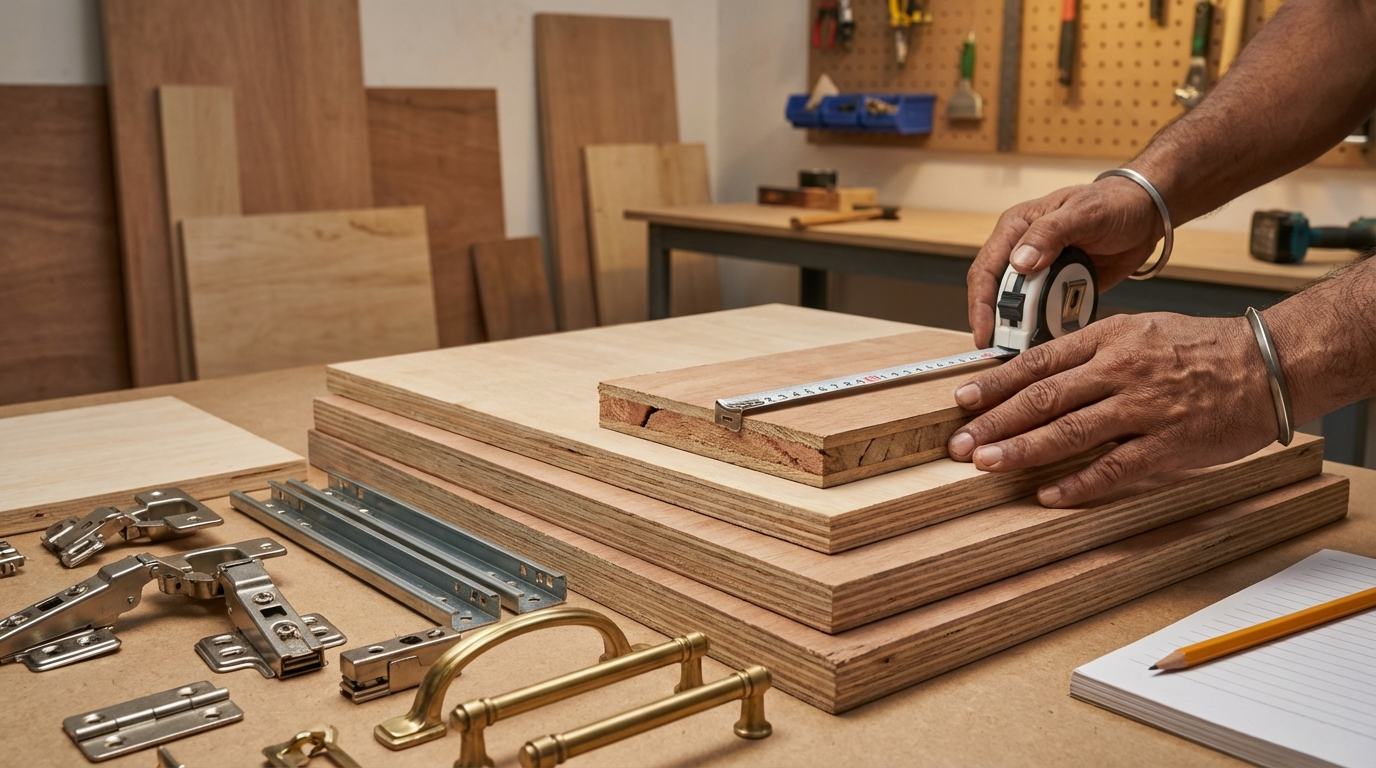
- Inconsistent thickness across the sheet (measure multiple points)
- Surface irregularities visible at an angle under light
- Color variation within the same batch
- Brittleness or cracking when flexed slightly
- Strong chemical odor indicating incomplete curing
- Dealer unable to confirm HPL vs LPL classification
Common Buyer Mistakes to Avoid
Understanding typical errors helps buyers make informed decisions and avoid costly corrections later. These mistakes recur across projects regardless of budget or experience level.
Mistake 1: Choosing based solely on appearance without checking grade. A beautiful pattern is worthless if the laminate delaminates within a year. Always verify whether you're getting HPL or LPL, and match the grade to application requirements.
Mistake 2: Using thin laminates (0.6mm) on kitchen shutters. Kitchen shutters face regular impact, heat exposure, and moisture cycling. Thin laminates chip easily at edges, show wear faster, and provide inadequate heat resistance near cooking zones. Budget for minimum 0.8mm HPL in kitchens.
Mistake 3: Ignoring edge banding in humid locations. Exposed laminate edges allow moisture to wick into the core, causing swelling and delamination. In humid cities, proper PVC edge banding isn't optional—it's essential for longevity.
Mistake 4: Selecting high-gloss finish for heavy-use kitchens. Glossy surfaces show every fingerprint, water spot, and minor scratch. Unless you're committed to daily polishing, matte or textured finishes are more practical for Indian kitchens.
Mistake 5: Not matching laminate and substrate moisture ratings. Putting HPL on standard particle board defeats the purpose. The substrate will fail before the laminate does. Match moisture-resistant laminates with BWR plywood or HDHMR boards.
Mistake 6: Ordering insufficient quantity without wastage buffer. Cutting patterns, edge damage, and installer errors mean you'll use 8-12% more than calculated area. Under-ordering leads to batch matching problems when reordering—colors vary slightly between production runs.
Mistake 7: Not inspecting delivery before acceptance. Check every sheet for surface defects, corner damage, and consistent coloring before signing delivery receipts. Post-delivery claims are difficult to resolve.
Mistake 8: Applying laminate on insufficiently dried substrate. Fresh plywood from dealers may have elevated moisture content. Applying laminate traps this moisture, causing bubbling within weeks. Allow substrates to acclimatize 3-5 days minimum before laminating.
Workmanship and Installation Requirements
Proper installation determines whether laminate achieves its potential lifespan. Many laminate failures trace to workmanship issues rather than material defects.
Cutting and Edge Preparation
Laminate requires cutting with fine-toothed blades (minimum 80 teeth for circular saws) to prevent edge chipping. The decorative face should face up when using hand tools, down when using table saws—this ensures any chip-out occurs on the non-visible side. Leave 2-3mm excess for final trimming with router or file.
Cut edges require sealing or edge banding within 24 hours in humid environments. Exposed kraft paper core absorbs moisture rapidly, initiating delamination. PVC edge banding of 0.8mm-2mm thickness, applied with edge-banding adhesive or heat-activated tape, provides adequate protection.
Adhesive Application and Bonding
Contact adhesive (fevicol SR, dendrite, or equivalent) should be applied to both laminate back and substrate surface. Allow both surfaces to dry until tacky but not wet—the "finger test" should show resistance without transferring adhesive to your finger. Typical drying time is 10-20 minutes depending on temperature and humidity.
Alignment is critical because contact adhesive bonds immediately—repositioning is impossible. Use alignment sticks or dowels to position laminate accurately before allowing surfaces to meet. Apply pressure from center outward using a rubber roller or clean cloth-wrapped wooden block to eliminate air pockets.
Hinge Zones and Hardware Mounting
Cabinet shutters require cup hinges that demand 35mm boring holes plus mounting screw positions. These areas face concentrated stress during opening and closing cycles. Laminate around hinge zones should extend fully to the hole edge—avoid situations where the hinge cup contacts exposed substrate.
For soft-close hinges and heavy shutters, consider reinforcing the hinge zone with additional plywood lamination before surface laminate application. This provides better screw holding and distributes hinge stress over a larger area.
Site Storage and Carpenter Briefing
Provide carpenters (mistris) clear instructions: store laminate sheets flat, not leaning against walls. Keep away from direct sunlight, rain exposure, and construction dust. The installation area should be enclosed (doors and windows in place) with reasonable humidity control before laminate work begins.
Brief the carpenter on required edge treatment, adhesive application method, and drying times. Many laminate failures occur when rushing to meet deadlines—adequate curing time is not negotiable.
Quality Checks Without Lab Tests
Buyers can perform several meaningful quality checks without specialized equipment. These field tests help verify laminate quality before purchase and after delivery.
Visual Inspection Points
Examine the decorative surface under raking light (low-angle illumination) to reveal surface imperfections, bubbles, or inconsistencies. Check that pattern alignment is accurate—wood grain patterns should have consistent direction. Color should be uniform across the sheet without patches or streaks.
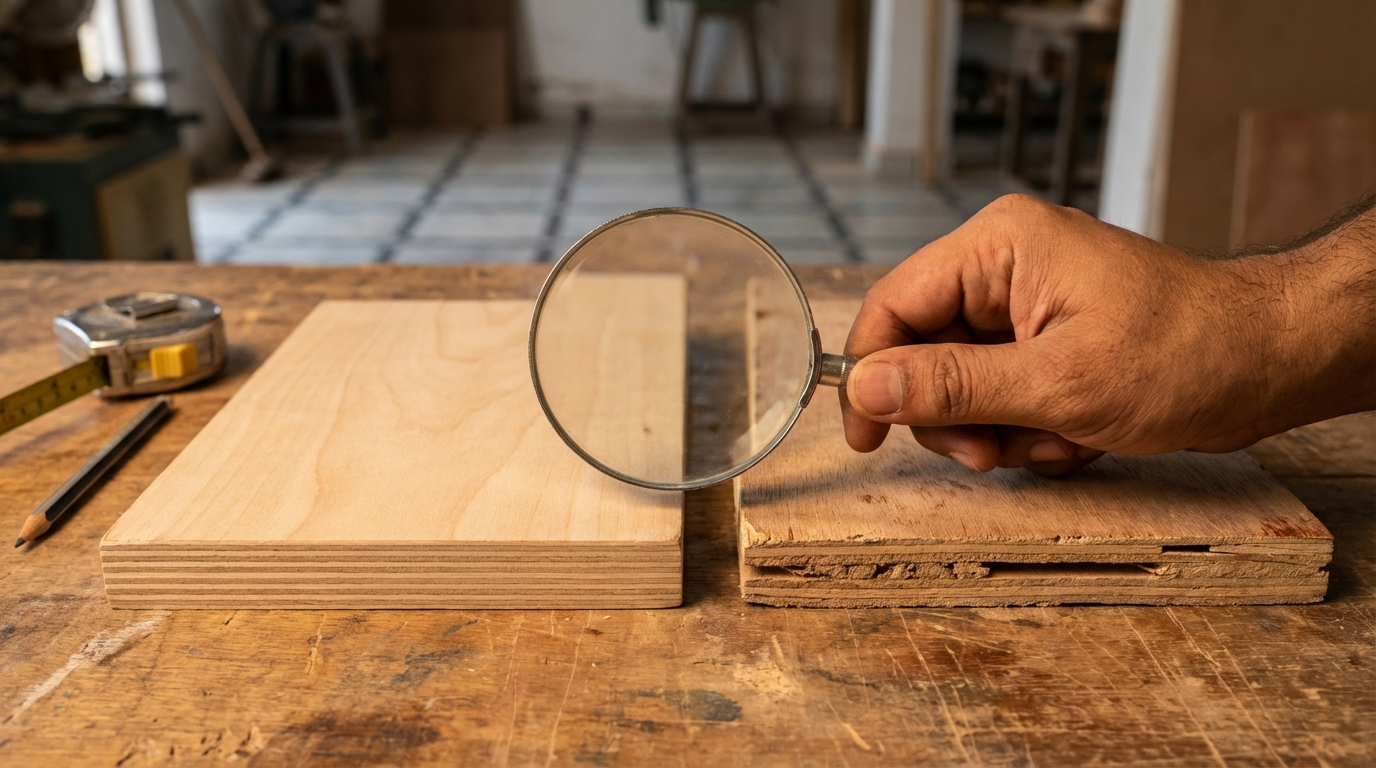
Examine cut edges where visible: the core layers should appear uniformly dense without visible voids, dry spots, or color variation. The edge should feel smooth, not crumbly or fibrous.
What Thickness of Laminate is Best for Wardrobes?
For wardrobe applications, 0.8mm decorative laminate provides adequate durability for most installations. This thickness offers good balance between cost and performance—sufficient rigidity to resist minor impacts while remaining cost-effective. External wardrobe shutters that face frequent handling benefit from 1mm laminate for additional edge durability. Internal wardrobe surfaces can use pre-laminated boards with factory-applied 0.2-0.4mm laminate, since these areas face minimal wear.
Simple Field Tests
Weight test: HPL sheets should feel denser than LPL of equivalent size. Compare against known-quality samples if available.
Flexibility test: Gently flex a corner of the laminate sheet. Quality HPL should flex with mild resistance and return to flat without cracking. Excessive brittleness or unusual flexibility indicates manufacturing issues.
Tap test: Tap the surface with a knuckle. Quality laminate produces a solid, resonant sound. Hollow spots or inconsistent sound suggests air voids or inadequate resin penetration.
Edge check: Run your finger along the factory-cut edge. It should feel smooth and consolidated, not rough or layered. Visible separation between layers indicates poor bonding.
Questions to Ask Dealers
- Is this HPL or LPL? (Don't accept vague answers)
- What is the thickness verified by measurement, not just specification?
- What is the sheet manufacturing date? (Avoid sheets over 12 months old)
- Is this batch color-matched to samples shown?
- What is the return policy for defective sheets?
Laminate vs Alternative Finishes: Decision Framework
Laminates compete with several alternative surfacing materials, each with distinct trade-offs. This comparison helps buyers understand when laminate is optimal versus when alternatives make more sense.
| Scenario/Condition | Recommended Choice | Reason |
|---|---|---|
| Budget kitchen, moderate humidity | 1mm HPL on BWR plywood | Cost-effective, adequate moisture resistance, wide pattern selection |
| Premium kitchen, heavy cooking | Acrylic or PU finish on MDF/HDHMR | Better heat resistance, seamless appearance, easier deep cleaning |
| Wardrobe exterior, dry region | 0.8mm decorative laminate | Cost-efficient, sufficient durability, extensive design options |
| Wardrobe exterior, coastal city | 1mm HPL with full edge banding | Moisture resistance essential, edge protection critical |
| TV unit or study table | Textured laminate 0.8mm-1mm | Hides scratches, practical maintenance, good appearance |
| Traditional or luxury aesthetic | Natural veneer with PU top coat | Authentic wood appearance, refinishable, distinctive character |
| Commercial furniture, high traffic | Compact laminate or thick HPL | Maximum durability, impact resistance, easy maintenance |
| Bathroom vanity or wet areas | Compact laminate or solid surface | Self-supporting, superior moisture resistance, no substrate to damage |
How Long Does Laminate Last in Humid Conditions?
Quality HPL laminate with proper edge sealing typically lasts 10-15 years in Indian humid conditions when installed on appropriate moisture-resistant substrates. In coastal cities with sustained high humidity, expect 8-12 years for well-installed HPL on BWR plywood. Standard decorative laminates (0.6-0.7mm LPL) may show edge deterioration within 3-5 years in humid environments, particularly if edge banding is inadequate or missing. The substrate usually fails before properly installed HPL—ensuring your plywood or board grade matches environmental demands is equally critical.
Frequently Asked Questions
What is the difference between HPL and decorative laminate?
HPL (High-Pressure Laminate) is a manufacturing classification referring to laminates made under pressure exceeding 1,000 PSI, while "decorative laminate" describes the aesthetic function rather than manufacturing process. All HPL is decorative laminate, but not all decorative laminate is HPL—many decorative laminates are actually LPL (Low-Pressure Laminate) made under lower pressure. HPL is denser, more durable, more moisture-resistant, and available in thicknesses from 0.8mm upward. When purchasing, always confirm whether you're getting HPL or LPL rather than relying on the generic "decorative laminate" label.
Can laminate sheets be used in bathrooms?
Standard laminate sheets are not recommended for bathroom wall or floor applications where direct water contact is frequent. However, compact laminates (self-supporting, thick HPL products) are specifically designed for bathroom partitions, vanity panels, and similar applications. For bathroom vanity cabinets, HPL on marine-grade plywood with comprehensive edge sealing can work for the external cabinet structure, but areas directly exposed to water splashing require waterproof alternatives. Compact laminate panels of 6mm-12mm thickness are commonly used for toilet partition systems and perform well in wet environments.
Is 0.8mm laminate sufficient for kitchen cabinets?
Yes, 0.8mm HPL is adequate for kitchen cabinet shutters and carcass finishing in most Indian kitchens, provided it's genuinely HPL grade and properly installed with edge banding. For areas near gas stoves that face direct heat exposure, 1mm thickness provides better heat resistance. The 0.8mm specification works well for upper cabinets, pantry units, and base cabinet areas away from cooking zones. Budget-focused projects may use 0.8mm for cabinet interiors while specifying 1mm for external shutters that face regular handling and visual prominence.
How do I remove stains from laminate surfaces?
Most kitchen stains (turmeric, oil, sauce) clean easily from quality laminate using mild dish soap and warm water with a soft cloth. For stubborn stains, apply a paste of baking soda and water, let it sit for 10-15 minutes, then wipe clean. Avoid abrasive scrubbers or steel wool that can scratch the melamine surface. For adhesive residue or marker stains, isopropyl alcohol applied with a soft cloth usually works without damaging the laminate. Never use acidic cleaners or harsh chemicals—these can dull the surface finish permanently.
What causes laminate to bubble or lift from the substrate?
Bubbling typically results from three causes: moisture trapped between laminate and substrate during installation, inadequate adhesive coverage leaving unbonded zones, or moisture ingress through unsealed edges post-installation. If bubbling occurs within weeks of installation, it's usually an installation defect—the substrate was too moist or adhesive application was insufficient. Bubbling that develops over months or years typically indicates edge seal failure allowing humidity to reach the adhesive layer. Prevention is easier than repair: ensure substrate is dry, apply adhesive completely across both surfaces, and seal all edges promptly.
Can I apply laminate over old laminate?
Direct laminate-over-laminate application is generally not recommended and often fails. The glossy melamine surface of existing laminate doesn't provide adequate bonding surface for contact adhesive. If you must overlay, the existing laminate surface should be thoroughly sanded to create mechanical texture, cleaned of all dust and oils, and primed with appropriate bonding agent before new laminate application. Even then, results are unpredictable. For reliable outcomes, remove existing laminate by carefully heating and peeling, clean the substrate, and apply fresh laminate. This extra effort provides substantially better long-term results.
Is fire-retardant laminate necessary for home kitchens?
Fire-retardant laminate is not typically required for residential kitchens in India—building codes generally mandate fire-rated materials only for commercial, institutional, and public assembly spaces. Standard HPL doesn't support active combustion but can char under sustained direct flame contact. For home kitchens, the practical concern is heat damage near gas stoves rather than fire spread. If fire safety is a significant personal concern, fire-retardant grades add approximately 25-40% to material cost and are available from major brands. Most homeowners allocate this budget toward better exhaust systems instead.
Why do laminate colors vary between sample and delivered sheets?
Color variation between samples and bulk sheets occurs because samples are often from different production batches than current inventory. Manufacturing variables like paper batch color, resin mixture timing, and pressing temperature create subtle variations between runs. Always request samples from current production batch when finalizing orders. Order all sheets for a single room from one batch to ensure consistency—mixing batches can result in visible color differences when panels are adjacent. This is particularly important for solid colors and subtle woodgrains where variation shows prominently.
How much laminate wastage should I budget for?
Budget 10-15% wastage beyond calculated requirements for most projects. Simple rectangular installations with minimal cutting may achieve 8-10% wastage. Complex layouts with multiple cutouts, angles, or pattern matching can generate 15-20% waste. Factors increasing wastage include: first-time carpenters with the material, directional patterns requiring matching, small pieces that can't be utilized elsewhere, and edge damage during handling. It's more cost-effective to order slightly excess material upfront than to face batch-matching challenges with top-up orders.
Can laminate be used for flooring in Indian homes?
Laminate flooring (interlocking click-lock panels) differs from laminate sheets used for furniture. Flooring-grade laminates are specifically engineered with wear-resistant top layers and moisture-resistant cores designed for foot traffic. In Indian homes, laminate flooring works well in bedrooms and living areas but has limitations: it cannot handle standing water (unlike tiles), making it unsuitable for bathrooms and problematic for kitchens with regular water spillage. For ground-floor apartments or humid cities, moisture-resistant underlayment and edge sealing become essential. Our kitchen cabinet plywood comparison discusses substrate options for different kitchen flooring scenarios.
What is the warranty period for laminate sheets, and what does it cover?
Major brands offer warranties ranging from 3 to 10 years, but coverage terms vary significantly. Most warranties cover manufacturing defects—delamination, color fading (not from UV exposure), surface cracking—that appear under normal use conditions. Warranties typically exclude damage from improper installation, exposure beyond rated conditions, edge damage from moisture ingress, and surface wear from abrasive cleaning. Warranty claims require purchase invoices from authorized dealers and usually involve manufacturer inspection. For practical purposes, verify the dealer's reputation and return policy since resolving warranty claims with manufacturers can be time-consuming.
Is it worth buying anti-fingerprint laminate for the entire kitchen?
Anti-fingerprint (AFX) laminate commands significant price premiums—typically 40-60% more than standard finishes. For full kitchen coverage, this adds substantially to project cost. A practical approach: use AFX laminate for frequently touched surfaces (upper cabinet shutters at eye level, tall unit doors, handle-less push-open shutters) while using matte finish laminate for base cabinets and internal surfaces. This targeted application captures most visual benefit at fraction of full-coverage cost. If your kitchen uses discrete handles rather than push-to-open mechanisms, standard matte laminate may prove adequate since fingerprints concentrate on handles rather than shutter surfaces.
How do I verify if a laminate is genuinely HPL and not LPL?
Direct verification requires understanding the characteristics: HPL in 0.8mm-1mm thickness should feel dense and rigid, not flexible like thin plastic. Edge examination under magnification shows more compressed, uniform layers in HPL versus visible layer separation in LPL. Tap sound on HPL is solid and resonant versus slightly hollow in LPL. However, the most reliable verification is purchasing from authorized brand dealers who can provide manufacturer documentation. Unbranded or generic "HPL" from unknown sources frequently turns out to be LPL sold at HPL prices. When in doubt, the price itself is indicative—genuine HPL cannot be profitably sold at LPL price points.
Can laminate edges be polished or finished without edge banding?
Laminate edges can be hand-filed or router-trimmed to remove cutting roughness, but the exposed kraft paper core remains visible and vulnerable. Some installers apply colored edge sealant that matches the laminate face, creating a finished appearance without separate edge banding. This works adequately for low-visibility edges (inside cabinet corners, bottom edges against floor) in dry environments. For visible edges in humid areas, proper PVC or ABS edge banding remains the durable solution. Edge sealing without banding is a budget compromise rather than a quality equivalent—acceptable for some applications but not a substitute where moisture resistance matters.
Final Considerations for Laminate Selection
Laminate selection integrates material science, environmental assessment, aesthetic preference, and practical budgeting. The "best" laminate for any project depends on honest evaluation of where it will be used, what stresses it will face, and how long it needs to perform. Premium grades in inappropriate applications waste money; economy grades in demanding environments fail prematurely.
Indian market conditions add specific considerations absent from general laminate guidance: monsoon humidity, inconsistent site storage, variable workmanship quality, and diverse regional climate patterns all influence outcomes. Matching laminate grade to substrate quality, ensuring proper edge treatment, and allowing adequate installation time typically matter more than brand selection for long-term performance.
For kitchen projects, our kitchen cabinet plywood comparison provides additional context on substrate selection that directly affects laminate performance. Wardrobe-specific considerations including sliding versus hinged door mechanisms and internal fitting options are covered in related guides. Ultimately, informed material selection combined with quality workmanship delivers results that both perform durably and satisfy aesthetic goals across years of daily use.
Disclaimer: This content is provided for general informational purposes based on industry practices and publicly available information. Product specifications, standards, prices, and availability may vary by manufacturer, region, and time. Readers should independently verify details with manufacturers, dealers, or qualified professionals before making purchase or construction decisions.Want Plywood Suggestions?
Share a few details and a Sainik 710 specialist will suggest suitable brands and connect you to responsive dealers.