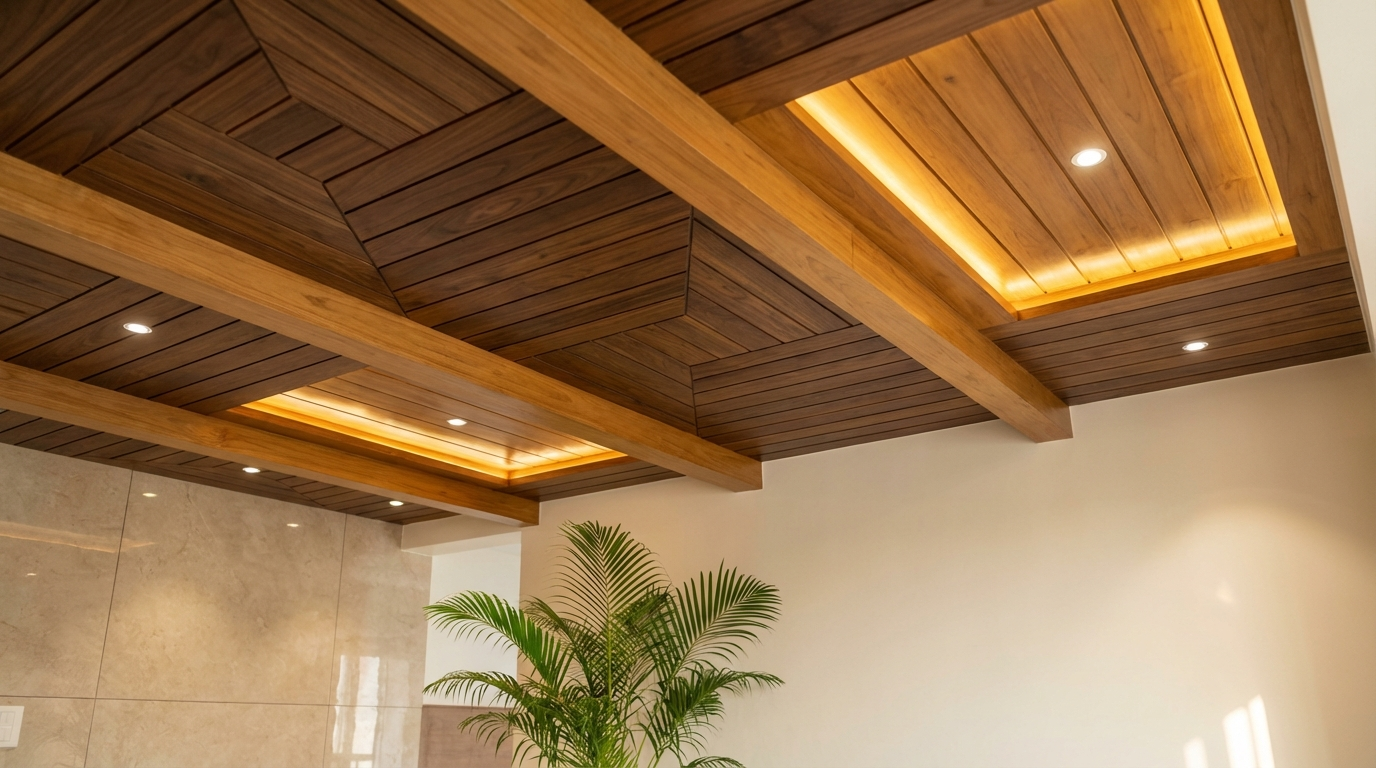
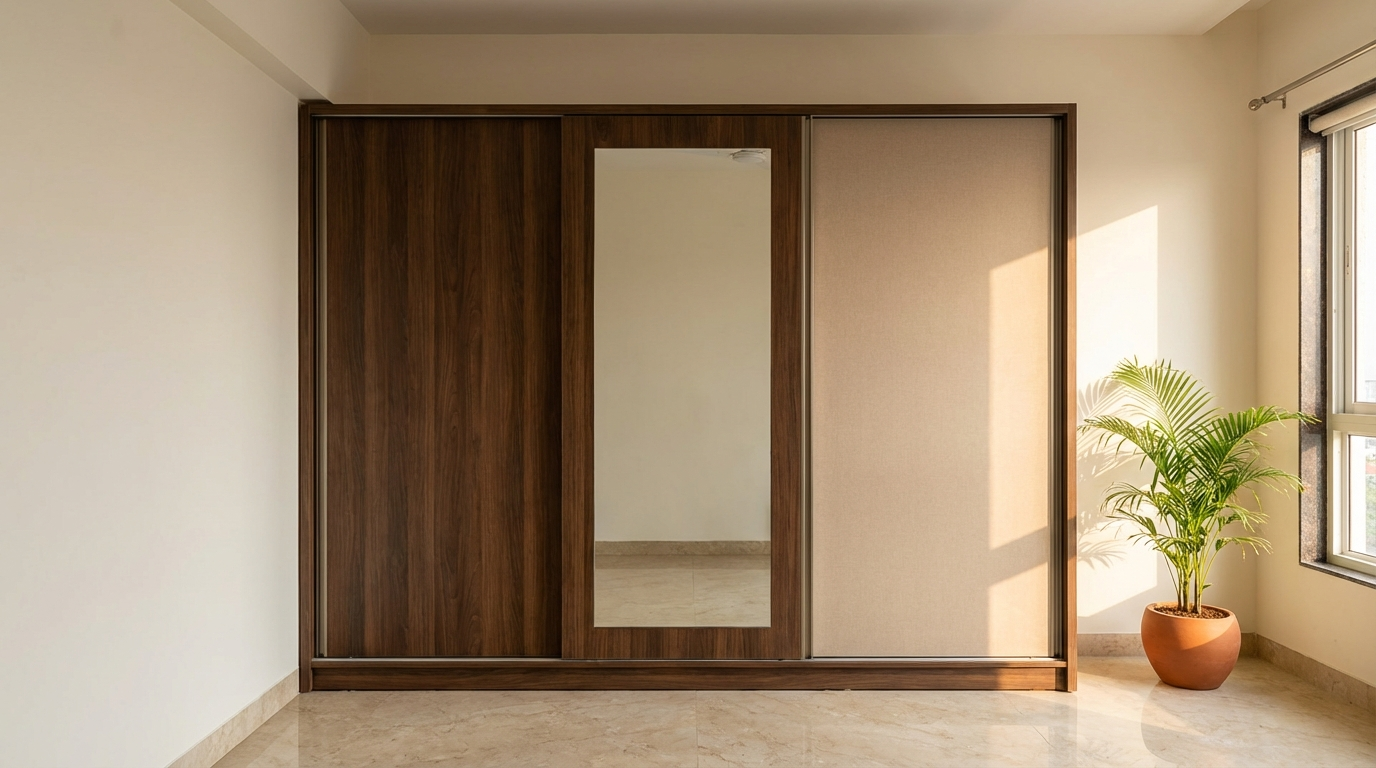
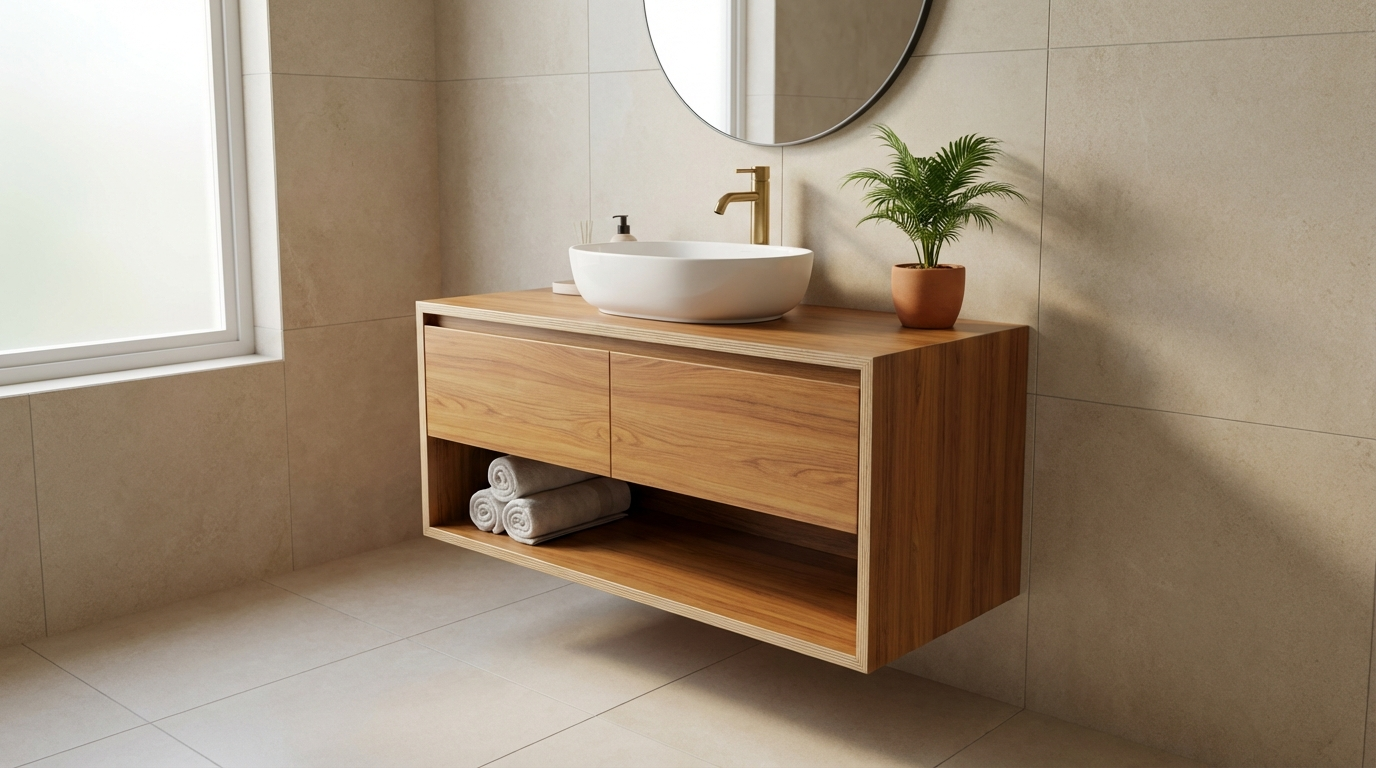
Kitchen Door Design: 25+ Stylish Ideas for Modular, Modern & Indian Kitchens
Get 25+ kitchen door design ideas—cabinet doors, entrance doors & modular options. Compare materials, hinges & finishes for stylish Indian kitchens.
Quick Decision Summary
The best kitchen door design depends on your budget, humidity exposure, and style preference—BWR-grade plywood with laminate or acrylic finish works for most Indian kitchens, while HDHMR suits high-moisture zones near sinks and dishwashers.
If you're in a hurry: For modular kitchen cabinets, choose 18mm BWR plywood with high-pressure laminate (HPL) or acrylic finish for a balance of durability, moisture resistance, and aesthetics. For kitchen entrance doors, solid flush doors with hardwood frames perform better than hollow-core options. Coastal and humid regions should prioritize marine-grade or HDHMR cores over standard MR plywood.
- Choose laminate-on-plywood doors if: You want cost-effective, durable cabinet doors with easy maintenance and good moisture resistance
- Choose acrylic or PU-finish doors if: You prioritize a glossy, premium look and can invest in careful handling during installation
- Choose HDHMR or marine ply if: Your kitchen experiences high humidity, water splashes near sink/dishwasher areas, or you live in coastal cities
- Avoid MDF for cabinet doors if: Your kitchen lacks proper ventilation or you're in a humid climate zone—edge swelling is a common failure
Key takeaway: Material choice matters more than aesthetic trends—prioritize substrate quality and edge sealing over decorative finish alone.
What Kitchen Door Design Actually Means
Kitchen door design refers to the style, material construction, and finish of doors used in kitchen spaces—primarily cabinet doors, pantry doors, and kitchen entrance doors. This encompasses shutter profiles (slab, shaker, louvered), substrate materials (plywood, MDF, HDHMR, particle board), surface finishes (laminate, acrylic, membrane, PU, veneer), and hardware compatibility (hinges, handles, soft-close mechanisms).
For Indian homeowners, kitchen door design decisions split into two categories: modular kitchen cabinet shutters (the most common) and kitchen entrance or partition doors. Cabinet shutters face the harshest conditions—daily moisture from cooking steam, oil splatter, temperature fluctuations from gas burners, and constant opening/closing cycles. Entrance doors deal with different challenges: security, sound insulation, and aesthetic integration with adjacent living spaces.
Technical Breakdown for Informed Buyers
Every kitchen door has three critical layers: the core substrate (what provides structural strength), the surface finish (what you see and touch), and the edge treatment (often the weakest point). The core determines screw-holding capacity, moisture behaviour, and long-term stability. The finish affects aesthetics, cleanability, and scratch resistance. Edge banding quality often separates doors that last 15 years from those that fail in 3–5 years.
In the Indian modular kitchen industry, "kitchen door" typically means cabinet shutters—ranging from 16mm to 19mm thickness for standard cabinets. Entrance doors for kitchens follow residential door standards—typically 30mm to 35mm solid or semi-solid construction.
Common Misconceptions Cleared
Many homeowners confuse material grades with finish types. "Glossy finish" isn't a material—it's a surface treatment applied over MDF, plywood, or HDHMR. Similarly, "modular kitchen doors" aren't a specific material; they're manufactured doors designed for factory-produced kitchen systems. The substrate underneath matters far more than the marketing name. A "premium Italian finish" applied to low-grade particle board will fail faster than a basic laminate on BWR plywood in humid Indian conditions.
India-Specific Reality Check: Moisture, Termites, and Workmanship
Indian kitchens present unique challenges that European or American design guides completely miss. Monsoon humidity reaching 70–90% in coastal and eastern India, combined with cooking steam from open-flame gas burners, creates moisture conditions that destroy unsuitable materials within 2–3 years. Understanding these realities prevents expensive mistakes.
Monsoon and Coastal Risk Factors
Cities like Mumbai, Chennai, Kolkata, Kochi, and Visakhapatnam experience sustained humidity above 75% for 4–6 months annually. In these zones, MR-grade plywood and standard MDF absorb atmospheric moisture even without direct water contact. Cabinet doors swell at edges, laminate lifts at corners, and hinge holes enlarge from wood expansion. BWR or BWP-grade plywood, marine ply, and HDHMR boards resist these conditions far better.
Coastal salt air adds another dimension—it accelerates corrosion of metal hinges and handles while degrading certain adhesives faster. Stainless steel hardware (304 grade minimum) becomes essential rather than optional in these locations.
Storage and Handling on Indian Sites
Material quality degrades significantly between factory and installation in India. Plywood and HDHMR sheets often sit in open warehouses, loading docks, or construction sites exposed to rain, dust, and humidity. Factory-finished doors arriving from modular kitchen manufacturers should be inspected for edge damage, corner chips, and moisture exposure before acceptance. Reject sheets with visible edge swelling or delamination—these defects worsen after installation.
Acclimatization matters: doors should sit in the kitchen environment for 48–72 hours before final installation to adjust to local humidity levels. This reduces post-installation warping, especially for solid wood or veneer-finished options.
Common Contractor Practices and Pitfalls
Local carpenters (mistris) often prioritize speed over proper technique. Watch for these common shortcuts that damage kitchen door longevity:
- Skipping edge banding on cut edges—exposed core absorbs moisture
- Using undersized pilot holes for hinges—causes screw pullout within months
- Installing doors before wall paint or plaster dries—trapped moisture damages doors
- Ignoring soft-close hinge requirements—standard hinges on heavy acrylic doors fail faster
- Cutting laminate sheets face-down without proper blade selection—causes chipping at visible edges
Regional Variations Across India
Northern plains (Delhi NCR, Jaipur, Lucknow) experience extreme temperature swings—hot summers and cold winters—causing expansion-contraction cycles that stress door joints. Use materials with good dimensional stability and leave adequate expansion gaps in door frames.
Southern and western coastal areas prioritize moisture resistance above all else. Inland plateau cities (Bangalore, Pune, Hyderabad) have moderate conditions where standard BWR plywood performs well for most applications.
Kitchen Door Material Options: Complete Comparison
Kitchen door materials divide into substrate (core) choices and finish (surface) choices. Understanding both layers helps you make informed decisions rather than relying on showroom names that obscure actual construction.
Core Substrate Options
| Substrate Material | Moisture Resistance | Screw Holding | Weight | Cost Level | Best For |
|---|---|---|---|---|---|
| BWR Plywood (IS 303) | Good | Excellent | Medium-Heavy | Medium | Most cabinet doors, general Indian kitchens |
| BWP/Marine Plywood (IS 710) | Excellent | Excellent | Heavy | High | Sink cabinets, coastal homes, high-humidity zones |
| HDHMR/HDF | Very Good | Good | Heavy | Medium-High | Uniform finish requirements, laminate/acrylic doors |
| MDF (Standard) | Poor | Moderate | Medium | Low-Medium | Dry zones only, painted/membrane finishes |
| Particle Board | Poor | Weak | Light | Low | Budget projects, low-use areas (not recommended for kitchens) |
| WPC (Wood Plastic Composite) | Excellent | Moderate | Medium | Medium-High | Wet areas, sink surrounds, outdoor kitchens |
Is HDHMR Good for Indian Kitchens?
HDHMR (High-Density High Moisture Resistant) boards work well for Indian kitchens when used correctly. They offer excellent surface uniformity for laminate and acrylic finishes—better than plywood's natural grain variations. Their moisture resistance exceeds standard MDF significantly, handling typical cooking humidity without edge swelling. However, HDHMR has lower screw-holding strength than plywood at hinge points. For cabinet doors with heavy-duty hinges, reinforce hinge zones with hardwood blocks or use European cup hinges with larger mounting plates. HDHMR performs best for slab-style doors without routed profiles.
Surface Finish Options
| Finish Type | Appearance | Durability | Maintenance | Cost | Best For |
|---|---|---|---|---|---|
| High-Pressure Laminate (HPL) | Matte to semi-gloss, many patterns | Excellent | Easy—wipe clean | Medium | Most kitchens, best value for money |
| Acrylic | High gloss, mirror-like | Good (scratches visible) | Fingerprint-prone | High | Modern/contemporary designs, light colours |
| PU (Polyurethane) Paint | Matte to gloss, any colour | Good | Moderate | High | Custom colours, shaker-style doors |
| Membrane/PVC Foil | Various textures, wood-look | Moderate | Easy | Low-Medium | Budget kitchens, routed profiles |
| Veneer | Natural wood appearance | Moderate (needs care) | Needs periodic polish | Medium-High | Traditional/warm aesthetics |
| Glass (Lacquered Back) | Ultra-gloss, depth effect | Fragile at edges | Fingerprint-prone | Very High | Premium modular kitchens, handleless designs |
Design Ideas with Practical Material Choices
Kitchen door aesthetics should balance visual appeal with material suitability. Below are 25+ design ideas grouped by style, with specific material and finish recommendations for Indian conditions.
Modern Minimalist Designs (Slab/Flat Doors)
- Handleless white gloss: HDHMR 18mm + acrylic finish, push-to-open or J-profile handles, aluminium edge trim—ideal for compact urban kitchens
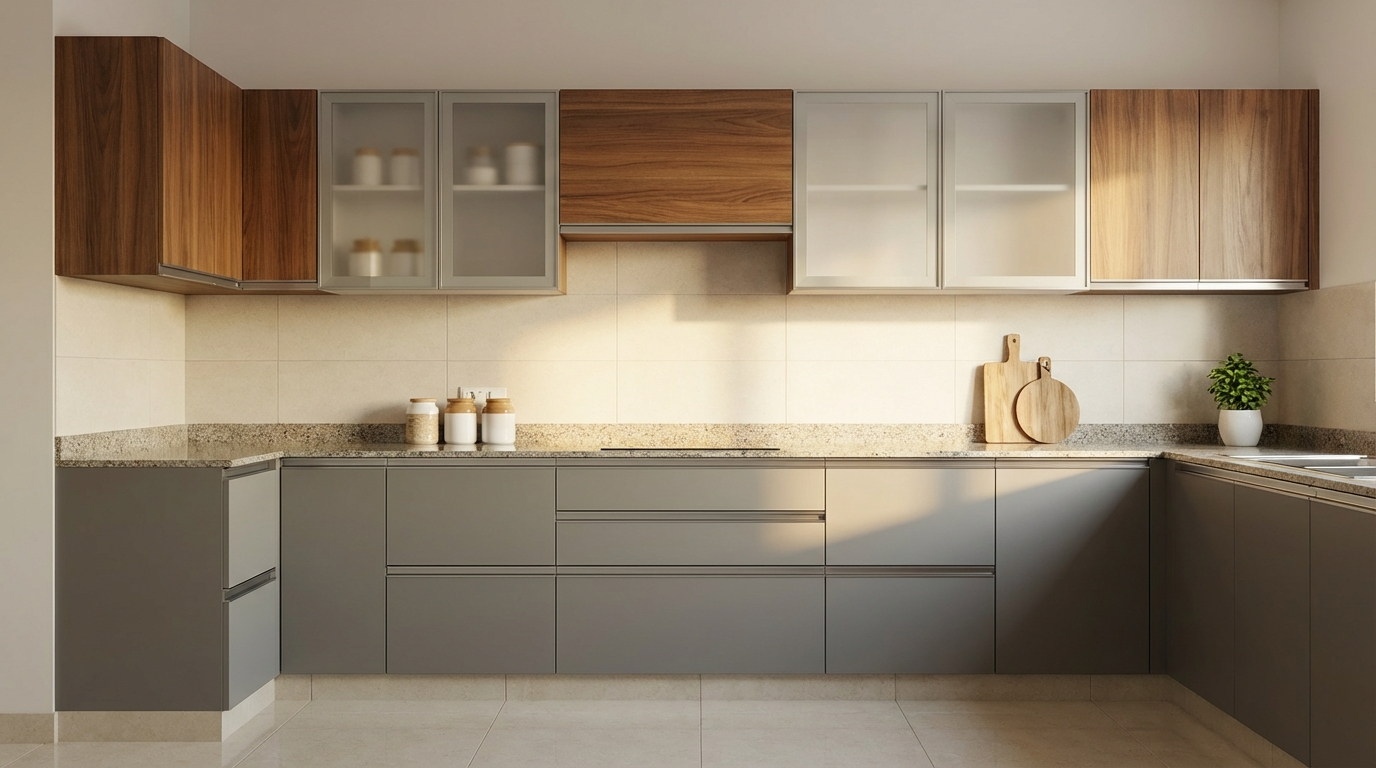
- Matte grey with integrated handles: BWR plywood 18mm + HPL matte grey, routed finger-pull groove—low maintenance, hides fingerprints
- Two-tone (dark base, light uppers): Charcoal lower cabinets + cream uppers in HPL finish—creates visual depth in galley kitchens
- Wood-grain laminate: HDHMR + wood-texture HPL—achieves wood look without veneer maintenance concerns
- Textured concrete finish: MDF + textured laminate (use only in well-ventilated, dry kitchens)—industrial aesthetic
Shaker and Traditional Profile Designs
- Classic white shaker: MDF 18mm + PU paint white, routed shaker profile—timeless, works with brass or chrome hardware
- Sage green shaker: MDF + PU paint muted green, paired with marble countertops—trending in 2026 for transitional kitchens
- Natural oak shaker: BWR plywood + oak veneer + PU clear coat—warm traditional look, requires climate control
- Cream with antique brass handles: MDF + membrane finish cream, classic ring-pull handles—colonial or vintage themes
Glass-Insert and Mixed-Material Designs
- Frosted glass upper cabinets: Aluminium frame + frosted glass insert + HPL base cabinets—visually lightens small kitchens
- Fluted glass feature doors: Reeded/fluted glass in aluminium profile for display cabinets—hides clutter while adding texture
- Glass-front pantry: Clear or tinted glass aluminium frame for tall pantry unit—showcases organized storage
- Mixed veneer and glass: Walnut veneer base units + glass uppers—luxury feel, traditional-modern blend
High-Gloss and Reflective Designs
- Mirror-finish acrylic white: HDHMR + white acrylic—maximizes light reflection, makes kitchens appear larger
- Deep burgundy gloss: HDHMR + coloured acrylic (burgundy/navy)—bold statement, handles fingerprints better than light colours
- Lacquered back-painted glass: 4mm glass on plywood substrate—ultra-premium finish, fragile edges need careful handling
Textured and Tactile Designs
- 3D wave pattern: Routed MDF + PU paint white—sculptural effect, works as feature wall cabinet
- Vertical groove (tambour effect): Routed plywood + laminate—mid-century modern aesthetic
- Louvered doors: Solid wood or MDF louvered panels—provides ventilation for pantry units, traditional look
- Leather-textured laminate: HPL leather-texture finish on HDHMR—unusual, luxury-feel for bar units or pantry
Indian Kitchen-Specific Designs
- Jaali (lattice) pattern insert: MDF routed jaali panel in aluminium frame—ventilated storage, traditional Indian aesthetic
- Brass-inlay fusion: Walnut veneer doors with brass strip inlay—luxury Indian contemporary style
- Teak-finish laminate with brass handles: HPL teak woodgrain + traditional brass lotus handles—affordable traditional look
- Terracotta and cream combination: HPL terracotta base cabinets + cream uppers—earthy, suited to South Indian aesthetics
- Temple-style carved doors: Solid teak with traditional carvings for pooja unit adjacent to kitchen—use only in dry zones
Cabinet Door Styles: Profile and Construction Types
Cabinet door profiles affect both aesthetics and manufacturing complexity. Understanding profile types helps you balance design preferences with budget realities.
Slab (Flat Panel) Doors
Slab doors feature completely flat surfaces without frames or panels. They suit modern, minimalist, and contemporary kitchen styles. Construction is straightforward: single-piece substrate with applied finish. Slab doors cost less to manufacture than profiled options because they require no routing or frame assembly. Best finishes: laminate, acrylic, lacquer, back-painted glass. Challenges: Flat surfaces highlight any substrate warping—quality materials matter more here.
Shaker-Style Doors
Shaker doors have a flat centre panel surrounded by a simple frame (stiles and rails). This classic profile originated from American Shaker communities and works in traditional, transitional, and modern farmhouse kitchens. Construction typically uses MDF with routed profiles and PU paint finish. Shaker profiles add 15–25% to manufacturing cost over slab doors. Challenges: Routed edges on MDF are moisture-sensitive—proper sealing is critical.
Raised Panel Doors
Traditional raised panel doors feature a centre panel that projects outward from the frame. Common in classical, colonial, and European kitchen styles. Usually manufactured from solid wood or MDF with multiple routing operations. Highest manufacturing cost among profile types. Best for: Large kitchens with traditional interiors where elaborate detailing suits the space.
What Thickness of Cabinet Door is Best for Modular Kitchens?
Standard modular kitchen cabinet doors use 18mm thick substrates for optimal balance between weight, strength, and hardware compatibility. Thinner 16mm doors work for small cabinets and overhead units where reducing weight matters. Thicker 19mm or 25mm options suit tall pantry doors and heavy glass-insert designs. European cup hinges—the industry standard—are designed for 18–19mm door thickness. Using different thicknesses requires hardware adjustment and can affect closing alignment. Stick to 18mm for most applications unless you have specific structural reasons for variation.
Kitchen Entrance Door Design Considerations
Kitchen entrance doors differ fundamentally from cabinet shutters. They must handle daily traffic, provide acoustic separation from living areas, maintain security for service entrances, and withstand different stress patterns than cabinet doors.
Solid vs Semi-Solid vs Hollow Construction
Solid-core doors (particle board or MDF core surrounded by hardwood frame and veneer/laminate facing) offer best sound insulation and durability. Weight ranges 25–40 kg depending on size. Semi-solid doors have honeycomb or tubular cores—lighter but reduced sound blocking. Hollow-core doors (just frame with thin face panels) should never be used for kitchen entrances—they dent easily, provide no insulation, and feel cheap.
Material Recommendations for Kitchen Entrance Doors
For main kitchen entrance from living/dining areas: Solid flush doors with BWR plywood frame and quality laminate or veneer facing provide durability with aesthetic flexibility. For service entrances or utility areas: Aluminium frame doors with glass or solid panels offer better moisture resistance and easy cleaning. For semi-open kitchens: Sliding barn-style doors or pocket doors save swing space while providing optional separation.
Hardware for Entrance Doors
Kitchen entrance doors require different hardware than cabinet doors. Use mortise locks or cylindrical locks rather than simple latches. Hinges should be heavy-duty (minimum 4-inch ball-bearing hinges for solid doors). Door closers help manage cooking odour control by ensuring doors close properly. Kickplates protect lower portions from foot traffic and cleaning impacts.
Hinges and Hardware: The Often-Ignored Factor
Hardware quality determines how long your kitchen doors function properly. Beautiful doors on cheap hinges fail within 1–2 years through sagging, misalignment, or complete hinge failure.
Cabinet Door Hinge Types
European Cup Hinges (Concealed Hinges): Industry standard for modular kitchens. Completely hidden when door is closed. Available with integrated soft-close mechanisms. Adjustable in three directions (height, depth, side). Requires precise 35mm boring holes. Quality brands: Hettich, Häfele, Blum, Ebco. Budget alternatives exist but soft-close mechanisms fail faster.
Soft-Close Mechanism: Essential for heavy acrylic or glass doors—prevents slamming that damages both door and cabinet. Adds ₹80–150 per hinge over standard options. Worth the investment for any cabinet opened multiple times daily.
Hinge Count Guidelines: Doors up to 600mm height: 2 hinges. Doors 600–1000mm: 3 hinges. Doors over 1000mm (tall units): 4 hinges minimum. Heavy acrylic/glass doors: Add one extra hinge regardless of height.
How Long Do Kitchen Door Hinges Last in Humid Conditions?
Quality European hinges from established brands last 10–15 years in normal Indian kitchen conditions with 50,000+ opening cycles. In high-humidity coastal areas, nickel-plated hinges corrode faster—specify stainless steel (SS304) hinges for these zones. Budget hinges typically fail at soft-close dampers first, then at pivot points. Signs of failing hinges: doors don't close flush, squeaking sounds, visible sagging, difficulty adjusting alignment. Replace hinges at first signs rather than waiting for complete failure—misaligned doors stress cabinet boxes.
Handle and Knob Selection
Handle style should match overall kitchen design while ensuring comfortable grip. Integrated handles (routed grooves, J-profiles, push-to-open) suit minimalist designs. Bar handles (stainless steel, aluminium, brass) work universally. Knobs suit traditional/shaker styles but require more wrist motion. Material matters: Stainless steel (SS304) for coastal areas, zinc alloy with quality plating for inland areas. Avoid hollow aluminium handles that dent easily.
Edge Banding: The Critical Detail Most Buyers Ignore
Edge banding seals exposed substrate edges, preventing moisture penetration and giving doors a finished appearance. This seemingly minor detail often determines whether doors last 5 years or 15 years in Indian conditions.
Edge Banding Material Options
PVC Edge Banding (0.8–2mm): Most common choice. Thicker bands (1–2mm) provide better protection and premium appearance. Colour-matched or contrasting options available. Applied with hot-melt adhesive—quality depends heavily on application equipment.
ABS Edge Banding: Higher quality than PVC, better adhesion, more eco-friendly. Slightly more expensive. Preferred by premium modular kitchen manufacturers.
Acrylic Edge Banding: Used specifically for acrylic-finished doors to ensure colour/gloss matching. Creates seamless edge appearance on high-gloss doors.
Laser Edge Banding: Zero glue line visible—adhesive activated by laser during application. Premium appearance, strongest bond. Available only at well-equipped factories.
Edge Banding Failure Modes
Poor edge banding is the most common point of kitchen door failure. Watch for: Lifting at corners (first sign of adhesive failure), Peeling along length (moisture penetration started), Discolouration at edges (moisture damage to substrate), Visible glue line yellowing (adhesive degradation). Once edge banding fails, moisture attacks substrate from edges inward—replacement becomes necessary.
Quality Check for Edge Banding
Before accepting delivery: Run fingernail along all edges checking for lifting. Look for consistent colour matching between edge and face. Check corners for proper mitering or rounding. Inspect for visible glue squeeze-out. Reject doors with any edge banding defects—they cannot be properly fixed on-site.
Price Range and Cost Drivers for Kitchen Doors (2026 Market)
Kitchen door costs vary significantly based on substrate, finish, profile style, hardware, and manufacturing quality. Understanding cost components helps you allocate budget wisely rather than simply choosing the cheapest option.
Indicative Price Ranges (Per Square Foot of Door Area)
| Door Type | Budget Range | Mid-Range | Premium Range |
|---|---|---|---|
| Laminate on Particle Board | ₹180–280 | ₹280–380 | ₹380–500 |
| Laminate on BWR Plywood | ₹350–450 | ₹450–600 | ₹600–800 |
| Laminate on HDHMR | ₹400–520 | ₹520–700 | ₹700–900 |
| Acrylic on HDHMR | ₹600–800 | ₹800–1100 | ₹1100–1500 |
| PU Paint on MDF (Shaker) | ₹550–750 | ₹750–1000 | ₹1000–1400 |
| Membrane/PVC Foil on MDF | ₹280–380 | ₹380–500 | ₹500–650 |
| Veneer on Plywood | ₹500–700 | ₹700–1000 | ₹1000–1500+ |
| Back-Painted Glass | ₹900–1200 | ₹1200–1800 | ₹1800–2500+ |
Note: Prices are indicative for 2026 market conditions and vary by city, quantity, and manufacturer. Hardware costs additional.
Key Cost Drivers Explained
Substrate Quality: BWR plywood costs 40–60% more than particle board but lasts 3x longer in kitchen conditions. HDHMR sits between them in both cost and performance.
Finish Type: Acrylic and PU paint finishes cost significantly more than laminate due to application complexity and material costs. Glass finishes are premium-priced due to fragility risks during production.
Edge Treatment: Laser edge banding adds ₹30–50/running foot over standard hot-melt PVC banding. Acrylic edge matching adds similar premium.
Profile Complexity: Routed profiles (shaker, raised panel) add 15–30% over slab doors. CNC-routed decorative patterns cost even more.
Hardware: Premium European hinges (Blum, Hettich) cost ₹250–500 per piece versus ₹80–150 for budget alternatives. Multiply by 2–4 hinges per door.
Budget Estimation Method
For rough budgeting: Calculate total door area in square feet (measure each door opening and multiply). Use mid-range price per sq ft for your chosen material combination. Add 15–20% for hardware (hinges, handles). Add 10% for installation and contingency. Example: 100 sq ft of laminate-on-plywood doors = ₹45,000–60,000 for doors + ₹7,000–10,000 hardware + ₹5,000–7,000 installation = ₹57,000–77,000 total.
Common Buyer Mistakes and How to Avoid Them
Kitchen door purchases frequently go wrong due to predictable errors. Learning from others' mistakes saves money and frustration.
Mistake 1: Choosing Based on Showroom Samples Only
What goes wrong: Showroom samples are made perfectly under controlled conditions. Production batches vary in colour, edge quality, and finish consistency. Doors delivered look different from samples.
Why it happens: Buyers don't request production-line samples or visit manufacturing facilities.
How to avoid: Ask for actual production samples (not display pieces). Visit the factory if ordering large quantities. Include colour/finish tolerance clauses in purchase agreements.
Mistake 2: Ignoring Substrate Quality
What goes wrong: Beautiful finish applied to cheap particle board. Within 2–3 monsoons, edges swell, hinges pull out, doors warp.
Why it happens: Sellers emphasize finish (visible) over substrate (hidden). Price comparisons ignore material differences.
How to avoid: Always ask specifically: "What is the substrate material?" Insist on written specification in quotation. Pay the premium for BWR plywood or HDHMR in kitchen applications.
Mistake 3: Underestimating Humidity Impact
What goes wrong: MDF or MR-grade plywood doors installed in humid coastal kitchens. Edges swell within first monsoon season.
Why it happens: Buyers don't research material suitability for their specific climate zone.
How to avoid: Map your location to climate zone (coastal/humid/moderate/dry). Choose materials rated for that moisture exposure level. Over-specify rather than under-specify in borderline cases.
Mistake 4: Skimping on Edge Banding
What goes wrong: Thin 0.4–0.5mm edge banding peels off within 1–2 years, exposing substrate to moisture.
Why it happens: Thinner edge banding costs less. Difference not visible initially.
How to avoid: Specify minimum 1mm PVC or ABS edge banding. For premium projects, insist on laser-edge or thick acrylic banding.
Mistake 5: Choosing Cheap Hinges
What goes wrong: Soft-close mechanism fails within months. Doors sag, don't close properly, require constant adjustment.
Why it happens: Hinge cost seems minor compared to door cost. Buyers accept whatever vendor provides.
How to avoid: Specify hinge brand in contract. Budget ₹300–500 per hinge for quality European brands. Verify hinge brand on delivery before installation.
Mistake 6: Not Measuring Accurately
What goes wrong: Doors arrive wrong size—either too big (need expensive trimming) or too small (gaps visible).
Why it happens: Measurements taken before cabinet installation complete. Wall/floor not level.
How to avoid: Measure after cabinet carcasses fully installed and leveled. Verify measurements at top and bottom (openings often not perfectly square). Leave 2–3mm tolerance for adjustment.
Mistake 7: Ignoring Ventilation Requirements
What goes wrong: Enclosed cabinets near cooking zones trap moisture and heat. Doors deteriorate faster than expected.
Why it happens: Focus on aesthetics over function. Closed-cabinet-everywhere approach.
How to avoid: Include open shelving or ventilated panels near hob area. Use louvered doors for pantry/storage units. Ensure chimney/exhaust adequately removes cooking moisture.
Workmanship and Installation Tips
Even the best materials fail with poor installation. These guidelines ensure your kitchen doors perform as intended.
Cutting and Edge Sealing Requirements
All cut edges must be sealed before installation—exposed substrate absorbs moisture immediately. For on-site cuts (unavoidable for final fitting), seal edges with wood primer or edge sealant same day. Never leave exposed MDF or plywood edges overnight in humid conditions. Use appropriate saw blades: Fine-tooth blades (60+ teeth for 200mm blade) for laminate-faced materials to prevent chipping. Cut laminate face-up on table saws, face-down on circular saws.
Fastening and Screw Holding Guidance
Pre-drill pilot holes for all screws to prevent substrate splitting—especially important for MDF and HDHMR. Pilot hole diameter: 70% of screw shank diameter. For heavy doors, use deeper screws (minimum 20mm penetration into cabinet side panel). Apply wood glue to mounting plates before screwing for additional holding strength in MDF.
Hinge Zone Reinforcement
Reinforce hinge mounting areas on HDHMR and MDF doors with hardwood plugs or blocks. Install reinforcement during door manufacturing (not after). For retrofit reinforcement: Route 12mm deep pocket, glue in hardwood block, allow cure before hinge installation. This prevents the most common door failure—hinge pullout from weak substrate.
Site Storage and Acclimatization
Store doors flat on level surface, not leaning against walls (causes warping). Keep wrapped in original packaging until ready for installation. Avoid storage in rooms with wet paint, fresh plaster, or incomplete waterproofing. Minimum 48-hour acclimatization in kitchen space before final installation—72 hours in humid climates.
Carpenter Briefing Checklist
- Review hinge specifications and confirm tools available for 35mm cup boring
- Verify soft-close mechanism installation knowledge
- Confirm edge sealing material available for any on-site cuts
- Establish adjustment protocol—doors should be adjusted after initial settling
- Review handle/knob installation heights for consistency
- Set quality standards: gaps between doors, alignment tolerances, closing consistency
Quality Checks Without Lab Tests
You don't need laboratory equipment to assess kitchen door quality. These practical checks identify major issues before and after purchase.
Visual Inspection Points
Surface finish: Check under bright light at 45-degree angle. Look for ripples, orange-peel texture, dust inclusions, colour inconsistency. Laminate should be perfectly flat without air bubbles.
Edge banding: Run finger along all edges. Feel for lifting, gaps, or rough spots. Corners should be smooth, properly rounded or mitered. No visible glue lines on quality work.
Face alignment: Place straightedge across door surface. Should be perfectly flat (slab doors) or consistently profiled (shaker doors). Any twist or bow indicates substrate or storage problems.
Questions to Ask Dealer/Supplier
- "What is the exact substrate material and grade?" (Should specify: BWR plywood IS 303, HDHMR, MDF, etc.)
- "What is the edge banding thickness and material?" (Minimum 1mm PVC or ABS)
- "Which brand of hinges and soft-close are included?" (Should name specific brand)
- "What is warranty coverage for edge banding and finish?" (Standard: 1 year minimum, premium: 5+ years)
- "Can I visit your manufacturing unit?" (Reluctance is a red flag)
Warning Signs to Reject
- Weight inconsistency: Doors of same size should weigh the same. Significant variation indicates substrate quality differences.
- Core voids: Tap door surface listening for hollow spots. Solid construction sounds consistent; voids sound distinctly different.
- Edge discolouration: Yellow or brown edges indicate moisture damage already occurred.
- Finish lifting: Any peeling, bubbling, or lifting at edges—reject immediately.
- Strong chemical odour: Excessive formaldehyde smell indicates low-quality adhesives and potential health concern.
Simple Field Tests
Weight test: Lift and compare similar-sized doors. Heavier typically indicates denser, better-quality substrate (with same finish).
Tap test: Knock on door surface with knuckle. Solid substrate sounds dense; hollow construction sounds tinny. Voids produce distinctly different sound.
Edge scratch test: Gently scratch unexposed edge with fingernail. Quality substrate shouldn't crumble or powder easily. MDF should show fibres; plywood should show layers.
Flex test: For uninstalled doors, apply gentle pressure at centre. Quality doors should resist flexing. Excessive bend indicates thin substrate or poor core.
Decision Framework: Choosing the Right Kitchen Door by Scenario
Use this framework to match your specific situation with appropriate door choices.
| Your Situation | Recommended Door Type | Reasoning |
|---|---|---|
| Budget kitchen, dry inland city | Laminate on particle board or MR plywood | Lowest cost, adequate for moderate conditions |
| Mid-range kitchen, metro city, moderate humidity | HPL laminate on BWR plywood 18mm | Best value, good moisture resistance, durable |
| Premium kitchen, any location | Acrylic on HDHMR with laser edge | Superior finish, excellent moisture resistance, premium appearance |
| Coastal city (Mumbai, Chennai, Kochi) | Marine ply or HDHMR, SS304 hinges | Maximum moisture and salt resistance |
| Near sink or dishwasher | HDHMR or marine ply base, any finish | Direct water splash resistance critical |
| Traditional Indian aesthetic | Shaker MDF + PU paint or wood veneer on plywood | Achieves profile detail, warm appearance |
| Ultra-modern minimalist | Handleless slab, HDHMR + acrylic | Cleanest lines, contemporary look |
| Heavy cooking (Indian style, daily) | Matte laminate (not gloss) on BWR/HDHMR | Hides oil marks, easy cleaning, durable |
| Rental property kitchen | Membrane/PVC foil on MDF | Lower cost, replaceable, acceptable durability |
| Display cabinet/glass doors | Aluminium frame + glass insert | Proper frame support for glass weight |
Frequently Asked Questions
What is the best material for kitchen cabinet doors in India?
BWR-grade plywood (IS 303 compliant) with high-pressure laminate finish offers the best balance of moisture resistance, durability, and value for most Indian kitchens. It withstands humidity during monsoon season, holds screws well for hinges, and laminate surfaces clean easily after cooking splatter. For high-humidity zones like coastal cities or areas directly adjacent to sinks and dishwashers, HDHMR or marine-grade plywood provides additional moisture protection. The substrate choice matters more than the finish—invest in quality core material rather than premium finish on cheap substrate.
Can MDF be used for kitchen doors in humid Indian climates?
Standard MDF performs poorly in humid Indian conditions and should generally be avoided for kitchen applications except in very dry regions with excellent ventilation. MDF absorbs atmospheric moisture through edges even without direct water contact, causing swelling, warping, and eventual finish failure. If you prefer MDF for routed profiles (like shaker-style doors), ensure all edges are thoroughly sealed, use moisture-resistant MDF grades where available, and install only in kitchens with effective exhaust ventilation and dehumidification. Many kitchen door failures in India trace back to MDF usage without adequate moisture precautions.
What thickness should kitchen cabinet doors be?
Standard modular kitchen cabinet doors use 18mm thick substrates—this thickness works best with European cup hinges (industry standard), provides adequate rigidity for typical door sizes, and balances weight against structural strength. Overhead wall cabinet doors can use 16mm thickness to reduce weight on wall-mounted cabinet boxes. Tall pantry unit doors and heavy glass-insert doors benefit from 19mm thickness for additional rigidity. Avoid mixing different thicknesses within the same kitchen as it complicates hinge selection and creates inconsistent appearance at closed positions.
How do I maintain glossy acrylic kitchen doors?
Acrylic finish doors require gentle cleaning to maintain their mirror-like appearance. Use soft microfibre cloths only—paper towels and rough cloths scratch acrylic surfaces. Clean with mild soap and water or specific acrylic cleaners; avoid ammonia-based glass cleaners, abrasive compounds, and acidic substances. Wipe in one direction rather than circular motions to prevent swirl marks. Light scratches can sometimes be buffed out with plastic polish compounds. Fingerprints show prominently on light-coloured acrylic—consider matte finishes or darker colours for families with children or heavy kitchen usage.
What is the difference between modular kitchen doors and regular cabinet doors?
Modular kitchen doors are manufactured in factory conditions with precise machinery, standardised dimensions, and factory-applied finishes. They're designed to fit modular cabinet systems with European hinges, specific edge tolerances, and consistent quality control. Regular cabinet doors made by local carpenters are custom-built on-site or in small workshops, often with less precise equipment and variable quality. Modular doors offer better finish consistency and faster installation but less customization flexibility. Carpenter-made doors allow unlimited custom sizes and on-site adjustments but require skilled craftspeople for quality results.
Are handleless kitchen doors practical for Indian kitchens?
Handleless designs (push-to-open, J-profile, or integrated grip) work well in modern Indian kitchens but require consideration of cooking style. Oily hands from Indian cooking can leave marks on push-to-open surfaces, making matte finishes preferable over glossy ones for these designs. J-profile handles (groove routed into top edge) provide grip without surface contact but accumulate dust in the groove. Push-to-open mechanisms add cost (₹150–300 per door) and can fail over time—quality German or Italian mechanisms last longer than budget alternatives. For heavy-use kitchens, visible handles remain the most practical choice.
How long do kitchen cabinet doors typically last?
Kitchen door lifespan varies dramatically based on material quality, finish type, installation quality, and usage conditions. Quality BWR plywood doors with HPL laminate finish, properly installed with good hinges and edge banding, typically last 12–18 years in normal Indian kitchen conditions. Premium HDHMR with acrylic finish can exceed 15 years. Particle board doors in humid conditions may fail within 3–5 years. Veneer finishes require more maintenance and may need refinishing every 5–7 years to maintain appearance. Hinge quality affects functional lifespan—doors last only as long as their hardware functions properly.
Can I replace just the kitchen doors without changing cabinets?
Yes, door replacement without cabinet change is common and cost-effective for kitchen refreshes. This works best when existing cabinet boxes remain structurally sound. Measure door openings precisely after removing old doors—existing holes from hinges may limit new hinge placement options. Consider whether cabinet boxes can support new door weight (acrylic doors are heavier than laminate). European hinge systems allow some adjustment, but significant size differences require new drilling. Door replacement typically costs 40–60% less than full kitchen remodelling while dramatically updating appearance.
What causes kitchen doors to warp and how can I prevent it?
Warping results from uneven moisture absorption—one face absorbs more moisture than the other, causing differential expansion. Primary causes include: poor edge sealing allowing moisture entry, humid storage before installation, single-sided laminate application, and inadequate kitchen ventilation. Prevention strategies: Choose substrates with balanced construction (veneer both sides, or stable HDHMR), insist on complete edge sealing, allow proper acclimatization before installation, maintain kitchen ventilation/exhaust during cooking, and avoid storing wet utensils in closed cabinets immediately after washing.
Is glass a good choice for kitchen cabinet doors?
Glass cabinet doors work well for display purposes in upper cabinets where you want to showcase dishes or glassware. Frosted or tinted glass hides clutter while allowing visual depth. However, glass is heavier than solid doors (requiring stronger hinges and cabinet construction), shows fingerprints prominently, and requires careful handling during installation. Glass doors shouldn't be used near cooking zones where thermal shock from heat could cause cracking. For full kitchen door sets, glass works best as accent elements rather than primary material—combining glass uppers with solid base cabinet doors is common and practical.
What kitchen door colour hides stains and wear best?
Medium wood-tone laminates and grey/taupe matte finishes hide daily wear, fingerprints, and minor stains most effectively. Pure white shows every mark and requires frequent cleaning. Dark colours (black, navy) show dust and water spots prominently. Textured finishes outperform smooth surfaces for stain concealment. For Indian kitchens with heavy spice use, avoid light solid colours—wood-grain or stone-texture patterns with variations mask inevitable cooking residue better. Consider your cleaning frequency realistically when choosing colours; beautiful showroom finishes may become maintenance burdens in daily use.
Should kitchen doors match throughout the kitchen or can I mix styles?
Strategic mixing creates visual interest while maintaining coherent design. Common successful combinations: Different colours for upper and lower cabinets (light uppers, dark lowers), slab doors for most cabinets with glass-insert accent doors, and feature material for island or pantry (veneer or special finish). Avoid mixing too many different profile styles (shaker and slab can work together; shaker, slab, and raised panel together looks chaotic). Keep hardware consistent throughout regardless of door variations. Mixing finishes works best with professional design guidance to ensure cohesive result.
What edge banding thickness should I specify for kitchen doors?
Minimum 1mm PVC or ABS edge banding for standard kitchen applications—anything thinner (0.4–0.5mm) peels easily within 2–3 years. For premium kitchens, specify 2mm edge banding which provides better protection and more substantial appearance. Laser-edge technology (zero-glue-line application) offers strongest adhesion regardless of thickness and is worth specifying for modular kitchen orders. Edge banding material should match door colour precisely—colour-matched banding from same supplier as door finish ensures consistency. Always verify edge banding specifications in written quotations.
How do soft-close hinges work and are they worth the extra cost?
Soft-close hinges contain hydraulic or mechanical dampers that slow door movement in the final 15–20 degrees of closing, preventing slamming. They're absolutely worth the ₹100–200 premium per hinge for several reasons: They protect both doors and cabinet boxes from impact damage, reduce noise significantly (important in open-plan homes), prevent children from slamming fingers, and extend overall door lifespan. Quality soft-close mechanisms (Blum, Hettich, Häfele) maintain consistent function for years; budget alternatives often lose damping effectiveness within months. For heavy acrylic or glass doors, soft-close hinges are essential rather than optional.
Our wardrobe door design guide covers similar material and hardware considerations for bedroom furniture applications. For broader modular kitchen planning including cabinet layout and countertop selection, see our comprehensive modular kitchen planning resource.
Disclaimer: This content is provided for general informational purposes based on industry practices and publicly available information. Product specifications, standards, prices, and availability may vary by manufacturer, region, and time. Readers should independently verify details with manufacturers, dealers, or qualified professionals before making purchase or construction decisions.Want Plywood Suggestions?
Share a few details and a Sainik 710 specialist will suggest suitable brands and connect you to responsive dealers.