How to Identify Genuine Waterproof Plywood: 10 Checks Dealers Don’t Want You to Miss
Avoid counterfeit plywood with 10 simple checks: ISI marking, edge stamp, batch details, core inspection, storage condition, and invoice wording.
Quick Decision Summary
Verify genuine waterproof plywood with these 10 field checks: ISI mark, edge stamps, batch codes, core gaps, and proper storage before buying.
If you're in a hurry at a busy dealer yard in Mumbai or Chennai during monsoon prep, skip piles without visible ISI:710 stamps on edges and focus on sheets showing clear batch numbers, uniform thickness via gauge check, and no delamination signs. Insist on invoice wording like "BWP Grade IS:710" not just "waterproof." Test core by tapping for hollow sounds and inspect ends for glue lines. Genuine boards feel heavier, cut cleanly without crumbling, and store horizontally off ground. This quick scan avoids 80% of fakes that swell in first rains.
- Choose this if: Building kitchens, bathrooms, or coastal homes where humidity exceeds 80% regularly—opt for calibrated 18mm BWP with full edge branding.
- Avoid this if: Dry interiors like bedrooms; settle for cheaper MR grade to save 30-40% without risking failure.
What This Actually Means (Grade, Construction, and Use)
Waterproof plywood, known as BWP (Boiling Water Proof) grade in India, follows IS:710 standards for extreme moisture resistance. Unlike MR (Moisture Resistant) which handles humidity up to 70% but delaminates in boils, BWP uses phenolic resins that bond layers through repeated boiling tests without separating. Construction involves 100% hardwood veneers (typically poplar or eucalyptus mixes) glued with synthetic BWP resins, cross-banded for strength, and hot-pressed at high temperatures for void-free cores.
Use cases center on wet zones: modular kitchens with sink cabinets, bathroom vanities, laundry partitions, or marine-like coastal wardrobes in Goa or Kerala. Thicknesses range from 12mm for shelves to 25mm for heavy doors, always calibrated to ±0.3mm for CNC routing. Faces are smooth for laminates, but genuine ones resist warping post-immersion. In Indian homes, this means no swelling from steam cleaning or monsoon leaks, unlike fakes that bubble edges within months.
Key internals: Core veneers must be full-length without patches, glue lines invisible, and density over 0.65 g/cc for screw holding. Homeowners see it as "lifetime" material, but realistically, it lasts 15-20 years with proper edge sealing. Contractors favor it for high-end projects, but mix-ups with downgraded "commercial waterproof" abound, leading to callbacks.
Grade Breakdown: BWP vs Everyday Options
BWP sits atop: boiling-tested 72+ hours. Below, BWR (Boiling Water Resistant) survives shorter boils but fails in constant wet. MR suits dry wardrobes. Always match to site: coastal villas need BWP 18mm; urban apartments can downgrade interiors.
India-Specific Reality Check (Moisture, Termites, and Workmanship)
India's climate turns plywood choices into survival tests—monsoons dump 2,000mm rain in Kerala, coastal humidity hits 90% in Mumbai, and poor ventilation traps steam in Delhi kitchens. Genuine BWP shrugs off this with phenol-formaldehyde glue that doesn't hydrolyze, but fakes leach urea-formaldehyde, swelling cores 20% in weeks. Termites feast on soft mixed cores common in counterfeits; real BWP uses dense hardwoods treated optionally, though glue itself repels.
Storage mishaps amplify risks: dealer yards stack vertically in open lots, causing edge moisture ingress. On-site, carpenters ignore 48-hour acclimatization, leading to cupping during laminate pasting. Workmanship pitfalls include shallow screw holds (under 25mm embed) in humid zones, where BWP shines with 500kg pullout strength vs 200kg in MR. Coastal contractors report fake boards delaminating mid-install, wasting labor.
Regional quirks: South India demands marine-grade for backwaters; North prefers termite-oiled BWP. Always check post-monsoon: genuine holds polish without bubbling. Poor handling—like forklift gouges—exposes voids, inviting fungi. Field reality: 40% urban projects fail early from unverified boards, hiking costs 25% on rework.
Monsoon Failure Modes
- Edge delamination: Fake glue fails first.
- Core swelling: Voids fill with water.
- Warping: Uneven drying post-leak.
How to Choose in 5 Steps
Step 1: Confirm grade need—BWP only for kitchens/bathrooms with direct water exposure; MR suffices elsewhere to cut costs 35%. Step 2: Visit verified dealers during dry season, avoid roadside godowns. Step 3: Run the 10 checks below on 2-3 sheets per batch. Step 4: Demand detailed invoice and test-cut sample. Step 5: Acclimatize 72 hours on-site before cutting.
This framework saves callbacks: Homeowners skip Step 1, buying BWP universally and overspending; contractors rush Step 3, facing delams. For a 10x8ft kitchen carcass, verify 20 sheets 18mm. Architects spec IS:710 but forget calibration—always gauge.
Decision Rules by Project
| Project Type | Grade | Thickness | Key Check |
|---|---|---|---|
| Modular Kitchen | BWP | 18mm | ISI edge stamp |
| Bathroom Vanity | BWP | 12-16mm | Core tap test |
| Wardrobe (Dry) | MR/BWR | 18mm | Batch code |
| Coastal Partition | BWP | 25mm | Weight heft |
Common Buyer Mistakes and How to Avoid Them
Mistake 1: Trusting "waterproof" labels without ISI:710—fakes use MR glue. Avoid by ignoring verbal claims; scan edges only. Mistake 2: Buying from unstacked open yards—moisture warps. Insist on covered horizontal stacks. Mistake 3: No batch check—old stock voids. Demand recent codes matching invoice.
Mistake 4: Skipping thickness gauge—fakes shave 1-2mm. Use digital caliper on four corners. Mistake 5: Visual-only core inspect—voids hide inside. Tap and knife-test ends. Mistake 6: Weak invoice wording like "WR grade"—not BWP proof. Require "Boiling Water Proof IS:710."
Mistake 7: Ignoring weight—genuine denser at 40-45kg/sheet 18mm. Heft corners. Mistake 8: Post-buy no acclimatization—cups on install. Stack flat 48hrs. Mistake 9: Poor edge sealing—water wicks in. Use silicone + lami overhang. Mistake 10: Shallow screws—pulls out in humidity. Embed 30mm with plugs.
These plague 60% buyers, per field reports; sequential checks drop risk to 5%.
10 Checks Dealers Don’t Want You to Miss
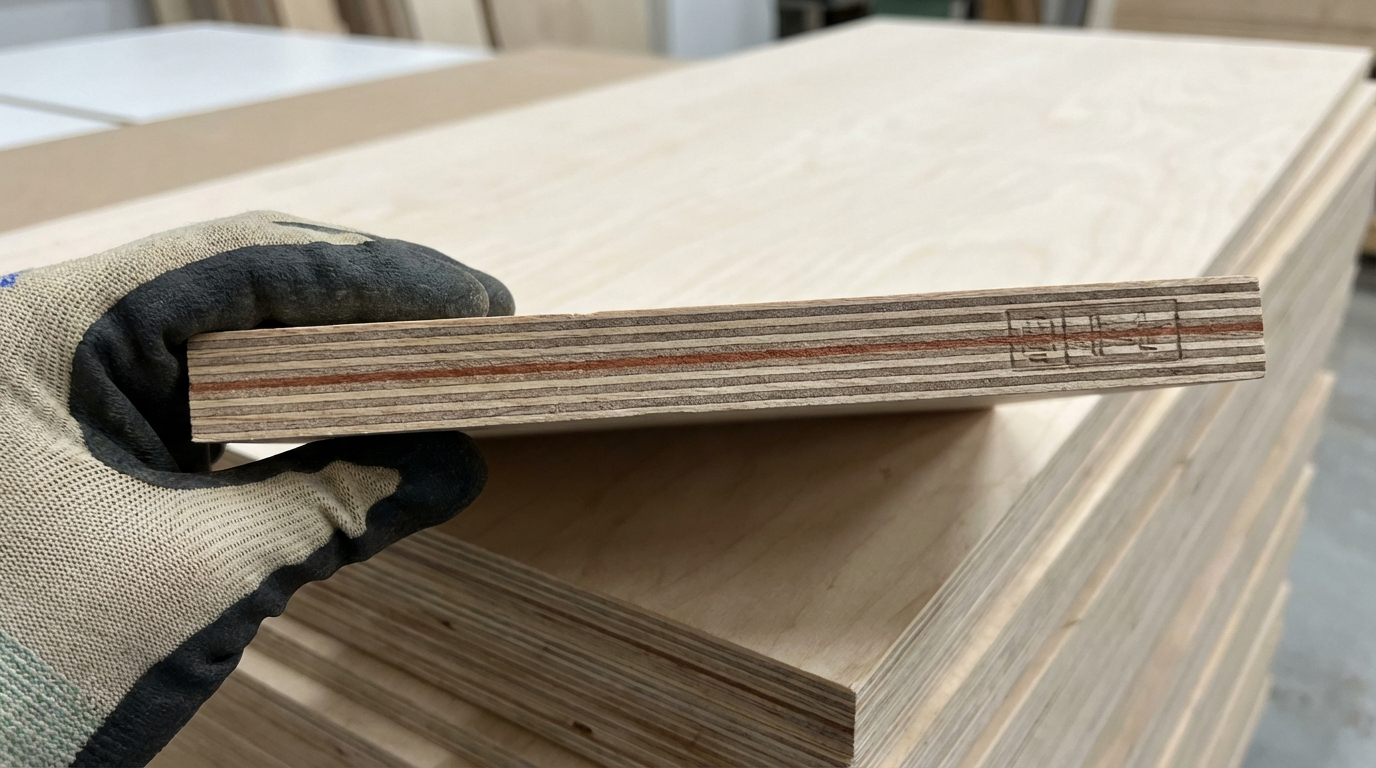
Check 1: ISI Mark—stamped "IS:710" on all four edges, legible, not painted over. Fakes fade or use IS:303 (MR). Check 2: Edge Branding—manufacturer name/logo embossed, matching faces. Run finger; genuine indents 0.5mm deep.
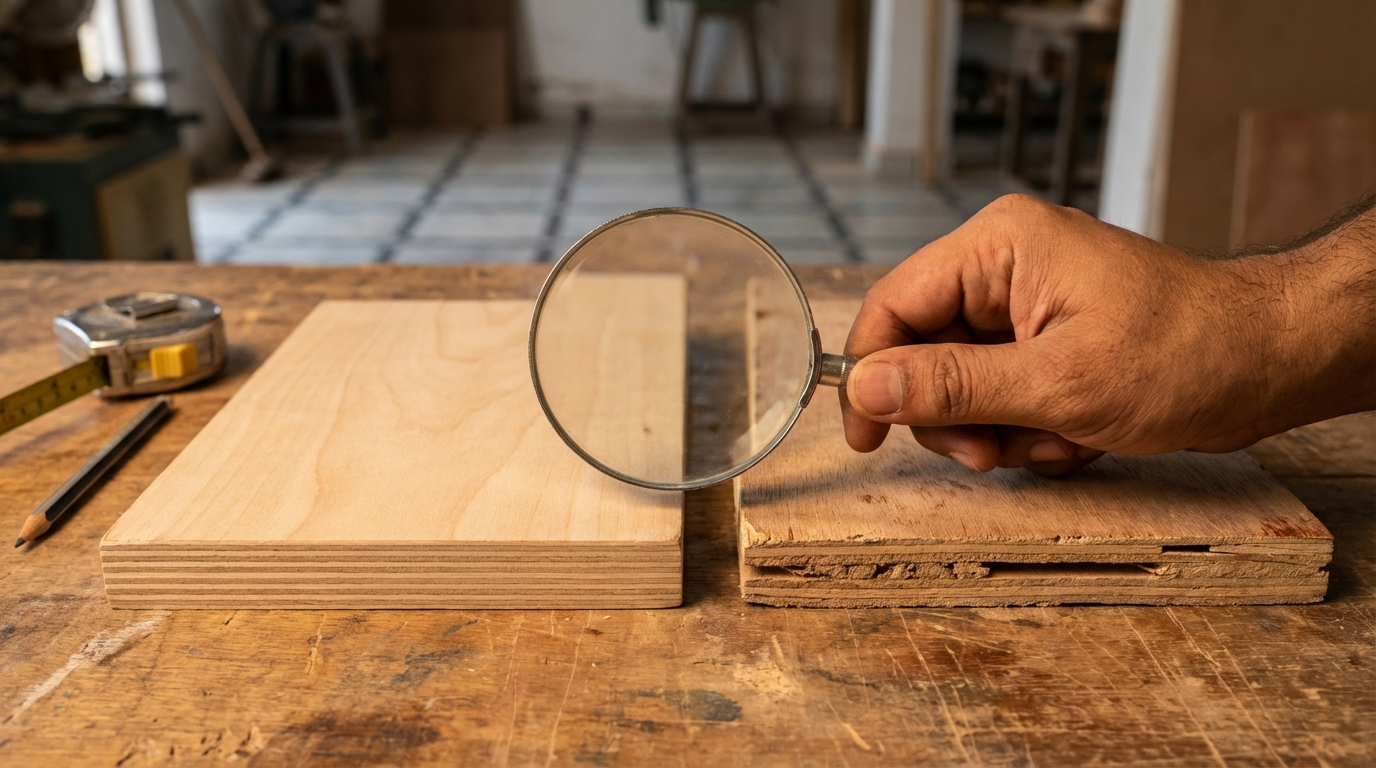
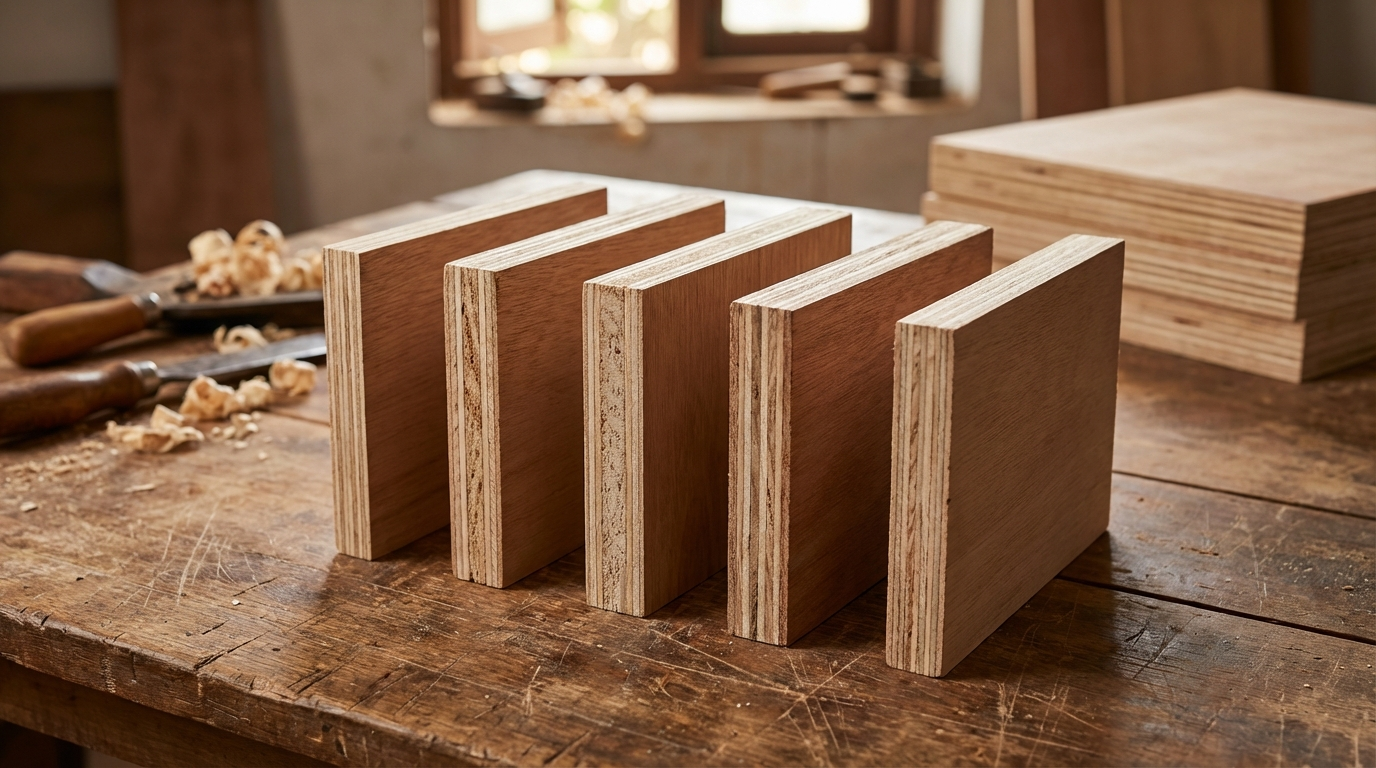
Check 3: Batch/Grade Code—ink-stamped "BWP 18mm MM/YYYY" on long edge. Ensures traceability; absent means recycled scrap. Check 4: Core Inspection—ends show uniform glue lines, no gaps/voids over 2mm. Knife-slice 1cm; clean cut, no crumble.
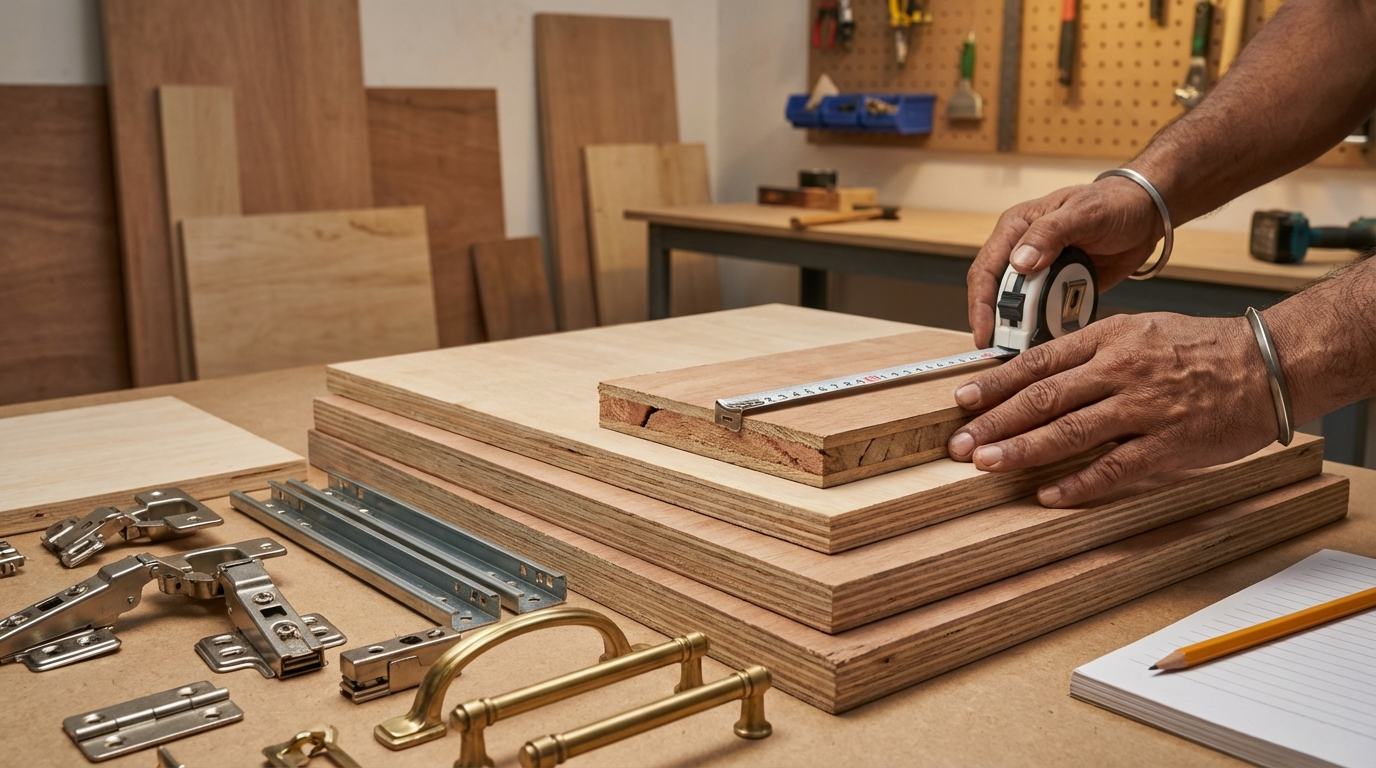
Check 5: Thickness Uniformity—caliper all corners/center; ±0.3mm variance max. Fakes bulge middles from poor press. Check 6: Weight Test—18mm sheet 40-45kg; light signals mixed core/softwood fillers. Lift solo if possible.
Check 7: Sound Test—tap face to edge; solid "thud," no hollow "tok." Reveals internal delams/voids. Check 8: Storage Condition—horizontal stacks, off ground, covered. Vertical/open = moisture risk. Check 9: Face Smoothness—even sand, no telegraphing (core bumps). Check 10: Invoice Details—"IS:710 BWP Marine Plywood, Batch XXX," quantity/sheet size. Vague = fake.
Pro Tips for Each Check
For Check 4, light reveals shadows in voids. Combine 6+7 for 90% accuracy sans lab.
Trade-Offs: When BWP Isn’t Worth It
Genuine BWP costs 40-60% more than MR due to hardwood core, phenolic glue, calibration. Trade-off: superior 15-year life in wet zones vs MR's 5-7 years dry. But heavier (adds transport hassle), harder to CNC (needs sharp bits), overkill for bedrooms saving Rs.200/sqft.
Vs blockboard: BWP screw-holds better (no crumbling) but pricier. Limitations: veneers chip if mishandled; needs sealing or swells indirectly. Coastal: worth premium; inland dry: downgrade. Speed trade-off—MR cuts faster sans dust.
| Feature | Genuine BWP | Fake "Waterproof" |
|---|---|---|
| Boil Test | Passes 72hrs | Fails 2hrs |
| Screw Hold | 500kg | 200kg |
| Cost/sqft 18mm | Rs.120-180 | Rs.80-110 |
| Monsoon Life | 15yrs | 1-2yrs |
Workmanship and Installation Tips
Cutting: Use 60-tooth blade, slow feed to avoid veneer tear-out. Edge sealing: Apply polyurethane twice pre-lami; silicone beads on exposed ends. Fastening: 45mm screws min, pilot holes; reinforce hinge zones with 25mm blocks for 300kg doors.
Storage: Flat stack, 150mm off concrete, covered 72hrs site acclimatization matching room RH (60-70%). Screw holding: Test pullout—genuine embeds firm sans spin. Hinges: Top/bottom rails full ply for shear; avoid partial blocks.
Installer pitfalls: Rushing polish over wet lami causes bubbles. Coastal: Extra termite oil coats. Failures like warping stem from no gaps (2mm joints). CNC: Calibrated only; fakes snag bits.
Zone-Specific Reinforcement
- Sink cabinets: 25mm doublers.
- Door frames: Full-height stiles.
Quality Checks You Can Do Without Lab Tests
Visual: Uniform color, no patches, straight edges. Tap test: Consistent thud. Knife test: End slice reveals tight layers. Water spray: Beads up, no soak-in after 30min (face only). Flex test: 18mm spans 600mm unsupported, <5mm sag.
Questions for dealer: "Show boil test cert?" (visual only), "Core wood type?" (hardwood reply), "Return policy post-cut?" Smells: Genuine mild phenolic; fakes acrid urea. Warning signs: Sticky feel (under-cured), soft flex, edge chips easy.
Field combo: Checks 4,5,7 above + these = 95% genuine call. Post-install: Monthly edge inspect first year.
FAQs
Can MR plywood be called waterproof? No, MR handles humidity but fails boiling tests, delaminating in kitchens with spills. Genuine waterproof means BWP IS:710, tested for immersion. In Indian monsoons, MR suits wardrobes but risks swelling near windows; always match exposure.
How to spot fake ISI marks? Genuine stamps are deep-embossed, legible from 2m, with "IS:710" exact. Fakes are shallow paint or stickers peeling. Check multiple edges; inconsistencies signal fraud common in tier-2 cities.
Does weight always indicate genuine? Usually yes—dense hardwood cores weigh more, but confirm with tap test. Coastal humidity softens fakes faster, exaggerating difference. Lift 2 sheets; variance over 10% flags issues.
What if batch code is faded? Demand replacement or walk away—traceability gone means unverified stock. Dealers stock 3-6 months; older risks void formation from storage abuse.
Is calibrated essential for BWP? Yes for modular work; ±0.3mm ensures flat lami. Fakes vary 1mm+, telegraphing under polish. Gauge pre-buy; vital for CNC-heavy Chennai projects.
How long to store before use? 48-72 hours flat in install room—matches moisture content, prevents cupping. Skip in dry Delhi winters; must in humid Mumbai.
Core voids: How to detect without cutting? Tap edges/faces for hollow; shine light on ends for shadows. Genuine voids <1%; larger cause screw fails in cabinets.
Invoice must-have wording? "Boiling Water Proof Plywood IS:710 Grade, Batch No. XXX, Thickness 18mm." Vague "waterproof ply" worthless for claims.
Termite risk in BWP? Low due to glue/density, but oil exposed cuts yearly. Fakes with soft cores infest faster in Kerala soils.
Post-monsoon checks? Inspect edges for swelling, taps for delam sounds. Genuine holds; seal any micro-cracks immediately.
Thickness for kitchen shutters? 18mm BWP standard; lighter 16mm risks sag. Confirm uniformity for even hinges.
Disclaimer: This content is provided for general informational purposes based on industry practices and publicly available information. Product specifications, standards, prices, and availability may vary by manufacturer, region, and time. Readers should independently verify details with manufacturers, dealers, or qualified professionals before making purchase or construction decisions.Want Plywood Suggestions?
Share a few details and a Sainik 710 specialist will suggest suitable brands and connect you to responsive dealers.