Guest Room Design Ideas: 20+ Comfortable & Stylish Layouts for Indian Homes
Explore 20+ guest room design ideas—comfortable beds, storage solutions & decor tips. Perfect layouts for small & large guest bedrooms in Indian homes.
Quick Decision Summary
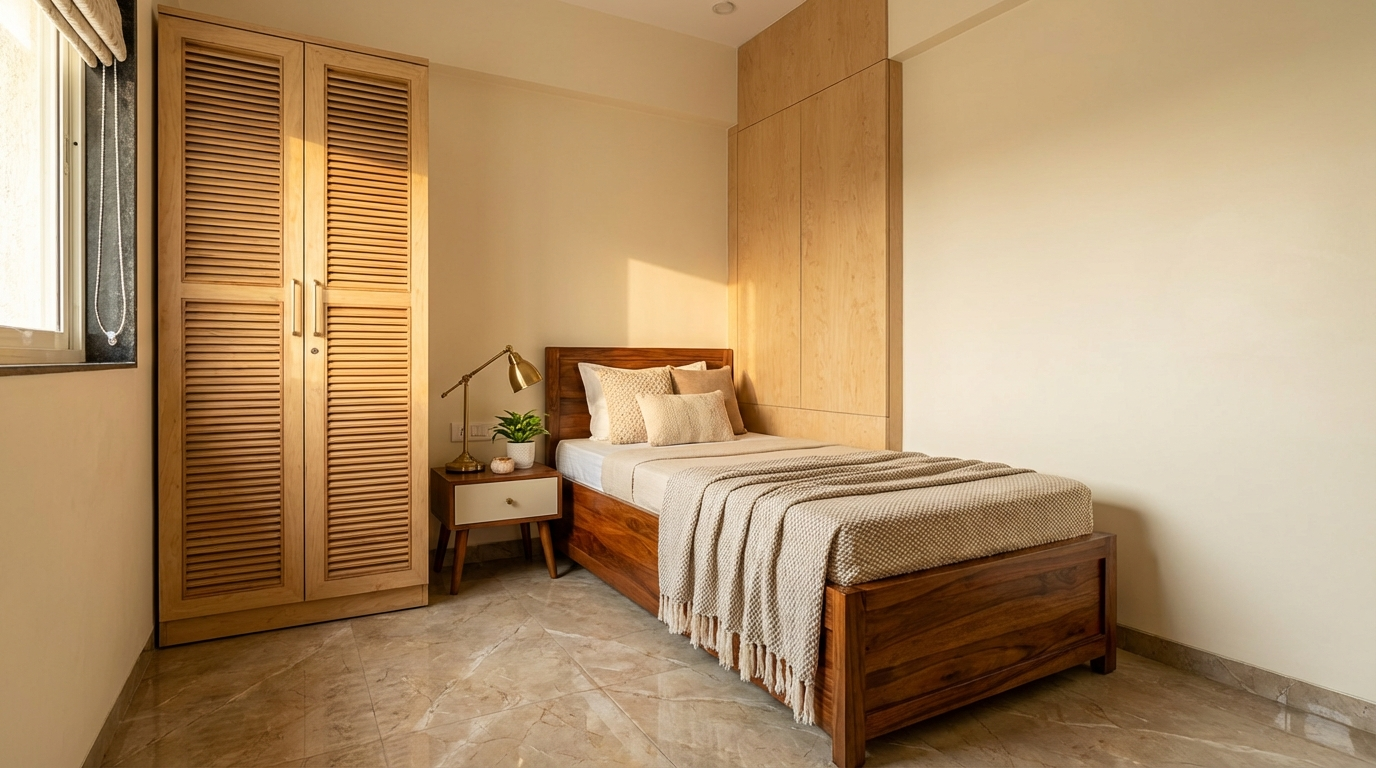
A well-designed guest room in Indian homes combines a comfortable bed with hydraulic storage, compact wardrobe space, and versatile furniture that serves multiple purposes when guests aren't visiting.
If you're short on time: Focus on a queen-size bed with under-bed storage (saves 15-20 square feet of floor space), a 4-foot sliding wardrobe with mirror panels, adequate bedside lighting, and a small writing desk that doubles as a vanity. For Indian homes where guest rooms often convert to study spaces or home offices, choose modular furniture in neutral tones that works across different use cases. Budget approximately ₹1.8 to ₹3.5 lakhs for complete guest room interiors including bed, wardrobe, and basic furnishings in metro cities.
- Choose this approach if: You have occasional guests (4-8 visits annually), need the room to serve dual purposes, want easy maintenance, or have a compact 100-150 square foot space.
- Avoid this approach if: You host guests for extended stays (weeks at a time), have elderly family members as regular visitors who need specialized furniture, or want a dedicated guest suite with attached bathroom styling.
Key takeaway: The best Indian guest rooms prioritize convertible functionality, adequate storage for guests' belongings, and materials that withstand humidity without constant maintenance.
What Guest Room Design Actually Involves in Indian Homes
Guest room design is the thoughtful planning of a bedroom space primarily intended for visitors, balancing hospitality aesthetics with practical functionality and dual-use potential. Unlike master bedrooms designed for daily personal use, guest rooms in Indian homes typically serve intermittent hosting needs while functioning as study rooms, home offices, or storage spaces during non-guest periods.
The technical aspects of guest room design involve selecting appropriate furniture dimensions for the available floor area, choosing materials suitable for your city's climate conditions, planning electrical points for guest convenience, and creating storage solutions that accommodate both visitor belongings and your household's overflow items. In Indian contexts, this also means considering joint family dynamics—elderly parents visiting from native towns, relatives during festivals, or friends attending family functions.
Common Misconceptions About Guest Room Design
Many homeowners assume guest rooms require minimal investment since they're used infrequently. This leads to using leftover furniture, poor-quality mattresses, and inadequate storage—creating uncomfortable experiences that reflect poorly on your hospitality. Another misconception is that guest rooms should be heavily decorated with personal touches; in reality, neutral, hotel-like aesthetics work better since different guests have different preferences. The most problematic assumption is treating guest room furniture as permanent—in Indian homes where space is premium, flexibility and convertibility should drive every design decision.
India-Specific Reality Check: Climate, Space, and Cultural Factors
Guest room design in India faces unique challenges that Western design guides rarely address. The monsoon season brings humidity levels of 70-90% in coastal and eastern cities, causing plywood furniture to swell, MDF to deteriorate, and mattresses to develop musty odors if ventilation is inadequate. Termite risk remains significant in ground-floor rooms and older buildings, making material selection critical rather than cosmetic.
Regional Climate Considerations
Coastal cities like Mumbai, Chennai, and Kochi require BWR or BWP grade plywood for all furniture, marine-grade hinges, and anti-fungal treatments for mattresses. In humid eastern regions like Kolkata, cross-ventilation planning becomes essential—position beds away from direct window exposure but ensure air circulation reaches storage areas. Northern cities like Delhi and Jaipur face extreme temperature variations; furniture must withstand both summer expansion and winter contraction without joint failures.
Space Constraints in Indian Urban Homes
The average urban Indian guest room ranges from 100-150 square feet—significantly smaller than Western standards. This demands multi-functional furniture: beds with hydraulic storage replacing separate almirahs, wall-mounted foldable desks instead of permanent study tables, and sliding wardrobes rather than hinged door options that consume swing space. In apartments, structural columns often intrude into guest rooms, requiring custom furniture solutions rather than standard market pieces.
Cultural Usage Patterns
Indian guest rooms serve festival hosting (where multiple relatives may share space), elderly parent visits (requiring lower bed heights and grab-rail considerations), and increasingly, work-from-home setups when professionals visit. Unlike Western guest rooms used primarily for overnight stays, Indian guest rooms often host week-long visits, making storage adequacy and daily comfort far more important than decorative elements.
Design Ideas with Practical Material Choices
Effective guest room design combines aesthetic appeal with material durability suited to Indian conditions. The following ideas are grouped by style and space size, with specific material recommendations for each element.
Compact Guest Room Ideas (100-120 Square Feet)
- Wall-mounted floating bed with storage: Use 18mm BWR plywood with laminate finish; platform height 14-16 inches for under-bed storage. Ideal for Mumbai, Chennai apartments where humidity demands moisture resistance.
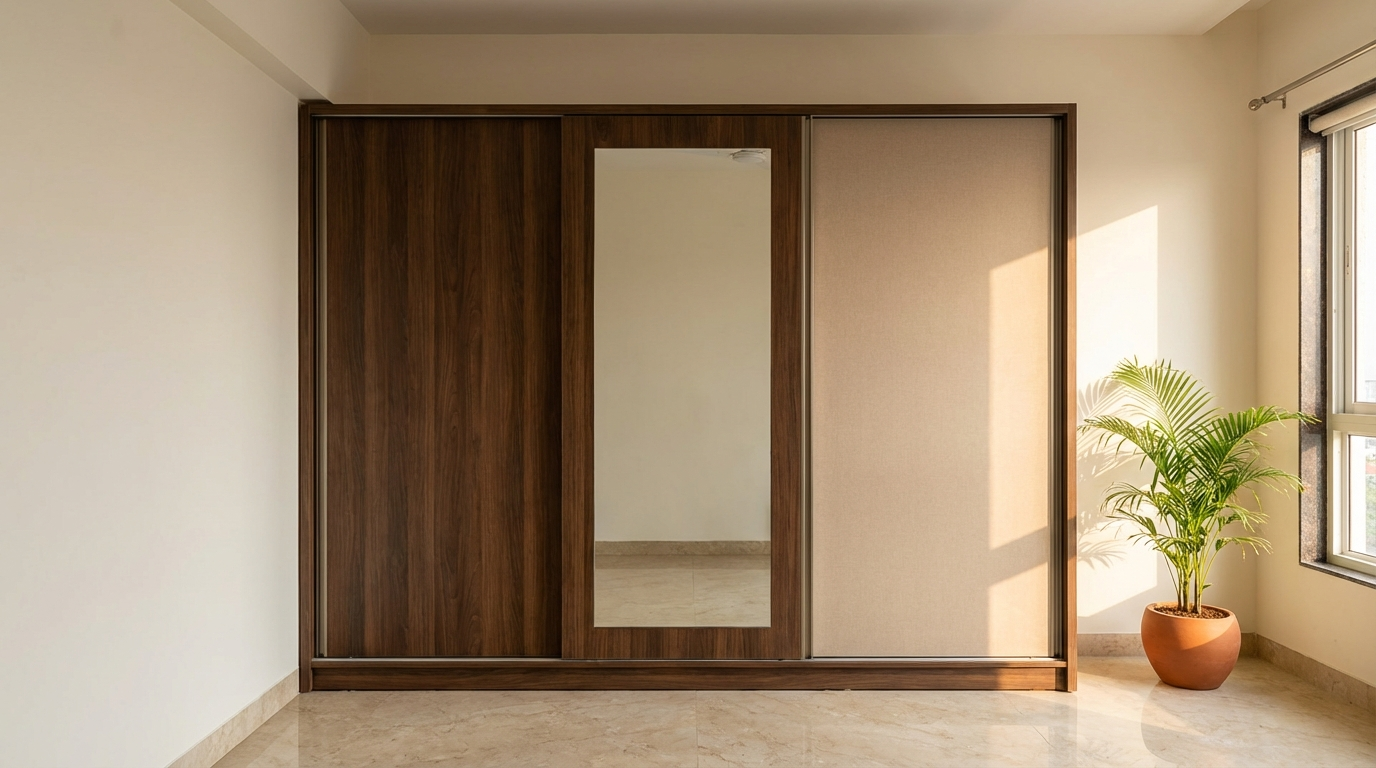
- Sliding wardrobe with mirror panel: 4-foot width maximum; 18mm calibrated plywood for carcass, 12mm for shelves. Mirror panel visually expands space and eliminates separate dressing mirror need.
- Foldable wall desk: 18mm marine plywood with piano hinge mounting; 24x18 inch surface sufficient for laptop use. Perfect for rooms doubling as home offices.
- Corner open shelving: 12mm plywood with edge banding; avoids bulky closed units while providing display and storage.
- Single bedside floating shelf: Replaces traditional nightstand; 18mm ply with concealed bracket mounting saves 4-6 square feet floor space.
Medium Guest Room Ideas (120-180 Square Feet)
- Queen bed with hydraulic mechanism: Use 19mm calibrated plywood for stability; hydraulic fittings rated for 10,000+ cycles. Budget ₹45,000-65,000 for quality execution.
- Full-height wardrobe with loft: 8-foot height utilizing vertical space; 18mm BWR for main structure, 12mm for internal partitions. Include hanging rod, shelf stack, and drawer unit.
- Writing desk with drawers: 48x24 inch surface; 18mm plywood top with 15mm drawer construction. Position near window for natural light.
- Upholstered headboard with side panels: Plywood backing with 2-inch foam and fabric covering; extends 6-8 inches beyond mattress width for visual impact.
- TV unit with concealed wiring: Wall-mounted 12mm plywood unit with cable management; include HDMI and power point integration.
Spacious Guest Room Ideas (180-250 Square Feet)
- King bed with extended platform: Platform extends 12-18 inches on sides for seating; 19mm plywood with carpet or laminate finish on extended sections.
- Walk-in wardrobe corner: L-shaped configuration using two walls; 18mm plywood throughout with internal lighting. Minimum 3x4 feet footprint required.
- Seating nook with storage ottoman: Window-adjacent daybed-style seating; 18mm plywood base with 4-inch foam cushion. Storage inside ottoman for extra bedding.
- Separate dressing area: Wall-mounted mirror with floating counter; 18mm plywood with laminate top, include drawer unit below for cosmetics storage.
- Reading corner with accent lighting: Comfortable armchair with floor lamp; floating bookshelf above using 15mm plywood with concealed supports.
Contemporary Indian Design Elements
- Jaali-inspired headboard: CNC-cut MDF or plywood pattern backed with LED strip lighting; creates traditional aesthetic with modern execution.
- Terracotta accent wall: Textured wall finish behind bed; complements wooden furniture tones common in Indian interiors.
- Brass hardware accents: Drawer pulls and wardrobe handles in antique brass finish; works across traditional and contemporary styles.
- Indoor plant integration: Wall-mounted planters or corner plant stand; choose low-maintenance species for rooms with variable occupancy.
- Fabric panel feature wall: Upholstered wall section behind bed; uses 12mm plywood backing with acoustic benefits for attached-wall apartments.
How Is Guest Room Design Different from Master Bedroom Design?
Guest rooms differ fundamentally from master bedrooms in usage frequency, personalization level, and functional requirements. While master bedrooms reflect personal preferences accumulated over years, guest rooms should maintain neutral appeal accommodating diverse visitor tastes. This affects every design decision from color selection (neutrals over bold personal choices) to furniture style (classic over trendy).
Storage planning differs significantly. Master bedrooms require extensive clothing storage with seasonal rotation systems, while guest rooms need temporary storage—adequate hanging space for a week's clothing, empty drawers for personal items, and accessible spots for luggage. Over-building storage in guest rooms wastes budget; under-building creates inconvenient guest experiences.
Electrical planning also varies. Master bedrooms benefit from multiple ambiance options—dimmable main lights, bedside reading lamps, accent lighting. Guest rooms need practical illumination—a good main light, bedside switching capability, and importantly, accessible charging points near the bed that many older homes lack.
What Size Bed Works Best for Indian Guest Rooms?
For most Indian guest rooms, a queen-size bed (60x78 inches) offers the optimal balance between sleeping comfort and floor space conservation. This size comfortably accommodates couples while leaving adequate circulation space in rooms as small as 120 square feet. King-size beds (72x78 inches) require minimum 180 square feet to avoid a cramped appearance and should only be considered in larger guest suites.
Single beds (36x78 inches) work well in extremely compact spaces or when the room primarily serves non-guest functions with occasional visitor accommodation. However, having two single beds with a gap allows flexible arrangements—pushed together for couples, separated for individual guests, or one bed folded/stored when the room functions as a study.
Bed height matters particularly for Indian guest rooms hosting elderly visitors. Standard bed heights of 18-20 inches suit most adults, but consider 16-inch heights if elderly parents visit regularly—easier for getting in and out without appearing institutional. Hydraulic storage beds add 2-3 inches to overall height; factor this into planning.
Price Range and Cost Drivers for Guest Room Interiors (2026 Market)
Guest room interior costs vary significantly based on material grades, customization level, city location, and brand choices. Understanding cost drivers helps budget realistically and identify where to invest versus economize.
Furniture Cost Breakdown
| Item | Budget Range | Mid-Range | Premium Range | Key Cost Drivers |
|---|---|---|---|---|
| Queen Bed with Storage | ₹25,000-35,000 | ₹40,000-60,000 | ₹70,000-1,20,000 | Plywood grade, hydraulic quality, headboard design |
| 4-ft Sliding Wardrobe | ₹30,000-45,000 | ₹50,000-75,000 | ₹85,000-1,40,000 | Internal fittings, finish type, soft-close mechanisms |
| Study/Writing Desk | ₹8,000-15,000 | ₹18,000-30,000 | ₹35,000-55,000 | Size, drawer units, cable management |
| Bedside Units (pair) | ₹6,000-12,000 | ₹15,000-25,000 | ₹30,000-45,000 | Floating vs floor-standing, drawer mechanism |
| TV Unit (if needed) | ₹10,000-18,000 | ₹22,000-38,000 | ₹45,000-70,000 | Size, backpanel lighting, storage complexity |
Why Prices Vary Significantly
Plywood grade creates the largest cost variation—MR grade plywood costs 30-40% less than BWR grade, and BWP/marine grade adds another 25-35% premium. For coastal cities, the BWR minimum is non-negotiable despite higher costs. Calibrated plywood (precisely thickness-machined) costs 15-20% more than standard plywood but ensures better fitting, especially for modular designs.
Finish type dramatically affects costs. Laminate finishes cost ₹800-1,500 per sheet depending on brand and pattern. Veneer finishes cost ₹2,000-4,500 per sheet but offer premium aesthetics. PU (polyurethane) finish adds ₹300-500 per square foot for labor and materials but provides superior durability.
Hardware quality often gets compromised in budget work, leading to premature failures. Quality hydraulic mechanisms for beds cost ₹3,500-6,000 per set; cheap alternatives fail within 2-3 years. Soft-close hinges cost ₹150-350 each versus ₹30-60 for standard hinges—multiply across a wardrobe with 10+ hinges, and differences accumulate.
City-wise Cost Variations
Metro cities (Mumbai, Delhi, Bangalore) command 20-35% premiums over tier-2 cities due to higher labor costs and real estate expenses of workshops. However, material quality access is better in metros. Tier-2 cities offer cost advantages but may have limited access to premium hardware and specialized finishes. Coastal cities add material cost premiums for marine-grade requirements regardless of city tier.
Common Buyer Mistakes in Guest Room Design
Learning from others' errors saves significant money and frustration. These mistakes appear repeatedly across Indian guest room projects.
Mistake 1: Oversizing Furniture for Available Space
What goes wrong: King-size bed in 130 square foot room leaves no circulation space; guests feel cramped despite large bed. Wardrobe doors hit bed corners when opened.
Why it happens: Homeowners prioritize sleeping comfort without measuring circulation paths. Furniture showrooms display pieces in large spaces, creating false scale impressions.
How to avoid: Create floor plan with actual measurements; mark furniture footprints including door swing arcs. Maintain minimum 24-inch circulation paths around bed.
Mistake 2: Ignoring Dual-Use Requirements
What goes wrong: Guest room sits unused 95% of year as purely decorative space. When need arises for home office or study, the room lacks necessary infrastructure.
Why it happens: Design focused exclusively on hosting scenario without considering room's potential during non-guest periods.
How to avoid: Plan electrical points for computer setup; include desk space even if compact; choose furniture that doesn't dominate room preventing alternative uses.
Mistake 3: Using Inferior Material Grades for "Rarely Used" Room
What goes wrong: MR grade plywood in Kolkata guest room swells during monsoons; particleboard wardrobe in Chennai develops termite damage within 3 years.
Why it happens: Budget allocation assumes low usage justifies cheaper materials. Infrequent use actually worsens moisture issues due to reduced ventilation.
How to avoid: Match material grade to climate, not usage frequency. BWR minimum for coastal/humid cities regardless of room type.
Mistake 4: Inadequate Electrical Planning
What goes wrong: No charging points reachable from bed; guests use extension cords creating hazards. AC point placed behind wardrobe requiring awkward installation.
Why it happens: Electrical planning done before furniture layout finalized; points placed by electrician convenience rather than usage logic.
How to avoid: Finalize furniture layout before electrical work; include USB charging points at bedside; plan AC point location with furniture clearance.
Mistake 5: Over-Personalizing the Space
What goes wrong: Bold personal color choices clash with guests' belongings; religious imagery uncomfortable for diverse visitors; family photos create awkward sleeping environment.
Why it happens: Treating guest room as personal expression space rather than hospitality environment.
How to avoid: Use neutral tones (beiges, grays, soft whites); minimize personal items; choose universally appealing artwork over specific themes.
Mistake 6: Neglecting Ventilation and Light Control
What goes wrong: Room becomes unbearable during afternoon hours; guests cannot sleep late due to morning light; musty smell develops in wardrobes.
Why it happens: Window treatment chosen for aesthetics over function; ventilation not considered in furniture placement blocking airflow.
How to avoid: Install blackout curtains with sheer layer option; position wardrobe away from windows; ensure cross-ventilation path remains unobstructed.
Mistake 7: Skipping Mattress Investment
What goes wrong: Beautiful room with expensive furniture but uncomfortable sleep; guests complain indirectly or avoid staying.
Why it happens: Budget exhausted on visible furniture; mattress treated as afterthought with leftover funds.
How to avoid: Allocate ₹15,000-25,000 minimum for quality mattress; choose medium-firm suitable for diverse preferences; include mattress protector from day one.
Decision Framework: Choosing Guest Room Elements by Situation
This framework helps match design decisions to specific household situations and constraints.
| Situation/Condition | Recommended Choice | Reasoning |
|---|---|---|
| Room under 120 sq ft | Queen bed with hydraulic storage, sliding wardrobe, wall-mounted desk | Maximizes floor space; storage under bed replaces separate units |
| Coastal city (Mumbai, Chennai, Kochi) | BWR/BWP plywood minimum, marine-grade hardware, treated mattress | Humidity above 70% damages MR grade; salt air corrodes standard hardware |
| Elderly parents as primary guests | Lower bed height (16"), grab rails option, non-slip flooring, brighter lighting | Accessibility needs; fall prevention; vision accommodation |
| Room doubles as home office | Murphy bed or sofa-cum-bed, permanent desk setup, adequate electrical points | Daily office use takes priority; bed needed only occasionally |
| Budget under ₹1.5 lakhs | Focus on bed and mattress quality; minimal wardrobe; skip TV unit | Sleep comfort is primary function; can add storage later |
| Extended stay guests (2+ weeks) | Full wardrobe with hanging and folding space, study area, mini fridge spot | Long stays need home-like amenities, not hotel-like minimalism |
| Ground floor room in older building | Treated plywood, elevated furniture bases, termite barrier treatment | Ground contact increases termite and moisture risk |
| Room with attached bathroom | Position wardrobe away from bathroom wall, waterproof laminate for vanity | Bathroom moisture migrates through walls; proximity increases damage risk |
Workmanship and Installation Tips for Guest Room Furniture
Quality workmanship determines whether well-chosen materials perform as expected. These guidelines help ensure proper execution regardless of whether you use a carpenter, modular kitchen company, or interior designer.
Cutting and Edge Sealing Requirements
All plywood edges must be sealed to prevent moisture ingress—exposed edges in humid climates absorb water, causing swelling and delamination within months. For laminate-finish furniture, insist on PVC edge banding (1mm minimum thickness) rather than paper tape which peels quickly. Veneer-finish pieces require proper veneer wrapping around edges, not just face application. For budget projects, paint-sealing edges with PU sealer provides basic protection.
Screw Holding and Fastening Guidance
Plywood screws should be minimum 25mm for face fixing and 35-40mm for edge fixing through carcass joints. Pre-drilling prevents splitting, especially near edges—drill pilot holes 2mm smaller than screw diameter. For hinges and handles facing repeated stress, use machine screws with embedded nuts rather than wood screws alone; wood screws loosen over time with daily use.
Hinge Zones and Reinforcement Logic
Wardrobe doors require three hinges minimum for standard heights; heavy doors or soft-close mechanisms need four hinges. Hydraulic bed mechanisms must attach to cross-members, not directly to panels—add 18mm plywood reinforcement strips at all hinge points. Soft-close drawer systems need precise parallel installation; even 2mm misalignment causes binding and premature wear.
Site Storage and Acclimatization
New plywood should acclimatize in the room for 48-72 hours before cutting, especially during monsoon season. Store sheets horizontally on flat supports, not leaning against walls which causes warping. Completed furniture should not be installed during painting—paint fumes and moisture damage fresh laminates and hardware.
Carpenter Briefing Checklist
- Share actual room measurements including ceiling height and door positions
- Specify plywood grade and brand—don't accept "equivalent" substitutions without approval
- Confirm edge banding type and color matching for all visible edges
- Agree on hardware brands for hinges, channels, and mechanisms
- Discuss screw types—machine screws for stress points, wood screws for general fixing
- Set timeline with penalties for delays beyond reasonable allowance
- Establish payment schedule tied to completion milestones, not calendar dates
Quality Checks Without Lab Tests
You don't need specialized equipment to verify quality before and during guest room furniture work. These practical checks help identify problems early.
Visual Inspection Points
Plywood sheets: Look for consistent face veneer without patches, repairs, or discoloration. Core should show uniform layers without large gaps or bark inclusions visible at edges. Warped sheets indicate moisture exposure—reject any sheet that doesn't lie flat.
Laminate sheets: Check for consistent color across sheets from same batch; lighting differences reveal subtle variations. Surface should feel smooth without texture irregularities. Edges should be clean-cut without chipping.
Hardware: Quality hinges feel substantial, not flimsy; moving parts should operate smoothly without resistance. Drawer channels should slide freely without binding. Check that all hardware packages are unopened original packaging, not loose pieces.
Questions to Ask Dealer/Supplier
- "What BIS certification does this plywood carry?" (IS 303 for MR, IS 710 for BWR, IS 848 for particle board)
- "Can I see test certificates for this batch?"
- "What's the warranty coverage and claim process?"
- "Is this sheet from current production or older stock?"
- "What's the recommended storage if I'm not using immediately?"
Warning Signs to Watch For
Core voids: Tap center of plywood sheet; hollow sound indicates internal gaps. Compare tap sound across multiple points—significant variation suggests inconsistent core quality.
Moisture issues: Plywood feels heavier than expected suggests moisture absorption. Look for any warping, cupping, or swelling at edges. Musty smell indicates moisture damage—reject regardless of visual appearance.
Delamination risk: Try prying edge layers at corner; quality plywood resists separation. Any easy separation indicates glue bond failure—common in substandard products.
Simple Field Tests
Weight test: Quality BWR plywood feels denser than MR grade of same thickness. Very light sheets suggest low-density core or excessive voids.
Flexibility test: 18mm plywood should have minimal flex across unsupported spans of 2-3 feet. Excessive bending indicates weak core construction.
Edge hardness: Press fingernail into plywood edge; quality sheets resist indentation. Soft, crumbly edges indicate inferior core material.
Can Guest Rooms Use Particle Board or MDF to Save Costs?
Particle board and MDF can work in guest room applications under specific conditions, but understanding limitations prevents costly failures. These engineered boards cost 40-60% less than equivalent plywood but have significant restrictions in Indian conditions.
Standard particle board and MDF cannot tolerate moisture—even normal monsoon humidity causes swelling and deterioration. HDHMR (High Density High Moisture Resistant) boards offer better moisture tolerance and can work in air-conditioned guest rooms in non-coastal cities. However, even HDHMR shouldn't be used for furniture bases contacting floors or in rooms without consistent climate control.
Screw holding presents challenges with particle board—screws pull out more easily than from plywood, making it unsuitable for hinge-heavy applications like wardrobe doors. MDF holds screws better but requires pilot holes to prevent surface cracking. Both materials need edge banding without exception; exposed edges absorb moisture rapidly.
Recommended approach: Use HDHMR for wardrobe carcass and shelving where strength demands are lower, but use plywood for bed frames, desk structures, and any furniture requiring hinge mounting. This hybrid approach captures cost savings while maintaining durability where it matters most.
How Long Do Guest Room Interiors Last in Indian Climate?
Expected lifespan depends heavily on material selection, installation quality, and maintenance practices. Properly executed guest room interiors should last 15-25 years with normal use, but poor choices can cause failures within 3-5 years.
BWR grade plywood furniture in humid cities typically lasts 12-18 years with proper edge sealing and ventilation. MR grade in the same conditions may show deterioration within 5-8 years—swelling, warping, and delamination appearing progressively. Particleboard furniture rarely exceeds 5-7 years in Indian conditions unless exceptionally well-maintained in climate-controlled environments.
Hardware typically fails before structure in quality furniture. Budget hinges and channels last 3-5 years of regular use; quality German or equivalent hardware lasts 10-15 years. Hydraulic bed mechanisms have 8,000-15,000 cycle ratings; quality units last 10+ years, cheap versions fail within 3-4 years.
Mattresses need replacement every 7-10 years regardless of furniture condition. Using mattress protectors and ensuring regular airing can extend useful life. Guest room mattresses, used less frequently, may last longer but still require replacement as foam degrades over time even without heavy use.
Guest Room Design for Different Indian Home Types
Design approaches vary significantly based on home type, each presenting unique constraints and opportunities.
Apartment Guest Rooms
Typically 100-150 square feet with fixed layouts and structural constraints. Focus on vertical storage—floor-to-ceiling wardrobes utilize otherwise wasted space. Sound insulation becomes important in shared-wall apartments; upholstered headboards and fabric panels reduce noise transmission. AC point planning must work around fixed window positions.
Independent House Guest Rooms
Usually larger (150-250 square feet) with more flexibility. Can include attached bathrooms, walk-in closets, and separate sitting areas. Ground floor rooms require termite precautions; upper floor rooms may have sloped ceilings requiring custom furniture. Natural ventilation options reduce AC dependence.
Villa Guest Suites
Luxury implementations with 300+ square feet, often including sitting area, walk-in wardrobe, and en-suite bathroom. Design can embrace full hospitality aesthetics—hotel-like amenities, premium materials, and dedicated workspace. Budget allocations of ₹5-10 lakhs enable premium finishes and branded hardware throughout.
Row House Guest Rooms
Narrow, deep layouts common in row houses require longitudinal furniture arrangement. Beds typically position along longer walls with circulation down the center. Natural light often comes from single direction requiring careful window treatment and artificial light planning.
FAQs About Guest Room Design
What is the ideal guest room size for Indian homes?
The ideal guest room size ranges from 120-180 square feet, providing adequate space for a queen bed, compact wardrobe, and small desk while maintaining comfortable circulation. Rooms under 100 square feet feel cramped and limit furniture options to single beds and minimal storage. Rooms above 200 square feet require additional furniture elements—seating areas, larger wardrobes, or entertainment units—to avoid appearing empty and unwelcoming. For most Indian apartments where spare rooms serve multiple functions, 140-160 square feet offers the best balance between guest comfort and everyday utility as a study or home office.
How much does a complete guest room interior cost in India?
Complete guest room interiors cost between ₹1.5-4 lakhs in metro cities, varying significantly based on material grades, customization complexity, and finish choices. Budget implementations (₹1.5-2 lakhs) use MR grade plywood with basic laminate finishes and standard hardware. Mid-range projects (₹2.5-3.5 lakhs) employ BWR grade plywood, soft-close mechanisms, and better-quality mattresses. Premium executions (₹4-6 lakhs) include veneer or PU finishes, branded hardware throughout, designer headboards, and comprehensive storage solutions. These ranges cover furniture and soft furnishings; additional costs for electrical work, painting, and flooring vary based on existing room condition.
Should I use plywood or HDHMR for guest room furniture?
Plywood remains the preferred choice for guest room furniture in most Indian conditions due to superior moisture resistance and screw-holding strength. HDHMR can work for wardrobe carcasses and shelving in air-conditioned, non-coastal environments, offering 30-40% cost savings over equivalent plywood. However, use plywood for bed frames (structural strength requirements), hinge-mounted elements (better screw retention), and any furniture in humid locations. The hybrid approach—HDHMR for less-stressed components, plywood for structural elements—balances cost and durability effectively. Avoid standard MDF or particle board entirely unless in consistently climate-controlled spaces in dry northern cities.
What bed height works best for guest rooms with elderly visitors?
For guest rooms hosting elderly family members, maintain bed heights between 16-18 inches from floor to mattress top. This height allows easier sitting and standing than standard 20-22 inch heights while remaining comfortable for younger guests. Avoid very low platform beds (under 14 inches) which require significant effort to rise from, and avoid very high beds (above 22 inches) which pose fall risks during night-time bathroom visits. If your guest room serves mixed age groups, a 17-inch height provides reasonable compromise. Consider adding a bedside step stool for flexibility without permanent height changes.
How do I maintain guest room furniture between visits?
Guest room furniture requires specific maintenance during non-use periods to prevent humidity damage and preserve finishes. Open wardrobe doors weekly for 2-3 hours to ventilate interiors; place silica gel packets inside to absorb moisture during monsoon months. Air mattresses and bedding monthly—even unused mattresses develop musty odors without ventilation. Wipe laminate surfaces with damp cloth quarterly to remove dust accumulation. Run AC or dehumidifier for 2-3 hours weekly during humid seasons even when room is vacant. Check hinges and drawer channels annually; apply silicone lubricant to maintain smooth operation. These simple routines prevent the deterioration that accelerates in unused spaces.
Is it necessary to have a wardrobe in every guest room?
While not absolutely necessary, some storage provision is essential for guest comfort. At minimum, provide hanging space for 8-10 garments and drawer or shelf space for folded items. This can be a full wardrobe, open closet system, or even a clothing rack with covered shelf unit. Without any storage, guests live out of suitcases—uncomfortable for stays beyond one night and reflective of poor hospitality. For rooms where wardrobe space is constrained, wall-mounted hooks, floating shelves, and under-bed storage boxes provide alternatives. The key principle: guests should be able to unpack and settle in rather than treating your home as a hotel room.
What lighting is essential for a guest room?
Essential guest room lighting includes three elements: general room lighting (ceiling fixture or fan-light combination providing overall illumination), bedside lighting (accessible from bed with individual switching for reading without disturbing partners), and task lighting (desk lamp if workspace included). Avoid relying solely on a single overhead light—the harsh illumination creates unwelcoming ambiance. Include multiple switch points allowing guests to control lighting from bed without getting up. Consider night-light provision for bathroom navigation—especially important for elderly guests. Smart switches or dimmers add hospitality touch, allowing guests to customize lighting levels to their preferences.
How can I make a small guest room appear larger?
Visual expansion techniques help small guest rooms feel less cramped without structural changes. Use light wall colors (whites, creams, pale grays) which reflect light and create openness. Install mirrors strategically—wardrobe door mirrors or wall-mounted mirrors opposite windows double perceived depth. Choose furniture with legs rather than solid bases; visible floor space creates lightness. Minimize visual clutter through closed storage rather than open shelving. Use vertical stripes in curtains or wallpaper accents to emphasize height. Maintain consistent flooring without rugs breaking up floor area. These combined techniques can make 100 square foot rooms feel significantly more spacious without sacrificing functionality.
Should guest rooms have TVs installed?
TV installation depends on your hosting patterns and guest preferences. For guest rooms used primarily by elderly parents or relatives during extended stays, TVs provide entertainment and connection. For rooms hosting occasional overnight guests, TVs are unnecessary and consume budget better spent elsewhere. If including TV, wall-mounting saves floor space; include HDMI access for guests using streaming devices; provide basic channel guide and remote instructions. Position TV viewable from bed without requiring neck strain. The trend increasingly favors tablets or allowing guests to use personal devices over dedicated room TVs—guest rooms aren't hotel rooms, and personal device streaming often provides better entertainment options.
What is the most common mistake in Indian guest room design?
The most common mistake is designing guest rooms as infrequently-used showpieces rather than functional spaces serving dual purposes. Indian homeowners often over-invest in decorative elements while neglecting practical requirements—beautiful rooms with uncomfortable mattresses, elaborate furniture without adequate electrical points, or striking designs that prevent room use for any purpose beyond hosting. The second most common error is material under-specification; using MR grade plywood or standard particle board in humid climates leads to rapid deterioration. Successful guest rooms balance aesthetics with functionality, prioritize comfort over appearance, and maintain flexibility for non-guest use throughout the year.
How do I ensure good ventilation in guest room wardrobes?
Wardrobe ventilation prevents musty odors and moisture damage that plague enclosed storage in Indian conditions. Include louvered sections in wardrobe design—ventilation panels at top and bottom of doors allow air circulation without compromising dust protection. Leave 2-inch gaps between wardrobe back and wall for rear airflow. Avoid completely sealed wardrobes; perforated back panels work better than solid boards. Use breathable fabric covers for stored bedding rather than plastic. Place silica gel or activated charcoal sachets inside wardrobes, replacing monthly during monsoons. Open wardrobe doors for several hours weekly even when room is unused. These measures combined prevent the moisture accumulation that damages stored items and wardrobe interiors.
Can I design a guest room that converts to a home gym?
Yes, convertible guest room-gym designs work well with proper planning. Use Murphy beds (wall beds) or fold-down sofa-beds that free floor space for exercise. Ensure flooring can handle both purposes—rubber underlays beneath regular flooring provide exercise cushioning without permanent gym aesthetics. Plan electrical for equipment like treadmills (may need dedicated circuit). Include full-length mirrors that serve both guest vanity and exercise form-checking. Storage should accommodate both guest items and fitness equipment—perhaps split wardrobe sections. Wall-mounted TV works for both guest entertainment and workout videos. The key constraint: allow 100+ square feet clear floor space when in gym mode, meaning total room size needs 150+ square feet minimum for practical dual use.
What flooring works best for Indian guest rooms?
Vitrified tiles provide the most practical guest room flooring in most Indian climates—durable, moisture-resistant, easy to clean, and comfortable with area rugs for warmth. Laminate flooring offers wood-look aesthetics at lower cost but requires careful moisture management and may show wear in high-traffic paths. Hardwood flooring works in climate-controlled spaces but demands maintenance commitment unsuitable for intermittently-used rooms. Marble and granite suit premium implementations but feel cold without climate control. Carpet flooring is generally unsuitable for Indian conditions due to dust accumulation and moisture issues. For most budgets and climates, large-format vitrified tiles (24x24 inch or larger) with quality area rug provide optimal combination of practicality and comfort.
Final Thoughts on Guest Room Design for Indian Homes
Designing a guest room that works for Indian homes requires balancing multiple factors—climate resilience, space efficiency, dual-use flexibility, and genuine hospitality. The best guest rooms aren't showpieces that impress visitors for a moment; they're comfortable, practical spaces that make guests feel genuinely welcome while serving household needs year-round.
Start by honestly assessing your hosting patterns and room constraints. A room hosting elderly parents quarterly needs different solutions than one accommodating friends annually. Match material grades to your city's climate—the premium for BWR plywood in coastal cities is insurance against early furniture failure, not unnecessary expense. Plan electrical infrastructure before furniture decisions; retrofit additions always cost more and look worse than integrated planning.
Remember that guest room furniture should serve guests' convenience, not display your design preferences. Neutral aesthetics accommodate diverse visitors; practical storage lets guests settle in; quality mattresses ensure restful sleep. The highest compliment isn't admiration of your room's appearance—it's guests asking to extend their stay because they feel comfortable and welcome.
For detailed guidance on specific furniture elements mentioned throughout this article, our wardrobe construction guide and bed design recommendations provide additional technical depth. Quality materials combined with proper workmanship create guest rooms that serve your home beautifully for decades.
Disclaimer: This content is provided for general informational purposes based on industry practices and publicly available information. Product specifications, standards, prices, and availability may vary by manufacturer, region, and time. Readers should independently verify details with manufacturers, dealers, or qualified professionals before making purchase or construction decisions.Want Plywood Suggestions?
Share a few details and a Sainik 710 specialist will suggest suitable brands and connect you to responsive dealers.