Emerald Green Interior Design: 30+ Luxurious Ideas for Walls, Furniture & Decor
Explore 30+ emerald green interior ideas—walls, furniture & decor for luxurious homes. Color combinations & styling tips for sophisticated Indian interiors.
Emerald Green Interior Design: 30+ Ideas That Actually Work in Indian Homes
Emerald green is a deep, rich jewel-tone shade that brings instant luxury to any room without making your space look like a forest exploded. Short version: This color works brilliantly for accent walls, velvet sofas, and statement decor pieces—but you need to pair it correctly with gold, beige, or blush pink, or your room will feel like a dark cave. Most people get the pairing wrong. I've seen gorgeous emerald walls ruined by the wrong curtain fabric, and trust me, that's a ₹50,000 mistake you don't want to make.
This is right for you if:
- You want your living room to look expensive without an interior designer's bill
- You're tired of beige walls and want something dramatic but sophisticated
- Your home has good natural light—preferably west or south-facing windows with at least 4-5 hours of sunlight
- You're comfortable with bold choices (half-hearted attempts with this color look worse than not trying at all)
Skip this if:
- Your room gets minimal natural light—emerald will make it feel smaller and darker
- You change decor themes every two years and want flexibility
Bottom line: Emerald green is a statement color that rewards commitment—go all in with proper complementary shades, or stick to smaller accents like cushions and vases.
What Emerald Green Actually Means in Interior Design
Emerald green is a bright, vivid shade of green with the hex code #50C878. It has sometimes historically been known as "Paris green," "Imperial green" or "Veronese green," but those names are less common today. A medium shade of green, it's brighter than hues like teal and olive green, but darker than lime and neon green.
Most people think emerald is just "dark green." Actually, it sits somewhere between forest green and teal, with a slight blue undertone that makes it cooler than olive or sage. Emerald is a cool shade of dark green that matches the gemstone of its namesake. It is a member of the jewel tone family, which includes other jewel-inspired colors such as amber, sapphire, amethyst, and ruby. Emerald is more blue-toned than other earthier, yellow-toned shades of green like forest green, olive green, or kelly green.
Emerald green was Pantone's color of the year in 2013. Because of its long history and associations with precious gemstones, emerald green is considered a classic color that can symbolize refinement, wealth and royalty. Here's the thing—it's making a serious comeback, though 2026 is all about jewel tones with an even dustier finish, "like your grandmother's emerald ring, discovered after 50 years in a jewelry box." Clients are gravitating toward muted emerald and earthy greens.
Why Emerald Green Works Beautifully in Indian Homes
Deep emerald green draws from India's verdant landscapes and symbolises growth and prosperity. This isn't just some Western trend imported blindly—emerald has deep roots in our culture. Think about it. Zari borders, silk sarees, temple motifs—green has always meant celebration here.
Emerald paired with gold isn't just luxurious—it holds cultural weight in Indian interiors, echoing zari, temple motifs, and festive decor. This is why the combination works so naturally in homes across Mumbai, Chennai, and Kolkata. In Hyderabad, I've seen emerald accent walls paired with brass diyas and wooden furniture create spaces that feel both modern and rooted.
Now, here's where climate matters. In humid coastal cities like Mumbai (where humidity hits 85-90% during monsoon) or Chennai, you need to be careful with the paint finish. Matte finishes can attract more moisture and show dampness faster. Go for eggshell or satin finish on emerald walls—easier to wipe down, more resistant to fungal growth. Olive, emerald, or forest green are ideal for a living room. But for bedrooms in naturally humid areas, consider lighter variants or limit emerald to just one accent wall.
The Ghatkopar side of Mumbai gets more humid than Borivali—if you're in a sea-facing flat, you'll want better quality exterior-grade interior paints for that emerald feature wall. Not worth the risk otherwise.
Does Emerald Green Make Rooms Look Smaller?
Emerald green is a darker color, which means it can swallow a room and make it look smaller when painted throughout. This is the biggest concern I hear. And it's valid—but context matters. In a 12x14 foot living room with west-facing windows, one emerald accent wall behind the sofa actually makes the room feel more defined, not cramped. Full room coverage? That's different. Reserve that for larger spaces—300+ sq ft living rooms, formal dining areas, or homes with high ceilings.
For smaller Mumbai apartments (and let's be honest, most of us are working with 10x12 bedrooms), use emerald in decor instead—a velvet armchair, cushion covers, ceramic vases. You get the luxe feel without the cave effect.
30+ Emerald Green Ideas by Application
Emerald Green Walls: 8 Approaches That Work
| Approach | Best For | Pairing Recommendation | My Take |
|---|---|---|---|
| Full accent wall (behind sofa/bed) | Living rooms with good light | Cream or off-white remaining walls | Classic choice—hard to mess up |
| Paneled wainscoting in emerald | Dining rooms, formal spaces | White upper walls, brass fixtures | Expensive to execute properly |
| Emerald ceiling (fifth wall) | Compact rooms with high ceilings | Neutral walls, gold pendant lighting | Underrated—creates dramatic intimacy |
| Color blocking with mustard | Modern flats, statement lovers | 70% emerald, 30% mustard | Bold. Needs confidence. |
| Emerald in alcoves/niches | Pooja rooms, display shelving | White shelving, brass accents | Perfect for small commitments |
| Textured emerald wallpaper | Bedrooms, reading corners | Velvet textures with gold | Easier to remove later |
| Half-wall emerald with dado rail | Hallways, transitional spaces | Blush pink or cream above | Elegant old-world feel |
| Emerald bathroom walls | Guest bathrooms, powder rooms | Brass fixtures, white marble | Use tile, not paint |
Emerald green brings a vibrant, refreshing touch and looks especially regal when paired with gold accents. Sapphire blue adds depth and calmness, making it a perfect choice for living rooms or bedrooms where elegance is key.
Emerald Green Furniture: 10+ Ideas
The velvet sofa moment is real. The green velvet sofa combines sleek lines and sumptuous finishes to create the ultimate opulent effect, following a classic mid century modern design but updating the style with features such as brass, angular legs and rich velvet fabric.
Living room:
- Emerald velvet 3-seater sofa with channel stitching—looks stunning against beige or grey walls
- Wingback accent chair in emerald beside a neutral sofa—adds color without overwhelming
- Tufted emerald ottoman as coffee table alternative—functional and dramatic
- Emerald velvet armchair in reading corner—cozy and sophisticated
Bedroom:
- Upholstered emerald headboard—instant luxury upgrade
- Emerald velvet bench at foot of bed—useful and beautiful
- Matching emerald nightstands (lacquered finish)—bold choice that works in larger bedrooms
Dining:
- Emerald velvet dining chairs with wooden table—elegant but needs stain-guard treatment
- Emerald bar stools at kitchen island—modern, practical
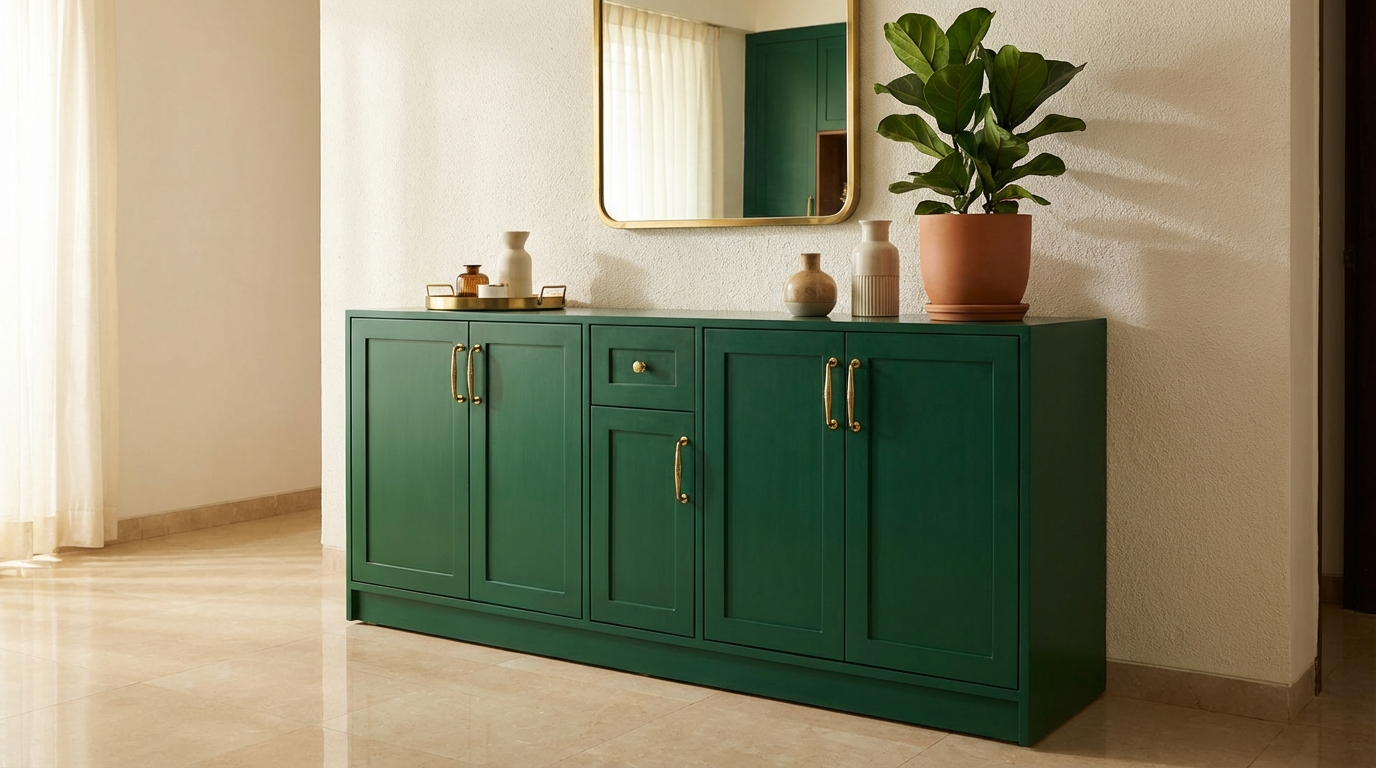
- Emerald buffet or sideboard—statement storage
A quick word on velvet in Indian climates: it collects dust faster. Vacuum weekly. In Chennai or Kolkata humidity, ensure your AC runs regularly or the fabric will feel damp. Honestly? I'd recommend performance velvet with stain-guard for homes with kids. Performance fabric resists stains, repels moisture, and is both washable and non-toxic — perfect for homes with kids and pets.
Emerald Green Decor: 15+ Small Ways to Add the Color
Not ready for a sofa or painted wall? Start smaller.
- Emerald throw cushions (2-3 on a neutral sofa is enough)
- Velvet curtains in emerald—dramatic but reversible decision
- Ceramic vases and planters
- Emerald picture frames on a gallery wall
- Table lamps with emerald glass or ceramic bases
- Emerald glass candleholders for dining tables
- Velvet table runners for console tables
- Emerald throw blankets
- Ceramic bowls and serving pieces for the kitchen
- Emerald area rugs (solid or patterned)
- Bedding sets with emerald accents
- Bathroom towels and accessories
- Art prints with emerald tones
- Emerald lacquered boxes and trays
- Green plants in emerald planters (indoor palms, monsteras—they echo the color naturally)
Emerald green is the perfect color to bring your plant obsession to life. Create an indoor jungle with emerald green walls behind your plant collection.
Color Combinations That Actually Work
Emerald green looks great with colors like peach, aubergine, rose, ruby red and pink. It can also work well alongside other shades of green, for instance lime green.
| Combination | Mood/Style | Ratio | Best For | Avoid If... |
|---|---|---|---|---|
| Emerald + Gold | Regal, luxurious | 70:30 | Living rooms, dining rooms | Modern minimalist spaces |
| Emerald + Blush Pink | Soft, feminine, elegant | 60:40 | Bedrooms, powder rooms | Hyper-masculine schemes |
| Emerald + Cream/Beige | Calm, grounded, versatile | 40:60 | Any room—safest bet | Wanting high drama |
| Emerald + Navy Blue | Deep, moody, sophisticated | 50:50 | Studies, formal spaces | Rooms with poor light |
| Emerald + Mustard Yellow | Bold, warm, retro | 70:30 | Living rooms, eclectic homes | Subtle taste preferences |
| Emerald + Terracotta | Earthy, bohemian | 60:40 | Balconies, casual rooms | Formal settings |
| Emerald + White | Clean, fresh, modern | 30:70 | Minimalist homes, small rooms | Needing warmth |
| Emerald + Wood Tones | Natural, warm, timeless | Variable | Traditional Indian homes | Ultra-modern aesthetics |
Instead of pairing this green shade with primary colours, consider other shades that are more understated. Combine emerald green with a jewel tone, or use blush pink as an accent colour for a more luxurious scheme. An emerald green colour can also work well with metallics like rose gold.
Pairing emerald green with gold brings lushness and elegance to a space. The beautiful green tones create a warm atmosphere and the gold accents shimmer. For example, you can use emerald furniture and choose gold hardware for the wall decor. If you want a feminine outcome, add rose gold elements, too.
Colors to Avoid with Emerald Green
Bright yellow can be too harsh against emerald green, overwhelming its natural sophistication. Blue presents an overly saturated contrast that can detract from emerald green's organic elegance. Hot pink may clash with emerald green by competing for visual attention. Bright red offers a classic Christmas combination, but outside of seasonal contexts, it can be too bold.
I've seen this go wrong in a flat in Andheri around Diwali 2022. Client wanted red and emerald everything—looked festive for about two weeks, then felt exhausting. Christmas theme year-round isn't what you want.
How to Choose the Right Emerald Shade
Not all emeralds are created equal. The shade you pick matters enormously.
Step 1: Check your light. North-facing rooms with limited sunlight need warmer emeralds (slightly more yellow undertone). South and west-facing rooms can handle the cooler, bluer emeralds.
Step 2: Consider your existing furniture. If you have warm-toned wooden furniture (walnut, teak), go for muted emerald. Cool-toned furniture (grey, black) pairs with brighter emerald.
Step 3: Test on your actual walls. Buy sample pots—worth ₹200-300 each—and paint 2x2 foot patches. View at morning, afternoon, and night with your artificial lights on.
Step 4: Decide on finish. Matte absorbs light (good for hiding wall imperfections). Satin reflects slightly (easier to clean, better for humid areas). Gloss is for furniture and trim only—too much shine on walls looks cheap.
Exception: If you're in a rental and can't paint, skip to emerald soft furnishings. Velvet curtains and cushion covers give 80% of the effect with zero landlord drama.
| Situation | Recommended Approach | Why |
|---|---|---|
| Small bedroom (under 120 sq ft) | Emerald headboard + white walls | Prevents cave effect |
| Large living room (300+ sq ft) | Full accent wall + emerald accents | Space can handle the drama |
| Open-plan kitchen-living | Emerald kitchen cabinets or dining chairs | Creates visual zones |
| Rental flat | Velvet sofa + throw cushions | No permanent changes |
| South Indian traditional home | Emerald + gold + brass accents | Cultural harmony |
| Modern minimalist flat | Single emerald statement piece | Less is more here |
Common Mistakes People Make with Emerald Green
1. Going emerald everywhere. One accent wall. One statement sofa. Maybe coordinated cushions. Stop there. I've walked into homes that looked like they were decorated inside a bottle of Sprite. Too much of any jewel tone becomes suffocating.
2. Ignoring lighting. Emerald shifts dramatically under different lights. Under warm yellow bulbs, it looks almost forest green. Under cool white LEDs, it looks more teal. Test your paint samples under your actual lights, at actual night-time conditions. This drives me crazy—people show me photos taken in daylight, then complain the room feels different at dinner time. Of course it does.
3. Pairing with the wrong metals. Emerald loves gold, brass, and bronze. It tolerates rose gold. It fights with chrome and silver. That builder-standard chrome bathroom fitting against an emerald wall? Looks accidental, not designed.
4. Cheap velvet. This one really frustrates me. Good velvet has pile that bounces back. Cheap velvet starts looking patchy within six months. If you're investing in an emerald sofa, spend an extra ₹15,000-20,000 on quality fabric. There was this family in Powai—bought a budget velvet sofa in 2023, and by late 2024 it looked ten years old. Had to reupholster the whole thing.
5. Forgetting about maintenance. Velvet needs weekly vacuuming. Emerald walls show dust and handprints. If you have toddlers touching walls constantly, maybe wait a few years. Or pick satin/semi-gloss finish that wipes clean.
6. Matching everything exactly. Subtle variation is better. Your emerald curtains shouldn't match your emerald cushions perfectly—slight shade differences create depth. Matchy-matchy looks like a hotel, not a home.
7. Neglecting texture variety. Emerald in velvet, emerald in cotton, emerald in ceramic—mixing textures prevents the room from feeling flat. All velvet everything? Too much.
8. Forgetting the 60-30-10 rule. When using these colors, follow the 60-30-10 rule. Choose a neutral as your base color and let it take up about 60% of the space. Then use emerald to decorate 30% of the remaining space. Finally, use accent colors to take up the remaining 10%.
Quality Checks for Emerald Paints and Fabrics
For paints:
- Check pigment density—cheap paints need 3-4 coats for emerald to look rich, quality paints need 2
- Ask for VOC certification—especially important in bedrooms
- Test for color consistency—some brands vary between batches
- Request a swatch, not just the fan deck chip—chips lie under store lighting
- Confirm fade resistance—south-facing walls get more UV exposure
For velvet fabrics:
- Run your hand against the pile, then with it—quality velvet shows smooth color transition
- Check the backing—tightly woven backing means longer life
- Ask about pile weight (ideally 300+ GSM for upholstery)
- Inquire about stain-guard treatment—essential with emerald (shows marks easily)
- Test a sample for color transfer—rub white cloth on it firmly
Questions to ask dealers:
- "What's the Martindale rub count?" (For upholstery—should be 25,000+ for everyday use)
- "Is this performance velvet or standard?" (Performance costs more but lasts longer)
- "Can I see the same shade in a finished project?" (Most good dealers have photos)
- "What's the return/exchange policy if the color doesn't match?" (Reputable sellers offer this)
Here's a trick most paint dealers don't like: buy the smallest sample pot, paint a large swatch on scrap plywood, and carry it around your house at different times of day. Much more accurate than in-store testing.
Working with Carpenters and Painters: What to Communicate
For painters:
- Specify the exact paint code and brand—don't trust "emerald green" descriptions
- Insist on seeing the actual tinted paint before application starts
- Ask for primer specifically tinted grey or white (grey primer under dark colors gives better depth)
- Confirm two coats minimum for richness
- Discuss finish expectations—matte, satin, or eggshell
- Schedule painting during dry season if possible (October-March in Mumbai)
For carpenters (furniture):
- Provide fabric samples ahead of time—not just photos
- Discuss foam density for seating (40-50 density recommended for sofas)
- Clarify if you want removable cushion covers (easier cleaning)
- Confirm leg material and finish (brass or gold works best)
- Ask about sprung seats vs webbing (springs last longer)
I've seen carpenters skip proper batting under velvet and regret it. Velvet shows every lump and imperfection underneath. Get this right the first time.
How Long Does Emerald Decor Last?
Good quality emerald paint on interior walls: 7-10 years before fading, assuming normal wear. South-facing walls might need touch-ups earlier—maybe 5-6 years.
Velvet upholstery: 8-12 years if maintained properly. Weekly vacuuming, annual professional cleaning, immediate stain treatment. Lower-quality velvet shows wear in 3-4 years—that crushed look isn't vintage charm, it's deterioration.
Emerald ceramics and glass decor: Effectively permanent. These become heirlooms.
Velvet curtains: 5-7 years. They fade faster due to direct sunlight exposure. Consider lining to extend life.
Signs of wear to watch:
- Paint looking chalky or faded—needs recoating
- Velvet pile lying flat permanently—fabric is worn out
- Color looking patchy in high-contact areas—time for replacement
Alternatives Worth Considering
Rather than abandon green altogether, designers have simply recalibrated. The 2026 Colors of the Year all point toward a deeper, earthier spectrum—greens with smoke, shadow and patina built in.
If emerald feels too bold: Try teal or peacock blue—similar jewel-tone richness but with more blue, which reads as slightly calmer. Our guide to blue interiors covers these options.
If you need more warmth: Dusty emerald, sapphire blue, and muted cranberry are the trending alternatives. Forest green has more yellow undertones and feels cozier in north-facing rooms.
If budget is tight: Start with emerald throw cushions and one ceramic vase. Test how you feel about the color in your space before committing to furniture or walls. A ₹2,000 cushion investment tells you more than a ₹50,000 sofa purchase ever will.
Is Emerald Green Worth the Investment in 2026?
Deeper hues are feeling more luxurious and timeless—especially in formal spaces. Colors like cranberry red, sapphire blue, and emerald green ground a room and pair beautifully with layered materials like stone, wood, and brass. Clients are gravitating toward jewel tones in living rooms, dining rooms, and powder rooms.
If I'm being honest, emerald isn't going anywhere. The hue topped 1stDibs' annual designer survey for three consecutive years (2020–2023) as the most-used color in interiors. Yes, there's a shift toward dustier, more muted variants, but the core appeal remains. A well-executed emerald living room will still look sophisticated in 2030.
FAQs About Emerald Green Interiors
Is emerald green too dark for small Indian apartments?
Not necessarily, but application matters. In a compact 2BHK, avoid painting full rooms emerald. Instead, use it strategically—one accent wall in the living room with good lighting, emerald cushions on a light sofa, or a statement armchair in a corner. The key is balance with lighter surrounding colors. I've seen this work beautifully in 800 sq ft flats in Thane and Navi Mumbai when done right. If your flat gets minimal natural light, stick to emerald decor rather than walls.
What colors go best with emerald green for Indian weddings/festive decor?
Emerald paired with gold is the best green colour combination when you want a rich contrast—it holds cultural weight in Indian interiors, echoing zari, temple motifs, and festive decor. Add cream, ivory, or blush pink for softer moments. For sangeet or mehendi themes, emerald with coral or mustard creates energy. This combination has been popular in wedding decor for decades because it works—no need to reinvent it.
Is it true that emerald green affects mood negatively?
Common belief: dark colors like emerald cause depression. Reality: color psychology shows green promotes balance and calm. Emerald is a shade of green, a color that symbolizes balance and harmony. Green has strong associations with nature and the environment and is seen as the color of luck, freshness and renewal. In color psychology, green is thought to help balance emotions and promote a sense of calm and clarity. The issue isn't emerald itself—it's poor lighting and claustrophobic application.
Can I use emerald green in my kitchen?
While shades of burgundy, navy blue, and emerald green continue to dominate as kitchen colors, you need to consider maintenance. Grease splatters show more on dark colors. Use emerald on upper cabinets or the island (away from the cooktop), and keep the backsplash area lighter. Semi-gloss finish is mandatory for kitchen emerald—you'll be wiping it down constantly.
What if I live in a coastal city like Chennai or Kochi—will emerald fade faster?
Salt air and humidity accelerate paint degradation. Use exterior-grade interior paints for accent walls facing moisture. Choose fade-resistant formulations (most premium brands offer these). For fabrics, ensure your AC runs regularly to prevent dampness. Velvet in coastal humidity without climate control gets musty—I'd suggest performance fabric alternatives or limiting velvet to AC rooms only.
Is emerald green suitable for pooja rooms?
Traditionally, white, yellow, or saffron dominate pooja spaces, but emerald works beautifully as an accent—especially in niches behind idols or as a backdrop for brass pieces. The green-gold combination echoes temple aesthetics naturally. Just ensure you're comfortable with it spiritually—some families have specific color traditions that matter more than trends.
How do I maintain emerald velvet in humid Indian weather?
Vacuum weekly with upholstery attachment. Use a dehumidifier in the room during monsoon. Don't place velvet furniture against damp walls or near windows that leak. Professional steam cleaning once a year—not more, not less. If you notice musty smell, increase AC usage and ensure ventilation. For homes without AC, honestly reconsider velvet entirely—cotton or performance fabric works better.
Is it true that emerald attracts dust more visibly?
Yes, dark colors show dust more than light ones. This is physics, not a flaw. Weekly dusting on surfaces, regular vacuuming on fabrics. It's maintenance, not magic. If you hate cleaning, light greens (sage, mint) might suit your lifestyle better.
What type of lighting works best with emerald walls?
Warm white LEDs (2700K-3000K) make emerald look richer and more inviting. Cool white (5000K+) can make it look harsh or too teal. Avoid fluorescent lighting entirely—it flattens the jewel-tone effect. Wall sconces create beautiful shadows and depth on emerald surfaces. If you're investing in emerald walls, invest in proper lighting too.
Can I mix emerald with other greens in the same room?
Olive and emerald make one of the stranger-sounding combinations, but olive is a green shade with much warmer undertones than emerald. The two colors provide a surprising balance that also adds depth to your palette. The key is ensuring undertones complement rather than clash. Emerald + sage works. Emerald + neon lime doesn't.
What's the best emerald green paint available in India?
Most major brands offer emerald variants—Asian Paints, Berger, Nerolac, Birla Opus. Emerald Green colour is a sheer infusion of glam and glory, painted on the walls, reverberating exuberance in every pulse of life. Rather than chasing specific brand names, focus on quality tier—go for their premium or luxury lines. The ₹150-200/litre economy paints don't have enough pigment density for true emerald richness. Spend ₹400-600/litre on quality paint; you'll need fewer coats and get better color depth.
How does emerald green look with traditional Indian wooden furniture?
Using emerald green and wood together creates a tranquil, calming atmosphere and a feeling of warmth and comfort. Wood flooring, furniture, accents, and decor can all create a cohesive and inviting space. Teak and sheesham look particularly stunning with emerald—the warm wood tones balance the cool jewel tone perfectly. This is actually one of the easiest combinations in Indian homes because we already have the wood furniture.
Anyway—that covers most of what you need to know about emerald green interiors. The color rewards thoughtful application and punishes hasty decisions. Take your time choosing the right shade, test before committing, and remember that restraint often looks better than excess. And if your architect disagrees with everything I've said here—listen to them too. Every space is different.
Disclaimer: This content is provided for general informational purposes based on industry practices and publicly available information. Product specifications, standards, prices, and availability may vary by manufacturer, region, and time. Readers should independently verify details with manufacturers, dealers, or qualified professionals before making purchase or construction decisions.
Want Plywood Suggestions?
Share a few details and a Sainik 710 specialist will suggest suitable brands and connect you to responsive dealers.