Drawing Room Interior Design: 40+ Ideas for Modern & Traditional Indian Homes
Get 40+ drawing room interior design ideas—modern, traditional & small spaces. Tips for furniture, colors, lighting & wall panels for Indian homes.
Quick Decision Summary
The ideal drawing room interior design for Indian homes combines comfortable seating with strategic furniture placement, neutral base colors with accent walls, layered lighting, and materials suited to local humidity levels—typically 18mm BWR or marine-grade plywood for built-in units and MDF/HDHMR for decorative panels.
If you're in a hurry: Start with your seating arrangement—an L-shaped sofa works for most Indian drawing rooms under 200 sq ft, while larger spaces can accommodate a central seating layout with accent chairs. Use light colors on walls to maximize the perception of space, add one accent wall with texture or paneling, invest in layered lighting (ambient + accent + task), and choose moisture-resistant materials for any built-in furniture if you live in a humid or coastal region.
- Choose modern minimalist design if: You have a compact space (under 150 sq ft), prefer low maintenance, want flexibility for future changes, or live in a rented apartment
- Choose traditional Indian design if: You own the home, value heritage aesthetics, have a larger drawing room (200+ sq ft), or want statement furniture pieces that last generations
- Choose fusion design if: You want the warmth of traditional elements with contemporary functionality, have family members with different aesthetic preferences, or want your space to feel current yet rooted
- Avoid over-designing if: Budget is tight—a well-planned simple drawing room always outperforms a cluttered expensive one
Key takeaway: The best drawing room design balances aesthetics with Indian lifestyle realities—guest hosting, family gatherings, climate challenges, and practical maintenance.
What Drawing Room Interior Design Actually Means in Indian Homes
Drawing room interior design refers to the strategic planning of layout, furniture, colors, lighting, materials, and decorative elements in the primary guest-receiving and family gathering space of an Indian home. Unlike Western "living rooms" that are often casual family zones, Indian drawing rooms traditionally serve a dual purpose—impressive enough for guests while comfortable enough for daily family use.
The term "drawing room" itself comes from "withdrawing room," where guests would be received formally. In contemporary Indian homes, this space has evolved into a multi-functional area that must accommodate everything from Diwali gatherings and family functions to daily TV viewing and casual conversations.
Key Components of Drawing Room Design
A complete drawing room design encompasses several interconnected elements:
- Space planning: Determining traffic flow, seating arrangements, and functional zones
- Furniture selection: Sofas, center tables, TV units, display cabinets, and accent seating
- Wall treatments: Paint colors, accent walls, wall panels, textured finishes, and artwork placement
- Flooring coordination: Matching furniture and rugs with existing floor materials (vitrified tiles, marble, or wood)
- Lighting design: Ambient, accent, and task lighting through ceiling fixtures, wall sconces, and lamps
- Storage integration: Built-in units, floating shelves, and hidden storage solutions
- Décor and accessories: Cushions, throws, plants, mirrors, and decorative objects
Common Misconceptions About Drawing Room Design
Many homeowners mistakenly believe that good drawing room design requires expensive branded furniture or professional interior designers for every decision. In reality, a well-planned layout using mid-range furniture often looks better than randomly placed premium pieces. Another misconception is that traditional designs are outdated—contemporary Indian design actually celebrates heritage elements when executed thoughtfully. The biggest misconception is prioritizing aesthetics over functionality; a beautiful room that doesn't accommodate your family's actual activities will feel wrong within months of completion.
India-Specific Reality Check: Climate, Materials, and Workmanship
Indian drawing rooms face unique challenges that generic international design advice doesn't address. Monsoon humidity (70-90% RH for 4-5 months), temperature variations, dust accumulation, and termite risks must inform every material choice. A design that works perfectly in a climate-controlled European apartment may fail spectacularly in Mumbai's humidity or Chennai's coastal salt air.
Regional Climate Considerations
| Region | Primary Challenge | Material Recommendations | Design Adjustments |
|---|---|---|---|
| Coastal cities (Mumbai, Chennai, Kochi) | High humidity, salt air, monsoon moisture | BWP/marine-grade plywood, HDHMR, WPC boards, stainless steel hardware | Avoid untreated wood, ensure ventilation gaps, use moisture-resistant fabrics |
| Humid eastern regions (Kolkata, Guwahati) | Prolonged high humidity, flooding risk | BWR minimum for all furniture, raised plinths for floor units | Elevate furniture slightly, avoid floor-touching upholstery |
| Northern plains (Delhi, Lucknow) | Extreme temperature swings, dust | MR-grade acceptable for most furniture, solid wood suitable | Plan for dust accumulation, avoid deep carvings that trap dust |
| Dry regions (Rajasthan, parts of Maharashtra) | Low humidity, heat | MR-grade sufficient, more options available | Wood may crack from dryness—maintain humidity balance |
Is Marine-Grade Plywood Necessary for Drawing Room Furniture?
Marine-grade (BWP) plywood is not mandatory for all drawing room furniture unless you're in a coastal city or your drawing room has persistent dampness issues. For interior TV units, display cabinets, and seating frames in cities like Delhi, Jaipur, or Bangalore, BWR-grade plywood performs adequately at 15-20% lower cost. However, if any furniture will be placed against an external wall that gets damp during monsoons, or if your ground-floor flat has rising dampness issues, upgrading to marine-grade for those specific pieces is a worthwhile investment. The key is identifying which furniture pieces face actual moisture exposure rather than blanket-applying the highest grade everywhere.
Contractor and Carpenter Practices to Watch
Common issues observed on Indian job sites include:
- Material substitution: Ordering BWR-grade and receiving MR-grade—always check the "IS 303" or "IS 710" marking on plywood sheets
- Inadequate edge sealing: Cut edges left exposed absorb moisture and delaminate—insist on edge banding or sealant on all exposed edges
- Poor hardware selection: Using mild steel hinges that rust in humid conditions—specify zinc-plated or stainless steel
- Insufficient acclimatization: Plywood delivered and used same day swells or shrinks later—allow 3-5 days for material to adjust to room conditions
- Ignoring load calculations: Floating shelves without adequate wall anchoring fail over time—verify anchor type and wall composition
Modern Drawing Room Design Ideas for Indian Homes
Modern drawing room design emphasizes clean lines, minimal clutter, neutral color palettes with strategic accent colors, integrated storage, and contemporary furniture forms. This approach works particularly well for compact Indian apartments where maximizing the perception of space is crucial.
20 Modern Drawing Room Ideas with Material Specifications
- Minimalist white drawing room: All-white walls with a single textured accent wall using MDF fluted panels (12mm), compact L-shaped sofa in grey fabric, floating TV unit in 18mm BWR plywood with white laminate finish
- Grey and mustard contemporary: Light grey walls with mustard accent cushions and throws, charcoal sofa, brass or gold-finish accessories, 18mm pre-laminated particle board TV unit
- Open-plan living-dining: No physical separation, defined zones through rug placement and lighting changes, modular sofa facing TV wall, dining area behind with pendant lighting
- Industrial-modern fusion: Exposed brick accent wall (or brick-effect wallpaper), metal-leg furniture, reclaimed wood center table, concrete-look vitrified tiles, black metal TV unit frame with wood shelves
- Compact studio-style: Wall-mounted TV with minimal frame, storage ottoman doubling as seating, nesting tables, floor lamps instead of ceiling fixtures, under-sofa storage
- Smart home integrated: Concealed wiring channels in wall panels, motorized curtains, recessed lighting with smart controls, hidden speaker mounts in TV unit using 18mm HDHMR
- Scandinavian-inspired: Light wood finishes (ash or oak veneer on 18mm BWR ply), white and pale blue palette, minimal furniture, abundant natural light, woven textiles
- Japanese minimalism (Japandi): Low-profile seating, floor cushions for additional guests, simple wooden furniture in walnut tones, shoji-screen-style room dividers using 9mm MDF with paper/fabric panels
- Monochromatic luxury: All-grey palette in varying tones, velvet upholstery, textured wall panels (PVC or MDF), metal accents in chrome or silver
- Earthy modern: Terracotta and beige palette, textured plaster walls, jute rug, wooden furniture in natural finish, indoor plants as décor
- Bold accent wall design: Three neutral walls with one dramatic wall in deep teal, emerald, or navy using premium emulsion paint, furniture in coordinating lighter tones
- Geometric pattern focus: Geometric wallpaper on one wall, solid-color furniture, pattern echoed in cushions and rug, simple lighting
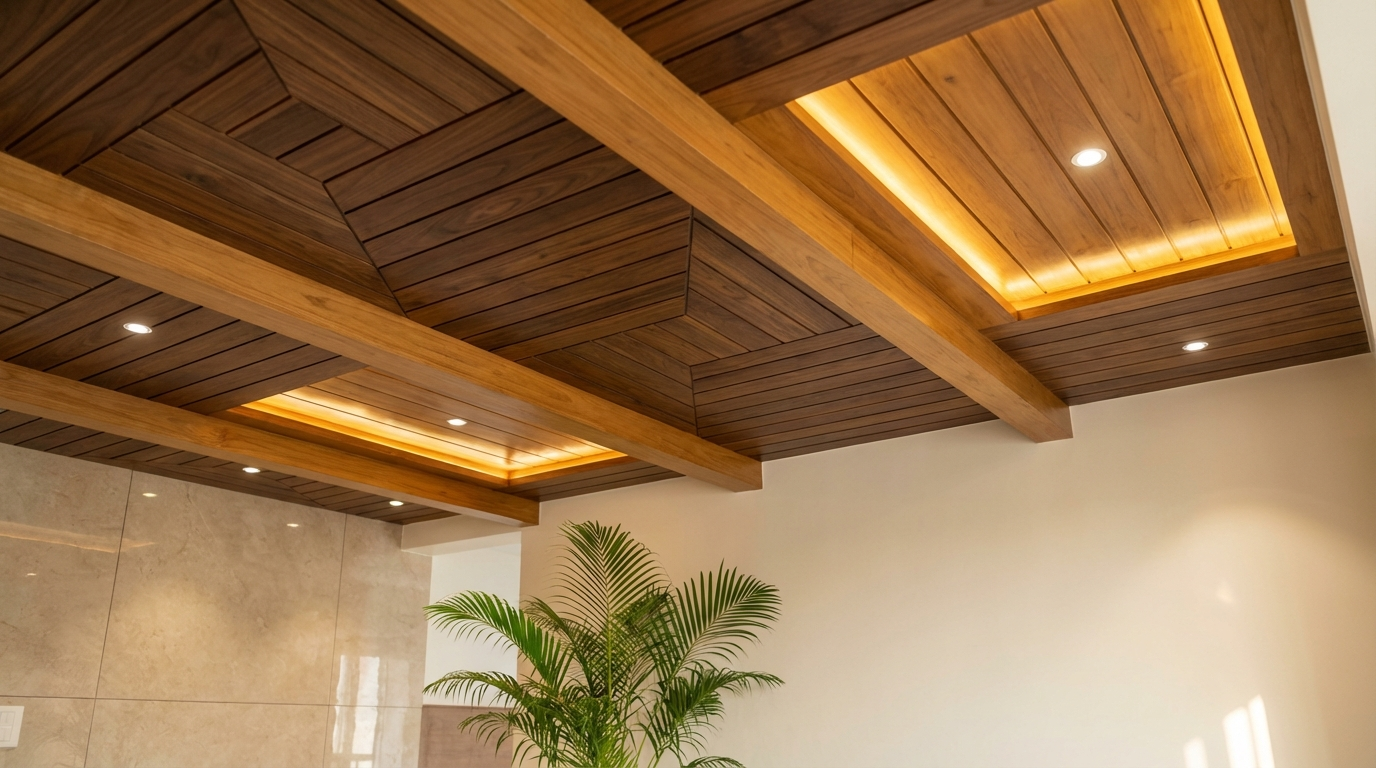
- Backlit panel feature: TV wall with backlit panels using LED strips behind 6mm acrylic or frosted glass mounted on 12mm HDHMR, creates dramatic evening ambiance
- Floor-to-ceiling storage wall: Full wall unit combining TV area, display shelves, and concealed storage using 18mm BWR plywood with laminate, maximizes storage in compact rooms
- Floating furniture look: Wall-mounted TV unit, floating shelves, sofa with visible legs creating visual space below, light-colored flooring
- Green and natural: Multiple indoor plants (areca palm, monstera, snake plant), green accent wall, wooden furniture, natural fiber rugs and cushions
- Art gallery style: Minimal furniture, focus on wall art, gallery-style lighting with track lights or picture lights, neutral background
- Metallic accents modern: Rose gold or brass accessories, metallic-finish cushions, mirrored side tables, glamorous yet contemporary
- Compact modular: Modular sofa that can be reconfigured, nested tables, wall-mounted shelving system, furniture on castors for flexibility
- Textured wall focus: 3D wall panels (PVC, MDF, or stone veneer) behind seating area, simple furniture that doesn't compete with wall treatment
Traditional and Ethnic Indian Drawing Room Design Ideas
Traditional Indian drawing room design celebrates heritage craftsmanship, natural materials like solid teak and rosewood, rich color palettes inspired by regional textiles, intricate carvings, and cultural artifacts. This approach suits homeowners who value timelessness over trends and are willing to invest in quality furniture that lasts generations.
15 Traditional Indian Drawing Room Ideas
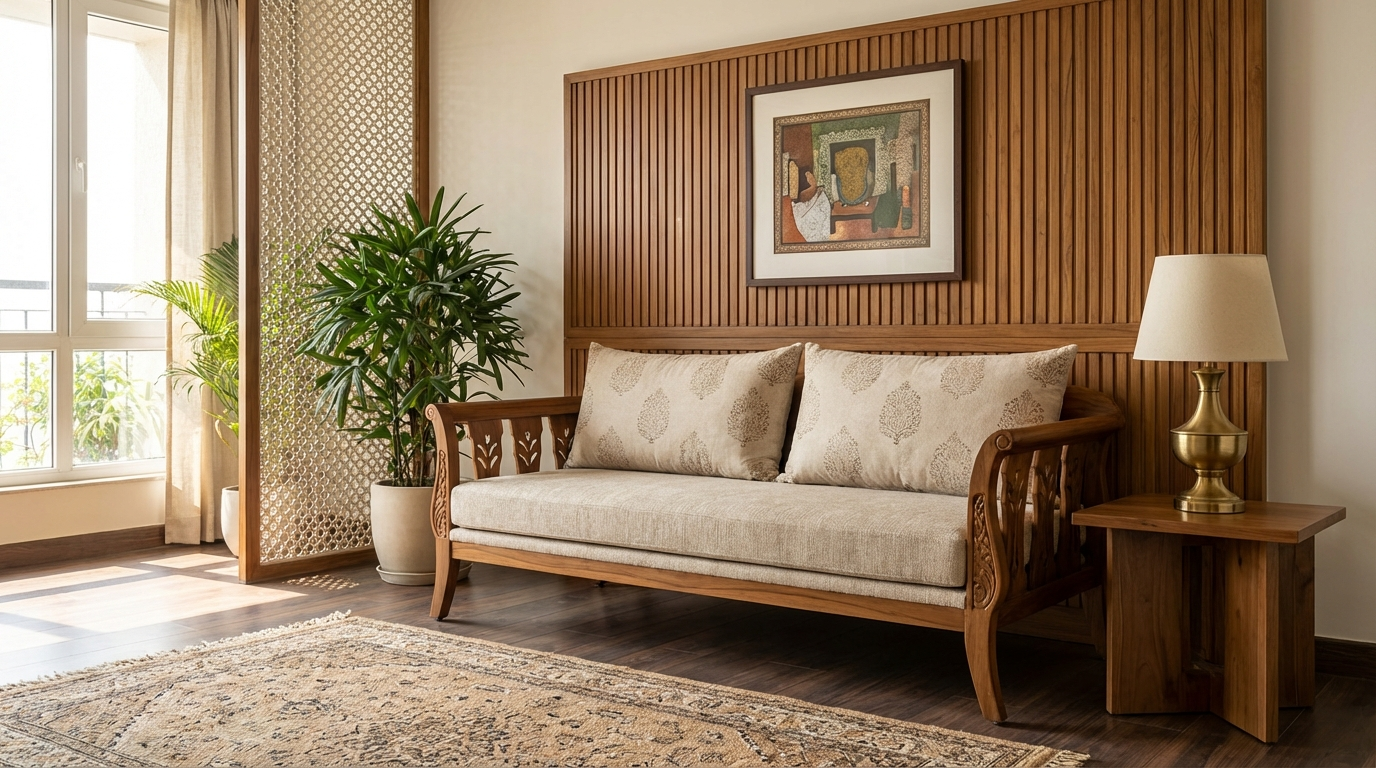
- Classic Rajasthani: Carved wooden seating (diwan-style), vibrant cushions in traditional prints, brass accessories, jaali (lattice) work in room dividers using 12mm teak-veneered plywood
- South Indian Chettinad: Dark wood furniture with distinctive curves, athangudi tiles (or tile-pattern flooring), brass lamps, minimal wall décor, solid teak or rosewood furniture
- Kerala traditional: Wooden flooring or wood-finish tiles, compact traditional furniture, brass uruli with floating flowers, mural-style artwork, teakwood frame with cane work seating
- Gujarati haveli-inspired: Heavy carved furniture, colorful textiles, carved wooden mirror frames, traditional swing (jhula) if ceiling height permits
- Bengali living room: Compact seating arrangement, shitalpati mats, terracotta décor, simple wooden furniture with subtle carvings, Rabindra-era aesthetic
- Mughal-inspired luxury: Arched design elements, marble inlay patterns (or marble-look tiles), rich jewel tones (emerald, ruby, sapphire), brass and mother-of-pearl accessories
- Contemporary traditional fusion: Modern sofa silhouette with traditional fabric upholstery (block prints, ikkat), traditional center table with clean-lined seating
- Temple-inspired corner: Small puja corner integrated into drawing room design, carved wooden frame, brass accents, separate lighting
- Vintage colonial: Plantation-style furniture, ceiling fans, cane furniture, neutral colors with dark wood, large windows with wooden blinds
- Arts and crafts display: Open shelving for displaying traditional crafts (blue pottery, bronze figures, folk art), neutral walls that don't compete with displayed items
- Textiles-focused traditional: Neutral furniture serving as canvas for rich textiles—embroidered cushions, woven throws, traditional durries, wall hangings
- Jharokha (window) feature: Ornamental false window (jharokha) as wall feature, traditional seating below, creates architectural interest using 18mm carved ply or MDF
- Brass and copper accent: Brass planters, copper accessories, traditional uruli, metallic cushions echoing warm metal tones throughout
- Ancestral furniture revival: Restored vintage furniture (family heirlooms) combined with neutral modern pieces, celebrating craftsmanship while maintaining functionality
- Regional folk art theme: Madhubani, Warli, or Kalamkari artwork as focal point, furniture and colors supporting rather than competing with art
Small Drawing Room Design Ideas (Under 150 Sq Ft)
Small drawing room design requires strategic furniture selection, vertical space utilization, light colors to expand perception, multi-functional pieces, and ruthless editing of unnecessary items. Most Indian apartments, especially in metro cities, have drawing rooms in the 100-180 sq ft range, making compact design skills essential.
Space-Maximizing Strategies That Actually Work
- L-shaped or compact sectional sofa: Fits corner spaces efficiently, provides more seating than traditional sofa + chairs in same footprint
- Wall-mounted TV unit: Eliminates floor furniture, creates visual space below—use 18mm BWR plywood with 10-12 inch depth maximum
- Mirrored accent wall: Full-height mirror on one wall doubles perceived space, brightens room—position opposite window if possible
- Light color palette: White, cream, soft grey, or pale beige on walls; avoid dark colors except as very small accents
- Furniture with exposed legs: Creates visual space below furniture, making room feel larger than pieces with solid bases
- Nested tables: Three tables that stack when not in use, expand for guests—available in wood, metal, or combination
- Vertical storage: Floor-to-ceiling shelving on one wall, utilizing height rather than floor space
- Foldable/extendable options: Wall-mounted drop-leaf table for occasional use, foldable chairs stored elsewhere
- Clear coffee tables: Glass or acrylic center tables don't visually block space like solid wood pieces
- Ottoman with storage: Serves as seating, footrest, and storage—choose neutral upholstery to blend rather than stand out
What Size Sofa Works Best for Small Indian Drawing Rooms?
For drawing rooms under 150 sq ft, a two-seater sofa (approximately 140-160 cm wide) with one or two accent chairs is usually more flexible than a large sectional. If you must use a sectional, compact L-shaped models with seat depth under 55 cm work better than deep-seated lounger styles. The critical measurement is traffic flow—you need minimum 60-75 cm clearance between sofa front and any opposite furniture for comfortable movement. Always measure your actual room dimensions and tape out proposed furniture positions on the floor before purchasing. Many homeowners regret buying oversized sofas that looked appropriate in large showrooms but overwhelm their actual spaces.
Drawing Room Color Schemes and Wall Design Ideas
The right color scheme for your drawing room depends on room size, natural light availability, adjacent room colors, existing furniture tones, and the mood you want to create. In Indian contexts, you must also consider how colors look under both natural daylight and artificial evening lighting, since most family activity happens after sunset.
Proven Color Combinations for Indian Drawing Rooms
| Color Scheme | Best For | Wall Application | Complementary Furniture |
|---|---|---|---|
| White + Wood tones | Small rooms, modern aesthetic | White walls, wood accent wall or panels | Natural wood furniture, grey or white upholstery |
| Grey + Mustard | Contemporary homes, north-facing rooms | Light grey walls, one mustard accent wall | Grey sofa with mustard cushions and throws |
| Beige + Brown | Traditional homes, warm atmosphere | Beige base, brown accent elements | Dark wood furniture, cream upholstery |
| White + Teal | Coastal cities, bright modern look | White walls with teal accent wall | White or natural furniture, teal accessories |
| Cream + Sage green | Nature-inspired, calming spaces | Cream walls, sage accent or wall panels | Light wood, natural textiles, abundant plants |
| Off-white + Terracotta | Indian contemporary, earthy warmth | Off-white base, terracotta accent wall or décor | Natural wood, terracotta accessories |
| Navy + Gold/Brass | Luxurious traditional, formal spaces | Neutral walls with navy accent, gold trim | Dark wood with brass hardware |
Wall Panel and Texture Options
Wall panels transform drawing rooms from ordinary to distinctive. Here are practical options:
- MDF fluted panels: Vertical grooves create elegant texture, available in various widths (15mm, 20mm, 25mm flutes). Use 12mm MDF sheets, CNC-cut or pre-manufactured panels. Cost: ₹150-350 per sq ft including installation
- WPC (Wood Plastic Composite) panels: Moisture-resistant, suitable for humid climates, available in wood-look finishes. Cost: ₹180-400 per sq ft
- PVC wall panels: Budget-friendly, easy installation, wide design variety including 3D textures. Cost: ₹40-150 per sq ft
- Wooden panel veneer: Natural wood veneer on plywood backing (18mm BWR recommended), authentic wood appearance. Cost: ₹400-800 per sq ft depending on veneer species
- Stone veneer: Thin natural stone sheets creating accent walls, requires proper wall preparation. Cost: ₹350-700 per sq ft
- Textured paint: Budget option using texture paints (Italian finish, rustic texture, metallic effects). Cost: ₹80-200 per sq ft
For detailed guidance on panel material selection, our wall panel comparison guide covers moisture resistance and installation requirements in depth.
TV Unit and Entertainment Center Design for Drawing Rooms
The TV unit is often the focal point of modern Indian drawing rooms, requiring thoughtful design that accommodates technology while providing storage and maintaining aesthetic appeal. The ideal TV unit balances visibility, cable management, storage for devices, and integration with overall room design.
TV Unit Configuration by Room Size
| Room Size | TV Size | Unit Configuration | Material Recommendation |
|---|---|---|---|
| Under 120 sq ft | 43-50 inch | Wall-mounted unit, floating shelf, minimal depth (10-12 inches) | 18mm pre-laminated HDHMR or BWR plywood |
| 120-180 sq ft | 50-55 inch | Low console unit or wall-mounted with side shelving | 18mm BWR plywood with laminate finish |
| 180-250 sq ft | 55-65 inch | Floor-to-ceiling unit with display and concealed storage | 18mm BWR or marine-grade plywood |
| 250+ sq ft | 65-75 inch | Feature wall with integrated lighting, multiple zones | Combination of plywood and panels |
Essential TV Unit Design Considerations
- Cable management: Plan concealed channels or conduits during construction, not after—chasing walls later is expensive and messy
- Power outlet placement: Position outlets behind where TV mounts, plus additional outlets for gaming consoles, set-top boxes, soundbars
- Ventilation: Enclosed cabinets housing electronic devices need ventilation slots or mesh panels to prevent overheating
- Viewing distance: Optimal distance is 1.5 to 2.5 times the TV diagonal—a 55-inch TV needs 2-3.5 meters viewing distance
- Height: TV center should be at eye level when seated (typically 42-48 inches from floor to center for standard sofa height)
- Weight capacity: Wall-mounted units and floating shelves must account for TV weight—verify wall type (brick vs drywall) and use appropriate anchors
For kitchen and living area open plans where TV units face kitchen moisture, our guide on moisture-resistant cabinet materials provides relevant specifications.
Lighting Design for Drawing Rooms
Effective drawing room lighting combines ambient lighting for general illumination, accent lighting for visual interest and artwork, and task lighting for specific activities. The goal is creating flexibility—bright enough for reading or family activities, dimmable for movies or entertaining, and dramatic when showcasing the room's best features.
Lighting Layers and Fixture Types
- Ambient (general) lighting: Ceiling-mounted fixtures, recessed downlights, or cove lighting providing overall illumination. LED panels or chandeliers for rooms under 150 sq ft; multiple fixtures or track lighting for larger spaces
- Accent lighting: Wall sconces, picture lights, LED strips behind panels or TV units, highlighting architectural features or artwork. Creates drama and depth
- Task lighting: Floor lamps beside seating for reading, table lamps on side tables, adjustable fixtures for specific activities
- Decorative lighting: Statement chandeliers, pendant lights, or artistic fixtures that serve as décor elements themselves
How Many Lights Does a Drawing Room Need?
A drawing room needs sufficient lumens for comfortable visibility while maintaining atmosphere control. As a guideline, aim for 100-200 lumens per square meter for ambient lighting in a living/drawing room. For a 150 sq ft (14 sq m) drawing room, this means approximately 1400-2800 lumens total ambient lighting—achievable with a combination of ceiling fixtures totaling 20-40 watts of LED output. Add accent and task lighting separately. The key is installing dimmers wherever possible—what feels appropriately bright for morning cleaning feels harsh during evening relaxation. LED strips for cove or back-panel lighting typically need 8-12 watts per running meter for effective accent lighting.
Lighting Mistakes to Avoid
- Single central ceiling light creating flat, shadowless illumination
- Downlights aimed directly at TV causing glare
- No dimming controls, forcing harsh or inadequate lighting
- Ignoring natural light patterns when placing furniture and fixtures
- Cool white (6000K+) LED creating clinical atmosphere—warm white (2700K-3000K) preferred for living spaces
Furniture Selection and Arrangement Guide
Drawing room furniture selection must balance aesthetic appeal, comfort for extended sitting, durability for daily Indian usage (including children's activities and guest hosting), and proportion appropriate to room size. The arrangement then determines traffic flow, conversation comfort, and visual balance.
Furniture Arrangement Principles
- Conversation distance: Seating should be 6-10 feet apart for comfortable conversation—closer feels crowded, farther requires raising voices
- Traffic pathways: Maintain 30-36 inch clearance for main pathways through the room
- Focal point orientation: Arrange seating to face the primary focal point (TV, fireplace, window view, or accent wall)
- Balance: Distribute visual weight—don't place all large furniture on one side
- Rug sizing: Living room rugs should be large enough for front legs of all seating to rest on the rug, or small enough to float in center without touching any furniture—avoid awkward middle sizes
Material Selection for Sofa and Seating Frames
The internal frame determines furniture longevity more than upholstery. Quality considerations:
- Solid wood frames (teak, sal, or sheesham): Best durability, heaviest, most expensive. Justified for heirloom-quality pieces
- Plywood frames (BWR grade, 18mm): Good durability at moderate cost, standard in quality modular furniture. Verify grade marking
- MDF or particle board frames: Budget option, acceptable for light use and temporary furniture. Avoid for primary seating that receives heavy daily use
- Metal frames: Contemporary option, very durable, requires quality welding and rust protection
For upholstery, Indian conditions favor performance fabrics (polyester blends, crypton-treated fabrics) over pure cotton or linen, which stain easily and absorb humidity. Leather requires air-conditioning for longevity in humid climates.
Common Drawing Room Design Mistakes and How to Avoid Them
Even well-intentioned homeowners make predictable errors that undermine their drawing room's potential. Understanding these mistakes before starting your design process saves money, time, and frustration.
Mistake 1: Buying Furniture Before Planning Layout
What goes wrong: Furniture that looked perfect in the showroom overwhelms the actual room or blocks traffic flow. Returns are often impossible.
Why it happens: Showrooms are large, making furniture appear smaller. Emotional purchasing without measurements.
How to avoid: Measure room precisely, tape out furniture positions on floor, use online room planners, or cut paper templates to scale before any purchase.
Mistake 2: Following Trends Without Considering Maintenance
What goes wrong: All-white interiors that show every mark, high-gloss surfaces that reveal fingerprints, light-colored fabrics that stain instantly.
Why it happens: Design inspiration from curated photos without considering daily Indian household realities—cooking smoke, dust, children, guests.
How to avoid: For primary furniture, choose mid-tone colors and textured fabrics that hide wear. Reserve high-maintenance finishes for accent pieces that can be replaced.
Mistake 3: Ignoring Scale and Proportion
What goes wrong: Massive sofa in small room, tiny center table under large window, mismatched furniture heights creating visual chaos.
Why it happens: Purchasing individual pieces without visualizing them together, mixing furniture from different style eras or quality levels.
How to avoid: Aim for consistent furniture scale—if you have a large sofa, pair with proportionate tables and lamps. Keep artwork and accessories in proportion to furniture beneath them.
Mistake 4: Neglecting Storage Planning
What goes wrong: Beautiful minimalist room becomes cluttered within months as everyday items accumulate without designated homes.
Why it happens: Focusing on aesthetics during design, underestimating actual storage needs.
How to avoid: List everything that needs storage—remotes, magazines, blankets, games, seasonal items—then design concealed storage into furniture and built-ins.
Mistake 5: Insufficient or Harsh Lighting
What goes wrong: Room feels flat and uncomfortable at night, or overly bright with no atmosphere control.
Why it happens: Relying on single ceiling fixture, choosing wrong color temperature, not installing dimmers.
How to avoid: Plan three lighting layers (ambient, accent, task), install dimmers on main circuits, use warm white LED (2700K-3000K) for living spaces.
Mistake 6: Poor Material Choices for Indian Climate
What goes wrong: Furniture swells or warps in monsoon, veneer delaminates, metal hardware rusts, fabric develops mold.
Why it happens: Using specifications from non-tropical climates, choosing budget materials inappropriate for local humidity.
How to avoid: Specify BWR or marine-grade plywood for furniture in humid cities, use moisture-resistant hardware, ensure adequate room ventilation.
Mistake 7: Overlooking Practical Traffic Flow
What goes wrong: Family members constantly squeezing past furniture, furniture positioned where doors can't fully open, awkward access to balcony or other rooms.
Why it happens: Planning with static view rather than movement patterns, not accounting for opened doors and pulled-out chairs.
How to avoid: Walk through the room mentally with all planned furniture, verify door swings don't hit furniture, maintain minimum 30-inch pathways.
Quality Checks and Dealer Selection Tips
Whether buying ready-made furniture or commissioning custom work, verifying quality before and during the process prevents expensive regrets. These checks don't require special equipment—just attention and basic knowledge.
For Plywood and Wood-Based Furniture
- Check plywood grade marking: Look for ISI mark and grade designation (IS 710 for BWP marine, IS 303 for BWR)
- Inspect edges: Cut edges should be smooth, tight, with no visible voids or core gaps. Delaminating layers indicate moisture damage or poor quality
- Tap test: Solid areas should sound dense. Hollow sounds indicate internal voids or thin material
- Weight check: Quality plywood has noticeable heft. Very light boards suggest low-density cores or air pockets
- Ask about core: Hardwood core holds screws better than softwood. Request cross-section sample if commissioning custom work
- Verify edge banding: All exposed edges should have edge banding or sealing, especially for furniture in humid locations
For Finished Furniture (Ready-Made)
- Check joints and corners: Corners should meet precisely with no gaps. Visible gaps indicate poor workmanship
- Test drawers and doors: Should open smoothly without sticking or rubbing. Hardware should feel substantial, not flimsy
- Inspect finish consistency: Laminate or veneer should be uniform without bubbles, scratches, or edge lifting
- Ask about frame material: For upholstered seating, verify frame material (solid wood, plywood grade, or particle board)
- Request warranty terms: Understand what's covered (frame, fabric, cushions, hardware) and for how long
Questions to Ask Dealers and Carpenters
- What plywood grade and brand will you use? Can I see the material before work begins?
- How will edges be finished and sealed?
- What hardware brand will you use? (Hettich, Ebco, Häfele are reliable mid-to-premium options)
- What's included in the quoted price? (Material, labor, hardware, delivery, installation?)
- What's the timeline, and what causes delays?
- Can I visit the workshop while work is in progress?
Budget Planning for Drawing Room Interiors
Drawing room interior costs in India vary enormously based on city, material choices, customization level, and designer involvement. Understanding cost drivers helps allocate budget effectively.
Approximate Cost Ranges (2026 Estimates)
| Component | Budget Range | Mid Range | Premium Range |
|---|---|---|---|
| 3-seater sofa | ₹18,000-35,000 | ₹40,000-80,000 | ₹1,00,000-3,00,000+ |
| TV unit (6-8 ft, custom) | ₹25,000-45,000 | ₹50,000-1,00,000 | ₹1,20,000-2,50,000+ |
| Center table | ₹5,000-12,000 | ₹15,000-35,000 | ₹45,000-1,50,000+ |
| Accent wall (per wall, ~80-100 sq ft) | ₹8,000-20,000 (paint/wallpaper) | ₹25,000-50,000 (panels) | ₹60,000-1,50,000+ (stone/premium wood) |
| Lighting (complete room) | ₹15,000-30,000 | ₹35,000-75,000 | ₹1,00,000-3,00,000+ |
| Curtains (complete room, basic window count) | ₹8,000-18,000 | ₹20,000-45,000 | ₹50,000-1,50,000+ |
Note: Custom furniture costs vary 15-25% between metros and tier-2 cities. Material costs are relatively consistent, but labor rates differ significantly.
Budget Allocation Recommendation
For a complete drawing room redesign on a moderate budget, allocate approximately: 40-45% for major furniture (sofa, TV unit), 15-20% for wall treatments and painting, 15-20% for lighting fixtures and electricals, 10-15% for accessories and décor, and 10% contingency for overruns. Prioritize the sofa—you'll use it daily, and quality here directly impacts comfort and longevity.
Frequently Asked Questions About Drawing Room Interior Design
What is the ideal size for a drawing room in Indian apartments?
Most Indian apartments allocate 150-250 sq ft for the drawing room, with compact apartments going as low as 100-120 sq ft. An ideal functional drawing room for a family of four needs approximately 180-200 sq ft to accommodate a three-seater sofa, two accent chairs, a center table, TV unit, and comfortable circulation space. However, effective design can make smaller spaces feel adequate and larger spaces feel intimate. The key is proportionate furniture selection—a 120 sq ft room with appropriately scaled furniture feels better than the same room stuffed with oversized pieces meant for larger spaces.
How much does a complete drawing room interior cost in India?
A complete drawing room interior in India ranges from ₹1.5-3 lakhs for budget execution, ₹4-8 lakhs for mid-range quality, and ₹10-25 lakhs or more for premium designer interiors. These costs include furniture, wall treatments, lighting, curtains, and décor but exclude civil work like flooring or wall construction. The variation depends primarily on material choices (particle board vs solid wood), furniture source (ready-made vs custom vs designer), city location, and designer involvement. For self-managed projects using good-quality custom-made furniture, ₹2,500-4,000 per sq ft of drawing room area is a reasonable mid-range estimate.
Should I hire an interior designer for my drawing room?
Interior designers add value when you lack time for research and coordination, need creative solutions for challenging spaces, want a cohesive design language throughout your home, or have a premium budget requiring specialized knowledge. For straightforward drawing rooms where you have clear preferences and willingness to learn, self-managed execution with good carpenter references can achieve excellent results at 30-40% lower cost. The middle path—hiring a designer for conceptualization and drawings only, then executing yourself—offers good value. Designer fees typically range from ₹50-150 per sq ft for basic consultation to ₹150-400 per sq ft for comprehensive design, plus implementation markups on materials.
What colors make a small drawing room look bigger?
Light colors—white, off-white, cream, pale grey, and soft pastels—make small rooms appear larger by reflecting light and reducing visual weight. The most effective strategy combines light-colored walls with one slightly deeper accent wall, creating depth without darkening the space. Avoid dark colors on ceilings, which lower perceived height. Matching wall and ceiling colors (or using white ceilings with light-toned walls) maximizes the perception of space. Monochromatic color schemes with varying tones feel more spacious than multiple contrasting colors. Mirrors positioned opposite windows amplify natural light and double perceived space.
Which plywood is best for drawing room furniture in humid cities?
For drawing room furniture in humid coastal cities like Mumbai, Chennai, Kochi, or Kolkata, BWR (Boiling Water Resistant) grade plywood is the minimum standard, with BWP (Boiling Water Proof/marine grade) recommended for furniture against external walls or in ground-floor flats with dampness issues. Always specify 18mm or 19mm thickness for structural furniture components and verify IS 303 (BWR) or IS 710 (BWP) markings. HDHMR (High Density High Moisture Resistant) boards offer excellent moisture resistance and smooth finish for laminated furniture, though they cost more than equivalent plywood. For TV units and display cabinets in air-conditioned rooms with consistent climate control, MR-grade can suffice, but BWR provides better safety margin.
Can I mix modern and traditional styles in my drawing room?
Mixing modern and traditional styles—often called "transitional" or "contemporary Indian" design—is not only possible but increasingly popular. The key is maintaining visual balance and intentionality. Successful fusion typically uses a neutral modern base (clean-lined sofa, simple walls) with traditional accent elements (carved center table, traditional artwork, heritage textiles, brass accessories). Alternatively, traditional furniture frameworks can receive contemporary upholstery or modern lighting. Avoid mixing at random—establish a clear primary style (70-80% of the room) with contrasting accents (20-30%) for coherent results. Color continuity also helps disparate elements feel unified.
How do I choose between a sectional sofa and a traditional sofa set?
Choose sectional sofas for: compact rooms where L-shaped configuration uses corners efficiently, modern aesthetics, families preferring lounging positions, and homes with frequent movie-watching. Choose traditional sofa sets (3+1+1 or similar) for: larger rooms with multiple seating zones, traditional aesthetics, frequent formal guest hosting where individual seating feels more appropriate, and flexibility to rearrange or separate pieces for different occasions. In Indian contexts, consider that traditional sets often appear more formal for guest hosting, while sectionals feel more casual and family-oriented. Many Indian families compromise with a sectional plus two accent chairs, combining lounging comfort with formal seating options.
What is the best flooring for Indian drawing rooms?
Vitrified tiles remain the most practical choice for Indian drawing rooms—durable, easy to clean, available in wood-look and marble-look patterns, and moderately priced (₹60-200 per sq ft installed for good quality). Natural marble adds luxury but requires sealing and careful maintenance. Engineered wood flooring offers warmth and premium appearance but is susceptible to moisture damage in humid climates and scratching in homes with heavy furniture movement. For budget projects, polished ceramic tiles provide good value. Whatever flooring you choose, decide before finalizing furniture—flooring color significantly influences furniture and wall color choices.
How important is natural lighting for drawing room design?
Natural lighting significantly impacts drawing room ambiance, energy costs, and even psychological wellbeing. Well-lit rooms feel larger, more pleasant, and require less artificial lighting during daytime. When possible, position primary seating to benefit from natural light without direct glare on screens. Use light-colored curtains or blinds that filter rather than block sunlight. Mirror placement can redirect natural light deeper into rooms. However, Indian climates often require balancing light with heat management—large west-facing windows may need heavier treatment for afternoon heat. For rooms with limited natural light, focus on effective artificial lighting design with warm color temperatures to compensate.
What TV size is appropriate for a medium-sized Indian drawing room?
For typical Indian drawing rooms with viewing distances of 8-12 feet (2.4-3.6 meters), TV sizes between 55-65 inches offer optimal viewing. The standard formula suggests TV diagonal in inches should roughly equal viewing distance in inches divided by 2 (for comfortable viewing) to 1.5 (for immersive viewing). An 8-foot viewing distance suits 48-65 inch TVs; a 10-foot distance suits 60-75 inch TVs. Beyond size, consider resolution—for 55 inches and above, 4K resolution ensures clarity at closer distances. Always measure and visualize before purchase; mounting a cardboard cutout at intended position helps judge scale before committing.
Is Vastu important for drawing room interior design?
Vastu considerations influence many Indian homeowners' design decisions. Common Vastu recommendations include positioning the drawing room in the north or east zone of the home, placing heavy furniture in the south or west areas, keeping the northeast area light and clutter-free, positioning the main door to avoid direct alignment with bedroom doors, and using certain colors based on direction (yellows and greens for east-facing rooms, blues and whites for north-facing). While Vastu compatibility is entirely personal choice, many of these principles align with practical design—positioning furniture for natural light flow, maintaining uncluttered entryways, and balanced room arrangement. Discuss Vastu requirements with your designer early if they're important to your family.
How do I maintain my drawing room furniture in Indian climate conditions?
Regular maintenance extends furniture life significantly in Indian conditions. For wood and plywood furniture: wipe dust weekly with soft dry cloth, use coasters under wet items, maintain consistent indoor humidity through ventilation or dehumidifiers during monsoon, and apply furniture polish quarterly. For upholstered seating: vacuum weekly to remove dust and particulates, rotate cushions monthly for even wear, address spills immediately with appropriate cleaners, and professionally clean annually. For metal hardware: check for rust signs quarterly, lubricate hinges and drawer slides annually, and replace corroding hardware promptly before damage spreads. Avoid direct sunlight on fabric and wood finishes to prevent fading and cracking.
Can I do drawing room interior design myself without professional help?
Self-managed drawing room design is entirely feasible for homeowners willing to invest time in research, measurement, and coordination. Start with thorough measurement and a scaled floor plan (many free apps assist). Research extensively—Pinterest, design magazines, and showroom visits help develop your eye. Prioritize one or two professional elements (good-quality custom furniture or lighting) while managing simpler elements yourself. Build relationships with reliable carpenters and vendors through referrals. Allow extra timeline for learning curve. The main advantages are cost savings (30-40% typical) and exact customization to your preferences. The main risks are coordination complexity and potential mistakes that professionals would avoid through experience.
What are the latest drawing room design trends in India for 2026?
Current trends in Indian drawing room design include: sustainable and natural materials (reclaimed wood, natural fiber textiles, terracotta accents); earthy color palettes replacing grey dominance (warm beiges, terracotta, sage green, warm browns); biophilic design with abundant indoor plants and natural textures; smart home integration for lighting, curtains, and climate control; multifunctional furniture for flexibility; curved and organic furniture forms softening previously rigid modern lines; statement lighting as design focal points; and personalized art and craft display over generic décor. Trend adoption should be selective—choose elements that genuinely suit your lifestyle rather than following trends wholesale.
Final Thoughts: Creating a Drawing Room That Works for Indian Life
The most successful drawing room designs balance aspiration with practicality. Your drawing room must accommodate the realities of Indian life—frequent guests, extended family gatherings, children's activities, domestic help access, dust management, monsoon humidity, and power fluctuations. A design that looks stunning in photographs but requires constant maintenance or restricts normal activities will frustrate rather than delight.
Begin with function: how does your family actually use the space daily? Build aesthetics around those patterns rather than forcing lifestyle changes to match a design. Invest in quality where it matters most—the sofa you'll sit on daily, the plywood grade for built-in furniture, the lighting that defines evening atmosphere. Economize thoughtfully on items you can upgrade later—accessories, curtains, and accent pieces.
Whether you choose sleek modern minimalism or rich traditional warmth, the best drawing room is one that welcomes your family home every evening and makes guests feel honored. Material choices, color schemes, and furniture arrangements are tools toward that goal, not goals themselves.
Disclaimer: This content is provided for general informational purposes based on industry practices and publicly available information. Product specifications, standards, prices, and availability may vary by manufacturer, region, and time. Readers should independently verify details with manufacturers, dealers, or qualified professionals before making purchase or construction decisions.Want Plywood Suggestions?
Share a few details and a Sainik 710 specialist will suggest suitable brands and connect you to responsive dealers.