Double Door Design for Main Hall: 20+ Grand Entrance Ideas with Materials & Vastu Tips
Explore 20+ double door designs for main hall—wooden, glass & modern options. Get material guide, size recommendations & Vastu tips for grand entrances.
Quick Decision Summary
The best double door design for an Indian main hall combines teak or engineered wood frames (minimum 35mm thickness) with decorative glass or carved panels, sized between 5 to 6 feet total width for balanced proportions and Vastu compliance.
If you're short on time: Choose solid teak or hardwood frames for durability in Indian conditions—monsoon humidity, dust, and daily heavy use demand robust construction. For modern aesthetics, engineered wood with veneer finish offers budget-friendly elegance. Always ensure the door opens inward (Vastu), faces east or north if possible, and has a proper threshold to prevent water ingress during rains.
- Choose double doors if: Your main hall entrance is 5 feet or wider, you want a grand aesthetic, your home follows Vastu principles, or you need better ventilation options
- Avoid double doors if: The entrance width is under 4.5 feet, budget is extremely tight, or structural modifications aren't feasible
Key takeaway: Double doors transform ordinary entrances into statement pieces—invest in quality materials and proper installation for decades of trouble-free operation.
What Double Door Design Actually Means for Indian Main Halls
A double door design for main hall consists of two door leaves (shutters) that open from the centre, creating a wider entrance passage compared to single doors. In Indian residential architecture, these doors typically range from 5 to 7 feet in total width and serve as the primary aesthetic element of the home's facade while fulfilling Vastu requirements for balanced energy flow.
The technical construction involves two separate door shutters mounted on opposite frames with a common or divided frame structure. Each shutter usually measures between 2.5 to 3.5 feet in width, with the combined opening providing 5 to 7 feet of passage space. The frame thickness ranges from 4 to 5 inches for wooden frames and 2 to 3 inches for metal frames, depending on wall thickness and structural requirements.
Understanding Double Door Components
Every double door system comprises several critical components: the main frame (chaukhat), two door shutters (palla), hinges (minimum 4 per shutter for heavy doors), a central astragal or meeting stile, threshold or floor track, locking mechanism with multi-point engagement, and weatherstripping for dust and water resistance. The quality of each component determines overall performance—cheap hinges on expensive teak doors will still result in sagging within years.
Common misconception cleared: Many homeowners believe double doors are purely decorative. In reality, they serve functional purposes including better cross-ventilation when both shutters open, easier furniture movement, wheelchair accessibility, and improved emergency egress. The grandeur is a bonus, not the primary purpose.
India-Specific Reality Check: Climate, Termites, and Installation Challenges
Indian double doors face unique challenges that European or American door designs never encounter. Monsoon humidity ranging from 70% to 95% in coastal and eastern regions causes solid wood to expand, potentially jamming doors in their frames. Conversely, dry northern winters cause contraction, creating gaps and rattling. Understanding these cycles is essential for material selection and installation.
Monsoon and Humidity Considerations
Coastal cities like Mumbai, Chennai, and Kolkata experience sustained high humidity for 4 to 6 months annually. Doors here require:
- Kiln-dried timber with moisture content below 12%
- Boiling Water Resistant (BWR) grade plywood for any panel work
- Marine-grade hardware (stainless steel 304 or 316)
- Proper clearance gaps (3-4mm) at edges to accommodate expansion
- Complete edge sealing before installation
Termite and Borer Protection
Termite damage destroys thousands of wooden doors across India annually. Pre-treatment of wooden frames with anti-termite chemicals is mandatory in most regions. Teak naturally resists termites due to its oil content, but sal, mango wood, and cheaper alternatives require chemical treatment. The frame's contact points with the wall and floor are most vulnerable—ensure your carpenter applies termite-resistant primer at these junctions.
Regional Variations in Door Requirements
| Region | Primary Challenge | Material Recommendation | Special Requirements |
|---|---|---|---|
| Coastal (Mumbai, Chennai, Goa) | Salt air corrosion, high humidity | Teak, Marine ply, SS hardware | Anti-corrosion coating, 4mm expansion gap |
| North India (Delhi, Jaipur, Punjab) | Extreme temperature variation | Seasoned hardwood, engineered wood | Weatherstripping, proper finishing both sides |
| Eastern India (Kolkata, Odisha) | Prolonged monsoon, high humidity | Teak, BWR ply panels | Raised threshold, drainage consideration |
| South India (Bangalore, Hyderabad) | Moderate humidity, termites | Teak, quality hardwoods | Anti-termite treatment essential |
20+ Double Door Design Ideas with Material Specifications
Double door designs for Indian main halls range from traditional carved masterpieces to contemporary minimalist panels. The right design depends on your home's architectural style, budget, maintenance capacity, and personal aesthetic preferences. Here are practical design categories with specific material recommendations for Indian conditions.
Traditional Carved Wooden Designs (8 Ideas)
- Temple-style carved teak doors: Full-height carved panels depicting deities or geometric mandalas. Use solid teak minimum 40mm thickness, hand-carved by skilled craftsmen. Budget: Premium segment. Best for: Independent houses, villa entrances
- Rajasthani brass-studded doors: Dark wood base (sheesham or teak) with brass nail patterns and iron ring handles. Requires 45mm+ thickness to hold studding. Best for: North Indian traditional homes
- South Indian temple door replica: Heavy teak with multiple horizontal panels and traditional brass fittings. Often includes carved elephants or lotus motifs. Minimum 50mm thickness recommended
- Colonial-era panel doors: Six or eight-panel design with raised mouldings, finished in dark polish or painted white. Works with teak, mahogany, or quality MDF with veneer
- Mughal arch-top doors: Pointed arch header with geometric jali work in the upper portion. Requires custom frame construction—add 15-20% to standard costs
- Gujarat haveli style: Intricate floral carvings with peacock motifs, typically in natural wood finish. Skilled artisan work, 3-4 week fabrication time
- Kerala traditional doors: Jackfruit wood or teak with minimal carving, emphasizing wood grain. Usually painted or stained dark
- Chettinad mansion doors: Massive scale (7+ feet height), heavy teak with brass and iron fittings. Architectural statement pieces
Modern and Contemporary Designs (8 Ideas)
- Flush panel with veneer finish: Clean, flat surface in walnut, oak, or teak veneer on engineered wood core. 35mm thickness sufficient. Best for: Modern apartments, minimalist homes
- Horizontal groove pattern: Parallel grooves routed into flush door surface, creating linear texture. Works with solid wood or quality ply with laminate
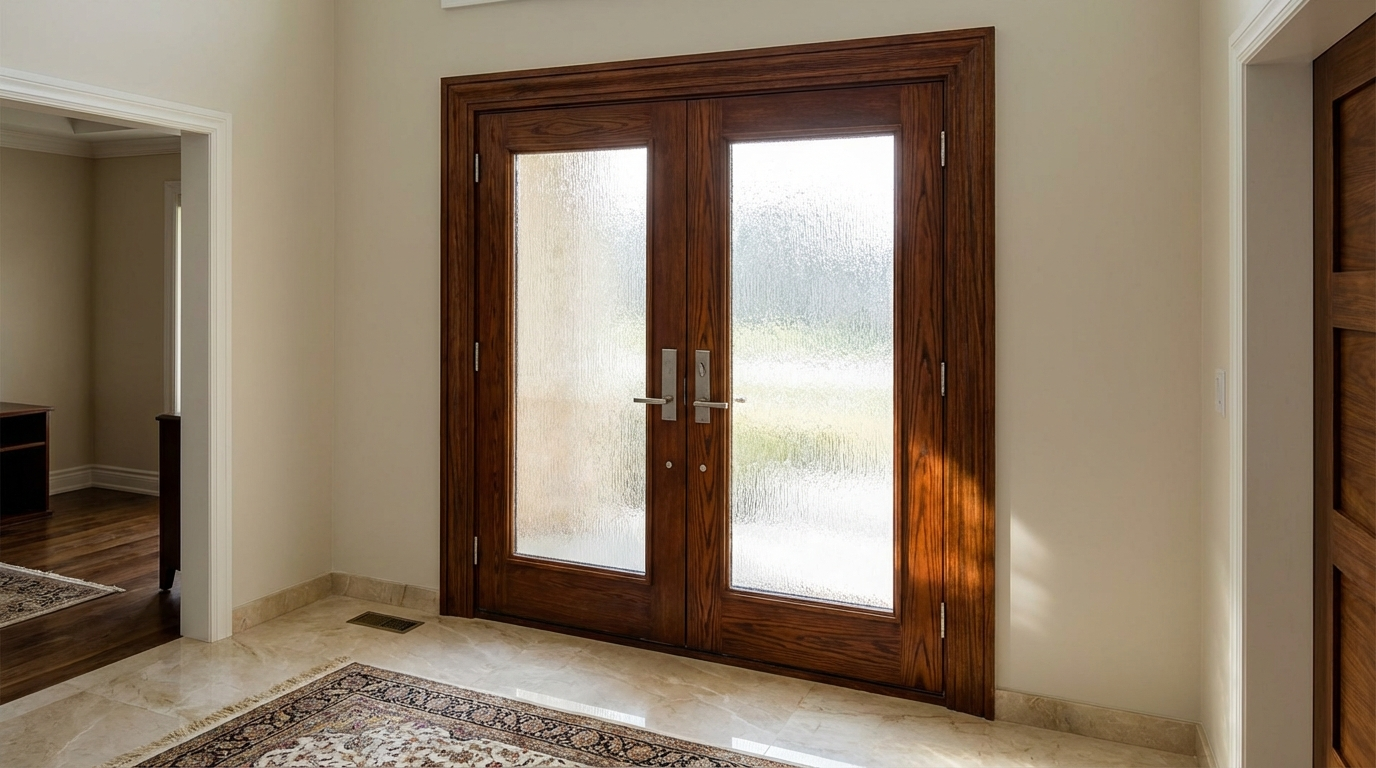
- Glass and wood combination: Wooden frame with frosted, etched, or tinted glass panels. Use toughened glass minimum 10mm. Provides natural light in dark foyers
- Pivot door design: Large single or double pivot doors rotating on floor and ceiling pins. Requires reinforced flooring and ceiling anchor points. Ultra-modern aesthetic
- Metal frame with wooden infill: Steel or aluminium frame with wooden panels. Offers security with warmth. Suitable for ground floor apartments
- Geometric CNC-cut panels: Modern patterns laser-cut or CNC-routed into MDF or ply panels, backlit or plain. Trendy but requires dust-resistant finishing
- Two-tone painted doors: Contrasting colours on frame and panels or different shades on each shutter. Works best with MDF or smooth-finished ply
- Industrial style with metal accents: Raw wood finish with exposed iron straps, bolts, or handles. Popular in urban lofts and contemporary homes
Glass-Dominant and Security-Enhanced Designs (6 Ideas)
- Full glass with minimal frame: Large toughened glass panels (12mm) with slim aluminium or wooden borders. Maximum light, minimum obstruction. Not ideal for ground floors without grilles
- Wrought iron with glass: Decorative iron scrollwork framing glass panels. Traditional security with visibility. Heavy—requires robust hinges
- Stained glass feature panels: Coloured glass insets in wooden doors creating artistic focal points. Requires skilled glasswork, premium budget
- Safety door plus decorative door: Outer metal safety door with inner decorative wooden double doors. Common in apartments—provides security and aesthetics
- Louvered double doors: Angled slats allowing ventilation while blocking direct view. Good for covered porches in hot climates
- Smart door with digital lock integration: Any design upgraded with electronic locks, video doorbell housing, and intercom integration. Requires professional installation
Material Selection Guide: What Works in Indian Conditions
Material choice determines 70% of a double door's longevity and performance. Indian conditions demand materials that handle humidity fluctuations, resist termites, withstand daily heavy use, and maintain appearance for decades. The wrong material in the wrong location leads to warping, cracking, or premature failure within 3-5 years.
Solid Wood Options Compared
| Wood Type | Durability | Termite Resistance | Cost (Relative) | Best For |
|---|---|---|---|---|
| Teak (Sagwan) | Excellent (50+ years) | Natural resistance | High | Premium main doors, all climates |
| Sal | Very Good (30+ years) | Good | Medium-High | Heavy-duty doors, North/East India |
| Sheesham (Rosewood) | Good (25-30 years) | Moderate | Medium | Carved doors, dry climates |
| Mango Wood | Moderate (15-20 years) | Low (needs treatment) | Low-Medium | Budget doors, dry regions only |
| Mahogany | Good (25-30 years) | Moderate | High | Colonial style, moderate humidity |
| Deodar/Pine | Moderate (15-20 years) | Low | Low | Painted doors, hill stations only |
Is Engineered Wood Good for Main Hall Double Doors?
Engineered wood products including flush doors with block board core, BWR plywood panels, and MDF with veneer can perform excellently for main hall double doors when properly specified. The key is selecting the right core type and ensuring complete edge sealing. Block board cores offer superior screw-holding for heavy hardware, while calibrated MDF provides perfectly flat surfaces for modern finishes.
For engineered wood double doors, specify: BWR or BWP grade plywood for panels, minimum 30mm thickness for shutters, hardwood lipping on all edges, and complete primer sealing before any finish application. These doors cost 40-60% less than solid teak while delivering 15-20 years of service in moderate humidity conditions.
Metal and Composite Options
Steel doors with powder coating offer unmatched security but lack the warmth of wood. Aluminium-framed doors work well for glass-heavy designs. Fibre-reinforced polymer (FRP) doors resist moisture completely but may not suit traditional aesthetics. For most Indian main halls, wood remains preferred for its visual warmth, easy repairability, and cultural appropriateness.
Size and Dimension Guidelines for Indian Homes
Standard double door dimensions in India follow a width range of 5 to 6 feet (1500mm to 1800mm) and height of 7 to 8 feet (2100mm to 2400mm). However, optimal sizing depends on the main hall dimensions, ceiling height, and facade proportions. Undersized doors look mean; oversized doors overwhelm the space and complicate hardware selection.
Recommended Dimensions by Hall Size
| Main Hall Area | Recommended Door Width | Height | Shutter Configuration |
|---|---|---|---|
| Under 150 sq ft | 4.5-5 feet | 7 feet | Two equal shutters |
| 150-250 sq ft | 5-5.5 feet | 7-7.5 feet | Two equal or 60:40 |
| 250-400 sq ft | 5.5-6 feet | 7.5-8 feet | Two equal shutters |
| Above 400 sq ft | 6-7 feet | 8-9 feet | Equal or unequal as per design |
Frame and Shutter Thickness Standards
Frame thickness typically ranges from 4 to 5 inches to accommodate wall thickness plus finishing. Shutter thickness should be minimum 35mm for flush designs and 40-50mm for carved or panelled designs. Heavier shutters require thicker frames—a 50kg shutter needs minimum 4.5-inch frame depth to prevent twisting over time.
For our detailed guide on plywood thickness selection for different furniture applications, see our comprehensive plywood buying guide.
Vastu Tips for Double Door Main Entrances
Vastu Shastra considers the main entrance as the mouth of the home through which energy enters. Double doors, when properly positioned and designed, are considered highly auspicious as they allow balanced energy flow. Following Vastu principles doesn't require compromising on aesthetics—most guidelines integrate naturally with good design practice.
Direction and Positioning Guidelines
- Preferred directions: East and North are considered most auspicious for main entrances. Northeast is excellent, while West is acceptable
- Directions to avoid: South-facing main doors are traditionally avoided. Southwest is considered least favourable
- Opening direction: Double doors should open inward and clockwise (right shutter opening first when viewed from outside)
- Threshold requirement: A raised threshold (minimum 2 inches) is recommended to contain positive energy
- Equal shutters: Both door shutters should be equal in size for balanced energy—avoid significantly unequal divisions
Design Elements as per Vastu
Vastu recommends avoiding sharp or aggressive imagery on main doors—opt for auspicious symbols like Om, Swastika, or floral patterns. The door should be proportionate to the building—neither too large nor too small. A well-lit entrance with no shadows falling on the door is preferred. Broken hinges, creaking sounds, or difficulty in opening are considered inauspicious and should be corrected immediately.
Bottom line: Most Vastu guidelines align with practical design sense—balanced proportions, smooth operation, positive imagery, and proper maintenance serve both spiritual and functional purposes.
Hardware and Fittings: What Makes Double Doors Function Properly
Hardware quality determines how well double doors operate daily. Cheap hinges cause sagging within months, poor locks compromise security, and inadequate weatherstripping allows dust and water infiltration. Allocate 15-20% of your door budget specifically for quality hardware—this investment pays off in smooth operation for decades.
Essential Hardware Components
- Hinges: Use minimum 4 hinges per shutter for doors over 7 feet height. Ball-bearing hinges (4-inch) recommended for heavy doors. Stainless steel 304 grade for coastal areas
- Main lock: Mortise lock with multi-point locking for security. Brands matter—choose reputable manufacturers with replacement part availability
- Tower bolts: Top and bottom bolts (aldrop style) for the fixed shutter. 8-inch minimum length
- Door closer: Hydraulic door closer optional but recommended for heavy doors to prevent slamming
- Door stopper: Wall-mounted or floor-mounted to prevent handle damage to walls
- Weatherstripping: Rubber or brush seals at all edges to prevent dust and water ingress
What Hardware Grade is Best for Indian Double Doors?
For main hall double doors in Indian conditions, specify hardware with the following minimum grades: hinges in stainless steel 304 (coastal) or zinc alloy with chrome finish (inland), locks meeting IS:3818 standards with minimum 3-lever mechanism, and tower bolts in brass or stainless steel. Avoid iron or mild steel hardware in any humid region—rust begins within months regardless of initial coating quality.
Common Buyer Mistakes When Choosing Double Doors
Having surveyed numerous door installations across Indian cities, certain mistakes appear repeatedly. Avoiding these pitfalls saves money, prevents rework, and ensures your double doors serve your home well for decades.
Mistake 1: Prioritizing Appearance Over Material Quality
What goes wrong: Beautiful carved doors made from inferior wood warp or crack within 2-3 monsoons. Why it happens: Buyers focus on carvings rather than wood species and seasoning. How to avoid: Always confirm wood type, check for kiln-drying certification, and prioritize material before design complexity.
Mistake 2: Undersizing for the Space
What goes wrong: Doors look disproportionately small against the facade, reducing visual impact. Why it happens: Cost-cutting or following standard sizes without considering specific architecture. How to avoid: Size doors proportionate to the entrance facade—spend the extra for custom sizing if standard sizes don't fit.
Mistake 3: Ignoring Frame Quality
What goes wrong: Good shutters installed on weak frames sag, bind, or show gaps within years. Why it happens: Frames are hidden—easy to cut corners. How to avoid: Specify frame wood quality matching or exceeding shutter quality. Inspect frames before plastering covers them.
Mistake 4: Cheap Hardware on Expensive Doors
What goes wrong: Hinges fail, locks malfunction, doors become difficult to operate. Why it happens: Budget exhausted on doors, hardware treated as afterthought. How to avoid: Budget hardware at 15-20% of door cost. Never compromise on hinges for heavy doors.
Mistake 5: No Expansion Gap Allowance
What goes wrong: Doors jam during monsoon when wood expands. Why it happens: Carpenter fits doors tight for clean appearance. How to avoid: Insist on 3-4mm gap at all edges during dry season installation—explain seasonal movement to your mistri.
Mistake 6: Incomplete Edge Sealing
What goes wrong: Moisture enters through unsealed edges, causing swelling and delamination. Why it happens: Edges hidden in frame, finishing rushed. How to avoid: Seal all edges with primer before installation. Inspect before doors go into frames.
Mistake 7: Ignoring Site Storage Requirements
What goes wrong: Doors stored improperly on-site absorb moisture or get damaged before installation. Why it happens: Doors delivered early, construction site dusty and humid. How to avoid: Time delivery close to installation date. Store doors flat on supports in covered, ventilated area.
Installation and Workmanship Guidelines
Proper installation transforms quality materials into functional, long-lasting doors. Poor installation ruins even the best materials. If you're managing contractors directly, understanding installation requirements helps ensure quality outcomes.
Pre-Installation Checklist
- Verify wall opening dimensions match door specifications (allow 10mm clearance)
- Confirm wall thickness accommodates frame depth
- Check floor level across threshold—doors need level surface
- Inspect doors for damage from transport before accepting delivery
- Allow 48-72 hours acclimatization in installation space before fitting
- Confirm all hardware is on-site before starting installation
Critical Installation Steps
- Frame installation: Set frame plumb and level using wedges. Anchor to wall with proper fasteners—minimum 3 points per side for frames over 7 feet
- Gap filling: Fill gaps between frame and wall with PU foam or cement mortar. Avoid leaving voids that allow moisture penetration
- Hinge mounting: Mark hinge positions carefully—top hinge 7 inches from top, bottom hinge 11 inches from bottom, remaining hinges evenly spaced. Use all screws—no empty holes
- Shutter hanging: Hang shutters with temporary support, check swing clearance, adjust if needed before tightening all screws
- Lock fitting: Install locks with proper alignment. Test operation multiple times before completing
- Final adjustments: Check closing, latching, and locking. Ensure consistent gaps all around
Carpenter Briefing Points
Before your mistri starts work, clarify these points: expansion gaps required, hinge specifications and positions, edge sealing requirements, hardware installation standards, and finish expectations. Many traditional carpenters resist "new" methods—explaining the reasoning behind requirements helps ensure compliance.
Quality Checks You Can Do Without Lab Tests
Professional testing labs verify material grades, but practical on-site checks catch most problems before they become permanent. These visual and tactile inspections help verify quality during purchase and installation.
At the Dealer/Workshop
- Wood grain inspection: Consistent grain without wild patterns indicates proper seasoning. Avoid planks with visible knots or checks
- Weight test: Lift the door—solid teak feels significantly heavier than alternatives. Light weight suggests hollow cores or inferior species
- Tap test: Knock on door surface. Solid wood produces dull thud; hollow cores or delamination produce resonant or rattling sounds
- Edge check: Examine edges for voids, gaps, or poor bonding. Well-made doors show clean, tight laminations
- Moisture meter: If dealer has one, check reading. Below 12% is acceptable for interior use; below 10% ideal for main doors
During Installation
- Frame plumb check: Use level on frame sides—out-of-plumb frames cause perpetual operational problems
- Hinge alignment: Hinges should be perfectly flush with frame edge, not recessed too deep or protruding
- Gap uniformity: Consistent 3-4mm gap around all edges indicates proper fitting
- Swing test: Door should swing freely without binding at any point in the arc
- Closing test: Close door—it should latch without excessive force. Difficult latching indicates alignment issues
Questions to Ask Your Dealer
- What wood species is this? (Get specific: teak, sal, sheesham—not just "sagwan quality")
- Is the wood kiln-dried? What moisture content?
- What warranty do you provide against warping?
- Can you provide material test certificate?
- Who manufactured this? (Workshop name/location)
Price Range and Cost Estimation (2026 Market)
Double door costs in India vary dramatically based on material, craftsmanship, size, and location. Understanding cost drivers helps set realistic budgets and evaluate quotations. The following ranges indicate general market pricing—actual quotes will vary by city, season, and quantity.
Price Ranges by Material and Style
| Door Type | Price Range (Per Pair) | Key Cost Drivers |
|---|---|---|
| Basic flush (block board core) | ₹15,000-25,000 | Veneer quality, hardware |
| Panel door (engineered wood) | ₹25,000-45,000 | Panel complexity, finish |
| Solid teak (plain) | ₹60,000-1,00,000 | Wood grade, thickness |
| Solid teak (carved) | ₹1,00,000-3,00,000+ | Carving complexity, artisan skill |
| Wood + glass combination | ₹40,000-80,000 | Glass type, wood species |
| Steel safety door + decorative | ₹50,000-1,20,000 | Steel thickness, inner door material |
What Drives Cost Variation
Wood species creates the largest cost variation—teak costs 3-4x mango wood. Craftsmanship level matters significantly for carved doors—master carvers charge premium rates. Size increases cost non-linearly—a 7-foot door may cost 40% more than 6-foot despite only 16% size increase due to material waste. City location affects labor and transport—metro prices typically 15-25% higher than tier-2 cities. Hardware adds ₹3,000-15,000 per pair depending on quality level.
Budget Estimation Method
For budget planning: Decide material category (engineered, solid wood, carved teak), determine approximate size, add 15-20% for hardware, add 10-15% for installation, and include 5-10% contingency. Get minimum three quotations from different suppliers for comparison—significant variation often indicates quality differences rather than just pricing.
Maintenance for Longevity
Well-maintained double doors last 30-50 years for solid wood and 15-25 years for engineered wood doors. Neglected doors deteriorate within a decade regardless of initial quality. Maintenance requirements vary by material but follow common principles.
Regular Maintenance Schedule
- Weekly: Dust with dry cloth. Wipe fingerprints from polished surfaces
- Monthly: Check hinge tightness. Lubricate hinges and locks with light oil
- Quarterly: Inspect weatherstripping condition. Check for pest activity
- Annually: Touch up polish or paint if needed. Inspect frame-wall junction for gaps
- Every 3-5 years: Complete refinishing for natural polished wood. Repaint painted doors
How Long Do Double Doors Last in Humid Conditions?
In high-humidity environments (coastal areas, eastern India), solid teak double doors with proper finishing last 40-50 years with regular maintenance. Engineered wood doors typically last 12-18 years in similar conditions. The critical factor is complete sealing of all surfaces—unsealed edges allow moisture penetration that dramatically shortens lifespan. Annual inspection after monsoon helps catch early deterioration before it spreads.
Frequently Asked Questions
Which wood is best for double door main entrance?
Teak (Sagwan) remains the best wood for main entrance double doors in Indian conditions. Its natural oils provide termite resistance, dimensional stability across humidity changes, and exceptional durability lasting 50+ years with proper care. For budget-conscious buyers, Sal wood offers excellent durability at lower cost, though it lacks teak's natural termite resistance and requires chemical treatment. Sheesham works well for carved doors in dry climates but needs protection in humid coastal areas. Avoid mango wood and rubberwood for main entrances—they lack the durability needed for heavy daily use.
What is the ideal size for double doors in an Indian main hall?
The ideal double door size depends on your main hall dimensions and ceiling height. For typical Indian homes with 150-250 square feet main halls, a 5 to 5.5 feet wide by 7.5 feet tall double door provides balanced proportions. Larger halls (250-400 sq ft) suit 6 feet wide doors. Never go below 4.5 feet total width—narrower openings defeat the purpose of double doors. Height should be proportionate to ceiling—7 feet doors work for 9-10 feet ceilings, while 12 feet ceilings can accommodate 8-9 feet tall doors for dramatic effect.
Are double doors better than single doors for main entrance?
Double doors offer distinct advantages for main entrances: grander aesthetic presence, better ventilation when both shutters open, easier movement of large furniture, wheelchair accessibility, improved emergency egress, and Vastu compliance with balanced energy flow. However, they cost more, require wider openings, need more careful installation to ensure alignment, and take up more swing space when open. Single doors suit narrow entrances, tight budgets, and smaller homes. For halls over 150 square feet with adequate entrance width, double doors typically enhance both aesthetics and functionality.
Can engineered wood be used for main door double shutters?
Yes, engineered wood including flush doors with block board core, BWR plywood panels, and veneered particle board can serve well for main door double shutters when properly specified. Choose BWR or BWP grade plywood rated for moisture resistance, minimum 35mm shutter thickness, hardwood lipping on all edges, and complete surface sealing. These doors cost 40-60% less than solid wood while delivering 15-20 years service. However, they cannot be carved, suit modern rather than traditional aesthetics, and may not match solid wood's prestige factor. For contemporary designs, well-made engineered wood doors offer excellent value.
What Vastu direction is best for main entrance double doors?
According to Vastu Shastra, East-facing main entrances are most auspicious, associated with prosperity and positive energy from the rising sun. North-facing entrances rank second, believed to attract wealth and opportunities. Northeast combines benefits of both. West-facing is acceptable though not ideal. South-facing entrances are traditionally avoided, believed to attract negative influences. If your home's layout mandates a south-facing entrance, Vastu remedies include bright lighting, auspicious symbols, and specific colour choices. Regardless of direction, doors should open inward and the right shutter (viewed from outside) should open first.
How much do carved teak double doors cost in India?
Carved teak double doors in India typically range from ₹1,00,000 to ₹3,00,000+ per pair depending on size, carving complexity, and artisan skill level. Basic relief carving on standard-size doors starts around ₹1,00,000. Intricate temple-style carvings with multiple panels and deep relief work exceed ₹2,50,000. Master craftsman work or replica antique designs can reach ₹5,00,000 or more. These prices include the doors only—add ₹10,000-25,000 for quality hardware and ₹5,000-15,000 for professional installation. Prices vary significantly between regions—Gujarat and Rajasthan with strong carving traditions may offer better value than metros.
How do I prevent double doors from warping in monsoon?
Preventing monsoon warping requires attention at multiple stages. During purchase, ensure wood is kiln-dried to below 12% moisture content. During installation, seal all surfaces including edges before fitting, maintain 3-4mm expansion gaps at all edges, and install proper weatherstripping. Post-installation, maintain consistent indoor humidity using exhaust fans or dehumidifiers, ensure proper ventilation in the entrance area, and refinish doors every 3-5 years to maintain protective coating. If doors begin binding during monsoon, do not plane them—wait for dry season when they'll shrink back. Address underlying moisture issues rather than trimming doors.
Is glass panel double door suitable for main entrance?
Glass panel double doors suit main entrances when security and privacy requirements are met. For ground floor or street-facing entrances, use toughened glass minimum 10mm thick, consider frosted or tinted glass for privacy, and install quality locks. Adding decorative iron grilles behind glass provides security without sacrificing aesthetics. Upper floor apartments or houses set back from the street can use larger glass panels safely. Glass doors allow natural light into dark foyers—a significant advantage in interior apartments. For maximum security, pair a decorative glass double door with a separate outer safety door.
What hardware is needed for heavy double doors?
Heavy double doors (over 40kg per shutter) require robust hardware to function properly. Use minimum 4-inch ball-bearing hinges, at least 4 per shutter positioned correctly (top hinge 7 inches from top, bottom hinge 11 inches from bottom). Specify stainless steel 304 grade for coastal areas. Choose heavy-duty mortise locks with multi-point locking. Include 8-inch or longer tower bolts at top and bottom of the fixed shutter. Consider hydraulic door closers to prevent slamming and reduce hinge stress. Budget ₹8,000-15,000 for quality hardware on heavy carved doors—cheap hardware will fail within 2-3 years under the stress.
How often should double doors be polished or repainted?
Natural polished wooden double doors typically need re-polishing every 3-5 years depending on sun exposure and wear. Signs indicating need include fading colour, dull surface, visible scratches, or tacky feel in humid weather. Painted doors last 5-7 years between repaintings in covered areas, 3-4 years with direct sun and rain exposure. Before recoating, sand lightly to remove loose material and ensure good adhesion. For long-term protection in harsh conditions, marine-grade exterior polyurethane finishes last longer than standard polishes though cost more initially.
Can double doors be installed in apartments?
Yes, double doors can be installed in apartments with certain considerations. Most apartment main doors face common corridors—check society rules regarding door projection and design uniformity. Many societies mandate a safety door first, inside which you can install decorative double doors. Ensure your entrance width accommodates double door sizing—minimum 4.5 feet opening needed. Structural modifications to widen openings require society and structural engineer approval. Pivot double doors require reinforced ceiling and floor anchor points not always feasible in standard construction. For apartments, combination designs with outer safety door and inner decorative double door often work best.
What is the difference between double door and French door design?
Double doors and French doors both feature two opening shutters, but they differ in construction and aesthetics. Traditional double doors typically have solid wood panels, may be carved or plain, and are generally opaque. French doors feature glass panels with wood or metal dividers (muntins), allowing light transmission while providing separation. French doors originated in European architecture and suit colonial, Mediterranean, or contemporary styles. Indian double doors often incorporate traditional carved elements unsuited for French style. For main entrances prioritizing light, French doors or glass-panel double doors work well. For traditional aesthetics and maximum privacy, solid double doors remain preferred.
How do I choose between carved and plain double doors?
The choice between carved and plain double doors depends on architectural style, budget, maintenance commitment, and personal preference. Carved doors suit traditional, classical, and heritage-style homes—they're statement pieces demanding attention. Plain or minimally detailed doors complement modern, contemporary, and minimalist architecture. Carved doors cost 2-5x more than plain versions in the same material. They're harder to maintain—carvings collect dust and require careful cleaning. Carved details may be damaged during transport or handling. If your home's interior continues the traditional theme, carved doors maintain consistency. Modern interiors with traditional carved entry doors create interesting contrast but require confident design execution.
What thickness is recommended for double door shutters?
Double door shutter thickness depends on material and design. For flush doors with block board core, minimum 35mm ensures adequate rigidity. Panel doors with raised mouldings need 38-45mm base thickness. Carved solid wood doors typically range from 45-55mm to accommodate carving depth while maintaining structural integrity. Heavy carved teak doors may reach 60mm. Thicker isn't always better—excessive thickness increases weight, requires heavier hardware, and strains hinges. Frame thickness should exceed shutter thickness by 15-25mm to ensure proper coverage. Your carpenter can recommend optimal thickness based on specific design and material choices.
Note: sainik710.com is an independent informational site providing educational content about doors and interior materials. We are not affiliated with any door manufacturer, brand, or dealer. Always verify specifications and prices with local suppliers before making purchases.
Disclaimer: This content is provided for general informational purposes based on industry practices and publicly available information. Product specifications, standards, prices, and availability may vary by manufacturer, region, and time. Readers should independently verify details with manufacturers, dealers, or qualified professionals before making purchase or construction decisions.Want Plywood Suggestions?
Share a few details and a Sainik 710 specialist will suggest suitable brands and connect you to responsive dealers.