Commercial Plywood vs Waterproof Plywood: What’s the Difference (Grades, Use-Cases, Cost & Mistakes)
Learn the real difference between commercial and waterproof plywood: grades (MR/BWR/BWP), where each works, cost trade-offs and common buying mistakes.
Quick Decision Summary
Commercial plywood (MR grade) works for dry interiors like bedrooms; waterproof plywood (BWR or BWP) is essential for kitchens, bathrooms, or coastal homes.
If you're in a hurry: Opt for commercial plywood to save 20-40% on costs for fully enclosed wardrobes or bedroom furniture in low-humidity zones like Delhi winters. Switch to waterproof grades only where splashes, steam, or monsoons hit directly—think modular kitchens or bathrooms. The upgrade adds durability but not always needed; poor workmanship wastes even premium boards. Always prioritize edge sealing and proper storage regardless of grade.
- Choose commercial plywood (MR) if: Dry indoor use, budget-tight projects, no direct water exposure, good ventilation.
- Choose waterproof plywood (BWR/BWP) if: Kitchens, bathrooms, coastal areas, high humidity, frequent cleaning with water.
- Avoid commercial plywood if: Wet zones, poor site ventilation, termite-prone basements.
- Avoid over-specifying waterproof if: Fully dry cabinets, tight budgets—it's overkill and adds weight/cost unnecessarily.
Comparison That Actually Helps
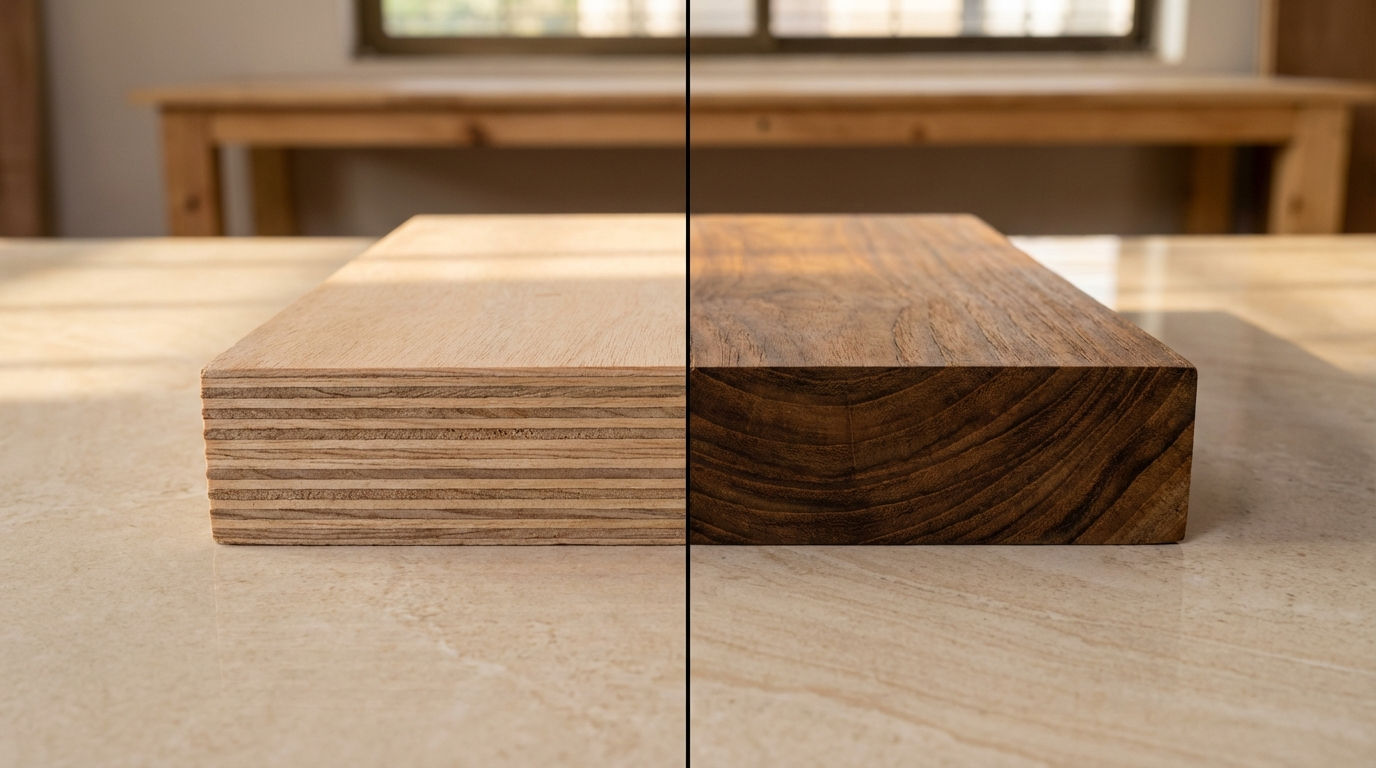
Understanding commercial vs waterproof plywood boils down to glue type, core strength, and real-world moisture handling—not just labels. Commercial plywood, often MR (moisture resistant) grade, uses urea-formaldehyde glue that holds in normal indoor humidity but softens with prolonged dampness. Waterproof variants step up: BWR (boiling water resistant) endures short boils and high humidity; BWP (boiling water proof or marine grade) survives extended submersion, ideal for harsh conditions.
Core construction differs too—commercial often has mixed hardwood with more voids, while waterproof uses denser hardwoods or poplar for better screw hold and less warping. Faces are similar (veneers 1-1.5mm), but waterproof boards calibrate tighter for uniform thickness post-lamination.
| Feature | Commercial Plywood (MR Grade) | Waterproof Plywood (BWR) | Waterproof Plywood (BWP/Marine) |
|---|---|---|---|
| Glue Type | Urea-Formaldehyde (interior use) | Phenolic Resin (improved moisture) | Phenolic Resin (premium waterproof) |
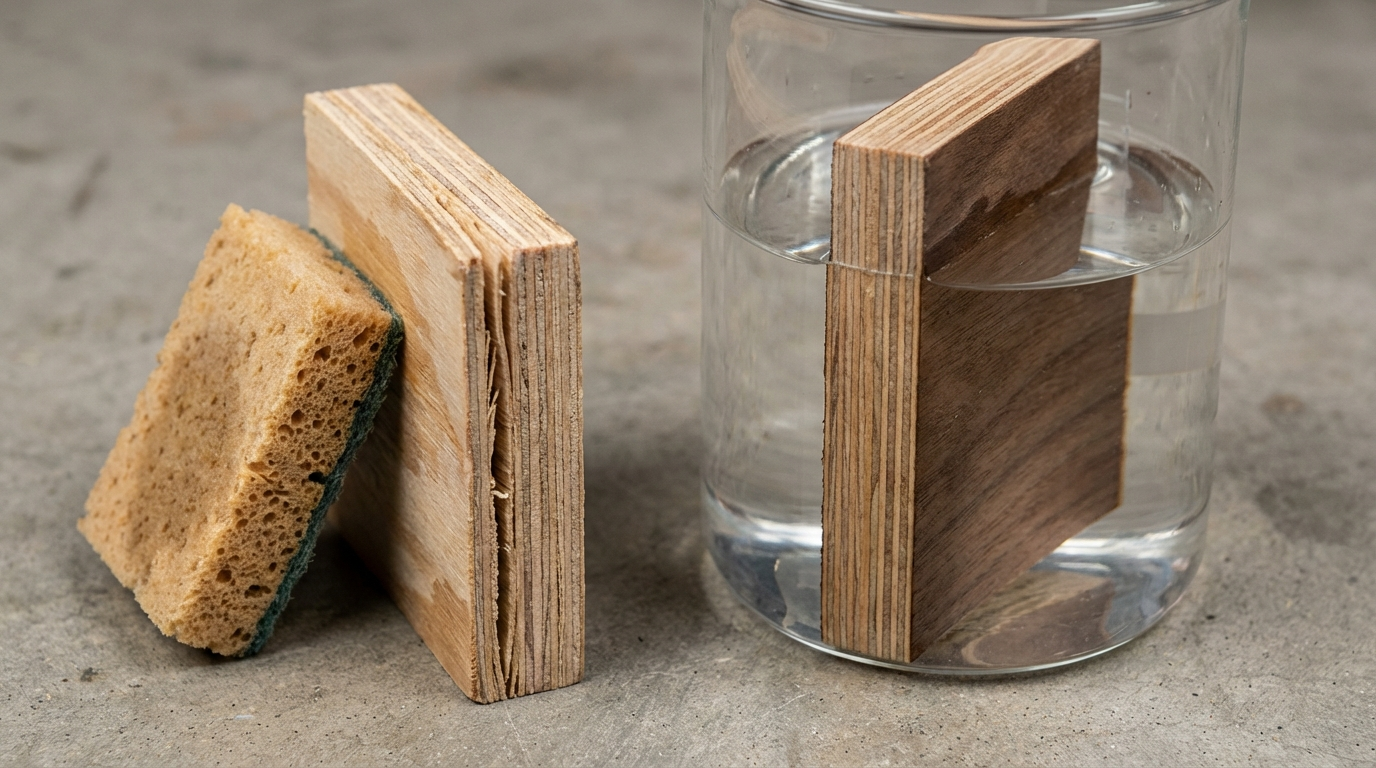
| Moisture Test | 3-hour boil: delaminates | 4-hour boil: minor effect | 72-hour boil: no delamination |
| Best Uses | Wardrobes, beds, TV units (dry) | Kitchens, laundry (indirect wet) | Bathrooms, outdoors, coastal |
| Screw Holding | Good in dry; weakens if damp | Better retention in humidity | Excellent even after wetting |
| Warping Risk | High in monsoons without sealing | Medium; needs edge care | Low; robust core |
This table highlights trade-offs: commercial saves money for 80% of home projects but fails in wet zones, where BWP prevents callbacks. In Indian contexts, BWR often bridges the gap cost-effectively for modular setups.
Price Range and Cost Drivers
Prices vary widely by city (Mumbai coastal premiums vs inland), thickness, core quality, and calibration. For 18mm thickness—a common wardrobe spec—commercial MR plywood typically ranges 70-120 rupees per square foot. BWR waterproof adds 20-40%, landing at 100-170/sqft, while BWP marine pushes 140-250/sqft or more for calibrated, void-free boards.
Thinner 6-12mm sheets drop 30-50% for paneling; 25mm+ structural jumps 20%. Cost drivers include: glue type (phenolic doubles resin cost), core (hardwood vs poplar/mixed), face veneer grade (AA vs A), calibration (sanded uniform adds 10-15%), and logistics (coastal import duties hike BWP). Brand premiums add 15-30%, but mid-tier unbranded often matches quality if checked.
Budget estimation example: A 10x6ft wardrobe (60sqft ply) in MR: 5,000-8,000 rupees material alone. Switch to BWR: 7,000-12,000. Factor 20% extra for edges/laminate. Contractors in humid Pune might quote full project 25% higher for waterproof to cover risks. Always get samples; city variations like Chennai monsoons demand higher-end.
Pro tip: Bulk buys negotiate 10-15% off, but inspect batches—cheapest often has voids inflating long-term costs via repairs.
What This Actually Means (Grade, Construction, and Use)
Commercial plywood refers to MR grade boards for general interiors, not meant for water contact. Built with 5-13 plies of softwood/hardwood, glued with urea resin that bonds well dry but hydrolyzes (breaks down) above 20% moisture. Thicknesses 3-25mm, faces plain sawn veneers for laminate bonding.
Waterproof plywood splits into BWR and BWP. BWR uses phenolic glue for kitchens/bathroom vanities—resists steam but not immersion. BWP, with tropical hardwood cores and fully waterproof glue, suits marine edges or flood-prone ground floors. Construction: more plies, tighter glue lines, often pre-pressed for flatness.
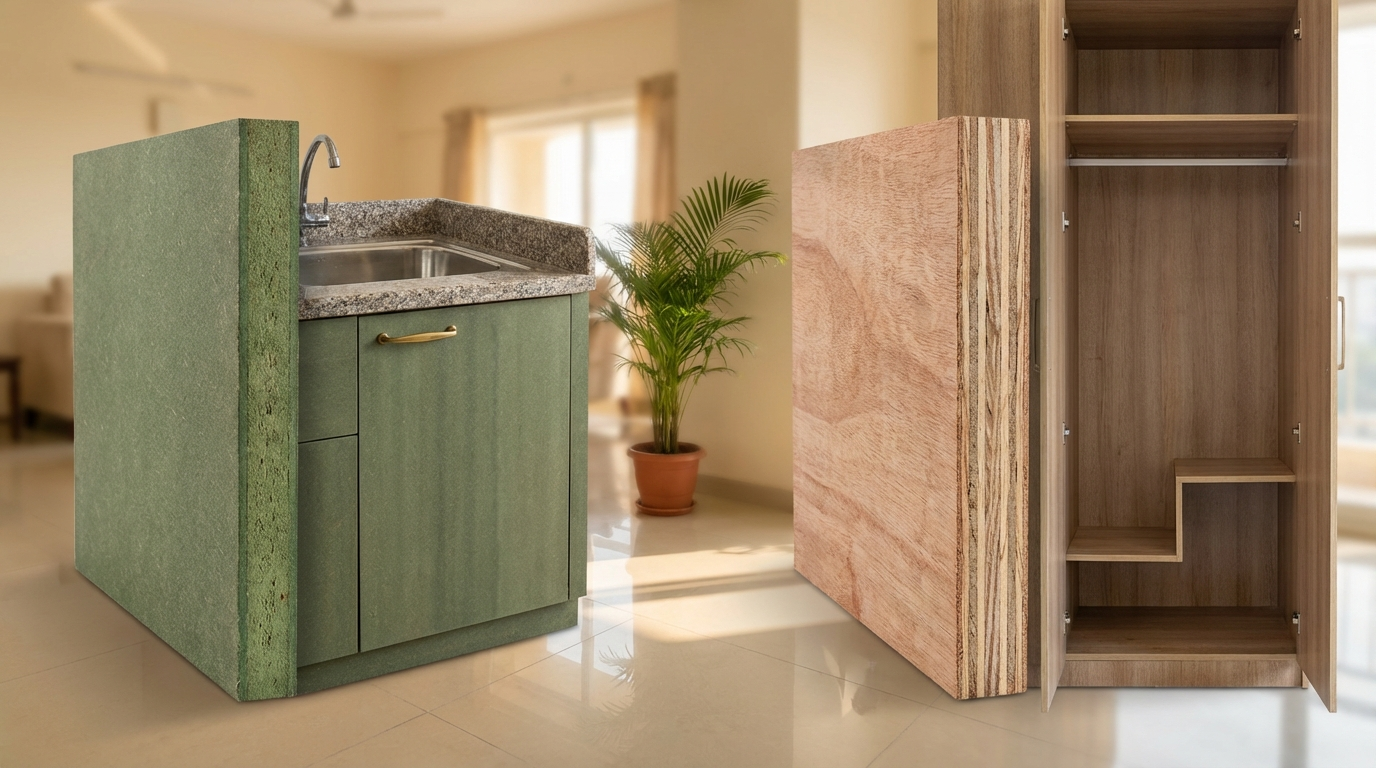
Use cases sharpen choices: Commercial shines in bedrooms (beds, lofts) or living rooms (TV cabinets) where humidity stays below 60%. Waterproof for modular kitchens (sink cabinets), wardrobes in attached bathrooms, or partitions in humid Mumbai flats. In coastal Goa, even walls need BWP to fight salt-laden air. Avoid commercial outdoors—UV and rain destroy faces fast.
Hybrid tip: Mix grades—MR for wardrobe carcass, BWP shelves near sinks. This optimizes without overkill.
India-Specific Reality Check (Moisture, Termites, and Workmanship)
India's monsoons (70-90% humidity), coastal salt spray, and poor ventilation amplify plywood failures. Commercial MR swells 10-15% in Kerala rains if unsealed, leading to laminate bubbling. Waterproof BWR/BWP limits to 2-5%, but only with proper install.
Termites ignore grades—both need anti-termite glue or sprays. Mixed-core commercial hides more infestation risks in dusty godowns. Workmanship pitfalls: carpenters in Tier-2 cities cut corners on edge sealing, exposing glue lines to AC drips or spills.
Storage mishaps common—stacked sheets on bare floors absorb ground moisture, warping even BWP. Acclimatize 48-72 hours in project humidity. Contractor practices vary: Delhi favors cheap MR for speed; Chennai insists BWP post-floods. Ventilation gaps in modular units trap steam, dooming commercial ply in Indian kitchens.
Coastal logic: Salt accelerates glue failure—BWP mandatory. Hot-dry Rajasthan suits MR fine. Always brief installers on zone-specific risks.
Common Buyer Mistakes and How to Avoid Them
Here are 10 frequent pitfalls in Indian plywood buys, with fixes:
- Mistake: Assuming "commercial" means any interior use. Avoid by mapping wet zones—upgrade to BWR for kitchens.
- Mistake: Ignoring edge sealing. Insist on 2-3mm PVC/ABF tape post-cut; water wicks in otherwise.
- Mistake: Buying thinnest/cheapest without load check. Test screw hold; use 18mm+ for shelves.
- Mistake: Skipping acclimatization. Leave sheets 3 days on-site; prevents expansion gaps.
- Mistake: Trusting vendor "waterproof" claims sans grade stamp. Demand BIS mark and boil test proof verbally.
- Mistake: Overlooking core voids. Knife-probe edges; reject gap-filled boards.
- Mistake: No termite treatment plan. Specify PF (phenol formaldehyde) glue + pre-site spray.
- Mistake: Budgeting only material, ignoring labor hikes. Waterproof needs skilled routing; quote inclusive.
- Mistake: Coastal use of MR. Default BWP; salt eats urea glue.
- Mistake: Post-monsoon storage errors. Elevate stacks, cover loosely for air flow.
These stem from rushed decisions—always site-inspect mid-project.
Quality Checks You Can Do Without Lab Tests
Empower yourself with field inspections before handing cash.
- Visual scan: Uniform color, no patches/cracks on faces. Check edges for glue squeeze-out (shiny lines mean good bonds).
- Tap test: Knock across surface—even "thud" indicates solid core; hollow "ping" signals voids.
- Knife/scratch test: Lightly score edge—clean cut, no crumbling. Probe core gently for density.
- Weight check: Heavier boards often denser; compare same-size stacks.
- Calibration feel: Stack edges align flat; no "steps" means machine-sanded.
- Moisture meter (borrow one): Under 12% ideal; above 15% reject.
- Questions to vendors: Glue type? Core wood? Boil test duration? Batch date? Reject vague answers.
- Warning signs: Musty smell (prior damp), warped corners, excessive sand dust (poor pressing).
For waterproof, ask for a small offcut to simmer-test at home. These catch 80% fakes saving rework costs.
Workmanship and Installation Tips
Even premium plywood fails without solid techniques tailored to Indian sites.
Cutting and edge sealing: Use CNC or table saw for clean lines; seal exposed edges immediately with epoxy or silicone—monsoon delays delaminate fast. PVC lips for cabinets.
Fastening/screw holding: Pre-drill 3-4mm holes; commercial needs shorter screws (40mm) vs BWP (50mm). Test pull-out on scrap—aim 50kg hold per point.
Hinges/handles zones: Reinforce with 18mm+ doublers in particleboard for soft hinges; BWP holds direct. Space 35-40cm apart for even load.
Storage and acclimatization: Vertical racks, 150mm off floor, loose polythene cover. Match room humidity 48hrs pre-cut.
Installer notes: Polish after full cure (7 days); ventilate kitchens to cut steam. In humid Bangalore, extra silicone gaps prevent swelling.
Decision Framework for Your Project
Use this table to pick grades based on site conditions and use—scalable for homeowners to contractors.
| Project Type | Humidity Level | Water Exposure | Recommended Grade | Thickness Guide | Extra Tips |
|---|---|---|---|---|---|
| Wardrobe (enclosed) | Low-Medium | None | Commercial MR | 18mm carcass, 12mm doors | Seal internals |
| Modular Kitchen | High | Indirect (sinks) | BWR Waterproof | 18-25mm | Stainless hardware |
| Bathroom Vanity | Very High | Direct splashes | BWP Marine | 18mm+ | Epoxy seal all |
| TV Unit/Partition | Medium | Low | MR or BWR | 12-18mm | Acclimatize well |
| Coastal Bed/Base | High | Humidity/Salt | BWP | 18-25mm | Termite spray |
Adjust for budget: Drop one grade if ventilation excellent. Revisit post-monsoon.
FAQs
Can I use commercial plywood in a kitchen? Typically no for sink-adjacent areas, as steam and spills degrade MR glue quickly in Indian humidity. It works for upper cabinets far from stoves if well-sealed and ventilated, but BWR reduces warping risks by 50-70%, avoiding costly replacements after a year.
What's the main difference in glue? Commercial uses urea glue for dry bonds, breaking in moisture; waterproof employs phenolic resins resisting hydrolysis. This makes BWP viable for boiling tests, crucial in monsoon-prone homes where urea fails edge-to-edge.
Is BWP worth the extra cost for wardrobes? Rarely—overkill for dry closets, adding 40% expense without proportional gains. Reserve for bathrooms or coasts; MR with good sealing lasts 10+ years indoors.
How to spot fake waterproof plywood? Check for BIS stamps, even tap tone, and vendor boil claims. Real BWP feels denser, cuts cleanly; fakes crumble at edges or delaminate in home tests.
Does thickness matter more than grade? Both critical—18mm BWR outperforms 12mm BWP in sag resistance for shelves. Match to load: heavy Indian storage needs thicker cores regardless.
Termite resistance: grade or treatment? Treatment first—pre-glue chemicals essential for all. Waterproof glues slow spread better, but inspect mixed cores in commercial for entry points.
Best for coastal apartments? BWP mandatory—salt air corrodes MR fast. Pair with ventilation fans and elevated storage to extend life 2-3x.
Can I paint commercial plywood outdoors? Poor idea—even sealed, expansion cracks paint. Use BWP with marine varnish for verandas.
How long does each last in kitchens? MR: 3-5 years with care; BWR: 8-12; BWP: 15+. Depends on cleaning habits and sealing diligence.
Calibration: why care? Ensures flat lamination post-humidity shifts; uncalibrated warps cabinets. Feel edges align before buying.
Mixing grades in one project? Smart—MR carcass saves cash, BWP wet zones. Ensure matching thickness for joints.
Disclaimer: This content is provided for general informational purposes based on industry practices and publicly available information. Product specifications, standards, prices, and availability may vary by manufacturer, region, and time. Readers should independently verify details with manufacturers, dealers, or qualified professionals before making purchase or construction decisions.Want Plywood Suggestions?
Share a few details and a Sainik 710 specialist will suggest suitable brands and connect you to responsive dealers.