Best Plywood for Wardrobes: Calibrated vs Regular + Thickness for Shelves, Shutters & Back Panel
Wardrobe plywood guide with ideal thickness for shelves and shutters, when calibrated plywood matters, and moisture/odour tips for long life.
Quick Decision Summary
Calibrated BWP or BWR plywood (18mm for shelves/shutters, 6-9mm for back panels) outperforms regular for wardrobes in humid Indian homes.
If you're in a hurry: Opt for calibrated BWP grade plywood across wardrobe components for uniform thickness, better screw holding, and resistance to warping in monsoon-prone areas. Use 18mm for load-bearing shelves and shutters, 12mm for side panels, and thinner 6mm for backs. Regular plywood saves upfront cost but risks delamination and sagging over time, especially without proper edge sealing. Prioritize calibration for CNC/modular fits and BWP glue for coastal or high-moisture zones.
- Choose calibrated BWP if: High humidity, heavy storage, modular design, or long-term durability needed.
- Choose regular MR/BWR if: Dry interiors, budget constraints, light use, and skilled carpenter workmanship.
- Avoid regular entirely if: Coastal city, poor ventilation, or no acclimatization time on site.
What This Actually Means (Grade, Construction, and Use)
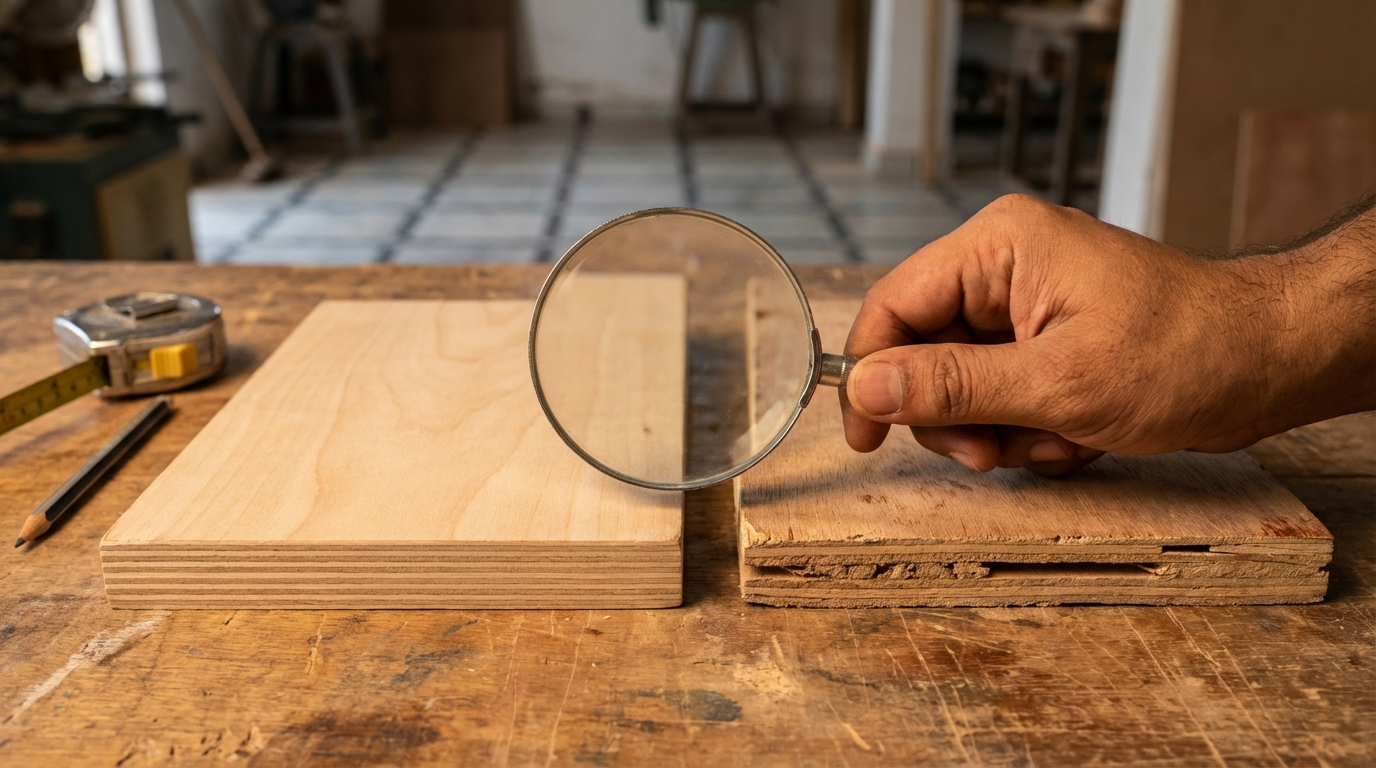
In wardrobe context, "plywood" refers to engineered panels made by gluing thin wood veneers (plies) under pressure. Grades like MR (moisture-resistant), BWR (boiling water-resistant), and BWP (boiling water-proof/marine) define glue strength against India's variable humidity. Calibrated plywood has sanded surfaces to precise thickness tolerance (±0.3mm), ideal for flush fittings in wardrobes without shimming. Regular plywood varies more (±0.5-1mm), suiting basic carpentry but causing alignment issues in factory-like modular setups.
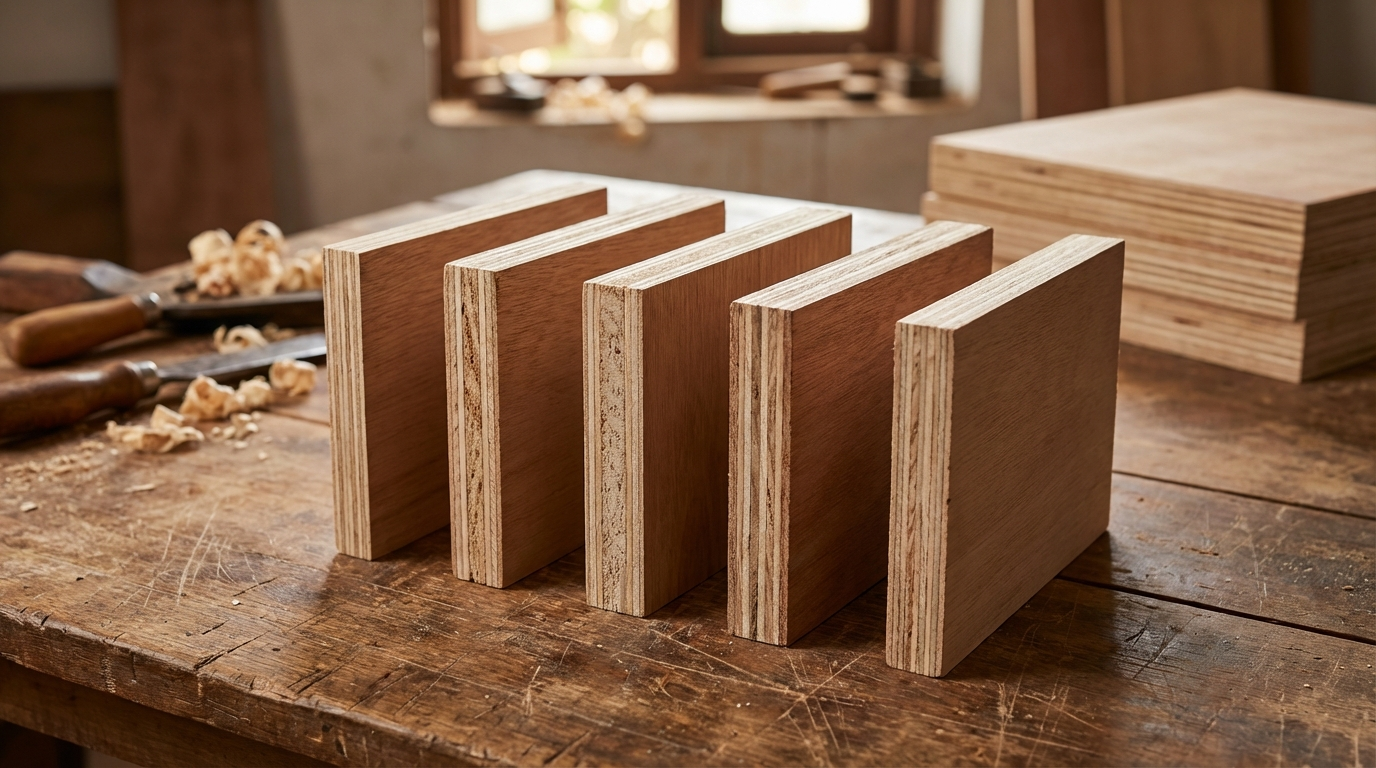
Construction matters: Hardwood core (poplar/gurjan) offers superior screw holding for hinges; mixed core (eucalyptus/softwood) cuts costs but gaps under load. For wardrobes, use cases split by part—shelves bear 20-50kg uniform load, shutters flex daily, backs prevent dust but rarely load-bear. Thickness dictates: Thicker resists sag (e.g., 18mm shelves span 900mm without middle support), calibrated ensures even laminate adhesion.
Real-world use in Indian homes: Wardrobes face 60-90% monsoon RH, termite risks in subfloors, and odour from poor glue. BWP handles boiling tests (72hrs submersion), suiting steamed bathrooms-adjacent closets; MR delaminates faster in unventilated spaces. Calibrated shines in urban apartments with CNC routing for sliders, while regular fits rural DIY with manual saws.
Core Types Breakdown
- Hardwood core: Dense, termite-resistant, premium screw pull-out strength (200-300N).
- Mixed core: Lighter, cheaper, but voids cause hinge failure after 2-3 years.
India-Specific Reality Check (Moisture, Termites, and Workmanship)
India's climate demands plywood that withstands 80-95% RH monsoons, 40°C summers, and coastal salt air. Coastal Mumbai/Chennai sees plywood swell 5-10% if unsealed; inland Delhi/Pune risks dry cracks. Termites thrive in humid subfloors—untreated ply lasts 3-5 years vs. treated 15+. Workmen often skip acclimatization (7-day site adjustment), causing post-install warp.
Common practices: Carpenters in Tier-2 cities use MR for speed, ignoring BWP's edge in wet zones. Modular firms push calibrated for precision, but on-site hacks with regular lead to gaps. Storage tip: Stack horizontally under cover, elevate from ground; exposure causes 2-3% thickness gain overnight. Odour from urea-formaldehyde glue fades in 1-2 months if ventilated, but lingers in sealed wardrobes.
Failure modes: Edge delamination from rain splashback, core voids cracking under shelf weight, termite tunnels weakening shutters. Mitigation: BWP + termite oil treatment + proper ventilation gaps. Contractor reality: 70% jobs use 18mm uniform, but savvy owners specify calibrated for 20% less rework.
Zone-Wise Risks
| Zone | Key Risk | Recommended Grade |
|---|---|---|
| Coastal | Swelling/Salt | BWP Calibrated |
| Inland Humid | Monsoon Warp | BWR Calibrated |
| Dry Interior | Cracks | BWR Regular |
Calibrated vs Regular: Comparison That Actually Helps
Calibrated plywood undergoes precision sanding for consistent thickness and flatness, crucial for wardrobe uniformity. Regular skips this, leading to variable surfaces that complicate laminate pasting and door alignment. In India, calibrated costs 15-25% more but reduces installation time by 20-30% for modular wardrobes.
Key differences emerge in use: Calibrated holds laminates without bubbles; regular needs filler. Screw holding: Calibrated's density uniformity gives 15-20% better pull-out resistance. Under humidity, calibrated warps <1mm per meter; regular up to 3mm.
| Factor | Calibrated | Regular | When It Matters |
|---|---|---|---|
| Thickness Tolerance | ±0.3mm | ±0.5-1mm | CNC/Modular Fits |
| Screw Holding | High (Uniform Core) | Variable (Voids) | Hinges/Shelves |
| Warping Resistance | Excellent | Fair | Humid Climates |
| Cost Premium | 15-25% | Base | Budget vs Longevity |
| Best For | Urban Modular | Rural Basic | Design Type |
Choose calibrated for shutters/shelves in high-end homes; regular for backs or temporary setups.
How to Choose in 5 Steps
- Assess Environment: BWP for coastal/humid; BWR inland. Skip MR unless ultra-dry.
- Match Thickness to Load: 18mm shelves (900mm span), 18mm shutters, 6-9mm backs.
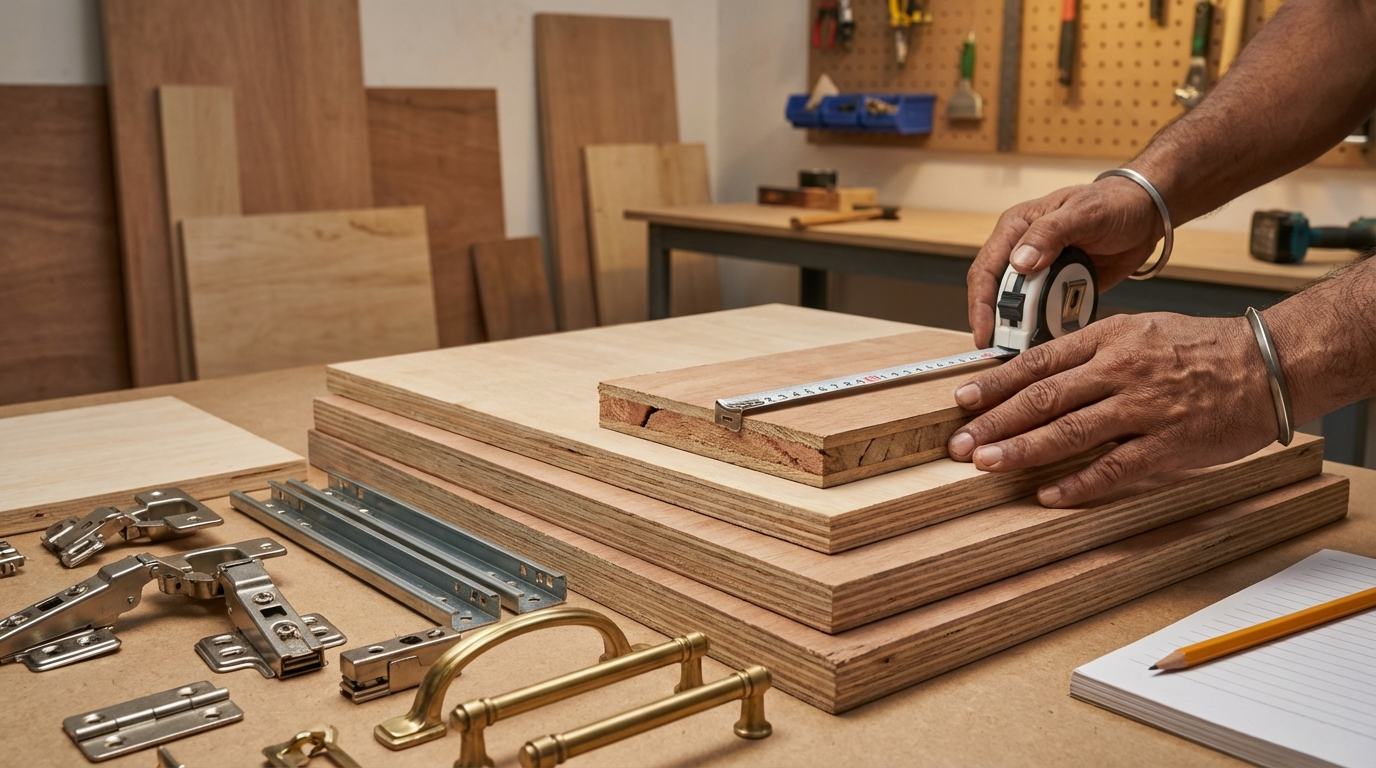
- Insist on Calibration: Measure 5 spots per sheet (<0.5mm variance); finger-test flatness.
- Check Core & Glue: Knock for solid thud (no hollows); smell for low VOC.
- Verify Treatment: Ask for termite proofing cert; edge-seal sample in water overnight.
Each step filters 80% subpar stock. For wardrobes over 2m height, prioritize calibrated hardwood core.
Ideal Thickness Guide for Wardrobe Components
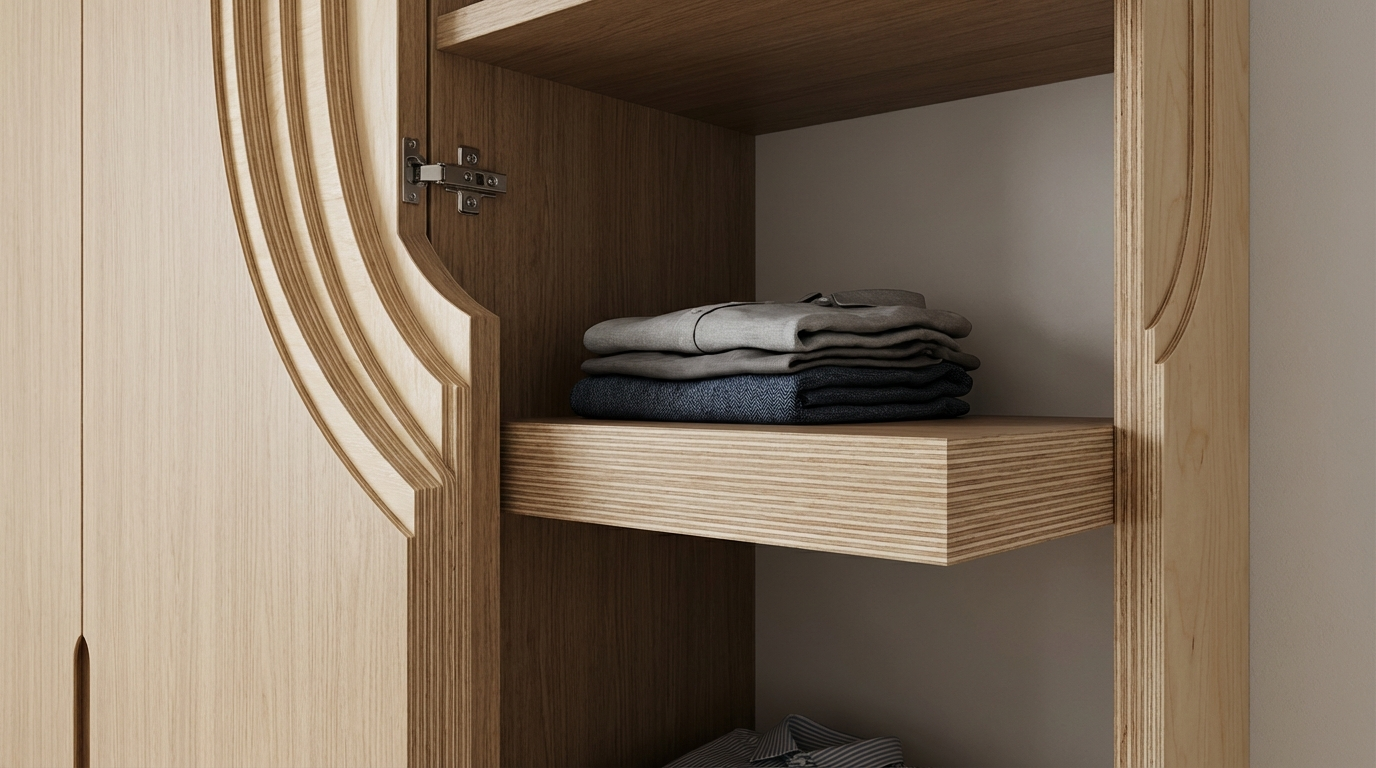
Shelves: 18mm standard for 50kg load over 900-1200mm span; 16mm if middle support. Prevents 10-15mm sag after 2 years. Shutters: 18mm for sliders/pivot (flex resistance); 16mm hinged if lightweight. Back panels: 6-9mm—thinner saves weight/cost, no load. Sides/partitions: 12-18mm for stability.
Logic: Thicker = better deflection resistance (span/28 rule for 1mm sag). Indian wardrobes average 6x4ft; overload from linen/pots demands 18mm. Calibrated versions fit tighter, reducing vibration noise.
Span vs Thickness Table
| Component | Recommended Thickness | Max Span (No Sag) | Grade Tip |
|---|---|---|---|
| Shelves | 18mm | 1000mm | Calibrated BWP |
| Shutters | 18mm | N/A (Vertical) | Hardwood Core |
| Back Panel | 6-9mm | Full Height | Regular BWR |
| Sides | 12mm | 2000mm Height | Calibrated |
Overload Scenarios
Heavy storage (books)? Upsize shelves to 21mm. Kids' wardrobe? 16mm shutters suffice.
Price Range and Cost Drivers
Typical ranges: 18mm BWP calibrated ₹120-180/sqft; regular BWR ₹90-130/sqft. 12mm ₹90-140; 6mm ₹60-90. Varies 20-30% by city—Mumbai premium, Tier-3 lower. Drivers: Glue (BWP +20%), calibration (+15%), core (hardwood +25%), thickness (+10%/3mm), batch/region logistics.
Wardrobe budget: 8x4ft unit needs 40-50sqft ply; ₹6,000-12,000 material alone. Add 30% for laminate. Estimate: Multiply sqft x thickness factor (18mm=1.2x base). Confirm locally—monsoon hikes transport costs.
Trade-off: Regular saves ₹2,000/unit but risks ₹5,000 rework in 2 years.
Quality Checks You Can Do Without Lab Tests
Visual: Uniform colour, no knots/cracks on face. Edges straight, no chip-outs. Knock test: Solid across surface (hollow = voids). Moisture: Press edge—dry crumbles, wet swells. Screw test: Drive 4" screw, pull—resists 20kg easy.
Questions: Core wood type? Glue grade proof? Calibration tolerance? Termite treatment method? Batch date? Warning signs: Musty smell (old stock), wavy surface (poor press), sanded unevenly.
Field hack: Soak edge 30min—good ply unchanged; bad puffs up. For wardrobes, test shelf sample under 20kg overnight.
Workmanship & Installation Tips
Cutting: CNC for calibrated (clean edges); table saw for regular (sand burrs). Edge sealing: 2-coat PU/sealer within 2hrs cut—prevents 90% moisture ingress. Fastening: 45mm screws for 18mm ply, pre-drill to avoid splits. Hinges: Reinforce with 12mm blocks in soft cores; zones 150mm from top/bottom.
Acclimatize 72hrs site-wrapped. Modular: Shim variances <1mm. Common fail: Exposed cuts in humid rooms delaminate edges first. Polish/laminate post-assembly for odour trap.
Fastener Pull-Out Guide
- 18mm: 250N average.
- Reinforce shutters: Toggle bolts for heavy doors.
Common Buyer Mistakes and How to Avoid Them
- Uniform Thickness Everywhere: Avoid by using 6mm backs—saves 20% cost/weight.
- Ignoring Calibration: Leads to wobbly shutters; specify ±0.3mm.
- MR in Humid Areas: Swells fast—switch to BWP.
- No Edge Sealing: Delams in 6 months; seal all cuts Day 1.
- Thin Shelves for Span: Sags under clothes; 18mm min 900mm.
- Mixed Core Unchecked: Hinge fails; knock-test insist hardwood.
- Skipping Acclimatization: Warps post-install; 7 days mandatory.
- Overlooking Termites: Tunnels ruin; demand treatment proof.
- Budget Blind: Cheap regular callbacks; factor 20% premium for calibrated.
Decision Framework: Wardrobe Plywood Selector
| Your Scenario | Grade | Calibration | Thickness (Shelves/Shutters/Back) | Cost Level |
|---|---|---|---|---|
| Coastal Heavy Use | BWP | Yes | 18/18/9mm | High |
| Inland Modular | BWR | Yes | 18/18/6mm | Medium |
| Dry Basic | BWR | No | 16/16/6mm | Low |
| Budget Kids' Wardrobe | MR | No | 16/16/6mm | Lowest |
Use this for quick specs; adjust for custom spans.
FAQs
Is calibrated plywood always necessary for wardrobes?
Calibrated plywood proves essential in modern wardrobes with laminates or sliders, ensuring flush alignment and preventing filler needs that crack over time. In humid Indian conditions, its uniform thickness resists warping better than regular variants. However, for simple hinged designs by local carpenters in dry interiors, regular suffices if properly sanded on-site, though expect 10-15% more finishing labour. Prioritise it for spans over 800mm or CNC work to avoid costly adjustments.
What thickness for wardrobe shelves to avoid sagging?
For typical 900-1200mm wide shelves holding 30-50kg of clothes or linens, 18mm calibrated BWP or BWR grade works best, limiting deflection to under 2mm even after years. Thinner 16mm risks visible sag in humid monsoons without centre supports, common in Indian apartments. Test by loading a sample; factor wardrobe height—taller units need stiffer sides too. Always pair with hardwood core for edge support.
Regular vs calibrated: worth the extra cost?
The 15-25% premium for calibrated pays off in reduced installation time and longevity, especially for modular wardrobes where variances cause misalignment and rework fees. Regular plywood fits budget jobs with manual tools but falters in precision finishes or high-moisture zones, leading to laminate bubbles or door rubs. In coastal cities, calibrated's stability justifies it; inland dry homes can skip for savings if workmanship compensates.
Best plywood grade for Indian wardrobes?
BWP grade stands out for boiling water-proof glue, handling monsoons and steam from attached bathrooms without delamination, ideal for 70% of urban homes. BWR serves well inland with good balance; MR limits to ultra-dry closets. Match to location—coastal demands BWP calibrated, while Tier-2 dry areas manage BWR regular. Termite treatment adds must-have layer everywhere.
How to check plywood quality on-site?
Inspect by tapping for uniform solid sound, checking edges for straightness and no voids, and measuring thickness at four corners for consistency under 0.5mm variance. Wet a small edge piece—if it doesn't swell or soften in 30 minutes, moisture resistance holds. Smell for mild odour only; strong chemical hints poor glue. Demand glue grade verbal confirmation and core wood details from supplier.
Does wardrobe back panel need thick plywood?
Thin 6-9mm BWR suffices for backs as they face no load, just dust barrier and rigidity. Thicker adds unnecessary weight and cost—use savings for premium shelves. Ensure groove-fit sealing to block insects; calibrated optional here unless full modular precision needed. In termite zones, treat even thin panels.
Impact of monsoon on wardrobe plywood?
Monsoons spike humidity to 90%, swelling unsealed regular plywood 3-5% and causing warp or shutter binds. Calibrated BWP minimises this with tight tolerances and superior glue; seal all edges twice and ventilate interiors. Post-monsoon, check for mould—poor cases need full replacement. Acclimatise sheets 7 days pre-cut.
Hardwood core vs mixed for wardrobes?
Hardwood core excels in screw holding for repeated hinge use and shelf loads, resisting pull-outs 20-30% better in daily open-close cycles. Mixed cores save cost but hide voids that fail under torque, common in budget wardrobes. Opt hardwood for shutters/shelves; mixed ok for backs if inspected. India's variable carpenter skill amplifies core importance.
Installation tips for long-lasting wardrobes?
Acclimatise plywood 5-7 days wrapped on-site, cut with sharp blades, seal edges immediately with PU, and use 45-50mm screws pre-drilled. Reinforce hinge zones with blocks if core soft; level base perfectly to avoid stress cracks. Laminate post-assembly traps moisture—ventilate 48hrs. These steps extend life 2x in humid India.
Can MDF replace plywood in wardrobes?
MDF suits low-cost shutters with good screw hold initially but swells catastrophically in humidity without HDHMR upgrade, unsuitable for shelves or exposed edges. Plywood's veneered strength handles India's climate better for load-bearers. Use MDF only dry interiors, fully sealed; plywood wins for durability trade-off.
Wrapping Up: Build Smart, Last Long
Selecting calibrated BWP 18mm for key wardrobe parts aligns Indian realities—humidity battles, termite threats, and workmanship variables—for 10-15 year reliability. Weigh trade-offs honestly: Calibration boosts precision at cost, thickness adds strength with weight. Field checks and steps ensure value; skip shortcuts for regret-free storage.
Disclaimer: This content is provided for general informational purposes based on industry practices and publicly available information. Product specifications, standards, prices, and availability may vary by manufacturer, region, and time. Readers should independently verify details with manufacturers, dealers, or qualified professionals before making purchase or construction decisions.Want Plywood Suggestions?
Share a few details and a Sainik 710 specialist will suggest suitable brands and connect you to responsive dealers.