Best Plywood for Doors: Thickness, Core Type, Screw Holding & Moisture Safety (Room-wise Guide)
Pick the best plywood for doors with thickness recommendations, core type checklist, screw-holding tips, and room-wise guidance for humid areas.
Quick Decision Summary
For door plywood in Indian homes, opt for 18-19mm thick BWR grade with calibrated hardwood core for optimal screw holding and moisture resistance.
If you're in a hurry, prioritize BWR or BWP grades in 18mm thickness with full hardwood core over mixed core options. This setup handles monsoons, daily wear, and hinge loads without warping or screw pull-outs, especially in humid coastal cities like Mumbai or Chennai. Calibrated surfaces ensure smooth laminate pasting and precise door sizing. Avoid MR grades for any exposed door edges and skip under-16mm sheets for main doors—they compromise stability. Always acclimatize sheets on-site for 48-72 hours before cutting.
- Choose this if... building interior doors in kitchens/bathrooms (BWR/BWP, 18mm hardwood), need strong screw grip for heavy hinges, or live in high-humidity zones.
- Avoid this if... budget is ultra-tight for dry bedrooms (MR ok but upgrade core), opting for pre-made flush doors (plywood specs less critical), or ignoring calibration (leads to uneven finishes).
What This Actually Means (Grade, Construction, and Use)
Door plywood refers to engineered wood sheets specifically selected or built for flush doors, panel doors, or framed door constructions. Unlike wardrobe or furniture ply, door plywood must endure repeated opening/closing, hardware loads, and edge exposures. Grades like MR (moisture resistant), BWR (boiling water resistant), and BWP (boiling water proof/marine) define glue and resin strength against humidity. Construction involves 9-13 plies layered with face veneers (0.6-1.2mm thick) and a core of hardwood strips or mixed woods.
Thickness typically spans 16-25mm; 18mm suits most internal doors for balance between weight and rigidity. Calibrated plywood has sanded, uniform thickness (±0.3mm tolerance) ideal for CNC cutting and flush door assembly. Screw holding measures pull-out resistance—hardwood core excels here (200-300N per screw) vs mixed core (under 150N). Use cases include: solid core flush doors (veneer/laminate faced), louvered vents, or wardrobe shutters acting as doors. In India, doors often pair plywood with solid wood frames for added strength, but poor core voids cause failures like sagging over time.
Key is matching construction to use: high-traffic entrance doors demand BWP marine ply, while bedroom doors tolerate BWR. Face quality (AA/BB grade) affects finishing—smoother faces reduce polishing labor. Always check for cross-band plies (thin sheets between faces and core) as they prevent delamination under humidity swings common in Indian climates.
India-Specific Reality Check (Moisture, Termites, and Workmanship)
India's diverse climates amplify plywood vulnerabilities: coastal monsoons (80-95% RH) swell MR grades, inland AC rooms dry out mixed cores causing cracks, and termite-prone suburbs like Delhi NCR demand pre-treated sheets. Poor site storage—stacked outdoors or near wet concrete—leads to 10-15% moisture pickup, warping doors before installation. Contractor shortcuts like skipping edge sealing expose cores to steam in kitchens, resulting in bubbling laminates within 6-12 months.
Workmanship varies regionally: Mumbai carpenters favor calibrated hardwood for precise mitre joints, while rural areas use uncalibrated mixed core to cut costs, risking hinge failures. Termite risk peaks in subsoil contact zones; opt for IS-marked anti-termite treated ply. Ventilation matters—poorly aired bathrooms accelerate core rot. Field reality: 30-40% of door complaints stem from mismatched grades, like MR in wet zones. Acclimatize plywood 3-5 days in install room to match ambient humidity (40-60% ideal). Local practices like water-proofing doors post-install fail if core is subpar.
Trade tip: In humid Kolkata or Kerala, BWP is non-negotiable; drier Bangalore allows BWR savings. Always verify vendor batch moisture (under 12%) via meter if possible.
How to Choose in 5 Steps
- Assess room conditions: Map humidity (bathroom/kitchen: high; bedroom: low), traffic (entrance: heavy), and exposure (edge visible?). High moisture mandates BWR/BWP.
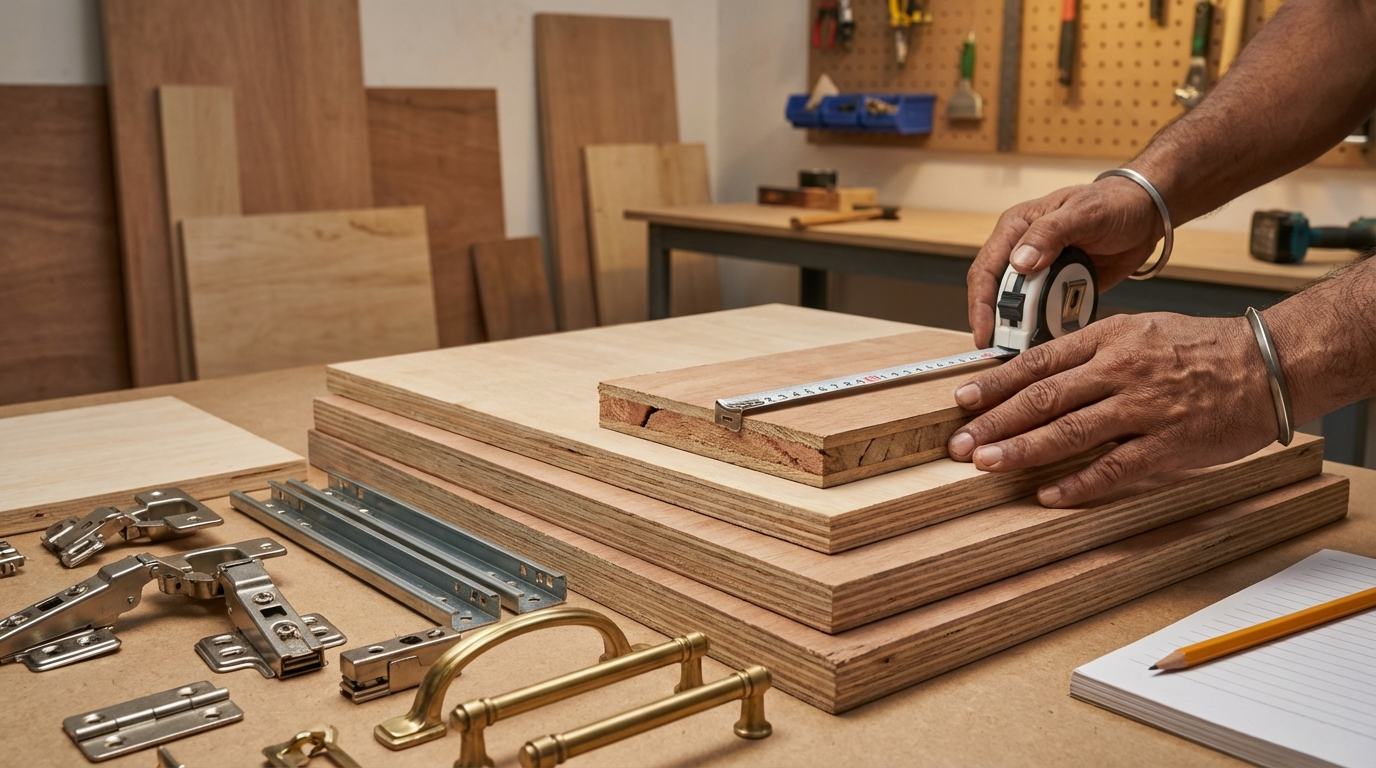
- Pick thickness by door size: 16mm for shutters under 700mm height; 18-19mm for standard 2100x900mm doors; 25mm for heavy external panels. Factor frame weight.
- Select core type: Hardwood full core for screw-intensive doors (hinges, handles); mixed ok for light bedroom use if calibrated.
- Confirm grade and calibration: BWR minimum, calibrated for uniform edges. Check face veneer consistency.
- Validate with checks: Knock test for voids, screw test on sample, acclimatize plan. Budget 10-15% extra for sealing/finishing.
This framework cuts guesswork—homeowners skip to pro installs, carpenters align specs upfront. For architects, specify "18mm BWR calibrated hardwood core, IS 3039 compliant" in drawings. Contractors: stock room-wise variants to avoid swaps.
Best Thickness Recommendations for Doors
Thickness dictates door rigidity, weight, and transport ease. 18mm emerges as sweet spot for 90% Indian internal doors (2100mm height), providing warp resistance without sagging under hardware. Under 16mm suits lightweight wardrobe shutters but flexes in wind drafts. 19-21mm for kitchen doors handles steam loads; 25mm for main entrance where security trumps lightness.
Room-wise Thickness Guide
- Bedroom/Balcony: 16-18mm—light use, easy handling.
- Kitchen/Utility: 18-19mm—resists oil splashes, moderate weight.
- Bathroom/Wash: 19mm BWP—thick to counter steam swelling.
- Entrance/External: 25mm—impact strength, pair with solid frame.
Thinner risks bowing (e.g., 12mm in humid zones delaminates edges); thicker adds 20-30% cost/logistics pain. Calibrated versions prevent thickness variation causing uneven gaps. Homeowners: match to frame depth. Installers: cut allowances for swelling (1-2mm per side).
Core Types: Hardwood vs Mixed – Which for Doors?
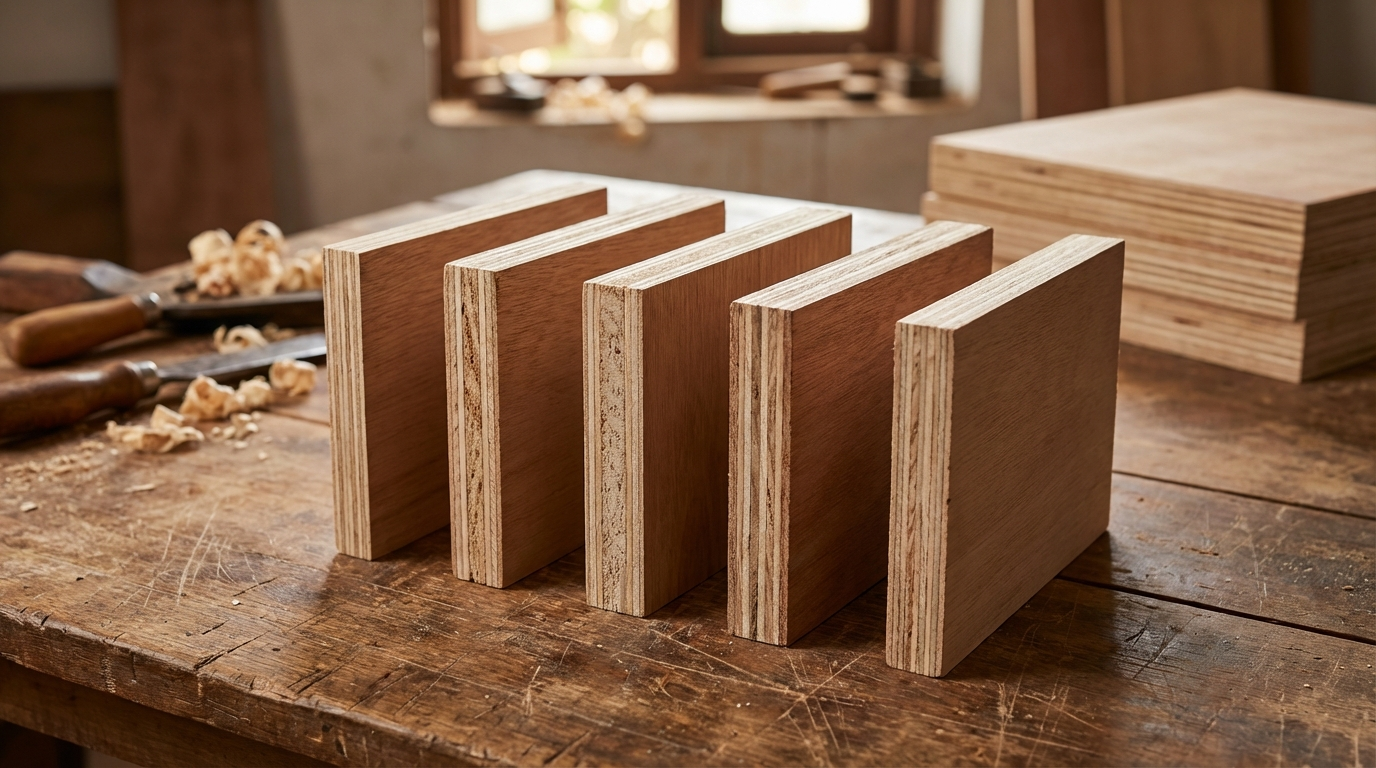
Core forms 80% of plywood volume, dictating screw holding and stability. Hardwood core (gurjan, sawn timber strips) offers dense, uniform strength—ideal for doors with 4-6 hinges pulling 100-200kg cycles. Mixed core (poplar/shorea mix) cheaper but gappier, suits non-load panels.
| Aspect | Hardwood Core | Mixed Core |
|---|---|---|
| Screw Holding (N) | 250-350 | 120-200 |
| Moisture Stability | High (less voids) | Medium (gaps swell) |
| Cost Premium | 20-40% | Base |
| Best For | Hinges/handles zones | Light shutters |
Door-specific: Hardwood prevents pull-outs in high-use areas; mixed fails in 1-2 years under heavy doors. Check by tapping—hollow sounds signal voids. Coastal use favors hardwood for density.
Screw Holding Strength: Why It Matters for Doors
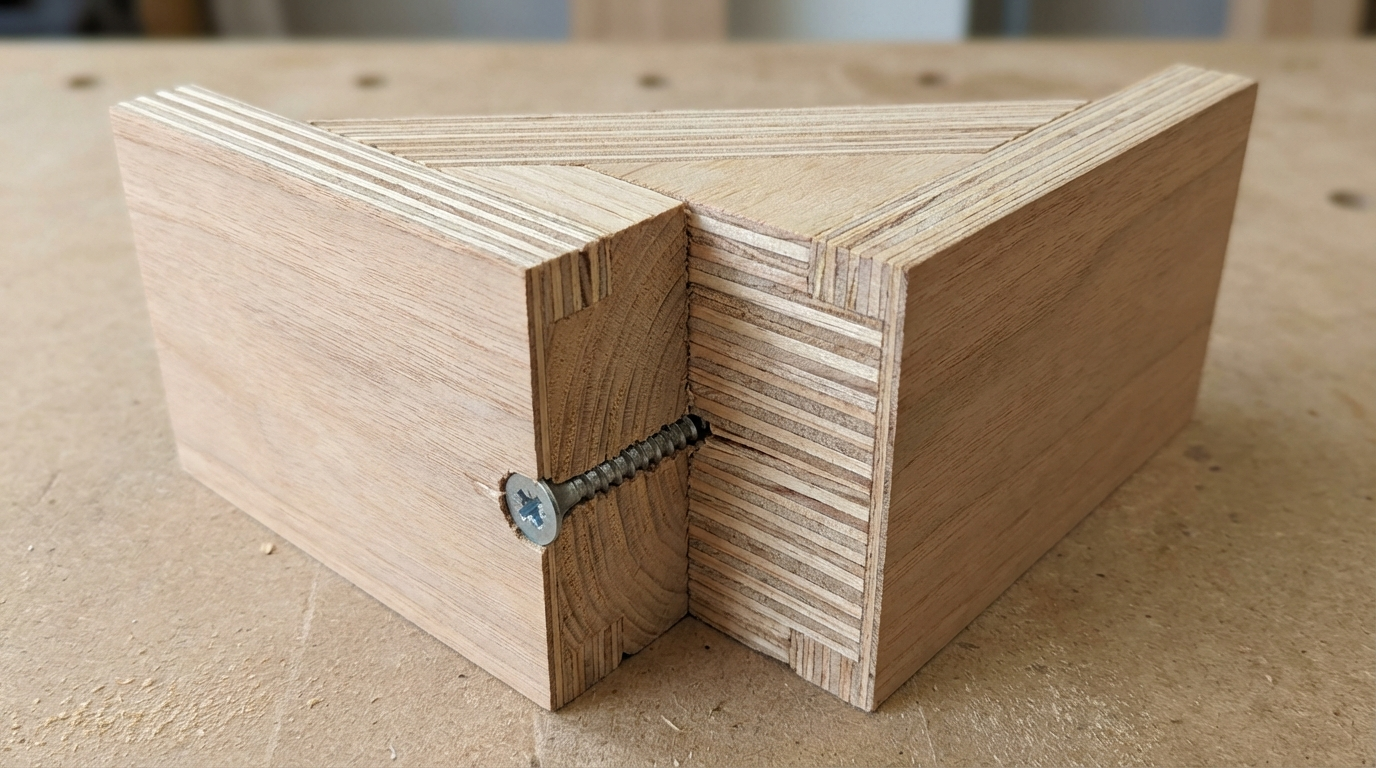
Doors bear dynamic loads from hinges (tower bolts, handles)—weak holding causes loose fittings, misalignment. Hardwood cores grip 2-3x better; test by screwing 50mm particle board screw, pull at 45° (should hold 20-30kg). Calibrated ply distributes load evenly.
Failure Modes
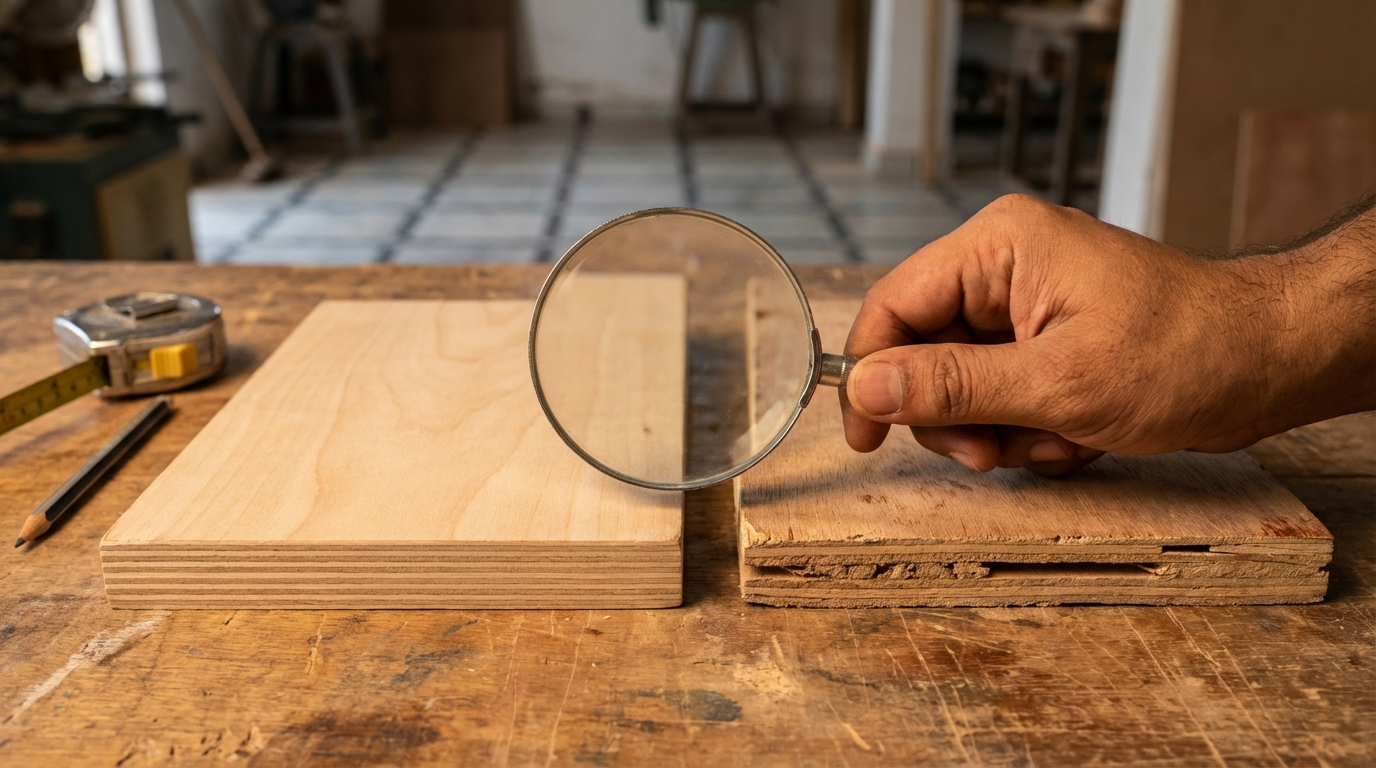
Common: Core voids crumble around screws; uncalibrated faces splinter. Reinforce with wooden blocks in hinge zones for mixed cores. India tip: Use SS screws in humid areas to avoid rust weakening grip.
Architects spec 300N min; carpenters pre-drill 3mm pilots. OEMs embed metal inserts for ultra-heavy doors.
Moisture Safety: MR, BWR, BWP Grades Explained
MR suits dry zones (8-14% glue bond); BWR (PF resin) survives 72hr boils; BWP/marine (phenolic) for immersion. Doors expose edges—seal meticulously. Monsoon test: BWR swells <8%; MR 15%+.
Room logic: Bedrooms MR ok; kitchens BWR; bathrooms BWP. Untreated edges delaminate in 6 months. Acclimatization equalizes to site RH.
Room-wise Plywood Guide for Doors
Bedrooms
Low humidity, light traffic: 18mm BWR hardwood. Laminate finish hides minor imperfections.
Kitchens
Steam/oil: 19mm BWR calibrated, edge-seal twice. Avoid veneer—use laminates.
Bathrooms
High RH: 19mm BWP marine, full hardwood. GRP coat edges.
Entrances
Weather-exposed: 25mm BWP, solid frame integration.
Variations: AC rooms drop to MR; coastal up to marine always.
Decision Framework Table
| Room Type | Thickness | Core | Grade | Key Check |
|---|---|---|---|---|
| Bedroom | 18mm | Hardwood/Mixed | BWR | Screw test |
| Kitchen | 18-19mm | Hardwood | BWR | Calibration |
| Bathroom | 19mm | Hardwood | BWP | Edge seal |
| Entrance | 25mm | Hardwood | BWP | Void knock |
Use this scannable guide: Cross-reference conditions for spec sheet.
Common Buyer Mistakes and How to Avoid Them
- Choosing MR for wet zones: Swells in kitchens—avoid by RH mapping.
- Mixed core for hinges: Pull-outs—demand hardwood samples.
- Ignoring calibration: Uneven doors—measure tolerance.
- No acclimatization: Warps post-install—stack 3 days indoors.
- Thin ply for tall doors: Sags—minimum 18mm rule.
- Skipping edge sealing: Delams—apply 2-3 epoxy coats.
- Overlooking voids: Tap test fails—reject hollow sheets.
- Budget blind: Cheap ply callbacks—factor lifetime cost.
Workmanship and Installation Tips for Door Plywood
Cut with fine-tooth saws to avoid splintering; CNC preferred for curves. Edge seal all cuts with synthetic enamel (2 coats). Fasten hinges 150mm from top/bottom, pre-drill. For handles, plug core voids with wood filler. Store flat, covered, off-ground. Acclimatize 72hrs. Polish after hardware fit.
Quality Checks You Can Do Without Lab Tests
- Visual: Uniform color, no gaps/cracks.
- Knock: Solid thud, no hollows.
- Screw: Insert/pull 3 screws—firm hold.
- Bend: Slight flex, no creak.
- Questions: Glue type? Core wood? Treatment?
Warning: Patches signal repairs; wavy faces poor veneer.
Trade-offs: Cost, Durability, and Finish Considerations
Hardwood/BWP costs 25-50% more but lasts 15+ years vs 5-7 for mixed/MR. Calibration adds 10% but saves install time. Durability wins in humid India; cost savings backfire on callbacks. Finish: Smooth cali suits laminates; rough needs extra polish labor.
FAQs
Can I use 16mm plywood for main bedroom doors?
Yes, for lightweight laminated doors under low traffic, 16mm calibrated BWR works fine in dry interiors, saving weight and cost. However, pair with sturdy frames and check screw holding—upgrade to 18mm if adding heavy handles or in semi-humid areas to prevent flexing over time.
Is BWP plywood necessary for bathroom doors?
In steam-heavy Indian bathrooms without exhaust fans, BWP marine grade is ideal due to its immersion-proof resins, preventing core rot. BWR suffices with aggressive sealing and ventilation, but expect shorter life (8-10 years vs 15+) in coastal humidity.
How to test screw holding on-site?
Take a scrap edge, drill 3mm pilot, insert 40-50mm wood screw, pull at 45° angle—should resist 20kg+ without spinning. Hardwood cores excel; reject if loose immediately, common in cheap mixed variants.
What's the ideal core for flush doors?
Full hardwood core provides superior stability and hardware grip for flush doors, essential for daily cycles. Mixed cores cut costs for budget projects but risk voids—always verify density via weight/thickness ratio.
Does calibration matter for door plywood?
Absolutely—uncalibrated sheets vary 1-2mm, causing wavy laminates and sizing issues in door frames. Calibrated (±0.3mm) ensures precise fits, vital for modular setups or CNC work.
How long to acclimatize plywood before door making?
48-72 hours minimum in the install room matches ambient RH, preventing post-fit warping. In monsoons, extend to 5 days; stack horizontally with spacers for air flow.
MR vs BWR for kitchen doors—which wins?
BWR outperforms MR in kitchens with its boil-resistant glue, handling splashes better. MR risks edge swelling if unsealed—use BWR for longevity unless ultra-dry ventilated spaces.
Common door plywood failures in India?
Warping from poor storage, screw pull-outs from weak cores, and delamination from unsealed edges top the list, worsened by monsoons. Proactive grading and workmanship mitigate 80% cases.
Should doors use veneer or laminate facing?
Laminate preferred for durability on door plywood—resists scratches, hides minor face flaws. Veneer suits premium aesthetics but chips easier; seal both edges rigorously.
Hardwood core vs blockboard for doors?
Hardwood plywood edges out blockboard with better screw holding and flatness for laminates. Blockboard cheaper for frames but swells more—ply for faces/cores in modern doors.
Disclaimer: This content is provided for general informational purposes based on industry practices and publicly available information. Product specifications, standards, prices, and availability may vary by manufacturer, region, and time. Readers should independently verify details with manufacturers, dealers, or qualified professionals before making purchase or construction decisions.Want Plywood Suggestions?
Share a few details and a Sainik 710 specialist will suggest suitable brands and connect you to responsive dealers.