Best Plywood for Bathroom & Wet Zones: What Works, What Fails + Waterproofing Checklist
Bathroom plywood guide: what to use in wet zones, why boards fail, waterproofing and edge-sealing steps, and the right grade for long-lasting cabinets.
Quick Decision Summary
Use BWP (Boiling Water Proof) marine-grade plywood with 18mm thickness for bathroom cabinets and wet zones—it's the only reliable choice for direct moisture exposure.
If you're in a hurry: Skip MR or BWR grades entirely in bathrooms; they swell and delaminate within 1-2 monsoons. Opt for calibrated BWP with phenolic resin glue, fully edge-sealed with silicone or epoxy during installation. Pair with stainless steel hinges and proper ventilation to hit 10+ years durability. Coastal areas demand extra precautions like anti-termite treatment. Total setup cost varies by city but expect 20-30% premium over dry-area plywood.
- Choose BWP marine plywood if: Direct water splashes, high humidity (monsoon/coastal), cabinets under vanity or shower enclosures.
- Avoid MR/BWR if: Any wet zone exposure—even occasional steam causes core swelling.
- Upgrade to 18-19mm if: Heavy cabinets with stone tops or frequent use by families.
What This Actually Means (Grade, Construction, and Use)
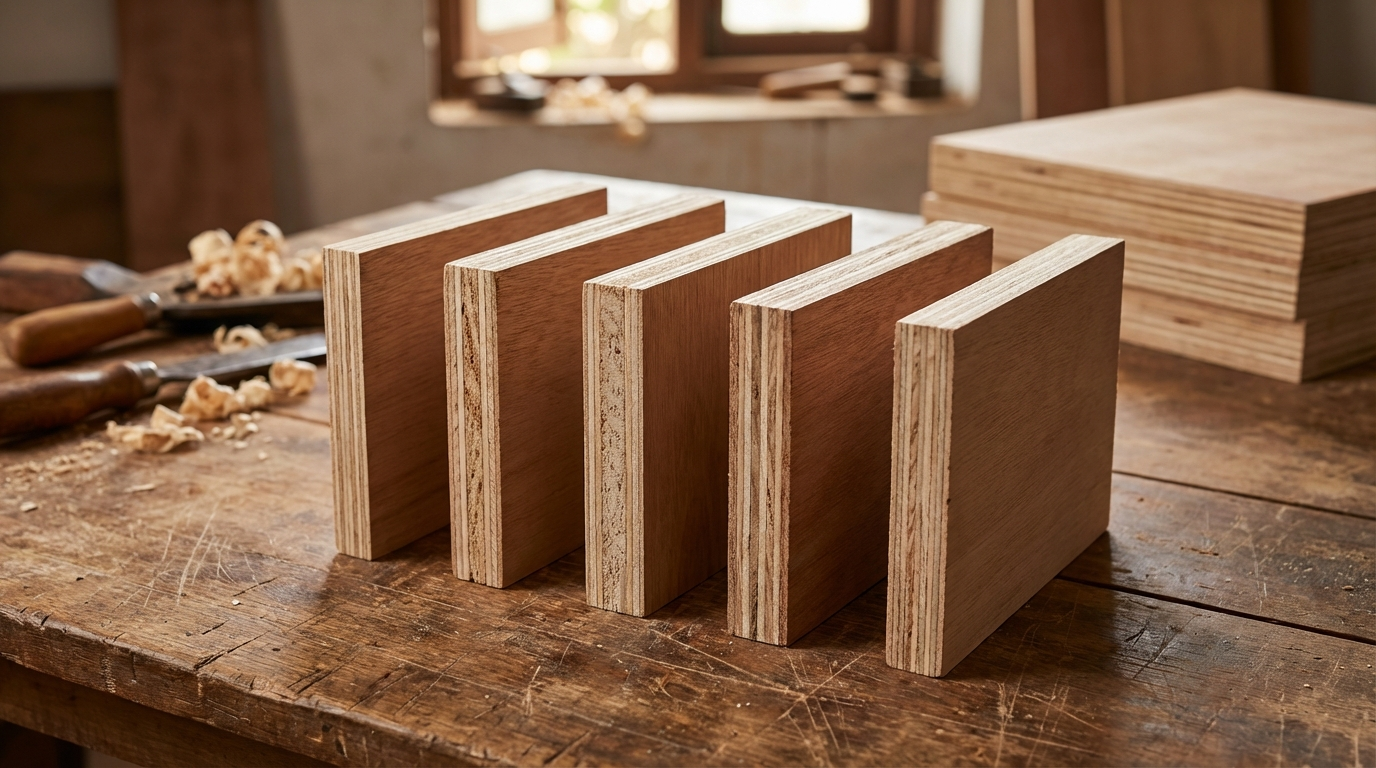
BWP grade plywood, often called marine plywood, uses phenolic resin glue that withstands boiling water immersion for hours without delaminating. This contrasts with MR (moisture resistant) using urea-formaldehyde glue for dry interiors, or BWR (boiling water resistant) handling short-term wet but failing under prolonged exposure. Construction-wise, BWP features uniform hardwood plies (gurjan or sal preferred over mixed core), zero gaps/voids, and calibrated thickness for flatness post-lamination.
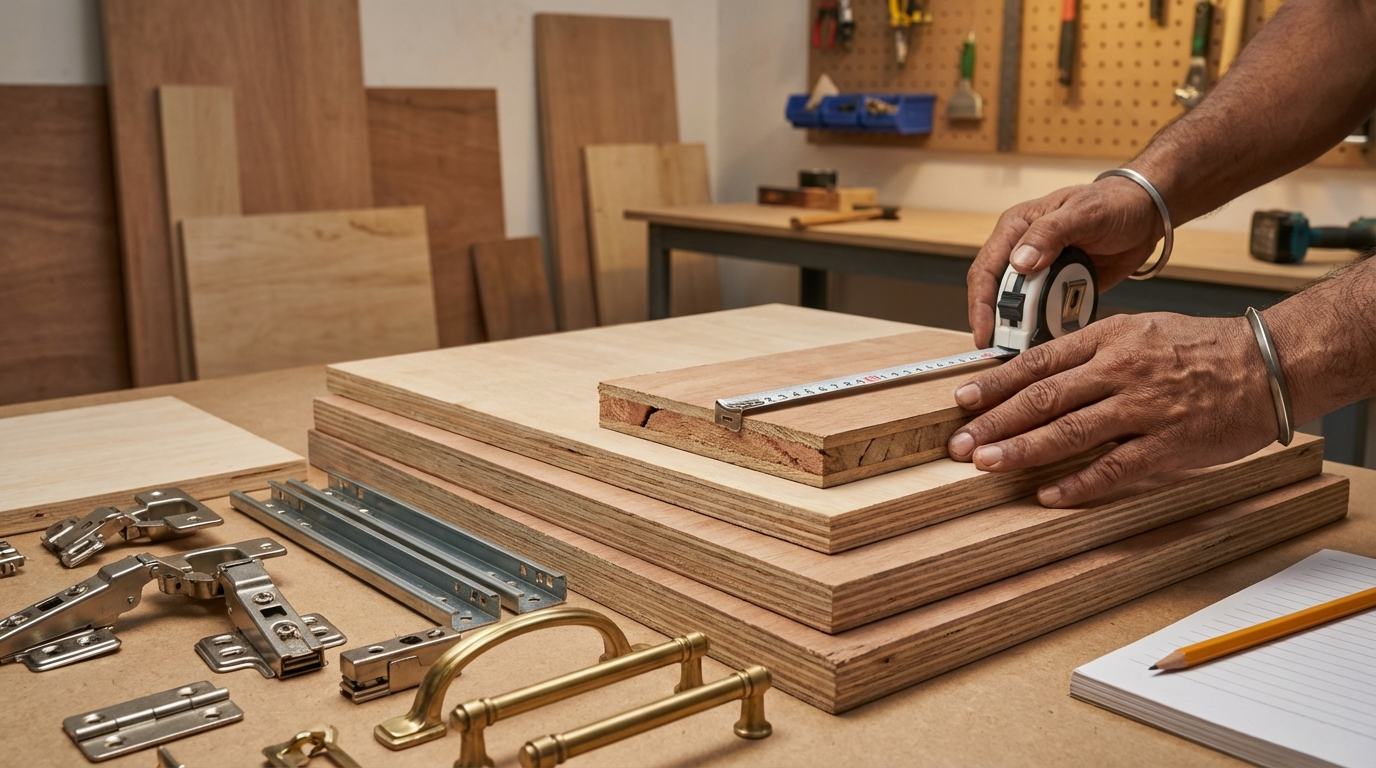
In bathrooms, "wet zones" cover vanity cabinets, mirror surrounds, towel racks, and partitions near showers. Dry zones like wall-mounted shelves can use BWR, but wet demands BWP to prevent warping from steam/humidity. Thickness matters: 12mm for light partitions, 18mm for load-bearing cabinets holding sinks or toilets. Face veneers are typically 1.0-1.2mm thick teak/sagwan for durability under polishing or lamination.
Use cases shine in modular bathrooms: BWP carcasses laminated with PVC or acrylic sheets resist peeling. Limitations? It's heavier and pricier, so balance with HDHMR boards for non-direct wet areas. Always acclimatize sheets 48-72 hours on-site before cutting.
India-Specific Reality Check (Moisture, Termites, and Workmanship)
India's climate turns bathrooms into moisture traps—monsoon humidity spikes to 90%+, coastal cities like Mumbai or Chennai add salt-laden air accelerating corrosion. Poor ventilation (no exhaust fans) traps steam, swelling even BWR cores within months. Termites thrive in humid wood residues; untreated plywood invites subterranean attacks via floor gaps.
Storage mishaps amplify risks: Sheets dumped outdoors absorb rain, leading to 10-15% thickness swell before installation. Carpenters often cut without edge-sealing, exposing glue lines to water ingress. Contractor shortcuts like partial silicone application fail in 2-3 years. Regional variations: North India sees dry winters but sudden rains; South demands constant BWP due to year-round dampness.
Workmanship reality: Local fabricators prioritize speed, using cheap sealants that crack. Insist on full perimeter sealing and 2-coat PU polish. Field data shows properly done BWP lasts 12-15 years vs. 3-5 for MR in same conditions.
How to Choose in 5 Steps
Step 1: Map wet zones—mark splash areas (1m radius from shower/sink). Use BWP only there; BWR elsewhere saves 15-20% cost.
Step 2: Pick core and glue—hardwood core (no mixed/softwood) with IS:710 certified BWP phenolic glue. Avoid poplar cores; they gap under humidity.
Step 3: Thickness by load—12-16mm partitions/TV units, 18-25mm cabinets. Calibrated for machine cutting.
Step 4: Finish compatibility—pre-laminate or raw for site lamination. Teak face for veneer; plain for acrylic.
Step 5: Vendor checks—ask for boil test demo (submerge scrap 4 hours, no split). Negotiate anti-termite dip. Budget: Factor city logistics (Delhi 10% higher than Kerala).
Why Plywood Fails in Bathrooms: Top Failure Modes
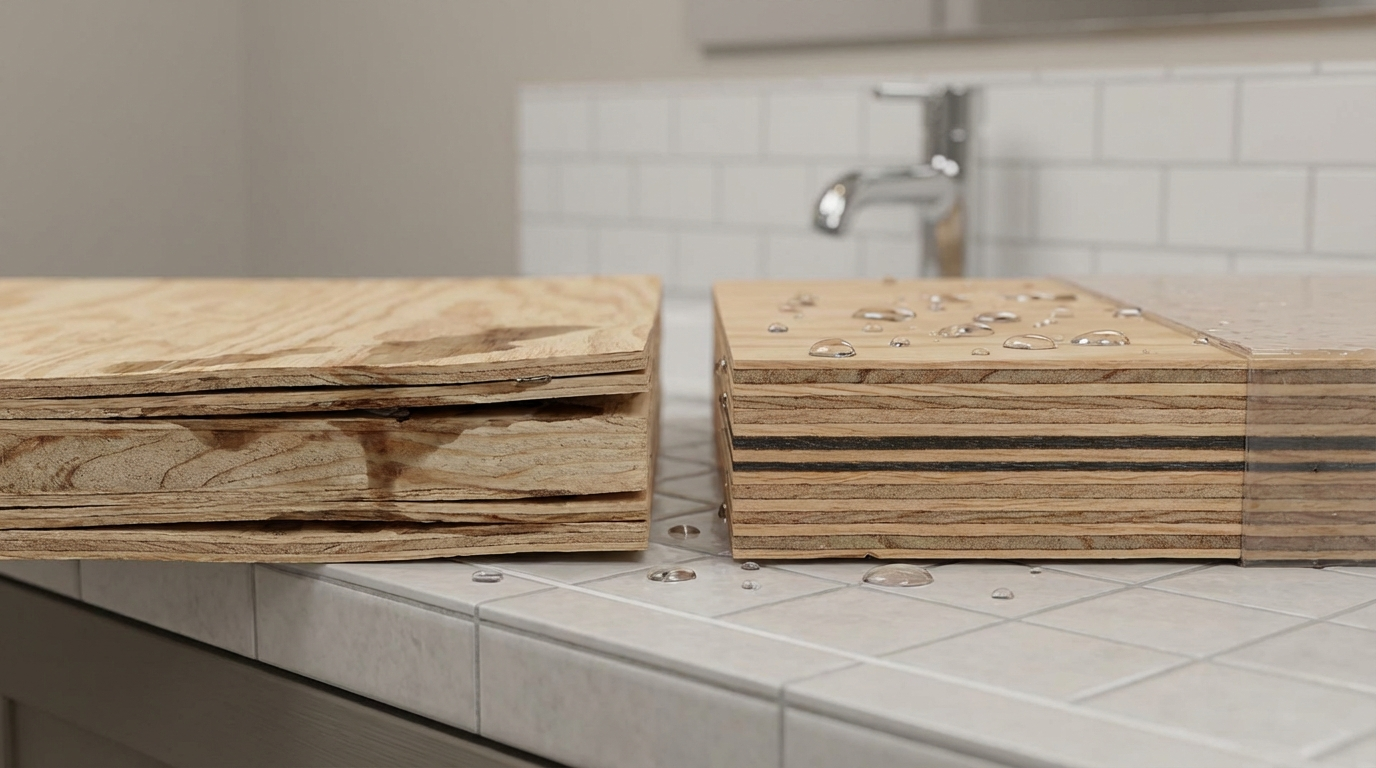
Edge delamination tops the list—unsealed cuts expose glue to steam, peeling laminates in 6-12 months. Core swelling follows: Water enters voids, expanding plies unevenly, warping doors. Screw holding fails as swollen cores crumble, dropping hinges.
In monsoons, humidity-driven bowing lifts tabletops. Coastal salt erodes unprotected faces. Poor acclimatization causes site-swelling mismatches. Mixed-core boards gap faster, trapping water.
Real-world: Homeowners report 40% vanity failures from MR plywood; BWP drops to 5% with sealing. Ventilation gaps exacerbate all—add exhaust + silica gels.
Waterproofing Checklist for Wet Zones
Pre-Installation Prep
Acclimatize plywood 72 hours in room temp (25-30°C). Check flatness with straight edge—no bows over 2mm/meter.
Cutting and Edge Sealing
- Cut with CNC/table saw; sand burrs.
- Apply epoxy primer to all edges/cuts (2 coats, 24hr dry).
- Seal with silicone sealant (bathroom-grade, non-shrink) full perimeter.
Assembly and Finishing
Laminate before assembly; overlap edges 2-3mm. Use SS screws (no iron). 3-coat PU polish on exposed wood. Reinforce hinge zones with blocks.
Post-Install
Caulk joints to walls; install exhaust. Silica packs in cabinets first 3 months.
Comparison: Plywood Grades for Wet Areas
| Grade | Glue Type | Wet Zone Suitability | Durability (Years) | Cost Premium |
|---|---|---|---|---|
| MR | Urea-Formaldehyde | Dry interiors only | 1-2 in wet | Base |
| BWR | PF Modified | Occasional splash | 3-5 in wet | +15% |
| BWP Marine | Phenolic | Direct wet zones | 10-15 | +30-50% |
BWP wins for bathrooms but overkill for bedrooms. HDHMR alternative for laminated cabinets: Better screw hold but needs sealing.
Decision Framework: Right Plywood by Scenario
| Scenario | Recommended Grade | Thickness | Extra Steps |
|---|---|---|---|
| Coastal shower cabinet | BWP Hardwood | 18-19mm | Double seal + SS fittings |
| Inland vanity (good vent) | BWP or HDHMR | 18mm | Single epoxy seal |
| Wet partition | BWP Calibrated | 12-15mm | Joint silicone + polish |
| Budget modular bath | BWR + heavy sealing | 16mm | Risk: Monitor 1st year |
Trade-Offs and Limitations
BWP excels in water resistance but costs 30-50% more, weighs 20% heavier (installation hassle), and needs skilled sealing—DIY often fails. Laminates hide flaws but peel if not prepped. Vs. PVC boards: BWP better screw hold for heavy doors, but PVC lighter/cheaper for panels.
Limitations: No plywood is 100% waterproof—sealing gaps are key. Termite risk persists without treatment. In extreme humidity (90%+), pair with dehumidifiers.
7 Common Buyer Mistakes and Fixes
- Mistake: Using MR for cost savings. Fix: Budget for BWP; calculate total replacement cost.
- Mistake: Ignoring edge sealing. Fix: Insist carpenter demos on scrap.
- Mistake: No acclimatization. Fix: 3-day site storage, stacked flat.
- Mistake: Mild steel screws/hinges. Fix: SS304 only; rust accelerates delam.
- Mistake: Thin plywood (12mm cabinets). Fix: 18mm min for sinks.
- Mistake: Poor ventilation planning. Fix: Exhaust + gap under doors.
- Mistake: Mixed-core boards. Fix: Tap test for uniform sound, no voids.
Workmanship and Installation Tips
Cut panels oversize, trim post-seal. Fasten with 50-60mm SS screws at 150mm centers; pre-drill to avoid splits. Hinge zones: Double ply or blocks for 4x hold. Polish sequence: Primer-sander-filler-PU (3 coats). Store vertical, covered; avoid floor contact.
Quality Checks You Can Do Without Lab Tests
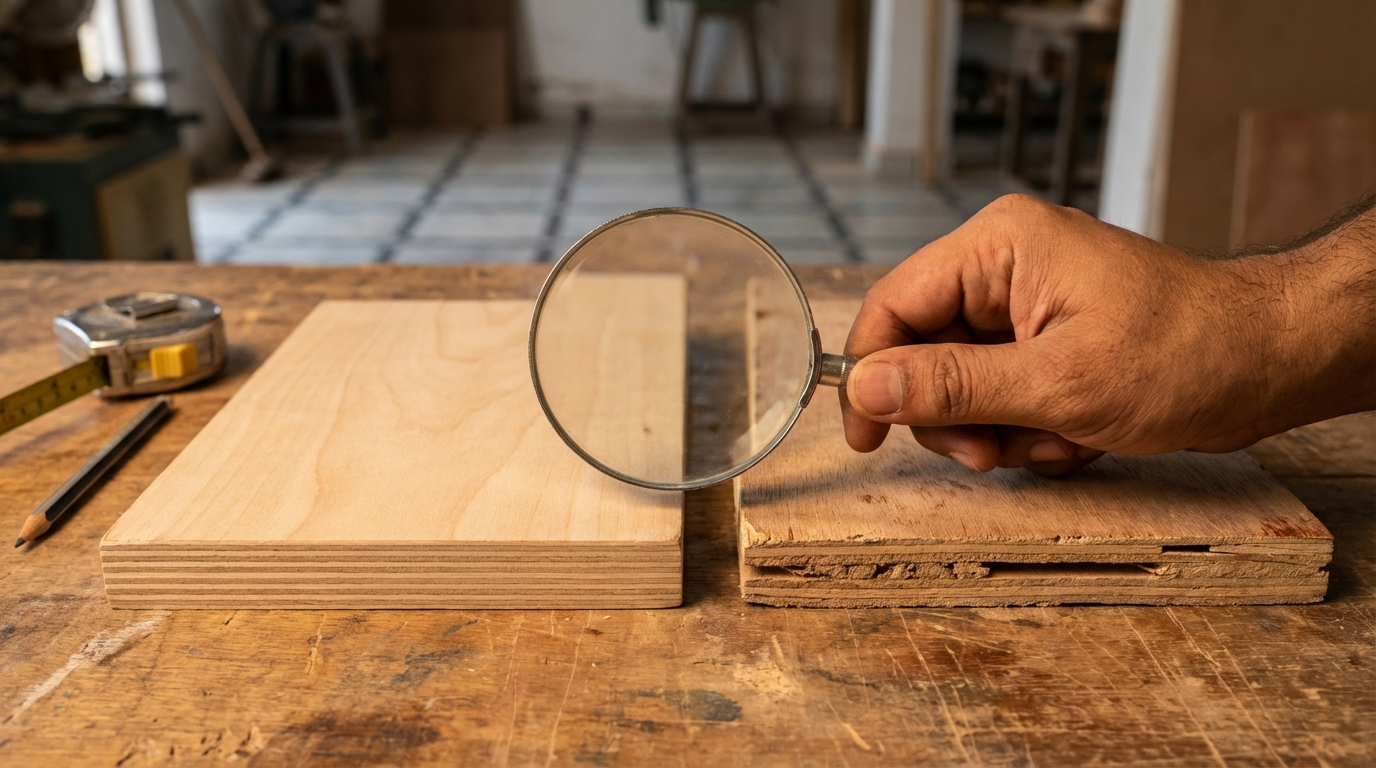
Visual: Uniform color, no patches/swirls (fake veneer). Tap edges—hollow sound signals voids. Weigh sample: Heavier = denser core. Bend test: No crackle. Ask: Glue type? Core wood? Boil test scrap? Reject if evasive. Moisture meter if available: Under 12%.
FAQs
Can BWR plywood work in bathrooms with sealing?
BWR handles occasional splashes but struggles in high-humidity bathrooms, especially monsoons. With meticulous edge-sealing and ventilation, it lasts 3-5 years, but expect swelling near sinks. For longevity, upgrade to BWP; the 20% extra cost prevents rework.
Is 18mm BWP necessary for bathroom cabinets?
Yes for load-bearing vanities holding stone tops or multiple shelves—thinner warps under weight/humidity. Partitions can drop to 12mm. Indian carpenters favor 18mm for screw stability in humid climates.
How to seal plywood edges effectively?
Prime with epoxy resin, sand, then silicone sealant overlapping faces 5mm. Two coats, full perimeter including cuts. Dry 24hrs between. This blocks 95% moisture ingress vs. partial painter's caulk.
What if no exhaust fan in bathroom?
Steam buildup dooms any plywood. Install one (150 CFM min); add wall gaps or silica. BWP buys time but can't compensate fully—seen in 30% more failures sans ventilation.
Hardwood vs mixed core for wet zones?
Hardwood (sal/gurjan) resists swelling better; mixed/poplar gaps faster. Pay 10-15% more for hardwood—worth it in coastal India where voids trap water.
Termite treatment needed for BWP?
Always—BWP glues don't repel termites. Insist on CIB-approved dip (chlorpyriphos). Reapply site barriers; monsoons flush protections.
Alternatives like HDHMR or PVC for bathrooms?
HDHMR good for laminated cabinets (moisture-tolerant), PVC for panels (light/cheap). But BWP superior for custom screw-heavy work. Trade-off: HDHMR easier CNC.
How long does sealed BWP last in bathrooms?
10-15 years with proper install/ventilation. Coastal drops to 8-12; neglect halves it. Regular checks catch early swelling.
Cost difference BWP vs others?
Varies by thickness/region: BWP 30-50% over MR. 18mm sheet: Factor core/glue/calibration. Bulk buys save 10%; confirm local quotes.
Best finish for bathroom plywood?
High-pressure laminate (1.2mm) or acrylic sheets—resist scratches/steam. Veneer ok with PU polish but peels easier. Edge-band all exposed.
Disclaimer: This content is provided for general informational purposes based on industry practices and publicly available information. Product specifications, standards, prices, and availability may vary by manufacturer, region, and time. Readers should independently verify details with manufacturers, dealers, or qualified professionals before making purchase or construction decisions.Want Plywood Suggestions?
Share a few details and a Sainik 710 specialist will suggest suitable brands and connect you to responsive dealers.