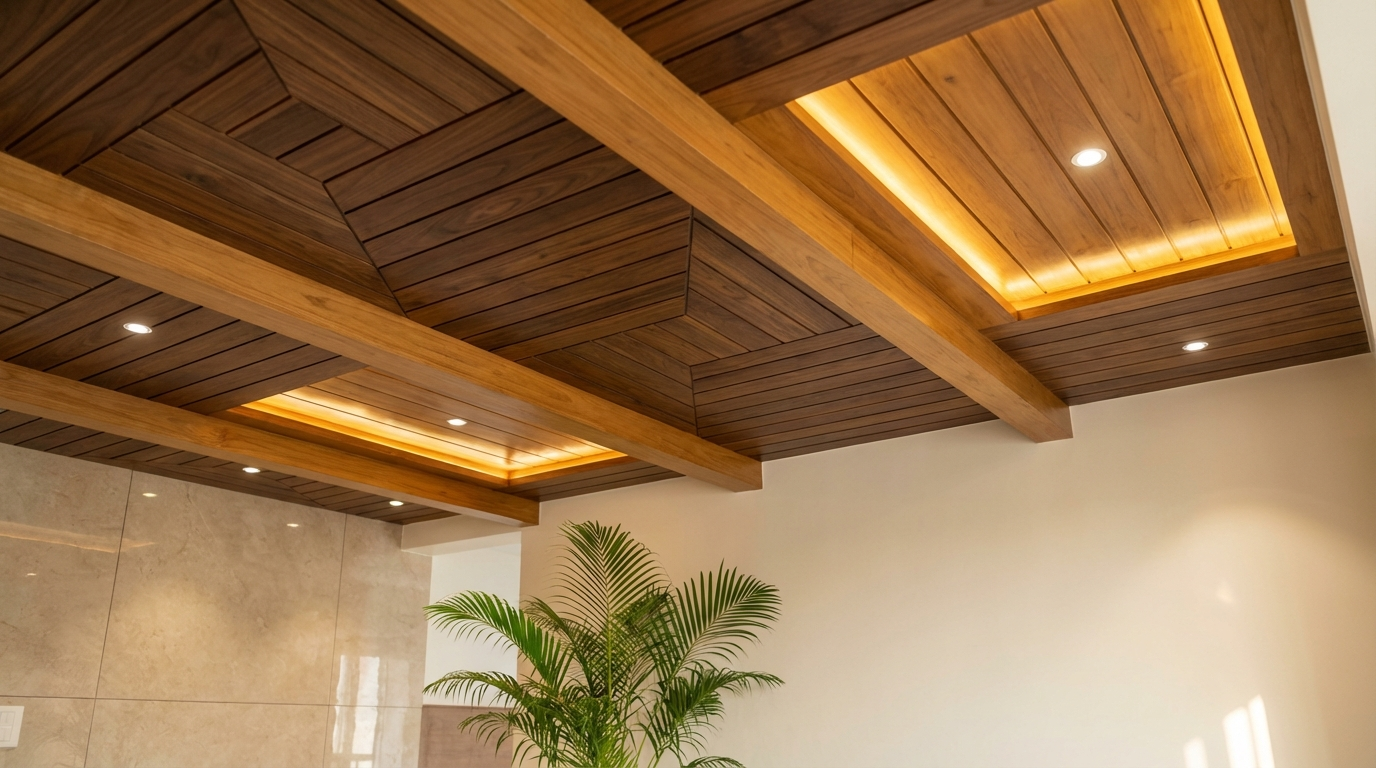
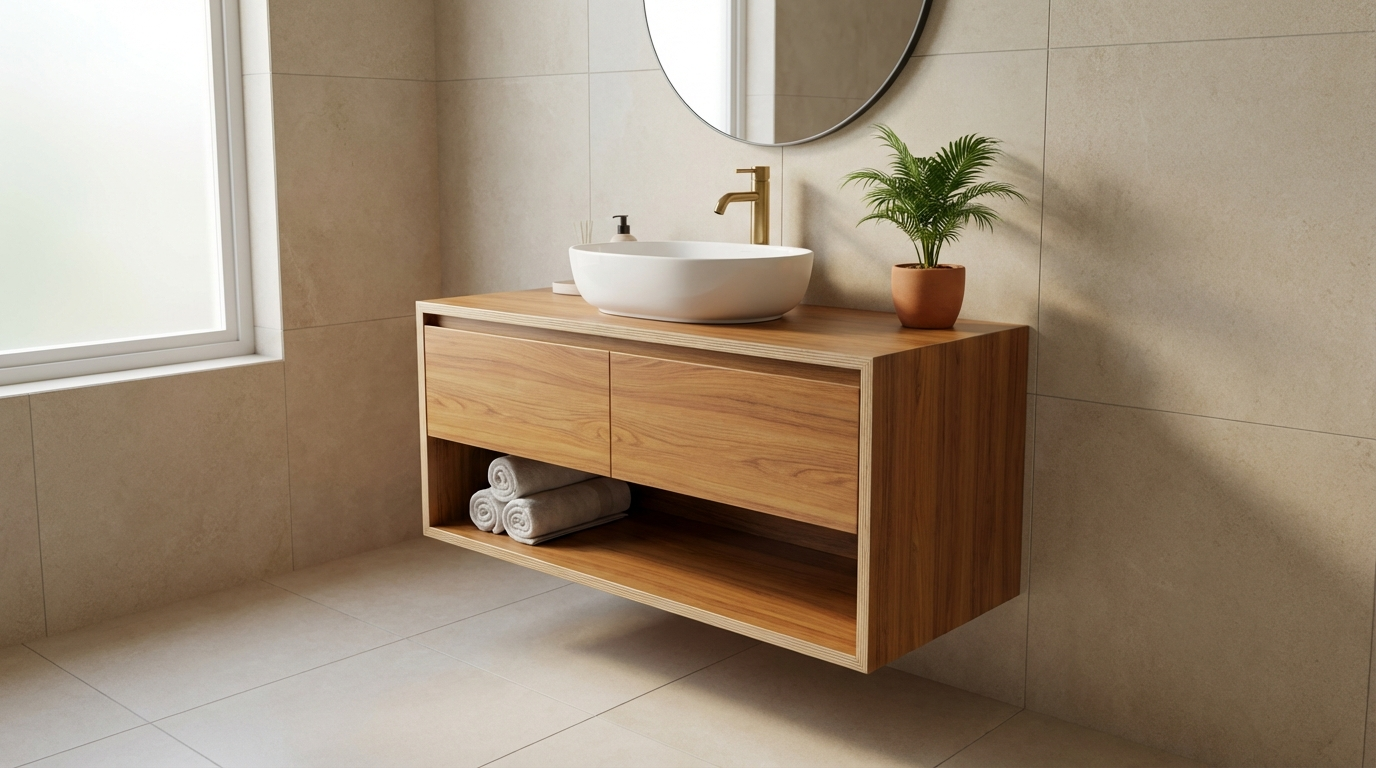
Bedroom Interior Design Ideas: 45+ Modern, Master & Small Bedroom Layouts for Indian Homes
Explore 45+ bedroom interior designs—master bedroom, small spaces & modern layouts. Get furniture tips, color schemes & storage solutions for India.
Quick Answer: The Best Bedroom Layouts Actually Work With Your Life
A well-designed bedroom interior balances sleep quality, storage efficiency, and the reality of Indian flat sizes—not just Pinterest aesthetics. Short version: Most Indian bedrooms fall between 100-150 square feet, which means every design decision carries weight. The best bedroom interiors prioritize bed placement for airflow and light, storage that doesn't crowd movement paths, and materials that handle humidity without warping. Modern designs work beautifully, but they need adaptation for our climate and space constraints. This is right for you if:
- You're renovating or building and want practical design direction
- Your current bedroom feels cramped despite decent square footage
- You've been burned by furniture that looked great in showrooms but failed at home—warped wardrobes, beds that block windows, the usual problems
- You want modern aesthetics without sacrificing function
Skip this if:
- You're looking for brand recommendations or exact furniture dimensions
- Your bedroom is above 250 sq ft—different principles apply to genuinely large spaces
Bottom line: Good bedroom design isn't about trends—it's about how well you sleep and how smoothly your morning routine flows.
What Bedroom Interior Design Actually Means in Practice
Bedroom interior design is the strategic arrangement of furniture, lighting, storage, and finishes within a sleeping space to optimize both rest and daily function. It goes beyond decoration to address traffic flow, climate response, and the specific needs of whoever uses the room. Here's what most people get wrong. They think bedroom design starts with a bed frame style or a colour palette. Actually, it starts with understanding how you move through the space. Where do you drop your phone at night? Where do clothes pile up? Which direction does morning light enter? I've seen beautifully designed bedrooms that became disaster zones within six months—not because the furniture was bad, but because nobody thought about the humidity near that window, or how tight the path between bed and wardrobe would feel. The technical side matters more than people realize. Bed height affects how easily you get in and out. Wardrobe depth determines if doors can open fully. False ceiling height changes how oppressive or airy a room feels. These aren't aesthetic choices—they're ergonomic ones. Modern bedroom design in India has shifted significantly. Ten years ago, heavy teak furniture dominated. Now you're seeing more engineered wood, modular storage, and lighter frames. Not just because of style changes, but because flat sizes shrank while expectations grew.
Why Bedroom Design Hits Different in Indian Homes
Let me be direct—most international bedroom design advice doesn't translate well to Indian conditions. A layout that works in Arizona or London will fail in Chennai or Mumbai.
Does humidity really affect bedroom furniture that much?
Absolutely, and more than most people expect. During monsoon, relative humidity in coastal cities hits 75-90% for months. In Mumbai's western suburbs, I've measured 88% RH inside bedrooms with closed windows. That moisture gets into everything—plywood cores swell, MDF backing boards warp, even solid wood expands enough to jam drawers. Bengaluru and Pune residents have it easier with 50-65% RH most of the year. But even there, you'll notice seasonal changes in how smoothly wardrobe doors operate. The Chennai side of things is particularly brutal. High humidity plus salt air means coastal apartments need marine-grade plywood or proper BWP boards for any bedroom furniture. I've seen beautiful imported bed frames—Italian designs, gorgeous finishes—develop rust spots on their hardware within two years because nobody thought about the climate. In places like Ahmedabad or Jaipur, the opposite problem emerges. Dry air causes wood to shrink, joints to loosen. Different challenge, different solutions. Specific climate considerations:
- Mumbai/Konkan belt: BWP plywood essential for wardrobes; metal hardware needs anti-corrosion coating
- Chennai/Coastal Tamil Nadu: Cross-ventilation critical; avoid north-facing windows with furniture against them
- Kolkata/Bengal: Monsoon prep includes ensuring 6-inch clearance between wardrobe backs and exterior walls
- Delhi NCR: Dust infiltration affects design—closed storage beats open shelving
Bedroom Types and What Actually Works for Each
Not all bedrooms need the same approach. A master bedroom has different requirements than a guest room, and small bedrooms need completely different thinking.
Master Bedroom Layouts (120-180 sq ft typical)
The master bedroom usually needs to accommodate a king-size bed (72x78 inches minimum), a wardrobe, possibly a dresser, and ideally some seating. In most Indian homes, this means tight margins. My take: The bed should face the entrance door but not align directly with it—Vastu aside, there's a practical reason. Direct alignment means the first thing guests see is your bed. Slight offset creates a sense of separation. For wardrobe placement, I always recommend the wall adjacent to the entrance. Why? It keeps the longest uninterrupted wall free for the bed, and you're not walking past the wardrobe to get to bed—morning routines and nighttime paths stay separate.
Small Bedroom Layouts (80-120 sq ft)
This is where most design advice falls apart. A 100 sq ft bedroom with a queen bed leaves roughly 50 sq ft for everything else. That's not much. What actually works:
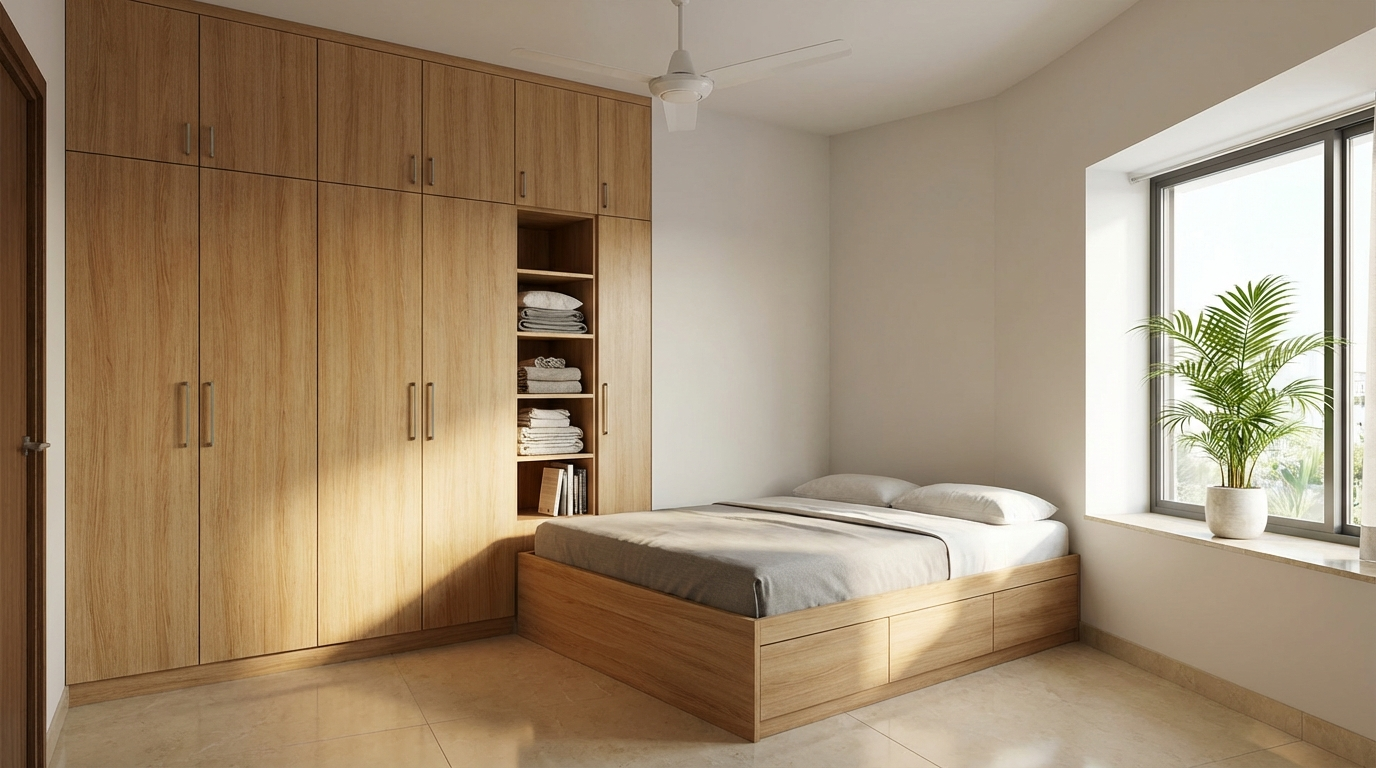
- Platform beds with built-in storage underneath—gains you maybe 15-20 cubic feet of space
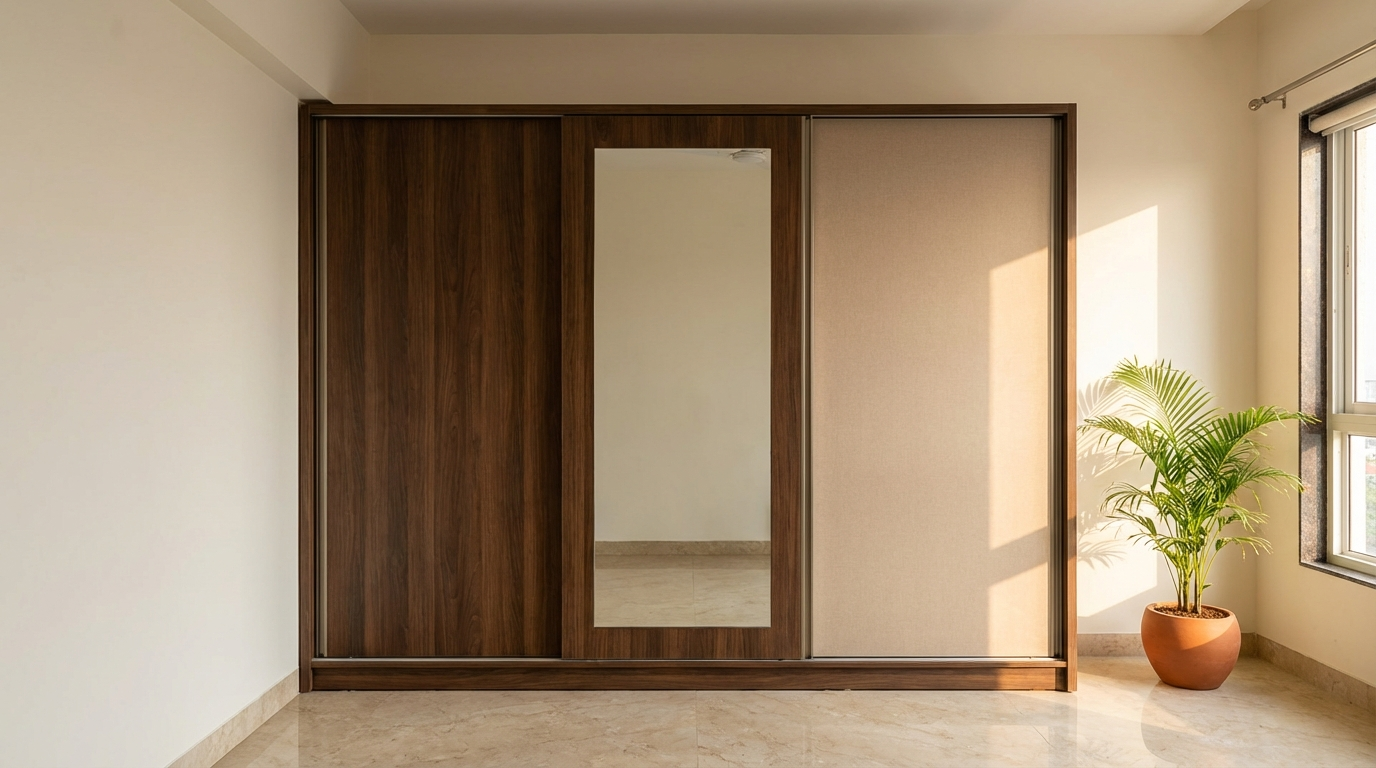
- Wardrobes with sliding doors instead of hinged (saves 18-24 inches of clearance space)
- Wall-mounted bedside shelves instead of tables
- Vertical storage: floor-to-ceiling wardrobes instead of standard 7-foot height
Honestly: If your bedroom is under 100 sq ft, skip the dresser entirely. A full-length mirror on the inside of your wardrobe door serves the same purpose.
Guest Bedroom / Second Bedroom (90-130 sq ft)
Guest bedrooms have different optimization goals. They're used intermittently, often need to double as home offices or storage rooms. A murphy bed sounds great in theory but rarely works in practice for Indian homes—the wall mounting needs solid brick or concrete, and the mechanism adds ₹25,000-40,000 to costs. Better approach: a good quality sofa-cum-bed with storage, paired with a compact desk.
| Bedroom Type | Ideal Size | Bed Size | Priority Features | Common Mistakes |
|---|---|---|---|---|
| Master Bedroom | 140-180 sq ft | King (72x78") | Attached wardrobe, ambient lighting, cross-ventilation | Oversized beds that block window access |
| Small Bedroom | 80-120 sq ft | Queen (60x72") | Multi-function furniture, vertical storage, light colors | Too much furniture, dark color schemes |
| Guest/Multi-use | 90-130 sq ft | Queen or Double | Convertible furniture, desk space, adequate storage for linens | Designing only for guests, ignoring daily use |
| Kids' Bedroom | 100-150 sq ft | Single to Queen | Study zone, play area consideration, growth-adaptable furniture | Over-theming; furniture that doesn't scale with age |
Modern Bedroom Design Elements That Actually Matter
Let's talk about what "modern" really means in 2026 bedroom design—because there's a lot of confusion here. Modern bedroom design emphasizes clean lines, minimal ornamentation, functional furniture, and a restrained color palette. It's not minimalism exactly, but it removes the unnecessary. The focus shifts from decorative elements to the quality of core pieces.
Is modern design actually practical for Indian families?
Depends on how you adapt it. Pure modern design—white walls, floating furniture, hidden storage—works in editorial photoshoots. Real Indian homes need modifications. What translates well:
- Platform beds without heavy headboards—easier to clean, visually lighter
- Integrated wardrobes that blend with walls
- Pendant or wall-mounted lighting instead of elaborate chandeliers
- Neutral base colors with accent elements you can change
What doesn't work as well:
- All-white color schemes (dust visibility, maintenance nightmare)
- Fully open closets without doors (dust, again, plus humidity exposure)
- Very low beds (tough for older family members)
- Glass or high-gloss surfaces everywhere (fingerprints, scratches show immediately)
Between you and me: The Instagram-perfect modern bedrooms you see have professional stylists, controlled lighting, and zero real-world use. Aim for modern principles—simplicity, function, quality materials—rather than exact reproduction.
Color Schemes That Work (And Ones That Don't)
Color affects mood, perceived space, and even temperature sensation in a bedroom. But color choices in India need to account for light quality, dust, and how colors age. Best performers for Indian bedrooms:
- Warm whites and off-whites: Hide dust better than pure white, work with both warm and cool lighting
- Soft greys with warm undertones: Contemporary feel, very forgiving of imperfect walls
- Muted greens (sage, olive): Calming, increasingly popular, work well with wooden furniture
- Warm beiges and taupes: Classic for a reason—they make most furniture colors work
Approach with caution:
- Dark accent walls: Look dramatic but shrink perceived space significantly in rooms under 140 sq ft
- Pure whites: Every scuff mark, every dust particle visible
- Bright or saturated colors for more than one wall: Can feel overwhelming in sleeping spaces
- Cool greys without warm lighting: Feel clinical, not restful
My recommendation: Paint samples on your actual walls and live with them for 3-4 days across different lighting conditions. What looks perfect at the paint store looks completely different under your bedroom's tube light at 10 PM.
Furniture Selection: What to Prioritize
Here's the thing. Most people pick bedroom furniture based on aesthetics, then struggle with functionality for years. Flip that approach.
Bed Frame Considerations
The bed frame is your biggest bedroom investment—both in money and floor space. Get this wrong and everything else suffers. Height matters more than you think. Standard bed heights (including mattress) of 20-24 inches work for most adults. Higher beds (26-30 inches) suit older users. Lower platform styles (14-18 inches) look modern but make sitting and standing harder. Storage beds are worth it in small spaces. Hydraulic lift-up mechanisms give you access to the entire bed area for storage. Drawer systems work but eat into the under-bed space—you get maybe 60% storage compared to lift-up designs. Material selection: The bed frame material affects durability dramatically. Our plywood selection guide for furniture covers this extensively, but here's the quick version: BWP plywood for the frame base in humid cities, marine plywood if budget allows. MDF works for headboards but not structural elements.
Wardrobe Decisions
Wardrobes consume 15-25% of most bedroom floor plans. Sliding doors save space but limit access (you can only open half at a time). Hinged doors need 20-24 inches of clearance but give full visibility. Internal configuration matters: Most factory wardrobes come with generic internals—one hanging rod, two shelves, maybe a drawer stack. Customize ruthlessly. Think about what you actually store:
- More hanging space if you wear formal clothes daily
- More shelving if you fold most items
- Dedicated saree/dhoti compartments if relevant
- Pull-out trouser racks instead of folding (reduces ironing)
For wardrobe material selection, especially for humidity-prone areas, the wardrobe plywood guide on this site has detailed recommendations.
Storage Solutions That Actually Get Used
I've seen hundreds of bedrooms with beautiful built-in storage that sits empty while clothes pile on chairs. Why? Bad placement, awkward access, or forgetting how people actually behave. Storage that works:
- Under-bed drawers for seasonal items (blankets, heavy woolens)
- Bedside tables with at least one drawer—not just a surface
- Wardrobe internals with adjustable shelving (your storage needs will change)
- Hooks or pegs behind doors for everyday items
- One dedicated "transition zone" surface where clothes can sit overnight before being washed or re-hung
Storage that sounds good but fails:
- Very high lofts (above 7 feet)—you'll need a step stool every time
- Deep shelves without pull-out mechanisms—things get lost at the back
- Completely enclosed storage with no quick-access spots
- Matching everything to a theme at the cost of function
Lighting Layers: The Most Underrated Design Element
Bedroom lighting needs to serve multiple purposes: bright enough for dressing, dim enough for winding down, task lighting for reading, and maybe ambient options for different moods. Three-layer approach: General lighting: Ceiling fixture or recessed lights. Should illuminate the whole room adequately for cleaning and general activities. 10-15 watts LED per square meter works as a baseline. Task lighting: Bedside lamps for reading, vanity lighting if you have a dresser. These should be independently switchable—nobody wants to get out of bed to turn off the main light. Ambient/accent: Optional but nice—LED strips behind headboards, cove lighting in false ceilings, dimmable wall sconces. This is where "mood" comes in. Practical tip: Install bedside light switches within arm's reach of your sleeping position. Both sides if it's a couple's room. Sounds obvious, but you'd be surprised how many electricians place switches by the door only.
Why do designers insist on multiple light sources?
Because single-source lighting creates harsh shadows and offers no flexibility. A bright ceiling light at 11 PM feels completely different than a warm bedside lamp. Your body responds to light as a sleep cue—you want the ability to signal "winding down" through lighting changes.
Common Bedroom Design Mistakes I Keep Seeing
After 18 years in this industry, certain patterns emerge. These are the mistakes that come back to haunt people. 1. Oversized furniture for the space That gorgeous king bed looks perfect in the showroom with their 500 sq ft display. In your 130 sq ft bedroom, it leaves 18-inch pathways and makes the room feel like a furniture warehouse. Measure twice, visualize thrice. 2. Ignoring the door swing zone Doors need clearance. Wardrobe doors, bathroom doors (if attached), bedroom entry door—each needs space to open fully. I've lost count of wardrobes installed with doors that hit the bed frame when opened past 90 degrees. The carpenter says it's fine, you live with the annoyance for years. 3. Aesthetic choices over climate reality This one really frustrates me. A designer specifies a gorgeous velvet headboard for a Mumbai flat. By second monsoon, it's musty and faded from humidity. Or metal bed frames in coastal areas that develop rust around joints. Or white fabric storage boxes that show every dust particle within weeks. 4. Zero electrical planning before furniture placement You finalize where the bed goes after the electrician has placed switch boards. Now your charging point is behind the headboard, your reading lamp has no convenient outlet, and the AC is positioned to blow directly on your head. 5. Treating the bedroom as a display room Bedrooms are lived in. They collect phones, books, glasses of water, chargers, clothes in transition. Designs that leave no surface space for daily life necessities fail immediately. You need at least one flat surface per person that's not the bed itself. 6. Matching everything too precisely A room where every piece matches perfectly—same wood tone, same hardware finish, same design language—actually looks staged and impersonal. Some contrast, some pieces that evolved over time, feel more like home. 7. Forgetting about cleaning access That platform bed with 2-inch floor clearance looks sleek. It's also impossible to clean under. Dust accumulates, you never see it, but you breathe it every night. Either go full floor contact or leave enough gap for a mop or vacuum attachment.
Quality Indicators When Buying Bedroom Furniture
A few checks can save you from expensive mistakes: Visual checks:
- Laminate edges should have no visible gaps or lifting
- Drawer slides should operate smoothly without wobble
- Surfaces should be uniform—no color variation patches
- Hardware (handles, hinges) should feel substantial, not flimsy
- Back panels shouldn't flex significantly when pressed
Questions for the dealer:
- "What's the core material?" (Plywood grade, MDF type, particle board)
- "What's the laminate thickness?" (0.8mm is decent, 1mm is better)
- "What's the warranty coverage, specifically?"
- "How do I claim warranty if hardware fails?"
- "Is assembly included, and who does it?"
Field tests you can do:
- Weight: Heavier usually means denser core material
- Tap test: Hollow sounds indicate thin panels or air gaps
- Drawer test: Pull drawers out fully, push back in—should be smooth
- Door swing: Open and close cabinet doors repeatedly—hinges shouldn't creak or resist
- Flex test: Press on flat surfaces—quality boards don't flex easily
Working With Carpenters: The Briefing That Prevents Problems
Whether you're getting custom furniture made or having modular pieces installed, clear communication matters. What to tell your carpenter/installer:
- Final room dimensions, including ceiling height and any protrusions
- Exact furniture placement with marked floor positions
- All electrical outlet and switch positions
- Door swing directions and clearance requirements
- Specific material expectations: "I want BWP plywood for the base, not MR grade"
- Edge banding requirements: "All exposed edges need PVC edge banding"
One story from last year: A client in Thane had a modular wardrobe installed. Beautiful piece, good materials. Three months later, laminate started peeling at the bottom edges. Why? The installer hadn't edge-sealed the base, and the bedroom had a slight slope toward that corner. Monsoon moisture collected, wicked up through unsealed chipboard, and damaged the laminate from inside. A ₹2,000 edge-banding step would have prevented a ₹35,000 repair.
How Long Does Bedroom Furniture Actually Last?
Honest expectations based on material and conditions:
| Furniture Type | Quality Level | Expected Lifespan | Conditions |
|---|---|---|---|
| Plywood wardrobe (BWP) | Good | 15-20 years | Normal use, moderate humidity |
| MDF wardrobe | Decent | 7-12 years | Low humidity, careful use |
| Solid wood bed frame | Good | 20-30+ years | Quality wood, proper maintenance |
| Engineered wood bed | Good | 10-15 years | BWP core, stable humidity |
| Particle board furniture | Budget | 3-7 years | Very dependent on moisture exposure |
Signs it's time to replace:
- Wardrobe doors no longer close properly despite hinge adjustment
- Drawer bottoms sagging or falling out
- Visible swelling or delamination on surfaces
- Persistent musty smell that cleaning doesn't remove
- Structural wobble that tightening fasteners doesn't fix
Alternatives and Workarounds Worth Knowing
Not every bedroom needs custom furniture or modular installations. Sometimes alternatives make more sense. If budget is tight: Ready-made furniture from established brands often costs 30-40% less than custom work. Yes, you sacrifice exact fit, but the quality-to-price ratio can be better. IKEA-style flat-pack options have improved significantly for Indian conditions. If you're renting: Avoid built-ins entirely. Freestanding furniture that you can take with you makes more sense. Focus spending on the bed (affects sleep quality) and let other pieces be functional rather than perfect. If humidity is severe: HDHMR (High Density High Moisture Resistant) boards work better than standard MDF. The HDHMR vs plywood comparison article covers this in detail—worth reading if you're in a coastal city. If space is extremely limited: Consider built-in carpentry that uses wall depth. Recessed headboards with shelving, wardrobes built into alcoves, bed platforms with integrated storage. Costs more but maximizes every inch.
FAQs About Bedroom Interior Design
What's the minimum bedroom size for a king-size bed?
A king-size bed (72x78 inches) needs at least 120 square feet of room to work comfortably. This allows roughly 24-30 inches of walking space on three sides and room for one wardrobe or dresser. Below this size, you're compromising circulation or storage significantly. I've seen king beds squeezed into 100 sq ft rooms—technically fits, practically miserable to live with.
Is it true that dark colors make bedrooms feel smaller?
Mostly true, but with nuance. Dark colors absorb light, which reduces the perceived boundary of walls—making the room feel enclosed. However, a single dark accent wall opposite a light source can actually add depth. The "dark = small" rule applies most strongly to rooms with limited natural light. In well-lit bedrooms with large windows, you have more flexibility.
What if I live in a coastal city like Mumbai or Chennai?
Your material choices need to account for 75-90% humidity during monsoons. Avoid MDF for structural elements—it swells with moisture. Use BWP or marine plywood for wardrobes and bed frames. Choose metal hardware with anti-corrosion coating or stainless steel. Fabric headboards need to be removable for cleaning or avoided entirely. And ensure adequate ventilation—air movement helps control moisture buildup inside closed storage.
How much should I budget for a complete bedroom interior?
For a mid-range finish in a 130-150 sq ft bedroom, expect ₹2.5-4 lakh including bed, wardrobe, side tables, lighting, and basic false ceiling. Budget options can bring this to ₹1.5-2 lakh with ready-made furniture and simpler finishes. Premium custom work can easily cross ₹6-8 lakh for the same size. The bed frame typically takes 20-25% of budget, wardrobe 35-45%, and the rest splits between other furniture, lighting, and finishing.
Is it true that you should never place a bed under a window?
Not an absolute rule, but there are practical reasons to avoid it. Windows can be drafty in winter, hot in summer, and leak moisture during heavy rain. Headboards against windows also reduce insulation and can make temperature regulation harder. That said, in space-constrained rooms, sometimes the window wall is the only option. In those cases, ensure the window seals well and add good curtains for insulation.
What's the best flooring for Indian bedrooms?
Vitrified tiles dominate for good reason—durable, easy to clean, relatively affordable. But they're cold underfoot in winter. Wooden flooring (engineered, not solid) adds warmth but needs more maintenance and costs significantly more. Laminate flooring offers a middle ground but doesn't handle moisture well. For most Indian homes, vitrified tiles with area rugs beside the bed hit the practical sweet spot.
How do I make a low-ceiling bedroom feel less cramped?
Several tricks help: avoid heavy false ceilings that eat into height, use vertical stripes or patterns that draw the eye upward, choose low-profile furniture that leaves more visible wall space, install curtain rods near the ceiling rather than just above windows, and use recessed or flush-mount lighting instead of hanging fixtures. Light, cool colors on the ceiling also help—pure white or very light grey.
Is it true that mirrors make bedrooms feel larger?
True, but placement matters. A large mirror on the wardrobe door or one wall reflects light and creates depth. However, mirrors directly facing the bed can be unsettling for some people and are considered inauspicious in Vastu. The best placement is usually on the wall perpendicular to windows—it bounces natural light into the room without creating awkward reflections when you're in bed.
What wardrobe depth works best?
Standard depth is 22-24 inches, which accommodates hangers comfortably. Going deeper (26-28 inches) wastes space—clothes don't hang better, you just lose floor area. Shallower wardrobes (18-20 inches) work for folded storage but won't handle hanging clothes well. If space is extremely tight, consider 20-inch depth with front-facing hangers rather than perpendicular ones—some specialized hardware makes this work.
Should I choose a headboard or go without?
Headboards serve practical purposes beyond aesthetics: they insulate against cold walls, prevent pillows from falling, give you something to lean against while reading, and protect the wall from marks. That said, in very tight spaces, an upholstered wall panel instead of a protruding headboard saves a few inches. Skipping headboards entirely works if your bed is positioned mid-room, but against a wall, you'll miss having one.
How do I handle a bedroom with no windows?
Internal bedrooms exist in many Indian flats, especially converted from larger rooms. Compensate with strong artificial lighting (layered approach essential here), light wall colors, mirrors to create depth, and excellent ventilation through exhaust fans or connection to AC systems. Consider a false window with backlit panels for psychological relief. And accept that this room needs more climate control investment than naturally ventilated spaces.
Is modular furniture better than carpenter-made for bedrooms?
Depends on your priorities. Modular furniture offers consistent quality, faster installation, and often better hardware. Carpenter-made allows exact customization to your space and specific requirements. For standard-shaped rooms, modular usually wins on value. For odd layouts, alcoves, sloped ceilings, or very specific needs, custom carpentry makes more sense. The carpentry vs modular debate really comes down to how standard your requirements are. --- Right, that's the practical overview. One last thing—take photos of your empty room from multiple angles before any furniture shopping. You'll reference them constantly, and they help immensely when explaining your space to anyone helping with design. Good luck with the project.
Disclaimer: This content is provided for general informational purposes based on industry practices and publicly available information. Product specifications, standards, prices, and availability may vary by manufacturer, region, and time. Readers should independently verify details with manufacturers, dealers, or qualified professionals before making purchase or construction decisions.
Want Plywood Suggestions?
Share a few details and a Sainik 710 specialist will suggest suitable brands and connect you to responsive dealers.