Bed Design Ideas (40+): Storage Beds, Hydraulic, Box Beds + Best Plywood for Bed Base
40+ bed designs including storage and hydraulic options. Learn the right plywood grade and thickness for bed base and headboard to prevent sagging.
Quick Decision Summary
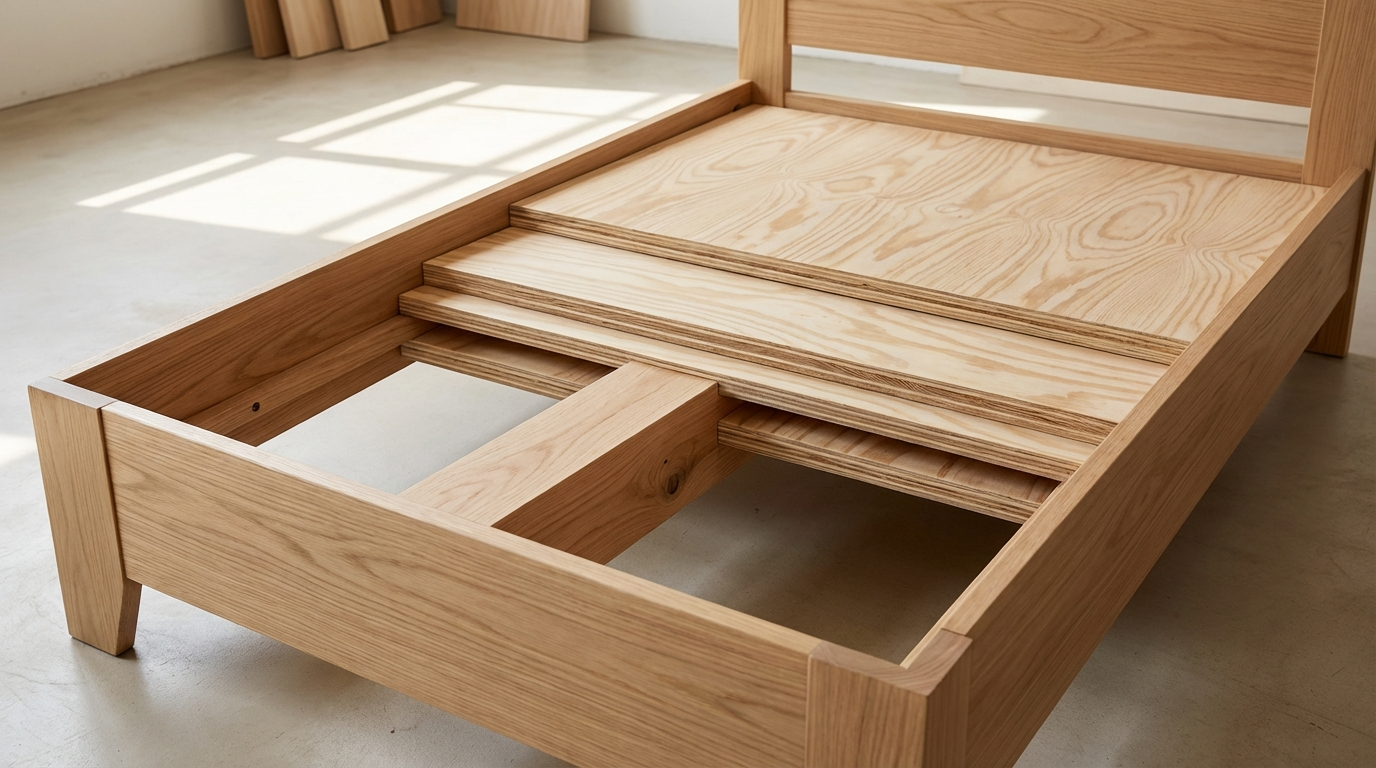
Best choice: 18mm BWR calibrated plywood with hardwood core for bed bases in storage, hydraulic, or box beds—handles weight, humidity, and daily use without sagging.
If you're in a hurry, prioritize BWR grade over MR for any bed design involving storage mechanisms, as it resists monsoon swelling better in Indian homes. Use 18mm thickness for the base slats or full panel to support 200-300kg loads typical for queen/king sizes. Pair with 12mm for headboards. For hydraulic lift beds, reinforce edges with solid wood beading to prevent plywood flex. This setup lasts 10+ years with proper edge sealing, outperforming cheaper mixed-core options in coastal or high-humidity zones like Mumbai or Chennai.
- Choose 18mm BWR if... your bedroom has poor ventilation, you're adding heavy mattresses, or opting for hydraulic storage in humid regions—offers superior screw holding and warp resistance.
- Choose 12-16mm MR if... budget-tight, dry inland climate like Delhi interiors, and low-profile platform design without storage.
- Avoid thin plywood (<16mm) if... planning box beds with drawers—leads to sagging and mechanism failure.
- Avoid mixed-core boards if... termite-prone area—hardwood core pulls screws better for bed frame assembly.
Design Ideas with Material Choices
Bed designs in India blend functionality with space-saving needs, especially in urban apartments. Storage beds, hydraulic lifts, and box styles dominate due to limited room sizes (typically 10x12 ft bedrooms). Here are 40+ ideas grouped by type, with plywood specs tailored to prevent common issues like base sagging or headboard wobble. Recommendations factor Indian climates: BWR for humid zones, MR for dry; thicknesses ensure stability under 10-15 year use.
Platform Beds (Simple, Low-Profile: 10 Ideas)
- Minimalist Floating Platform: 6-inch height, flush slats. Use 16mm MR plywood base, 12mm headboard; laminate finish. Ideal for small rooms; dims 78x60x12 inches.
- Legged Platform with LED Underside: Tapered legs. 18mm BWR slats (spaced 4 inches), hardwood frame. Prevents moisture trap under bed.
- Raised Platform for Underbed Drawers: 12-inch height. 18mm BWR full panel base, 12mm drawer sides; edge-band all exposed cuts.
- Japanese-Style Low Platform: Tatami mat top. 12mm MR plywood frame only; no full base needed.
- Scandinavian Clean Lines: Angled legs. 16mm calibrated BWR, veneer finish for warmth.
- Industrial Metal-Plywood Mix: Exposed rivets. 18mm BWR with metal accents; great screw holding.
- Curved Edge Platform: CNC-routed edges. 18mm BWR, polish for seamless look.
- Storage-Free Kids Platform: 12-inch height. 12mm MR, fun laminate prints.
- Guest Room Convertible: Foldable sides. 16mm BWR reinforced hinges.
- AC-Friendly Ventilated Platform: Perforated slats. 18mm BWR for airflow in humid homes.
Storage Beds (Drawer or Lift: 15 Ideas)
- Side Drawer Box Bed: 4 full-length drawers. 18mm BWR base/sides (hardwood core), 25mm for frame; ball bearings essential.
- Front-Pull Ottoman Storage: Single compartment. 18-20mm BWR panel, gas struts for easy lift.
- Multi-Level Drawers: Shallow top + deep bottom. 16mm BWR drawers, 18mm base.
- Hidden Wheel Drawers: Locks in place. 12mm MR sides, 18mm BWR base.
- Linen Organizer Compartments: Divided sections. 18mm BWR throughout; label fronts.
- Winter Storage Bed: Quilt bins. 20mm BWR for heavy loads in North India.
- Compact Queen Drawer Bed: 72x60 inches. 18mm calibrated BWR, laminate for dust resistance.
- King-Size Side Access: Dual drawers each side. 25mm BWR frame to avoid flex.
- Vertical Lift Panels: Pop-up sides. 18mm BWR with piano hinges.
- Custom Shoe Slots: Angled drawers. 16mm BWR, melamine finish.
- Family Box with Casters: Movable unit. 18mm BWR base reinforced.
- Teen Room Multi-Use: Desk + drawers. 16-18mm BWR hybrid.
- Coastal Humidity-Resistant: Sealed drawers. 18mm BWP if near sea.
- Budget Mixed Storage: 2 drawers + open shelf. 16mm MR.
- Luxury Velvet-Wrapped: Fabric over 18mm BWR.
Hydraulic & Gas Lift Beds (Heavy-Duty: 10 Ideas)
- Full Hydraulic Queen Lift: Mattress flips up. 25mm BWR base (essential for 100kg+ lift), hardwood core.
- Twin Hydraulic with LED: Motion-sensor lights. 20mm BWR, silent struts.
- King Gas Strut Ottoman: Extra-deep storage. 25mm BWR slats reinforced.
- Low-Effort Elder-Friendly Lift: Dual struts. 18-20mm BWR, safety lock.
- Headboard-Integrated Hydraulic: Padded board. 12mm BWR headboard, 25mm base.
- Space-Saver Studio Lift: Wall-hugger design. 20mm BWR compact.
- Heavy Mattress Hydraulic: Ortho support. 25mm BWR critical.
- Custom Height Adjustable: Variable lift. 20-25mm BWR frame.
- Monsoon-Sealed Lift: Rubber gaskets. BWR or BWP.
- DIY Hydraulic Retrofit: Add to existing frame. 18mm overlay.
Box & Specialty Beds (5+ Ideas)
- Classic Box Bed Frame: Fully enclosed base. 25mm BWR all around.
- Wall-Mounted Box: Floating effect. 18mm BWR cantilevered.
- Bunk-Style Box: Stacked storage. 20mm BWR ladder reinforced.
- Trundle Box Pull-Out: Guest bed inside. 18mm BWR dual layers.
- Partition Box Divider: Room separator. 18mm BWR with shelves.
These designs suit 80% of Indian homes; scale dims by 10-20% for custom fits. Always acclimatize plywood 48-72 hours on-site.
What This Actually Means (Grade, Construction, and Use)
Plywood for bed bases isn't just any sheet—it's the structural backbone handling point loads from bed legs, human weight (80-120kg per person), and mattress bounce. Grades like MR (moisture-resistant) suit dry interiors but swell in humidity; BWR (boiling water-resistant) endures 72-hour boils, ideal for Indian monsoons. BWP/marine goes further for coastal extremes but costs more.
Construction matters: Hardwood core (poplar/gurjan) offers tight glue lines and screw pull-out resistance up to 200kg per point—crucial for hydraulic pivots. Mixed-core (often softwood) gaps under stress, causing rattles. Calibrated plywood (sanded to exact thickness, e.g., 17.3-18mm) ensures even mattress support, preventing dips.
For bed use: Base needs 18mm+ for spans over 3ft (queen slats); headboards 12mm suffices but reinforce screw zones. Box beds demand full panels without cuts to avoid voids. In storage designs, plywood sides must resist drawer slide torque—BWR hardwood wins. Typical build: 18mm base + 75x25mm wood slats spaced 3-4 inches for ventilation, topped with ply sheet if needed.
Thickness Breakdown for Beds
- 12mm: Headboards, lightweight platforms (dry areas only).
- 16-18mm: Standard bases, drawer sides—most versatile.
- 20-25mm: Hydraulic/box frames, heavy users.
Edge sealing with 2-3mm PVC/ABA tape post-cutting prevents delam. Laminates (1mm) or veneers add finish; polish plywood faces for natural look but seal pores first.
India-Specific Reality Check (Moisture, Termites, and Workmanship)
India's climate turns beds into battlegrounds: Monsoon humidity (80-95% in Mumbai/Kerala) swells MR plywood 10-15%, causing sagging bases. Coastal salt air corrodes glues; inland dust clogs vents. Termites feast on mixed cores in 70% of untreated homes—North India's subterranean species burrow fast.
Storage mishaps amplify risks: Stacked sheets in godowns absorb ground moisture; site exposure without covers warps panels. Carpenters often skip acclimatization, leading to 20% shrinkage post-install, cracking joints.
Workmanship pitfalls: Local fabricators cut corners with 12mm bases for "cost-saving," ignoring 200kg queen loads. Hydraulic installs overlook strut alignment, causing plywood shear. Best practice: Insist on BWR+ termite oil treatment; store sheets horizontally under tarps 6 inches off ground. In wet zones, ventilate under-bed space 6+ inches high. Coastal users: BWP for bases, anti-fungal primer. Expect 15-20% higher costs but 2x lifespan.
How to Choose the Best Plywood for Your Bed Base in 5 Steps
Step 1: Assess load and design—hydraulic/box needs 20-25mm BWR hardwood; simple platform ok with 16mm MR. Measure span: over 4ft requires thicker.
Step 2: Climate match—BWR/BWP for humidity >70% (coastal/east); MR for arid west/north interiors. Termite history? Demand IS:303 certified with treatment.
Step 3: Core inspection—knock for solid thud (hardwood), not hollow (mixed/voids). Calibrated edges straight, no fuzz.
Step 4: Finish compatibility—laminate hides minor flaws; bare ply needs polishing/sealing. Test screw hold: 4 screws in 50x50mm scrap shouldn't pull.
Step 5: Vendor QC—cut sample onsite, check water beads (BWR test); negotiate batch uniformity. Budget buffer 10% for rejects.
This framework cuts failures by 80%; architects prioritize step 2, carpenters step 3.
Price Range and Cost Drivers for Bed Plywood
Typical ranges for bed-grade plywood (18mm): MR 60-90/sqft, BWR 85-130/sqft, BWP 120-180/sqft—varies by city (Mumbai +20%, inland -10%), thickness (+15% per mm), core (hardwood +25%), calibration (+10%). A queen bed base (25sqft) runs 2,000-4,000 material cost.
Drivers: Glue/resin (PF for BWR adds 20%), brand tier (major +30% for consistency), logistics (South plywood cheaper in Chennai). Queen hydraulic frame: 8,000-15,000 total ply. Factor 20% waste from cuts. Negotiate bulk; confirm no hidden freight.
Common Buyer Mistakes and How to Avoid Them
- Undersizing thickness: 12mm base sags in 6 months. Avoid: Calculate load x span; minimum 18mm BWR.
- Ignoring core type: Mixed gaps cause rattles. Avoid: Tap test; insist hardwood.
- Skipping grade for savings: MR in humid rooms swells. Avoid: Climate checklist pre-buy.
- Poor storage on-site: Vertical stacking warps. Avoid: Flat under cover, 48hr acclimatize.
- No edge sealing: Cut edges delam in monsoons. Avoid: Seal immediately with tape/varnish.
- Weak screw zones: Headboard flops. Avoid: Pilot holes + hardwood core.
- Hydraulic without reinforcement: Ply shears. Avoid: 25mm + beading.
- Forgetting ventilation: Mold under box beds. Avoid: 4-inch slat gaps.
- Blind vendor trust: Batch defects. Avoid: Sample cuts/tests.
Quality Checks You Can Do Without Lab Tests
Visual: Uniform color, no patches/black lines (glue failures). Edges straight, no chipping—calibrated sign. Face veneer smooth, no bubbles.
Knock test: Solid across—no dull thuds (voids). Water sprinkle: MR darkens fast, BWR resists 30min.
Screw pull: 6x75mm screw in edge; twist—should hold 50kg. Flex test: 1m span under 50kg—no >2mm bend.
Ask: Core wood origin/treatment? Glue type? Batch moisture <12%? Reject fuzzy cuts or musty smell.
Workmanship and Installation Tips for Durable Beds
Cutting: CNC or table saw with zero-clearance insert; zero kerf loss. Seal all edges same day—2 coats polyurethane or PVC tape.
Fastening: Pilot 3mm holes; 65-75mm screws for frame, 45mm for slats. Hydraulic: Torque struts to spec, plywood underside braced.
Hinges/handles: Pre-drill zones; reinforce with 50x50mm blocks. Storage drawers: 25mm full-extension slides on 18mm sides.
Site prep: Level floor ±2mm; acclimatize 72hr. Monsoon: Plastic sheet during install. Finish: Laminate press 100°C/2min; polish 3 layers.
Plywood Comparison for Bed Applications
| Grade/Type | Best Bed Use | Strengths | Weaknesses | India Climate Fit |
|---|---|---|---|---|
| MR (12-18mm) | Headboards, dry platforms | Low cost, easy cut | Swells in humidity | Dry interiors (Delhi) |
| BWR Hardwood (18-25mm) | Bases, storage/hydraulic | Screw hold, warp resist | Mid-price | Humid/monsoon (most India) |
| BWP Marine (18-25mm) | Coastal box beds | Boil-proof | High cost | Sea areas (Goa) |
| MDF/HDHMR Alt | Non-load panels | Smooth CNC | Poor screws, swells | AC rooms only |
Decision Framework: Plywood for Your Bed Design
| Scenario | Thickness | Grade/Core | Finish | Risk Mitigation |
|---|---|---|---|---|
| Hydraulic Storage (humid) | 25mm | BWR Hardwood | Laminate + Seal | Strut brace + Vent |
| Drawer Box (inland) | 18mm | BWR Mixed ok | Veneer | Termite oil |
| Platform Kids (dry) | 16mm | MR Hardwood | Polish | Edge tape |
| Coastal Lift | 20mm | BWP | Marine coat | Anti-fungal |
FAQs
Can I use 12mm plywood for a full bed base?
12mm works only for headboards or super-light platforms in dry climates with dense slat spacing, but for full bases supporting mattresses over 3ft spans, it flexes and sags under adult weight, especially in storage designs. Opt for 18mm minimum BWR to distribute loads evenly and avoid mid-night creaks—carpenters report 50% failure rate on thin sheets in Indian homes after 1-2 years.
What's better for hydraulic beds: BWR or BWP?
BWR suffices for most inland/monsoon areas, offering boil resistance and strong core for lift mechanisms at lower cost, but BWP edges it in coastal high-salt zones where glue degrades faster. Trade-off: BWP adds 30-50% expense but extends life to 15+ years; test local humidity—if sheets swell post-rain test, upgrade.
How to prevent sagging in storage bed bases?
Combine 18-25mm calibrated BWR plywood with 3-4 inch spaced hardwood slats underneath, ensuring no span exceeds 300mm. Reinforce hydraulic pivot points with 50mm beading; poor spacing causes 20-30% deflection. Acclimatize and seal edges to counter humidity-induced softening common in Mumbai apartments.
MR vs BWR for bedroom plywood—which for headboards?
MR is fine for headboards (non-load bearing) in ventilated dry rooms, saving 20-30%, but BWR prevents veneer peel in humid bedrooms where pillows trap moisture. Headboards take incidental knocks, so hardwood core BWR holds screws for shelves/hooks better long-term.
Ideal plywood thickness for king-size box beds?
King bases (78x72 inches) demand 20-25mm BWR hardwood to handle wider spans and heavier mattresses (150kg+), preventing central sag. Drawer sides can drop to 18mm; contractors in Chennai often under-spec 16mm, leading to drawer misalignment—always span-calculate.
Does calibrated plywood matter for bed slats?
Yes, calibrated ensures uniform 17-18mm thickness for even mattress support, reducing pressure points and bounce. Non-calibrated varies 1-2mm, causing waves; vital for hydraulic where alignment is key. Adds 10% cost but halves rework.
Termite-proofing plywood for beds?
Treat with oil-based termiticide pre-install, especially mixed cores; BWR glues resist better than MR. Elevate bed 6 inches, ventilate undersides. In termite hotspots like Bangalore outskirts, pair with borate spray—reapply yearly for 10-year protection.
Best finish for plywood bed frames in humid India?
1mm laminate or 0.6mm veneer with full edge banding traps moisture best; bare polish works if 3-4 PU coats seal pores. Avoid paint alone—it chips on flex zones. Laminate dust-wipes easily in kids' rooms.
Can blockboard replace plywood for bed bases?
Blockboard's solid core holds screws well initially but gaps/swells more in humidity than plywood's cross-layers. Use for frames, not spans; plywood superior for flat bases in storage beds. Hybrid: Block strips + ply top.
How much plywood for a queen hydraulic bed?
Expect 30-40 sqft (base 20, sides 10-15, head 5), depending on height/drawers. Factor 15% waste; BWR 18-25mm totals 3,000-5,000. Measure twice—carpenters add hidden braces.
Veneer or laminate for storage bed aesthetics?
Veneer (0.6mm real wood) warms plywood's look for premium beds but scratches easier; laminate tougher for high-touch drawers. Both seal well; choose veneer for master, laminate for kids—match room vibe.
Disclaimer: This content is provided for general informational purposes based on industry practices and publicly available information. Product specifications, standards, prices, and availability may vary by manufacturer, region, and time. Readers should independently verify details with manufacturers, dealers, or qualified professionals before making purchase or construction decisions.Want Plywood Suggestions?
Share a few details and a Sainik 710 specialist will suggest suitable brands and connect you to responsive dealers.