Plywood Dealers in Pune: Find Waterproof Plywood Shops + Price Comparison Guide
Find plywood dealers in Pune—waterproof, BWP & commercial plywood shops. Price comparison, verification tips & buying guide for genuine plywood.
The Quick Answer: Where to Find Genuine Plywood in Pune
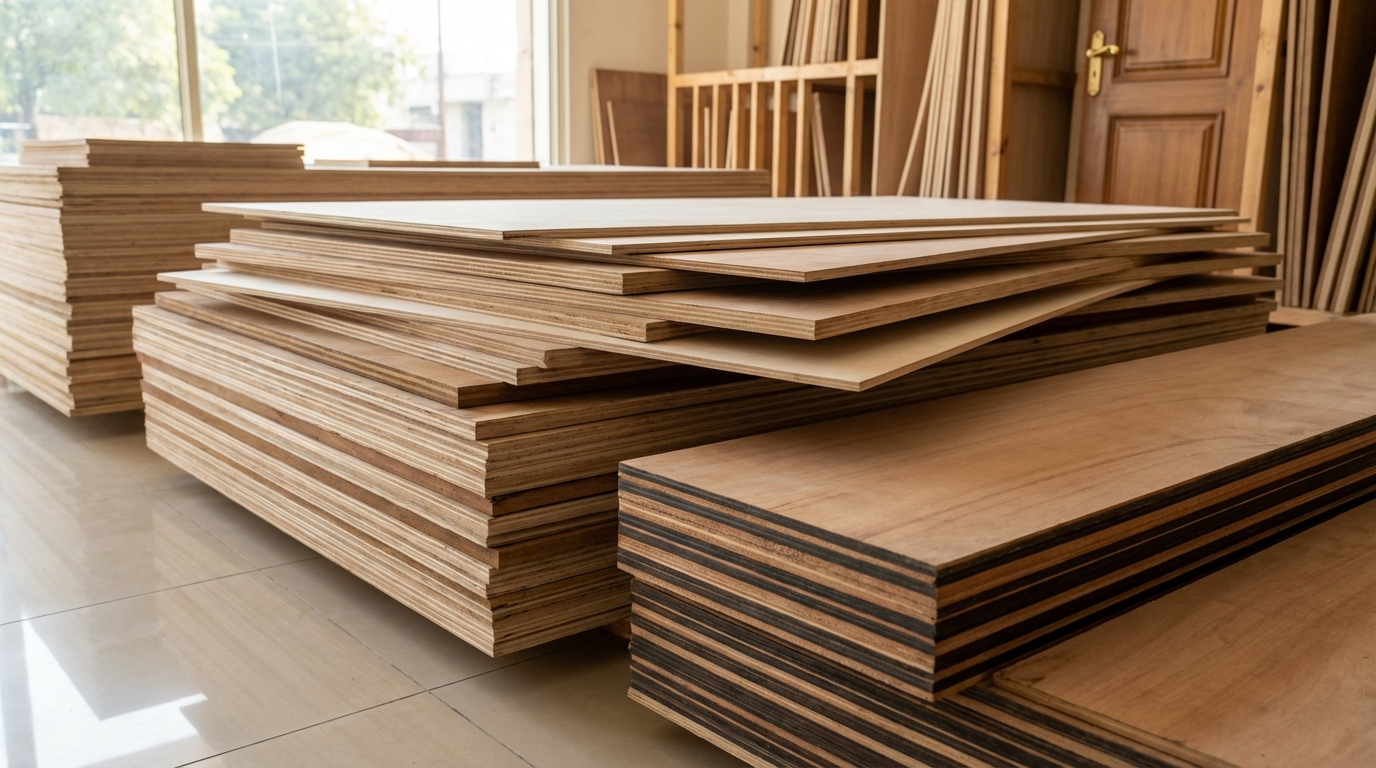
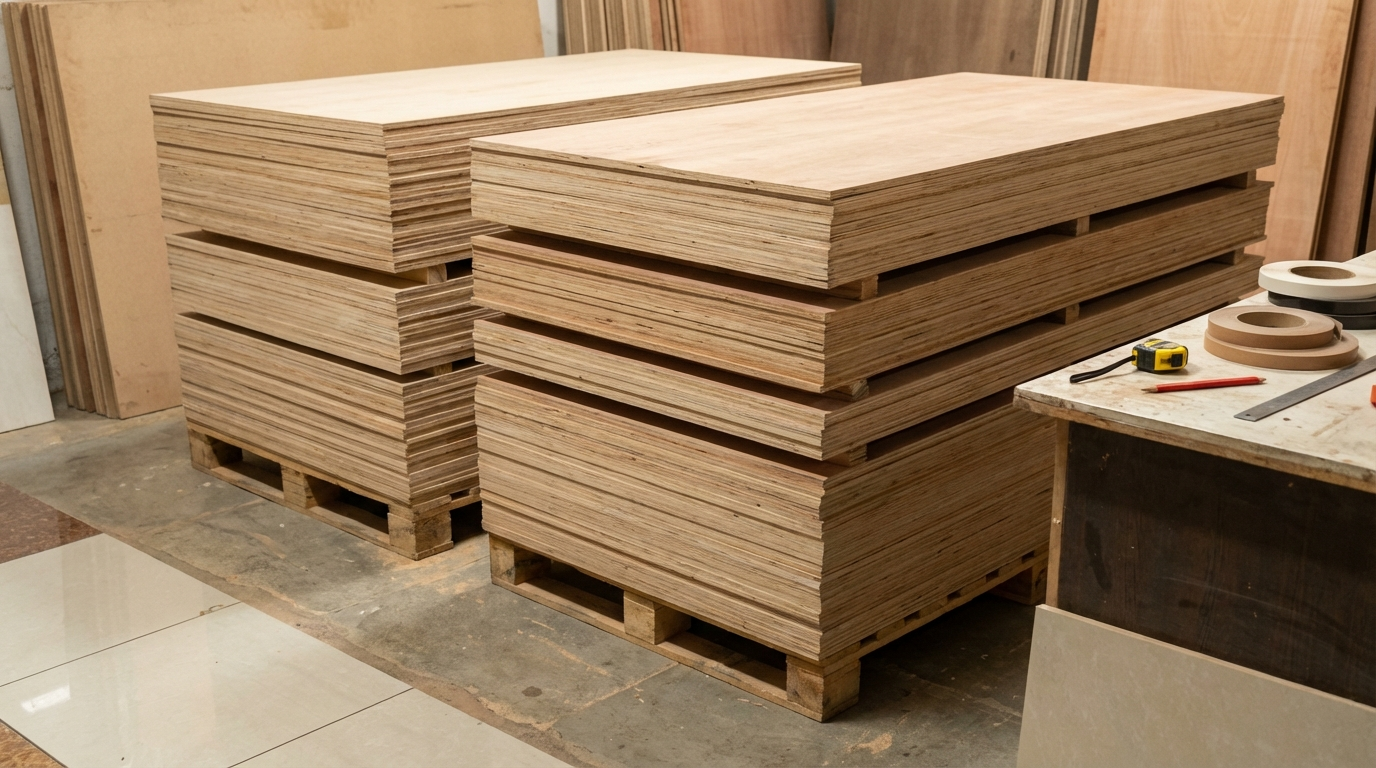
Pune's primary plywood market is concentrated in the New Timber Market area in Bhawani Peth, with over 1,600 plywood wholesalers operating across the city. The market stretches across multiple clusters—some old, some new—and navigating it without guidance is a recipe for overpaying or getting stuck with substandard material.
Short version: If you're doing interiors in Pune, your best bet is to visit the Bhawani Peth New Timber Market area (pincode 411042) where the highest concentration of plywood dealers exists. This area has both wholesale and retail options. But don't just walk in blind—know your grades, check for ISI marks on the actual sheet (not just packaging), and always compare at least 3-4 shops before deciding. In the 2026 market, top-quality BWP holds price while economy segments compete aggressively but with greater quality variance.
This is right for you if:
- You're doing kitchen, bathroom or any wet-area work in Pune and need waterproof ply
- You want to compare prices across multiple dealers before committing—saves you ₹2,000-5,000 on a typical 2BHK project, easily
- You've been confused by terms like BWR, BWP, MR, Marine and want clarity before your carpenter starts pushing whatever's in his regular supplier's stock
- You want to avoid the classic mistake of paying branded prices for unbranded or mislabeled material
Skip this if:
- You're looking for specific dealer names and phone numbers (I don't list those—too many change, and frankly, commissions create bias)
- You're expecting exact prices—those change monthly
Bottom line: Pune has excellent plywood availability, but the gap between best and worst quality is massive. Understanding grades matters more than finding the "best" dealer.
What "Plywood Dealer" Actually Means in the Pune Market
A plywood dealer is a trader who stocks and sells plywood sheets—they don't manufacture. The ISI mark is a certification mark controlled and issued by the Bureau of Indian Standards (BIS), and this symbol means that a certain product complies with the quality standards set by BIS. Most dealers in Pune carry multiple brands, ranging from national names like Century, Greenply, and Kitply to regional mills from Gujarat and Karnataka.
Most people think all dealers sell the same stuff. Actually, no. There's a huge difference between a retail plywood shop in Kothrud and a wholesale godown in Bhawani Peth. The wholesale guys deal in volume—contractors, builders, interior firms. They'll often negotiate better on 20+ sheet orders but won't bother with small retail queries. Retail shops are friendlier for individual buyers but mark up by 8-15%.
Here's something that surprised me when I first visited Pune's timber market: the same brand can have wildly different quality depending on which factory batch it came from. Two sheets both labeled "18mm" can have different effective value if one is under-thickness, has voids, or has uneven pressing. This is why you check the sheet itself, not just the brand sticker.
Is it worth visiting the Timber Market yourself, or can you just order online?
Honestly, for your first purchase—go in person. Online ordering is fine for repeat purchases when you know exactly what you want. But that first visit teaches you things no website can: how the sheets smell (fresh ply vs old stock), how they flex when you lift them, whether the edges show gaps. I've had clients in Pune order "branded BWP" online and receive sheets with visible core voids. Returns are painful. Physical inspection prevents 80% of quality disputes.
Why Pune's Climate Actually Matters for Plywood Selection
The average relative humidity of Pune is around 69%, although it varies from around 51% during summer (March) to 92% during the monsoon (August). August exhibits the highest relative humidity, with a percentage of 87.90.
So here's the thing. Pune isn't coastal like Mumbai, but it's not dry like Nagpur either. The monsoon lasts from June to October, with moderate rainfall and temperatures ranging from 22 to 28°C. Those four months of sustained humidity—especially if your flat has poor ventilation or faces the hills—create conditions where MR-grade plywood will struggle in kitchens and bathrooms.
I've seen this play out repeatedly. There was this 3BHK in Baner around 2022 where the client went with commercial MR-grade for the entire kitchen to save maybe ₹8,000. By the second monsoon, the cabinet under the sink had started swelling at the edges. The laminate was lifting. Complete redo cost him over ₹40,000. Classic false economy.
"The expensive mistake is choosing MR in moisture-prone zones to 'beat' a forecasted price rise. If swelling/delamination occurs, your effective cost explodes due to dismantling and refitting."
In places like Chennai or Mumbai, you'd use marine or BWP for almost everything. Pune is more moderate—you can get away with BWR grade for most applications, but kitchens and bathrooms need proper BWP. Living room wardrobes? BWR is usually fine. Outdoor use? Don't even think about anything less than marine grade.
Types of Plywood You'll Find at Pune Dealers
Let me break down what actually matters when you're standing in a Bhawani Peth shop with sheets stacked everywhere:
| Plywood Type | ISI Standard | Best For | Price Range (per sq ft) | My Take |
|---|---|---|---|---|
| Commercial/MR Grade | IS: 303 – for normal domestic products including beds, cupboards, tables | Dry areas—bedrooms, living rooms | ₹40–₹60 | Fine for wardrobes away from windows. Avoid in kitchens. |
| BWR Grade (Boiling Water Resistant) | IS: 303 | Semi-wet areas, general furniture | ₹60–₹90 | My default recommendation for Pune homes. Good balance. |
| BWP/Marine Grade | IS: 710 – for marine and river craft applications; standard first published in 1957 | Kitchens, bathrooms, areas with direct water exposure | ₹90–₹150 | Essential for sink cabinets. Don't compromise here. |
| Structural Plywood | IS: 10701 | Load-bearing applications, mezzanines | ₹100+ | Rarely needed in residential. Confirm with structural engineer. |
| Shuttering Plywood | — | Construction formwork | 12mm: ₹2,228–₹2,723/piece; 18mm: ₹3,168–₹3,872/piece | Tracks project starts and formwork cycles. Prices jump if construction accelerates. |
Honestly: Most Pune homes need a mix—BWR for 70% of furniture, BWP for kitchen base units and bathroom vanities. Don't let anyone upsell you marine grade for bedroom wardrobes. That's money wasted.
What thickness works best for wardrobes versus kitchen cabinets?
For wardrobe carcasses (the main body), 18mm is standard—actually, you could use 16mm for the sides if budget is tight, but 18mm for shelves is non-negotiable. Kitchen base cabinets need 18mm minimum because of the weight and moisture. For wardrobe shutters (doors), 18mm works, though some designers use 12mm with proper edge banding for a lighter feel. Backing panels are typically 6mm or 8mm.
Our wardrobe plywood guide goes deeper into thickness selection if you need specifics.
Major Plywood Market Areas in Pune
Here's where to actually go:
New Timber Market, Bhawani Peth (411042) – This is the heart of it. Established dealers like National Veneer & Ply have been here for 35 years. You'll find everything from budget commercial ply to premium imported veneers. Best for wholesale and serious comparison shopping. Go on a weekday morning—less crowded, dealers have more time to explain.
Bhawani Peth, Hadapsar, Kothrud, Shivaji Nagar – Retail-focused clusters spread across these areas. More convenient if you live nearby, but expect slightly higher prices than the main timber market.
Wakad, Kaspate Vasti Road – Growing hub serving the Hinjewadi IT corridor and Pimple Nilakh side. Newer shops, decent stock, caters to apartment buyers.
Hadapsar (Vardhman Chetan Estate area near Sasane Nagar) – Good option if you're in the eastern suburbs. Saves you the trip to Bhawani Peth.
Wagholi (Sai Balaji Warehousing area) – Warehouse-style dealers serving the outskirts. Better for bulk orders.
Price Reality Check (2026 Market Conditions)
In most Indian cities, plywood prices in 2026 are more likely to remain range-bound with periodic spikes than to fall meaningfully. The reason is structural: wood and adhesive costs don't easily deflate, while demand is project-driven and supply is fragmented.
Here's what you should expect to pay in Pune for standard 8x4 feet sheets:
| Plywood Type | Thickness | Approximate Price Range (per sq ft) | Notes |
|---|---|---|---|
| Commercial MR | 18mm | ₹40–₹60 | Budget option. Check for voids. |
| BWR Grade | 18mm | ₹60–₹90 | Sweet spot for most uses |
| Marine/BWP | 18mm | ₹90–₹150 | Essential for wet areas |
| Hardwood Ply | 18mm | ₹80–₹120 | Stronger core, heavier |
| Flexible Ply | Various | ₹90–₹130 | For curved surfaces only |
These prices vary by supplier, brand, and location—plywood rates in metropolitan cities may be slightly higher compared to smaller towns due to transportation and demand.
Here's what actually affects your final bill:
- Raw wood costs—timber species like Gurjan, Eucalyptus, and Neem influence core pricing
- Logistics and fuel charges—local delivery costs can alter landed pricing
- Sheet calibration and finishing—factory-calibrated plywood costs more but saves labour during fit-out
- Certifications—ISI, termite treatment, and boiling waterproof testing add value and cost
- Seasonality—monsoon affects drying and transport, moisture management costs rise
Industry should expect an 8–15% increase compared to last year. In many parts of the country, manufacturers say their per-sheet production cost went up by ₹12–₹15.
Can you negotiate prices with Pune dealers?
Absolutely. In the wholesale market, 5-10% negotiation is standard on cash purchases. Bulk orders (20+ sheets) get better rates. But here's the trick most people miss: negotiate on the total bill, not per-sheet price. Dealers are more comfortable giving a round-figure discount at the end than reducing their listed rate. And always—always—confirm whether GST is included in the quoted price. Some shops quote ex-GST to look cheaper.
BWR vs BWP: Making the Right Choice for Pune Conditions
This is where I see maximum confusion. Let me clarify.
BWR (Boiling Water Resistant) means the adhesive can handle humidity and occasional moisture—it's tested by boiling samples in water for a specific duration. Good enough for most Indian homes except direct wet areas.
BWP (Boiling Water Proof) uses phenolic resin adhesive that can withstand prolonged water exposure. BWP plywood can withstand complete water immersion. This is what you need under kitchen sinks, bathroom vanities, and any outdoor application.
| Factor | BWR Grade | BWP Grade | Choose When... |
|---|---|---|---|
| Water resistance | Moderate—handles humidity | High—survives direct water contact | BWP for under-sink areas, BWR elsewhere |
| Price | ₹60-90/sq ft | ₹90-150/sq ft | Budget matters? Use BWR where safe |
| Adhesive type | MUF or extended UF | Phenolic resin | — |
| ISI standard | IS: 303 | IS: 710 | Always verify ISI mark on sheet |
| Smell when cut | Less pungent | Stronger chemical smell | Good ventilation needed during fabrication |
| Pune suitability | Most rooms | Kitchen base, bathrooms | Don't use MR grade anywhere |
| My preference | Use BWR as default, upgrade to BWP only for wet-area base units. Don't waste money on marine grade for wardrobes. | ||
Trade-off summary: You gain significant cost savings with BWR (roughly 30-40% cheaper than BWP) but lose the ability to place furniture in areas with direct water exposure. For a typical 2BHK Pune flat, you might use 70% BWR and 30% BWP—most dealers will sell you both.
How to Choose a Reliable Plywood Dealer in Pune
Here's my framework—works in Pune, works anywhere:
Step 1: Start with market reputation
Ask your interior designer or contractor which dealers they DON'T buy from. That negative list is more useful than recommendations (which often involve commissions). Look for dealers with 10-20+ years in business—they've survived competition for a reason.
Step 2: Check stock freshness
Plywood doesn't improve with age. Ask when the batch arrived. Sheets sitting in godowns for 6+ months may have absorbed moisture, especially if stored improperly during monsoon. Fresh stock has a distinct woody smell without mustiness.
Step 3: Verify ISI marking physically
Check for the ISI mark directly printed on the plywood. Avoid plywood where the ISI stamp is only on the packaging. The marking should include: ISI logo, IS number (303 or 710), license number, and manufacturer details.
Step 4: Compare across minimum 3 dealers
Prices vary 15-25% for identical grades across Pune dealers. The New Timber Market allows easy comparison—shops are adjacent. Spend an hour, save thousands.
Step 5: Ask for calibration certificate
Better manufacturers provide calibration reports showing actual thickness consistency. 18mm labeled ply should be 17.5-18.5mm across the sheet. Cheap ply varies wildly.
| Situation | Recommendation | Why |
|---|---|---|
| First-time buyer, single flat | Visit New Timber Market with your contractor | Direct comparison, contractor knows quality indicators |
| Bulk order (builder/multiple flats) | Get quotes from 3-4 wholesale dealers in Bhawani Peth | Volume discounts significant at 50+ sheets |
| Need quick delivery, small quantity | Use local retail shop near project site | Saves transport time, small premium acceptable |
| Specialty requirement (flexi-ply, veneers) | Established dealers like those in the heart of Timber Market with 35+ years experience stock decorative and specialty items | Niche products need specialist knowledge |
Red flags to walk away from:
- Dealer refuses to let you inspect sheets before purchase
- ISI mark visible only on outer packaging, not stamped on ply
- Price significantly below market (30%+ cheaper usually means quality compromise)
- No proper billing offered, only "kaccha" receipt
- Sheets show warping, bowing, or edge damage in storage
- Dealer can't explain the difference between BWR and BWP grades
Common Mistakes People Make When Buying Plywood in Pune
1. Trusting the carpenter's "regular supplier" blindly
Look, I get it—it's convenient. But carpenters often get commissions from specific dealers, which doesn't necessarily align with your interest in getting the best quality-price ratio. Always verify independently, at least for your first project.
2. Choosing based on brand name alone
A visually attractive face veneer can hide voids or low-density core. I've seen "branded" sheets that came from unauthorized sub-dealers or were older stock with quality issues. The brand matters, but physical inspection matters more.
3. Using MR grade for kitchen cabinets
This one really frustrates me. I've been saying this for years—MR grade is NOT suitable for kitchens. Period. The expensive mistake is choosing MR in moisture-prone zones. The ₹5,000-8,000 you save initially becomes a ₹50,000 replacement job in 2-3 years.
4. Not checking actual thickness
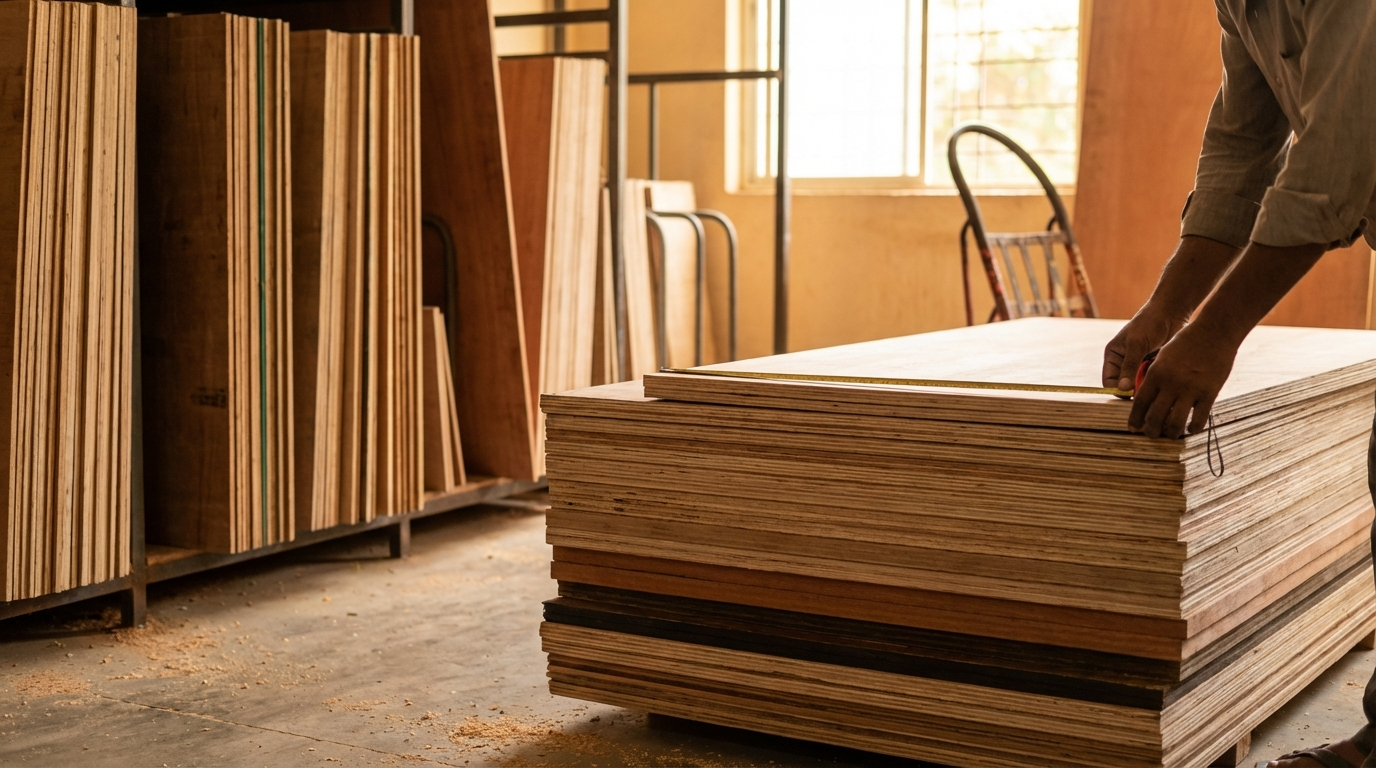
Two sheets both labeled "18mm" can have different effective value if one is under-thickness. Carry a measuring tape. Acceptable tolerance is ±0.5mm. Anything more, and you're getting cheated.
5. Ignoring core quality for face appearance
The smooth, pretty face veneer means nothing if the core is full of gaps. Tap the sheet—hollow sounds indicate voids. Calibrated plywood with no core gaps means better load-bearing capacity, uniform thickness, and greater structural integrity.
6. Buying during peak monsoon without inspection
During August, Pune experiences humidity of about 80% and above. Plywood absorbs moisture if stored improperly. July-September purchases need extra scrutiny—check for any dampness, warping, or musty smell.
7. Forgetting to account for wastage
Your carpenter will need 10-15% extra material beyond the calculated requirement due to cutting patterns and defects. Budget accordingly. I've seen projects stall because clients ordered exactly the calculated quantity.
8. Not getting proper GST billing
This matters for warranty claims. If the dealer sells without proper invoice, you have zero recourse if the ply fails within warranty period. Branded plywood warranties require original purchase documents.
9. Assuming all "marine" plywood is actually IS: 710 certified
Many dealers use "marine" loosely. Genuine marine plywood under IS: 710 is required to withstand rigorous conditions involving changes in temperature, humidity and alternate wetting and drying. Ask for the ISI certificate, not just verbal claims.
Quality Checks You Can Do Yourself
Visual checks (do these in the shop):
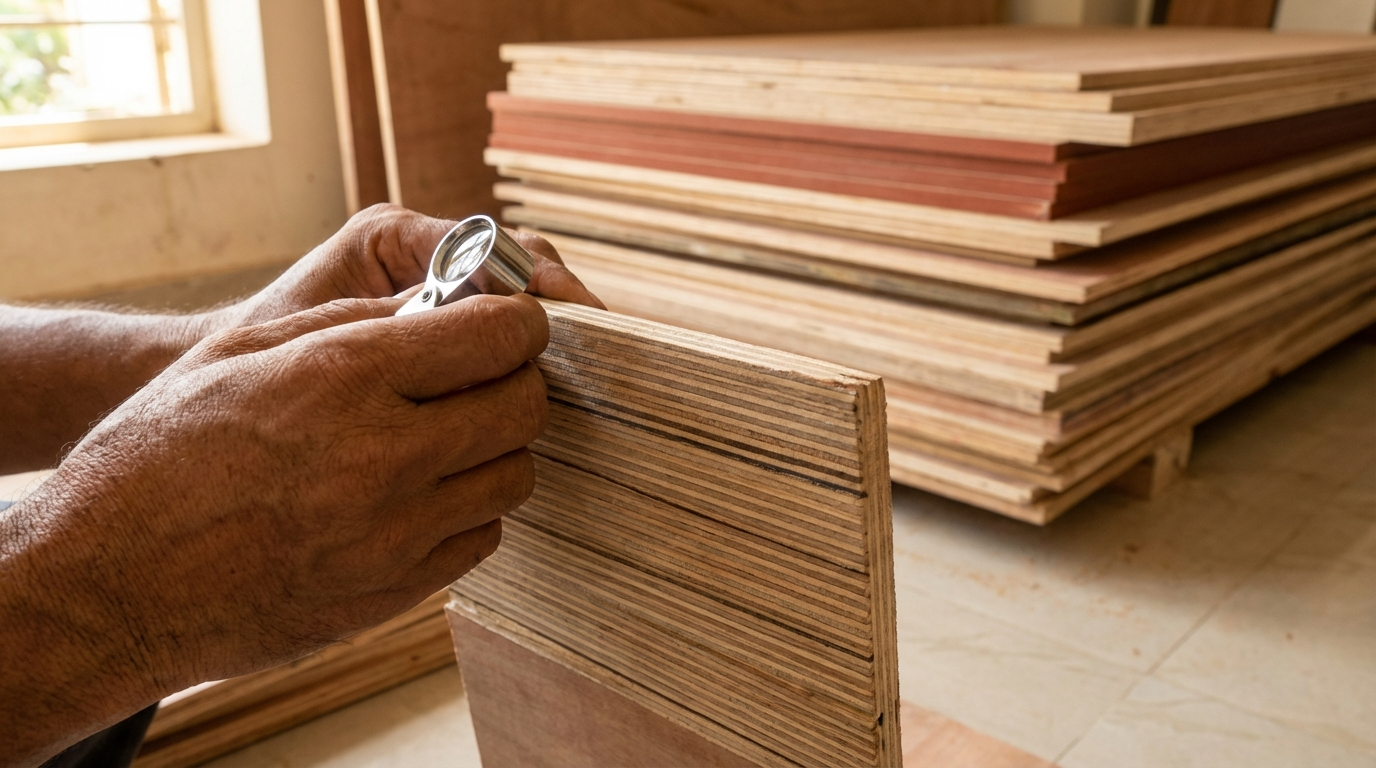
- Look at the edge—count the layers. More plies in the same thickness generally means better quality
- Check for core gaps/voids visible at edges
- Examine face veneer for patches, cracks, or uneven grain
- Look for any warping when the sheet lies flat
- Check if the manufacturer's stamp is printed (not stuck as a label)
- Verify thickness matches label at multiple points
Questions to ask the dealer:
- "What's the ISI license number, and can I verify it online?" (BIS website allows verification)
- "When did this batch arrive? Can I see the challan?"
- "What's your return policy for manufacturing defects?"
- "Is this calibrated plywood or standard?"
- "What adhesive grade—MUF, phenolic, or extended UF?"
Simple field tests:
- Tap test: Knock on the surface. Solid, consistent sound = good core. Hollow or varying sounds = voids inside
- Weight check: Compare two same-size sheets. Significantly lighter one likely has voids or lower density core
- Edge inspection: Run your finger along edges. Splinters, rough patches, or visible gaps indicate poor manufacturing
- Flex test: Slightly flex a corner (don't break it!). Good ply springs back. Bad ply stays bent or creaks
- Smell test: Strong chemical smell is normal for phenolic (BWP). Musty smell = old stock or moisture damage
Here's a trick most dealers don't like: Ask to see the bottom sheets in a stack, not just the top ones. Top sheets displayed to customers are often premium quality; dealers sometimes hide damaged or lower-grade sheets below. If they refuse, that tells you something.
Workmanship & Installation: What to Tell Your Carpenter
Good plywood can still fail if the mistri doesn't handle it properly. Here's what to communicate:
Cutting requirements:
- Use sharp circular saw blades—dull blades cause splintering
- Cut with the face veneer up to minimize visible chipping
- Support the sheet fully during cutting—unsupported cuts cause cracking
Edge sealing—this matters a lot:
Unsealed edges absorb moisture, especially during monsoon. Even BWP grade can swell at exposed edges over time. Options: edge banding tape (most common), PU sealant paint, or veneer strips. Don't skip this step, especially for kitchen cabinets.
Fastener guidance:
- Use 25-32mm screws for 18mm ply (should penetrate about 2/3 of thickness)
- Pre-drill pilot holes to prevent splitting, especially near edges
- For heavy-duty connections, use cam locks or dowels rather than just screws
- Avoid nails in plywood—they don't hold well and split the layers
Your carpenter briefing checklist:
- All edge cuts must be sealed before installation—no exceptions
- Kitchen base units need BWP grade only—don't substitute
- Allow 2-3mm expansion gap where ply meets walls
- Store sheets flat and dry at site before use—minimum 48 hours acclimatization
- Don't use damaged sheets, even for hidden areas—request replacement from dealer
- Apply water-resistant coating to bottom edges of base units (areas near floor)
Storage and acclimatization:
If you see frequent dealer stockouts of common thicknesses like 12mm/18mm, that's a practical sign you're in a supply-constrained scenario locally. Plan purchases early. Once delivered to site, sheets should lie flat (not standing) on a level surface, covered loosely to allow air circulation but protected from rain. During August when humidity varies from 74.6% to 99.3%, this becomes especially critical.
I've seen carpenters skip the acclimatization because they're in a hurry—then the furniture warps within weeks as the ply adjusts to room humidity. Two days of waiting saves months of complaints.
How Long Does Plywood Actually Last?
In my experience, well-maintained BWR plywood furniture lasts 10-15 years in normal conditions. BWP grade can go 15-20 years in wet areas if properly sealed. But "well-maintained" is the key phrase.
What affects longevity:
- Edge sealing quality—the weakest point on any plywood furniture
- Humidity control—AC rooms fare better than non-AC
- Direct water exposure frequency—occasional splashes vs. daily wetting
- Quality of original plywood—branded ISI-certified vs. unbranded
- Laminate/finish protection—good laminate adds years of life
Signs of wear to watch for:
- Laminate lifting at edges—early warning sign of moisture penetration
- Swelling or bubbling on surface—water damage has begun
- Screws becoming loose—core may be deteriorating
- Musty smell from cabinets—hidden moisture damage
- Visible warping of doors or panels—beyond repair, needs replacement
When to consider replacement:
If more than 30% of a cabinet unit shows damage, replacement is usually more economical than repair. Minor edge swelling can be cut away and re-edged. But once the core is compromised, there's no fixing it—the structural integrity is gone.
How long does BWP plywood really last in Pune's monsoon humidity?
Under kitchen sinks with proper edge sealing and ventilation? 12-15 years is realistic. Without edge sealing? I've seen failures in 3-4 years. The difference is entirely in how the plywood is finished and installed, not the material itself. Always treat 2026 pricing as "value per usable year," not "price per sheet."
Alternatives Worth Considering
Plywood isn't the only option anymore. Here's what else is available at Pune dealers:
HDHMR (High Density High Moisture Resistance)
Engineered board made from wood fiber. More homogeneous than plywood—no voids. Better for CNC-routed designs. Slightly cheaper than BWP plywood. Works well in kitchens. The kitchen cabinet material comparison on our site covers HDHMR vs plywood extensively.
MDF (Medium Density Fiberboard)
Good for painted finishes and detailed moldings. Not suitable for wet areas or load-bearing applications. Cheaper than plywood. Use only for decorative paneling, TV units, or wardrobe internals where weight isn't an issue.
Blockboard
Lighter than plywood, good for large panels like doors. Not recommended for shelves carrying weight—sags over time. If budget is tight, consider blockboard for backing panels only.
WPC (Wood Plastic Composite)
Excellent for frames in wet areas—completely waterproof. More expensive than wood but zero maintenance. If you're considering WPC frames, there's a separate door frame guide worth checking.
FAQs: What Pune Buyers Actually Ask
What if I live in Kothrud—do I need to go all the way to Bhawani Peth?
Not necessarily. Kothrud has several retail plywood shops that stock major brands. You'll pay maybe 8-12% more than wholesale market prices, but you save transport time and hassle. For small orders (under 10 sheets), local shops make sense. For larger projects, the savings from wholesale justify the trip. Some dealers also deliver across Pune, so get quotes with delivery charges included.
Is it true that all branded plywood is automatically good quality?
Common belief: branded means guaranteed quality. Reality: brands have multiple grades, and the cheapest variant of a premium brand may be worse than the best variant of a lesser-known brand. Always check the specific grade (MR/BWR/BWP) and ISI marking. Brand reputation helps with consistency and warranty service, but it's not a substitute for physical inspection.
Is it true that plywood prices are fixed and there's no scope for negotiation?
Absolutely false. Expect small upward revisions and negotiation-based pricing. Retail MRP exists, but wholesale prices are always negotiable. Even retail shops offer 3-5% cash discounts. Contractors and bulk buyers routinely negotiate 8-15% below listed rates. The key is comparing across dealers first—knowledge of market rates strengthens your negotiation position.
Can I use the same plywood grade for the entire kitchen?
Here's what I tell my clients: use BWP for base units (anything below counter level, especially sink cabinets) and you can use BWR for wall units (upper cabinets). Base units get water splashes, leaking pipes, and mopping water. Wall units typically don't. This mixed approach saves money without compromising durability where it matters.
Is it true that imported plywood is better than Indian brands?
Mostly marketing fluff. China accounts for 52% of global plywood production with export revenues of $5.3 billion. Some imported ply is excellent; some is rubbish dumped at low prices. Indian ISI-certified plywood from reputable manufacturers is perfectly adequate for residential use. Where imports genuinely excel is specialized products like flexible ply or premium decorative veneers—not standard furniture-grade material.
What should I do if the plywood delivered doesn't match what I ordered?
Check immediately upon delivery—before the truck leaves if possible. Verify ISI marking, grade, thickness, and quantity against your invoice. If there's a mismatch, document with photos and refuse delivery or note the discrepancy on the receipt. Reputable dealers will replace, but only if you catch it early. Once the carpenter starts cutting, your leverage disappears.
Is it safe to buy plywood online from marketplaces?
For replenishment orders when you know exactly what you need—yes. For first-time purchases—risky. You can't inspect quality before delivery. Descriptions like "waterproof" are used loosely online. If you do buy online, insist on proper GST invoice and stick to authorized dealers or brand stores. The reviews help, but remember that most negative reviewers had quality issues that you want to avoid firsthand.
How do I verify if an ISI mark is genuine or fake?
The ISI mark is controlled and issued by the Bureau of Indian Standards (BIS). Every ISI-marked product has a license number that can be verified on the BIS website. The marking should include: the ISI logo, IS number (303 for general, 710 for marine), CM/L number (manufacturer's license), and be printed directly on the sheet—not on a separate sticker. If the dealer can't provide the license number or it doesn't verify online, walk away.
What if my carpenter says BWR is "enough" for the kitchen?
Push back. Politely but firmly. Buyers may "downshift" to cheaper grades—often a false economy if moisture exposure is real. The carpenter doesn't pay for replacement when your cabinet swells in year two. You do. For peace of mind, insist on BWP for all base units and areas within 2 feet of water sources.
Is marine plywood overkill for a Pune apartment?
For bathrooms and under-sink areas—no, it's appropriate. Marine plywood is required to withstand rigorous conditions involving changes in temperature, humidity and alternate wetting and drying. For living room wardrobes and bedroom furniture—yes, it's overkill and a waste of money. Pune's climate is moderate; BWR handles most applications fine. Reserve marine/BWP grade for specific moisture-prone spots.
Is it true that termite-treated plywood doesn't need any other protection?
Termite treatment prevents pest damage, not moisture damage. You still need the right grade for water resistance. Many branded plywoods come pre-treated for termites, which is a plus, but it doesn't change the MR/BWR/BWP classification. Check for both: termite treatment AND appropriate water resistance grade for your application.
Quick tip before you head to the market: take photos of your room measurements and share them with the dealer. They can help calculate sheet requirements and minimize wastage through smart cutting plans. Saves you money and multiple trips.
Good luck with your project. And seriously—don't compromise on kitchen base cabinets. That's where Pune's monsoon humidity hits hardest.
Note: sainik710.com is an independent informational site and is not affiliated with any manufacturer.
Disclaimer: This content is provided for general informational purposes based on industry practices and publicly available information. Product specifications, standards, prices, and availability may vary by manufacturer, region, and time. Readers should independently verify details with manufacturers, dealers, or qualified professionals before making purchase or construction decisions.Want Plywood Suggestions?
Share a few details and a Sainik 710 specialist will suggest suitable brands and connect you to responsive dealers.