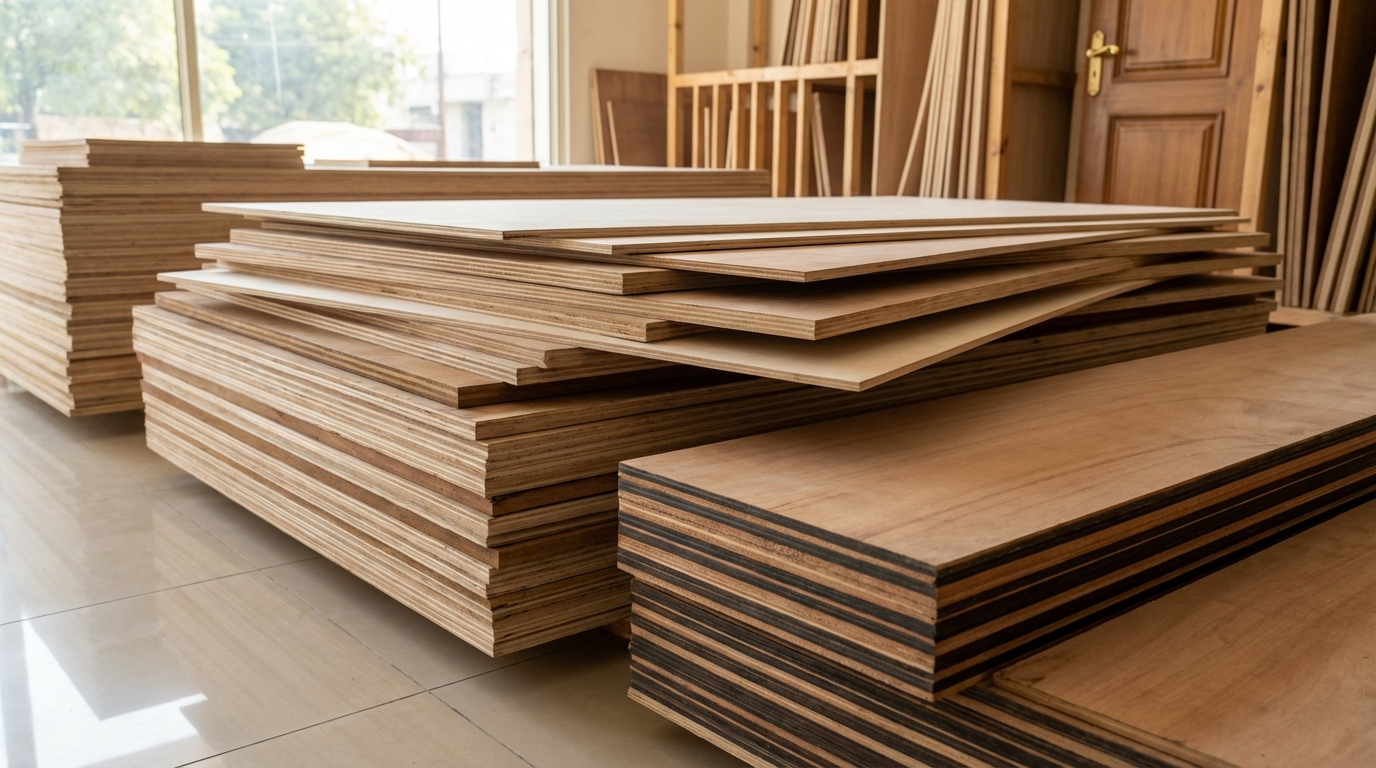
Plywood Dealers in Lucknow: Genuine Plywood Shops + Verification Checklist
Find plywood dealers in Lucknow—BWP, marine & commercial plywood shops. Verification checklist, price guide & tips for genuine plywood purchase.
Quick Answer: Where to Actually Buy Plywood in Lucknow
Lucknow has roughly 40-50 plywood dealers scattered across Kaiserbagh, Charbagh, Aminabad, and the newer Gomti Nagar stretch—but only about a third of them stock genuine ISI-marked boards consistently.
Short version: The main dealer clusters sit around Kaiserbagh market and Hewett Road near Shivaji Marg. For branded options, you'll find authorized dealers for major manufacturers in these areas. But here's the catch—just because a shop displays brand boards doesn't mean everything they sell is genuine. Verification matters more than the shop's signboard.
This guide is right for you if:
- You're building furniture in Lucknow and need reliable plywood sources
- You've been burned before—bought "BWP" that swelled up within months and now you're paranoid
- Your carpenter is pushing you toward a specific dealer and you want to cross-check
- You're new to UP and don't know which markets to trust
Skip this if:
- You only need a single 8x4 sheet for a quick repair job—any local hardware store will do
Bottom line: The dealer matters less than your verification process—a good checklist catches bad plywood regardless of where you buy it.
What "Authorized Dealer" Actually Means (And Doesn't Mean)
An authorized plywood dealer is a retailer officially registered with a plywood manufacturer to stock and sell their products. This typically means they receive directly from company warehouses and should maintain certain quality standards.
Most people think authorized means guaranteed quality. Actually, it just means they have a business relationship with the brand. The dealer might stock genuine branded sheets on one stack and cheaper unbranded stuff right next to it—and they'll happily sell you whichever you don't specifically ask to verify.
I've walked into "authorized" showrooms in Delhi, Mumbai, and yes, Lucknow, where the displayed samples were perfect but the stock they tried to load into my vehicle was clearly different—thinner, lighter, missing edge stamps. The authorization certificate on the wall doesn't load onto your truck. The actual sheet does.
What authorization should mean: the dealer can source that specific brand, they get some level of company support, and theoretically they're accountable if quality issues arise. What it often means in practice: the brand name brings you through the door, and then it's still buyer-beware territory.
Why Lucknow's Climate Makes Plywood Choice Tricky
Lucknow sits in the Gangetic plain with a climate that swings dramatically. Summer hits 45°C and above. Winter drops to single digits. And then monsoon dumps humidity levels that regularly cross 85%—sometimes touching 95% in August and September.
This matters because plywood reacts to moisture. MR grade (moisture resistant) handles occasional humidity fine. But Lucknow's monsoon isn't occasional—it's three straight months of relentless dampness. Kitchens stay humid year-round from cooking steam. Bathrooms obviously. Even living room wardrobes near exterior walls can trap moisture during monsoon.
In places like Chennai or Mumbai, you'd automatically go BWP or marine grade for anything near water. Lucknow's interesting because it's not coastal, so people assume they can get away with cheaper MR grade everywhere. What actually happens is the monsoon swelling and winter contraction cycles stress the boards repeatedly. By year three or four, you start seeing warping even in "dry" applications like bedroom wardrobes.
My recommendation for Lucknow specifically: BWR minimum for kitchens and any furniture against exterior walls. BWP for bathrooms—don't compromise there. MR grade is acceptable for interior wardrobes in air-conditioned rooms that stay climate-controlled.
Lucknow's Main Plywood Market Areas
Kaiserbagh and Charbagh Cluster
This is the traditional hardware and building materials hub. You'll find older established dealers here—some running third-generation family businesses. The advantage is competition keeps prices honest and you can walk between multiple shops comparing in an hour. The disadvantage is parking is a nightmare and the lanes get chaotic.
Shivaji Marg and Hewett Road
Several branded showrooms operate along this stretch. According to what I've seen and heard from contractors working in UP, this area has dealerships for major brands like Greenply, Century, and others. The Krishna Ply & Hardware shop on Shivaji Marg, for instance, has been operating for years and shows up with reasonable reviews from buyers [greenply.com].
The Hewett Road side has smaller shops worth checking—Shivajee Doors and Ashoka Glass & Plywood Centre are in this zone. Fair warning though: I haven't personally verified their current stock quality. Always apply the checklist regardless of what Google reviews say.
Gomti Nagar and Newer Developments
The posher showrooms targeting architects and interior designers have set up in Gomti Nagar. Prices tend to be marginally higher here—you're paying for air-conditioning and better display, essentially. The stock is often identical to what you'd find in Kaiserbagh, just presented nicer.
Latouche Road Area
A few dealers operate here, including some older wholesale operations. If you're buying in bulk—say, for an entire flat's furniture—the wholesale pricing here might work better than retail showrooms. But bring your own transport; these guys don't always do delivery for small orders.
Types of Plywood You'll Encounter in Lucknow Shops
Not all plywood is created equal. Here's what you'll actually see when you walk into dealers:
| Grade | Full Form | Best For | Avoid For | Lucknow Reality Check |
|---|---|---|---|---|
| MR | Moisture Resistant | Bedroom furniture, living room cabinets, interior partitions | Kitchens, bathrooms, exterior walls | Most commonly pushed grade—dealers make better margins here |
| BWR | Boiling Water Resistant | Kitchen cabinets, dining furniture, wardrobes near exterior walls | Direct water contact, outdoor use | Good middle ground for Lucknow's humidity |
| BWP | Boiling Water Proof | Bathroom vanities, kitchen sink areas, high-humidity zones | Nothing really—but overkill for dry bedrooms | Genuine BWP costs 30-40% more than MR; verify ISI marks carefully |
| Marine | Marine Grade | Constant water exposure, outdoor furniture, boat building | Regular indoor use—unnecessarily expensive | Rarely stocked; usually special order. Most "marine" labels are actually just BWP. |
| Commercial | — | Packing, temporary structures, backing boards | Any furniture meant to last | Cheap, everywhere, and often mislabeled as higher grades |
My take: For typical Lucknow home furniture—go BWR for kitchens and BWP for bathrooms. Don't let anyone convince you MR is "good enough" for a kitchen that'll see steam and spills daily. I've had arguments with dealers about this. They'll say "madam/sir, this is best quality MR, no problem." It's still MR. Physics doesn't care about sales pitch.
Is BWP actually worth the extra cost in Lucknow?
Depends entirely on where you're using it. For a bedroom wardrobe in an air-conditioned flat that stays climate-controlled, BWP is overkill—you're spending 35-40% more for protection you don't need. But for bathroom vanities and kitchen undersink cabinets, BWP pays for itself within two monsoons. I've seen MR-grade kitchen cabinets in Gomti Nagar flats that looked fine in January and needed replacement by October. The humidity gets trapped behind the granite countertop and just destroys unprotected board edges. So: bathroom and wet kitchen zones—yes, absolutely worth it. Dry interior spaces—save your money, BWR is plenty.
Price Reality Check for Lucknow (2025-26 Market)
I'm deliberately not giving exact figures because prices shift monthly with raw material costs. But here's the relative picture:
Commercial grade (MR): Expect roughly ₹45-65 per sq ft for 18mm depending on brand and core quality. Local unbranded stuff goes cheaper—₹35-45—but you're gambling on consistency.
BWR grade: Around ₹65-85 per sq ft for 18mm from decent brands. This is your working range for kitchen cabinets.
BWP grade: ₹85-120 per sq ft for 18mm. Proper BWP with ISI 710 certification costs more. Anyone offering "BWP" at MR prices is selling you something else.
What actually affects your final bill:
- Thickness—19mm costs noticeably more than 18mm, and 25mm is premium
- Core type—calibrated cores cost more than regular; worth it for modular kitchen shutters
- Quantity—buying 20+ sheets usually gets you 5-10% off retail
- Season—rates tend to dip slightly in October-November after monsoon demand drops
- Brand premium—top-tier brands charge 15-25% more for the name; whether that's worth it depends on your risk tolerance
Here's what many guides won't tell you: the dealer's margin on cheaper grades is often higher percentage-wise than on premium grades. They'll push MR harder because they make more on each sheet relative to their cost. Keep that in mind when they're "advising" you on what's sufficient.
The Verification Checklist (Print This Before You Go)
I've developed this over years of buying plywood across multiple cities. Works in Lucknow, works anywhere.
Before You Leave the Shop
| Check | What to Look For | Red Flag |
|---|---|---|
| ISI Mark | Stamped clearly on sheet face—not just sticker | Sticker only, or stamp is blurry/incomplete |
| Grade Marking | IS:303 for MR, IS:710 for BWP—printed on sheet | No IS number, or verbal claims only |
| Brand Logo | Embossed or printed consistently across sheets | Logo only on topsheet, not on edges or backside |
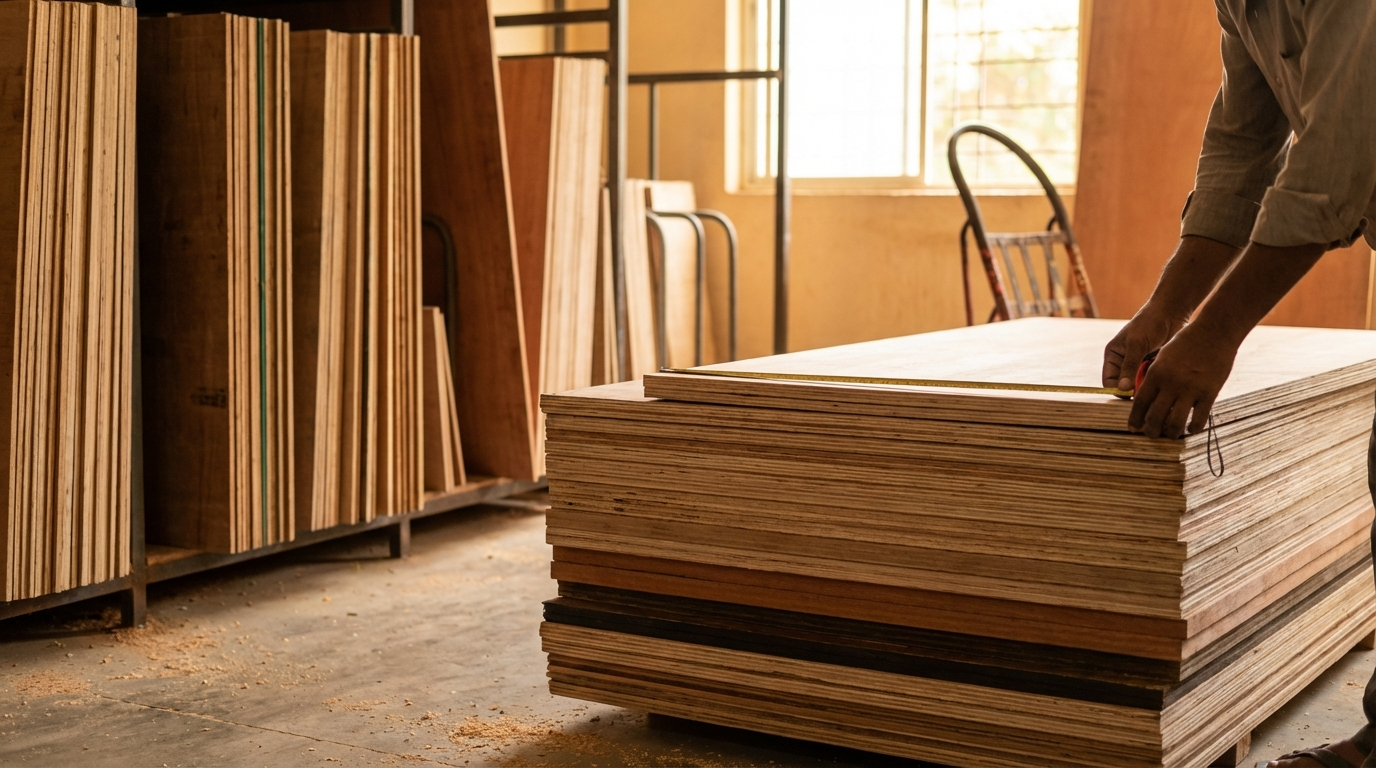
| Thickness | Measure with your own tape—should match claimed mm | Claimed 18mm measures 16.5-17mm (common cheat) |
| Weight | Lift the sheet—heavier usually means denser core | Unusually light for the thickness claimed |
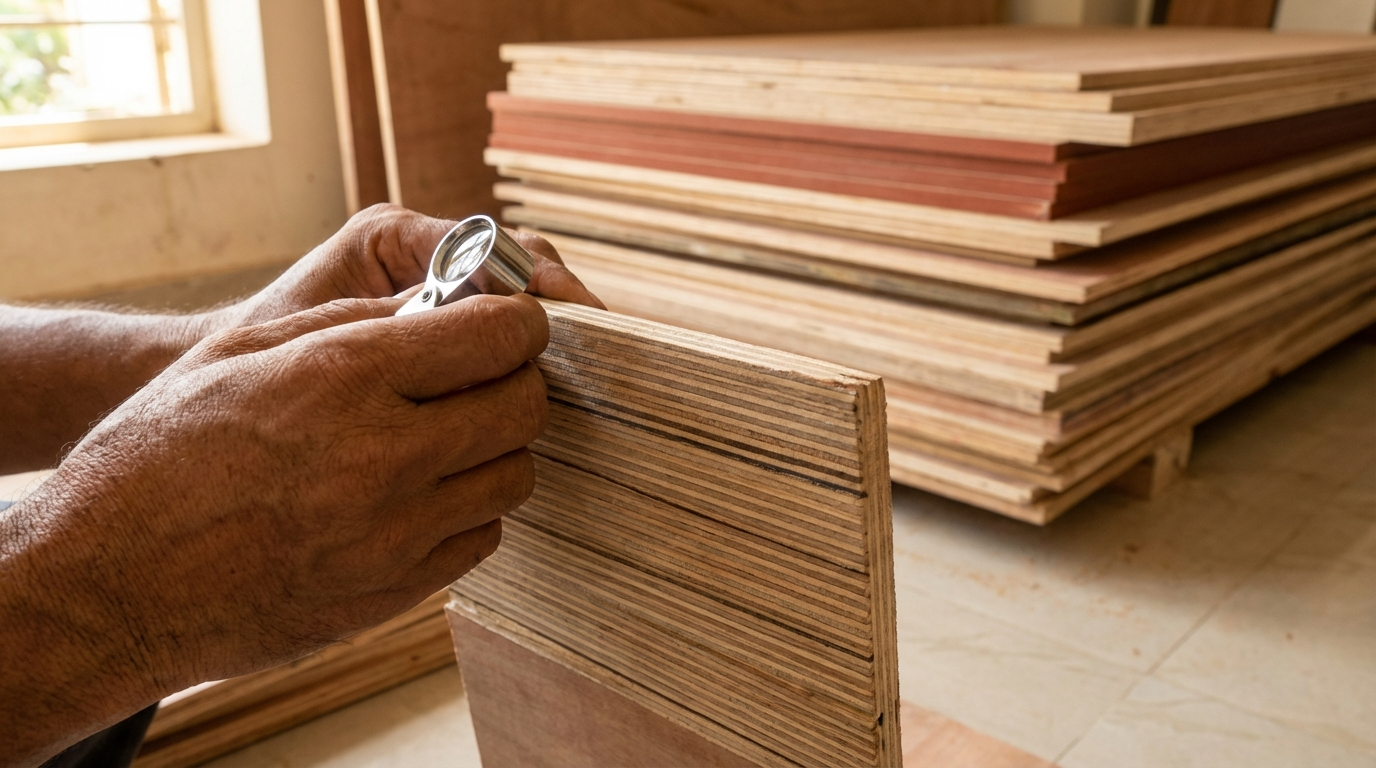
| Edge Inspection | Look at exposed layers—should be uniform, no voids | Gaps between plies, inconsistent layer thickness |
| Surface | Smooth, no bubbles, consistent color | Rough patches, discoloration, visible bubbles |
| Flex Test | Slight flex across width is normal; should spring back | Stays bent, or makes cracking sounds |
Questions to Ask the Dealer Directly
These questions aren't about getting information—they're about watching the reaction.
- "Can I see the company invoice for this batch?" Legitimate dealers have it. Hesitation = concern.
- "What's the warranty process if this delaminates within a year?" They should know the procedure immediately.
- "Is this from the same batch as the display sample?" Watch their eyes when they answer.
- "Do you have the company's toll-free number for verification?" Most branded plywood has QR codes or batch numbers that can be verified. Genuine dealers encourage this.
- "Can I pick my own sheets from the stack instead of taking what's loaded?" If they resist, something's off.
A Trick Most Dealers Don't Like
Ask to check sheets from the middle of the stack, not just the top ones. Sometimes the top 4-5 sheets are the genuine article, and the rest underneath is cheaper substitute. I've caught this twice—once in Thane, once in Noida. Same trick probably works in Lucknow. The dealer's reaction when you ask tells you everything.
Common Mistakes Buyers Make in Lucknow
Trusting the carpenter's "usual supplier" blindly. Your mistri might be getting a referral commission. Not saying all carpenters do this, but enough do that it's worth buying from a different source occasionally just to compare. I tell my clients: trust your carpenter's skill, verify his material recommendations independently.
Buying purely on price. The ₹10 per sq ft you save on cheaper MR instead of BWR will cost you ₹10,000+ in replacement when the kitchen cabinet bases swell. Short version: cheap plywood is expensive plywood, just with delayed billing.
Not measuring thickness yourself. This one really frustrates me. 18mm plywood that measures 16.5mm isn't a small thing—it's 8% less material. You're paying for 18, getting 16.5. Carry a tape measure. Takes thirty seconds.
Assuming "branded" means verified. A dealer can stock five genuine branded sheets for display and fifty dubious ones in the godown. The brand name on the signboard doesn't transfer to every sheet in the shop.
Ignoring edge quality. People check the face surface obsessively and never look at the edges. The edges reveal everything—voids, inconsistent glue lines, poor quality inner plies. Always check edges.
Buying without seeing the batch. "We'll deliver from godown" means you don't see what you're getting. Insist on seeing the actual sheets that will be delivered, or at minimum, that they come from the same batch as your inspected sample.
Not getting a proper invoice. This seems basic but a shocking number of buyers accept delivery receipts instead of proper GST invoices. Without invoice, warranty claims become nearly impossible, and you have no proof of grade purchased.
What thickness works best for wardrobes in Lucknow homes?
For wardrobe carcass (the box structure), 18mm works fine—it's the industry standard and handles normal loads without flexing. For shelves longer than 75cm without support, consider 19mm to prevent sagging over time, especially if you're loading heavy stuff. Backing boards can be 6mm. Wardrobe doors depend on whether you're using solid panels or frame construction—18mm for solid, 12mm for framed panels is typical. One thing specific to Lucknow: the winter-summer temperature swing can cause 18mm boards to warp slightly if not acclimatized before installation. Tell your carpenter to store the sheets indoors for 3-4 days before cutting.
What to Tell Your Carpenter (The Briefing Checklist)
Even if you buy perfect plywood, poor workmanship ruins it. Here's what to communicate:
- Edge banding is mandatory. Every cut edge must be sealed—either with matching laminate edge tape or PVC lipping. Unsealed edges absorb moisture first.
- Pre-drill screw holes. Driving screws directly into plywood without pre-drilling causes splits, especially near edges. Non-negotiable.
- Screw sizes matter. For 18mm ply, 25mm screws work. Longer screws punch through and look terrible. Shorter screws don't grip.
- Support long horizontal spans. Any shelf over 80cm needs a center support or it'll sag within two years. Physics.
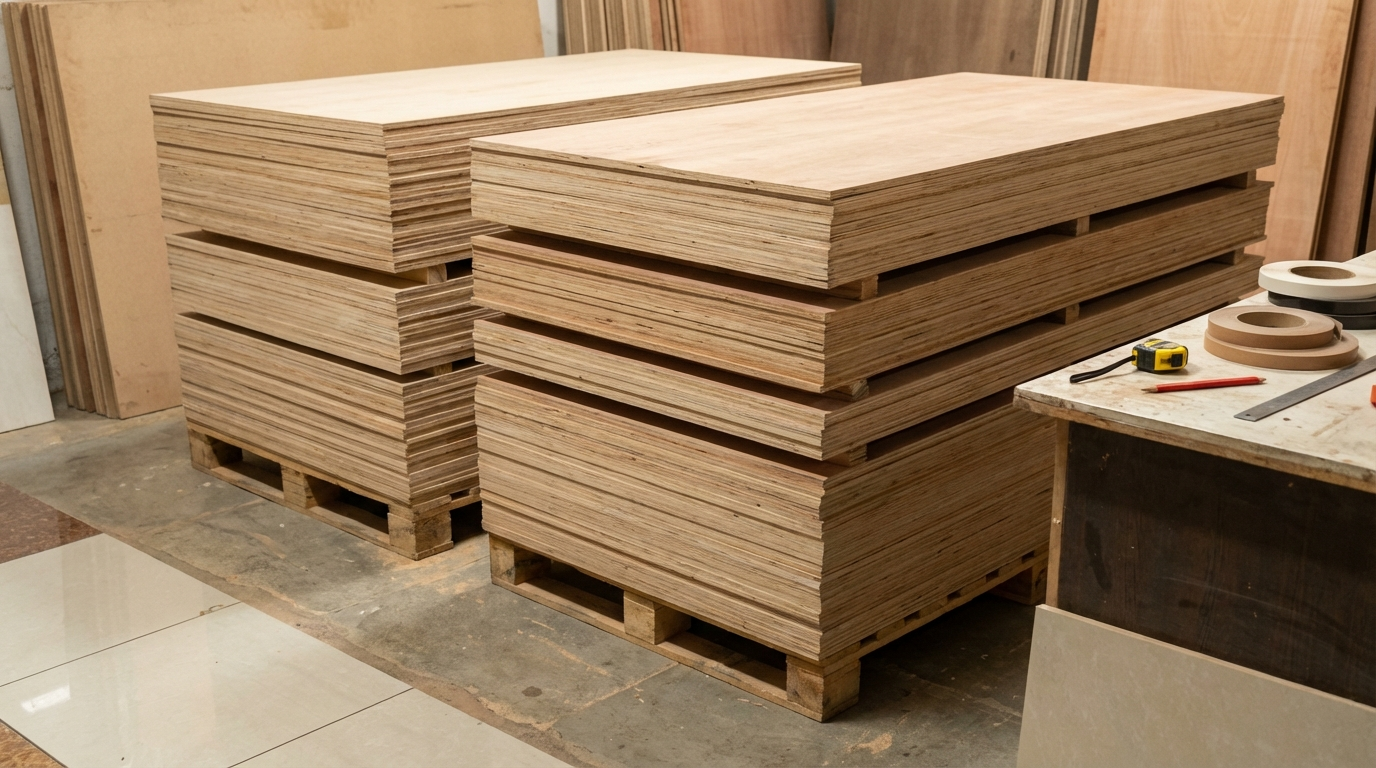
- Keep plywood elevated during storage. Don't lay sheets directly on concrete floors—moisture wicks up. Stack on wooden battens.
- Seal all sink cutouts immediately. The moment a cutout is made for sink or basin, the exposed core starts absorbing humidity. Seal same day.
A contractor in Aliganj once told me his team does about 40 wardrobes a month across Lucknow. He said the single biggest cause of callbacks is edge moisture damage—not bad plywood, not design flaws. Just unsealed edges absorbing humidity over monsoon. When I asked why his team doesn't seal every edge automatically, he laughed and said "time is money, and clients don't pay for careful." Which tells you exactly why you need to specify this explicitly.
How Long Plywood Furniture Actually Lasts in Lucknow Conditions
Let me give you honest numbers, not marketing claims.
MR grade in dry application (bedroom wardrobe, AC room): 12-18 years with proper maintenance. No water exposure, edges sealed, decent ventilation inside cabinets.
MR grade in kitchen (bad decision, but common): 4-6 years before visible damage. You'll see edge swelling first, then laminate lifting, then complete delamination of layers.
BWR grade in kitchen: 10-15 years. Handles steam and occasional spills fine. Still seal edges properly.
BWP grade in bathroom: 15-20 years if installed correctly. The adhesive is what matters—BWP uses phenolic resins that don't break down with moisture.
What affects longevity most:
- Edge sealing quality—this single factor probably accounts for 60% of premature failures I see
- Ventilation inside cabinets—closed cabinets trap moisture; include air holes at back
- Cleaning habits—wiping up spills immediately vs. letting them sit
- Installation height—base cabinets near floor always see more moisture than wall units
Signs of wear to watch for: Laminate lifting at edges (early warning), soft spots when pressed (core degradation), visible warping (moisture damage), and white powdery patches (fungal growth from trapped moisture).
Alternatives Worth Considering
Plywood isn't the only option anymore. Quick comparison:
HDHMR (High Density High Moisture Resistant): Better moisture resistance than BWR plywood, more uniform density, no voids. Costs similar to BWP plywood. Works excellent for kitchen shutters and bathroom vanities. The kitchen cabinet material comparison on our site covers HDHMR vs plywood extensively—worth reading if you're torn.
Particle Board: If budget is genuinely tight and you're furnishing a rental, particle board works for wardrobes that won't see water. Don't use it in kitchens. Don't use it in bathrooms. Don't use it anywhere humid. It's engineered sawdust held together by hope and resin.
Block Board: Good for doors and large panels where you need thickness without weight. Less suitable for kitchen cabinets because edge construction is different. Our blockboard guide explains where it makes sense.
MDF for shutters: For routed/carved wardrobe or kitchen shutters, MDF machines better than plywood. Use only for shutters, not carcass. And use moisture-resistant MDF grade for kitchens.
Can you use regular MR plywood in bathroom vanities if you seal it properly?
Technically, yes. Practically, don't. Here's the problem: "sealing properly" means multiple coats of waterproof sealant on every surface and edge, reapplied every couple of years. Nobody actually does this maintenance. The basin cutout edges are especially vulnerable—you can seal them initially, but micro-cracks develop, water gets in, and the core starts degrading invisibly. By the time you notice, it's too late. BWP costs maybe ₹2,000-3,000 more for a typical vanity's worth of plywood. Your vanity replacement will cost ₹15,000-25,000 with labor. Math doesn't support the gamble.
Red Flags That Should Make You Walk Away
Some warning signs are subtle. Some aren't.
- Dealer refuses to let you inspect sheets before purchase
- "We only have stock in godown, but same quality" without letting you verify
- Significantly below-market pricing with no clear explanation
- ISI marks that look printed/pasted rather than embossed into the sheet
- Aggressive pushback when you ask for invoice with GST
- Categorical claims that MR is "same as BWR for your use"—it never is
- Batch numbers or QR codes that don't verify through manufacturer systems
- Visible voids or gaps in sheet edges even on display samples
Trust your gut. If something feels off about the transaction, it usually is. Plenty of other dealers in Lucknow; you don't have to buy from anyone making you uncomfortable.
FAQs About Plywood Dealers in Lucknow
Which area in Lucknow has the most plywood shops?
Kaiserbagh and the Hewett Road stretch near Shivaji Marg have the highest concentration. You'll find maybe 15-20 dealers within walking distance in these areas. Gomti Nagar has newer showrooms but fewer options. For wholesale rates, try the Latouche Road area where some dealers do bulk business.
Is it true that all branded plywood is the same quality regardless of where you buy?
No, and this misconception costs people money. Manufacturing consistency varies by batch and factory. A brand might have excellent output from their Gujarat plant and inconsistent quality from another location. Additionally, storage conditions at the dealer matter—plywood stored in damp godowns absorbs moisture before you even buy it. Same brand, different dealer, potentially different experience.
How can I verify if a plywood sheet is genuinely BWP grade?
Look for IS:710 marking stamped or printed on the sheet face—not just a sticker. Genuine BWP is noticeably heavier than MR of the same thickness because of denser core and different adhesive. The edges should show uniform, well-bonded layers with no visible gaps. Most manufacturers now include QR codes or batch numbers you can verify through their website or customer care line. If the dealer discourages verification, that's your answer.
What if I live near the Gomti river—does humidity affect plywood choice?
Proximity to the river does increase ambient humidity, especially during monsoon when fog rolls in off the water. Homes in areas like Gomti Nagar, parts of Hazratganj, and other riverside neighborhoods should lean toward BWR minimum for all applications, not just wet areas. I'd actually recommend BWP for anything within about 2-3 km of the river, especially for ground floor flats where humidity levels stay higher. The extra cost is insurance against the moisture.
Is it true that thicker plywood is always stronger?
Not necessarily. An 18mm sheet with high-density calibrated core can outperform a 19mm sheet with voids and poor inner plies. Thickness matters for spanning distances without support—thicker boards flex less. But for sheer strength and durability, core quality and adhesive type matter more. Don't pay premium for 25mm when properly made 18mm serves the structural need. That said, for heavy-load applications like modular kitchen base carcasses, thicker does help distribute weight better.
Do Lucknow dealers offer delivery, and is it reliable?
Most established dealers include delivery within city limits for orders above 5-6 sheets. The reliability varies wildly though. Some deliver next day as promised. Others operate on "Indian standard time" which can mean anything from two days to a week. Get delivery timeline in writing on the invoice. And here's the important part—inspect sheets at delivery before signing acceptance. Once you sign, arguing about quality becomes much harder.
Should I buy plywood online or from physical dealers in Lucknow?
For someone buying for the first time, physical dealers make more sense. You can inspect, compare, and verify before paying. Online works well if you already know exactly what you want—specific brand, grade, thickness—and the platform has verified reviews. The challenge with online is you can't inspect before purchase, and returns for building materials are typically complicated. Physical dealer lets you reject substandard sheets on the spot.
What's the best time of year to buy plywood in Lucknow?
October through December usually sees slightly lower prices. The monsoon rush has passed, construction activity picks up post-Diwali, and dealers are more willing to negotiate. Avoid buying during peak monsoon (July-August) if you can—not because prices are higher, but because plywood sitting in humid godowns absorbs moisture. If you must buy during monsoon, let sheets acclimatize indoors for a week before carpentry work begins.
Is it true that local Lucknow-made plywood is inferior to branded national products?
This is actually a mixed picture. Some UP-based manufacturers produce genuinely good plywood—they source hardwood locally and have been in business for decades. But the quality control varies more than with large national brands. If you're buying local, verification becomes even more important. Check ISI marking, inspect thoroughly, and ask about the specific mill. Some local mills have excellent reputations among contractors; others are known for inconsistency. Your carpenter might actually have useful intel here.
How much plywood do I need for a 2BHK flat's complete furniture?
Rough estimation: for a typical 2BHK with 2 wardrobes, kitchen cabinets, TV unit, and some storage—you're looking at 40-55 sheets of 18mm plywood, plus another 15-20 sheets of 6mm for backing and bottom panels. This varies significantly based on design complexity. Modular kitchens with more cabinets eat plywood fast. Open shelving concepts use less. Get your carpenter or interior designer to provide a cutting list before you buy—this tells you exact quantities and reduces wastage.
What happens if I buy bad plywood and discover the problem later?
If you have a proper GST invoice, the brand's warranty should cover manufacturing defects like delamination. Process usually involves complaint to dealer, dealer escalates to company, company sends someone to verify, and if legitimate, they replace. Takes 2-4 weeks typically. But here's the catch—"defect" doesn't include damage from improper use, unsealed edges, or using MR grade where BWP was needed. They'll argue usage fault, you'll argue product fault, and resolution becomes a headache. Much easier to verify properly before buying.
Is it worth driving to Kanpur or Delhi for better plywood prices?
Almost never. The transportation cost, your time, and the hassle of warranty claims across cities makes this impractical. Price differences between Lucknow, Kanpur, and Delhi dealers are usually under 5-8%—nowhere near enough to justify the logistics. Plus, local dealers are easier to approach if problems arise. Only exception might be if you're buying 100+ sheets for a commercial project, where even 5% savings becomes substantial. For home use, buy local.
Right, that covers the essentials. The dealer market in Lucknow has options—from old-school Kaiserbagh shops to newer branded showrooms in Gomti Nagar. Where you buy matters less than how carefully you verify what you're buying. Print that checklist, take your measuring tape, and don't let anyone rush you through the inspection. Your furniture's going to live with you for a decade or more. Worth spending the extra thirty minutes getting it right.
Disclaimer: This content is provided for general informational purposes based on industry practices and publicly available information. Product specifications, standards, prices, and availability may vary by manufacturer, region, and time. Readers should independently verify details with manufacturers, dealers, or qualified professionals before making purchase or construction decisions.Want Plywood Suggestions?
Share a few details and a Sainik 710 specialist will suggest suitable brands and connect you to responsive dealers.