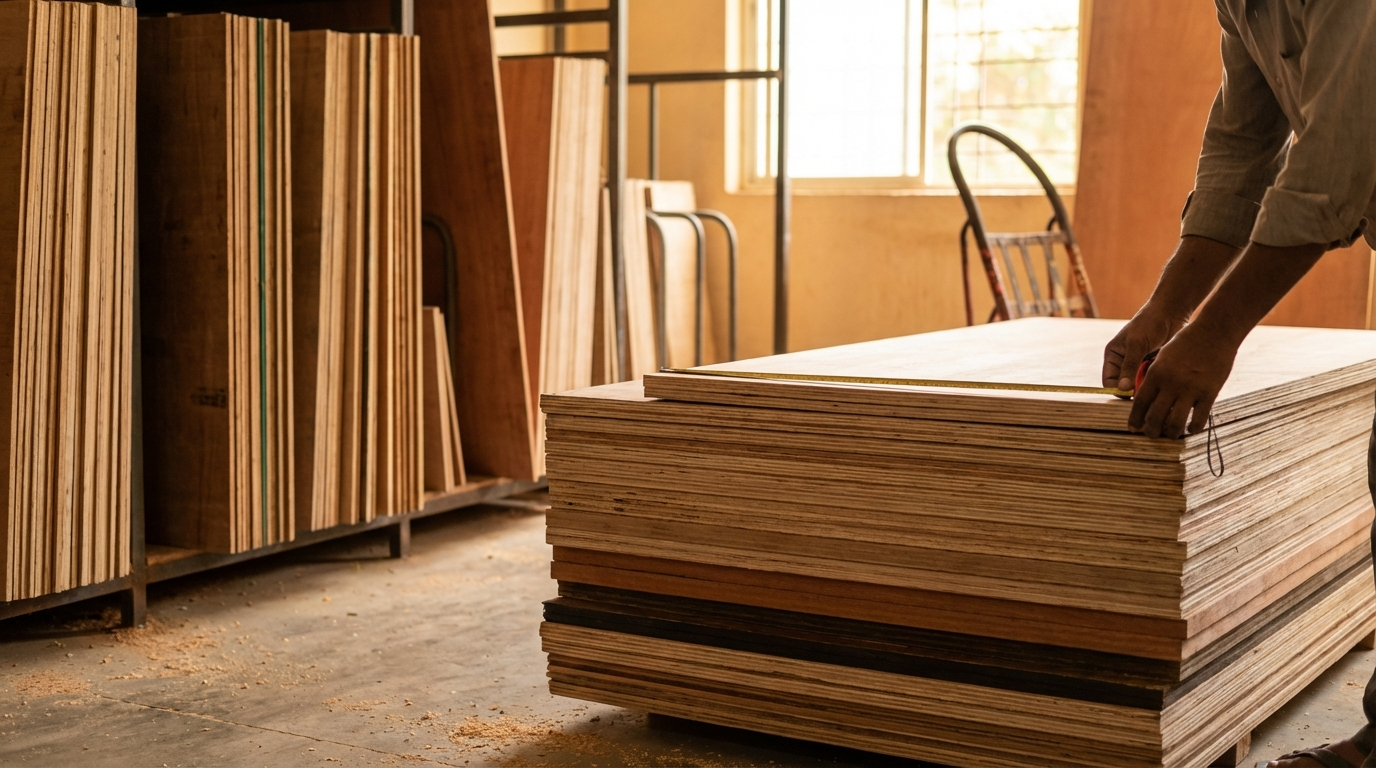
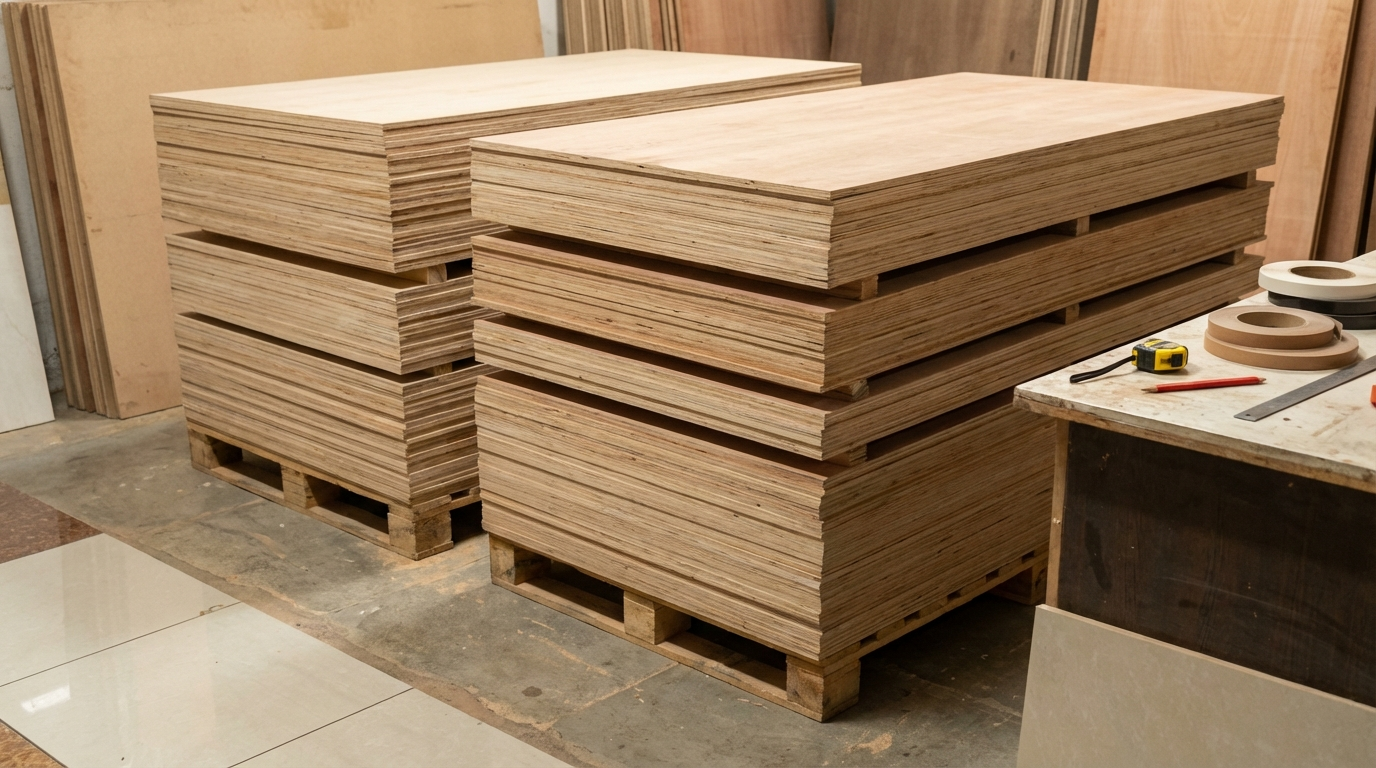
Plywood Dealers in Jaipur: Find Genuine Waterproof Plywood + Price Comparison Guide
Find plywood dealers in Jaipur—BWP, waterproof & commercial plywood shops. Price comparison, verification tips & buying guide for genuine plywood.
Finding Reliable Plywood Dealers in Jaipur—The Quick Answer
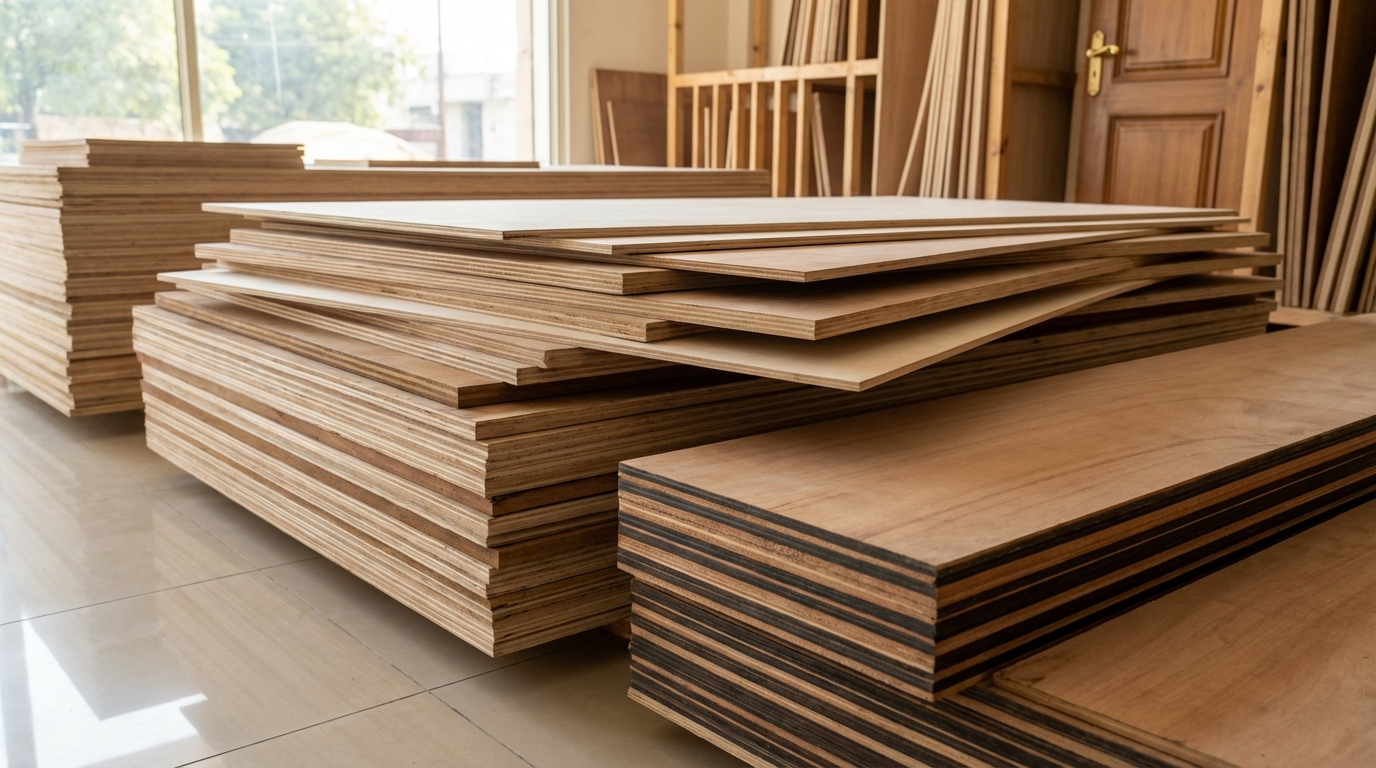
Finding genuine plywood dealers in Jaipur requires knowing the right market areas and verification tricks. Over 2,180 plywood shops exist in Jaipur, but quality varies wildly—and that's putting it mildly.
Short version: The main plywood markets in Jaipur are Vishwakarma Industrial Area (VKI Area) near Road No. 17 opposite Kailash Canteen, New Aatish Market in Mansarovar, and Vaishali Nagar along Gandhi Path near Pratap Market. For BWP (waterproof) plywood, always verify the IS:710 marking, ask for the BIS license number, and never trust just the printed stamp—counterfeit marks are everywhere.
This guide is right for you if:
- You're building or renovating in Jaipur and need genuine waterproof plywood for kitchens/bathrooms
- You want to understand the difference between the Rs 50/sq ft stuff and Rs 150/sq ft stuff—because trust me, there's a real reason for that gap
- You're tired of carpenters saying "yeh sab same hai" when it clearly isn't
- You need to buy in bulk for a project and want wholesale rates without compromising on grade
Skip this if:
- You're looking for specific dealer recommendations—I'm not here to promote anyone's business
Bottom line: In Jaipur's plywood market, the biggest risk isn't high prices—it's paying decent money for fake waterproof grades that'll fail within two monsoons.
What "Genuine Waterproof Plywood" Actually Means
Waterproof plywood—specifically BWP grade—is plywood that uses boiling water proof adhesive bonding and offers 100% waterproof performance suitable for heavy moisture-prone areas. Most people think any plywood labeled "waterproof" will handle their bathroom or kitchen. Actually, there are specific grades with very different capabilities.
MR (Moisture-Resistant) plywood, commonly called commercial plywood, is made with urea-formaldehyde resin and performs well in moderately humid situations like bedrooms and offices—but it's not waterproof. That's the stuff most dealers push because margins are better.
BWR (Boiling Water Resistant) plywood sits in the middle—it's water-resistant but not as waterproof as BWP, and works well for moderate moisture environments. Then there's BWP, also known as marine plywood, which can withstand prolonged exposure to moisture and is suitable for both interior and exterior projects.
Here's what dealers often don't explain clearly: IS:710 grade is waterproof plywood used in kitchens, lavatories, and even boat construction—it can handle a good deal of water and moisture. Meanwhile IS:303 is for normal domestic products like beds, cupboards, and tables—it can withstand some dampness but not actual water, making it best for dry indoor areas.
Why This Matters for Jaipur Homes Specifically
The climate of Rajasthan varies from arid to sub-humid. The west of Aravallis receives low rainfall, low humidity and high velocity winds annually, whereas the east of Aravallis enjoys low velocity wind with high humidity and much better rainfall.
Now here's where most guides get it wrong for Jaipur. People assume "desert climate means no moisture problems." Big mistake. Jaipur sits on the eastern side of the Aravallis. Summer remains dry and hot with temperatures gradually rising in April, May, and June—but when monsoon hits, humidity spikes dramatically. And in modern Jaipur homes with attached bathrooms, modular kitchens, and basement flats, moisture becomes a real problem.
Humidity and moisture plays a major role in material breakdown. When materials come in regular contact with moisture, wooden panels can start to warp and swell up, and low-quality plywood often suffers from exfoliation. I've seen this happen in flats near Jagatpura and Malviya Nagar where bathrooms are attached to bedrooms—the mistri used MR grade behind the bathroom wall, thinking it's a "dry" city.
Compare this to coastal cities like Chennai or Mumbai where the humidity stays high year-round. Bangalore, for instance, sees 75-85% humidity during monsoon from June to September—and Jaipur can hit similar levels in July-August. The difference is duration: in Jaipur, you get 3-4 months of moisture stress versus 8-9 months in coastal areas.
Is MR Grade Actually Enough for Jaipur Homes?
For wardrobes in bedrooms? Probably yes. MR plywood applications include wardrobes, study tables, office furniture, and bedroom panelling. It's a good balance of performance and economy for less humid cities and areas of a home that control humidity.
But for kitchen cabinets—especially the base units near the sink—no, absolutely not. If you're spending money on kitchens, bathrooms, furniture, or ceilings, ignorance about the correct plywood for high-humidity locations could potentially result in costly problems. I've been saying this for years, and people keep learning the hard way.
Types of Plywood Available in Jaipur Markets
Waterproof, decorative, and commercial plywood are made available at most Jaipur wholesalers. Let me break down what you'll actually find:
| Type/Grade | ISI Standard | Best For | Jaipur Market Availability | My Take |
|---|---|---|---|---|
| MR (Commercial) | IS:303 | Bedrooms, dry areas, office furniture | Widely available, every shop stocks it | Fine for 70% of home furniture |
| BWR | — | Kitchen shelves (not sink area), cupboards | Good availability at mid-range dealers | Decent middle-ground option |
| BWP/Marine | IS:710 | Kitchens, bathrooms, outdoor, boats | Available but many fake marks | Essential for wet areas—don't compromise |
| Shuttering | — | Construction formwork | VKI Area has good range | Not for furniture—some mistrys confuse this |
| Decorative/Veneer | IS:10701 | Visible furniture surfaces, wall panels | Major dealers in Mansarovar | Worth the cost for living room pieces |
| Blockboard | IS:1659 | Doors, long shelves, tabletops | Available at most wholesalers | Used for doors and long shelves—rigid and uses wooden blocks for enhanced rigidity |
Honestly, the main confusion happens because dealers in VKI Area will show you 5 different "waterproof" options at different prices, and they all look the same. The difference is in the adhesive—BWP plywood is made from hardwood veneers bonded with synthetic plastic resin, and its water resistance comes from special adhesive that can withstand boiling water for long hours without delamination.
Price Reality Check (2026 Market)
Let me give you actual ranges I'm seeing in the Jaipur market. These aren't exact quotes—prices change monthly—but this is the ballpark:
12mm BWP plywood typically ranges between ₹90 to ₹120 per square foot. 18mm BWP plywood, the thicker variant suitable for heavy-duty furniture, typically ranges between ₹130 to ₹160 per square foot. 19mm BWP plywood price is often found in the ₹140 to ₹170 per square foot range.
For MR grade, you're looking at roughly ₹50-80 per square foot for 18mm from decent brands. The cheap local stuff goes even lower—local plywood board of lower quality runs around ₹1,350-₹1,650 per sheet which works out to maybe ₹40-50 per square foot.
Here's what actually affects your final bill:
- Raw wood costs: Timber species like Gurjan, Eucalyptus, and Neem influence core pricing
- Sheet calibration and finishing: Factory-calibrated plywood costs more but saves labour during fit-out
- Certifications: ISI, termite treatment, and boiling waterproof testing add value—and cost
- Brand premium: Century, Greenply, Austin command higher prices than regional brands
- Dealer location: VKI Area wholesale markets run 10-15% cheaper than showrooms in C-Scheme
For 2026, expect small upward revisions and negotiation-based pricing. Top-quality BWP holds price while economy segments compete aggressively but with greater quality variance.
BWP vs MR vs BWR: Direct Comparison
| Parameter | MR Grade | BWR Grade | BWP/Marine Grade |
|---|---|---|---|
| Water Resistance | Ambient moisture only | Occasional water exposure | Prolonged water immersion |
| Adhesive Used | Urea formaldehyde | Synthetic resins | Phenol formaldehyde |
| ISI Standard | IS:303 | — | IS:710 |
| Price (18mm) | ₹50-80/sq ft | ₹70-100/sq ft | ₹130-160/sq ft |
| Typical Lifespan | 8-12 years in dry areas | 10-15 years with care | 15-20+ years properly maintained |
| Best For | Bedrooms, living rooms | Kitchen shelves, window ledges | Sink cabinets, bathrooms, outdoor |
| My Preference | Budget interiors | When BWP budget is tight | Any wet area—non-negotiable |
Choose MR when: Furniture won't face moisture, budget is limited, and you're okay replacing in 10 years.
Choose BWR when: Areas are occasionally impacted by moisture, like kitchen shelves, bathroom doors, indoor window ledges, and cupboards.
Choose BWP when: Direct water contact is possible, you want long-term peace of mind, or you're in a ground-floor flat with seepage risk.
The trade-off: BWP costs nearly double MR grade but lasts roughly twice as long in wet conditions. You gain durability but lose budget flexibility.
How to Choose the Right Dealer in Jaipur
Step 1: Decide which market makes sense for your order size. For bulk orders (full home interior, 50+ sheets), head to VKI Area. For smaller requirements, the showrooms in Mansarovar's New Aatish Market are more convenient.
Step 2: Check previous customers' comments and testimonials. Experienced wholesalers with many years in business are typically the best choice—they understand client needs and provide the right solutions.
Step 3: Never finalize on first visit. Get quotes from at least 3 dealers. Prices for identical brands can vary 15-20% between shops.
Step 4: Verify ISI certification. This is critical. I'll explain exactly how in the next section.
Step 5: Ask about delivery terms. Reputable wholesalers provide on-time delivery coordinated with construction schedules.
| Situation | Recommended Approach | Why |
|---|---|---|
| Full home interior (80+ sheets) | VKI Area wholesale market | Best bulk rates, wider selection |
| Kitchen modular only | Branded dealer showroom | Easier verification, warranty support |
| Budget renovation | Local market with personal inspection | Can negotiate but verify everything yourself |
| Commercial project | Direct from distributors with paperwork | Tax compliance, bulk discounts, documentation |
Red flags to walk away from:
- Dealer refuses to show ISI mark or gets defensive when you ask
- Price is more than 30% below market average—something's wrong
- No proper godown storage, sheets stacked outdoors
- Won't give you a proper invoice with grade mentioned
- Pushes only one brand aggressively (commission game)
Common Mistakes People Make in Jaipur
1. Trusting the printed ISI mark blindly
There are counterfeit ISI stamps. A manufacturer will glue a counterfeit logo on substandard plywood to lure people. This is rampant in every city, Jaipur included.
2. Letting the carpenter decide everything
This one really frustrates me. The mistri has his preferred dealer (who gives him commission), and he'll insist "yeh achha hai" without any technical basis. Carpenters are skilled at woodwork, not material science. Ensure your carpenter is comfortable working with the material, but the grade selection should be yours.
3. Using MR grade for kitchen base cabinets
I've seen this at least a dozen times in Mansarovar area flats. People save ₹8,000-10,000 on kitchen plywood, then spend ₹40,000 replacing swollen cabinets three years later. Delamination occurs when plywood layers begin to separate—this gets worse with prolonged moisture exposure, resulting in weakened panel structure.
4. Not checking thickness before installation
Two sheets both labeled "18mm" can have different effective value if one is under-thickness, has voids, or has uneven pressing. Always physically check a few sheets from your delivery.
5. Ignoring edge sealing
Even BWP plywood absorbs moisture through unsealed edges. Your carpenter should seal all cut edges with PU sealant or edge banding—most skip this step because it takes extra time.
6. Buying too early
Holding plywood for long periods at an active site can lead to moisture absorption, warpage, or edge damage—losses that can outweigh any price difference. Buy when your design is finalized and carpenter timeline confirmed.
7. Mixing batches for visible furniture
Different batches can have slight colour variations. For wardrobes or kitchen fronts where consistency matters, order enough from one lot.
8. Assuming "branded = genuine"
Brand names get counterfeited too. There was this case near Vaishali Nagar—must have been 2023—where an entire batch of fake branded sheets was circulating. The dealer himself didn't know until customer complaints started.
Quality Checks You Can Do Yourself
Visual Checks:
- Uniform colour: Even golden-brown or light brown shade throughout
- No lumps or warping: Flat surface without dents or wave patterns
- Tight veneer: No peeling or separating veneers at edges
- Clear markings: Brand name, thickness, grade, batch number clearly printed
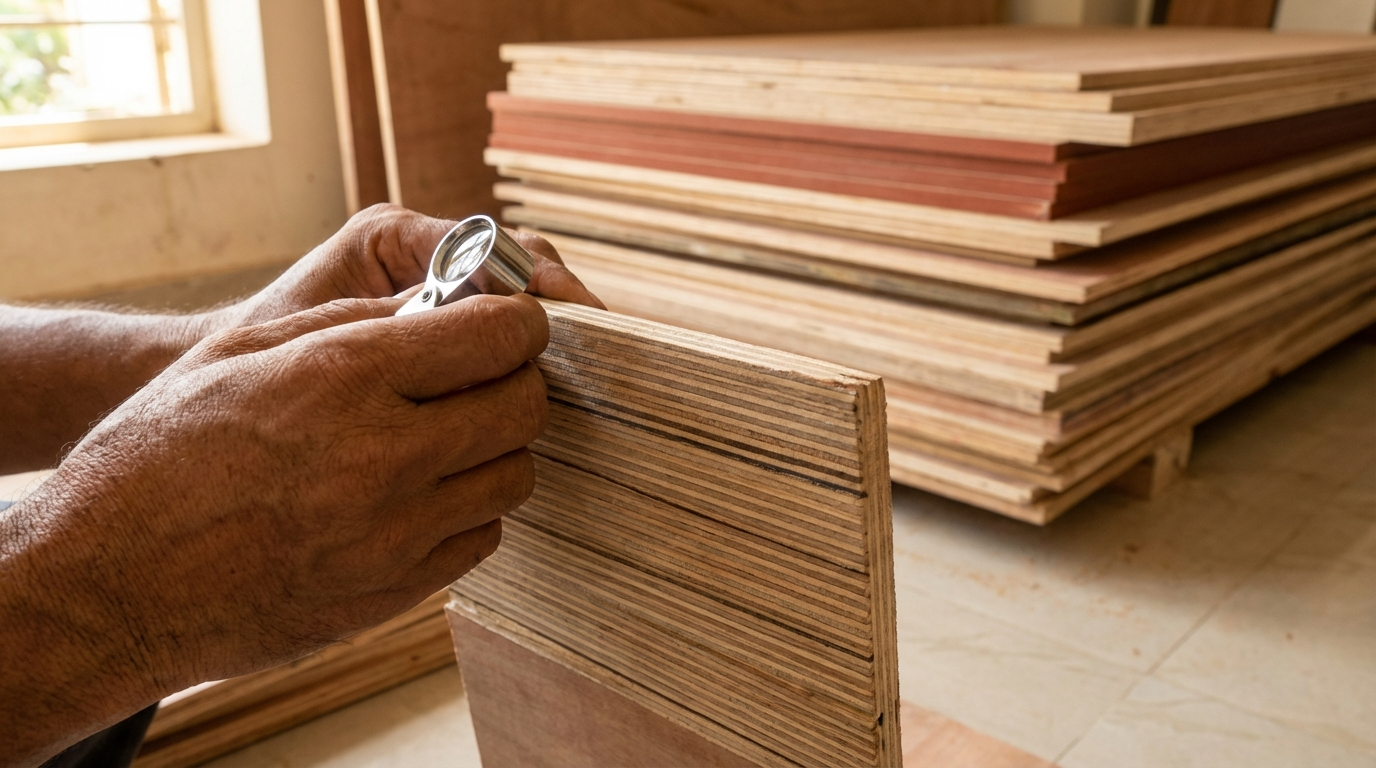
- Core consistency: Cut edge should show uniform layers without voids
Questions to Ask the Dealer:
- "Can you show me the BIS license number for this brand?" Every authentic ISI mark should have this 7-8 digit CM/L number
- "Is this IS:303 or IS:710?" Don't accept vague answers like "waterproof type"
- "When was this batch manufactured?" Old stock stored poorly loses quality
- "Do you have the test certificate from the manufacturer?"
- "What's your return policy if I find defects after delivery?"
Simple Field Tests:
- Tap test: Tap the sheet firmly. Solid plywood makes a dull thud. Hollow sound indicates voids or poor bonding.
- Weight check: Lift two sheets of same thickness—significant weight difference suggests different core quality
- Edge inspection: Look at cut edges for uniform layer thickness and no gaps between veneers
- Flex test: Slight flex is normal, but excessive bending indicates thin or weak core
- Boiling water test (for BWP): Submerge a sample in boiling water for 72 hours to check for delamination—most dealers won't let you do this, but you can request a cutoff piece
Here's a trick most dealers don't like: Ask for a small sample cutoff (even 6x6 inches works). Take it home, soak it in water overnight, and see what happens. MR grade will start swelling at edges. Genuine BWP will show no change.
How Do I Verify the ISI Mark is Genuine?
Check that the ISI mark includes the exact IS code (e.g., IS:303 or IS:710) and a CM/L number—the 7-8 digit license number that BIS provides to the manufacturer.
Original ISI-stamped plywood will bear the individual license number and the stamp. Note down the number and verify it on the BIS website to confirm genuineness. You can check on the BIS website by entering this license number.
Fake ISI marks often appear smeared or crumpled—the printing quality is a giveaway. Genuine marks are clean and consistent across sheets.
Workmanship and Installation Tips
Cutting requirements:
For modular kitchens, insist on machine cutting (CNC if possible) rather than hand cutting. Hand-cut edges are rough and absorb moisture faster. If your carpenter must hand-cut, ensure edges are sanded smooth.
Edge sealing—why it matters:
Always seal all edges properly—polish or laminate edges to block water seepage. Even the best BWP plywood can fail if water enters through unsealed edges. For kitchen base units, use PU sealant on bottom edges that might contact floor moisture.
Fastener guidance:
For 18mm plywood, use 1.5-inch screws minimum. For 12mm, 1-inch works. Always pre-drill in hardwood plywood to prevent splitting. Avoid nails in BWP grade—screws hold better in the dense phenolic core.
What to tell your carpenter:
- "Use IS:710 plywood for all kitchen base and sink units—I'll supply it separately if needed"
- "Seal all cut edges before installation, not after"
- "Don't use leftover MR pieces in bathroom cabinets"
- "Keep plywood off the floor during storage—use wooden battens underneath"
- "I want to see the sheets before cutting starts"
- "Maintain 5mm gap between plywood back and wall for ventilation"
Storage notes:
Store sheets flat, off the floor, protected from site moisture. I've seen carpenters stack sheets vertically against walls—this causes warping, especially in Jaipur's summer when temperature swings are dramatic.
There was this project in Pratap Nagar I consulted on last year. Carpenter stored 40 sheets of perfectly good BWP plywood in the half-finished building with no roof covering. Two weeks of unexpected early rain, and maybe 15 sheets had edge damage. ₹25,000 wasted because of careless storage.
How Long Does Plywood Actually Last?
Honest lifespan expectations depend heavily on usage and maintenance:
- MR grade in dry bedroom furniture: 10-15 years easily
- MR grade in kitchen (mistake): 3-5 years before problems appear
- BWR grade in moderate moisture areas: 12-18 years
- BWP grade in kitchens with proper sealing: 15-25 years
- BWP grade in bathrooms with good ventilation: 15-20 years
Heat, humidity, and daily use can cause small cracks, warping, or bending—especially in low-grade plywood. Jaipur's extreme temperature range (5°C winter nights to 45°C+ summer days) stresses wood more than moderate climates.
Signs of wear to watch for:
- Edges darkening or soft to touch—moisture infiltration starting
- Laminate lifting at corners—usually edge seal failure
- Slight warping of doors—either moisture or poor original quality
- Musty smell inside cabinets—fungal growth from trapped moisture
When to replace:
If you see delamination (layers separating), it's too late for repair. Replace the affected panels. Regular maintenance helps: wipe surfaces dry, re-polish every few years, and avoid prolonged contact with water.
Alternatives Worth Considering
HDHMR Boards:
Action Tesa HDHMR is high-density and moisture-resistant—a budget-friendly alternative for modular kitchens. Works well for kitchen carcasses when you want consistency. But for areas with direct water exposure or premium installations, BWP marine plywood offers superior long-term durability.
Blockboard:
Blockboards offer stability for wardrobes, tables, and bookshelves. Good for doors where you need rigidity without excessive weight. Not for wet areas though.
WPC Boards:
For bathroom vanities specifically, WPC (Wood Plastic Composite) handles moisture better than any plywood. More expensive, but zero swelling issues. The WPC door frame guide on our site covers this in detail.
If budget is tight, consider this hybrid approach: use BWP only for base units and sink area, BWR for wall units, and MR for pantry shelves away from water. Saves money without compromising critical areas.
FAQs About Plywood Dealers in Jaipur
Where is the main wholesale plywood market in Jaipur?
Vishwakarma Industrial Area (VKI Area) on Road No. 17, opposite Kailash Canteen, is the largest wholesale hub. You'll find multiple dealers competing, which means better negotiation power. The area near RIICO Industrial Area Mansarovar also has several wholesalers. For retail with more guidance, New Aatish Market in Mansarovar has showroom-style dealers who are more patient with first-time buyers.
Is it true that all branded plywood is genuine?
Common belief: If it has a brand name, it's authentic. Reality: Brand counterfeiting is a real problem. Manufacturers glue counterfeit logos on substandard plywood to lure people—that's why you must verify other parameters. Always check the CM/L number and buy from authorized dealers.
What if I live near Vaishali Nagar—which market is closest?
There are authorized dealers in Vaishali Nagar along Gandhi Path near Pratap Market. For wholesale rates, VKI Area is about 15 minutes away and worth the trip for larger orders.
Can I use commercial (MR) plywood for my kitchen if I'm on a tight budget?
I understand budget constraints—I really do. But this is one area where I tell people not to compromise. Use MR for wall units above counter level, absolutely. But for base cabinets near the sink? Use at least BWR, ideally BWP. The water splashes, the mopping, the occasional leak—MR will fail within 4-5 years. You'll spend more on replacement than you "saved."
Is it true that ISI mark guarantees quality forever?
The ISI mark certifies that plywood met standards at the time of testing. It doesn't guarantee storage conditions at the dealer, or that every batch maintains quality. The ISI mark is a prominent authenticity marker, but we cannot rely on it alone. Combine it with physical inspection and dealer reputation.
How much cheaper is wholesale compared to retail in Jaipur?
Expect 10-20% difference for the same branded product. Discounts and promotions accompany large orders at wholesalers. But wholesale often means minimum order quantities—you might need to buy 10-20 sheets minimum. For smaller requirements, the retail premium might be worth the convenience.
What's the difference between 18mm and 19mm plywood—is it worth paying extra?
19mm plywood offers slightly more load-bearing capacity and might be preferred for high-end cabinetry or areas requiring additional strength. The price difference is typically minimal, and usage should guide your choice. For most residential furniture, 18mm is sufficient.
Is it true that phenol formaldehyde adhesive is harmful?
The phenolic resin in BWP plywood does contain formaldehyde, but it's bound in the cured adhesive and doesn't off-gas significantly in normal use. CARB-certified plywood offers improved indoor air safety if this concerns you. For kitchens with good ventilation, standard BWP is fine.
What if my dealer doesn't have IS:710 marked sheets?
Walk away. Seriously. In a market flooded with fakes and low-grade ply, IS:710 is the most reliable proof of waterproofing quality. Any dealer claiming to sell genuine BWP but without proper ISI marking is either selling uncertified product or doesn't know what they're selling.
How do I know if plywood was stored properly before I bought it?
Check for water stains on edges, warping when sighted along the length, and musty smell. Ask when the batch arrived. Moisture content of plywood is typically 7-12% after delivery from factory, but usually increases during transport, storage, or further processing. Sheets stored in open godowns through monsoon will have absorbed moisture.
Is Jaipur's dry climate actually an advantage for plywood?
Yes and no. The dry season (October-May) is easy on plywood—minimal humidity stress. But Jaipur homes increasingly have attached bathrooms, basement levels, and modular kitchens that create localized high-moisture zones regardless of outside climate. Rainfall in Rajasthan is scanty overall, but when monsoon hits in July-August, indoor humidity spikes in poorly ventilated spaces.
Should I buy directly from a factory or manufacturer?
You can buy from dealers connected with reputed plywood factories through their website or phone. However, most factories have minimum order requirements (often 100+ sheets). For residential projects, authorized dealers are more practical.
Good luck with your project. And please—verify that ISI mark before handing over your money. It takes 5 minutes and can save you years of regret.
Disclaimer: This content is provided for general informational purposes based on industry practices and publicly available information. Product specifications, standards, prices, and availability may vary by manufacturer, region, and time. Readers should independently verify details with manufacturers, dealers, or qualified professionals before making purchase or construction decisions.Want Plywood Suggestions?
Share a few details and a Sainik 710 specialist will suggest suitable brands and connect you to responsive dealers.