Plywood Dealers in Kolkata: Genuine Waterproof Plywood Shops + Buying Checklist
Find plywood dealers in Kolkata—BWP, marine & commercial plywood shops. Verification guide, wholesale markets & tips for genuine plywood purchase.
Plywood Dealers in Kolkata: The Quick Answer
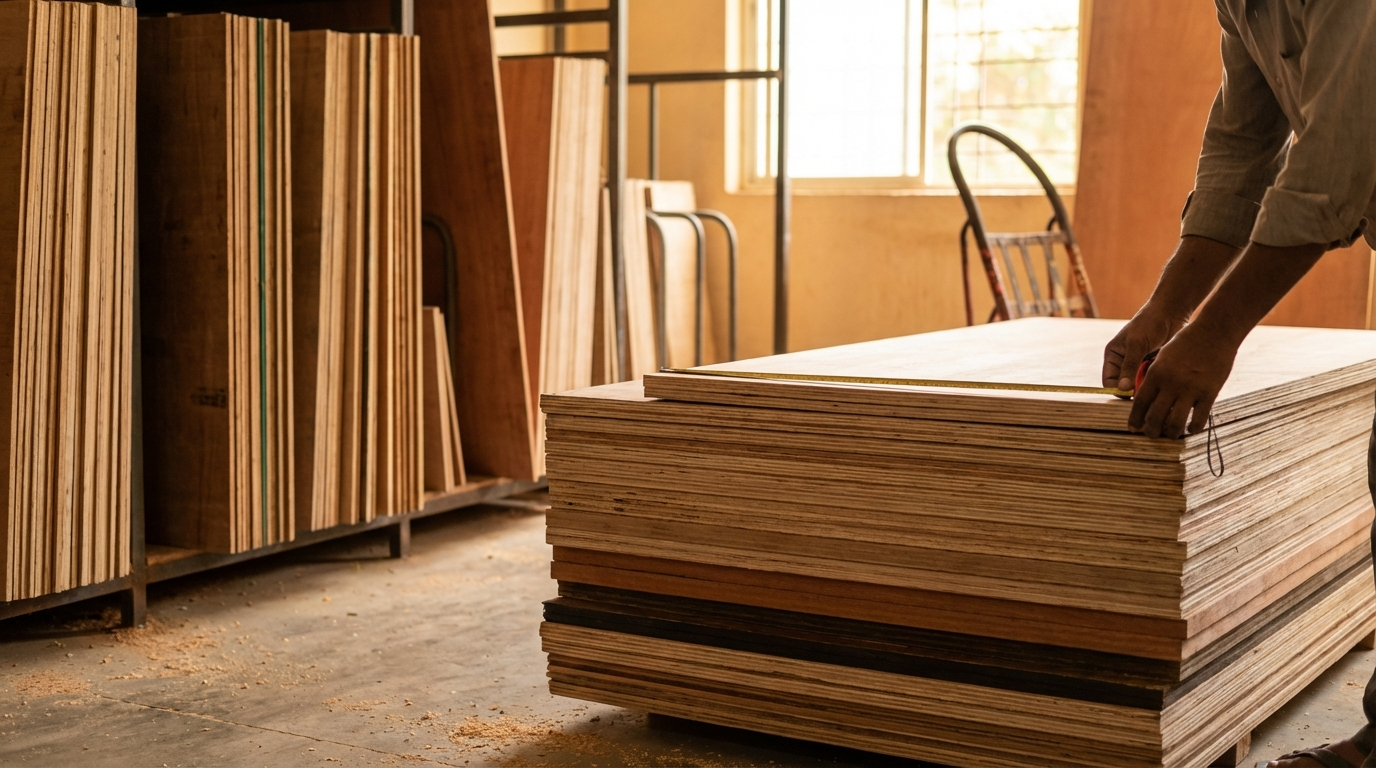
Plywood dealers in Kolkata are primarily concentrated in the wholesale hub of Burrabazar, with additional clusters around Bowbazar (Bipin Behari Ganguly Street area), Chittaranjan Avenue, and the Topsia-Tangra industrial belt. There are over 2,195 plywood shops in Kolkata, but finding a dealer who stocks genuine waterproof plywood—and not just something with "waterproof" printed on the packaging—requires some legwork.
Short version: Burrabazar is the biggest wholesale market in Kolkata for plywood and building material. Topsia and Tangra are famous for warehouses and plywood stockists. Howrah serves industrial supply houses and bulk traders. For genuine BWP (Boiling Water Proof) plywood, insist on checking the ISI 710 marking. Most dealers carry multiple grades—commercial, BWR, and BWP—but the labeling can be confusing (sometimes intentionally so). Go in person, ask to see the test certificates, and if they can't show you anything, move on.
This guide is right for you if:
- You're planning kitchen or bathroom furniture in humid Bengal climate
- You've been quoted wildly different prices and don't know what's genuine versus what's relabeled
- Your contractor suggested a dealer, but you want to verify independently before committing to a large order
- You're buying wholesale (50+ sheets) and need to negotiate properly
Skip this if:
- You just need a couple of 4mm sheets for backing—commercial ply from any shop will do
Bottom line: The Kolkata plywood market has excellent variety, but the mix of genuine and mislabeled products is higher here than in most cities I've worked in—buyer verification is essential.
Note: sainik710.com is an independent informational site and is not affiliated with any manufacturer.
What Plywood Dealers in Kolkata Actually Stock
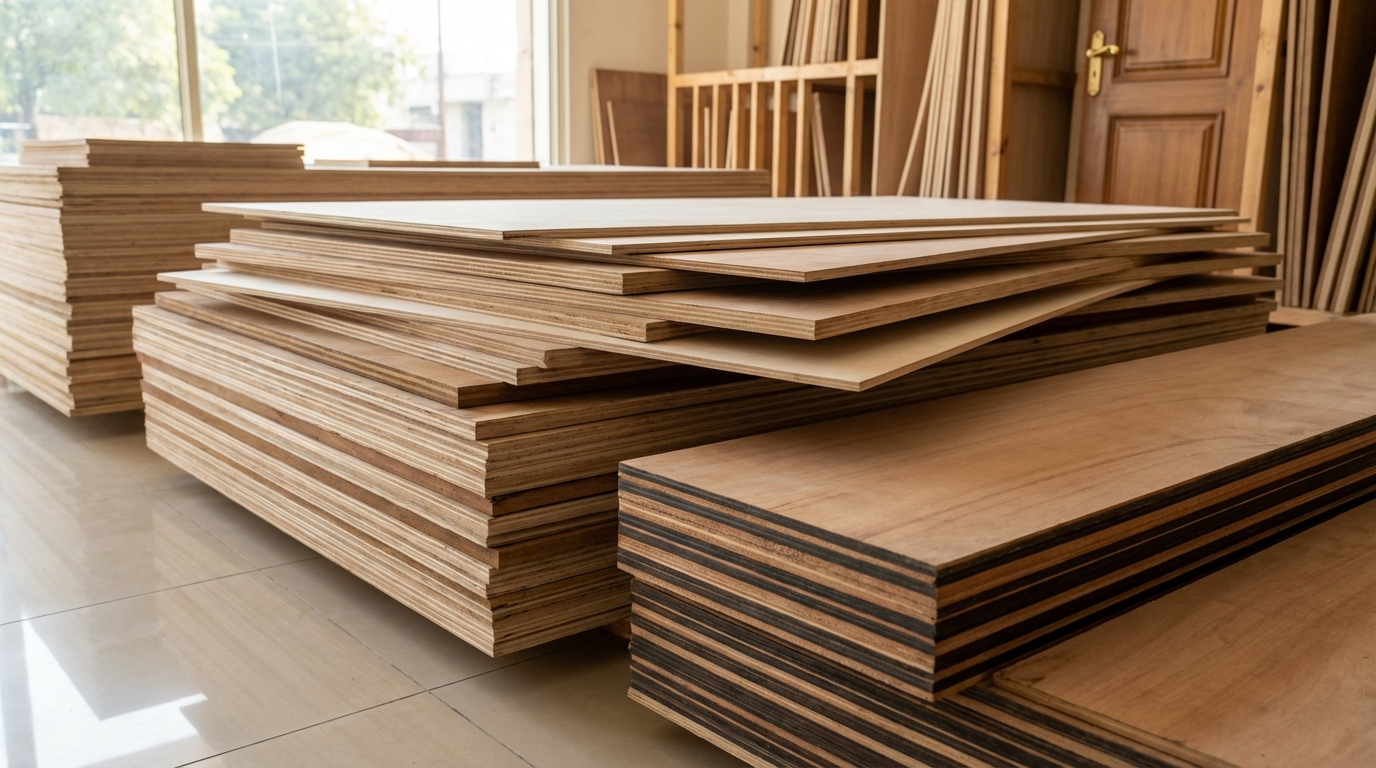
A plywood dealer is a trader or distributor who sources plywood from manufacturers and sells to end consumers, contractors, and carpenters. In Kolkata, dealers typically operate from both wholesale godowns (Burrabazar, Tangra) and retail showrooms (scattered across the city). You'll find plywood dealers, marine plywood dealers, and waterproof plywood dealers all operating under similar signboards, but their stock quality varies dramatically.
Most people think every shop that says "waterproof plywood" sells the same thing. Actually, there are three distinct grades commonly sold in Kolkata—Commercial (MR grade), BWR (Boiling Water Resistant), and BWP (Boiling Water Proof, also called Marine grade)—and many dealers use the terms interchangeably, which is technically wrong. Most interior designers and carpenters prefer to use BWR plywood for making kitchen cabinets and other kitchen furniture. For home furniture requirements, using waterproof BWR grade exterior plywood is usually considered good enough.
Here's where it gets tricky. Any BWP plywood must have ISI:710 certification to be considered genuine. The "710" refers to the Indian Standard specification for marine-grade plywood. If a dealer shows you a "waterproof" ply without this certification, you're either looking at BWR (which is water-resistant, not waterproof) or worse—relabeled commercial ply with marketing claims.
Is BWP plywood worth the extra cost in Kolkata?
For kitchen cabinets, sink units, and bathroom vanities—absolutely yes. The average relative humidity of Kolkata is around 77%, varying from around 66% during summer to 88% during the monsoon in July. That's brutal for wood products. I've seen MR-grade ply start bubbling within 8 months in a Salt Lake kitchen where the owner thought he was saving money. The repair cost him more than if he'd bought BWP from the start. For bedroom wardrobes away from any water source? BWR is usually fine—save your money there.
Why the Kolkata Climate Makes Grade Selection Critical
Look, I've consulted in Chennai, Mumbai, and Kolkata—all coastal cities. But Kolkata's humidity pattern is particularly harsh on plywood. Rains brought by the Bay of Bengal branch of the South-West monsoon lash the city between June and September and supply most of its annual rainfall of 1,711.5 mm. The highest rainfall occurs during the monsoon in July and August.
This isn't just about getting wet. Wood is a hygroscopic material—it naturally absorbs and releases moisture depending on the surrounding environment. During the monsoon, with humidity levels soaring, this balance is disrupted. Excessive moisture causes wood to expand, potentially compromising structural joints and surface finishes.
Kolkata's relative humidity starts at 58% in March and April, and peaks to a moist 83% by July and August. Compare this to, say, Jaipur, where monsoon humidity rarely crosses 70%. The sustained high humidity in Bengal means your plywood doesn't just get wet occasionally—it's constantly absorbing and releasing moisture for four solid months.
In places like Salt Lake, New Town, and the southern areas near the Sundarbans, the humidity is even higher than central Kolkata. If you're building in those areas, don't compromise on grade. A flat in Rajarhat isn't the same as one in drier Howrah when it comes to moisture exposure.
Types of Plywood Available at Kolkata Dealers
Related categories to plywood in Kolkata include veneer plywood, WPC plywood, birch plywood, PVC plywood, designer plywood, chequered plywood, fire resistant plywood, bamboo plywood, and marine grade plywood. But for most home projects, you'll be choosing between these four main options:
| Grade | Full Name | ISI Standard | Water Resistance | Best For | My Take |
|---|---|---|---|---|---|
| MR | Moisture Resistant | IS 303 MR | Handles humidity, not direct water | Bedroom furniture, storage in dry areas | Fine for wardrobes if you seal the edges properly |
| BWR | Boiling Water Resistant | IS 303 BWR | Survives occasional water exposure | Kitchen cabinets (upper), living room furniture | Decent middle-ground. Just don't use it near sinks. |
| BWP | Boiling Water Proof (Marine) | IS 710 | Can withstand 72 hours in boiling water without damage | Kitchen base units, bathrooms, balconies | Non-negotiable for anything that might see water |
| Shuttering | Film-Faced Plywood | Varies | High | Specifically designed for construction, serves the function of shaping concrete until it hardens | Only for construction, not furniture |
Honestly, the confusion happens because dealers sometimes stock "local" versions of these grades—plywood that claims to be BWR but hasn't actually passed any standardized test. You'll see listings like "19mm 303 BWR local commercial plywood" at different price points from "19mm 303 BWR red core plywood"—the word "local" often means no ISI certification.
Price Reality Check: What Plywood Actually Costs in Kolkata (2026 Market)
I'm not going to give you exact prices because they change quarterly, but here's the ballpark based on recent market checks:
Current approximate prices in Kolkata range from ₹56-68 per sq ft for local economical plywood, ₹79-97 per sq ft for 19mm 303 BWR local commercial plywood, and ₹114-140 per sq ft for 19mm 303 BWR red core plywood.
Waterproof plywood costs between ₹70 and ₹150 per square foot in Kolkata—that's a massive range, and the difference is usually in the core material, face veneer quality, and whether it actually carries genuine certification or just printed claims.
For shuttering plywood specifically, prices typically vary between ₹950 to ₹2,200 per sheet based on thickness and brand. Wholesale prices are typically ₹100-₹300 less than retail.
Here's what actually affects your final bill:
- Core wood type: Gurjan core is pricier than eucalyptus or poplar
- Face veneer: Gurjan face adds 15-20% to the cost
- Certification: ISI-marked plywood costs more but gives you legal recourse if defective
- Quantity: Buying 30+ sheets? You should get 8-12% off wholesale rates
- Market location: Burrabazar wholesale is cheaper than Salt Lake retail—sometimes by 25%
Quick budget estimate for a 3BHK in Kolkata: For bedroom wardrobes (BWR), kitchen (BWP), and bathroom vanity (BWP), expect to spend roughly ₹45,000-75,000 on plywood alone, depending on brands and whether you're buying retail or wholesale.
Comparing Kolkata's Main Plywood Market Areas
| Area | Type | What You'll Find | Best For | Drawbacks |
|---|---|---|---|---|
| Burrabazar | Wholesale hub | Every grade, every brand, bulk stock | Large orders (50+ sheets), price-conscious buyers | Chaotic, need to bargain hard, delivery can be slow |
| Bowbazar / C.R. Avenue | Mixed retail-wholesale | Good branded options near Central Metro | Medium orders, convenient location | Slightly higher prices than Burrabazar |
| Topsia & Tangra | Industrial warehouses | Bulk stock, shuttering ply, commercial grades | Contractors, builders | Not retail-friendly, minimum quantities often apply |
| Howrah | Industrial supply | Bulk traders, factory connections | Very large projects, direct factory rates | Far from central Kolkata, harder to verify quality on-site |
| Salt Lake / New Town | Retail showrooms | Branded ply, premium displays | Homeowners wanting convenience | Higher prices, limited negotiation room |
My preference: Start at Burrabazar for price discovery, then compare with a branded showroom. If the Burrabazar price is 20%+ lower for the same ISI-marked product, buy wholesale. If it's only 5-10% cheaper and you're not confident about verification, the showroom peace-of-mind might be worth it.
How to Choose a Reliable Plywood Dealer
Step 1: Check how long they've been operating. Some dealers in Kolkata have 65 years in business, while others opened last monsoon. Longevity matters in this industry.
Step 2: Ask specifically about ISI certification. Not "is this waterproof?"—every dealer says yes. Ask "Can I see the BIS license number and test certificate for this batch?" To be designated as IS-710, the plywood must undergo thorough testing to assess whether it is water resistant, durable, and meets the overall quality specifications. If plywood is classified as "IS-710", it is an assurance of its suitability for applications in water-heavy settings.
Step 3: Verify stock availability. When looking for the best dealer, keep these aspects in mind: Reputation and experience—well-established dealers are more trustworthy. Stock availability—a good dealer must have bulk stock in every size and thickness.
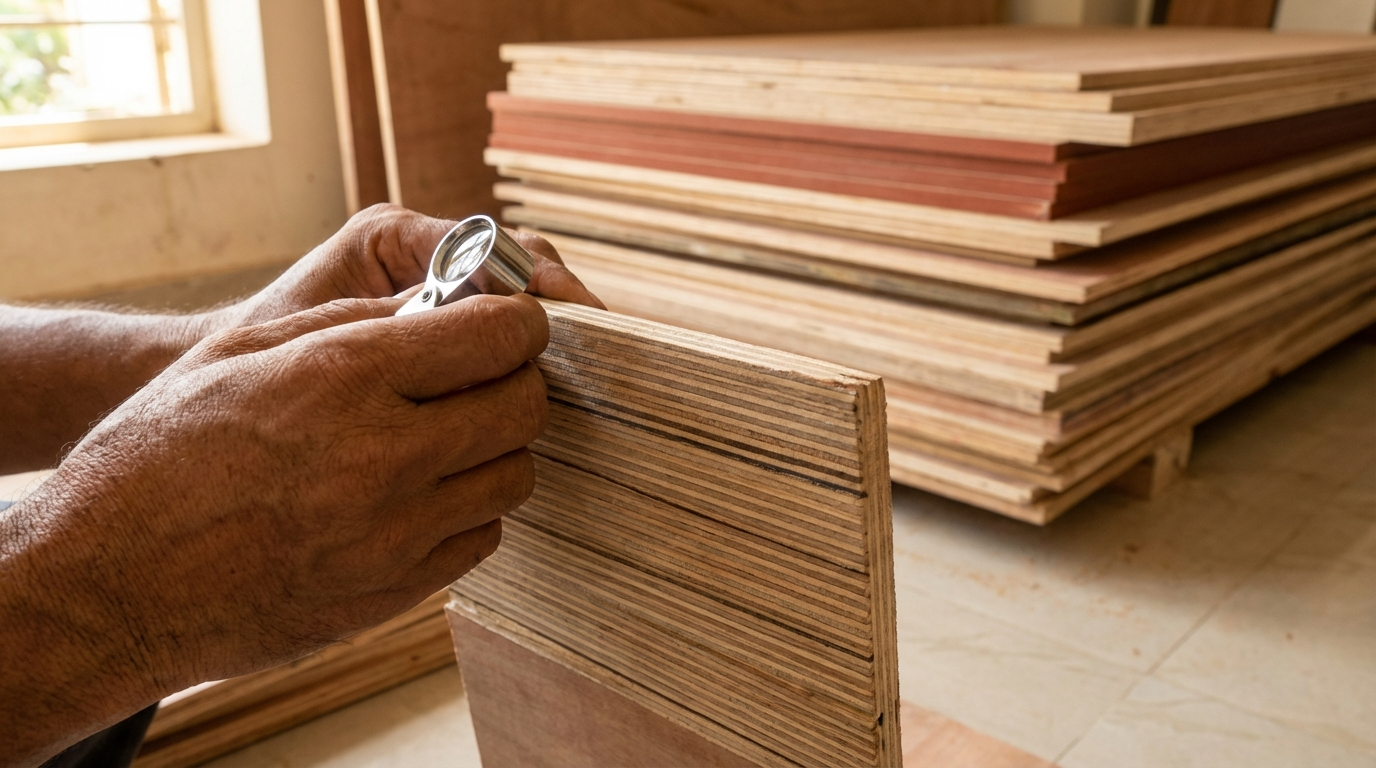
Step 4: Check the edges of at least 5-6 sheets from the stack. Don't just look at the top sheet they show you.
Step 5 (often skipped): Ask about return policy. Genuine dealers allow returns for manufacturing defects within 7-15 days.
Red flags to walk away from:
- Dealer insists on cash-only, no bill
- "ISI mark is there" but can't show the actual certificate
- Prices significantly below market average (20%+ less)—probably mislabeled grade
- Reluctance to let you inspect sheets from the middle of the stack
- No physical godown address—operating only through "delivery from warehouse"
Common Mistakes People Make When Buying Plywood in Kolkata
1. Trusting the carpenter's "regular dealer"
Look, I get it—your mistri says "mere paas acha source hai." But carpenters often get commissions from specific dealers, and that commission comes from somewhere. It comes from you paying slightly more, or getting slightly lower quality. Verify independently.
2. Buying based on thickness alone
An 18mm sheet of local commercial ply is not the same as 18mm ISI-marked BWP. Thickness tells you nothing about water resistance or bonding quality. I've seen people proudly say "maine 19mm liya hai"—great, but 19mm of what?
3. Not accounting for the full monsoon cycle
This one really frustrates me. Someone buys plywood in November, finishes their kitchen by January, and everything looks perfect through winter and spring. Kolkata experiences heavy monsoon rains from June to September, with peak rainfall in July and August. By August, the real test begins. If you bought wrong, you'll know by October—and by then the dealer isn't taking your calls.
4. Ignoring the core quality
100% Eucalyptus and Gurjan timber is used for making quality BWP plywood. Good quality phenol for giving it a boiling water resistant feature. Specially chosen veneer from quality wood not only gives longevity, strength, and stability but also gives a rich look. But cheaper options use poplar or mixed softwood cores—they'll warp faster.
5. Skipping the price comparison
One dealer in Bowbazar quoted a client of mine ₹125/sq ft for BWP 18mm. He walked 200 meters to another shop—₹98/sq ft for the same brand, same certification. That's a ₹8,640 difference on a 100-sheet order. Never buy from the first shop.
6. Believing "calibrated" means "premium"
Calibration (uniform thickness through sanding) is standard in good plywood. It's not a premium feature—it's basic quality control. Don't pay extra because someone mentions it.
7. Getting the wrong size cut at the dealer
Standard sheets are 8x4 feet. If you need 7x3 or custom sizes, dealers will cut for you—but they often charge extra and the cuts aren't always precise. Better to buy full sheets and have your carpenter cut onsite with proper measurements.
Quality Checks You Can Do Yourself at the Dealer's Shop
Visual checks:
- Look at the edge—you should see distinct, evenly-spaced veneer layers with no visible gaps
- Check the face for patches. One or two small patches are acceptable; multiple patches across the sheet indicate lower grade
- The ISI mark should be clearly stamped (not just stickered) with the manufacturer's license number
- Look for branding and labels—reputed brands print their logo and specifications on every sheet
- Check that sheets from the middle of the stack match the top sheet in color and quality
Questions to ask the dealer directly:
- "What's the BIS license number for this brand?" (They should be able to answer immediately)
- "Is this BWR or BWP? Show me where it's marked."
- "What's the core species—Gurjan, eucalyptus, or poplar?"
- "Can I return sheets with visible defects within a week?"
Simple field tests:
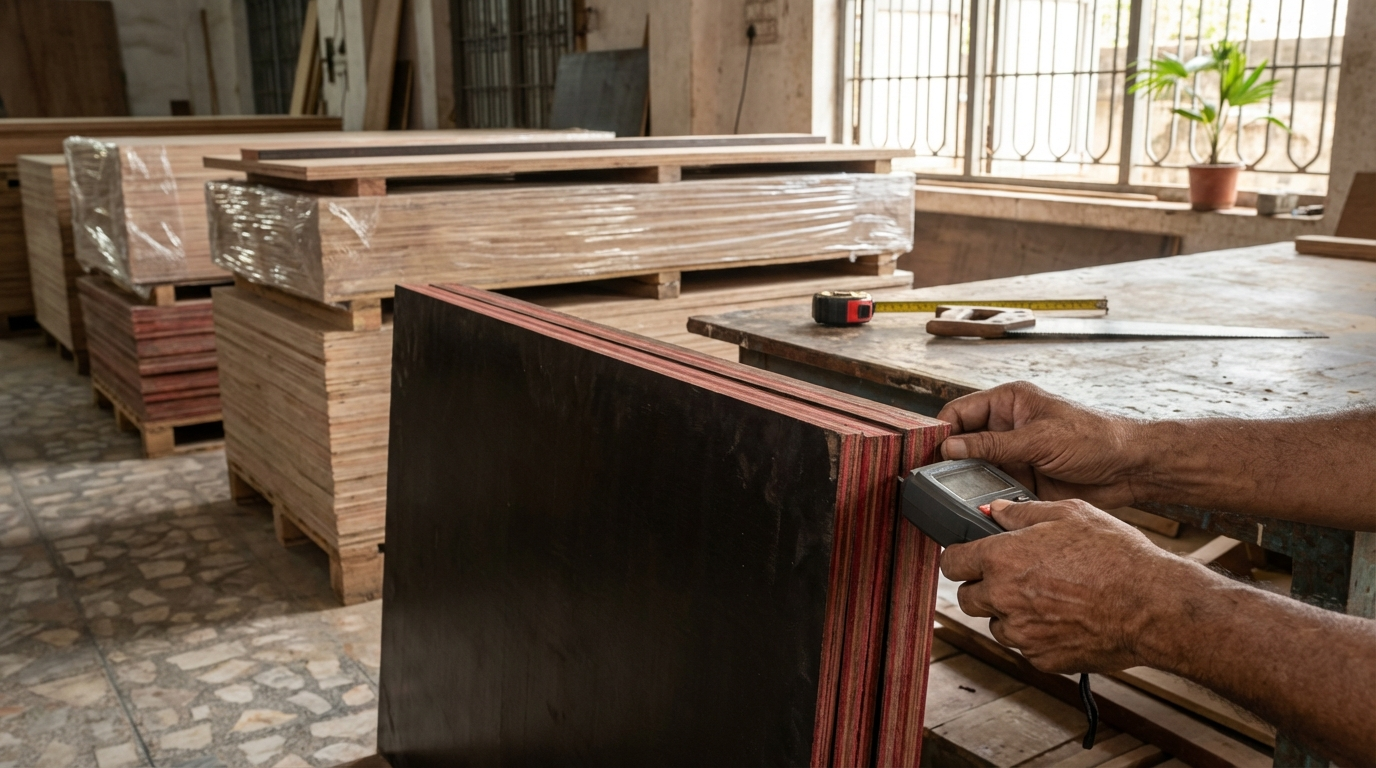
- Tap test: Knock on the sheet. Solid, consistent sound = good. Hollow spots = voids in the core
- Weight check: BWP with Gurjan core is noticeably heavier than commercial ply of the same size
- Edge inspection: Run your fingers along the edge. Feel for delamination starting at the corners
- Flex test: Gently flex an 8-foot sheet—it should bend uniformly, not crack or crease
Here's a trick most dealers don't like: Ask them to cut a small 6-inch square from a sheet you're considering. Take it home and soak it in water overnight. If it swells, warps, or the layers start separating—you have your answer. Genuine dealers confident in their stock will agree to this.
What to Tell Your Carpenter: Installation Briefing
Even the best plywood fails if the mistri cuts corners. Literally.
Cutting: Always use a circular saw with a fine-tooth blade, not a hand saw. Rough cuts leave exposed edges that absorb moisture faster.
Edge sealing: This is non-negotiable in Kolkata's humidity. Wooden interiors—whether furniture, flooring, wall panelling, or cabinetry—are particularly vulnerable to humid weather. Moisture can lead to warping, swelling, fungal growth, and general deterioration of wood's integrity. Every cut edge should be sealed with edge banding (PVC or ABS) or at minimum, two coats of wood primer. Don't let the carpenter skip this because "laminate will cover it."
Fasteners: For 18mm plywood, use screws minimum 25mm long. For 12mm, 19mm screws. Pilot holes prevent splitting—especially important for hardwood-core ply.
Your briefing checklist for the carpenter:
- "Seal all cut edges before assembly—show me when done"
- "Leave 3mm gap between back panel and wall for ventilation"
- "Use stainless steel hinges for kitchen cabinets, not MS"
- "No exposed plywood near water sources—even underneath sinks"
- "Store sheets flat, not leaning—warped sheets before installation means problems later"
There was this site in Behala—maybe 2022—where the carpenter stored 40 sheets of BWP plywood leaning against a wall for three weeks. By the time they started work, almost a third had developed a slight curve. The owner blamed the dealer. It wasn't the dealer's fault. It was storage.
How Long Does Plywood Actually Last in Kolkata?
Lab-tested plywood meeting the ISI 710 standard can deliver durability that lasts 25-30+ years. That's the optimistic manufacturer claim. In my experience, here's the realistic picture:
- BWP (IS 710) in kitchens: 15-20 years with proper edge sealing and ventilation
- BWR in bedrooms: 20+ years easily—dry conditions extend life significantly
- Commercial MR in bathrooms: 3-5 years before problems start. Just don't.
What affects longevity more than the grade itself:
- Edge sealing quality (the number one factor)
- Ventilation behind cabinets (trapped moisture kills even good ply)
- Plumbing leaks (even minor ones)
- Whether you're on ground floor (more humidity from foundation)
Signs of wear to watch for: Soft spots when you press the surface, bubbling or peeling laminate, musty smell inside cabinets, warped doors that won't close properly.
Alternatives Worth Considering
HDHMR (High Density High Moisture Resistance): If budget is very tight but you still need moisture resistance, HDHMR boards are a decent alternative for certain applications like back panels and shelf bottoms. They're cheaper than BWP plywood but won't take screws as well for structural parts. Our HDHMR vs plywood guide goes deeper into this comparison.
WPC (Wood Plastic Composite): WPC boards are waterproof, lightweight, and durable—perfect for furniture, interiors, and construction. For bathroom cabinets specifically, WPC might actually outlast plywood. The door frame guide covers WPC options if you're exploring that route.
Marine-grade block board: BWP block boards made of 100% pine wood offer good strength and long lasting life with warranty for borers. Better for very wide surfaces like table tops where plywood might flex.
Frequently Asked Questions
Is it true that all "710" branded plywood is the same quality?
No, and this misconception costs people money. "710" refers to the ISI standard specification—it's a certification, not a brand name. IS-710 is a grading acronym set by the Bureau of Indian Standards. The 'IS' means "Indian Standard," and "710" is the specific standard code for BWP plywood. Different manufacturers can all have IS 710 certification, but their quality still varies based on core wood, resin quality, and manufacturing precision. Always check the manufacturer's reputation along with the certification.
What if I live in Salt Lake or New Town—do I need better plywood than someone in drier Howrah?
Yes, actually. Salt Lake, New Town, and areas towards the Sundarbans experience higher localized humidity than western Howrah. If you're in these areas and building kitchen cabinets, don't compromise on BWP grade. I've seen BWR fail faster in Salt Lake than in Howrah flats of similar age. The proximity to wetlands and water bodies makes a measurable difference.
Can I use BWR plywood for bathroom vanities if I seal it properly?
I wouldn't recommend it for sink-adjacent furniture. No seal is perfect forever—it gets scratched, wears at edges, develops tiny cracks. When (not if) water eventually penetrates, BWR won't hold up. For bathroom vanities, either use BWP plywood or consider WPC boards as an alternative. The extra ₹800-1,200 per sheet is insurance against a ₹25,000 replacement job three years later.
Why do Kolkata carpenters often prefer local plywood over branded options?
Two reasons: margin and familiarity. Local ply gives carpenters better margins through dealer relationships. Also, many mistrys have worked with the same local suppliers for decades—they know what to expect, even if objective quality is lower. This doesn't mean local ply is always bad, but your carpenter's preference isn't necessarily based on what's best for your furniture's longevity.
How do I verify if a dealer's ISI certification is genuine?
Certification bodies verify compliance through routine inspections and testing. Every ISI-marked plywood should have a license number stamped (not stickered) on the sheet. You can verify this number on the BIS website. Additionally, genuine certified manufacturers maintain batch-wise test reports—a reputable dealer should be able to show you these when asked.
Is it true that Gurjan plywood is always better than eucalyptus?
Gurjan is the most unique and high density timber with natural bonding tendency and is termite and borer proof. It is reputed as a key timber species in making strong plywood. High density in woods leads to increased load bearing capacity, hence the core and face veneers of Gurjan wood increase durability. However, "better" depends on application. Eucalyptus-core BWP is perfectly adequate for most home furniture. Gurjan is worth the premium for high-use commercial installations or if you want maximum longevity. For budget-conscious home projects, eucalyptus-core with Gurjan face is a sensible middle ground.
What's the realistic discount I can expect buying wholesale from Burrabazar?
For orders of 50+ sheets, expect 8-15% below retail showroom prices. Wholesale prices are typically ₹100-₹300 less per sheet than retail. But—and this is important—wholesale buying requires you to verify quality yourself. There's no showroom experience, no nice salesperson walking you through options. If you're not confident identifying grades and checking for defects, the savings might not be worth the risk.
Is it true that BWP plywood doesn't need edge banding?
This is dangerous nonsense. BWP means the bonding won't fail when wet—it doesn't mean the wood itself won't absorb moisture. Cut edges are raw wood, exposed to the environment. Even BWP plywood will absorb moisture through unsealed edges over years, eventually leading to problems. Edge banding isn't optional for any plywood grade in Kolkata's climate.
What thickness should I use for kitchen cabinet shutters versus carcass?
For carcass (the box structure): 18mm or 19mm BWP. For shutters/doors: 16mm or 18mm works. For back panels: 6mm or 8mm is adequate. Some carpenters use 12mm for carcass to save costs—I'd push back on that for base cabinets that hold heavy cookware and are near moisture.
How many times can good shuttering plywood be reused?
High-grade shuttering plywood may be reused 10 to 15 times when handled properly. If you opt for film-faced plywood, it may be used up to 20-25 times. Proper storage and cleaning after every usage prolongs it. This is relevant if you're a contractor or builder—for home use, shuttering ply isn't what you need anyway.
Is it better to buy during any particular season in Kolkata?
Prices don't fluctuate seasonally as much as you'd think, but buying during October-November (post-monsoon, pre-Durga Puja rush) sometimes gives you slightly better attention from dealers who aren't swamped. Avoid the March-May summer when construction activity peaks and dealers have less time to negotiate. Also, plywood delivered during monsoon should be stored indoors immediately—prolonged moisture exposure during transport can start problems before installation even begins.
That's the gist. The Kolkata plywood market is competitive and has good options—you just need to do your homework. Talk to multiple dealers, verify what you're being sold, and don't let the mistri's "regular source" be your only option. Good luck with your project. And seriously—seal those edges.
Disclaimer: This content is provided for general informational purposes based on industry practices and publicly available information. Product specifications, standards, prices, and availability may vary by manufacturer, region, and time. Readers should independently verify details with manufacturers, dealers, or qualified professionals before making purchase or construction decisions.Want Plywood Suggestions?
Share a few details and a Sainik 710 specialist will suggest suitable brands and connect you to responsive dealers.